
You know the joy of watching your dog splash in the water. But what if danger lurks hours after they leave the pool? Dry drowning in dogs, also known as silent drowning is a rare but serious condition every owner must understand. This article covers the symptoms, timeline, first aid, and what the latest science says.
” Your dog just had a great time swimming, and now hours later, they are coughing and seem tired, could this be dry drowning in dogs? “
Key Takeaways
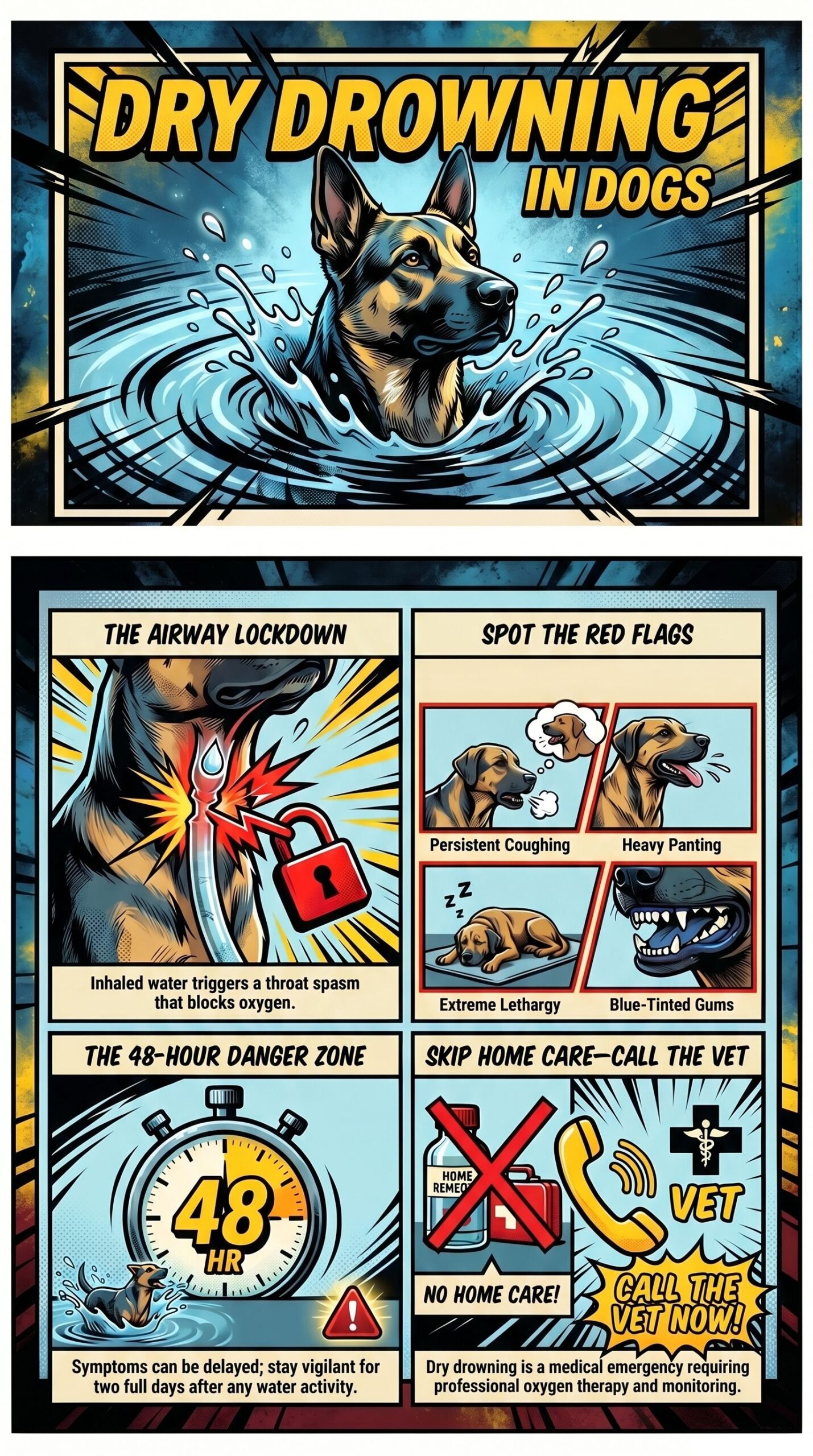
- Dry drowning in dogs happens when water irritates the airway, causing spasms.
- Symptoms can appear minutes to hours after swimming.
- Watch for persistent coughing, breathing trouble, lethargy, and pale or blue gums.
- Seek veterinary help immediately if you suspect dry drowning.
- Prevention and supervision are the best protection.
Quick Summary About Dry Drowning in Dogs
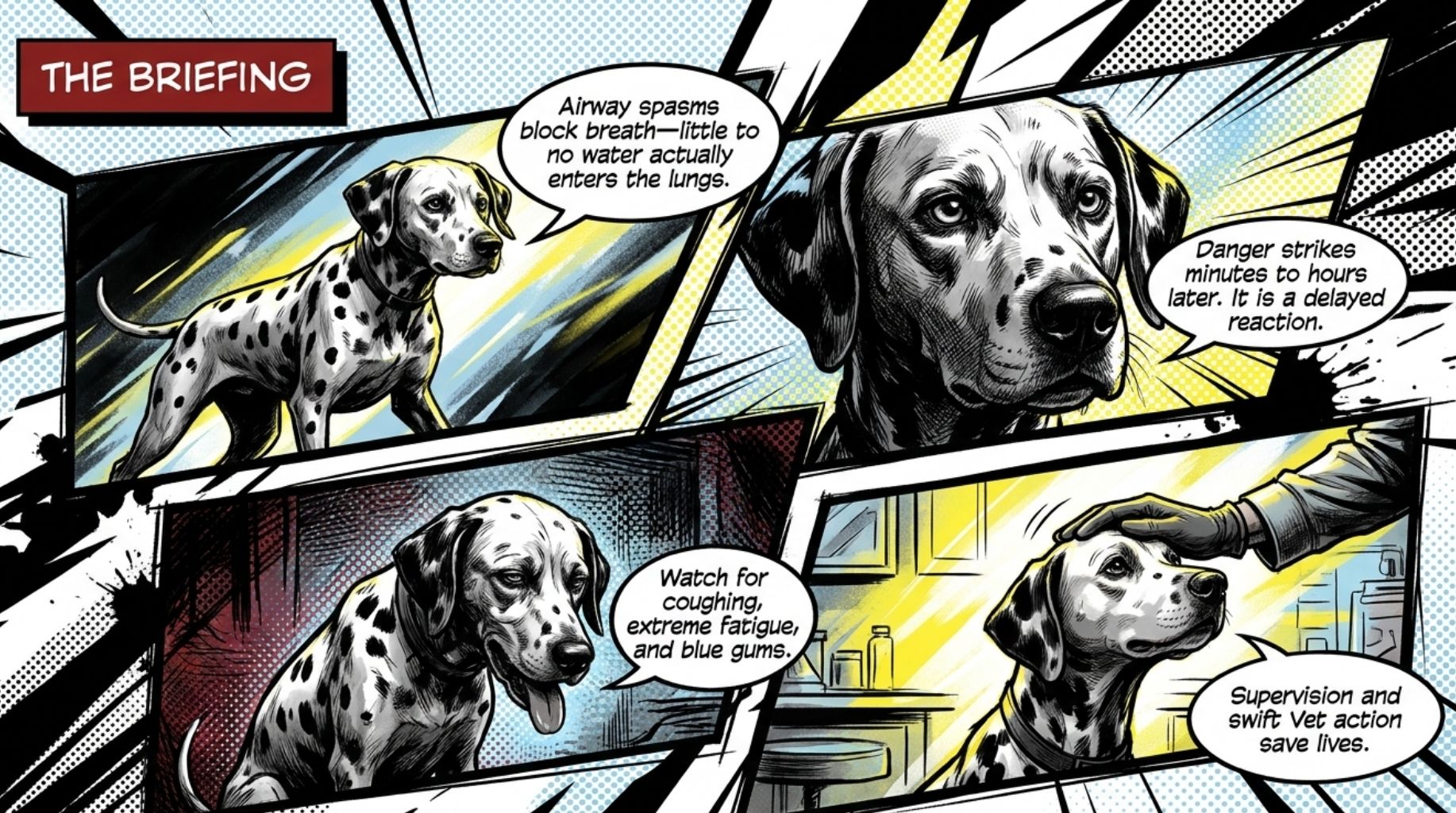
This article explains what dry drowning in dogs is, how it differs from secondary drowning, and why symptoms can appear hours after water exposure. You will learn the warning signs to watch for, the critical timeline for action, and step‑by‑step first aid. We also cover veterinary treatments, real case studies, and prevention tips to keep your dog safe.
Listen the Episode by The Bark Brigade Podcast About The Signs When Your Dog is Dry Drowning!
WHAT IS DRY DROWNING IN DOGS AND HOW DOES IT HAPPEN?
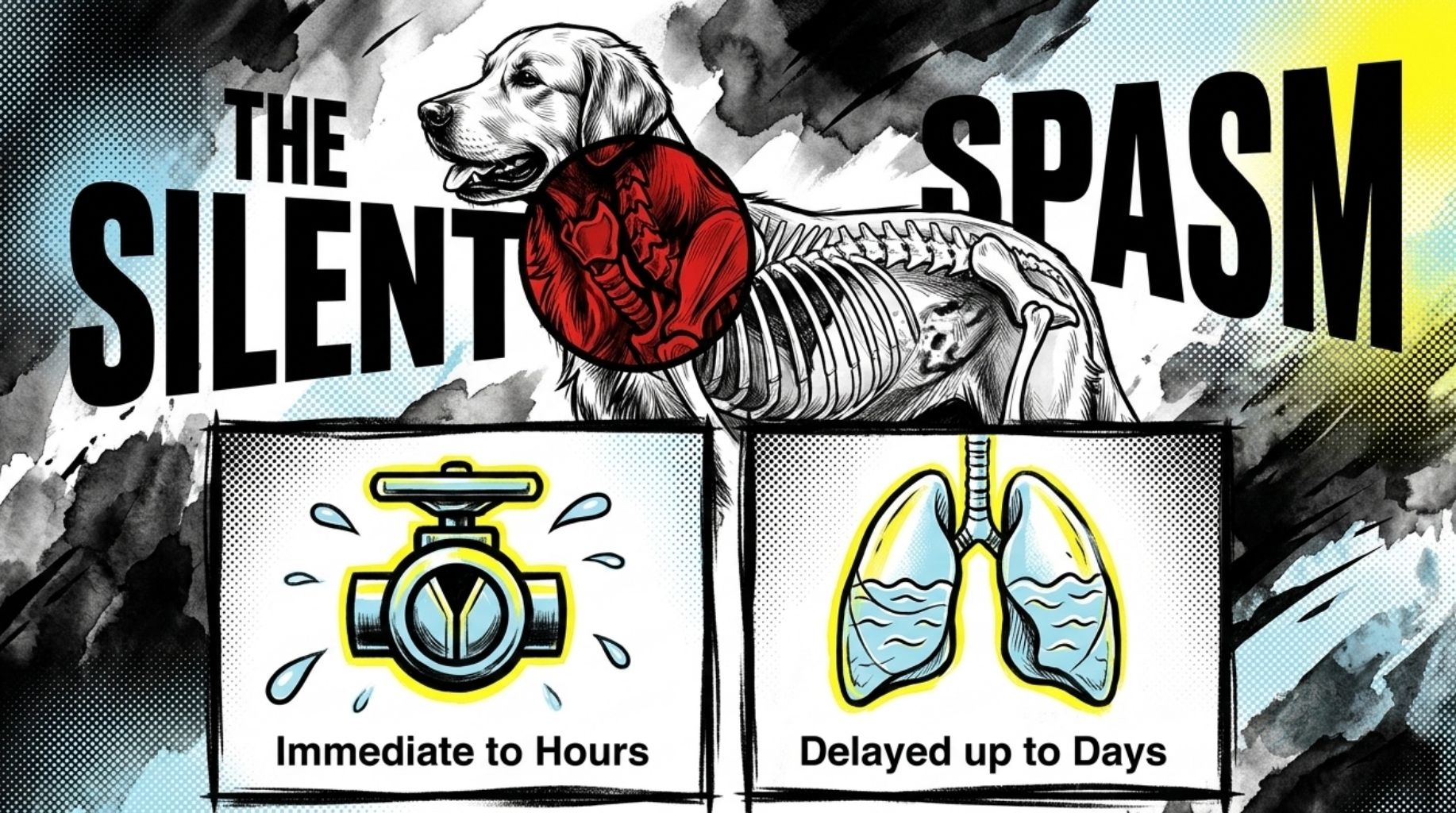
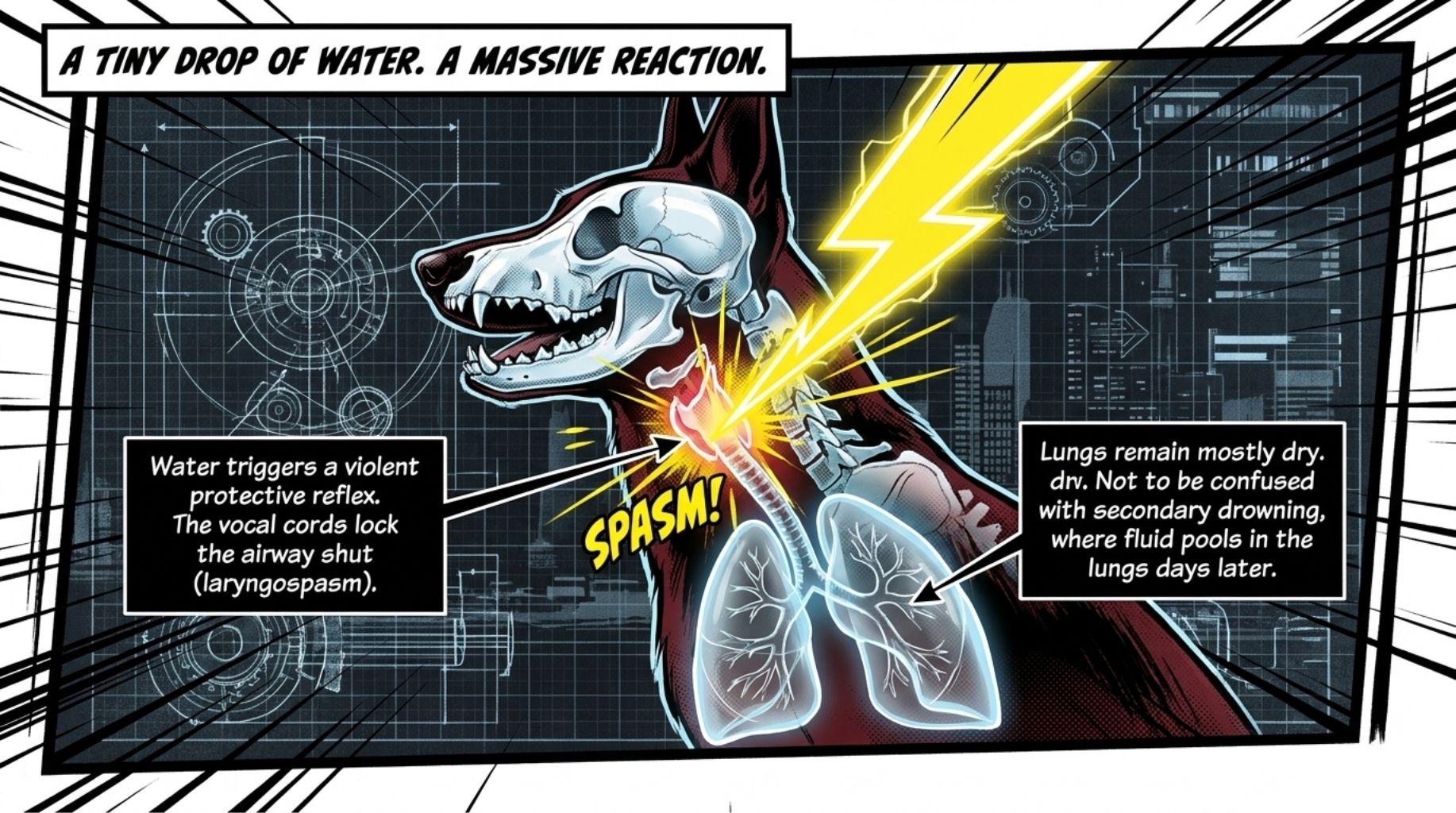
Dry drowning in dogs is not what most people think. Water does not fill the lungs. Instead, a small amount of water enters the airway and triggers a reaction. The vocal cords can go into spasm, known as laryngospasm. This spasm closes the airway and makes breathing difficult. The dog may seem fine at first. But hours later, breathing problems can develop.
🐾 Some pets can seemingly recover from a near‑drowning incident, only to succumb to fluid collection in the lungs hours later. This delayed reaction is what makes dry drowning in dogs so dangerous. The key difference from typical drowning is that little to no water actually reaches the lungs.
Dry Drowning Versus Secondary Drowning: What Is the Difference?
Many people use these terms interchangeably, but they are not the same. Dry drowning in dogs involves water irritating the larynx and causing a spasm that blocks the airway. The water never enters the lungs.
Secondary drowning, on the other hand, occurs when water does enter the lungs and causes inflammation and fluid buildup hours or even days later. Secondary drowning can occur more than 24 hours after the incident.
Both conditions are serious and require veterinary attention. However, dry drowning in dogs tends to happen more immediately, while secondary drowning has a longer delayed onset. Understanding this difference helps you know what to watch for after your dog swims. Always monitor your dog closely after any water activity, regardless of which condition you suspect.
How Does Water Trigger Dry Drowning?
The process starts when a dog inhales even a tiny amount of water. The water hits the larynx, which is the entrance to the windpipe. In about 10 percent of near‑drowning cases, the larynx goes into spasm and seals the airway. This spasm is the body’s protective reflex gone wrong. Instead of protecting the airway, it locks it shut.
The dog then cannot breathe properly. Oxygen levels drop, and the dog may panic. The spasm can last for minutes or longer. During this time, the dog struggles to get air. This is why dry drowning in dogs can be fatal even when no water enters the lungs. The airway itself becomes the problem. The body’s own defense mechanism turns against it.
Is Dry Drowning in Dogs Common or Rare?
Dry drowning in dogs is considered rare. However, it is a recognized risk for dogs that swim or play in water. Recent studies suggest that what was once called “dry drowning” may actually be other issues, like trauma, blood clots, or heart problems that caused the dog to stop breathing before entering the water.
That does not mean dry drowning in dogs does not exist. It means it is less common than once thought. But even a rare condition can affect your dog. That is why awareness matters. Thousands of pets drown in swimming pools each year. While dry drowning is a smaller subset of water‑related incidents, it is still a danger every pet owner should know about.
WHAT ARE THE WARNING SIGNS OF DRY DROWNING IN DOGS?
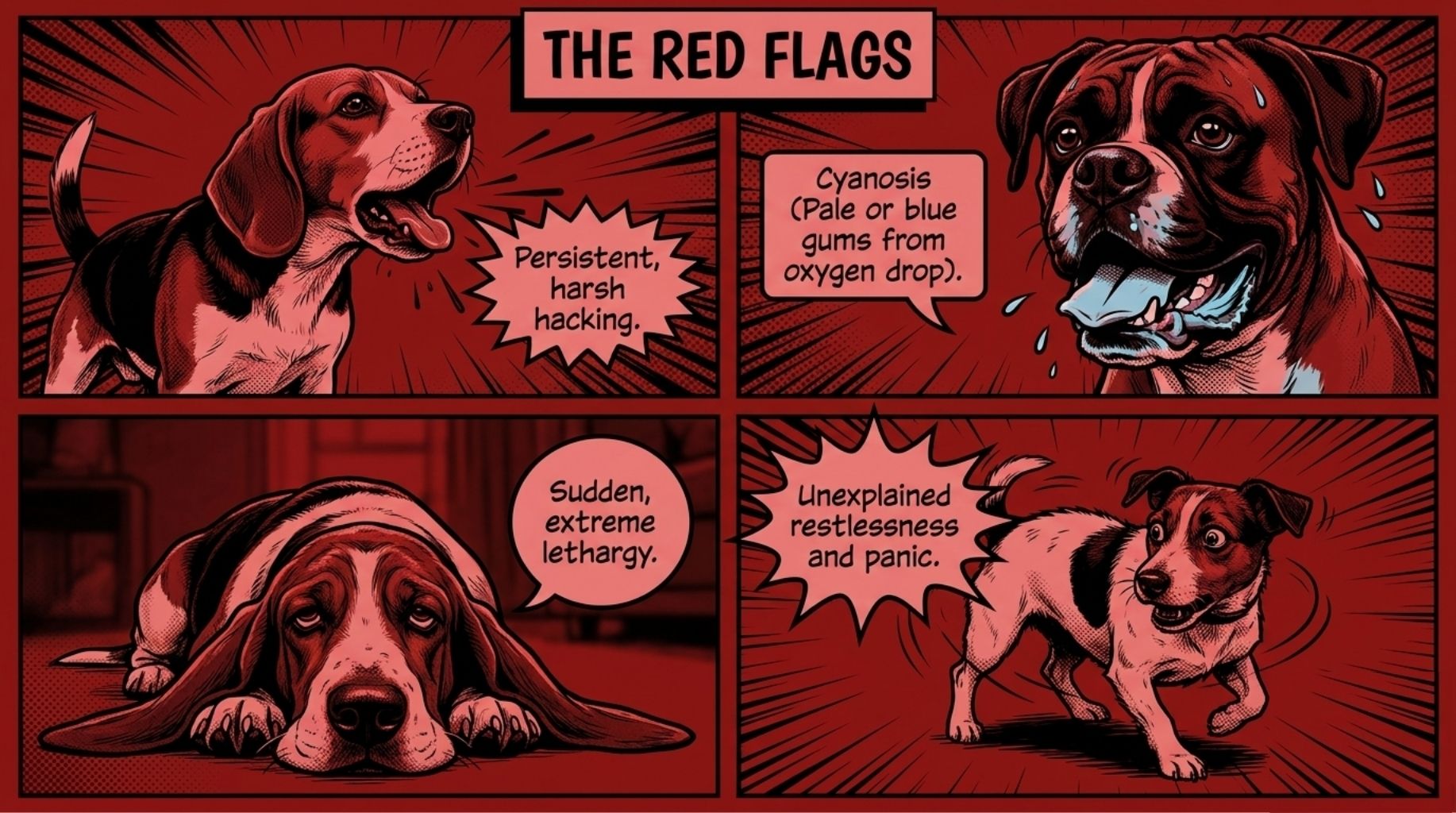
Recognizing the symptoms of dry drowning can save your dog’s life. The signs are not always obvious right away. Your dog may seem perfectly fine after swimming. Then, hours later, symptoms appear. The most common warning signs include persistent coughing or hacking. You might also notice trouble breathing or unusual panting.
🐾 Lethargy or sudden weakness is another red flag. Some dogs vomit or have pale gums. Anxiety and restlessness are also common. If you see any of these signs, do not wait. Call your veterinarian immediately.
What Does Coughing Tell You About Dry Drowning?
Coughing is the number one sign of dry drowning in dogs. It is the body’s way of trying to clear the airway. A few coughs after swimming can be normal. But persistent coughing that does not stop is a warning. The cough may sound wet or harsh. It might happen with or without foamy saliva.
If your dog coughs repeatedly more than a few minutes after leaving the water, pay attention. This could mean water irritated the larynx or entered the lungs. Do not dismiss it as just a little water. Dry drowning in dogs often starts with a cough that will not go away. Monitor your dog closely and note how long the coughing lasts.
How Does Breathing Change with Silent Drowning?
Breathing difficulties are a major red flag. Your dog may breathe faster than normal. They might pant even when resting. You may hear wheezing or noisy breathing. In severe cases, the gums and tongue may turn blue or pale. This is called cyanosis and means your dog is not getting enough oxygen.
Labored breathing, where the chest moves heavily with each breath, is another sign. If you see any of these changes, your dog needs emergency care. Dry drowning in dogs can progress quickly from mild breathing trouble to respiratory failure. Do not wait to see if it gets better on its own. It will not.
What Behavioral Changes Signal Silent Drowning?
Your dog’s behavior can tell you a lot. Lethargy is a common sign. A dog that was playful and energetic may suddenly seem tired and weak. They might not want to move or play. Some dogs become anxious or restless. They may pace, whine, or seem unable to settle. Vomiting can also occur.
These behavioral changes happen because the body is struggling to get enough oxygen. The dog feels unwell but cannot tell you why. Dry drowning in dogs affects the whole body, not just the lungs. If your dog acts strangely after swimming, trust your instincts. Something is wrong. Get veterinary help right away.
WHAT IS THE TIMELINE FOR DRY DROWNING IN DOGS?
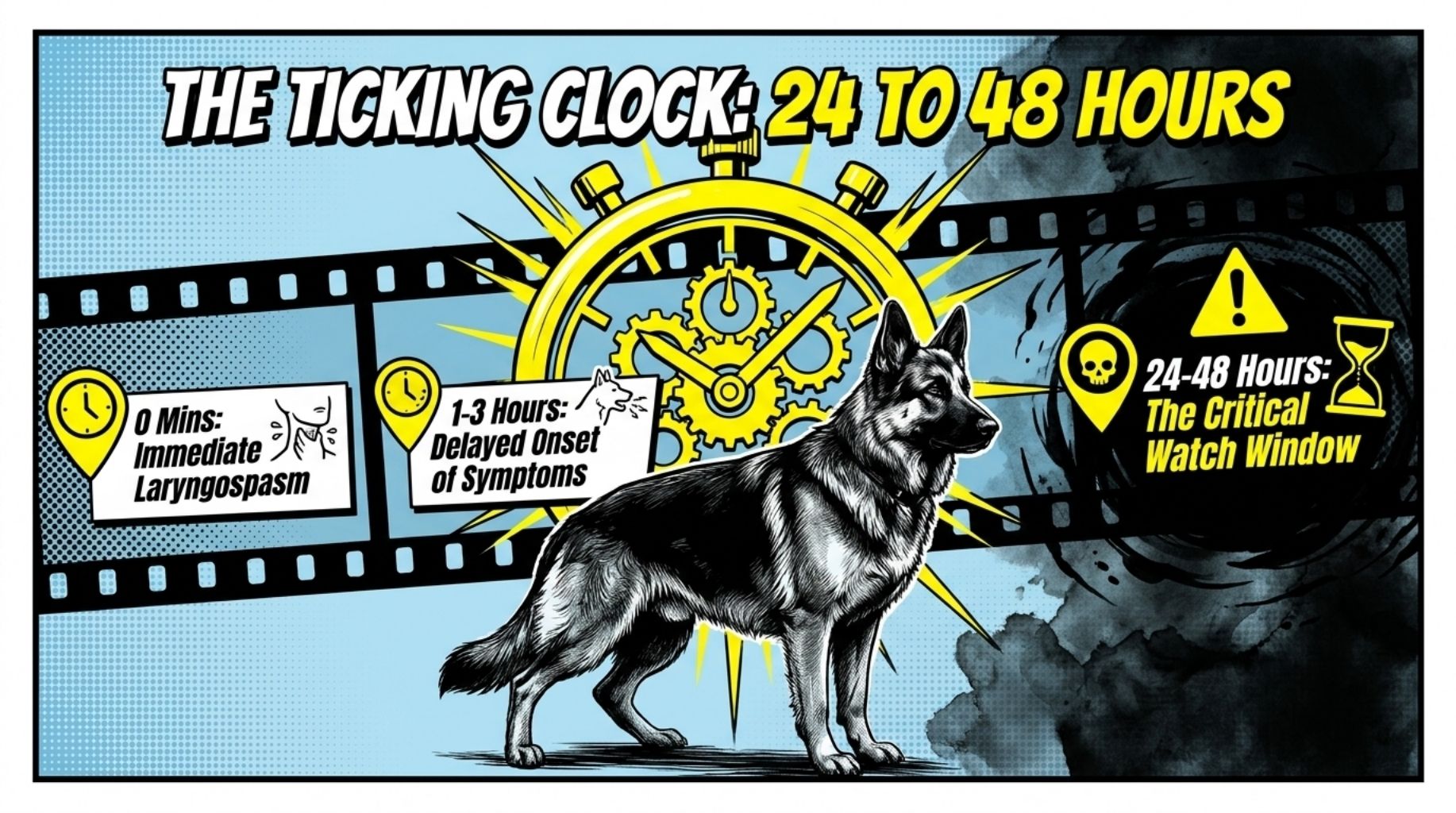
The timeline for dry drowning in dogs is what makes it so frightening. Symptoms can appear within minutes of water exposure. But they can also show up several hours later. In some cases, signs may not appear until 24 hours after the incident. This delayed onset means your dog can seem perfectly fine and then suddenly decline. You must monitor your dog for at least 24 to 48 hours after any swimming or water play.
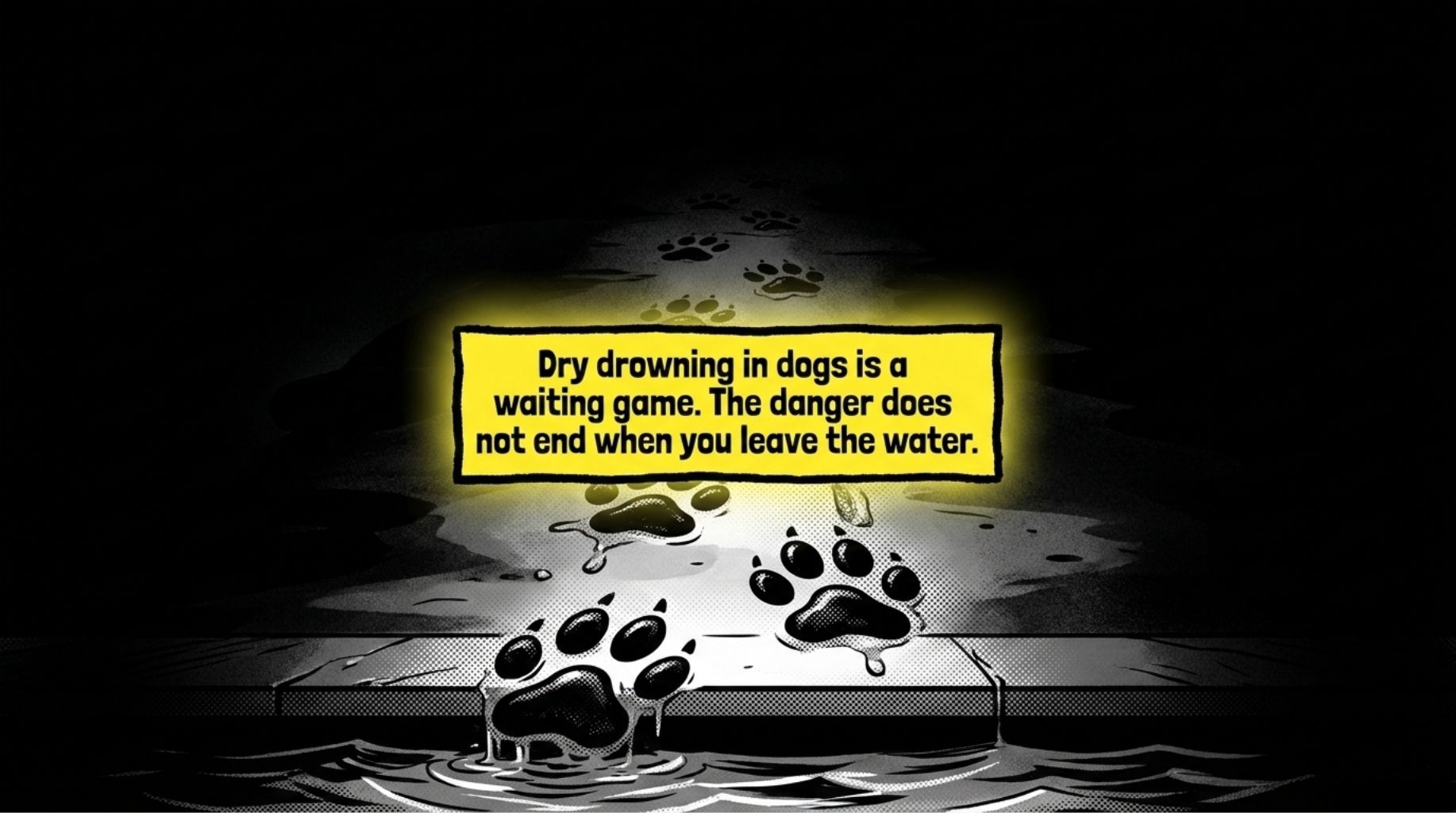
🐾 Do not assume your dog is safe just because they acted normal right after swimming. Dry drowning in dogs is a waiting game. The danger does not end when you leave the water.
How Soon After Swimming Can Dry Drowning in Dogs Happen?
Symptoms can start very quickly. In some cases, dry drowning in dogs happens almost immediately after water enters the airway. The larynx spasms, and the dog struggles to breathe right there at the poolside. Other times, the symptoms are delayed. They may appear 1 to 3 hours after swimming.
Some dogs show no signs until the next day. This wide range makes it hard to predict. That is why you should never leave your dog unattended after swimming. Keep watching them for the rest of the day and into the next. Dry drowning in dogs does not follow a strict schedule. Every dog reacts differently. Be vigilant no matter how much time has passed.
How Long Should You Watch for Dry Drowning in Dogs?
Veterinarians recommend monitoring your dog for 24 to 48 hours after any water incident. This is the critical window when complications can develop. During this time, watch for coughing, breathing changes, and lethargy. Check your dog’s gum color regularly. Pink gums are healthy. Pale, white, or blue gums are emergency signs.
Also, watch for changes in appetite or energy. A dog that refuses food or seems unusually tired may be in trouble. Dry drowning in dogs can escalate quickly even after 24 hours. Do not stop watching just because a day has passed. If you have any doubts, call your vet. It is always better to be safe.
When Do Most Cases of Dry Drowning Become Critical?
Most cases of dry drowning in dogs become critical within the first few hours after symptoms appear. The progression can be fast. A dog that starts coughing may develop severe breathing trouble within minutes. Lethargy can turn into collapse. Blue gums indicate a serious lack of oxygen. If you see these signs, do not wait.
Get to an emergency vet immediately. Time is everything. The sooner your dog receives oxygen and medical care, the better the outcome. Dry drowning in dogs is treatable, but only if you act fast. Do not try to manage it at home. This is not a condition that resolves on its own. Veterinary intervention is always required.
WHAT FIRST AID SHOULD YOU GIVE TO YOUR DOG FOR DRY DROWNING?
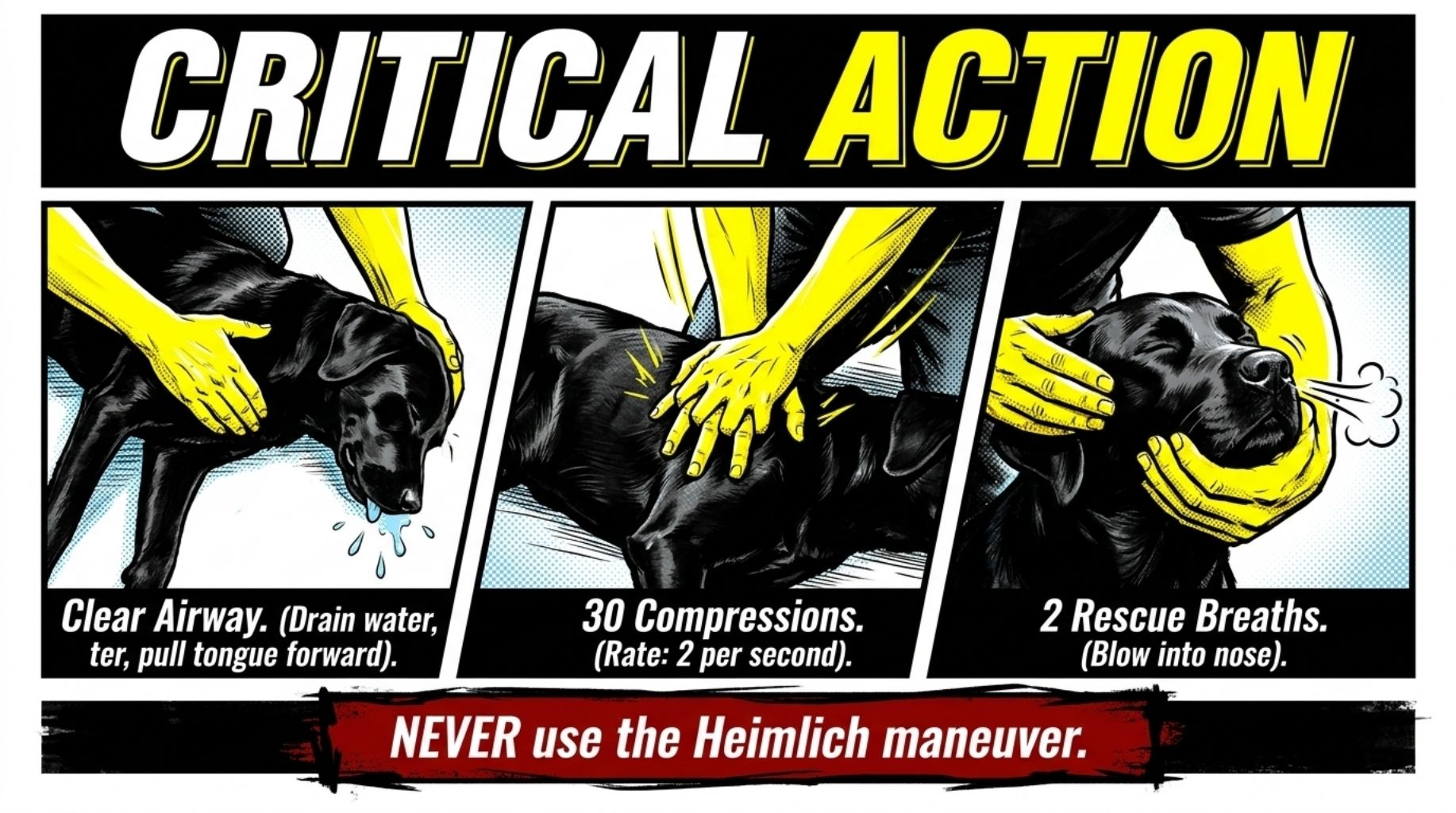
If you suspect dry drowning in dogs, act immediately. First, remove your dog from the water if they are still in it. Place your dog on their side with the head and neck extended. Keep the head slightly lower than the body to help drain any water. Pull the tongue forward and gently push on the chest and stomach to expel water. Be careful not to get bitten. Begin CPR if your dog is not breathing.
🐾 Cover your dog with a blanket to prevent heat loss. Then, seek veterinary help immediately. Do not delay even if your dog seems to recover. Complications can develop later.
How Do You Perform CPR For Dry Drowning in Dogs?
CPR can save your dog’s life. First, check for breathing and a heartbeat. If there is no pulse, start chest compressions. Place your dog on their right side on a firm surface. Put your hands over the heart, just behind the elbows. Give 30 chest compressions at a rate of two per second. Then, give rescue breaths.
Cup your hands around your dog’s muzzle to create a seal. Blow into the nose until you see the chest rise. Give two breaths after every 30 compressions. Continue CPR until your dog breathes on its own or until you reach the vet. Dry drowning in dogs can cause cardiac arrest, so CPR is a critical skill every owner should learn.
What Should You NOT Do?
Avoid common mistakes. Do not perform the Heimlich maneuver. It can cause more fluid to enter the lungs from the stomach. Do not waste time trying to drain water by tipping your dog upside down. This is often poorly effective.
Do not assume your dog is fine just because they start breathing again. Secondary complications like pneumonia, fluid in the lungs, and electrolyte imbalance can occur hours later. Do not leave your dog unattended. They may be confused and wander back to the water.
Most importantly, do not delay seeking veterinary help. Dry drowning in dogs requires professional medical care. Home first aid is only the first step. The vet is where your dog truly gets the help they need.
When Should You Take Your Dog to The Vet?
Take your dog to the vet immediately if you notice any symptoms. Do not wait to see if they get better. Even if your dog seems fine after first aid, they still need a vet check. Complications like pulmonary edema and pneumonia can develop hours later. Call your vet or an emergency animal hospital right away. Tell them what happened and what symptoms you see. They will tell you what to do next.
Dry drowning in dogs is a medical emergency. Do not try to treat it at home. The vet has oxygen, medications, and monitoring equipment that your dog needs. Early treatment makes a huge difference in outcomes. Do not hesitate. Your dog’s life may depend on it.
HOW DO VETERINARIANS TREAT DRY DROWNING IN DOGS?
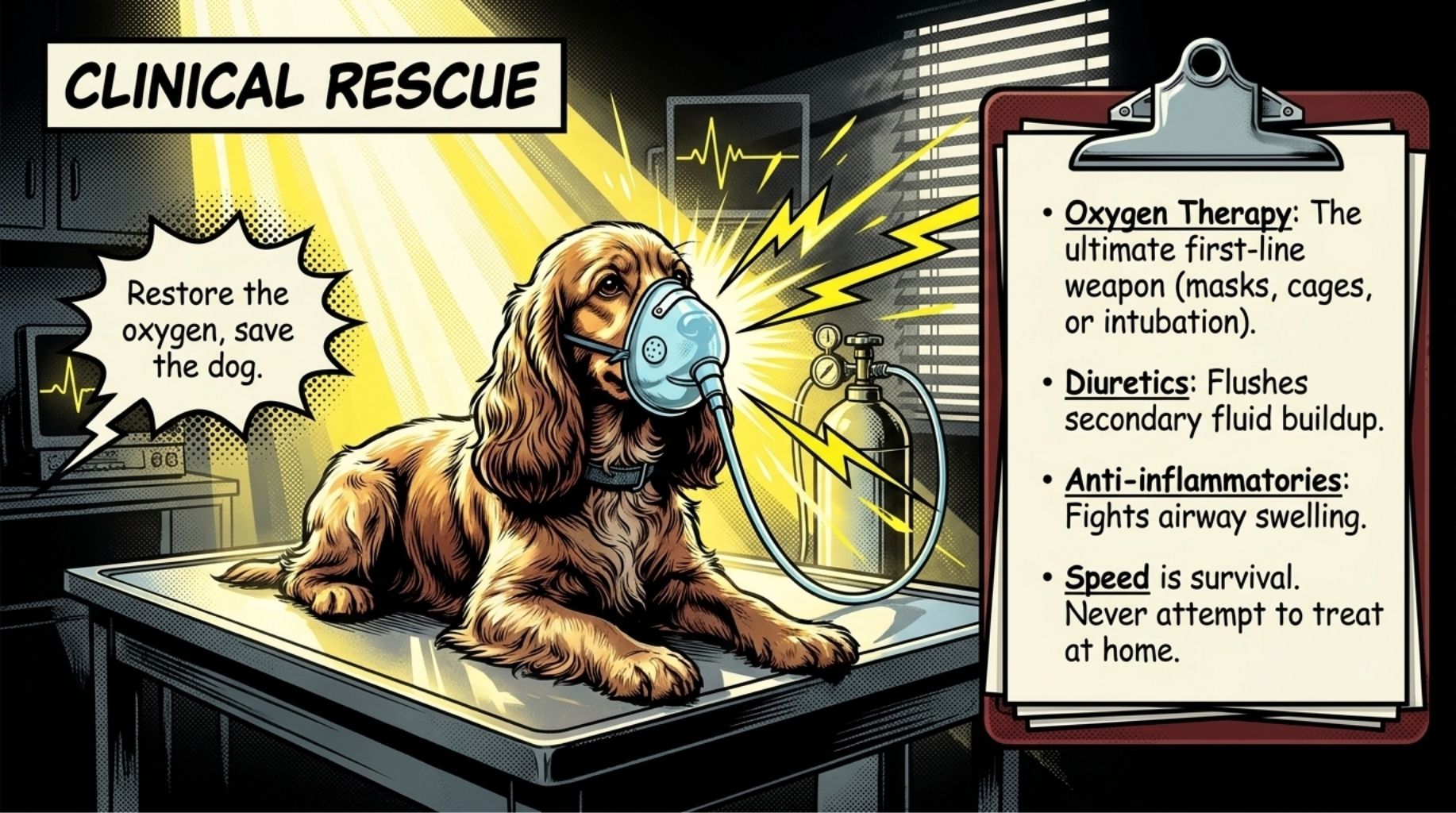
Veterinary treatment for dry drowning in dogs focuses on restoring oxygen and supporting the body. Oxygen therapy is the cornerstone of treatment. The vet will provide supplemental oxygen to help your dog breathe. In severe cases, intubation or mechanical ventilation may be needed. Medications can reduce inflammation and treat fluid buildup in the lungs. Diuretics may be used to remove excess fluid.
🐾 The vet will also monitor electrolytes and blood pressure. Chest X‑rays help assess lung condition and check for pneumonia. Treatment is time‑critical, and the prognosis depends on how quickly care is given.
What Oxygen Therapies Are Used for Dry Drowning?
Oxygen therapy is the first line of treatment. The vet may use an oxygen mask, an oxygen cage, or a nasal tube to deliver oxygen. In severe cases, the dog may need intubation and mechanical ventilation. This means a tube is placed into the windpipe, and a machine breathes for the dog.
Hyperbaric oxygen therapy is another option in some clinics. This involves treating the dog in a high‑pressure oxygen chamber. The goal is to get oxygen into the blood as quickly as possible.
Dry drowning in dogs causes oxygen deprivation, so restoring oxygen is the top priority. The faster oxygen is given, the better the chances of full recovery. Your vet will choose the best method based on your dog’s condition.
What Medications Help with Dry Drowning?
Veterinarians use several medications to treat dry drowning in dogs. Diuretics help remove excess fluid from the lungs. Anti‑inflammatory drugs reduce swelling in the airway. Bronchodilators open up the airways to make breathing easier.
Antibiotics may be given to prevent or treat pneumonia. Electrolyte solutions help restore balance in the body. The vet will tailor the medication plan to your dog’s specific needs. Some dogs may need multiple medications.
Others may need only oxygen and monitoring. Dry drowning in dogs is complex, and treatment must address both the immediate breathing issues and the potential for secondary complications. Always follow your vet’s instructions carefully.
What Is the Prognosis for Dry Drowning?
The prognosis for dry drowning in dogs depends on several factors. How quickly treatment starts is the most important factor. Dogs that receive oxygen therapy within minutes of showing symptoms have a better chance. The dog’s overall health also matters.
Younger dogs tend to recover better than older dogs with pre‑existing conditions. The severity of the laryngospasm and how long the dog went without oxygen also affect outcomes. With prompt treatment, many dogs make a full recovery.
However, complications like pneumonia or brain damage from oxygen deprivation can occur. Dry drowning in dogs is serious, but it is treatable. Do not lose hope if your dog shows symptoms. Get to the vet fast, and your dog has a good chance of pulling through.
REAL CASES AND PREVENTION: WHAT EVERY OWNER SHOULD KNOW
Real‑life cases show how quickly dry drowning in dogs can happen. One owner revived their dog with CPR after a drowning incident. The dog was diagnosed with noncardiogenic pulmonary edema and aspiration pneumonia. This case shows that even after successful CPR, complications can develop. Another case involved a dog that swallowed saltwater and coughed all night. The dog needed veterinary evaluation for possible aspiration pneumonia.
🐾 These stories are reminders that dry drowning in dogs is not a myth. It is a real danger. But the good news is that it is preventable. With the right precautions, you can keep your dog safe.
What Are the Best Prevention Tips?
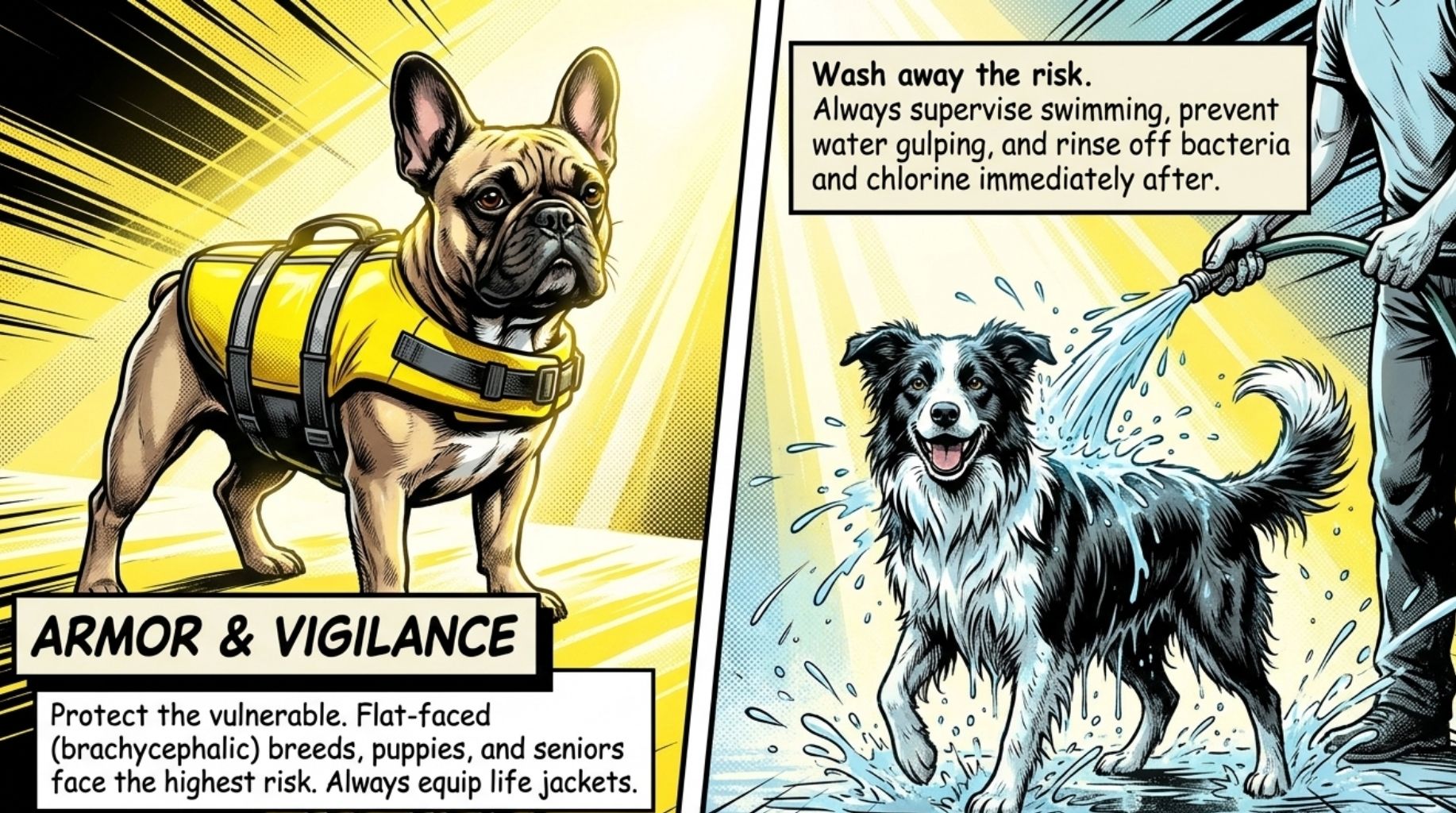
Prevention starts with supervision. Never leave your dog unattended around water. Watch them closely while they swim. Use a life jacket, especially for small, senior, or short‑snouted breeds. Limit diving and discourage your dog from gulping water. Offer plenty of rest breaks during play.
Rinse your dog after swimming to remove bacteria and chemicals. Introduce puppies to water slowly and in shallow areas. Teach your dog where the pool steps are. These simple steps can prevent dry drowning in dogs before it starts. Remember, an ounce of prevention is worth a pound of cure. Your vigilance is your dog’s best protection.
Which Breeds Are Most at Risk for Dry Drowning?
Some dogs face higher risks than others. Brachycephalic breeds with flat faces, like Bulldogs and Pugs, have narrower airways. They are more prone to breathing issues. Puppies under four months old are also at higher risk. Senior dogs with health problems may tire faster in the water. Dogs with seizure disorders or heart conditions are vulnerable.
If your dog falls into any of these categories, take extra precautions. Use a life jacket and keep swimming sessions short. Watch them even more closely after they leave the water. Dry drowning in dogs can affect any breed, but these dogs need extra care. Talk to your vet about your dog’s specific risks before swimming season starts.
What Should You Do After Every Swim to Prevent Dry Drowning?
After every swim, take these steps. Rinse your dog with fresh water to remove chlorine, salt, or bacteria. Dry your dog thoroughly, especially around the head and ears. Watch your dog for the next 24 to 48 hours. Look for coughing, breathing changes, or lethargy. Check gum color regularly.
If you notice anything unusual, call your vet. Do not wait. Prevention is not just about what you do before swimming. It is also about what you do after. Dry drowning in dogs can happen hours later, so your post‑swim routine is just as important. Make monitoring a habit. Your dog’s health depends on it.
FREQUENTLY ASKED QUESTIONS (FAQS)
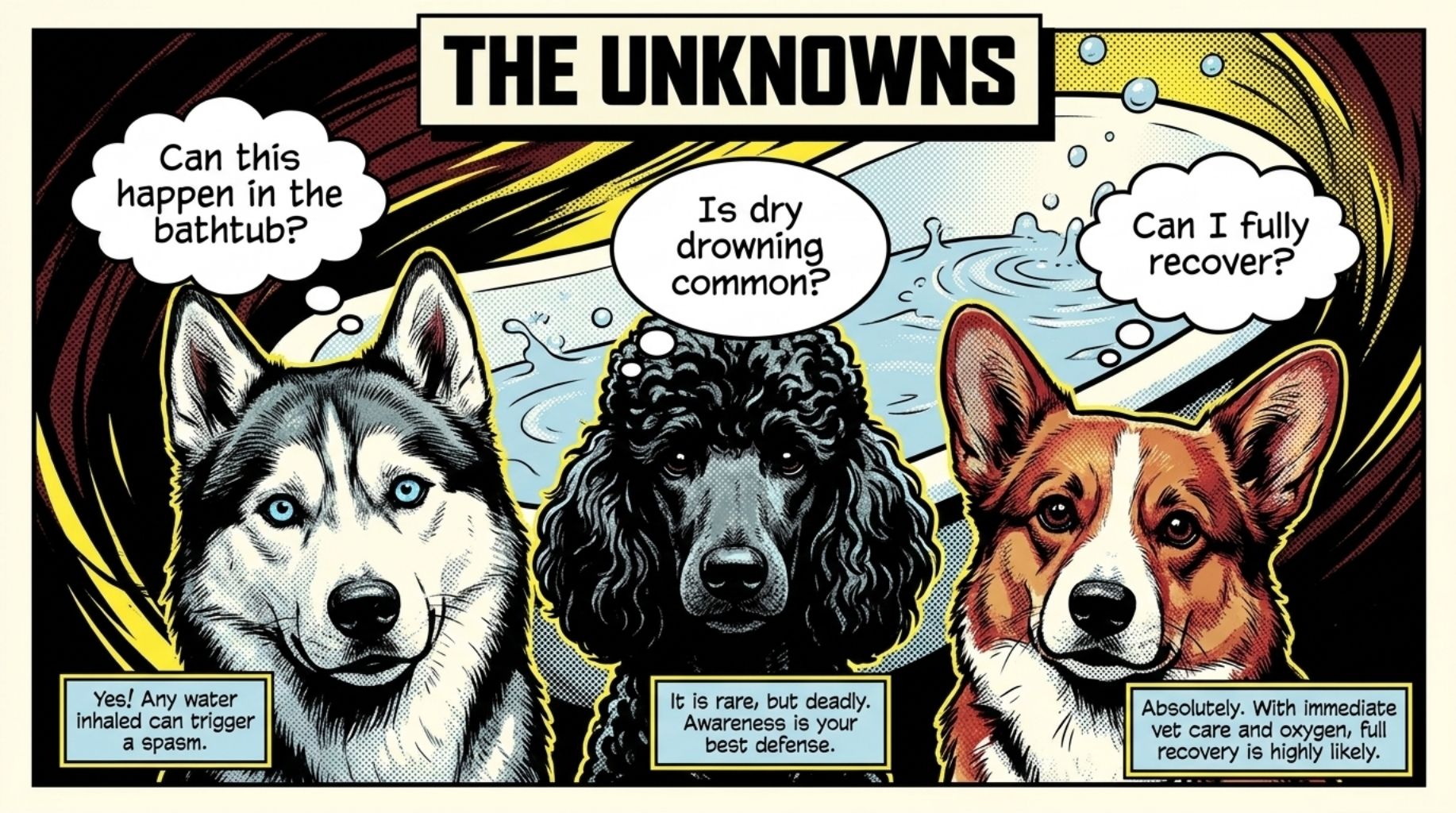
You still have questions? That is normal. Dry drowning in dogs is a scary topic, and every owner wants to be sure they know what to do. Below are the most common follow‑up questions people ask after learning about this condition. Read through these answers to feel confident the next time your pup goes for a swim.