
Watching your senior dog change is heartbreaking. You might notice new confusion or strange habits. Recognizing dog dementia symptoms early gives you the power to help. This guide walks you through every step, from first signs to final decisions.
“One day, your senior dog suddenly forgets which way the door opens. They stare at the wall for hours. It isn’t old age. It might be Canine Cognitive Dysfunction (CCD).”
Key Takeaways
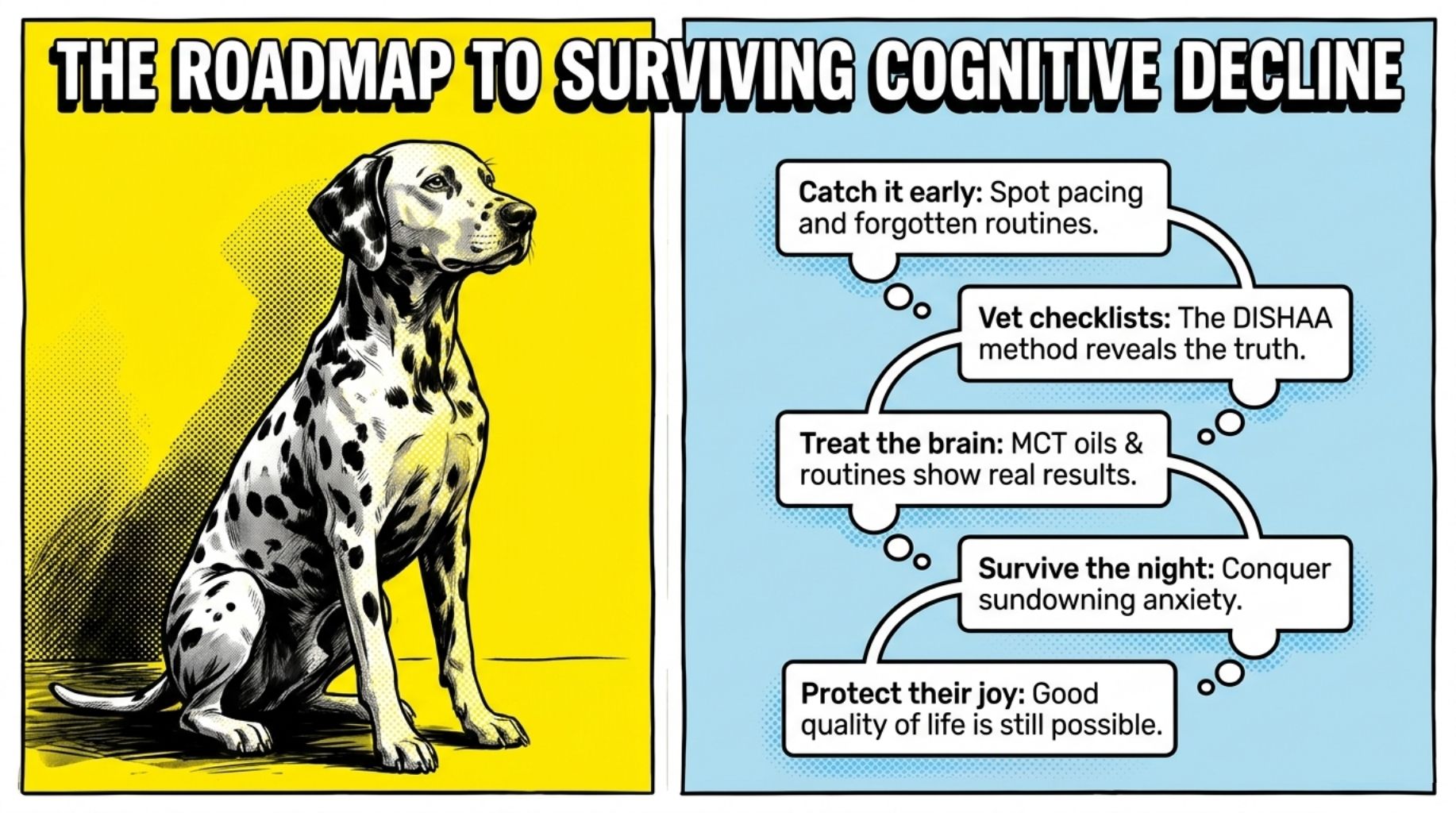
- Catch it early: Look for pacing, staring, or forgetting house rules.
- Use the DISHAA checklist: Vets use this tool to spot brain decline.
- Treat the brain: Special diets with MCT oil show real results in studies.
- Nighttime is hard: Sundowning makes dogs restless, but routines help.
- Dogs can stay happy: With the right care, quality of life stays good.
Quick Summary About Dog Dementia Symptoms, diagnosis and treatments
Dog dementia changes how older dogs think and act. You can spot the warning signs early. While there is no cure, you can slow the decline. This guide covers symptoms, diagnosis, and treatments. It uses the latest science to help your furry friend live better longer.
Listen the Episode by The Bark Brigade Podcast About Dog Dementia Symptoms, Diagnosis and Treatments!
COMMON DOG DEMENTIA SYMPTOMS AND STRANGE BEHAVIORS
You wake up at 3 AM. Your dog paces in circles, barking at nothing. They get lost behind the couch. These moments confuse you. You wonder if they are just getting old. The truth is simple, these are classic dog dementia symptoms. This condition, called Canine Cognitive Dysfunction (CCD), directly changes the brain. It looks exactly like Alzheimer’s in humans.
the First Signs: Early Dog Dementia Symptoms You Might Miss
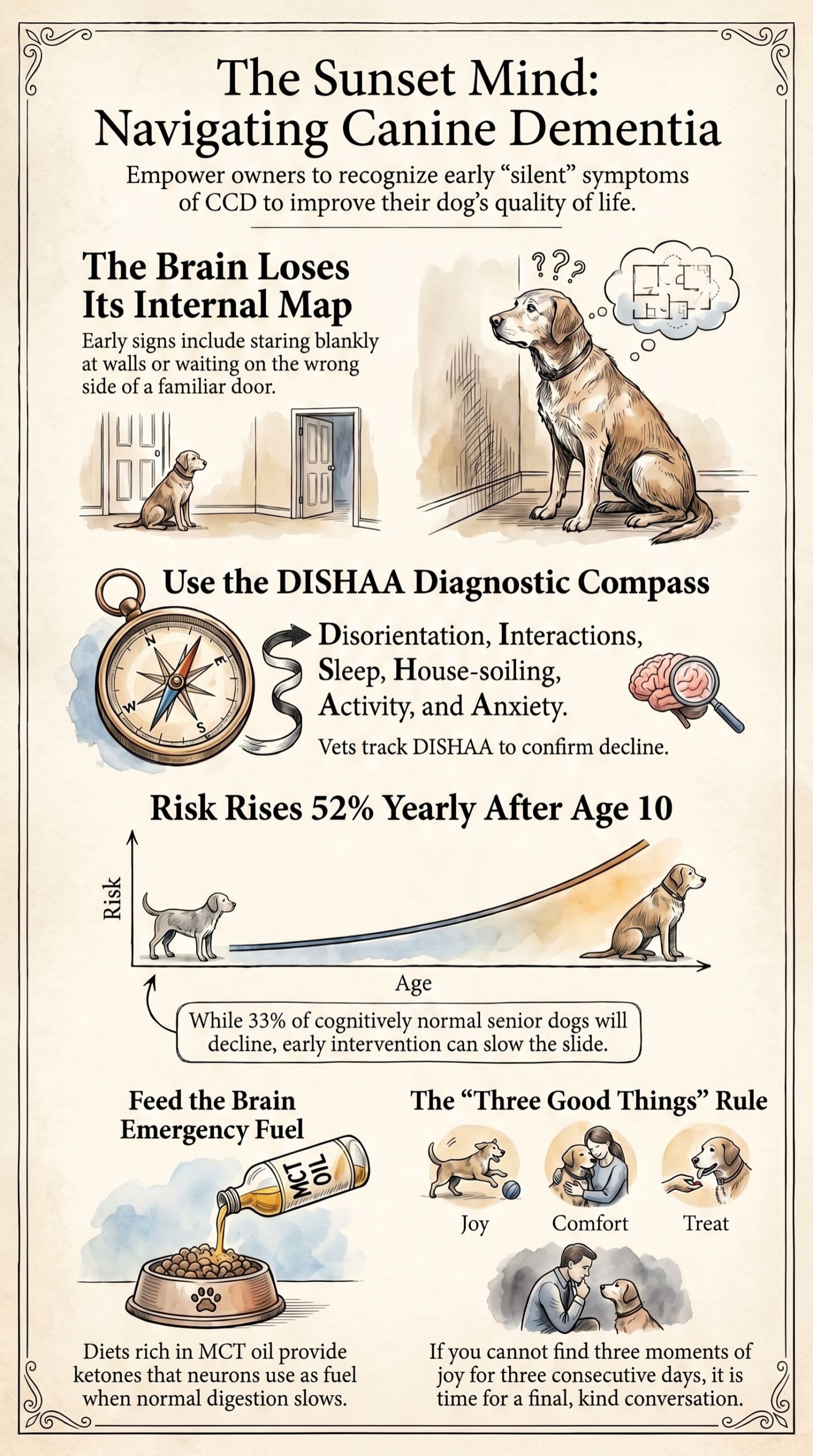
Most pet owners miss the first signs because they seem tiny. Your dog might stare blankly at a wall for a few seconds. They might wait at the wrong side of the open door. You might notice they stopped greeting you at the door. These early dog dementia symptoms often look like laziness. They are not. It is the brain losing its map of the home. I see this happen gradually.
One week, your dog knows the yard. Next month, they get lost looking for the water bowl. Dogs hide pain well, but they cannot hide confusion. If your senior pet suddenly stops asking for pets, pay attention. They might not recognize family faces right away. They might walk into a room and freeze, forgetting why they entered.
These moments are heartbreaking, but noticing them early gives you power. Many owners think their dog is just stubborn. They are wrong. Veterinary research confirms that 33% of dogs with normal cognition will decline into mild impairment soon after. The earlier you spot the blank stares and missing greetings, the sooner you can call the vet.
How Veterinarians Identify Severe Dog Dementia Symptoms? (DISHAA)
Vets do not guess when they see a confused dog. They use a powerful checklist called DISHAA. This tool covers six specific brain changes. Let me break it down for you.
D stands for Disorientation.
I stands for altered Interactions with family.
S means Sleep-wake cycle disruption.
H is House soiling accidents.
A refers to Activity level changes.
The last A is for Anxiety and fear.
This system catches even hidden dog dementia symptoms with ease. A vet will ask you when your dog started waking up at night. They will ask if your dog suddenly fears the vacuum cleaner. They might check if your dog forgets to eat. Using DISHAA, clinics can separate normal aging from true dementia.
For example, an old dog that sleeps more might just be tired. But a dog that paces for five hours? That is a neurological red flag. Always mention these behaviors to your doctor. Do not dismiss them as quirks. Every year after age 10, the risk of dementia rises by 52%. Regular screening matters.
Normal Aging vs. Real Decline: Spotting the Difference in Symptoms
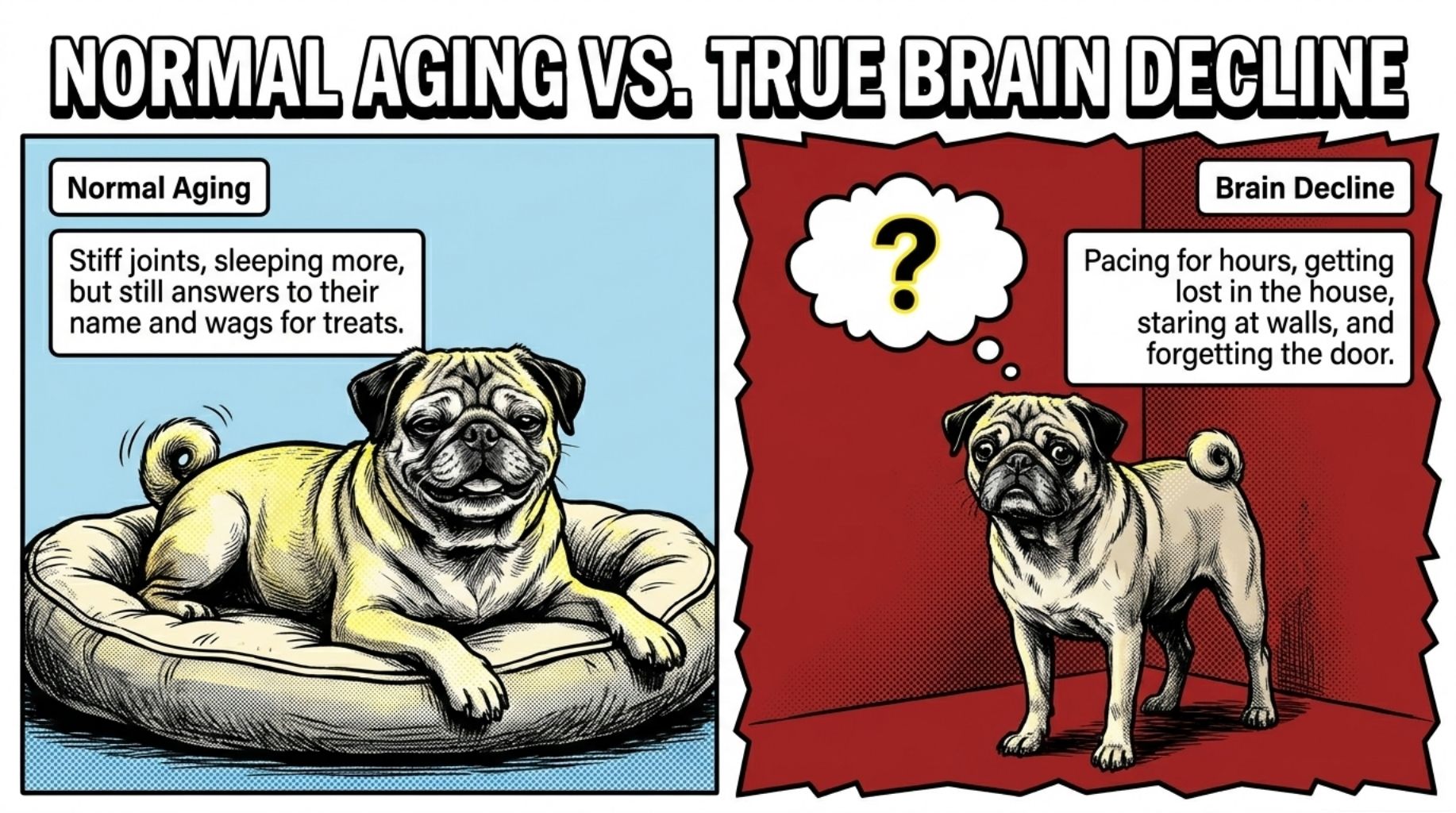
We all expect senior dogs to slow down. They get gray muzzles and stiff legs. That is fine. That is normal life. But losing memory is not normal. A healthy old dog still knows their name. They still wag for treats. A dog with dementia forgets those things slowly. The real difference lies in purpose. Your normal senior dog rests because their joints hurt.
Your dog with dementia paces because their brain forgot how to settle. Look at their eyes. A normal dog follows you across the room. A demented dog stares at the wall like it speaks to them. Watch how they eat. A normal dog still gets excited for dinner. A demented dog might walk away from the bowl entirely.
These dog dementia symptoms separate biological aging from brain disease. I suggest keeping a diary for one week. Write down every time your dog gets stuck. Note every night waking. If you see three or more of these signs, do not wait. Schedule the vet visit tomorrow. Early intervention changes the game.
HOW TO GET A REAL DIAGNOSIS AND RULE OUT OTHER SYMPTOMS?
Getting a diagnosis takes work. You cannot just point to a single behavior. Other sicknesses look exactly like dementia. A brain tumor, a bad tooth, or even liver failure can cause confusion. Your vet must play detective first. They will run blood tests and check the spine. This process helps confirm the real dog dementia symptoms while hiding any dangerous mimics.
The Vet Visit: What to Expect When Checking for Dementia?
Bring your detailed notes to the appointment. Tell the vet exactly when the strange actions started. They will perform a full physical exam. They watch how your dog walks into the room. Do they circle left for no reason? Do they flinch at soft touch?
Next, they take blood and urine samples. These tests check for diabetes or thyroid issues. Both diseases cause dementia-like confusion in old dogs. If everything looks clean, the vet moves to the brain exam. They might shine a light in the eyes to check pupil reflexes. They test the leg reflexes with a small hammer.
A dog with true dementia passes these physical tests easily. The issue sits in the mind, not the muscles. Many vets now use the CADES scale, short for Canine Dementia Scale. This form asks 13 specific questions about your dog’s day. It scores the severity of their dog dementia symptoms. A score over 40 usually confirms the condition. This method catches the disease early.
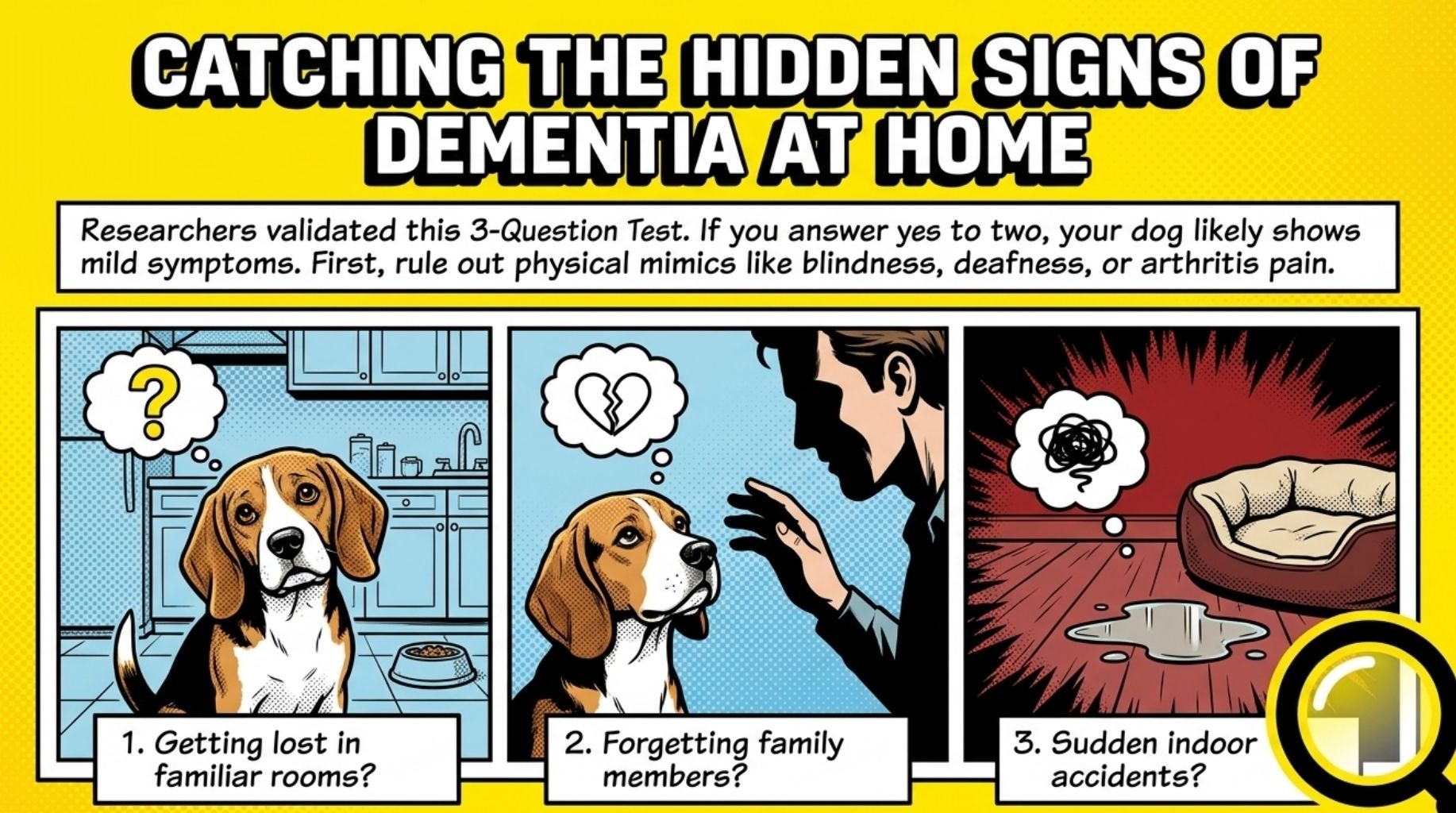
the 3 Question Test to Identify Mild Dementia Symptoms at Home
You do not need a vet for a basic check. Researchers designed a simple 3 question test for home use.
- First, does your dog get lost in familiar places like the kitchen?
- Second, does your dog fail to recognize family members you live with?
- Third, does your dog have accidents inside despite being house trained for years?
If you answer yes to two of these, your dog likely shows mild dog dementia symptoms. This test works best for dogs over 10 years old. It asks nothing scary. You do not need needles or exams. Just watch your pet during a normal evening.
Do they run to you when you call?
Do they remember the treat hiding spot?
I find this test useful for yearly check-ups. Do it every six months as your dog ages. If the answers start changing, you know it is time for professional help. The University of Washington validated this exact method on 300 senior dogs. It catches 84% of early CCD cases correctly.
Arthritis and Blindness Often Gets Mistaken for Dementia Symptoms
Many physical problems look like brain failure. Blindness is the biggest trick. A dog who cannot see will bump into walls. They will seem confused in the dark. But a blind dog still listens for your voice. A demented dog ignores the world entirely. Arthritis also fools owners. A dog with sore hips stops climbing stairs. That is not confusion. That is pain avoidance.
Deafness mimics the social withdrawal signs. Your dog might not come when called because they literally cannot hear you. Test this yourself at home. Stand behind your dog and clap loudly. If they jump or turn around, their ears work fine. Kidney disease causes night pacing and excessive drinking.
A simple blood test rules this out quickly. True dog dementia symptoms improve with routine, not medication. If your dog still responds to steak smells, their senses work. If they ignore steak completely, worry. Always ask the vet for a full workup. Do not assume dementia until you eliminate the rest.
LATEST RESEARCH ON DOG DEMENTIA, BIOMARKERS, AND DIAGNOSIS
Science moves fast on dog brain health. In the last 18 months, labs discovered blood tests that spot dementia early. They also used brain scans to watch the disease spread. This research proves one thing clearly, dog brains mirror human brains perfectly. Understanding dog dementia symptoms helps both species live better.
Blood Tests Can Now Track Dog Dementia Objectively
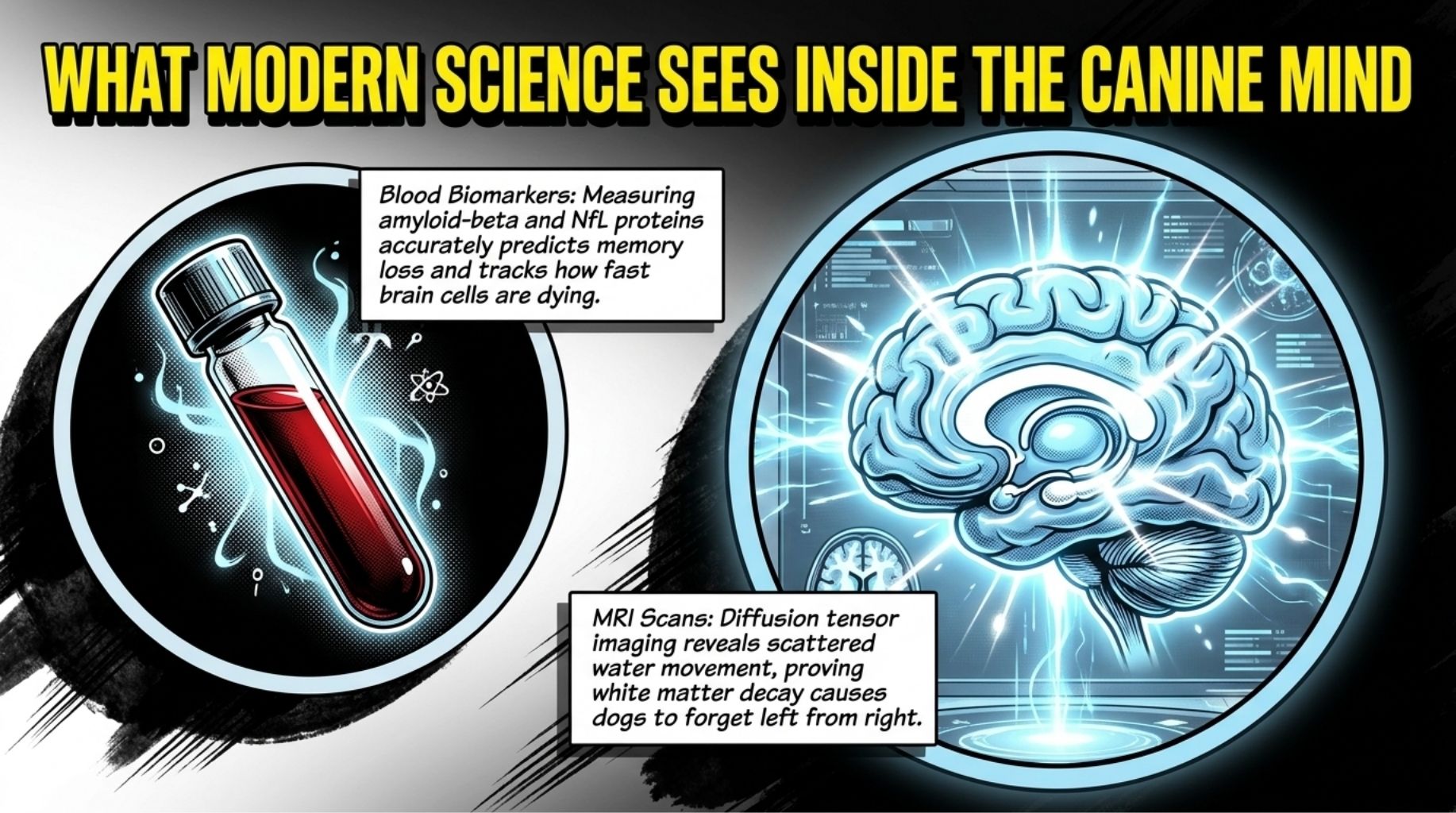
Until 2025, vets guessed based on behavior. Now, they can measure brain decline in a blood sample. Researchers at a major international study evaluated three specific biomarkers. They looked for amyloid-beta, neurofilament light chain, and GFAP proteins. High levels of these substances mean brain cells are dying rapidly.
The study tested 145 older dogs for these markers. The results showed that reduced amyloid-beta ratios directly predicted confusion and memory loss. This breakthrough matters because it removes the guesswork. You no longer have to wonder if you are imagining dog dementia symptoms. A simple blood draw tells the vet the truth.
The study also found that elevated NfL levels in spinal fluid rise with age. These biomarkers even help predict how fast the disease will spread. For example, a dog with very low amyloid-beta ratios often declines twice as fast. Vets can now use this data to adjust treatment plans early. This innovation turns CCD from a mystery into a measurable condition.
MRI Brain Scans Show How the White Matter Changes During Dog Dementia
You cannot see dementia from the outside. But an MRI machine reveals the damage. A 2025 imaging study used diffusion tensor imaging on aged dog brains. This technique tracks water movement inside the nerves. Healthy brains show organized water flow. Demented brains show scattered, random patterns.
The researchers scanned 22 senior dogs, half with CCD and half healthy. They found significantly lower white matter integrity in the CCD group. The broken nerves lived specifically in the hippocampus and frontal lobes. These areas control memory and decision making. Watching the scan results, scientists could predict the severity of dog dementia symptoms just by looking at the images.
Dogs with severe brain lesions paced constantly. Dogs with mild lesions only forgot the door direction. This research helps us understand why your dog gets stuck in corners. The brain cannot process left versus right anymore. Vets now use these imaging standards to confirm tough cases. It costs money, but it offers total certainty.
The Progression Study: How Fast Do Mild Symptoms Turn Severe?
How much time do you really have? A ten-year longitudinal study tracked 120 senior dogs for five years. They tested each dog every six months using the CCDR scale. The results were surprising but clear. Only 33% of normal dogs stayed healthy. The rest progressed to mild cognitive impairment quickly. Then, 22% of those mild cases advanced to full CCD within one year.
The speed depends entirely on age and baseline health. Dogs over 14 years old declined three times faster than dogs aged 10 to 12. The study also found that dog dementia symptoms rarely reverse. Once a dog starts sundowning, they do not stop.
However, early intervention did slow the slide. Dogs who received MCT oil and daily walks stayed in the mild stage 40% longer. This data gives you real hope. You cannot cure the disease, but you can steal back time. Start treatment the moment you see the first sign. Do not wait for the crisis. Every day of early care adds weeks of good life later.
MEDICATION, DIETS, AND HOME CARE FOR DOG DEMENTIA SYMPTOMS
You have options to fight this battle. Your vet can prescribe FDA-approved drugs. You can change the dog food. You can build a safe home environment. The goal is never to cure the brain. The goal is to reduce the scary dog dementia symptoms. A calm dog is a happy dog, even with a broken memory.
Selegiline and New Drugs Can Reduce Dementia Symptoms
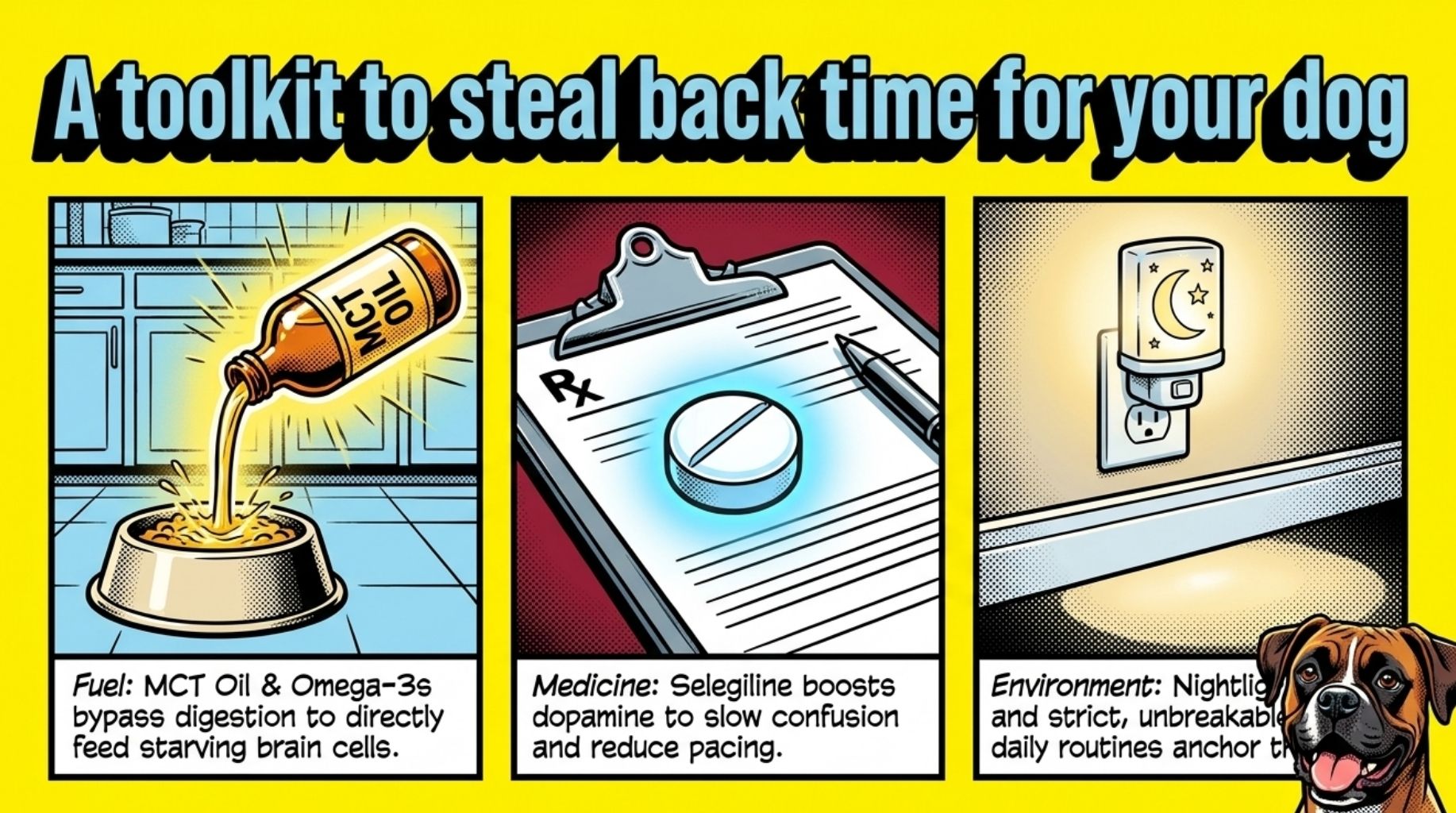
Selegiline remains the only FDA-approved drug for dog dementia. You take it once per day. It works by boosting dopamine levels in the brain. Higher dopamine helps the remaining nerve cells fire faster. About 30% of veterinarians say selegiline works very well for their patients. It does not reverse damage. It slows the confusion and reduces night pacing.
Exciting new drugs are coming very soon. A 2025 study tested a long-acting donepezil depot injection. Donepezil is a human Alzheimer’s drug. The dog version lasted for two full weeks on a single shot. It dramatically reduced dog dementia symptoms like circling and anxiety.
Another Japanese study used N-acetyl-D-mannosamine, or ManNAc. They gave it to five dogs with low cognitive levels for two months. All five dogs improved their ability to learn new maze paths. No side effects appeared. These results suggest a future where we treat dog dementia like diabetes, a chronic but manageable condition. Talk to your vet about clinical trials near you.
How MCT Oil and Omega-3s Calm Dementia Symptoms?
The right diet acts like brain medicine. Medium-chain triglycerides, or MCT oils, feed starving neurons directly. Normal dog food breaks down slowly. MCT oil bypasses the digestion line. It turns into ketones, which the brain uses as emergency fuel.
A 2025 global review of CCD treatments confirmed this benefit clearly. Dogs on MCT-enriched diets showed better memory and focus after just 30 days. Omega-3 fatty acids, found in fish oil, reduce brain inflammation. S-adenosylmethionine, or SAMe, fights oxidative stress inside the nerves. Many senior dog foods now include all three ingredients.
Look for “brain health” on the label. I suggest adding a salmon oil pump to dinner each night. It costs pennies but changes brain chemistry. Owners report that their dog’s dog dementia symptoms improve within two weeks. The pacing stops. The staring ends. The dog starts sleeping through the night again. This is not magic. It is just giving the brain the tools it needs to survive.
Night Lights and Routine That Ease Dog Dementia Symptoms
The physical environment matters as much as medicine. Start with night lights. Place them in every hallway and near the water bowl. A dog that wakes at 3 AM cannot see. They panic and start barking. A soft light shows them the way. Second, create a consistent daily schedule. Feed breakfast at 7 AM sharp. Walk them at 2 PM. Dinner at 6 PM. Dogs with dementia rely on timers, not memory. If you break the routine, they break down.
Use baby gates to block stairs and dangerous areas. A demented dog will walk right off a second-floor landing. They do not feel fear anymore. They just move forward. Provide traction mats on tile floors. Slipping scares them, which triggers more anxiety.
Finally, play white noise or soft classical music at night. The background sound masks sudden outdoor noises that trigger barking episodes. These small changes reduce severe dog dementia symptoms by up to 70% according to owner surveys. Your house becomes a safe harbor, not a confusing maze.
HELPING YOUR DOG AT NIGHT: SUNDOWNING AND SLEEP DISRUPTION FROM DEMENTIA SYMPTOMS
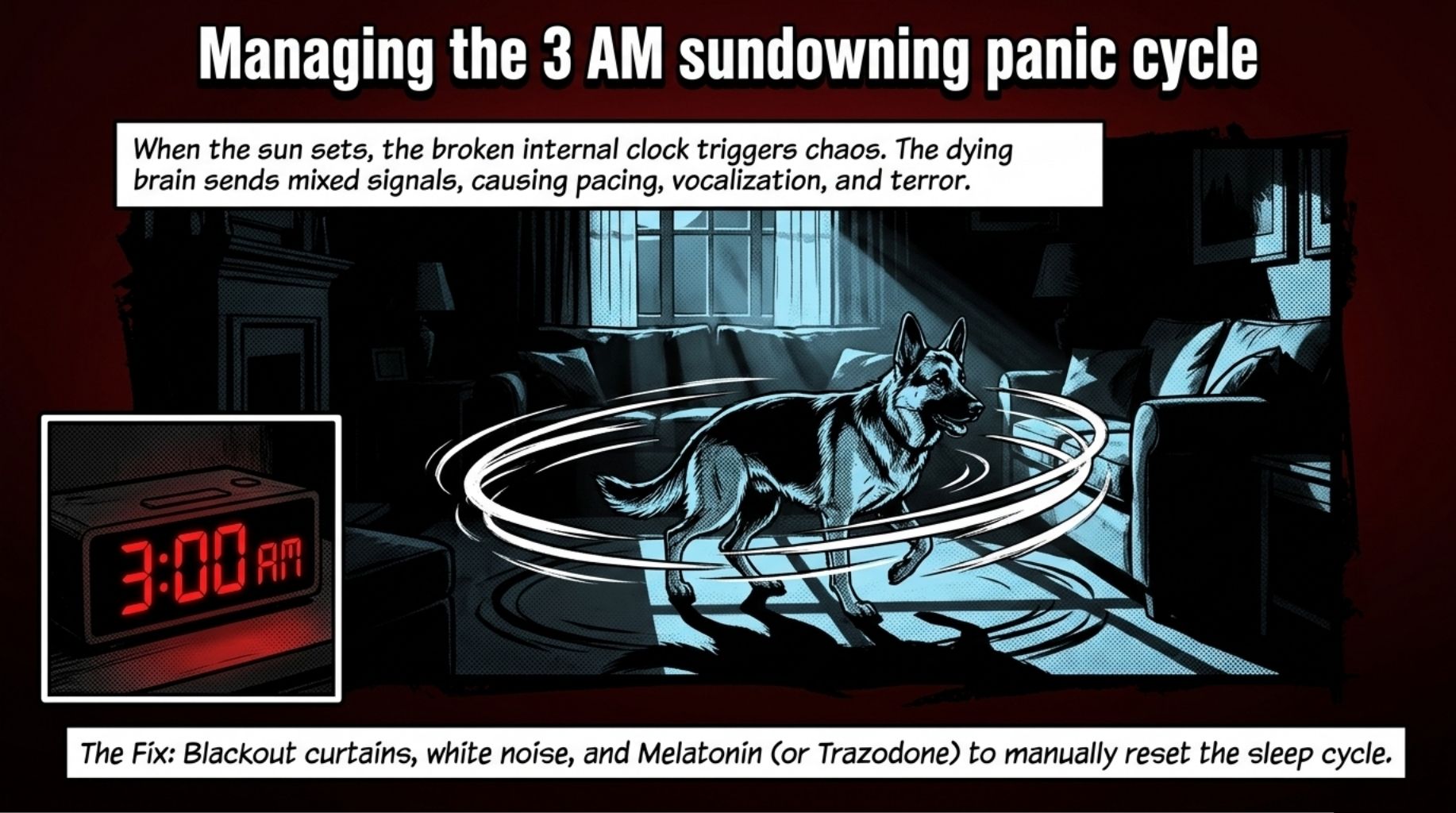
The sunset triggers chaos for many old dogs. Vets call this sundowners syndrome. As the light fades, your dog’s brain loses its anchor. They become restless, vocal, and scared. You lose sleep. They lose peace. Understanding this cycle is the only way to stop the worst dog dementia symptoms.
Why Sundowning Happens and How Melatonin Resets Dog Dementia?
The internal body clock breaks down during CCD. The suprachiasmatic nucleus, the brain’s master clock, loses cells. Without a clock, your dog cannot tell day from night. They might sleep for 20 hours straight. Then they wake up fully alert at midnight. Sundowning specifically occurs when the setting sun changes light patterns.
The dog’s broken eyes send mixed signals to the dying brain. Melatonin is your best weapon here. This natural hormone tells the body when to sleep. Give it one to two hours before bedtime. The correct dose depends on your dog’s weight, so ask your vet first. Melatonin reduces nighttime restlessness by resetting the disrupted cycle.
In severe cases, vets prescribe trazodone or gabapentin. These anxiety drugs calm the panic without heavy sedation. They improve everyone’s quality of life. Do not let your dog suffer through endless nights. Managing dog dementia symptoms requires managing sleep first.
Creating the Perfect Bedroom to Minimize Nighttime Dog Dementia Symptoms
Your dog’s sleeping area should never change. Pick a quiet corner away from windows. Use the same dog bed every single night. Place a worn t-shirt that smells like you inside the bed. Your scent provides deep comfort. Block all outside lights with blackout curtains. Random car headlights trigger barking episodes. Cover crates with a light blanket if your dog likes small spaces.
Set a pre-bed routine and stick to it hard. Take a final potty break at 10 PM sharp. Give a small bedtime treat. Say the same phrase, like “time for bed.” Turn on the white noise machine. Dim the lights slowly over 10 minutes. This wind-down ritual mimics the natural sunset that their brains cannot process.
Over two weeks, the dog dementia symptoms at night will drop drastically. You might still have bad nights, but they become exceptions, not the rule. Be patient. Be consistent. Your dog is not giving you a hard time. They are having a hard time.
When to Call Vet: Severe Sleep-Related Dog Dementia Symptoms
Some cases refuse to respond to home care. Your dog might scream for 8 hours straight. They might injure themselves by walking into sharp furniture. They might stop sleeping entirely, which leads to physical collapse. These severe dog dementia symptoms require medical intervention immediately. Do not feel guilty. This is not a training issue. It is a brain disease.
Your vet can prescribe stronger sleep aids. They might adjust the selegiline dose upward. Some dogs need low-dose anti-psychotics to stop the panic spirals. A recent case study showed that adding melatonin and trazodone together stopped 90% of severe sundowning within three days.
The dog finally rested. The owner finally slept. Everyone felt better. If you have tried everything for two weeks and nothing works, call the clinic. Advanced CCD sometimes requires hospice-level care. That is okay. You are fighting a losing battle against biology. Your job is to keep them comfortable, not to cure them.
QUALITY OF LIFE AND FINAL DECISIONS FOR DOGS WITH DEMENTIA
You will eventually ask the hard question. Is my dog still happy? Should I keep them alive? These answers depend on your personal values and their physical health. Dogs with dementia can still have good days. But you must be honest about the bad days too.
Can a Dog with Severe Dementia Symptoms Still Feel Joy?
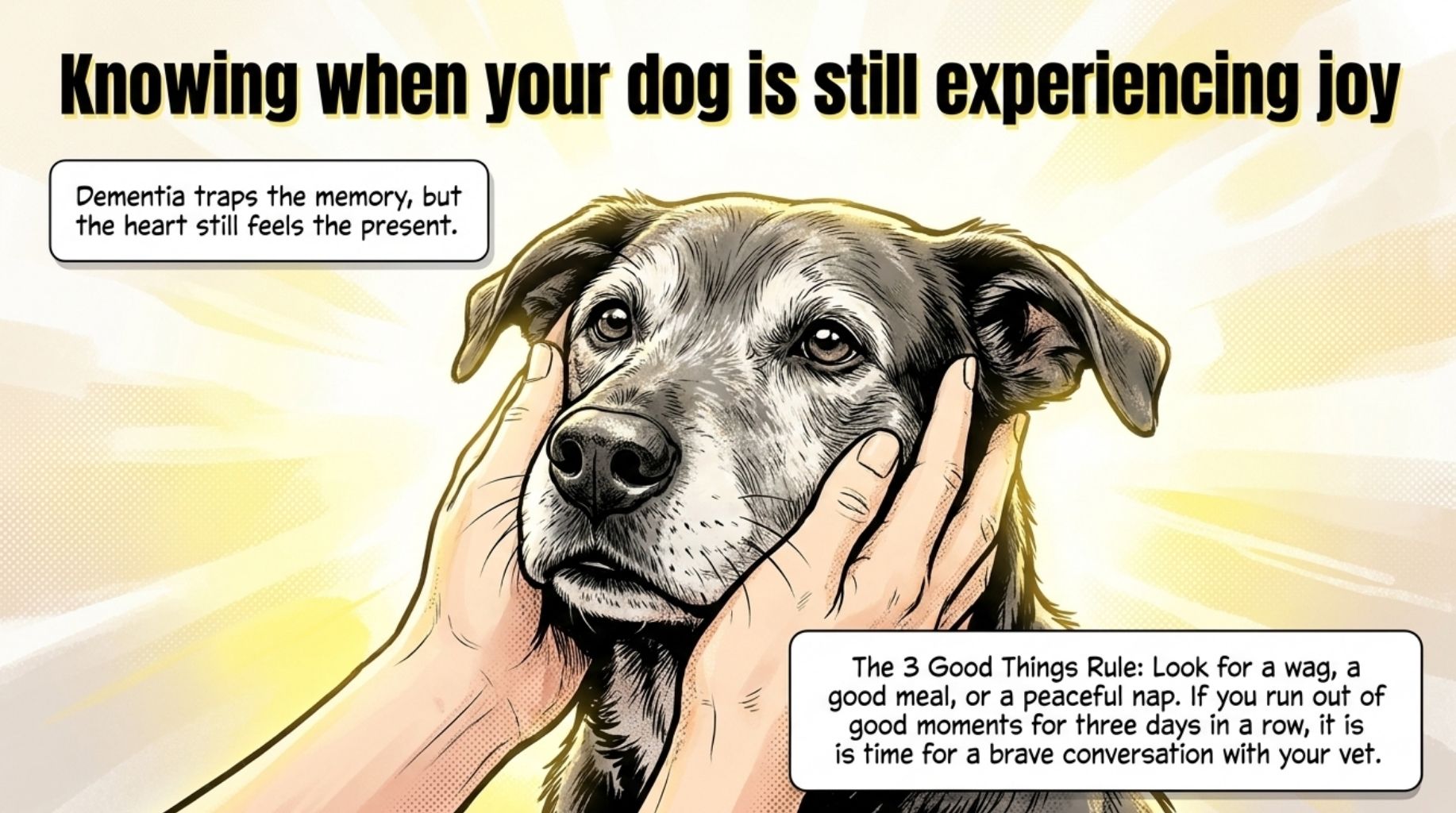
Yes, absolutely. Dementia destroys memory, not emotion. Your dog can still feel pleasure in the present moment. They might forget you five minutes later, but when you pet them right now, they feel love. Watch their tail when you enter the room. A dog that still wags, even occasionally, feels happiness. Look at their eating habits. A dog that still licks the bowl enjoys food.
However, fear also lives in the present. A dog that screams and bites due to confusion feels terror, not joy. If your dog spends 80% of the day pacing or staring blankly, their quality of life is low. If they still respond to treats, toys, or gentle touch, they have something to live for.
I suggest the “3 Good Things” rule. Every day, count three moments where your dog seemed relaxed or happy. If you run out of good moments for three days in a row, it is time for a serious talk with the vet. Dog dementia symptoms do not erase the soul. They just trap it.
The Fair Question: Should You Keep a Dog with Dementia Alive?
This question has no single right answer. Some owners keep dogs going for years with CCD. Others decide to let go early. Neither choice is wrong. Look at the body, not just the brain. If your dog still eats well, walks without pain, and sleeps through some nights, keep going. If they have stopped eating, lost massive weight, or developed bedsores, their body is quitting.
A dog with dementia does not understand why they feel sick. They just suffer. Seizures, constant trembling, or self-mutilation are absolute red flags. Do not let your dog live in agony because you feel guilty. The most loving act you can offer is a peaceful end.
Research shows that dog dementia symptoms themselves do not shorten life span. Dogs die from the body failing, not the mind forgetting. But a dog stuck in a corner for 10 hours a day is not living. They are existing. Be brave enough to see the difference. Talk to your vet about palliative care if you feel unsure.
How to Know It Is Time: The Dog Dementia Scale for End-of-Life
Use the CADES scale again, but this time for quality of life. Score your dog on their ability to eat, walk, and recognize you. If the score drops below 20, the disease has won. Most owners wait too long out of love. Do not let your dog suffer a slow, scary death at home. Vets now offer in-home euthanasia specifically for senior dogs with dementia. The dog passes in their own bed, with your smell around them.
Look for complete loss of bladder control. If your dog lies in urine for hours without caring, their mind has checked out. Also if they refuse all food for 48 hours, including meat and cheese, their hunger drive died. If they cannot stand up without falling over, their body quit.
These final dog dementia symptoms signal the end. Call the vet and schedule the appointment for tomorrow. Then spend the final hours feeding them chocolate. It will not hurt them now. It will only bring them joy. You gave them a great life. Now give them a great death.
LATEST RESEARCH AND SCIENCE STUDIES ON DOG DEMENTIA
Researchers are working harder than ever to understand the dog brain.
Breakthrough In Blood Testing and Mapping of White Matter Decay in Living Dogs
In 2025, a huge breakthrough appeared in blood testing. Scientists identified that amyloid-beta proteins in the blood drop sharply as dementia worsens. This discovery allows vets to track disease progression without expensive brain scans. Another study used DTI brain scans to map white matter decay in living dogs. They confirmed that CCD physically shrinks the hippocampus just like in humans.
First International Guidelines for CCD And the Success of The Chinese Research Team
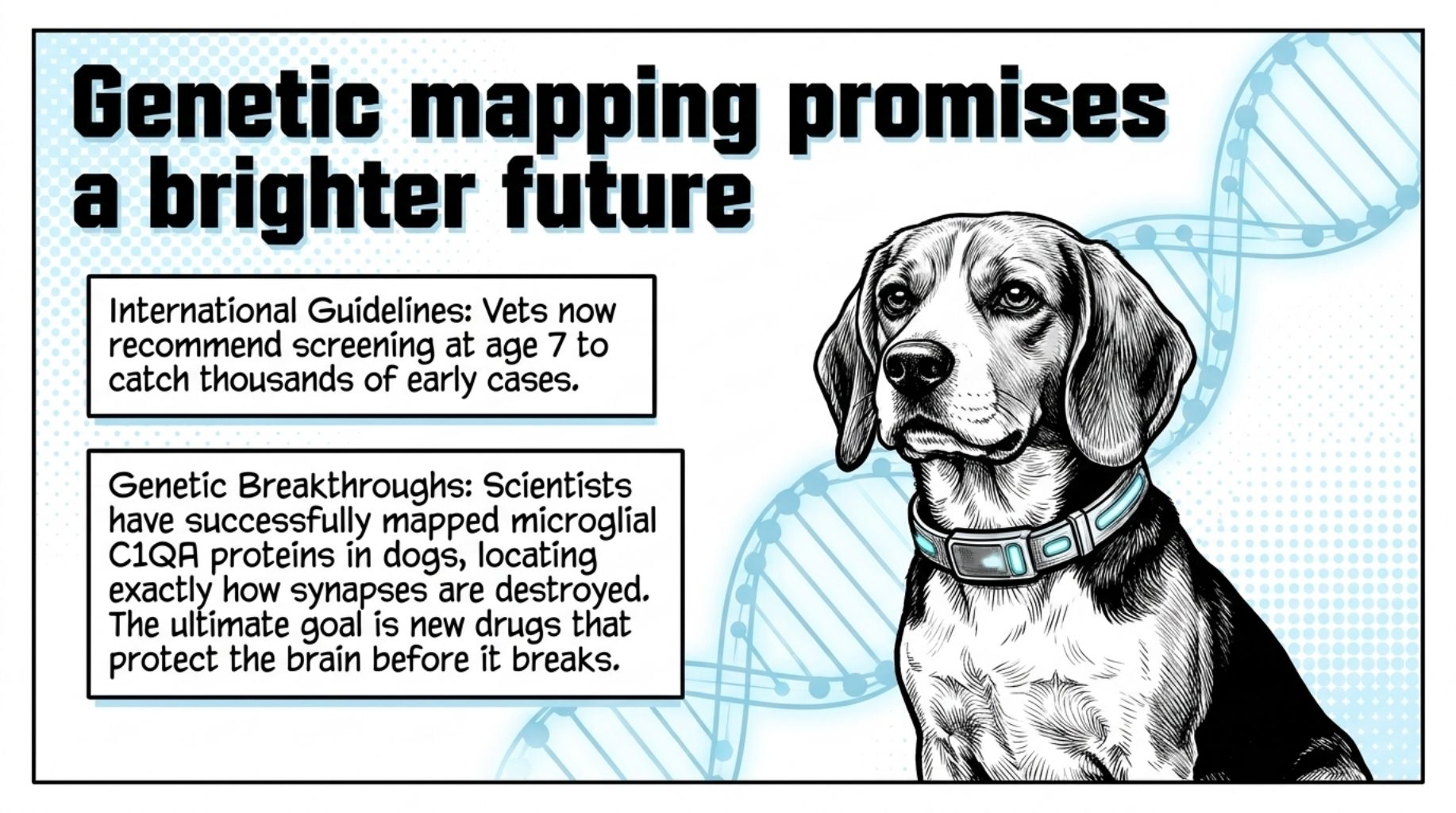
A separate working group published the first international guidelines for CCD. They recommended starting senior dog surveys at age 7, not age 10 as previously thought. This change alone will catch thousands of early cases.
Finally, a Chinese research team mapped the genetic pathways of CCD in beagle models. They found specific interactions between microglial C1QA proteins and neuronal CRT signals. This interaction physically damages the synapses, causing the dog dementia symptoms we see at home. Understanding this link opens the door for drugs that protect those synapses.
“The future looks bright, even if today feels dark!“
FREQUENTLY ASKED QUESTIONS (FAQ)