
You know the feeling. You are half asleep, and a cold, wet snout presses against your arm. This is the classic dog wake-up call that will leave you to wonder, why the dogs’ noses are wet in the first place. That damp little nub is more than just a funny feature on their face. It serves as a high-tech sensor and a window into their overall well-being. Let’s explore the fascinating story hiding right under your fingertips.
“You wake up to a cold, wet nose pressing against your hand, but have you ever stopped to ask why it feels that way, and what that moisture really means for your dog’s health and happiness?”
Quick Summary About Why Dogs’ Noses Are Wet
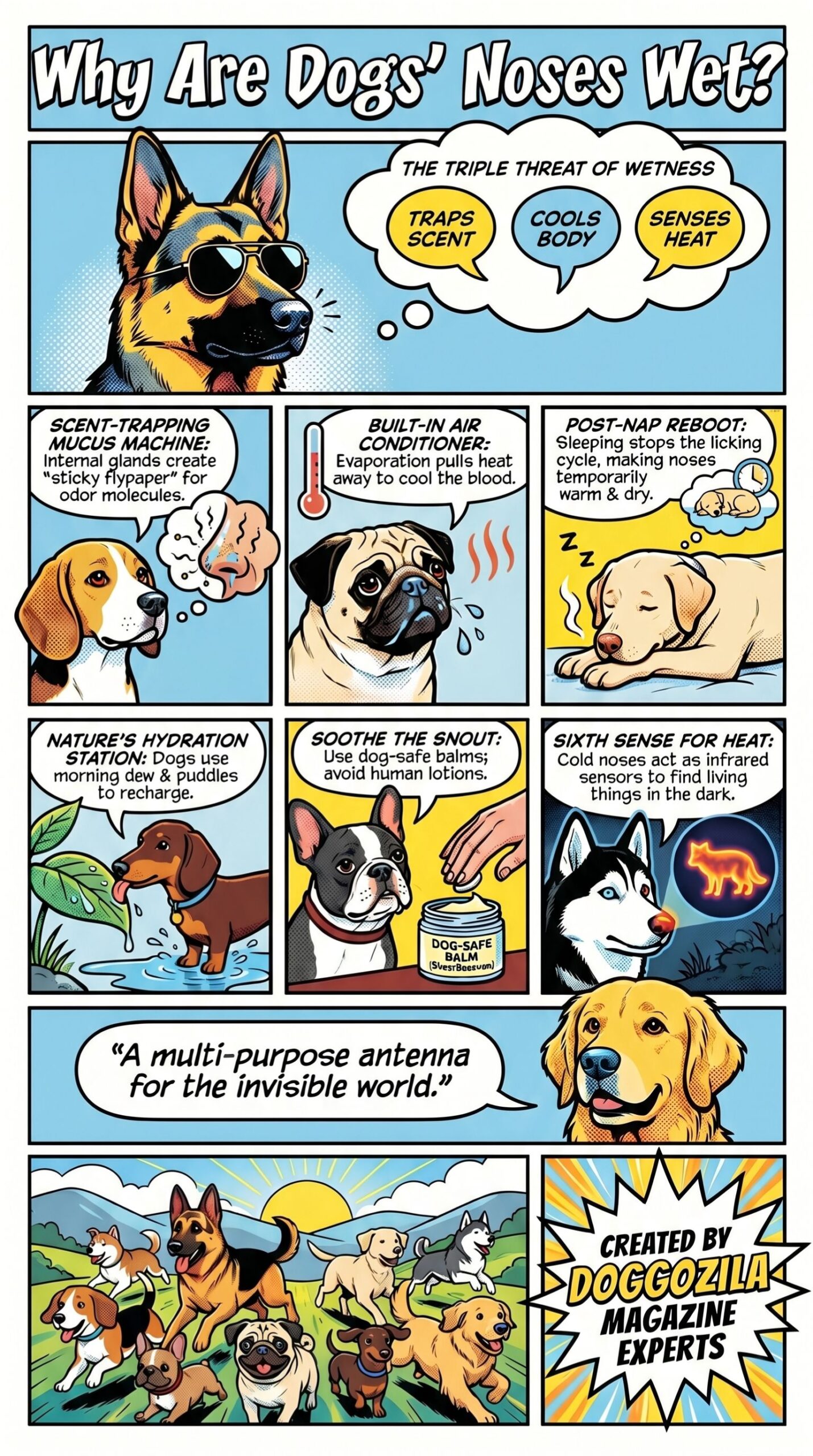
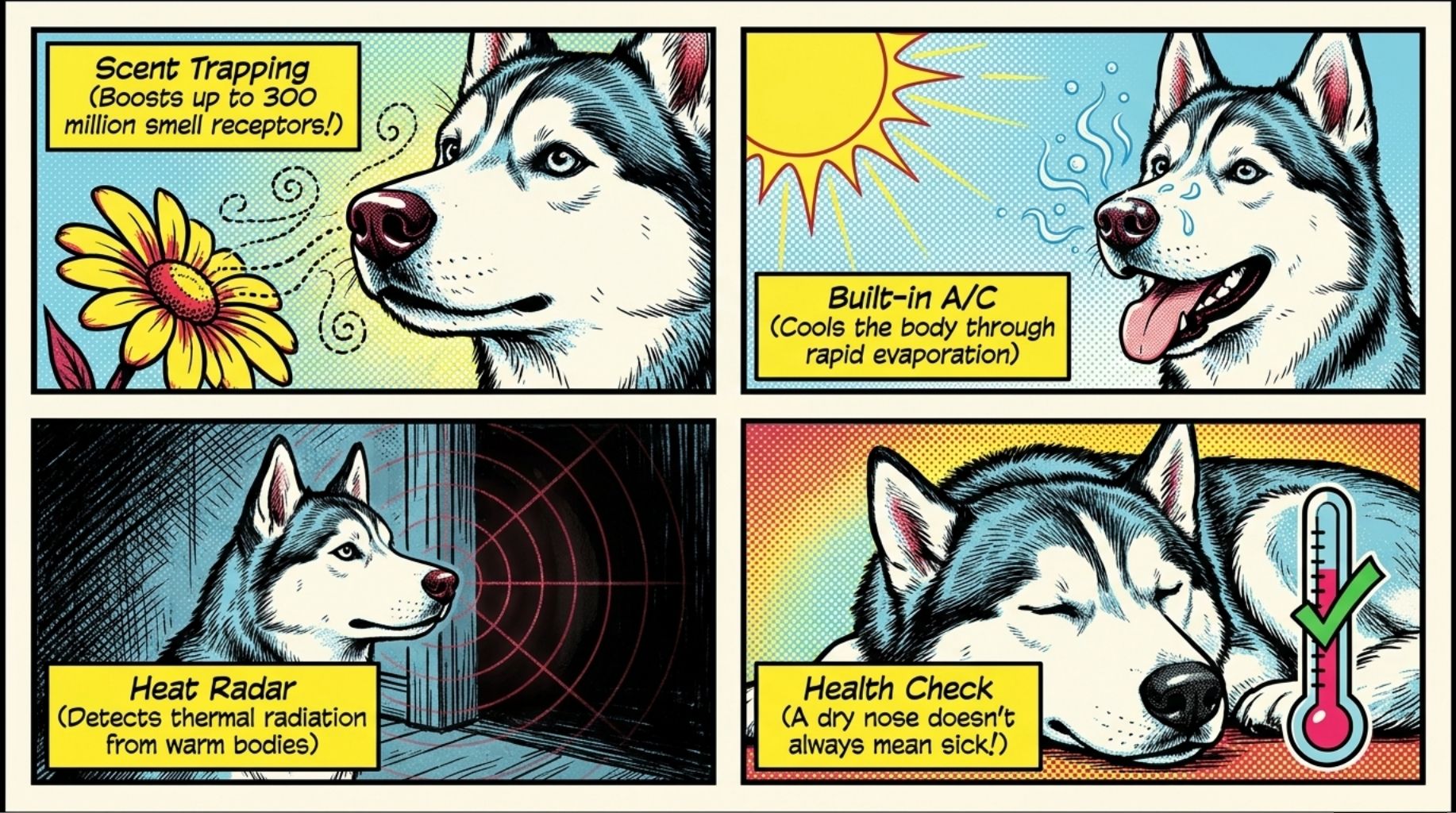
A dog’s wet nose is not just a random quirk. It serves three major purposes, trapping scent particles for a supercharged sense of smell, cooling the body through evaporation, and sharing social signals with other dogs. Special glands inside the nose produce moisture, and dogs also lick their noses constantly to keep them wet. While a dry nose alone is rarely a sign of illness, products like nose balms and coconut oil can help maintain healthy moisture. Recent science shows that a wet, cold nose can even detect body heat from a distance, an ancient evolutionary superpower.
THE SCIENCE THAT EXPLAINS WHY ARE DOGS’ NOSES WET
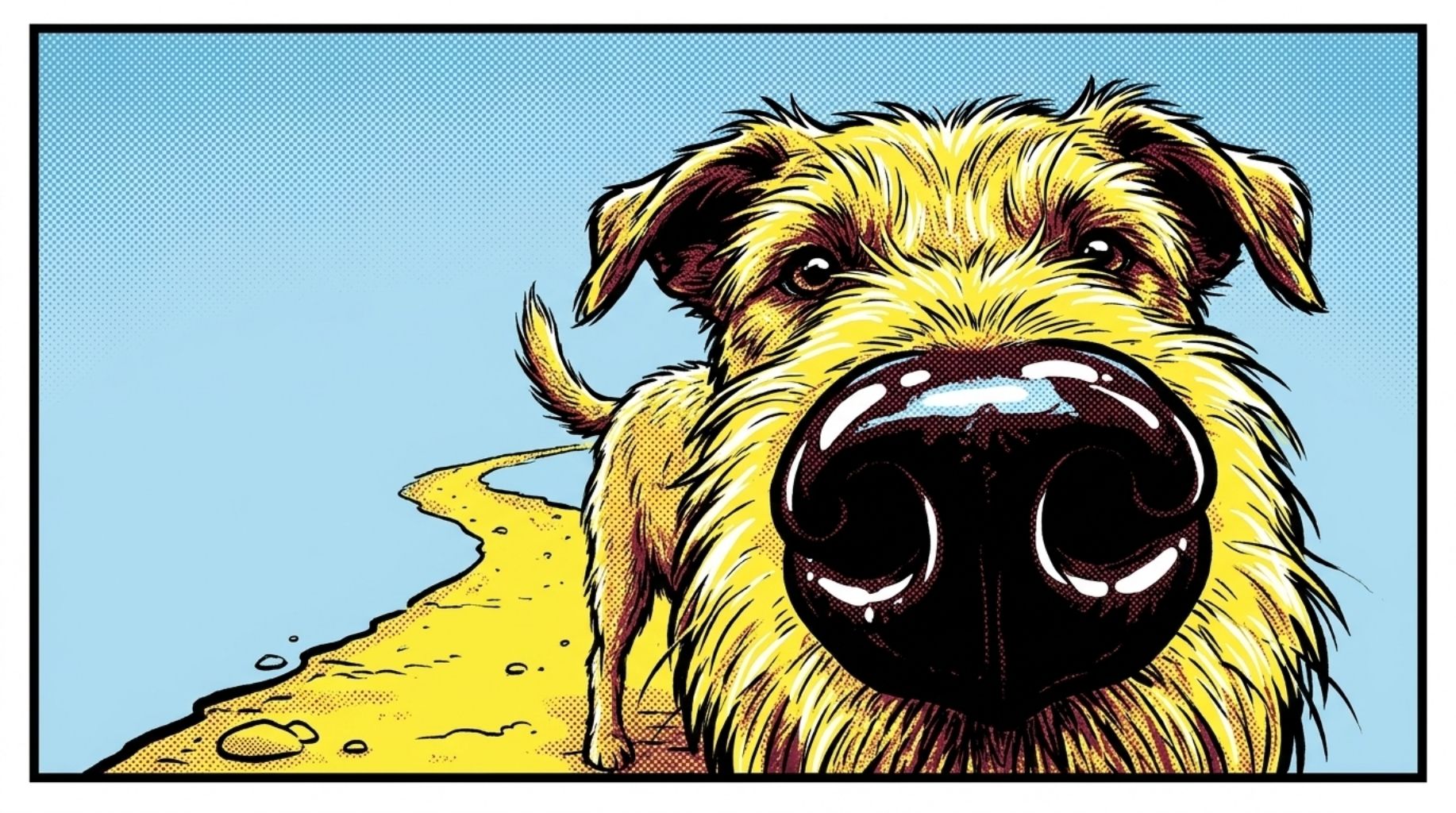
A dog’s nose works like a finely tuned machine that needs constant moisture. Special glands inside the nasal lining produce a thin layer of mucus all day long. This fluid is the secret weapon that turns a simple sniff into a detailed chemical report. When people ask why are dogs’ noses wet, the answer lies in this incredible biological design. Without this moisture, their superpower of smell would be severely limited.
Key Points & Takeaways to Remember
1. Why Are Dogs’ Noses Wet? The Short and Simple Answer
A wet nose traps scent particles, giving dogs up to 300 million smell receptors a huge advantage. Special glands and constant licking keep the nose moist, and a dry nose alone is not a reliable sign of sickness.
2. What Products Help Keep a Dog’s Nose Healthy and Moist?
Dog-safe nose balms (with shea butter or beeswax) and natural oils like coconut oil are excellent for soothing dry, cracked snouts. If you see bleeding or colored discharge, see a vet for medicated options.
3. What Is the Main Function of a Wet Dog Nose?
The three main functions are: enhanced scent detection, body cooling through evaporative moisture loss, and chemical communication via pheromones picked up by the wet surface.
4. What Causes a Dog’s Nose to Be Moist?
Internal mucus glands produce baseline moisture. Frequent licking adds extra wetness and moves scent particles to the vomeronasal organ. Environmental factors like humidity and sleep also cause daily moisture changes.
5. Latest Research and Science Studies on the Canine Nose
A 2020 study proved dogs sense weak thermal radiation (body heat) using their cold, wet noses. A 2024 study showed nose groove patterns (“rhinoglyphics”) help retain moisture. A 2025 study found head dunking in water is a safe way to clean and rehydrate a dog’s nose.
6. Frequently Asked Questions About Dog Noses
Key answers: A dry nose is normal after sleep. Dehydration signs include sticky gums and lethargy. Rehydrate with water, coconut oil, or a humidifier. See a vet for thick discharge or bleeding. Rhinoscopy is available for serious nasal issues.
The Tiny Mucus Glands That Do the Heavy Lifting
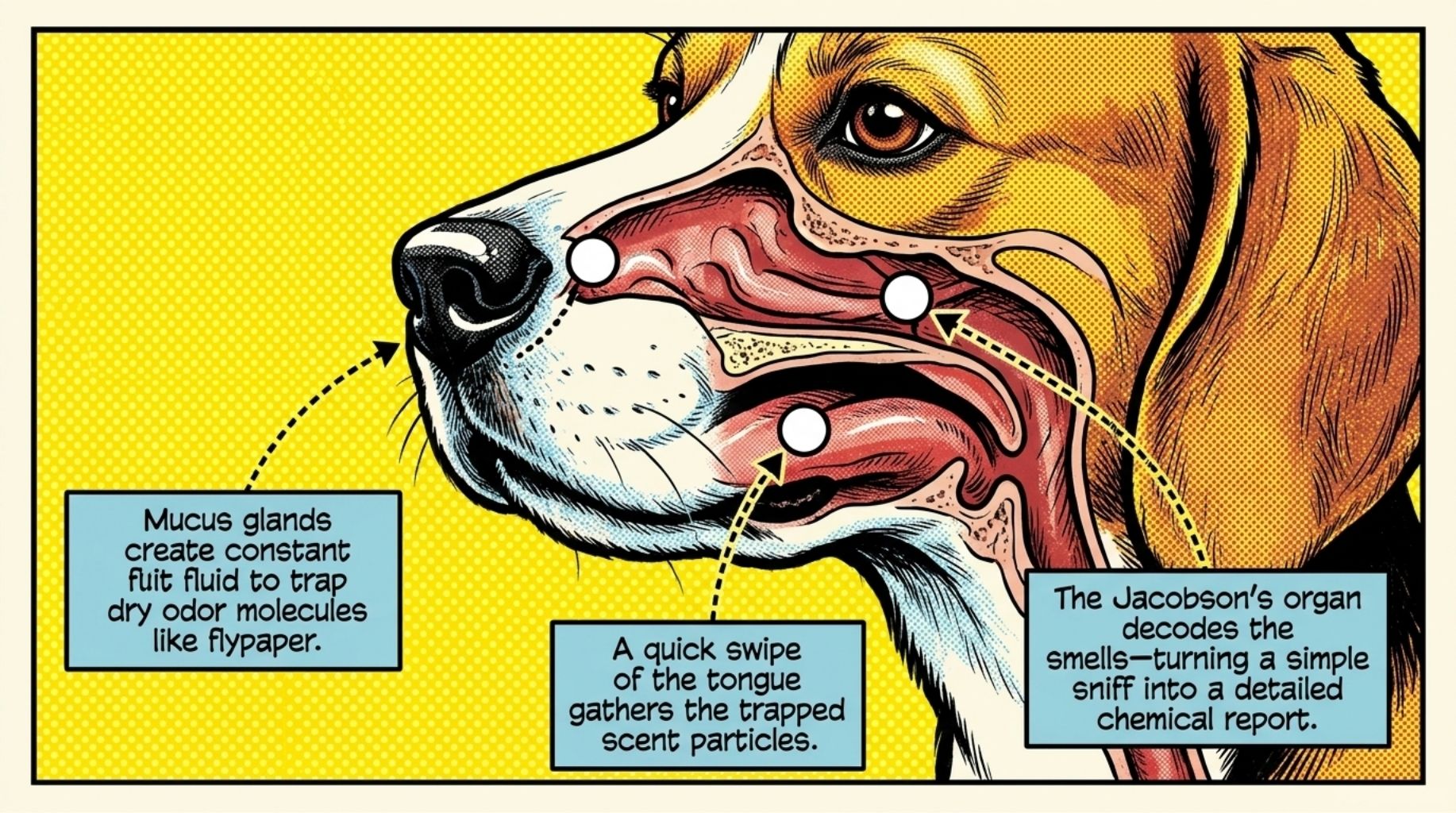
Deep inside the nasal passages, special glands work overtime to keep things damp. They produce a clear, watery fluid that coats the entire surface of the nose. This fluid acts like sticky flypaper for scent particles floating in the breeze. It traps odors and holds them steady for analysis.
Understanding why are dogs’ noses wet starts with appreciating these tiny factories. They ensure the sniffer stays ready for action every second of the day. Without this constant supply, the nose would dry out and lose its grip on smells.
Why Licking Is the Ultimate Scent Decoder Ring?
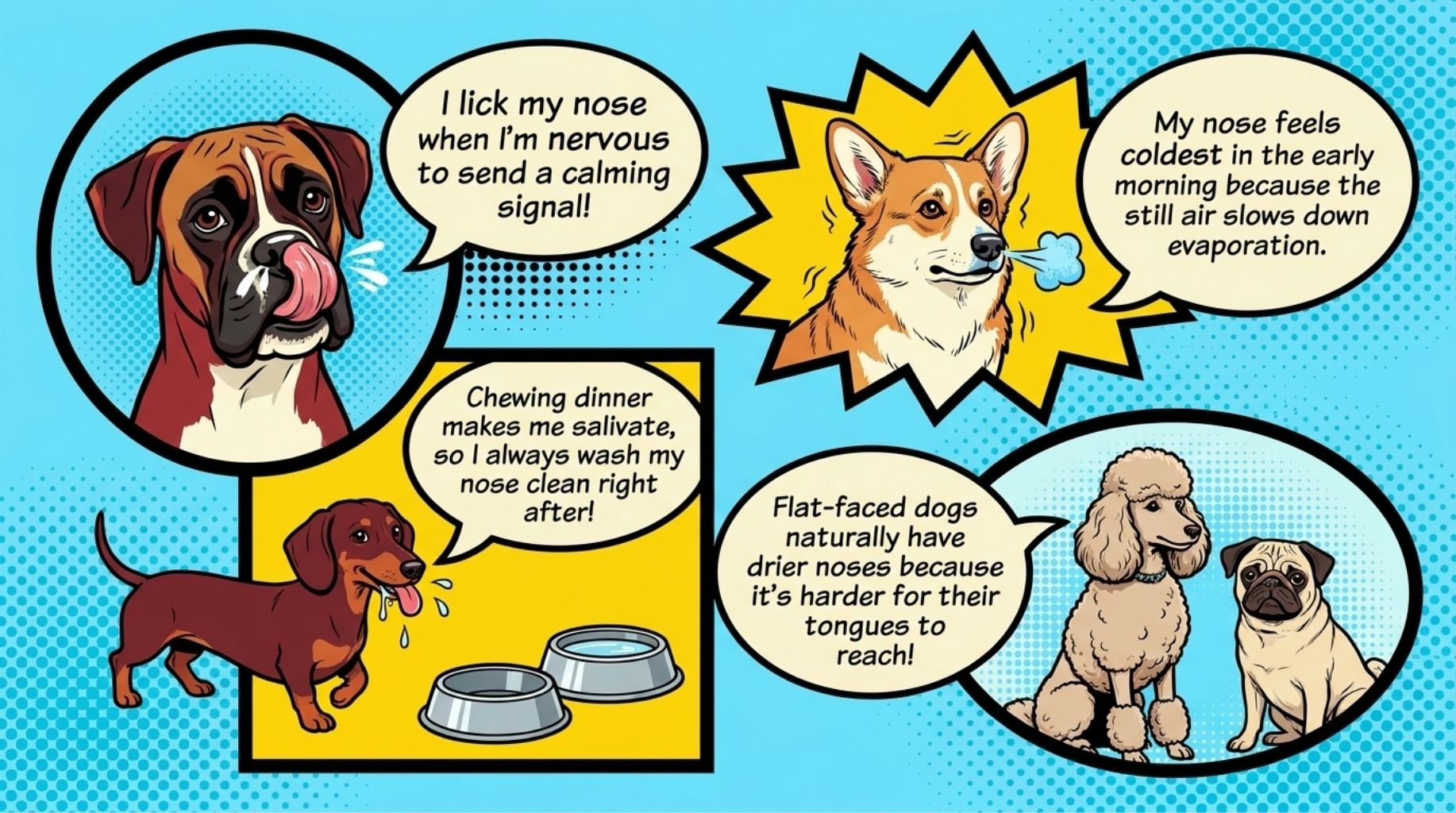
You probably think your dog licks their nose just to wipe off cookie crumbs. While cleaning is part of the job, the real reason goes much deeper. That quick swipe of the tongue transfers trapped scent particles from the nose into the mouth.
Once inside, a special organ called the Jacobson’s organ decodes the smells. This process is a key part of why are dogs’ noses wet and functional. The lick turns a simple sniff into a detailed story about the environment. It allows them to taste the air and understand who walked by moments ago.
How a Wet Sniffer Traps More Than Just Smells?
The damp surface of the nose helps dissolve dry odor molecules from the air. This makes the scents much easier for the nerve endings to detect and process. Recent studies have revealed another layer to why are dogs’ noses wet that surprises even scientists.
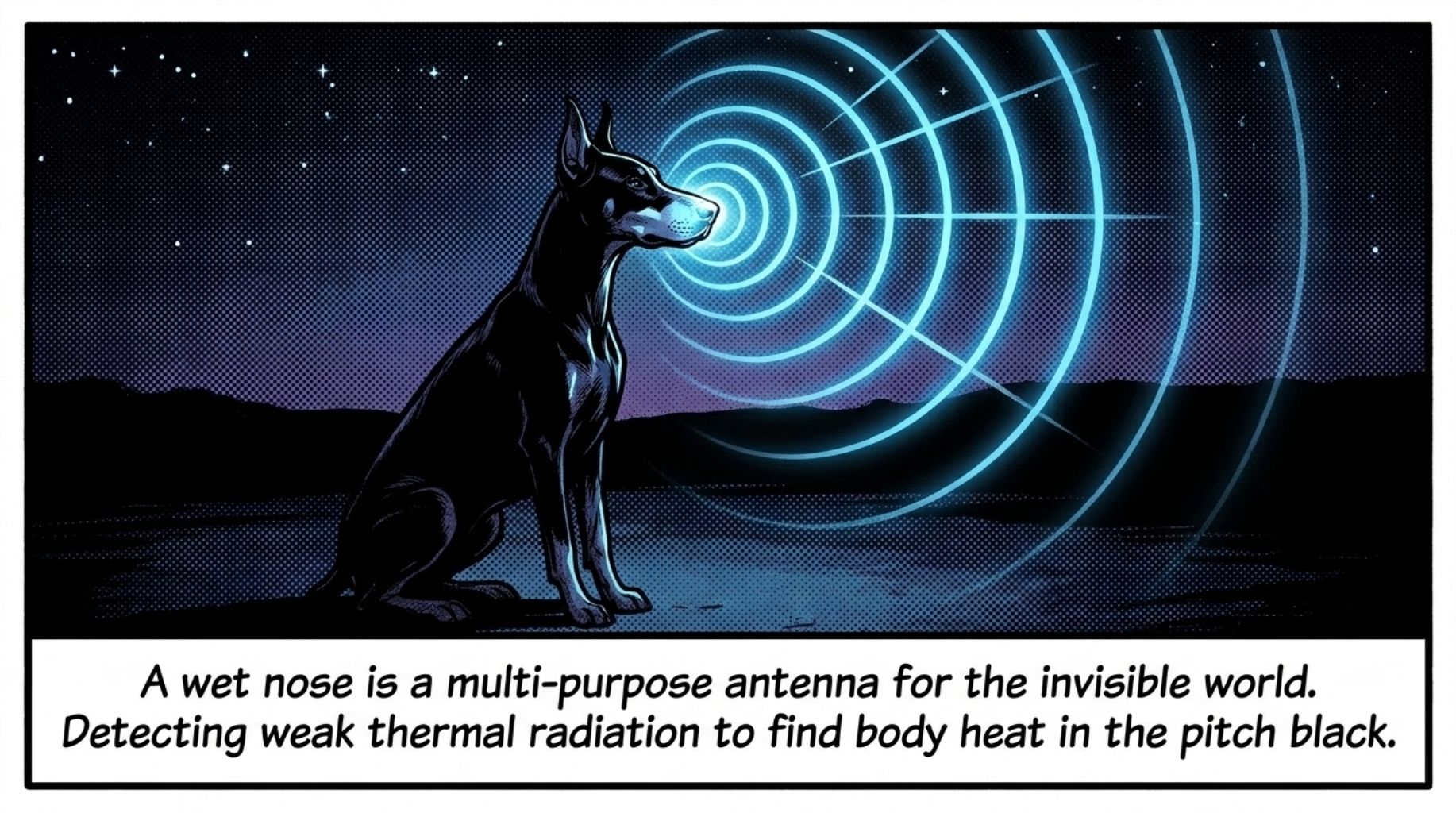
The moisture helps the nose detect faint sources of heat radiating from living things. This means your dog can likely find you in the dark by sensing your body warmth. A wet nose is a multi-purpose antenna for the invisible world. It combines scent detection with thermal sensing for a complete picture.
THE REAL REASONS WHY ARE DOGS’ NOSES WET AND COOL
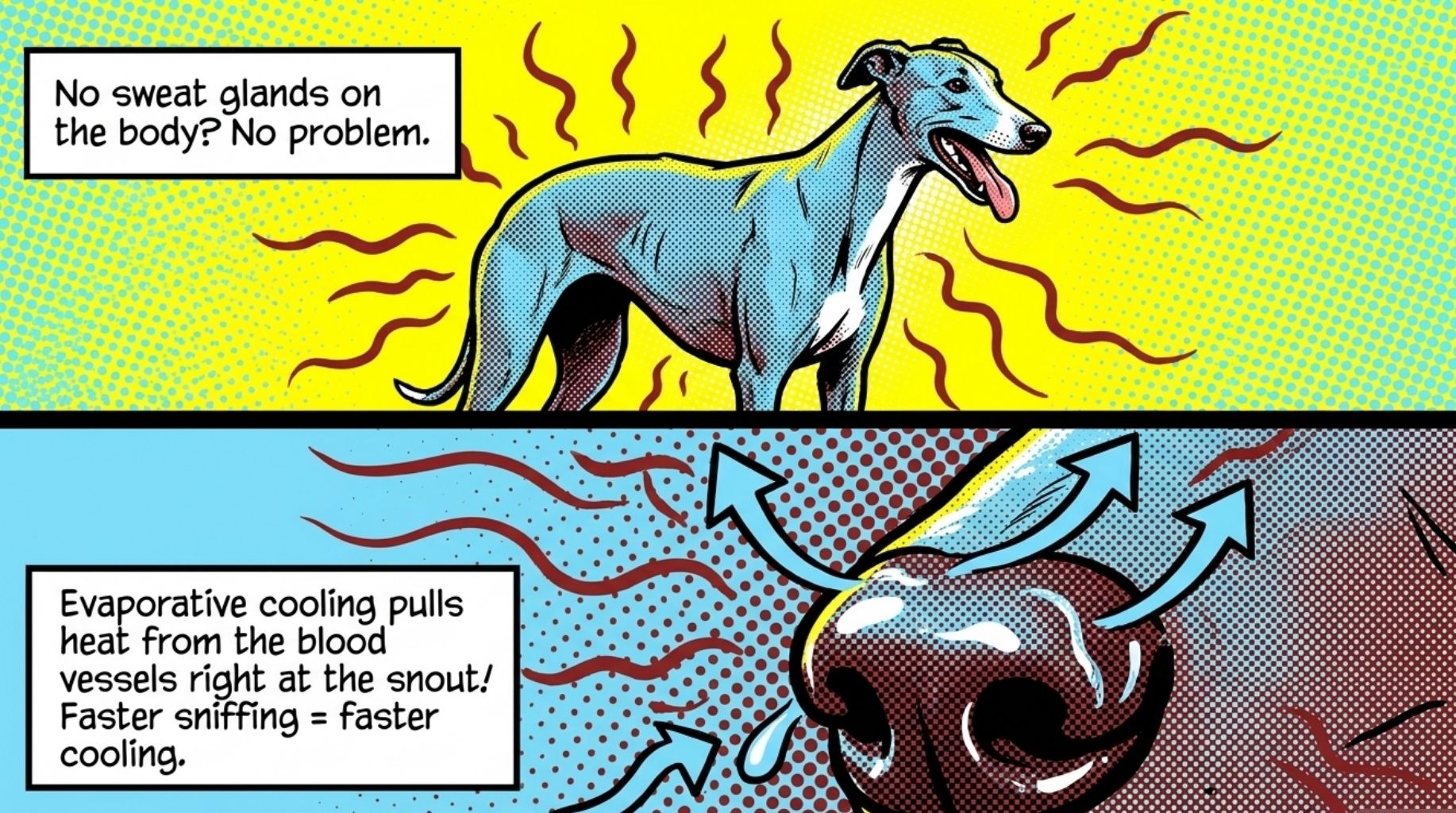
That chilly sensation you feel when you touch their snout is not just from the water. It comes from a natural process called evaporative cooling working on the surface. As the moisture evaporates into the air, it pulls heat away from the skin and blood vessels. This creates a small but powerful cooling system right on the tip of their face. This cooling effect is a major part of why are dogs’ noses wet even on hot summer days.
The Built-In Air Conditioner on Your Dog’s Face
Dogs do not have sweat glands all over their bodies the way humans do. Most of their sweat glands are located on their paw pads and, you guessed it, on their nose. When their body temperature rises, those nose glands release a bit of extra fluid.
As the liquid turns to vapor, it cools the blood circulating just beneath the skin. This process helps explain why are dogs’ noses wet as a form of temperature control. That cooled blood then travels back to help lower the overall body heat. It is a miniature air conditioner that runs on water and evaporation.
Why Are Dogs’ Noses Wet and Cold While They Sniff?
When your dog is actively sniffing during a walk, their nose feels extra chilly. This happens because they are pulling more air across the moist surface. The faster the air moves, the quicker the moisture evaporates from the skin.
This rapid evaporation pulls more heat away and makes the nose feel cold. It is another clue to why are dogs’ noses wet and how they maintain sensory sharpness. A cold nose actually means the scent detection system is in high gear. The coolness keeps the nerve endings sensitive and alert to changes.
What Science Says About the Temperature of a Snout
Researchers from Sweden and Hungary have uncovered an amazing hidden talent related to nose temperature. They found that a dog’s cold rhinarium, the naked tip of the nose, detects weak thermal radiation. In simpler terms, your dog can feel the body heat of a nearby animal from a distance.
This is a fascinating new chapter in the story of why are dogs’ noses wet and chilly. This skill would have helped their wild ancestors find hidden prey in tall grass. Today, it might help a mother dog locate her tiny puppies in a dark den. It proves that nose is more than just a smell machine.
THE MYSTERY WHY DOGS’ NOSES ARE WET AFTER NAPS
It is a moment that causes many new dog owners to worry. Your furry friend wakes up from a long snooze, and their nose feels dry and warm. You might immediately wonder if something is wrong with their health. Before you panic and call the vet, understand that this is perfectly normal behavior. The change simply comes down to the difference between being awake and being asleep.
The Simple Reason a Sleeping Dog Has a Dry Nose
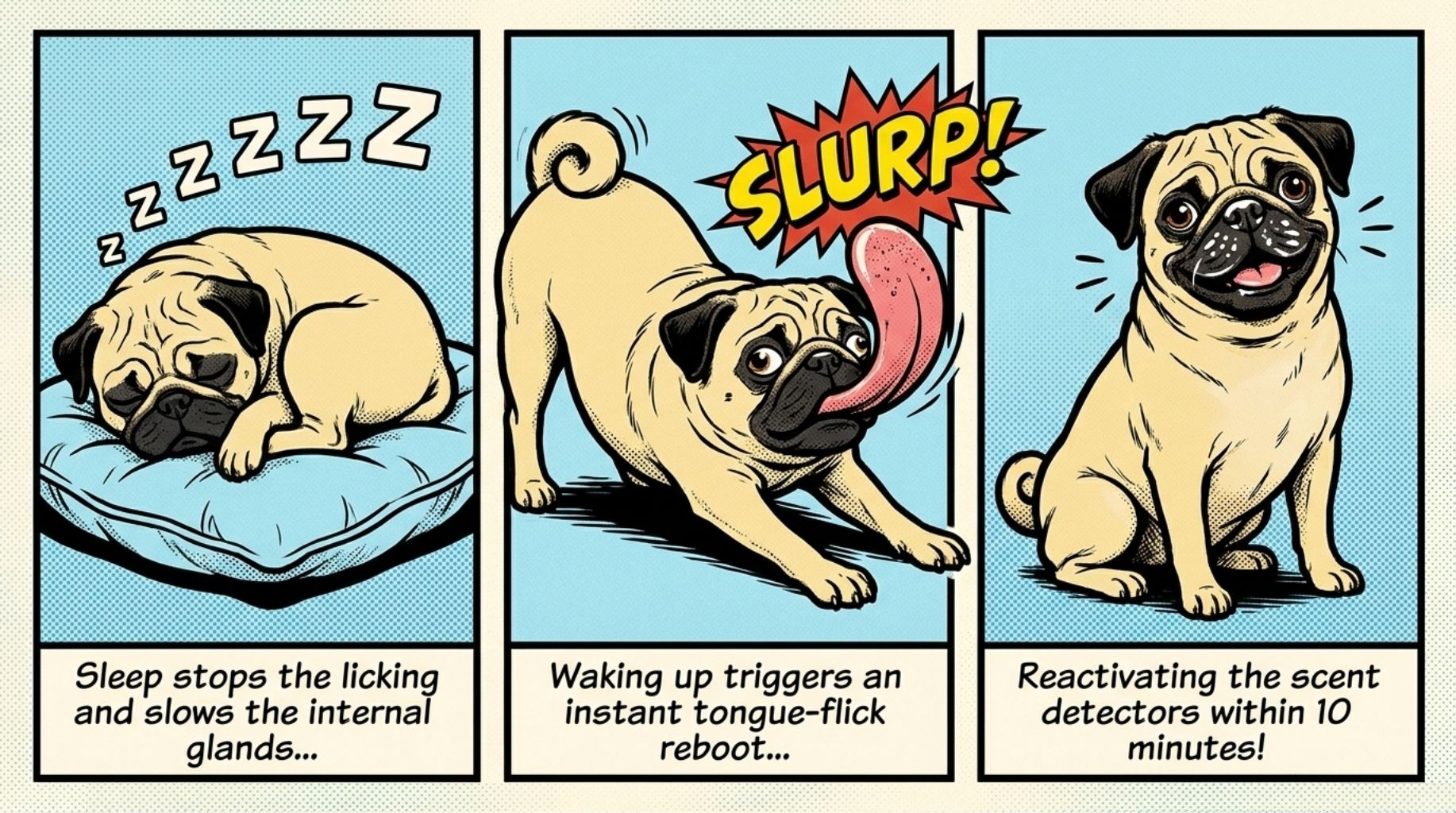
When your dog drifts off into a deep sleep, they stop performing their usual waking habits. The most important habit they stop is licking their nose to keep it coated. Without that tongue action, the surface moisture evaporates and leaves the nose dry.
The internal glands also slow down production just a tiny bit during rest. This temporary dryness is part of the answer to why are dogs’ noses wet only when they are alert. Body heat from being curled up under a blanket adds to the warm sensation. The moment they wake up and stretch, the moisture cycle starts again.
Why Are Dogs’ Noses Wet Again After Waking Up?
Watch your dog closely in the first minute after they open their eyes from a nap. You will almost always see that signature tongue flick across the snout. This is their instinctive way of rebooting the scent detection system. They know on some level that a dry nose is not as effective for smelling.
The lick spreads fresh saliva and reactivates the glands that produce mucus. This is exactly why are dogs’ noses wet within about ten minutes of being awake. It is a self-maintenance routine that happens without any thought.
Does a Dry Nose Mean Your Pup Is Under the Weather?
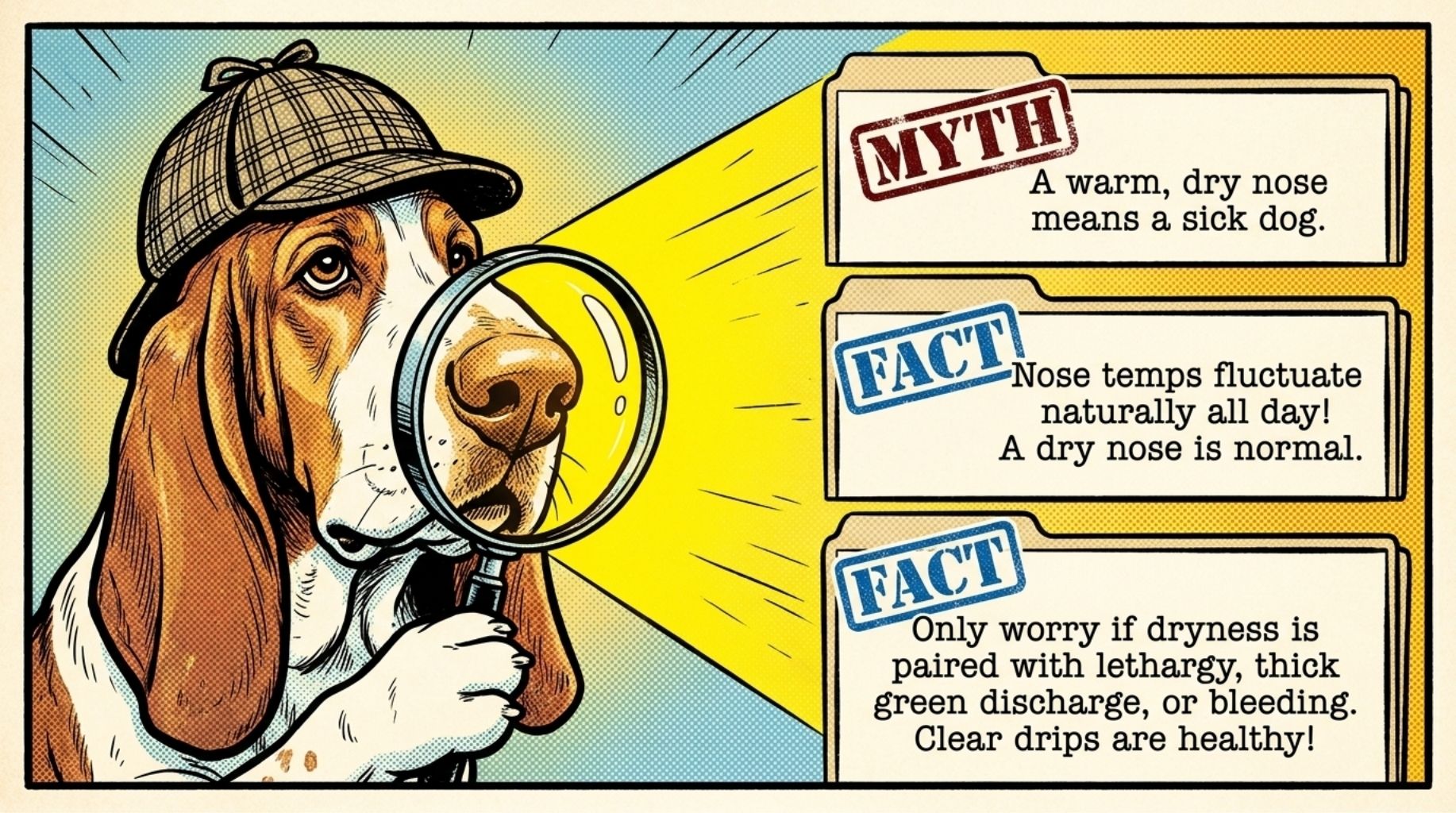
This is the single most persistent myth in the world of dog care. A warm, dry nose does not automatically mean your dog is sick or feverish. It is a completely normal fluctuation based on sleep cycles, room humidity, and weather.
You should only be concerned if the dryness comes with cracked skin, bleeding, or colored discharge. If your dog is eating well and wagging their tail, that dry nose is just a sign of a good rest. Focus on the whole dog and their behavior instead of just the snout tip. This will give you a much more accurate picture of their health.
EVERYDAY FACTORS THAT CHANGE YOUR DOG’S NOSE WETNESS
The world around your dog plays a huge role in how damp their nose feels. You might not notice the dry air from the furnace, but your dog’s snout certainly does. A day spent running through tall, wet grass will leave them with a dripping nose. Their sniffer is like a tiny weather station reacting to the environment. Understanding these outside factors helps you appreciate why are dogs’ noses wet at different times of the day.
How Home Heating and Cold Weather Dry Out the Snout?
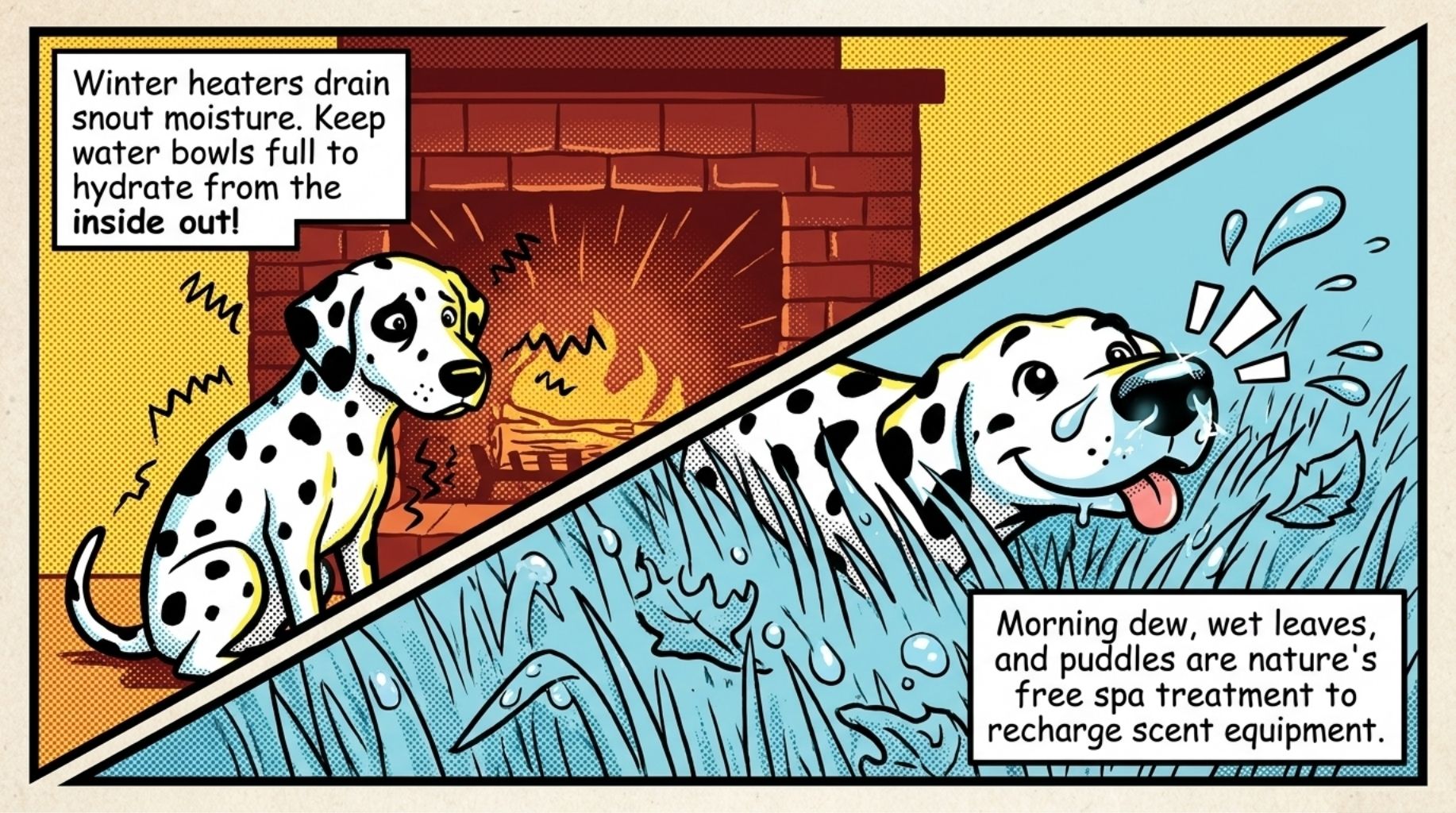
Winter can be a challenging season for maintaining a healthy, moist dog nose. Forced air furnaces and cozy fireplaces blast hot, dry air throughout the house. This dry air sucks moisture right out of any exposed skin, including the nose leather. Going outside into the cold winter wind can also chap and dry the delicate tissue.
You might notice the nose looks flaky or feels a bit rough during these cold months. This environmental change is a big part of why are dogs’ noses wet more in summer than winter. A small humidifier in the living room can bring great relief to both you and your pup.
The Role of Fresh Water in Nose Hydration
You cannot expect a well-lubricated snout without a well-hydrated body system. Water serves as the main ingredient in that special scent-trapping mucus. If your dog skips a few trips to the water bowl, their body conserves fluid.
One of the first places this conservation shows up is the nose surface. The nose may become slightly tacky or feel less slippery than usual. This internal connection is central to why are dogs’ noses wet and how to keep them healthy. Always ensure fresh, clean water is available to encourage regular drinking.
How Dogs Use Grass and Puddles to Re-Wet Their Sniffer?
Dogs are absolute experts at finding external sources of nose moisture. A simple morning walk through a lawn covered in morning dew is like a free spa treatment. They will happily plunge their face into wet leaves and muddy puddles without hesitation.
This behavior is not just about being messy or playful. It is a practical way to recharge their scent equipment using nature’s resources. The outdoors provides a constant supply of dew and rain to help keep the snout damp. This explains why are dogs’ noses wet even when they haven’t licked them in a while.
HOW TO KEEP A DOG’S NOSE HEALTHY AND MOISTURIZED?
Sometimes, despite all their licking and puddle diving, a dog’s nose needs a little human help. If the air inside your home is bone dry, you might see some cracking or flaking. There are safe and effective ways to provide relief without causing any harm. The most important rule is to use only products that are safe for dogs to ingest. You never want to apply something to that snout that could make them sick.
Safe Dog Nose Balms and Natural Home Solutions
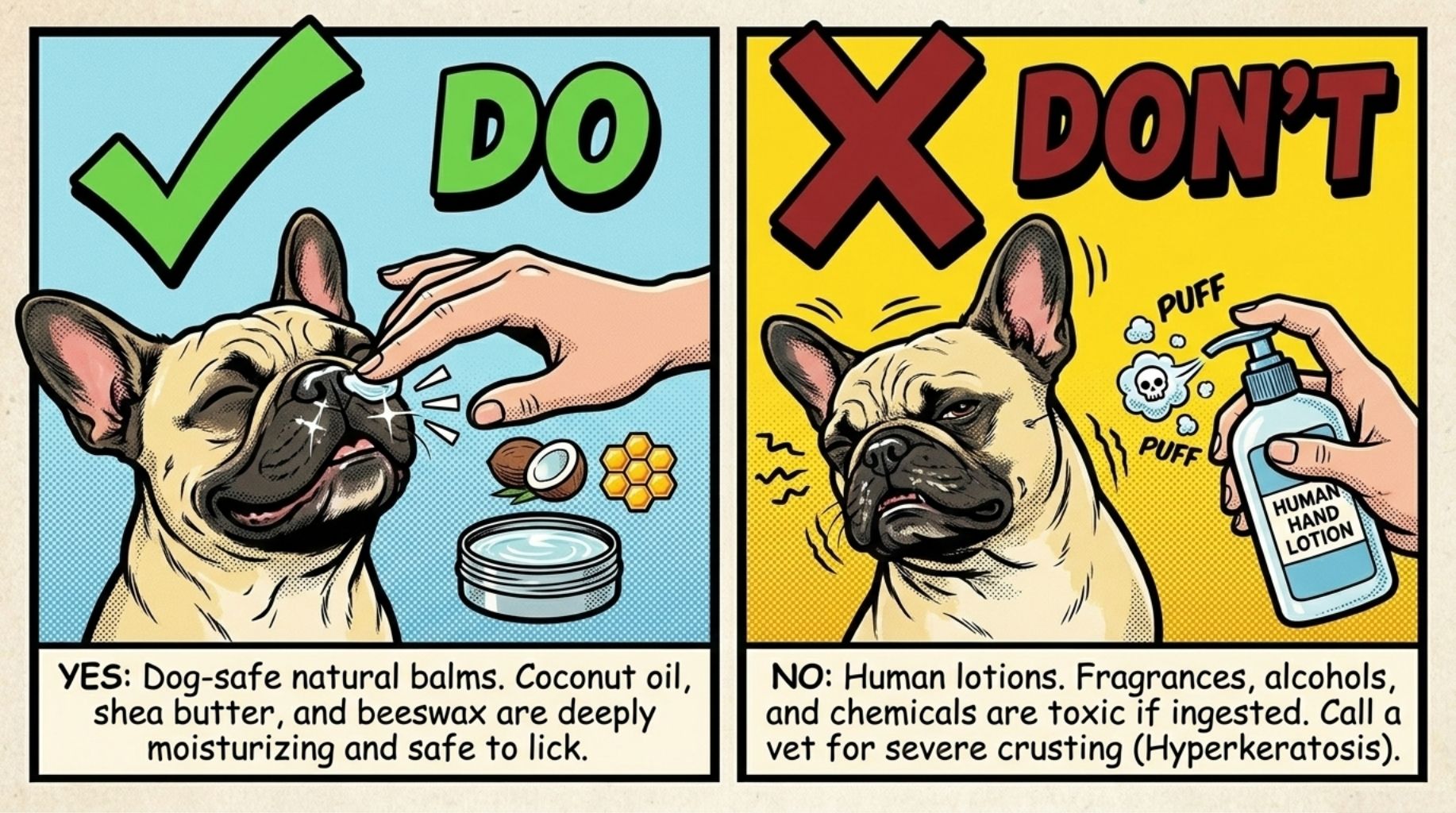
If you notice light flaking or a rough texture, a snout balm can work wonders. Look for products made with simple ingredients like shea butter, coconut oil, and beeswax. These ingredients are deeply moisturizing and completely safe if your dog licks them off.
You can also use a tiny dab of pure coconut oil right from your own kitchen pantry. Just rub a small amount onto the nose leather and try to distract them for a minute. This allows the oil to absorb into the dry skin before the tongue wipes it away. Understanding why are dogs’ noses wet helps you know when extra moisture is needed.
Why You Should Never Use Human Lotion on a Snout?
It can be very tempting to reach for your own hand cream when you see a chapped nose. Please resist this urge for the safety of your furry friend. Human lotions contain fragrances, alcohols, and chemicals that can be toxic to pets.
Since dogs lick their noses constantly throughout the day, they will ingest whatever you apply. Even lotions labeled as natural may contain essential oils that are poisonous to dogs. Stick only to vet-approved balms or pure, food-grade oils. This keeps their sniffer safe while you address the dryness.
When It Is Time to Call the Vet About Nose Issues?
A simple dry nose is usually nothing to lose sleep over. But a nose that is actively bleeding, crusty, or oozing green mucus needs attention. If the dryness does not improve with balm and the skin looks like thick tree bark, that is a different story.
This condition is called hyperkeratosis, and a vet can help you manage it. Also, watch for changes in the color of the nose or sores that will not heal. In these specific cases, a trip to the veterinarian is the wisest course of action. It is better to be safe and get an expert opinion on any unusual changes.
DECODING MYTHS AND FACTS ABOUT THE DOG SNOUT
For many decades, people have used the nose as the primary health check for dogs. If it is wet and cold, everything was fine. If it was warm and dry, panic often followed. This is an old wives’ tale that desperately needs to be retired. While the nose is an amazing and complex organ, it is not a reliable medical tool on its own. Let’s clear up the most common misconceptions once and for all.
Dogs’ Noses Can Be Wet Even When It Is Hot Outside
Even on a blazing summer afternoon, you will notice your dog’s nose stays damp. This seems odd because water evaporates so fast in the heat. The reason is that the nasal glands work even harder when the temperature climbs. They push out more fluid to maximize the cooling effect of evaporation.
The nose might feel slightly warmer to the touch, but it remains slick and moist. This is their body’s natural way of fighting off the summer heat without sweating buckets. The perfect example of why dogs’ noses are wet as a cooling mechanism.
Dogs’ Noses Can Be Wet and Sometimes Runny
A clear, watery drip from the nose is usually normal and nothing to worry about. It simply means the glands are a little overactive after a good sniff session. However, you need to watch closely for a change in color or thickness. If the drip turns yellow, green, or becomes thick like pudding, that signals a problem.
This type of discharge often points to an infection or allergies acting up. The difference between healthy wetness and sick wetness is all in the details. Knowing this will help you to understand why dogs’ noses are wet in a healthy way versus a concerning way.
Dogs’ Noses Can Be Wet and Cold: The Heat Sensor Theory
Let’s revisit that fascinating scientific discovery from the European research teams. They confirmed that dogs can sense weak thermal radiation using their cold nose tips. The cold temperature of the rhinarium makes it uniquely sensitive to warmth from other bodies.
This hidden skill explains why are dogs’ noses wet and chilly as a survival tool. It means your dog can locate you in a pitch-black room just by feeling your body heat. This ability likely helped their ancestors find warm prey hidden under leaves. It is a remarkable sixth sense hidden right under that wet nose.
Dogs’ Noses Can Be Wet on One Side but Not the Other
If you notice one nostril seems dry while the other side is damp, check their sleeping position. Lying with one side of the face pressed firmly into a dog bed dries out that nostril. This usually fixes itself within a few minutes of waking up and moving around.
However, if the one-sided dryness is constant and lasts all day, it could signal a minor blockage. A dental dog issue or a blocked tear duct can sometimes affect one side of the nose. In rare cases, a foreign object like a grass awn can be stuck inside. If the imbalance persists, a quick vet check is a smart idea.
FREQUENTLY ASKED QUESTIONS ABOUT YOUR DOG’S NOSE