
The bond we share with our dogs runs deep, yet nearly every choice we make for them can spark a heated debate. From what fills their bowl to how we teach them right from wrong, these clashes are known as dog controversies.
“Every bowl you fill, every walk you take, and every rule you set for your dog plants you on one side of a red-hot debate. Welcome to the dog world’s most unshakeable standoffs.”
Key Takeaways
- No single answer fits all dogs. Your pup’s needs may differ from the norm.
- Science shifts fast. What was true ten years ago may now be out of date.
- Pain and fear leave scars. Gentle methods build trust and better bonds.
- Listen, then decide. Seek a vet’s counsel and watch your own dog’s cues.
- Kindness over dogma. Empathy for other owners’ choices keeps the peace.
Quick Summary About Dog Controversies In The Community
This article guides you through fifteen big debates that split the dog world in two. You will see both sides of raw food, crate use, ear cropping, shock tools, breed bans, and more. It does not tell you what to think. It gives you the facts so you can choose with an open mind and a kind heart.
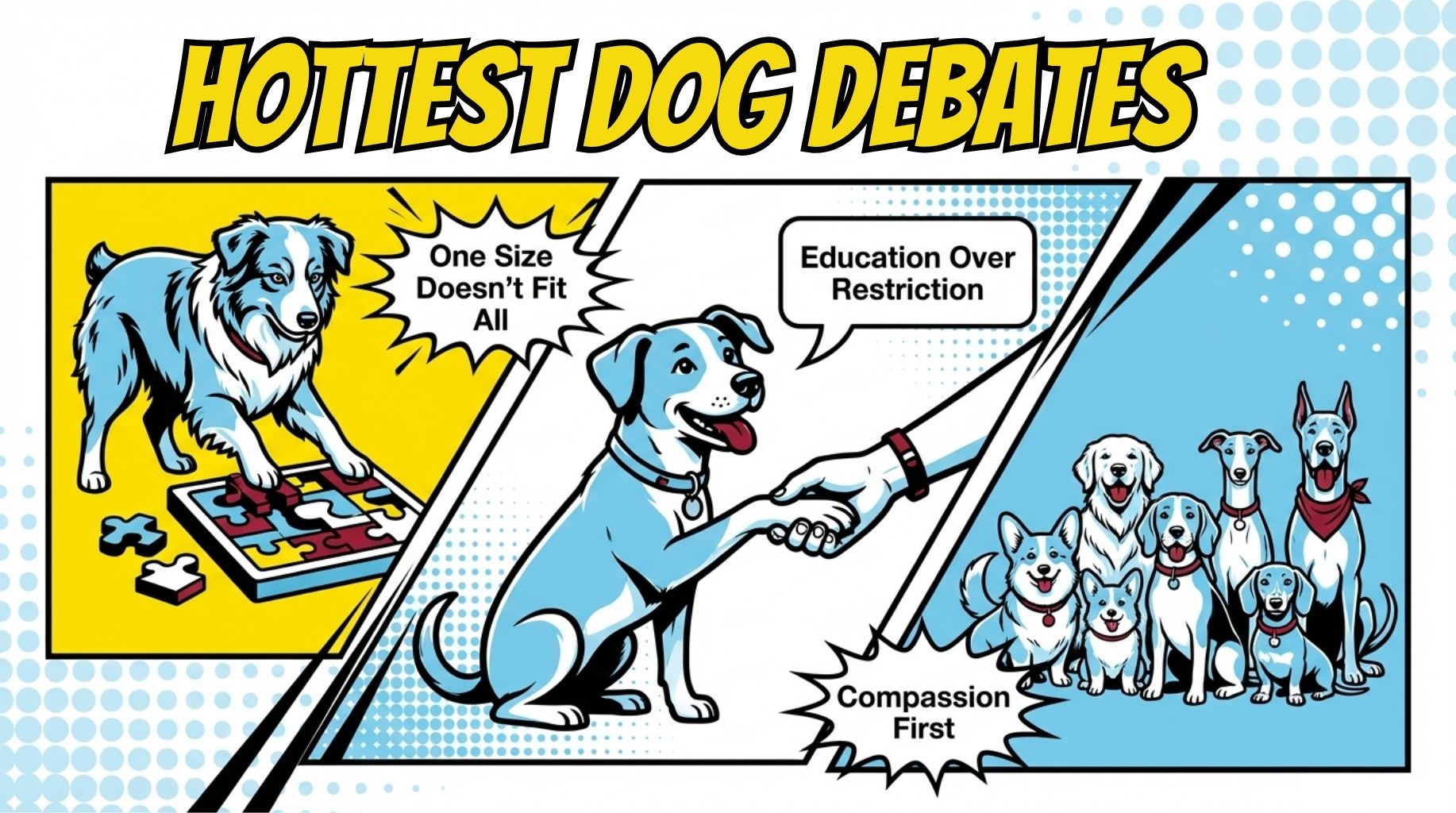
Listen the Episode by The Bark Brigade Podcast About Human Ethics Mirrored in Dog Ownership!
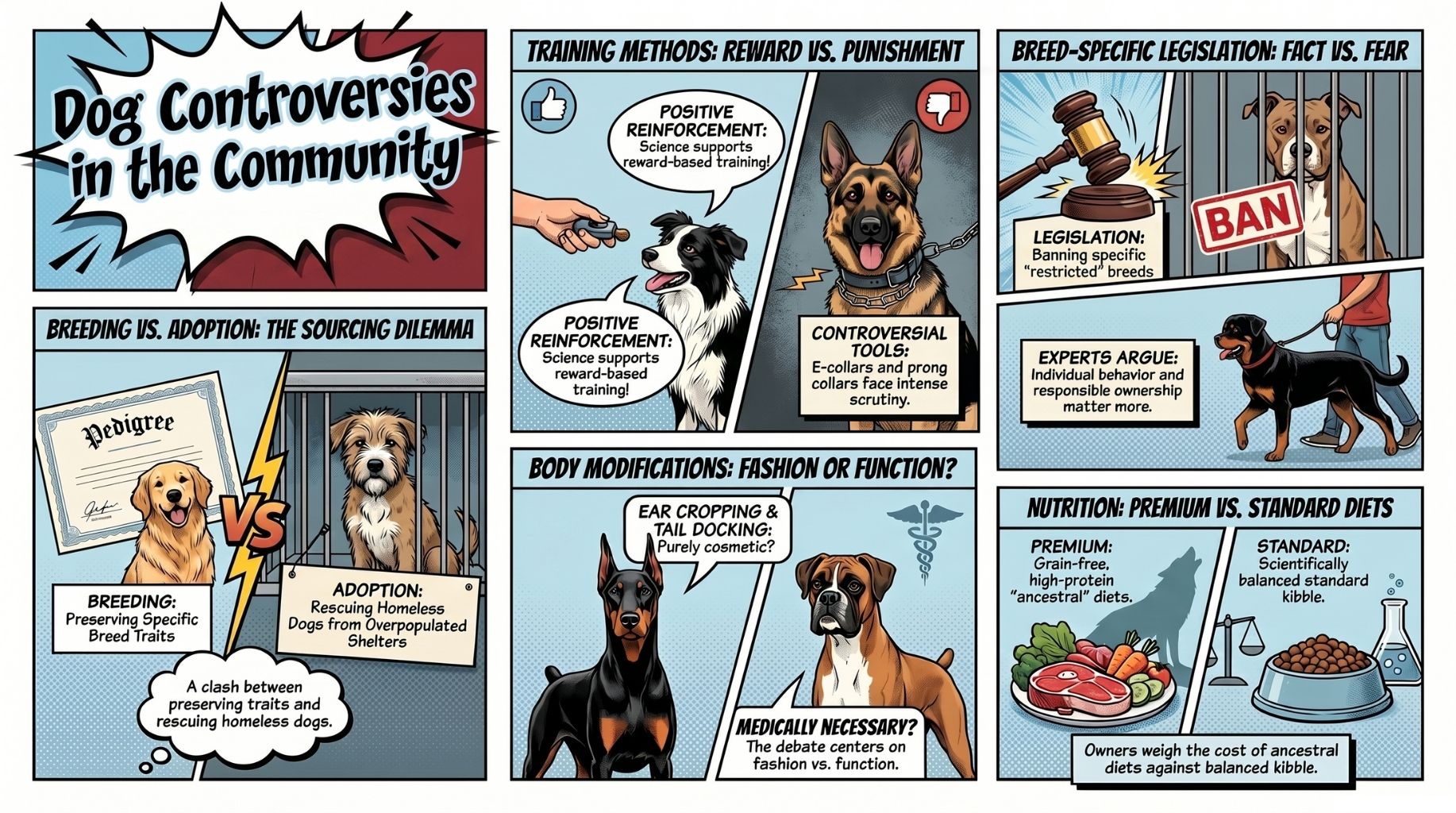
HOT CONTROVERSIES AND TOPICS EVERY DOG OWNER SHOULD DEBATE
Are you curious about the debates around dog care? As a devoted dog parent, understanding the complex issues can be insightful yet challenging. This article will explore the all controversies that every dog owner should consider. We’ll look at diverse views on breeding ethics, training approaches, and care standards. From ethical dilemmas to evolving roles of dogs, we’ll examine perspectives shaping the dog owner community.
Let’s foster an informed and compassionate dog community. Get ready to engage in critical talks, challenge norms, and deepen your bond with canine companions. It’s time to reflect on the vibrant world of dog ownership.
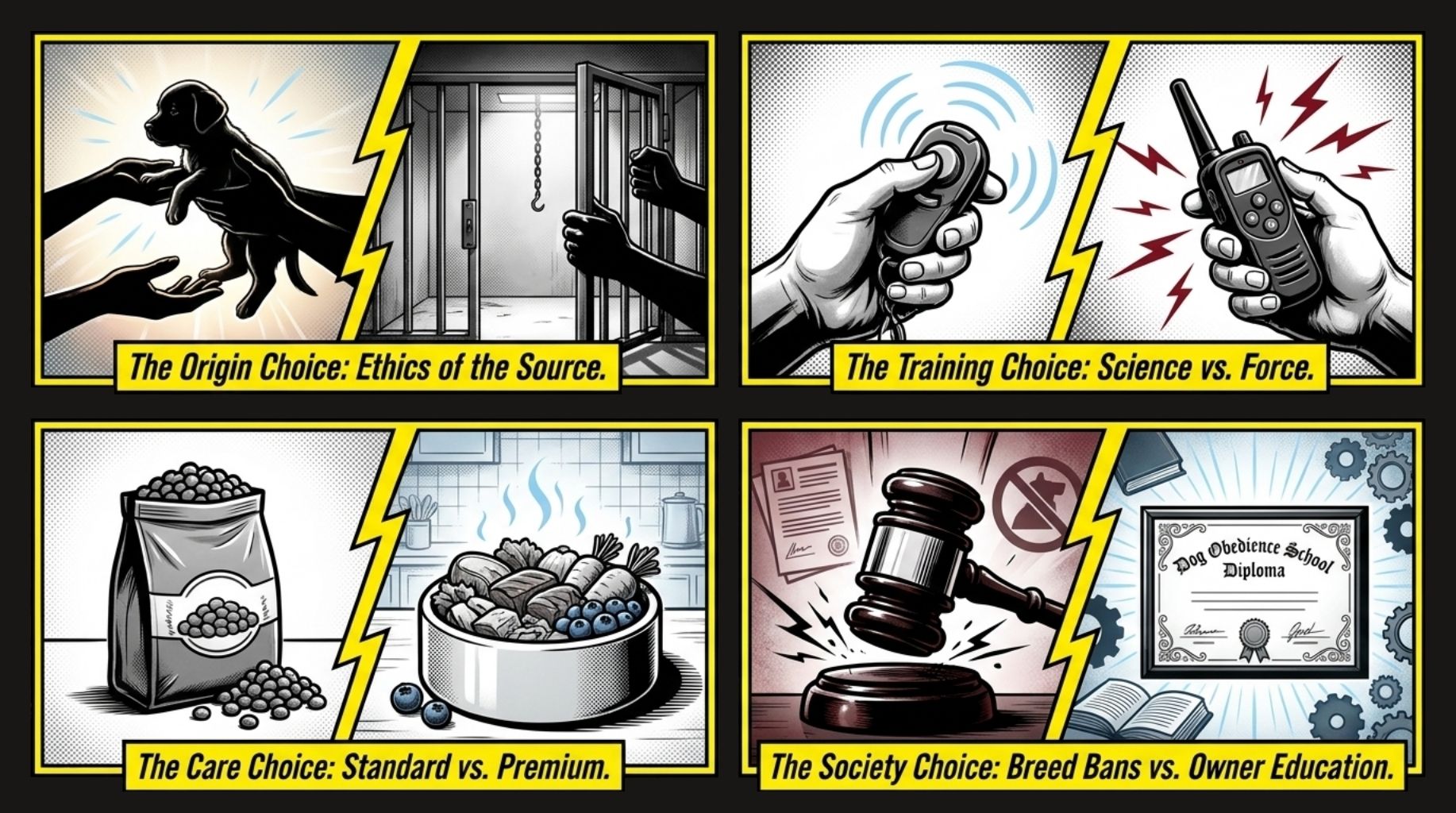
Dog Breeding vs. Adoption: A Complex Choice with Many Controversies
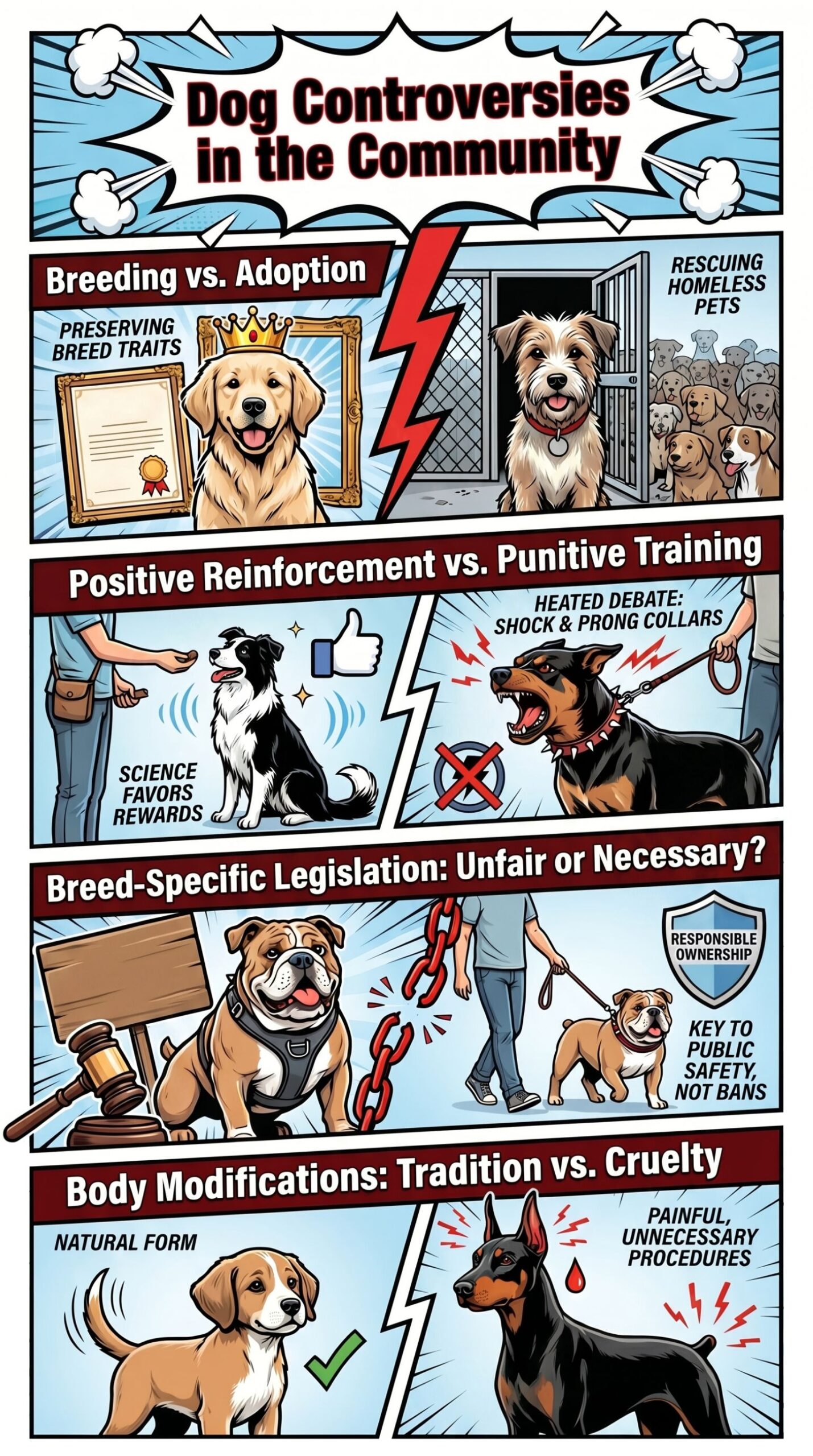
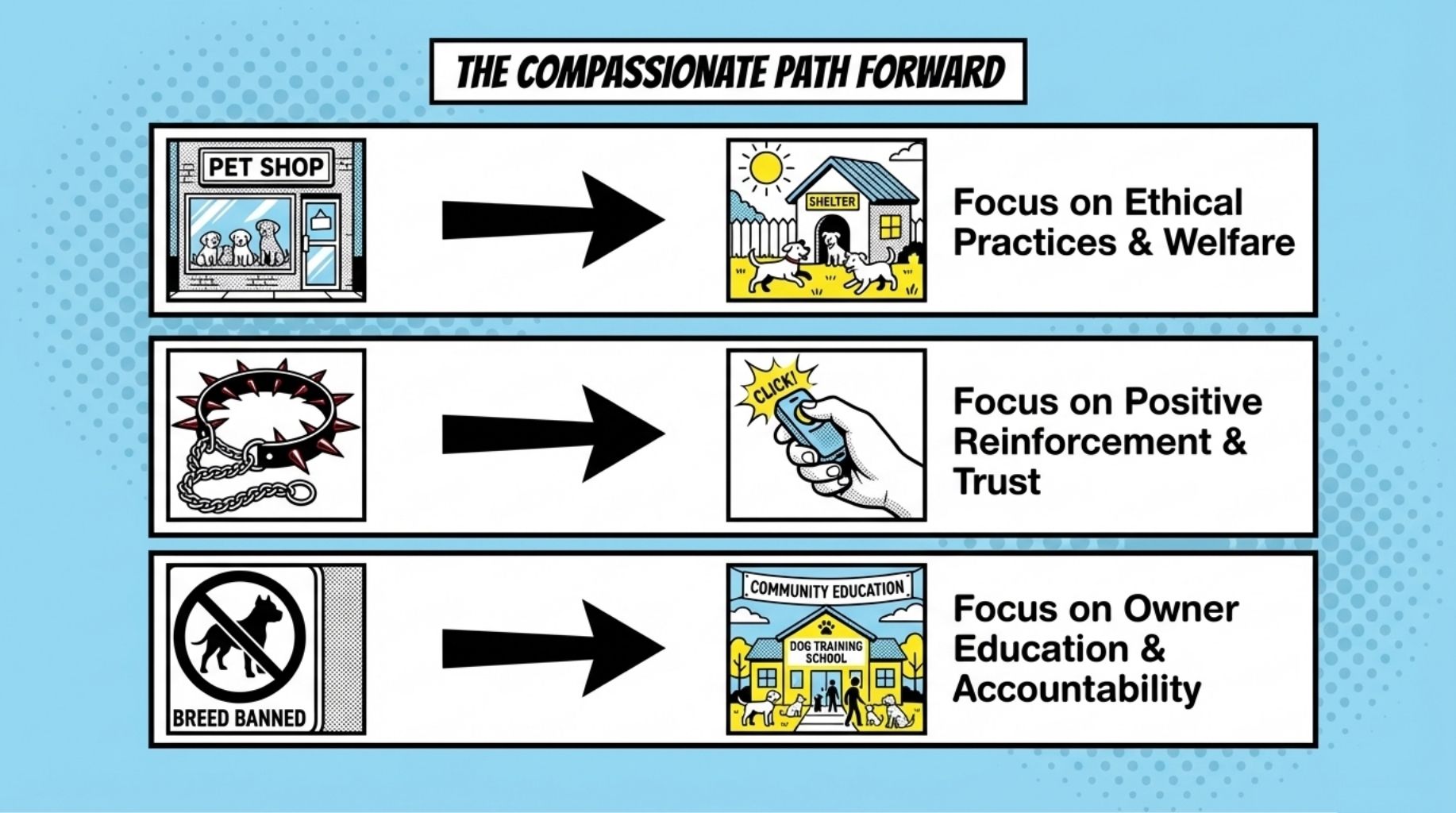
The breeding vs. adoption debate divides the dog world. Breeding supporters argue it preserves breeds and desirable traits. They believe responsible breeders ensure dogs’ health and temperament. On the other hand, adoption advocates emphasize rescuing homeless dogs.
They argue breeding perpetuates overpopulation and puppy mills. Adopting provides a loving home to abandoned or surrendered dogs. Both sides raise valid points. Ethical breeders prioritize dogs’ well-being, while overcrowded shelters highlight the need for adoption. Responsible ownership, whether through breeding or adoption, is crucial.
Dog Training Methods Controversies: Positive vs. Punitive
How we train dogs is hotly debated. Positive reinforcement focuses on rewarding good behavior. This gentle approach builds trust and enjoyment. Conversely, punitive methods use corrections like scolding or physical punishment. Critics argue this can cause fear and harm the human-dog bond.
Research supports positive reinforcement as more effective and humane. However, some argue corrections have a place in certain situations. Open discussions on science-based training benefit dogs.
Dog Controversies about Breed-Specific Legislation: Unfair or Necessary?
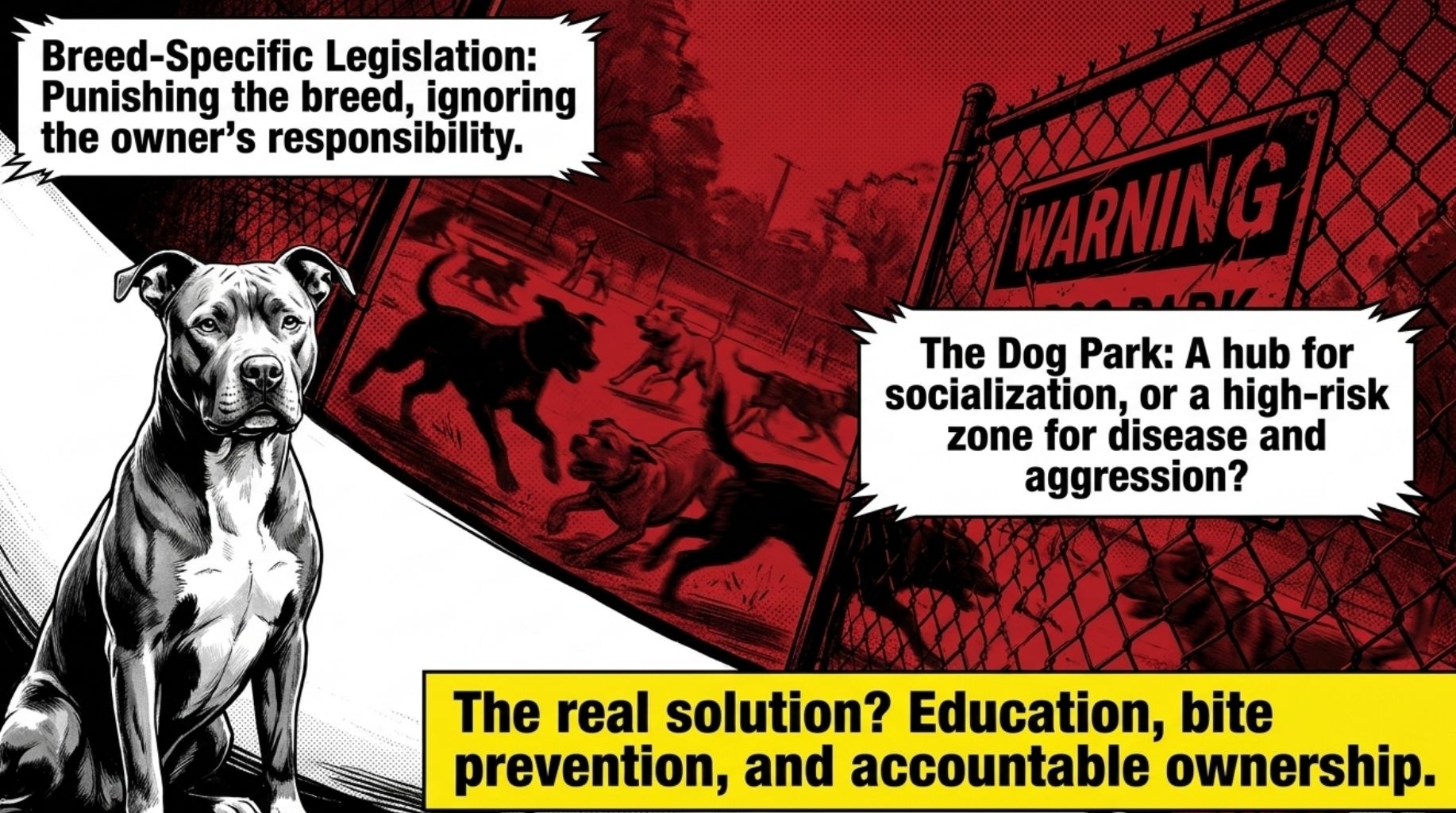
Breed-specific laws restrict or ban certain breeds perceived as dangerous. Supporters cite public safety concerns, while opponents argue breed alone doesn’t predict behavior. Critics highlight lack of evidence that such laws reduce dog bites.
They argue irresponsible ownership, not breed, is the root issue. The debate centers on balancing public safety with responsible ownership and education. Open discussions can lead to fair and effective policies.
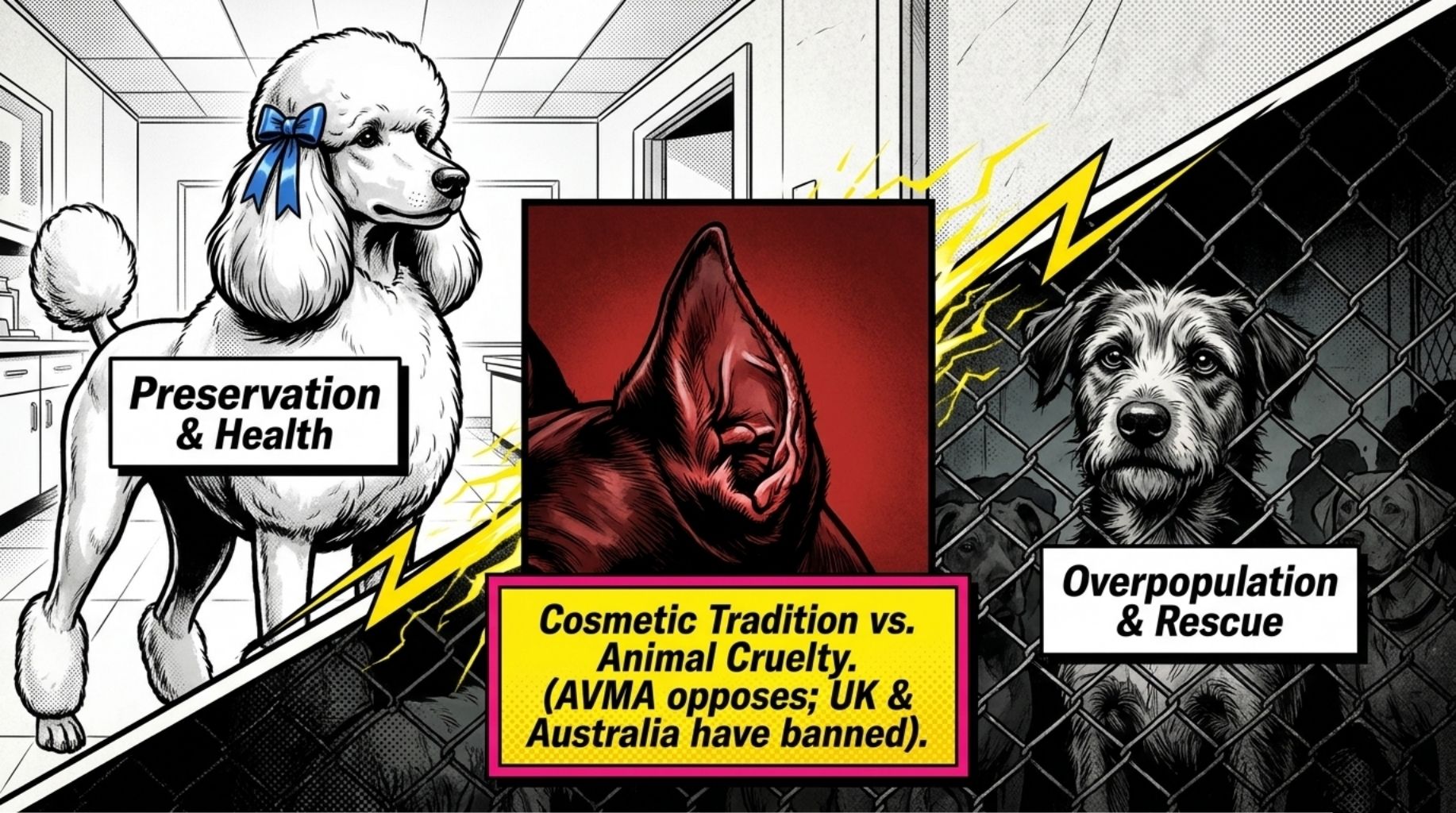
Controversies About Buying or Saving the Street Dog
Some people believe that buying puppies is okay. However, others argue there’s no need for more puppies since shelters have millions of dogs. Adopting a dog saves a life and helps reduce pet overpopulation. Recent studies show that while more dogs get adopted now, dog breeding still contributes significantly to homeless pets.
This concerns animal welfare groups, who encourage people to adopt first when looking for a new dog. A key benefit of adoption is the strong bond formed between the dog and new owner. Adopted dogs are grateful for their second chance, fostering closer connections with their human families.
On the flip side, those buying from breeders often seek specific traits like breed, size, or temperament matching their lifestyle and needs. Though responsible breeders aim for healthy, socialized puppies, not all prioritize dog well-being.
Puppy mills and backyard breeders may prioritize profits over animal health and happiness, resulting in dogs with behavioral and physical issues. Another thing to think about is cost. Getting a dog from a shelter is cheaper than buying one from a breeder. Adopted dogs are usually spayed, neutered, microchipped, and vaccinated. This saves new owners more money.
In the end, breeding or adopting is a personal choice. Consider your situation and priorities. But, remember this choice impacts the dog and pet overpopulation. By adopting, you can make a difference for dogs in need. You can also help reduce homeless pets in your area. If buying from a breeder, research and choose one that cares about their dogs’ health.
🔑 Key Points: Breeding vs. adoption is complex. Think about your situation, impact on the dog-human bond, and pet overpopulation.
The Ethical Debate Around Body Modifications
Modifying dogs’ bodies, like cropping ears and docking tails, is controversial. These procedures, often cosmetic for breed standards, face criticism. Animal advocates argue they cause dogs unnecessary pain and suffering. Some people support changing dogs’ bodies for breed standards. They say it’s been done for a long time. And they claim it helps prevent issues.
For example, cropping ears can stop infections in some breeds. And docking tails prevents injuries in working dogs. But many veterinary groups, like the American Veterinary Medical Association, disagree. They say these procedures are only cosmetic. And they don’t provide any medical benefits for dogs. They argue that they cause pain and distress. And they can lead to long-term health problems.
UK and Australia have banned ear cropping and tail docking
In recent years, there’s been a growing movement to ban these practices completely. Countries like the UK and Australia have already banned ear cropping and tail docking. Others have restrictions on the procedures. The debate about body modification ties into larger questions. About the ethical treatment of animals. And the responsibilities of pet owners.
Many argue that subjecting dogs to painful and unnecessary procedures is animal cruelty. And it goes against responsible pet ownership. Others, however, see it as a personal choice. They argue that as long as vets do the procedures properly. And the dogs are well cared for, there’s no harm in following breed standards.
In the end, the decision to crop a dog’s ears or dock their tail should not be taken lightly. Pet owners must educate themselves about the potential risks. And carefully consider if the procedure is truly necessary for their dog’s health and well-being.
🔑 Key Points: The ethical debate around body modifications on dogs, such as ear cropping and tail docking, centers on questions of animal welfare, breed standards, and the responsibilities of pet owners to prioritize the health and well-being of their animals.
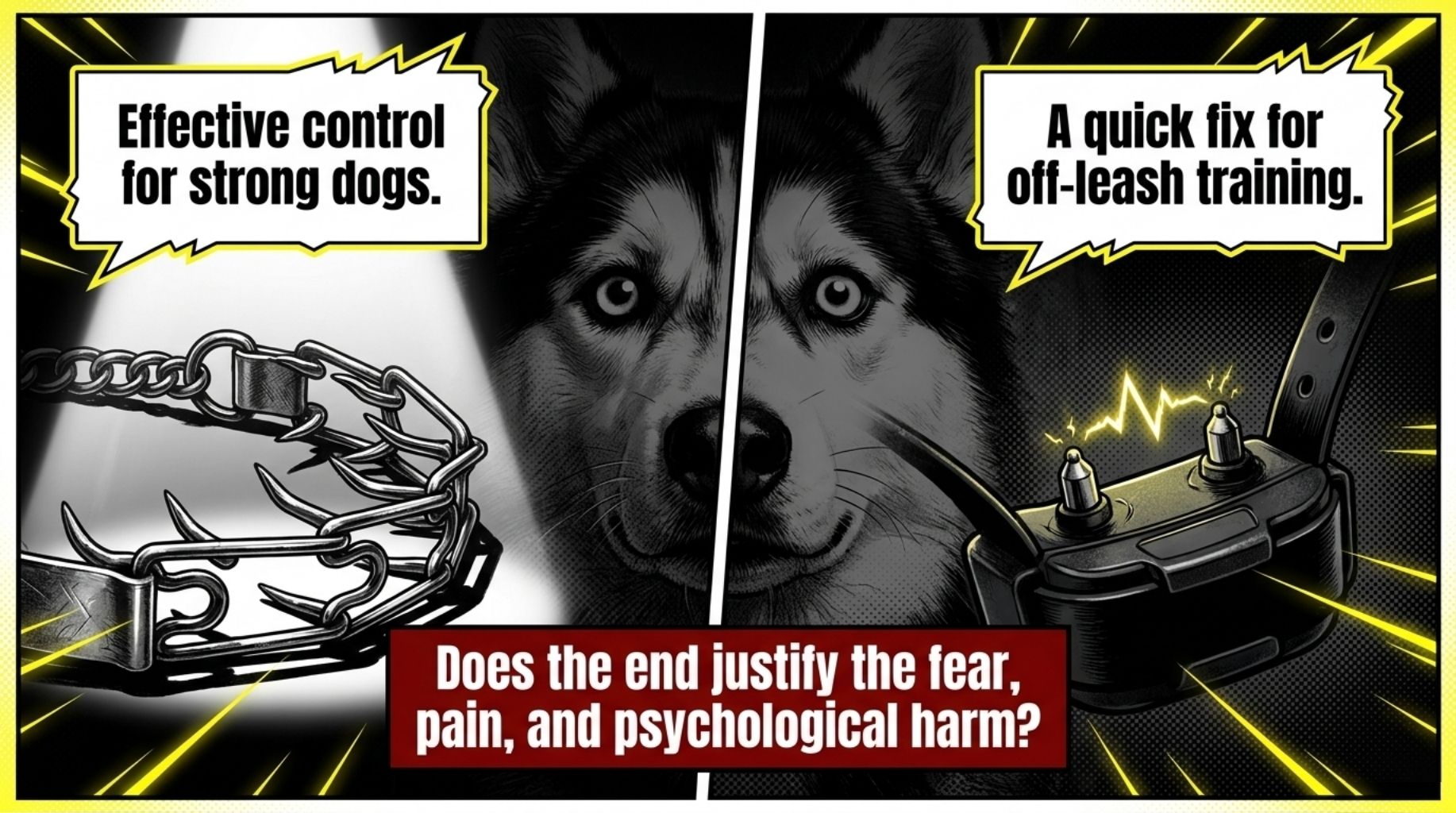
TRAINING TOOLS: NAVIGATING THE DOG CONTROVERSIES
When it comes to dog training, there are dozens of unique training tools available on the market, each with its own set of pros and cons. Two of the most controversial training tools are the prong training collar and the electric training collar.
Understanding Electric Training Collars
Electric training collars, also known as e-collars or shock collars, are a controversial training tool that delivers an electric shock to the dog’s neck when activated by a remote control. Proponents of these collars argue that they are an effective way to train dogs and can be particularly useful for off-leash training or for dogs with severe behavioral issues.
However, many dog trainers and animal welfare organizations have spoken out against the use of electric collars, arguing that they are inhumane and can cause physical and psychological harm to dogs. They argue that the use of pain and fear as training methods is not only unethical but also ineffective in the long run, as it does not address the underlying issues behind the dog’s behavior.
There are also concerns about the potential for misuse or abuse of electric collars, particularly by inexperienced or untrained owners. If the collar is not used correctly or if the shock level is too high, it can cause significant pain and distress to the dog, leading to anxiety, fear, and aggression.
🔑 Key Points: Using electric training collars on dogs is a controversial practice. Some owners find these collars helpful, but there are concerns about potential physical and emotional harm to the dogs.
The Case for and Against Prong Collars
Prong training collars, also known as pinch collars, are another training tool that divides opinions. These collars have metal prongs that dig into the dog’s neck when tightened, causing discomfort or pain. Proponents argue they effectively control strong dogs and are safer than choke collars. They claim proper use doesn’t harm dogs and can aid training.
However, opponents argue prong collars are inhumane and can physically and emotionally damage dogs. The metal prongs can cause bruising, puncture wounds, or even trachea and esophagus damage if misused. Critics claim prong collars don’t address root behavioral issues and may worsen problems long-term. They advocate positive reinforcement training methods that reward good behavior instead of punishing bad behavior.
🔑 Key Points: While some claim prong training collars are safe and effective when used correctly, others argue they are inhumane and can harm dogs physically and emotionally.
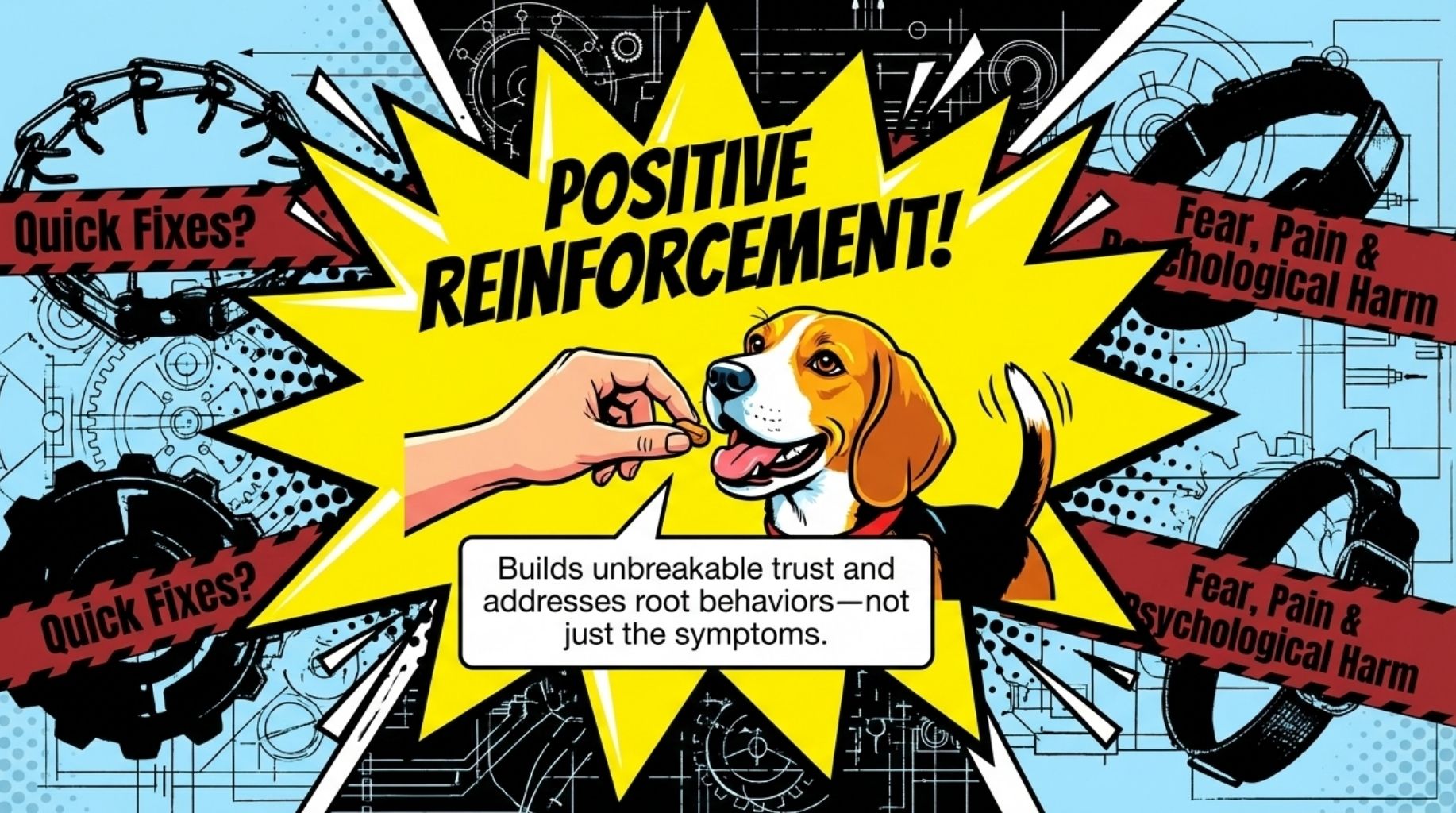
CUSTOMIZING TRAINING METHODS: BEYOND ONE-SIZE-FITS-ALL
When it comes to dog training, there is no one-size-fits-all approach. Every dog is unique, with their own personality, history, and learning style. As such, it’s important for owners and trainers to take an individualized approach to training that takes into account the specific needs and quirks of each dog.
The Importance of Understanding Dog Behavior
To effectively train a dog, it’s crucial to have a good understanding of dog behavior and cognition. Dogs communicate through body language, vocalizations, and other subtle cues that can be easy to miss if you don’t know what to look for.
By taking the time to learn about dog behavior and how they learn, owners can better understand their dog’s needs and tailor their training approach accordingly. This might involve using different training tools or techniques depending on the dog’s personality and learning style.
For example, a shy or fearful dog may respond better to positive reinforcement training methods that focus on building their confidence and trust, while a more high-energy or stubborn dog may benefit from a firmer hand and clear boundaries.
🔑 Key Points: Understanding dog behavior and cognition is key to developing an effective and individualized training approach that takes into account the unique needs and personality of each dog.
Dog Controversies about Tailored Individual Training
In addition to understanding dog behavior, it’s also important to take a holistic approach to training that considers the dog’s overall well-being. This means not just focusing on obedience and behavior modification, but also ensuring that the dog’s physical, mental, and emotional needs are being met.
A dog with anxiety or reactivity can benefit from a well-rounded training plan. This includes relaxation exercises to manage stress. Also, socialization to help the dog feel more at ease around triggers. And desensitization to gradually expose the dog to things that cause fear or anxiety. Of course, basic obedience training is important too.
For heavier or unhealthy dogs, the training should focus on exercise and diet changes. Increasing physical activity and providing a calorie-controlled, nutritious diet can improve the dog’s overall health. By considering the whole dog, physical, mental, and emotional needs, owners build a positive bond with their furry friend.
🔑 Key Points: An effective training approach looks at the dog’s well-being holistically. It factors in the dog’s individual traits, personality, learning style, physical condition, and emotional state. This personalized plan sets the dog up for success.
Standards of Care Controversies: What Every Dog Deserves
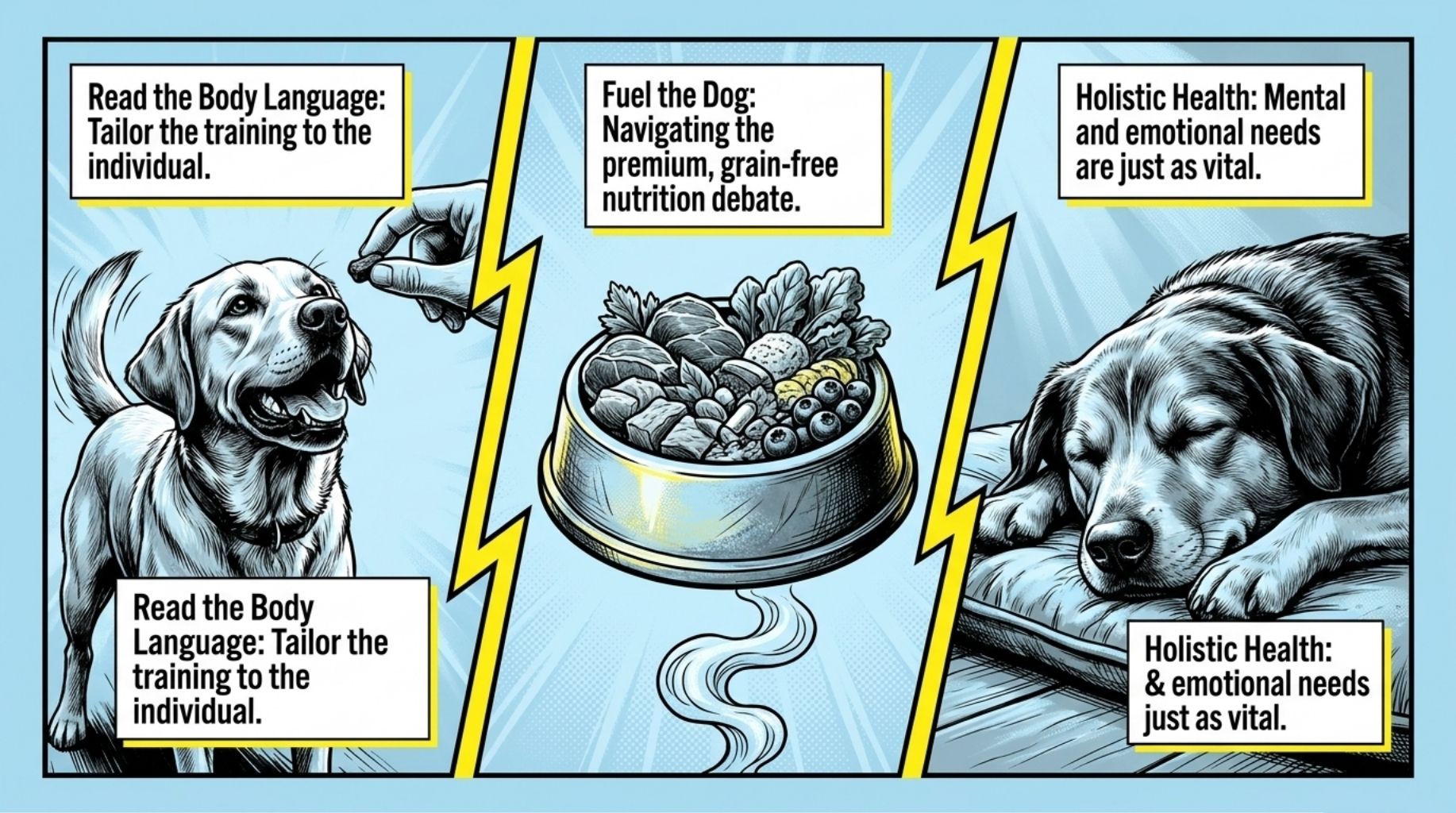
As a dog owner, providing proper care ensures your furry pal lives a happy, healthy life. But there’s debate over what standards of care is best. Different opinions on proper care make this a controversial topic. Nutrition is one area of debate. Some owners prefer premium, grain-free dog foods. Others argue these specialized diets are unnecessary and may even be harmful sometimes. The ideal diet depends on the dog’s individual needs, health status, your budget, and lifestyle.
Sometimes, there’s discussion about vet care. Most dog owners think regular check-ups and vaccines are important. But they don’t agree on how often these should happen or what treatments are needed. Some owners prefer a natural approach, using things like acupuncture or herbs. Others stick to standard treatments.
Grooming is another area where care can differ a lot. Some breeds need lots of grooming to keep their coat healthy and prevent matting. Others just need occasional baths and brushing. But there’s debate over what grooming practices are really necessary. And whether things like trimming nails or cleaning ears are safe and effective. The key is doing research, talking to your vet, and making informed choices for your dog’s needs. Staying up-to-date on the latest recommendations ensures your dog gets the care needed to thrive.
The Debate Over Premium vs. Standard Nutrition
A big debate in dog care is what to feed our furry friends. Some advocate for premium, grain-free diets marketed as closer to dogs’ ancestral diet. These often have high-quality proteins like chicken, fish, or lamb, plus fruits and veggies.
Some pet owners favor premium dog diets. They say it gives dogs needed nutrition for good health. And it may lower risks like allergies, digestion troubles, and other issues. Studies suggest premium diets can lead to healthier skin, coats, better digestion, and less obesity.
Others argue premium diets are unnecessary. They may even harm dogs in some cases. Dogs evolved to digest many foods, including grains. There’s no clear proof grain-free is better. Critics claim premium diets are costly without proven health benefits over a balanced, high-quality diet with grains. They advise feeding dogs based on their individual needs, not marketing claims.
The debate continues between those for and against premium vs standard dog nutrition. Both sides have compelling points. But the ideal diet depends on your dog’s specific health needs, your budget, and lifestyle.
For those who prefer healthy homemade dog food, we recommend to explore the Dog Chef Cookbook Recipes, to check the video guides and listen the podcast as well!

🔑 Key Points: The premium vs standard dog food debate is complex with strong views on both sides. Ultimately, the best diet suits your dog’s unique requirements, health status, as well as your budget and way of life.
THE IMPACT AND INEFFECTIVENESS OF BREED-SPECIFIC LEGISLATION
Breed-specific laws place restrictions on certain dog breeds. These aim to reduce dog bites or attacks. But this type of legislation is quite controversial in the pet world.
Controversies about the Bully Dog Breeds
The main targets of breed-specific laws (BSL) are often “bully breeds“. These include Pit bulls, Rottweilers, and Doberman Pinschers. These breeds have a reputation for aggression or danger. Some areas have banned or restricted owning them.
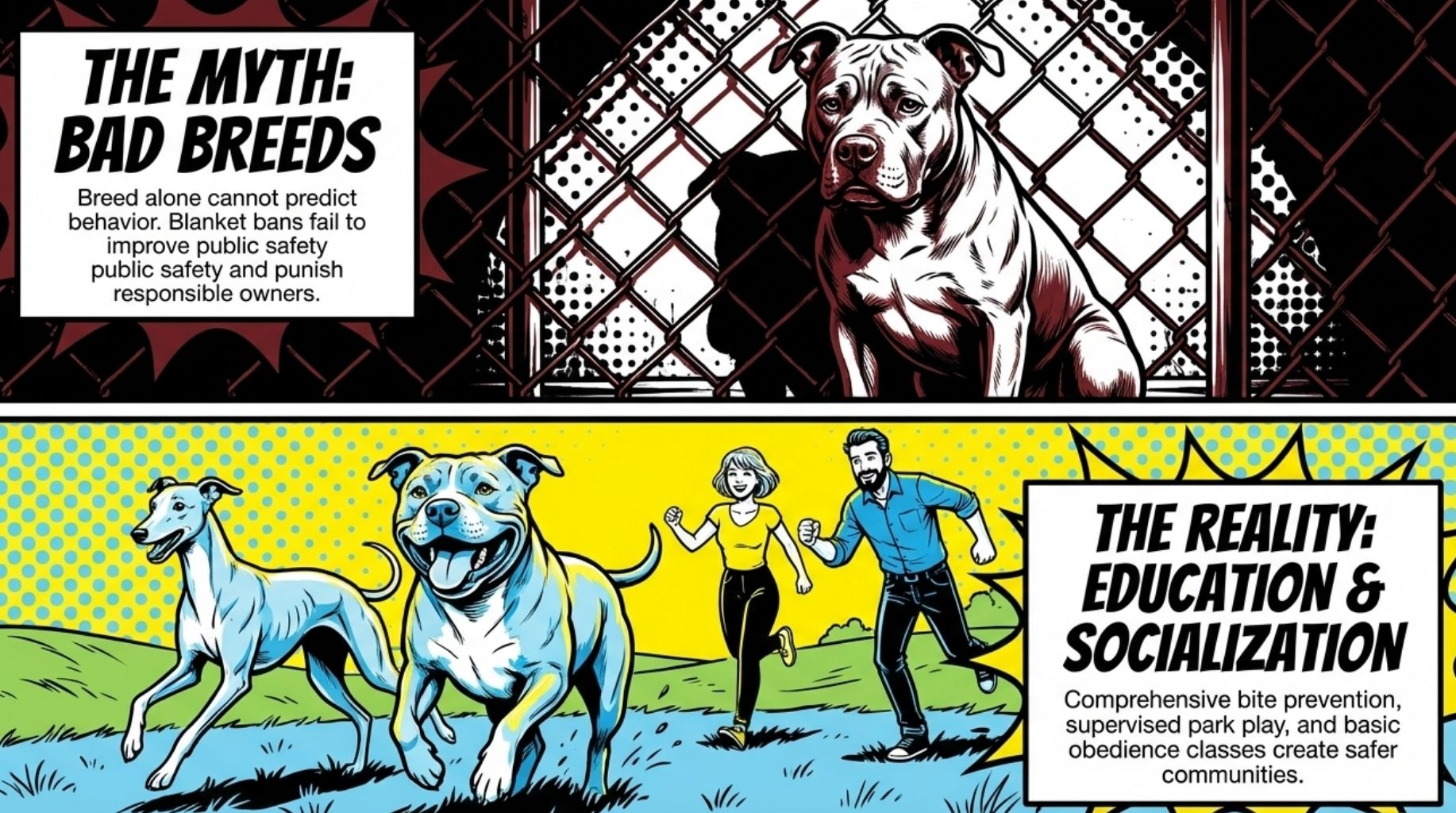
However, many experts say BSL is not effective. They argue it may even make things worse. Dog bites happen due to factors like temperament, socialization, training, and owner care, not just breed. Studies show breed alone can’t predict if a dog will be aggressive. In fact, many restricted breeds are friendly and loving when raised properly. With good socialization and training, they make great pets.
Critics say BSL discriminates against certain breeds and owners unfairly. Yet it doesn’t improve public safety much. They suggest focusing on responsible ownership is better. This includes proper training, socialization, and supervision. BSL can also have unintended effects on dogs and owners. Banned breed dogs may end up in shelters or euthanized more often. Responsible owners face fines, legal issues, or losing their pet.
Exploring Alternate Solutions to BSL
Instead of breed laws, many experts promote comprehensive bite prevention. This approach emphasizes education, training, and responsible ownership practices. One solution is requiring dog owners to attend basic obedience classes with their pets. This training helps dogs learn socialization skills and reduces aggressive behavior risk.
Another approach focuses on public education about dog body language and behavior. When people recognize signs of potential danger, they can take appropriate action. Some areas have implemented “dangerous dog” laws. These laws target individual aggressive dogs rather than entire breeds. Owners may need to muzzle their dogs in public or carry liability insurance.
The key is promoting responsible ownership and creating a culture of safety and respect for dogs and humans. Through education, supporting responsible owners, and holding irresponsible owners accountable, we can build safer communities for everyone.
🔑 Key Points: Rather than breed-specific legislation, a comprehensive approach focused on education, training, and responsible ownership creates safer communities for dogs and humans.
Unpacking the Controversies of Dog Parks
Dog parks have grown in popularity as enclosed spaces for dogs to socialize and exercise safely. However, these areas are controversial among dog owners and experts. Going to a dog park has its advantages. For one, dogs can run freely without leashes. This helps burn their excess energy. It prevents problem behaviors like barking or chewing.
Dog parks are also great for socialization. Interacting with other dogs is vital for a dog’s well-being and growth. For owners, dog parks build community. They’re places to meet fellow dog lovers. Parks offer a convenient play area for dogs. This is ideal for those without private yards.
However, risks exist at dog parks. A key worry is aggressive dog behavior. Social dogs can act reactive in high-energy parks. Owners may struggle to intervene fast enough before fights. There’s also disease risk if dogs aren’t vaccinated. Or if parks aren’t well-maintained. Some experts advise against bringing puppies or immunocompromised dogs.
Another issue is inconsistent rules and etiquette. Though some parks post guidelines, not all owners follow them. Or take action when needed. This leads to chaos, endangering dogs and humans. Overall, while convenient, dog parks require caution. Owners must supervise closely. And be ready to remove their dog if issues arise. By being responsible, the benefits can outweigh the risks.
🔑 Key Points: Although dog parks provide benefits, they have risks too. Therefore, it’s important to carefully manage them to ensure safety for dogs and their owners.
FRESH INSIGHTS FROM RECENT STUDIES AND REAL STORIES
Let’s expand the conversation with recent studies and real-life stories.
The Sniffing Revolution
A 2023 study from the University of Helsinki gave dogs a “sniff walk” where they set the pace and path. The result? Their heart rates dropped, and stress signs fell sharply. This challenges the old rule that a walk must be a strict heel. Let them sniff. It’s not a delay. It’s their way of reading the day’s news.
Invisible Fence Fallout
New data from a 2022 canine behavior study flags a hidden risk. Dogs contained by buried electric fences showed twice the rate of barrier frustration. Many began to bark and lunge at passing dogs, and some redirected their stress onto their own family. The shock they felt when straying near the edge stayed in their minds long after.
A Real Rescue Tale: Otis and the Bowl
Otis, a shy hound from a southern shelter, would not eat for three days. His new owner tried three types of kibble and even a fresh raw patty. Nothing worked. Then she warmed a simple mix of cooked turkey, rice, and a pinch of bone broth. Otis ate that meal in seconds. It turned out he needed warmth and a gentle scent to feel safe. This small shift saved him, no fanfare or strict diet rules required.
The “Snuffle Mat” Brain Boost
A 2024 pilot study on enrichment at Purdue University found that dogs who used a snuffle mat for ten minutes a day showed a measurable drop in cortisol. They also solved puzzles faster. The simple act of sniffing out hidden kibble gave their brains a deep rest. It’s a cheap tool that may do more for a restless dog than a long run.
Leash Tension and Its Hidden Cost
A study published in Applied Animal Behavior Science measured the pulse of dogs on tight leashes versus loose ones. A constantly tight leash raised the dog’s stress markers even when no other threat was near. The lesson? Teach a loose-leash walk not just for your arm’s sake, but for your dog’s calm mind.
A Quick Summary on Dog Controversies in the Community
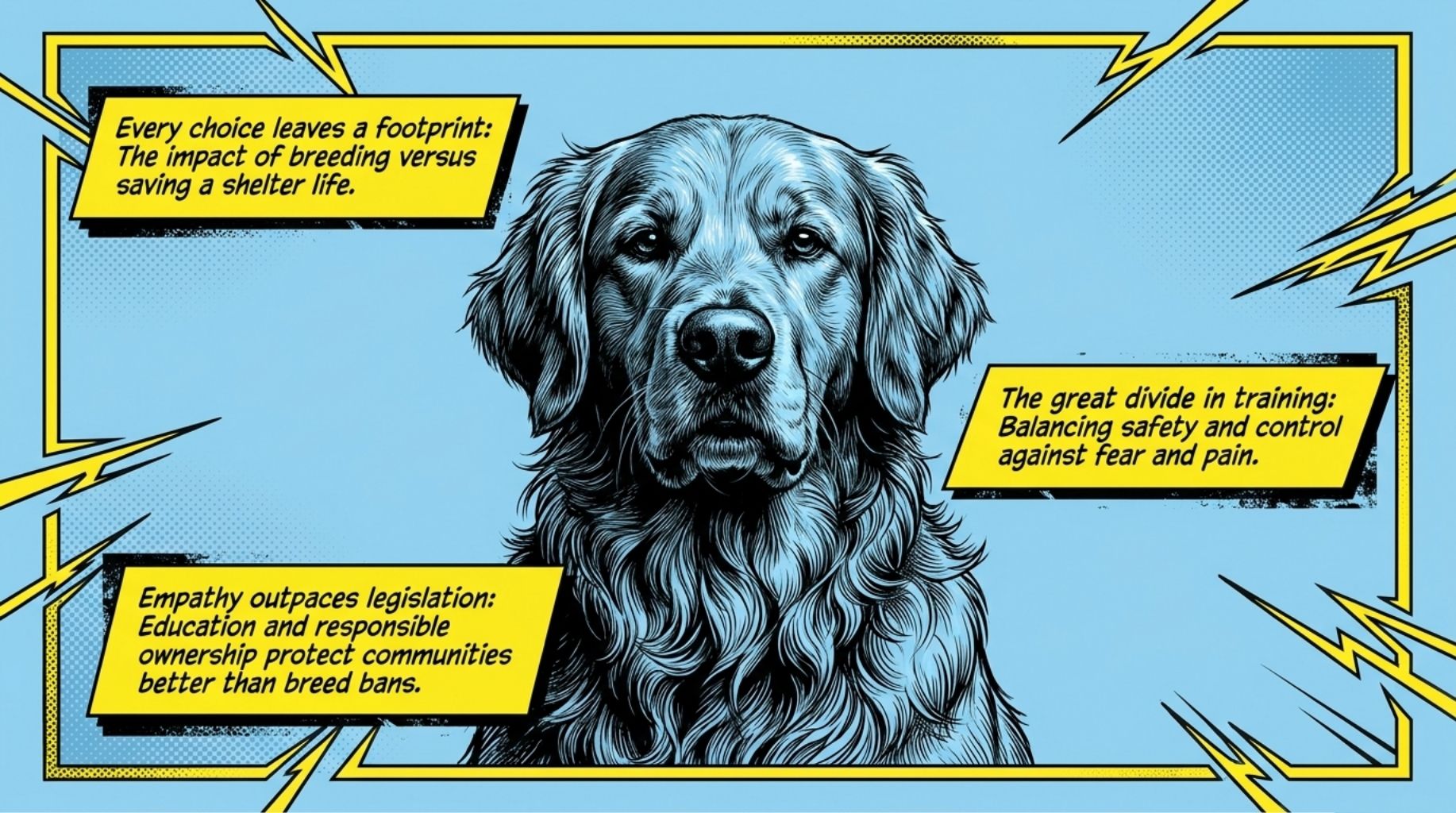
In today’s world, passionate debates about dogs arise. It’s crucial to navigate pet care with understanding and compassion. As discussions within the dog community spark, from ethical dilemmas around breeding versus adoption to breed-specific legislation, fostering empathy leads to a compassionate dog community.
By exploring body modifications, training tools, and care standards, we aim to improve dogs’ well-being. We promote positive training methods and responsible ownership practices. As we examine dogs’ roles, from companionship to societal impact, the profound human-dog bond emerges as a shared experience.
To foster an informed and compassionate dog community, reflect on diverse viewpoints. Engage in constructive dialogues and uphold responsibility for dogs’ welfare. Cherish the bond with furry friends, advocate for their well-being, and strive for harmonious coexistence built on mutual respect.
FREQUENTLY ASKED QUESTIONS (FAQS)
Join us in shaping a brighter future for dogs and the communities they enrich.

Together, we can make a positive difference.