
Does your dog lunge and bark every time a new person walks in? You are not alone. Learning how to fix dog aggression towards strangers is one of the most common challenges pet owners face. The truth is, aggression is usually a fear response, not a dominance issue. This guide will walk you through safe, humane, and highly effective strategies to turn those scary encounters into peaceful moments.
“You open the door for a delivery guy, and your dog turns into a barking, snarling monster. Your heart races, and you feel embarrassed and scared. But here is the good news: you can change this behavior starting today.”
Key Takeaways
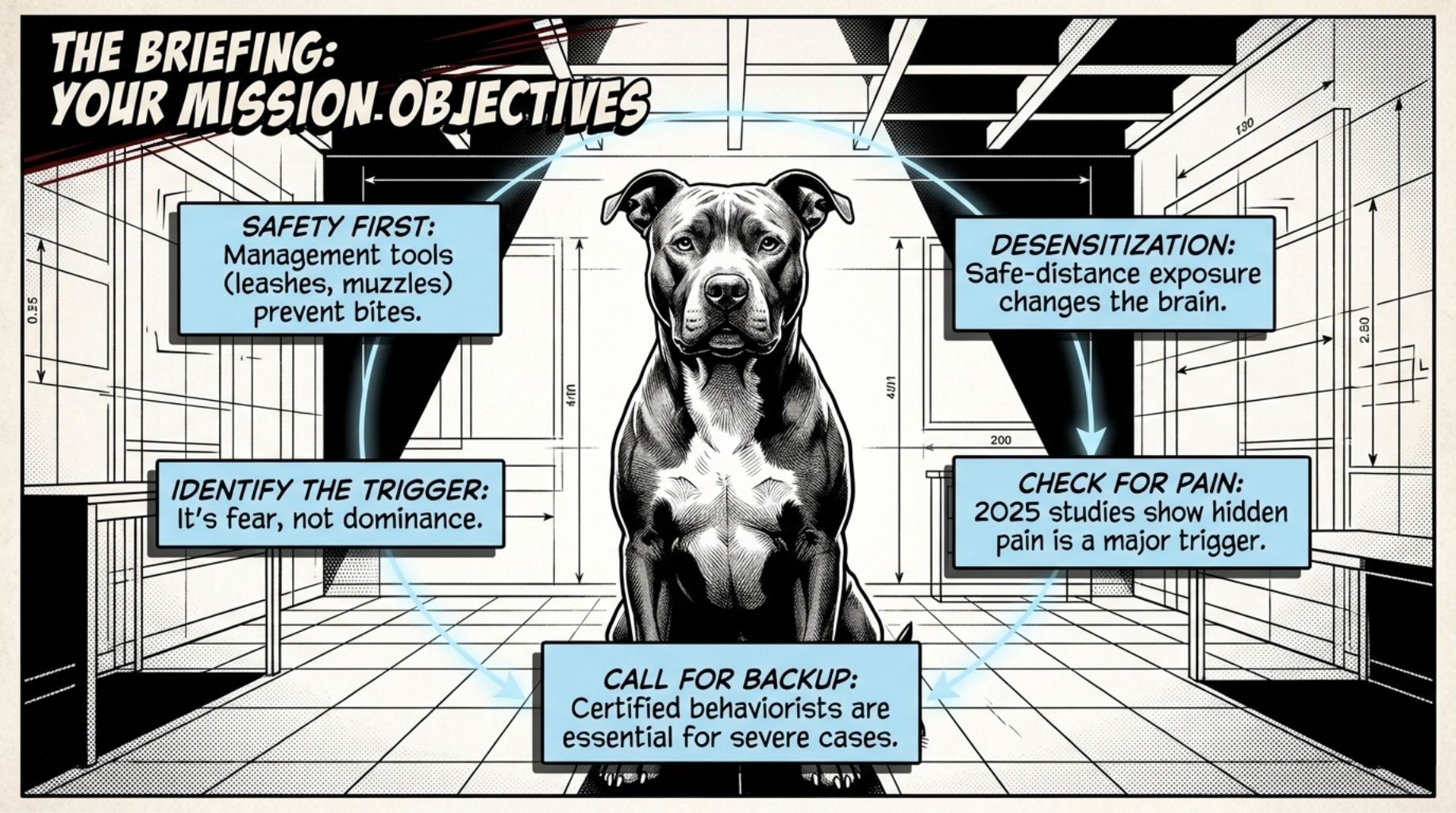
- Safety First: Use management tools (leashes, muzzles, baby gates) to prevent bites.
- Identify the Trigger: Aggression often stems from fear, not dominance.
- Desensitization Works: Slowly exposing your dog to strangers at a safe distance changes their brain.
- Pain Matters: Recent studies show that undiagnosed pain is a major aggression cause.
- Get Help: A certified behaviorist is your best ally for severe cases.
Quick Summary About How to Fix Dog Aggression Towards Strangers?
Aggression toward strangers is scary, but it is not hopeless. This article shows you how to fix dog aggression towards strangers using safe, science-backed methods. We cover management tools like leashes and muzzles, plus training techniques like desensitization and counter-conditioning. You will also learn about the latest 2025 research on dog aggression, including a groundbreaking study on pain as a hidden trigger. By the end, you will have a clear, step-by-step plan to help your dog feel calm and secure around unfamiliar people.
Listen to the Episode by The Bark Brigade Podcast About How to Stop Dog Aggression Towards Strangers!
LEARN WHY YOUR DOG IS AGGRESSIVE BEFORE YOU FIX HIS BEHAVIOR TOWARDS STRANGERS
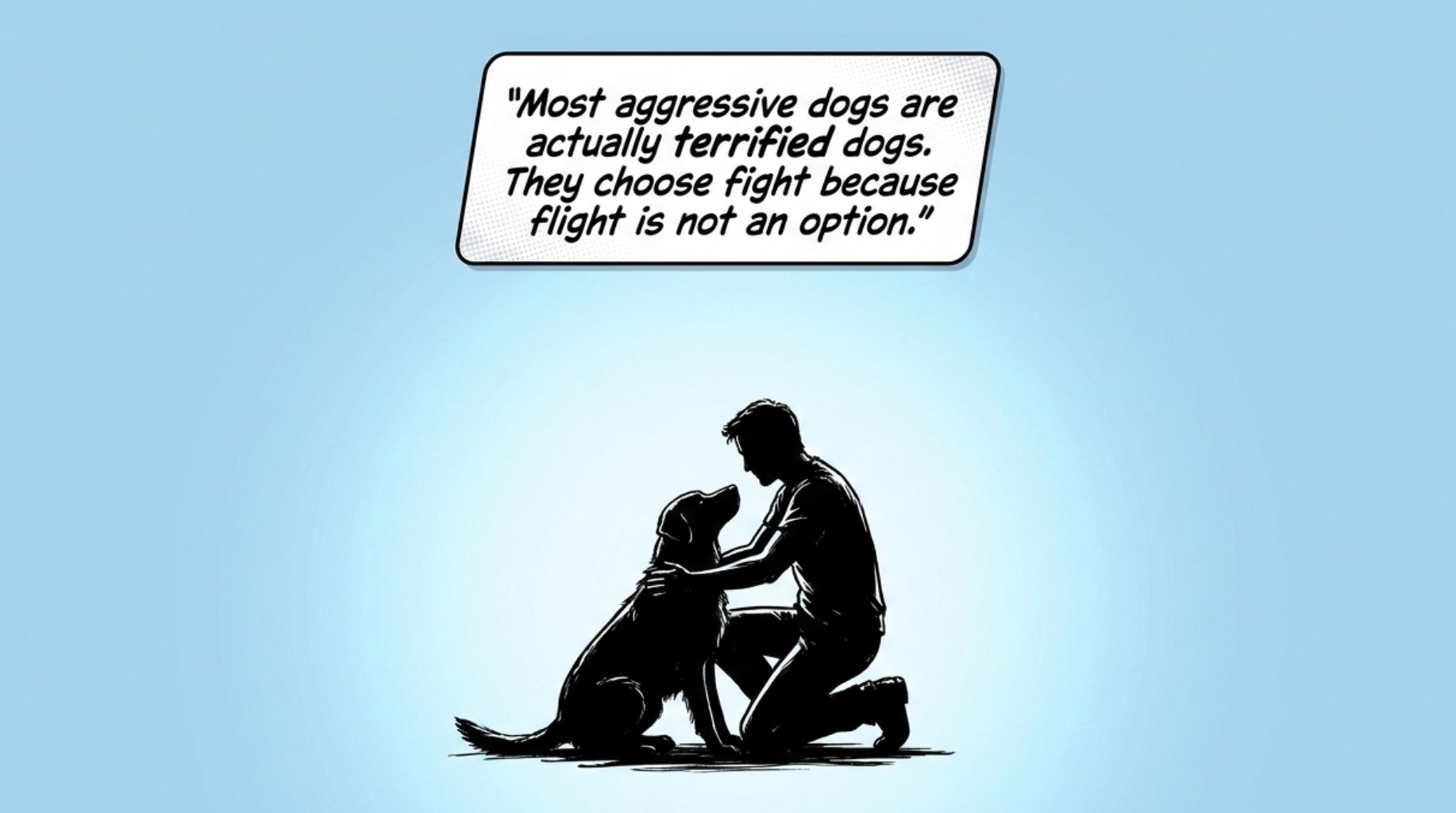
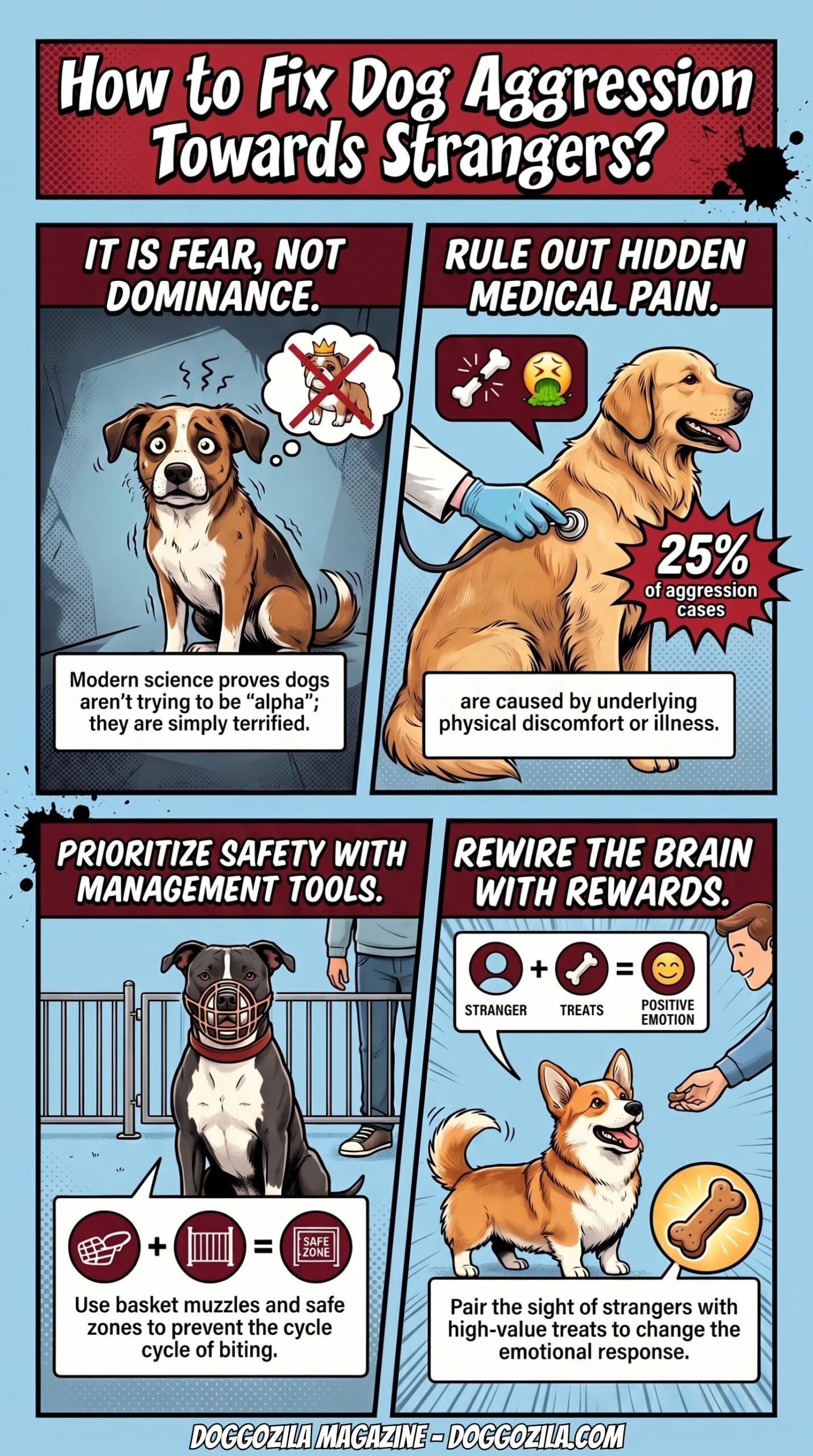
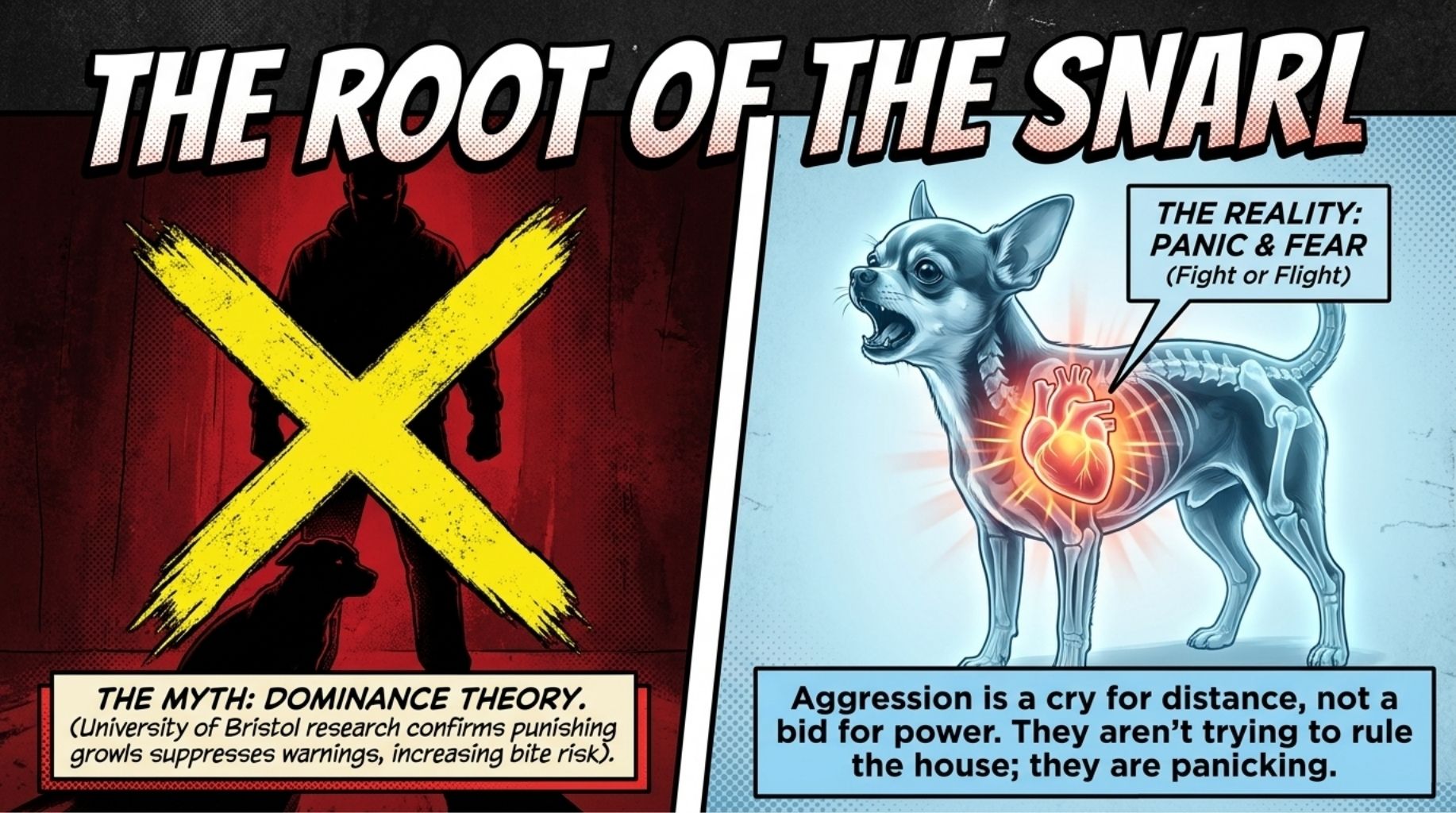
You cannot solve a problem until you know its root. Aggression is a symptom, not a disease. Learning to fix dog aggression towards strangers starts with identifying the “why” behind the snarl. Most aggressive dogs are actually terrified dogs. They choose fight because flight is not an option.
The Fear-Based Aggression Cycle That Hinders Fixing Dog Aggression Towards Strangers
Fear is the number one driver of aggression toward unfamiliar people. When a stranger approaches, your dog feels trapped. Their body floods with adrenaline and cortisol. That chemical rush forces them to react. Understanding this cycle is the first step in fixing dog aggression towards strangers. You must realize your dog is not being “bad.” They are panicking.
Every time a stranger triggers that panic, the fear deepens. Your dog learns that strangers equal danger. Their brain creates a strong, negative memory. This is called a conditioned emotional response. Breaking this cycle requires patience. You need to change the dog’s emotional forecast about strangers.
A 2024 study from the University of Helsinki found that fear-based aggression is highly heritable in certain breeds. But genetics are not destiny. Environment and training shape the final behavior. So, even if your dog has a fearful lineage, you can still rewrite their story.
Dominance Theory Is Dead: The Real Key to Fixing Dog Aggression Towards Strangers
For decades, trainers told us dogs fight for dominance. They said you must be the “alpha.” Modern science has completely debunked this myth. Dogs do not try to rule your household. They are not challenging your authority when they growl at a stranger. They are simply protecting themselves.
Research from the University of Bristol shows that dominance-based training actually increases aggression. Punishing a growl suppresses the warning, not the fear. This often leads to a dog that bites “out of nowhere.” True fixing dog aggression towards strangers involves building trust, not winning a battle.
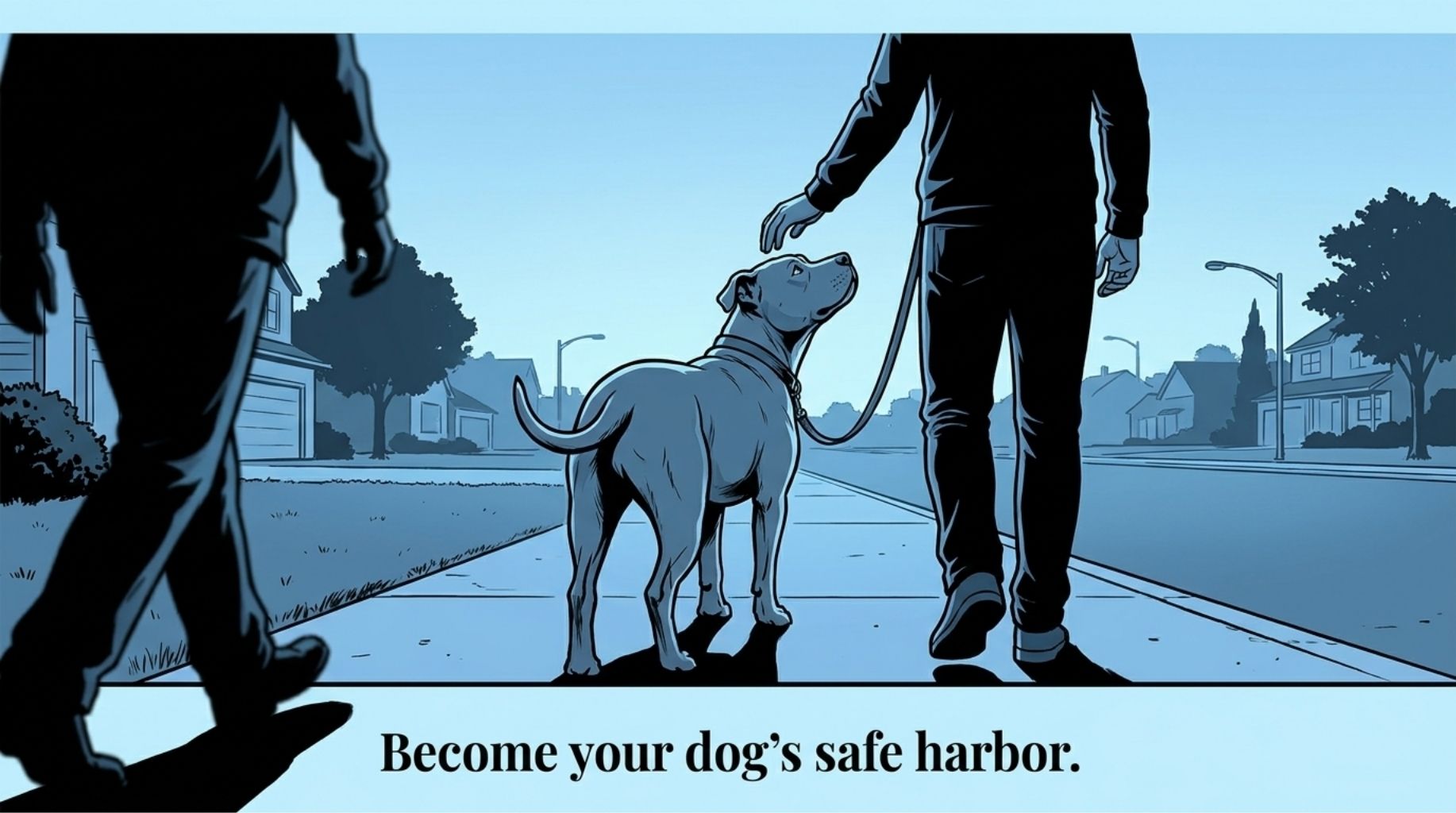
You must become your dog’s safe harbor. When your dog feels secure with you, they will look to you for guidance. Your job is to show them that strangers are not monsters. You do this through calm leadership and positive associations, not through force or intimidation.
Medical Causes: Why Pain Affects How to Fix Dog Aggression Towards Strangers
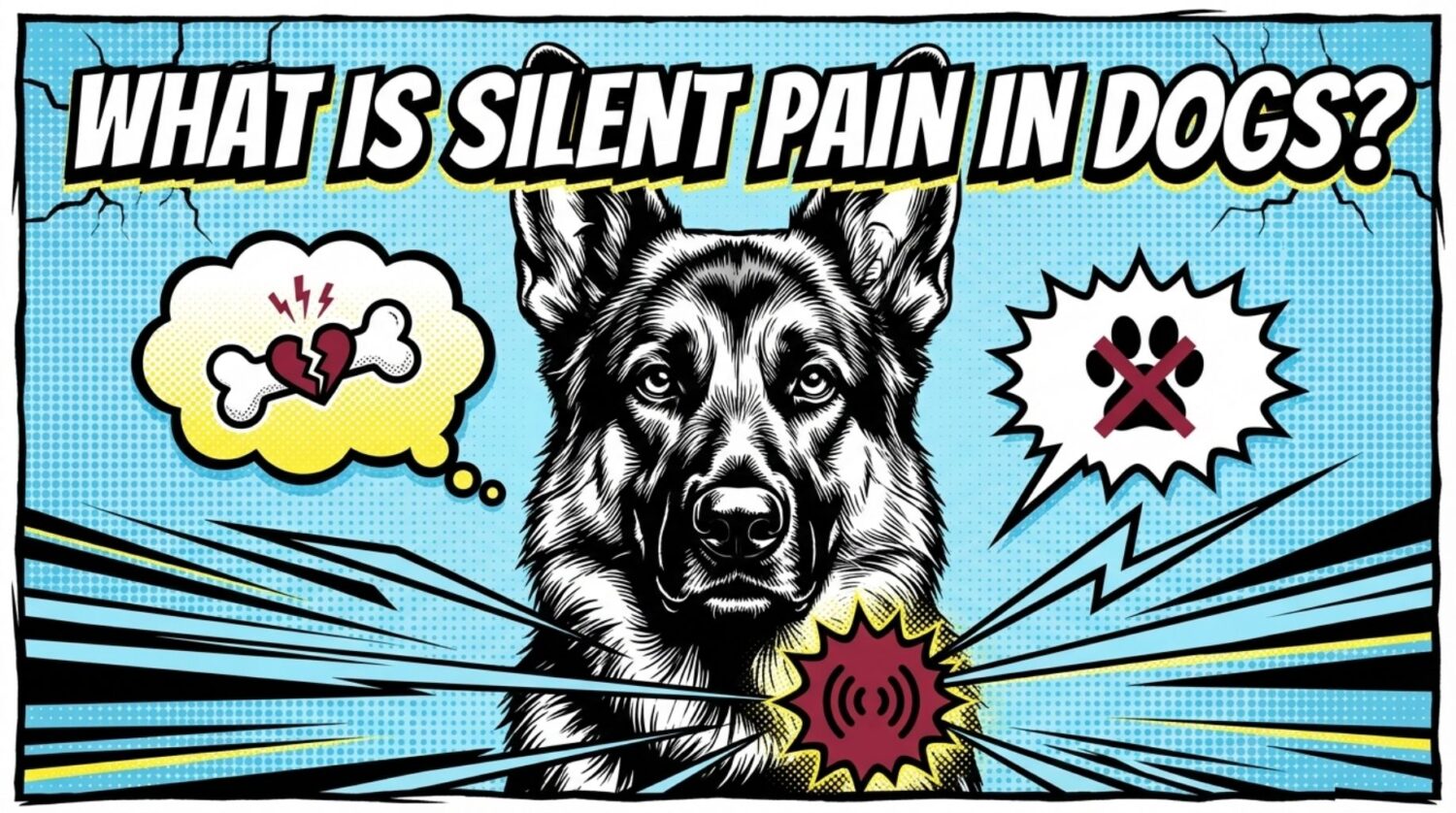
Here is a shocking fact from a 2025 review in the Journal of Veterinary Behavior. Over 25% of aggression cases have an underlying medical cause. Hip dysplasia, dental pain, or even a thorn in the paw can make a dog snap at strangers. How to fix dog aggression towards strangers must begin with a vet check. Do not skip this step.
Thyroid issues and neurological problems also trigger sudden aggression. One study tracked dogs with undiagnosed hypothyroidism. After they started medication, their aggression decreased by 80%. Pain makes your dog irritable and defensive.
A stranger reaching out to pet them might accidentally hurt their sore spot. So, before you hire a trainer, call your vet. Run blood panels and a full physical exam. If the vet finds a medical reason, treating it will solve half the aggression. Your dog is not angry; they are aching.
SAFETY FIRST: ESSENTIAL MANAGEMENT TOOLS TO FIX DOG AGGRESSION TOWARDS STRANGERS
Before you start any training, you must manage the environment. Safety is non-negotiable. Using the right tools to fix dog aggression towards strangers involves preventing bites while you work on behavior change. You cannot train a dog that is actively trying to bite someone.
Using a Leash and Muzzle to Safely Fix Dog Aggression Towards Strangers
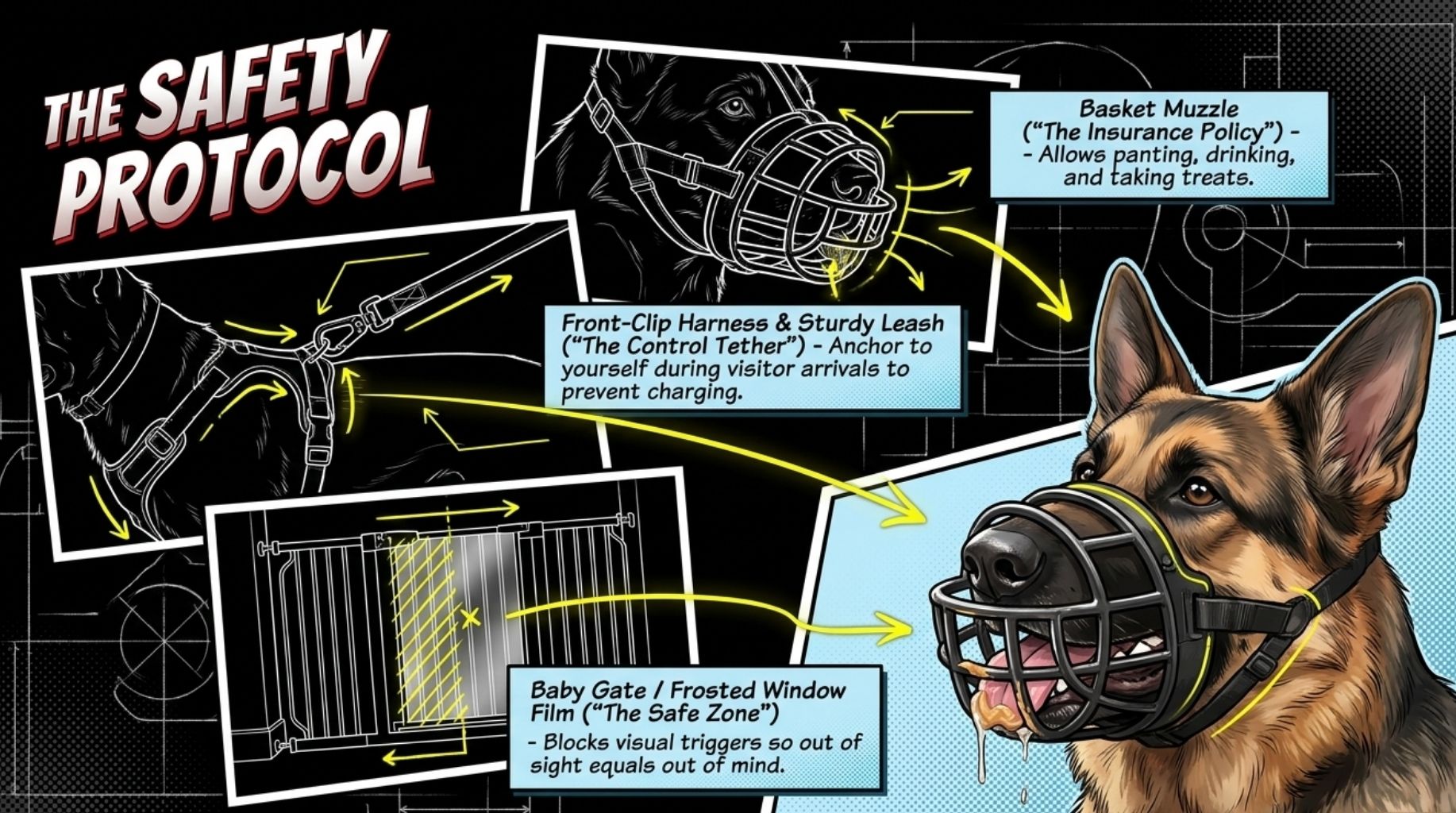
A front-clip harness and a basket muzzle are your best safety tools. A basket muzzle allows your dog to pant, drink, and take treats. It prevents bites without causing distress. Introducing the muzzle with peanut butter makes it a positive thing. This tool gives you peace of mind as you practice fixing dog aggression towards strangers.
Always keep your dog on a leash during visitor arrivals. Attach the leash to your waist or a sturdy anchor. This prevents your dog from charging the door. You maintain control while the stranger remains at a safe distance. Remember, a muzzle is not a punishment. It is an insurance policy.
Practice wearing the muzzle at home for short periods. Pair it with high-value rewards like cheese or hot dogs. Your dog will learn that the muzzle predicts good things. This makes the training process much smoother when strangers eventually enter the picture.
Creating a “Safe Zone” to Help Manage How to Fix Dog Aggression Towards Strangers
Set up a designated area for your dog when visitors arrive. This could be a crate, a gated kitchen, or a spare bedroom. Equip this zone with a comfy bed, water, and a long-lasting chew. Your dog stays here until you are ready to train. This is a critical step in how to fix dog aggression towards strangers.
This safe zone reduces your dog’s stress. They do not have to monitor every move the stranger makes. They can relax and focus on their chew toy. Over time, your dog will associate visitors with this positive alone time. You are lowering their overall anxiety load.
Never force your dog out of the safe zone to greet guests. Let them choose to come out when they feel ready. Forcing interaction backfires. It confirms your dog’s fear that strangers are unpredictable and scary. Respect their space, and they will slowly start to trust you.
Visual Barriers to Assist in Fixing Dog Aggression Towards Strangers
Sometimes, seeing the stranger is the main trigger. A visual barrier like a frosted window film or a baby gate with a cover can help. It allows your dog to hear the visitor without seeing them. Fixing dog aggression towards strangers often starts with lowering the visual intensity.
You can also use a solid fence or a hedge in your yard. If your dog cannot see the mailman, they cannot practice the aggressive behavior. Out of sight truly becomes out of mind. This gives you a clean slate for controlled training sessions.
Gradually, you will introduce brief visual glimpses. Start with a tiny crack in the barrier. Reward your dog for staying calm. Increase the exposure slowly over weeks. This builds your dog’s tolerance without overwhelming their nervous system.
THE SCIENCE OF DESENSITIZATION: A PROVEN WAY TO FIX DOG AGGRESSION TOWARDS STRANGERS
Desensitization is the gold standard for changing fearful reactions. It involves exposing your dog to a trigger at a very low intensity. Fixing dog aggression towards strangers relies heavily on this gradual approach. You are essentially rewiring the brain’s alarm system.
Finding the Correct Threshold to Fix Dog Aggression Towards Strangers
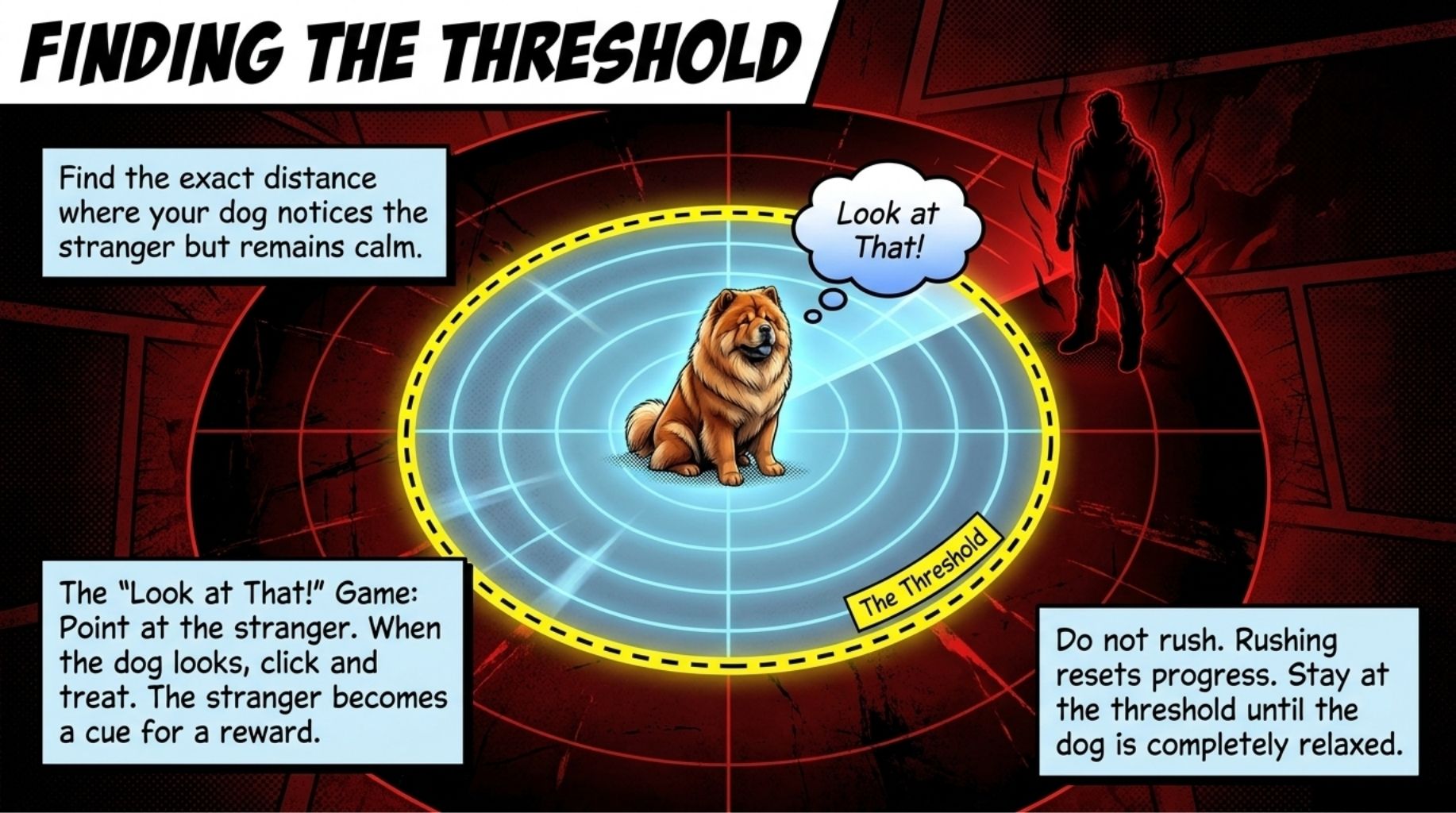
The threshold is the distance or intensity where your dog notices the stranger but does not react aggressively. Maybe it is 50 feet away. Maybe it is across the street. To fix dog aggression towards strangers, you must find that sweet spot. Your dog must see the stranger but remain calm.
Once you find the threshold, stay there. Reward your dog for looking at the stranger without barking or lunging. Use treats, praise, or a favorite toy. This sends a new message: “Stranger equals treats.” You are creating a positive prediction in your dog’s mind.
Move one tiny step closer only when your dog is completely relaxed. This process can take days or weeks. Do not rush. Rushing resets your progress. Patience is the secret ingredient to successful desensitization.
Using Staged Encounters to Practice Fixing Dog Aggression Towards Strangers
Enlist a calm, patient friend to act as your “stranger.” Brief them to ignore your dog completely. No eye contact, no talking, no reaching out. Fixing dog aggression towards strangers works best when the stranger is boring. Start with the friend standing at your threshold distance.
Your dog looks at the friend. You click and treat. Repeat this many times. The friend takes one step closer. You repeat the pattern. Over several sessions, the friend gets closer and closer. The dog starts to anticipate treats when they see this person.
Eventually, the friend can walk past your dog without a reaction. Then, they can sit down on a chair. Next, they can toss a treat on the floor without looking at the dog. Each stage builds on the last. This structured approach creates lasting behavioral change.
The “Look at That” Game to Support How to Fix Dog Aggression Towards Strangers
This is a brilliant game from Control Unleashed. You say “Look at That!” and point at the stranger. When your dog looks at the stranger, you click and reward. The stranger becomes the cue for a treat. This game empowers your dog to choose calm observation.
How to fix dog aggression towards strangers becomes fun with this game. Your dog starts looking at strangers eagerly, waiting for the click. They are actively choosing to disengage from the threat. This builds their confidence and decision-making skills.
Play this game daily during walks. Point at parked cars, bicycles, or distant people. Generalize the skill. When your dog masters it with random objects, transfer it to strangers. The game gives your dog control, which drastically lowers their stress levels.
COUNTER-CONDITIONING: CHANGING YOUR DOG’S EMOTIONAL RESPONSE TO STRANGERS
Counter-conditioning goes hand-in-hand with desensitization. While desensitization lowers the intensity, counter-conditioning changes the emotion. You are turning a negative feeling into a positive one. Fixing dog aggression towards strangers requires this emotional makeover.
Pairing Strangers with High-Value Rewards to Fix Dog Aggression Towards Strangers
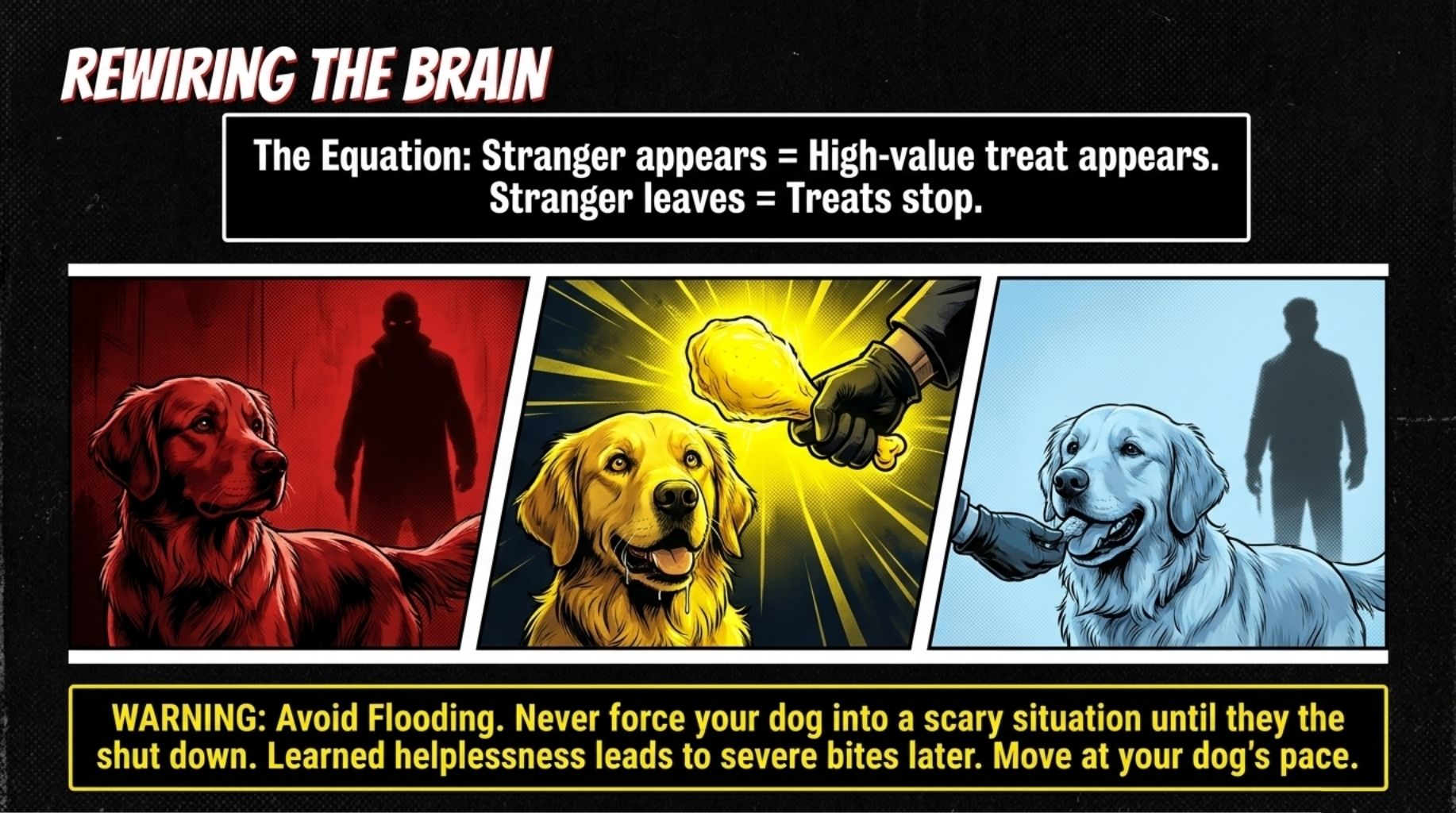
Timing is everything. You must present the treat exactly when the stranger appears. Your dog sees the stranger, and BAM, a piece of chicken appears. This classical conditioning creates a new link. To fix dog aggression towards strangers, you need this precise pairing.
Do this repeatedly. The stranger appears, chicken appears. The stranger leaves, the chicken stops. Your dog soon thinks, “Yay, a stranger! Where is my chicken?” This is a massive shift from “Oh no, a stranger! Where can I hide?“
Use the highest value treats possible. Boiled chicken, steak, liverwurst, or cheese. Reserve these special treats exclusively for stranger practice. This makes the reward even more powerful. Your dog will start volunteering for training sessions.
The Role of the Handler in Fixing Dog Aggression Towards Strangers
Your energy directly affects your dog. If you tense up when a stranger approaches, your dog feels that tension. They think, “Mom is scared, so I must be scared too.” Fixing dog aggression towards strangers demands that you stay calm and cheerful.
Smile and talk in a high-pitched, happy voice. Your dog mirrors your state. Act like the stranger is the best thing that ever happened. This social referencing is powerful. Your dog looks to you for cues on how to feel.
If you are anxious, practice breathing exercises. Keep the leash loose. A tight leash signals danger. Project an aura of “no big deal.” Your dog will start copying your relaxed posture, which makes training go much faster.
Avoid “Flooding” When Trying to Fix Dog Aggression Towards Strangers
Flooding means throwing your dog into the deep end. It involves forcing a dog to endure the scary thing at full intensity until they shut down. This is traumatic and dangerous. Fixing dog aggression towards strangers never uses flooding. A dog that shuts down is not “fixed.” They are frozen in learned helplessness.
This often leads to a sudden, severe bite later. Always respect your dog’s comfort zone. Slow and steady truly wins this race. If your dog panics, you have moved too fast. Take three steps back. Return to a distance where your dog is comfortable. Celebrate small victories. Progress might feel slow, but it is permanent.
WHAT THE LATEST RESEARCH SAYS ABOUT DOG AGGRESSION
Science is our best guide. We no longer rely on myths. Recent studies have given us clear, actionable insights into canine aggression. These findings directly inform how to fix dog aggression towards strangers.
The 2025 Pain and Aggression Connection Study
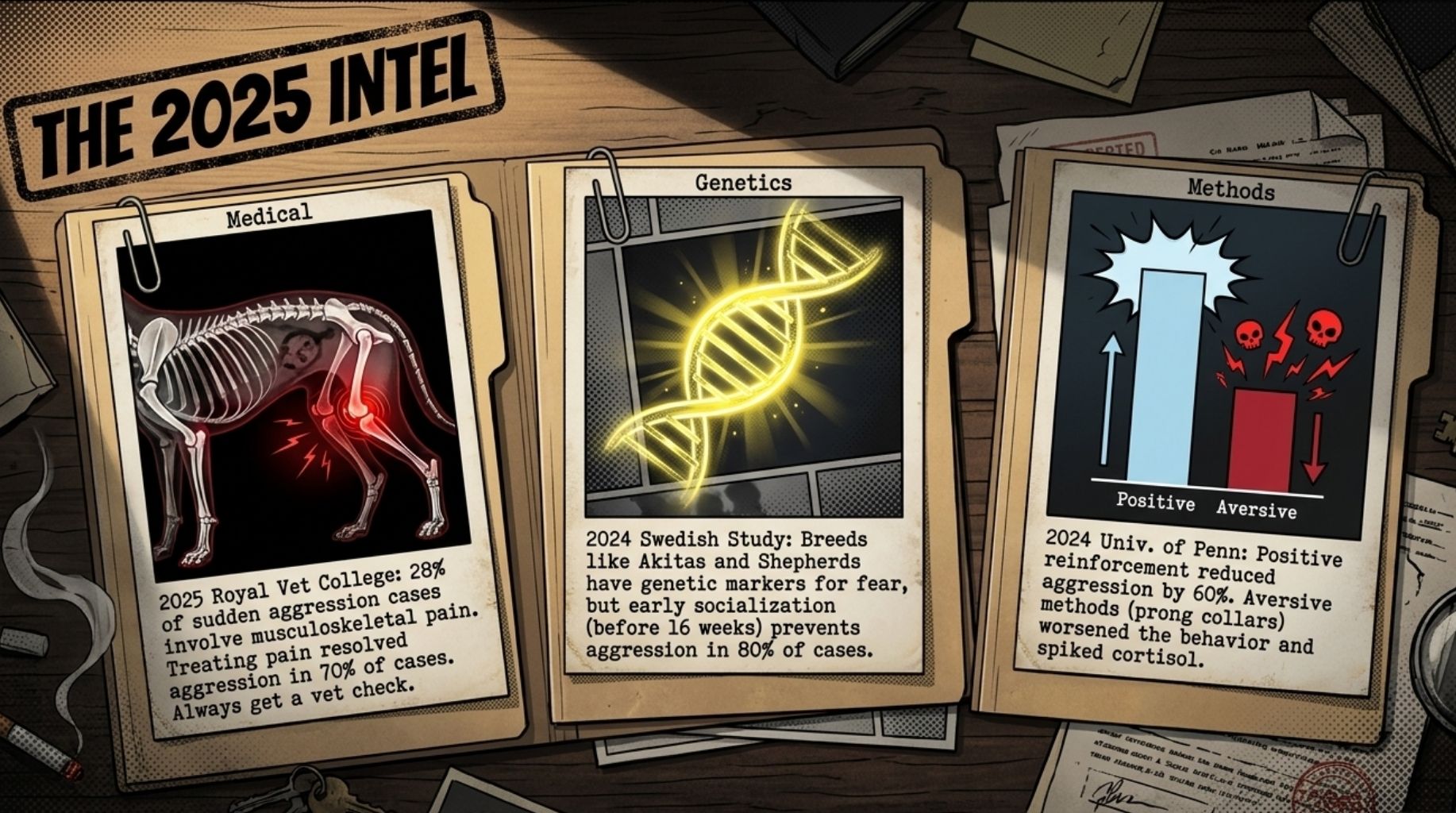
A large-scale 2025 study from the Royal Veterinary College analyzed 1,000 aggression cases. They found that 28% of dogs with sudden onset aggression had musculoskeletal pain. The dogs were not “angry.” They were physically hurting. Treating the pain resolved the aggression in 70% of those cases.
This study completely changes the game. It proves that a veterinary exam is not optional. It is mandatory. How to fix dog aggression towards strangers must include a full pain assessment. Watch for subtle signs like limping, reluctance to jump, or licking a joint.
The researchers recommend a pain trial. This involves giving the dog a short course of anti-inflammatory medication. If the aggression decreases, pain is likely the cause. This simple test can save you months of behavioral training.
Genetic Markers and Breed Predispositions (2024 Research)
Researchers in Sweden identified specific genetic markers linked to stranger-directed aggression. Breeds like Chow Chows, Akitas, and German Shepherds have a higher genetic propensity. However, these markers are not a life sentence. Environment influences whether these genes activate.
Early socialization is the most powerful environmental factor. Puppies that meet many different people before 16 weeks old are 80% less likely to develop aggression. Fixing dog aggression towards strangers in adult dogs is harder but still very possible. Adult brains retain neuroplasticity.
The study also showed that neutering does not uniformly reduce aggression. In some anxious dogs, neutering actually worsens fear-based responses. Always discuss the timing of neutering with your vet, especially if your dog is already nervous.
Efficacy of Positive Reinforcement vs. Aversive Methods (2024 Comparative Study)
The University of Pennsylvania conducted a two-year study comparing training methods. They divided aggressive dogs into two groups. One group used positive reinforcement. The other used prong collars and leash corrections. The results were clear. The positive group reduced aggression by 60%. The aversive group showed no improvement and often worsened.
Aversive methods increase cortisol levels. High cortisol impairs learning and heightens reactivity. How to fix dog aggression towards strangers must rely on reward-based techniques. Punishment suppresses behavior temporarily but damages trust permanently.
The researchers concluded that positive reinforcement is not just kinder; it is more effective. Dogs trained with rewards show better impulse control and faster recovery from stress. This is the evidence-based standard you should follow.
BUILDING A CONSISTENT ROUTINE FOR LASTING CHANGE
Training is not a one-time event. It is a lifestyle. To permanently fix dog aggression towards strangers, you need a consistent daily routine. This routine maintains your dog’s new calm habits and prevents relapse.
Daily Practice Sessions to Reinforce Fixing Dog Aggression Towards Strangers
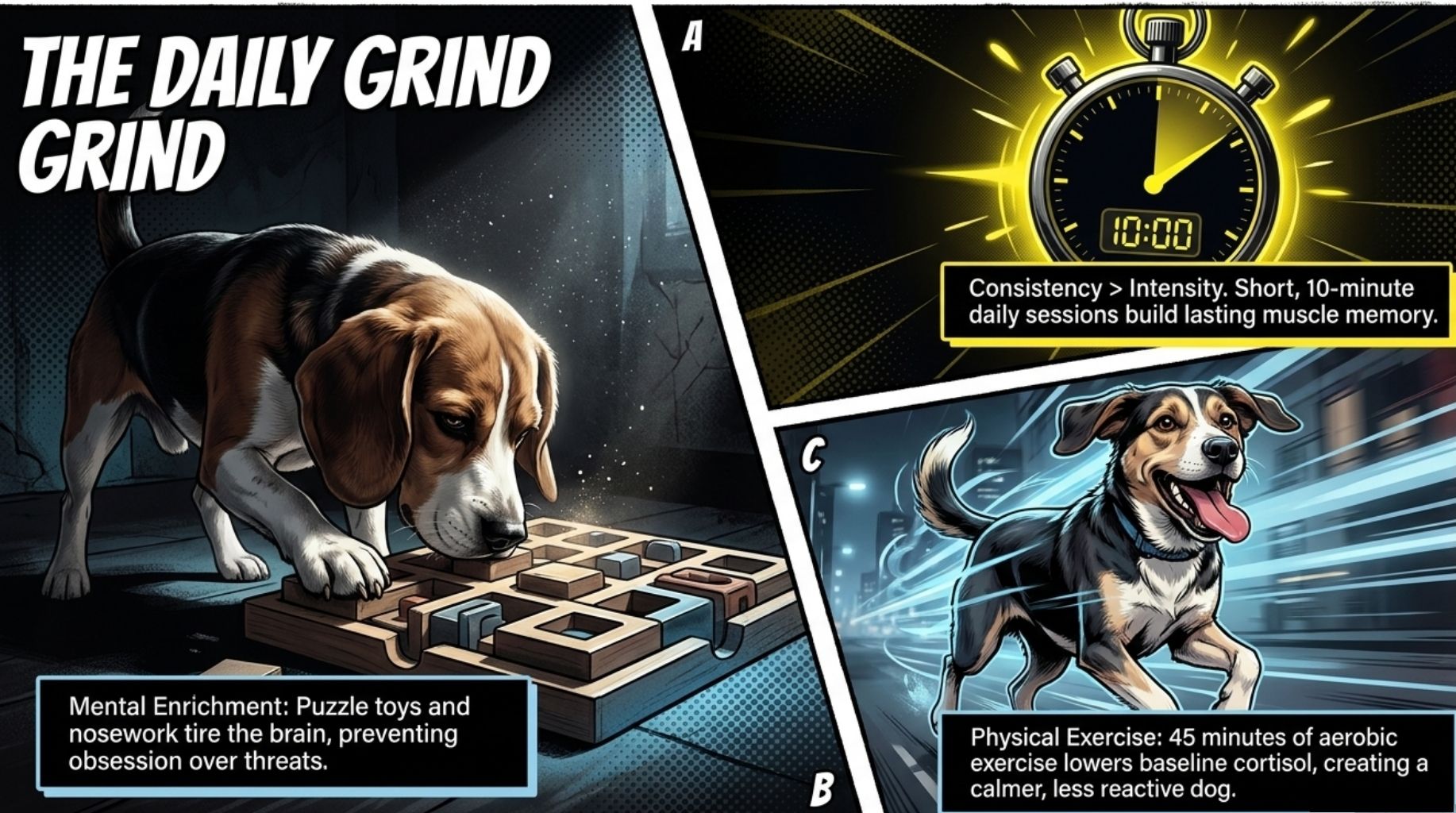
Set aside 10 minutes every day for practice. Use your own family members to act as “strangers” if you cannot find outside help. Have them knock on the door or ring the bell. Fixing dog aggression towards strangers depends on repetition. Repetition builds muscle memory.
Practice the “Look at That” game during every walk. Scan your environment for potential triggers. When you spot a distant stranger, initiate the game. This keeps your dog’s skills sharp. It also prevents the behavior from slipping back.
Consistency is more important than intensity. Short, daily sessions beat long, weekly sessions. Your dog will look forward to this training time because it is filled with tasty treats and your happy praise.
Enrichment and Exercise to Support How to Fix Dog Aggression Towards Strangers
A tired dog is a calmer dog. Physical exercise burns off nervous energy. Mental enrichment, like puzzle toys and scent work, tires the brain. How to fix dog aggression towards strangers becomes easier when your dog is physically and mentally satisfied.
A 2024 study showed that dogs receiving 45 minutes of aerobic exercise daily showed lower baseline cortisol. Lower cortisol means less reactive. Walks, fetch, and swimming are great options.
Combine these with nosework games that engage your dog’s powerful sniffing ability. A bored dog obsesses over threats. An enriched dog is more relaxed and resilient. So, before you greet a visitor, take your dog for a vigorous walk. A panting dog is a happy dog.
Knowing When to Call a Professional to Help Fix Dog Aggression Towards Strangers
Some aggression cases are too complex for DIY training. If your dog has bitten someone, or if you are terrified of handling them, seek professional help. A certified veterinary behaviorist or a qualified trainer with aggression experience is invaluable. They offer a fresh, expert perspective.
Look for credentials like IAABC or CCPDT. Ask about their training philosophy. They should use positive reinforcement, not punishment. A good professional will give you personalized homework. They will also teach you subtle body language cues you might have missed.
Investing in a professional is an investment in your dog’s life. It prevents accidents and saves you from endless frustration. There is no shame in asking for help. Smart owners know their limits.
FREQUENTLY ASKED QUESTIONS (FAQ)