
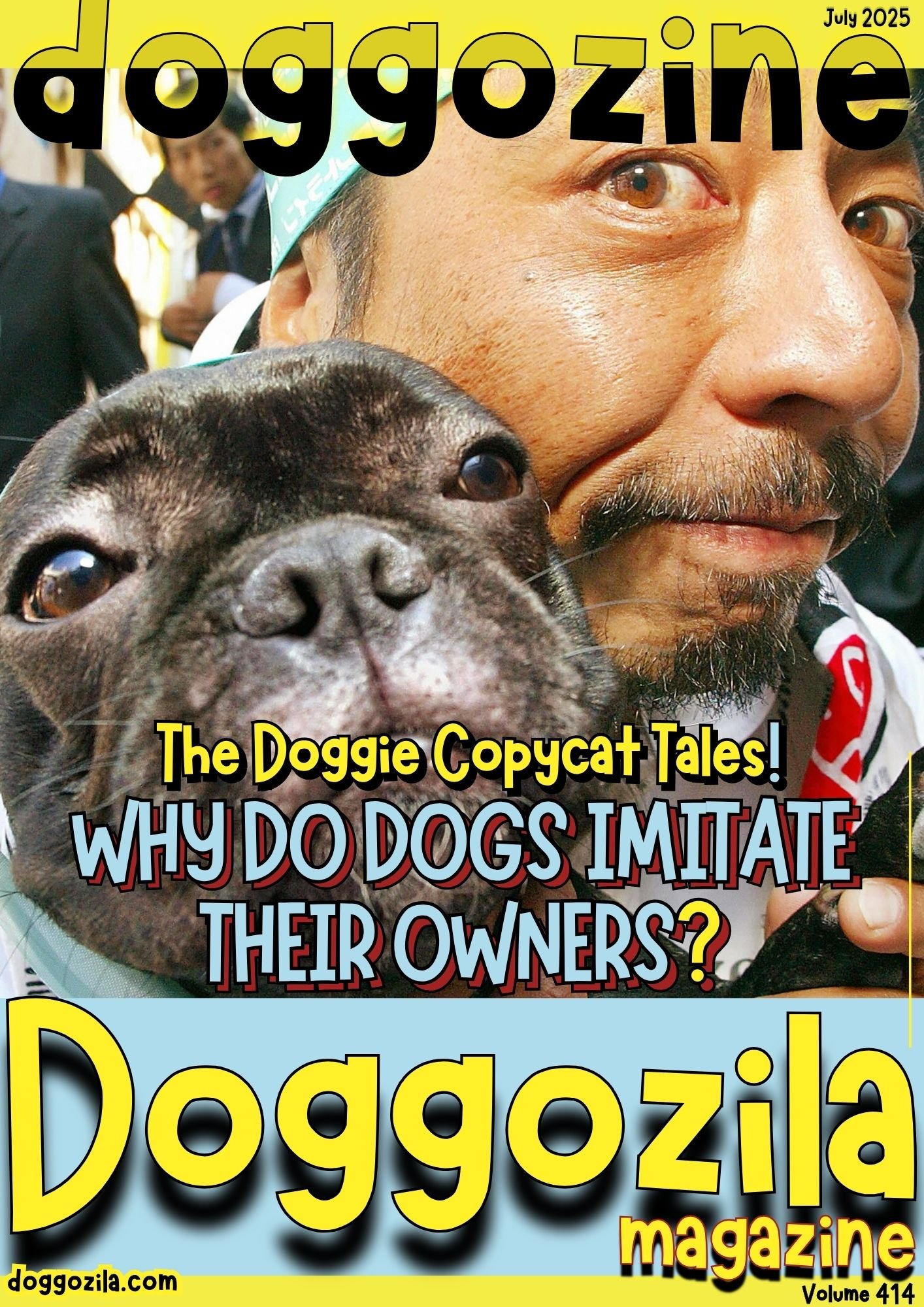
If you’ve ever caught your pup copying your every move, from yawning when you yawn to perching on the couch exactly how you do, then you’ve probably wondered, why do dogs imitate their owners in the first place? In this article, we’ll dive into the fascinating world of dog mimicry, combining cutting-edge research, real-life case studies, and plenty of heartwarming anecdotes that only a devoted dog blogger could share.
Together, we’ll explore how social learning, body-language cues, and even evolutionary survival strategies drive our furry friends to shadow us throughout the day. You’ll discover why your dog’s copied behaviors go beyond mere obedience and reveal deep emotional bonds that strengthen your partnership. Whether you’re a first-time dog parent or a seasoned trainer seeking fresh insights, this guide will equip you with knowledge and practical tips to turn everyday imitative moments into powerful training opportunities.
Updated: July 2026
“Have you ever caught your dog yawning right after you? That is no accident. It is science in action.”
Key Takeaways
- Imitation is a sign of a strong emotional bond.
- Mirror neurons help dogs learn by watching us.
- Dogs use a “copy everything” strategy to figure things out.
- Emotional mimicry deepens trust and understanding.
- You can use imitation as a fun training tool.
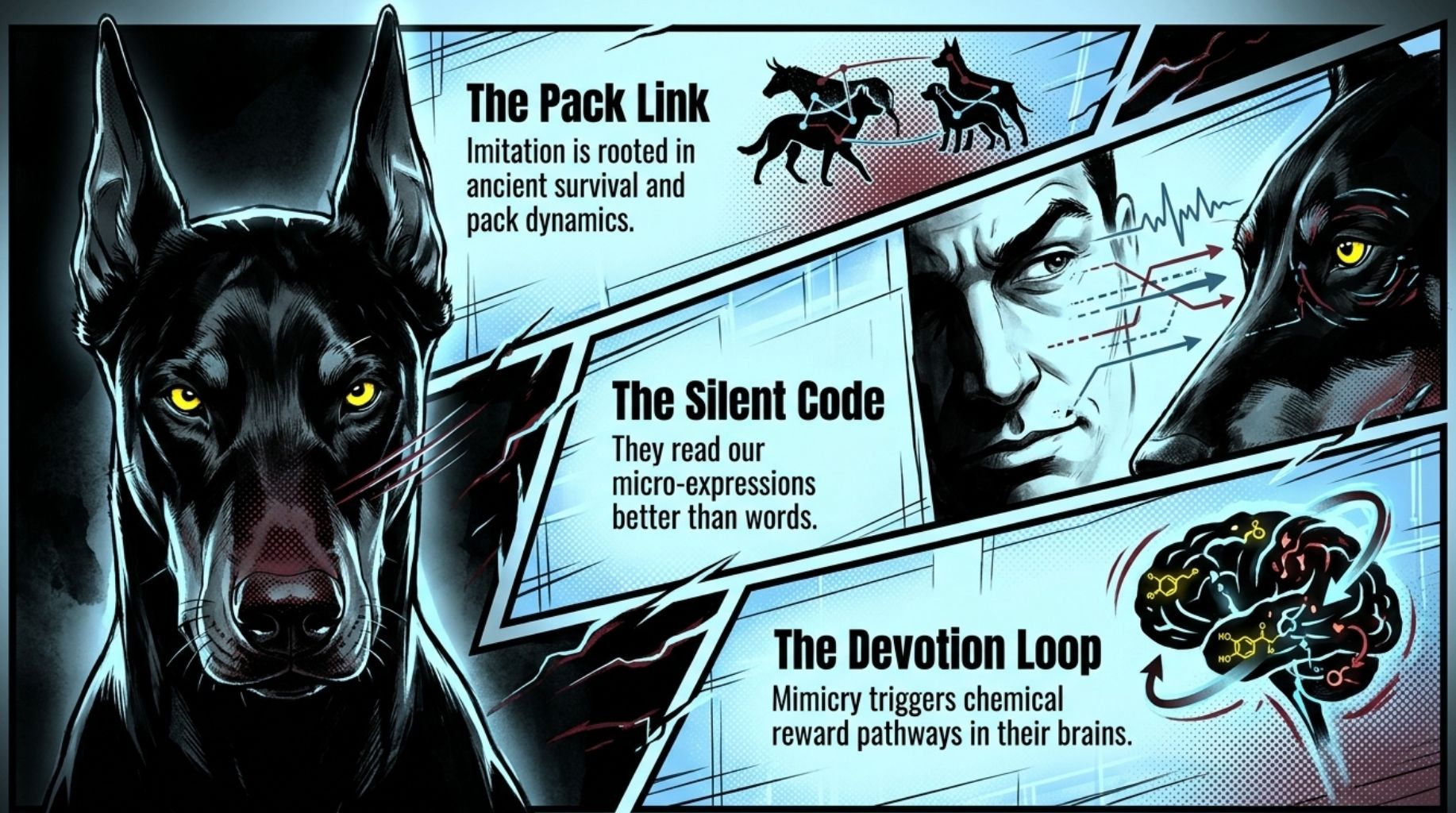
Quick Summary About Why Dogs Imitate Their Owners!
This ultimate guide explores the deep, science-backed reasons behind dog mimicry, proving that our furry friends mirror our physical postures and emotional states to build trust, communicate seamlessly, and strengthen our cross-species connection. Dogs imitate their owners for many reasons. It helps them bond, learn, and feel safe. You will discover why copying is a compliment. You will also learn how to use it for better training.
Listen to the Episode by The Bark Brigade Podcast About Why Dogs Mirror Our Every Move!
Discover The Scientific Fact Why Some Dogs are Looking Like Their Owners!
Jump in our article to find out more!
SCIENCE EXPLAINS WHY DO DOGS IMITATE THEIR OWNERS
Have you ever yawned and watched your dog yawn right back? Or noticed your pup tilting its head exactly when you do? These moments are more than just adorable coincidences. They are windows into a fascinating world of dog social learning.
Scientists have been studying this behavior for years, and they keep discovering just how deep it goes. Understanding why do dogs imitate their owners starts with understanding their brains.
Understanding Why Dogs Imitate Their Owners Starts with Brain Cells
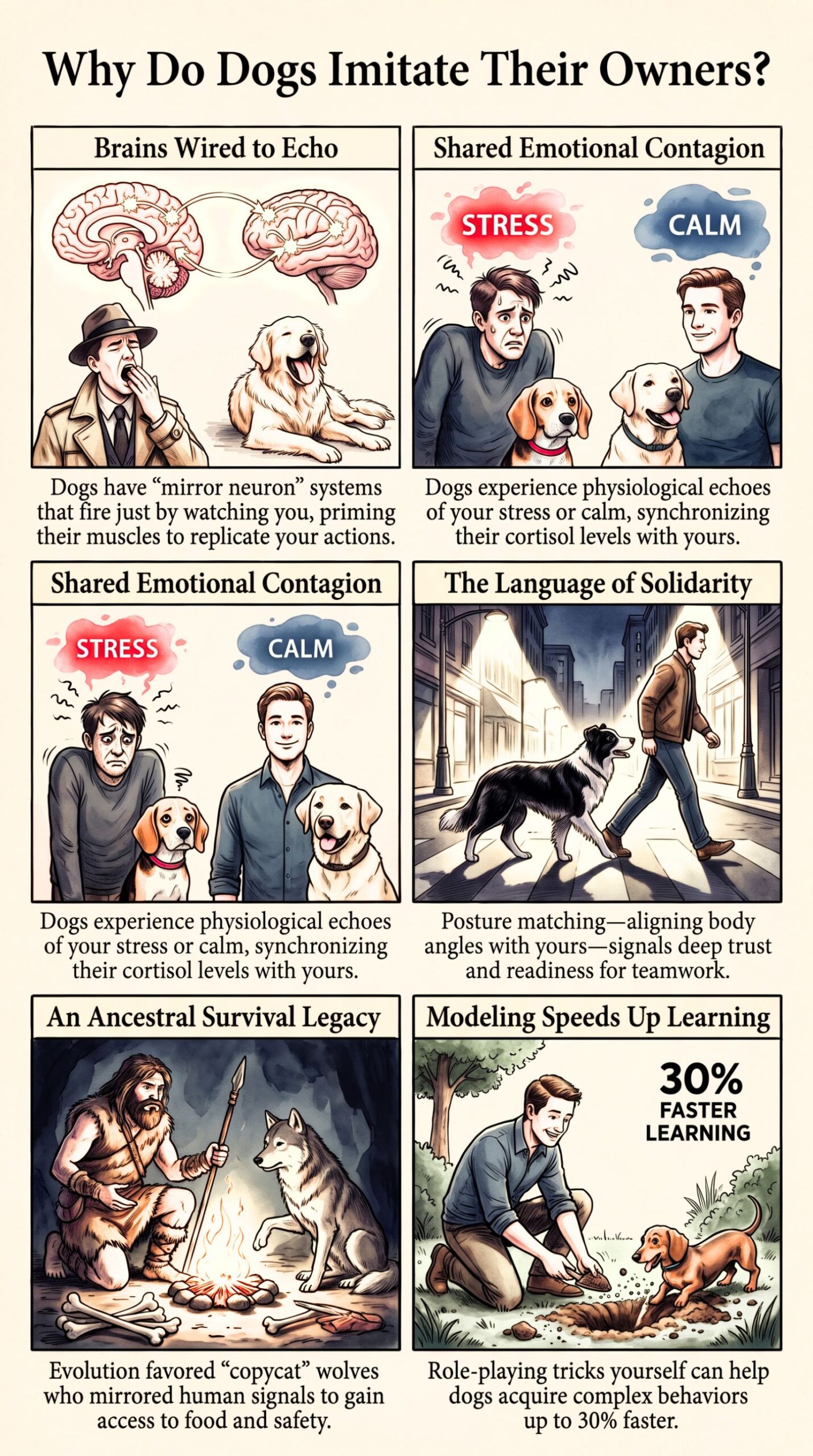
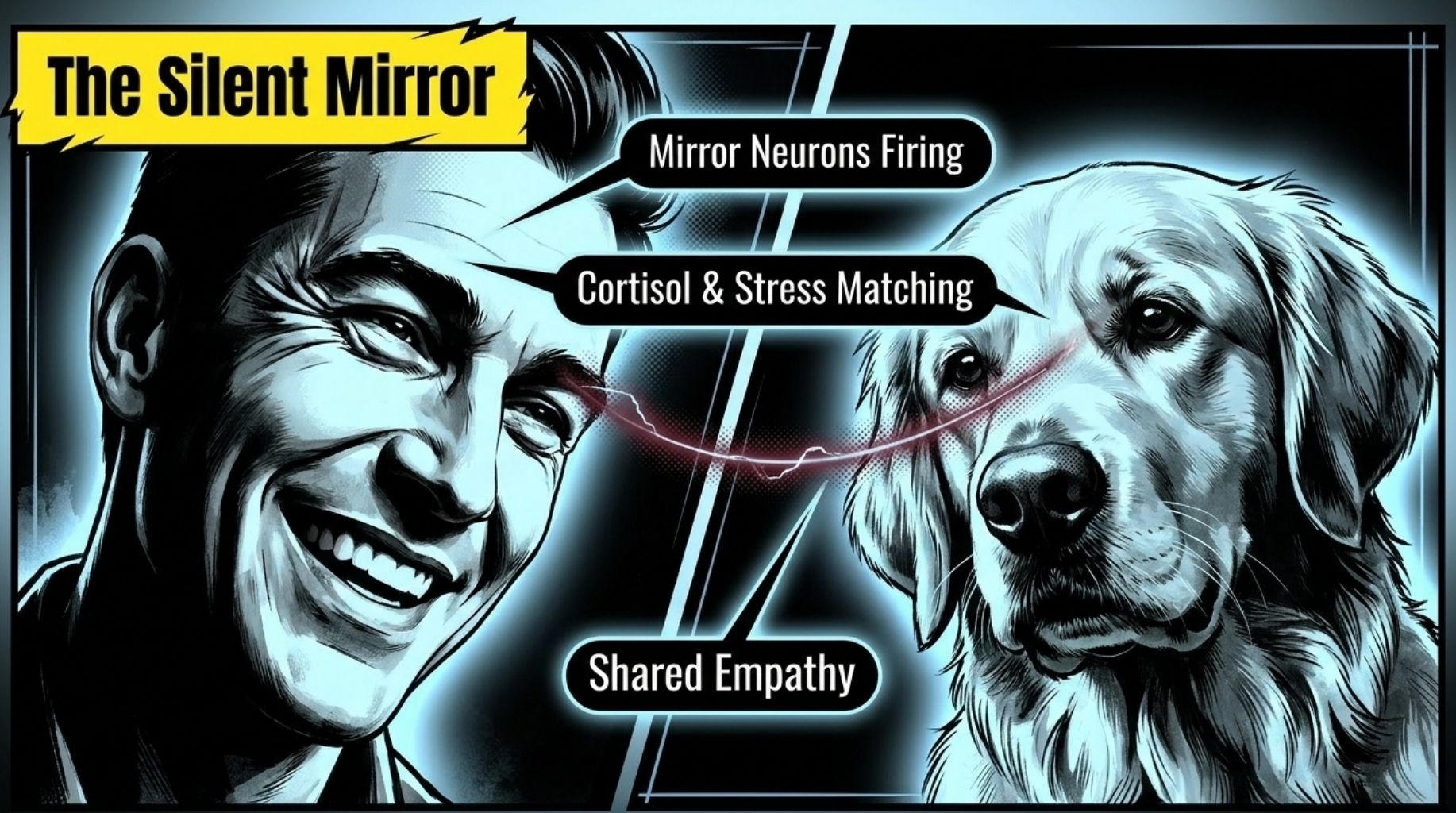
Dogs have special brain cells called mirror neurons. These cells fire when a dog does something. They also fire when a dog watches you do it. This system helps dogs learn by observation. It is the foundation of empathy in canines. Researchers believe this is a big reason why do dogs imitate their owners so easily. These neurons create a bridge between your actions and your dog’s brain. They make copying feel natural and automatic.
Why Do Dogs Imitate Their Owners So Quickly Without Thinking?
Sometimes dogs copy us without any effort. This is called automatic imitation. It happens in a split second. Your dog cannot control it. This reflex shows how deeply wired copying is in their DNA. It is just like when humans yawn after seeing someone yawn. Understanding why do dogs imitate their owners in this automatic way reveals how powerful their observation skills are. Their brains are built to mirror us instantly.
Social Learning Is a Key Reason Why Dogs Imitate Their Owners
Social learning drives much of dog behavior and offers a window into why dogs shadow human movements so seamlessly. Puppies watch their mothers to learn about life. They see how to eat, play, and rest. As they grow, they watch the mother dog’s cues for seeking food, rest, and play, internalizing each subtle twitch and bark.
Imitation is not just a reflex. It is a clever learning tool. Dogs watch our morning stretches and kitchen dances. They copy these moves to understand our world. This is exactly why do dogs imitate their owners from a very young age. They are hardwired to learn from us.
THE EMOTIONAL BOND AND WHY DO DOGS IMITATE THEIR OWNERS
Dogs are pack animals at heart. In the wild, pack members synchronize their actions to stay safe and cohesive. Your family is your dog’s pack, and imitation is a way to strengthen that bond. When your dog copies you, it is saying, “I am with you. We are a team.” This is a primary reason why do dogs imitate their owners in daily life.
Mimicry Acts as a Social Glue for Dogs and Humans
Behavioral synchronization creates unity between you and your pet. When you walk, your dog matches your pace. When you sit, your dog sits near you. This matching is a silent conversation. It builds trust every single day. This social bonding is a major reason why do dogs imitate their owners so consistently. Your dog feels closer to you when you move together.
The Love Hormone Helps Explain Why Dogs Imitate Their Owners
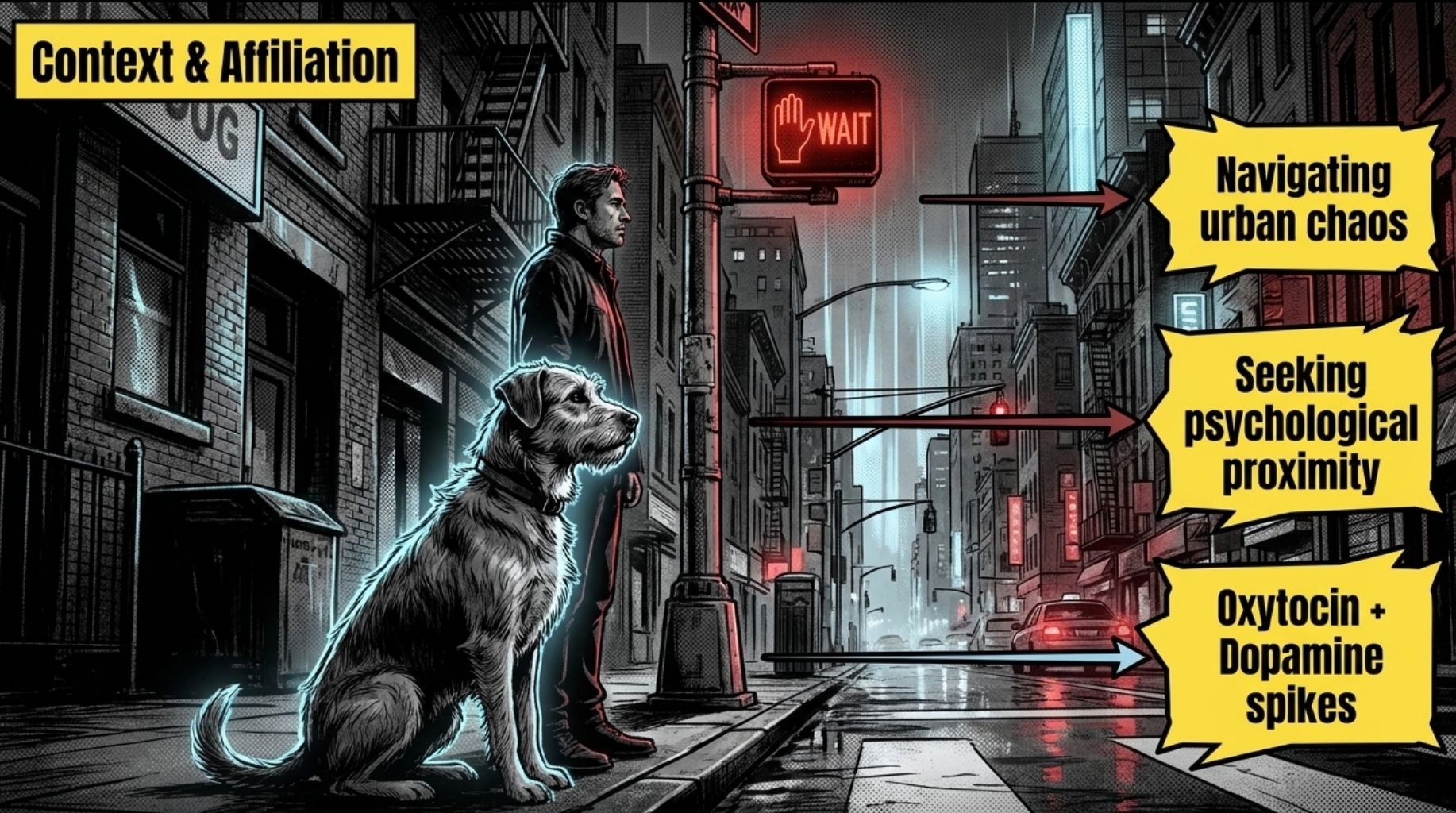
Oxytocin is the love hormone. It surges when you bond with your dog. When dogs copy us, both of you get an oxytocin boost. This chemical makes imitation feel great. It encourages both of you to stay in sync. The stronger your bond, the more your dog will copy you. Science shows that the answer to why do dogs imitate their owners often comes down to this powerful hormone. It makes copying a rewarding experience.
Strong Bonds Lead to More Mimicry in Dogs
Studies prove dogs copy their caregivers more than strangers. Your dog knows your scent and your voice. Imitation is a sign of deep affection. It proves your dog is paying attention. When you wonder why do dogs imitate their owners, remember it is mostly about love. The closer you feel, the more your dog will mirror your actions.
Studies measuring cortisol levels in dogs reveal parallel spikes when owners experience acute stress, underscoring a biochemical bridge between species. This mirroring of emotion goes beyond a simple behavioral copy, it’s a physiological echo that strengthens empathy.
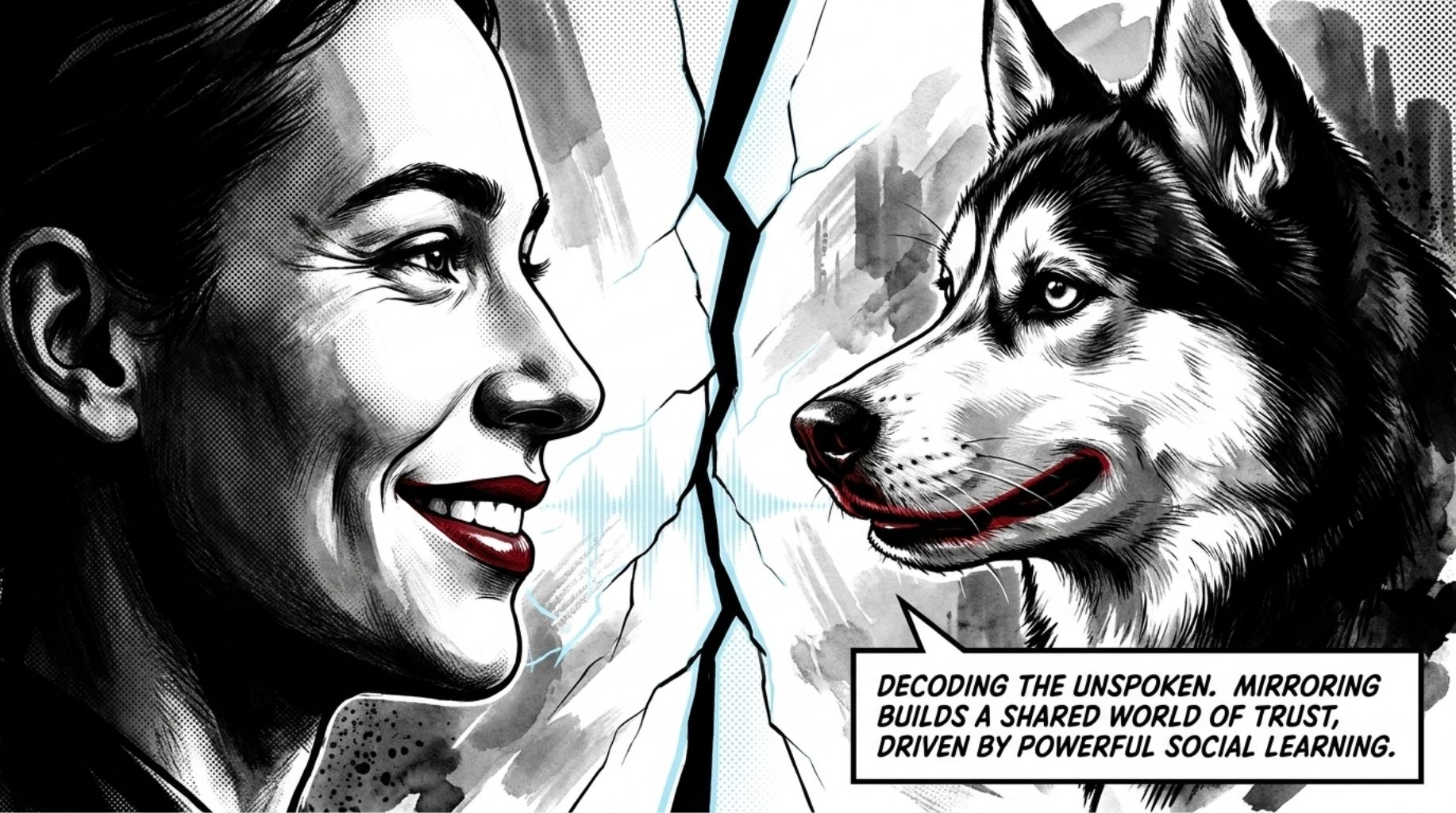
🔑 Key Points: Dogs imitate owners to decode unspoken cues (like laughter or gestures), creating a shared world of understanding and strengthening mutual trust. This mirroring goes beyond simple mimicry to form a foundational social bond.
PACK DYNAMICS SHOWS WHY DOGS IMITATE THEIR OWNERS
In a pack, every member has a role. Imitation helps dogs understand their place and learn the rules. When you are the leader, your dog watches you to figure out what to do. This is another key answer to why do dogs imitate their owners. They are looking to you for guidance on how to behave in your shared environment.
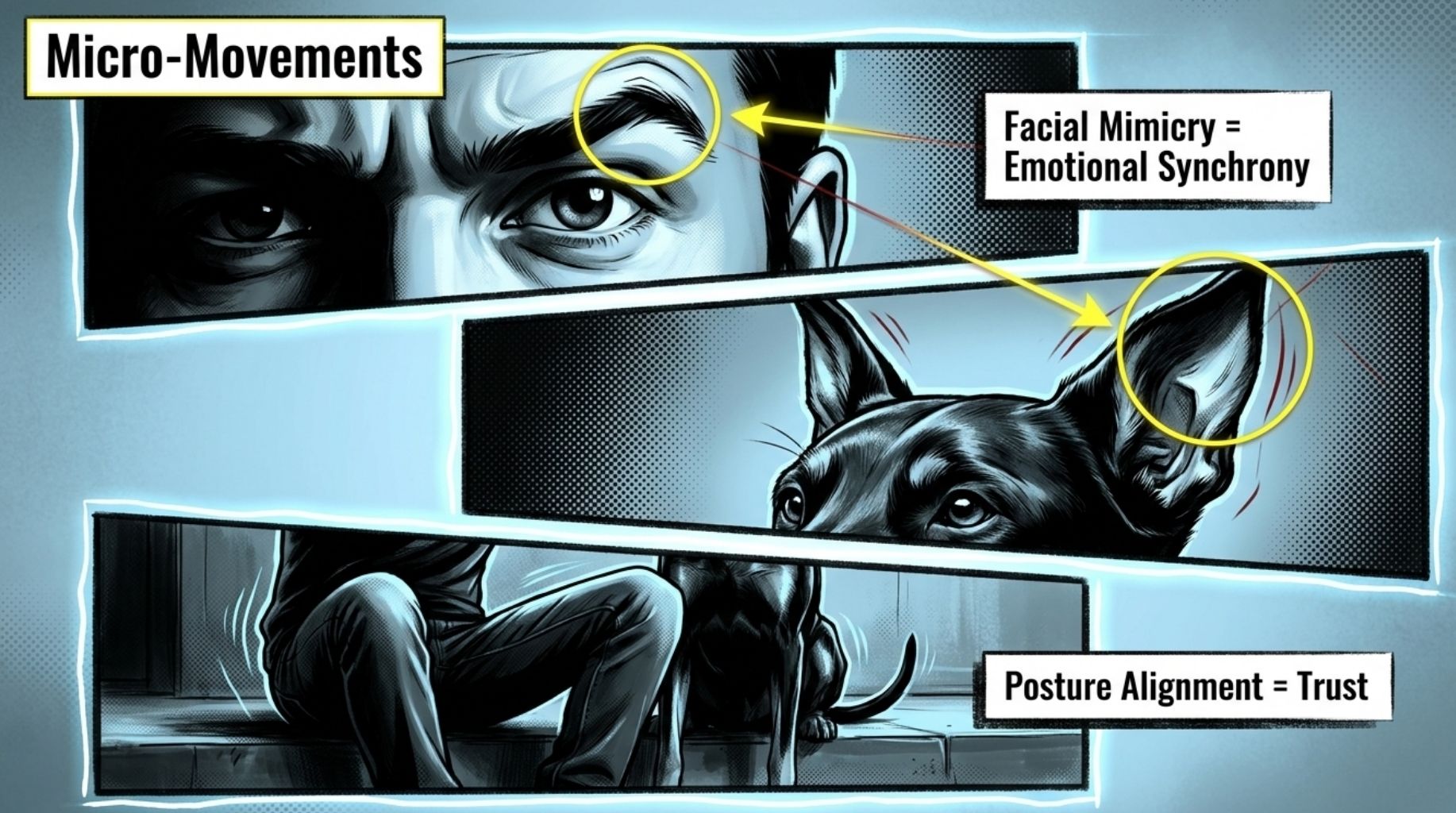
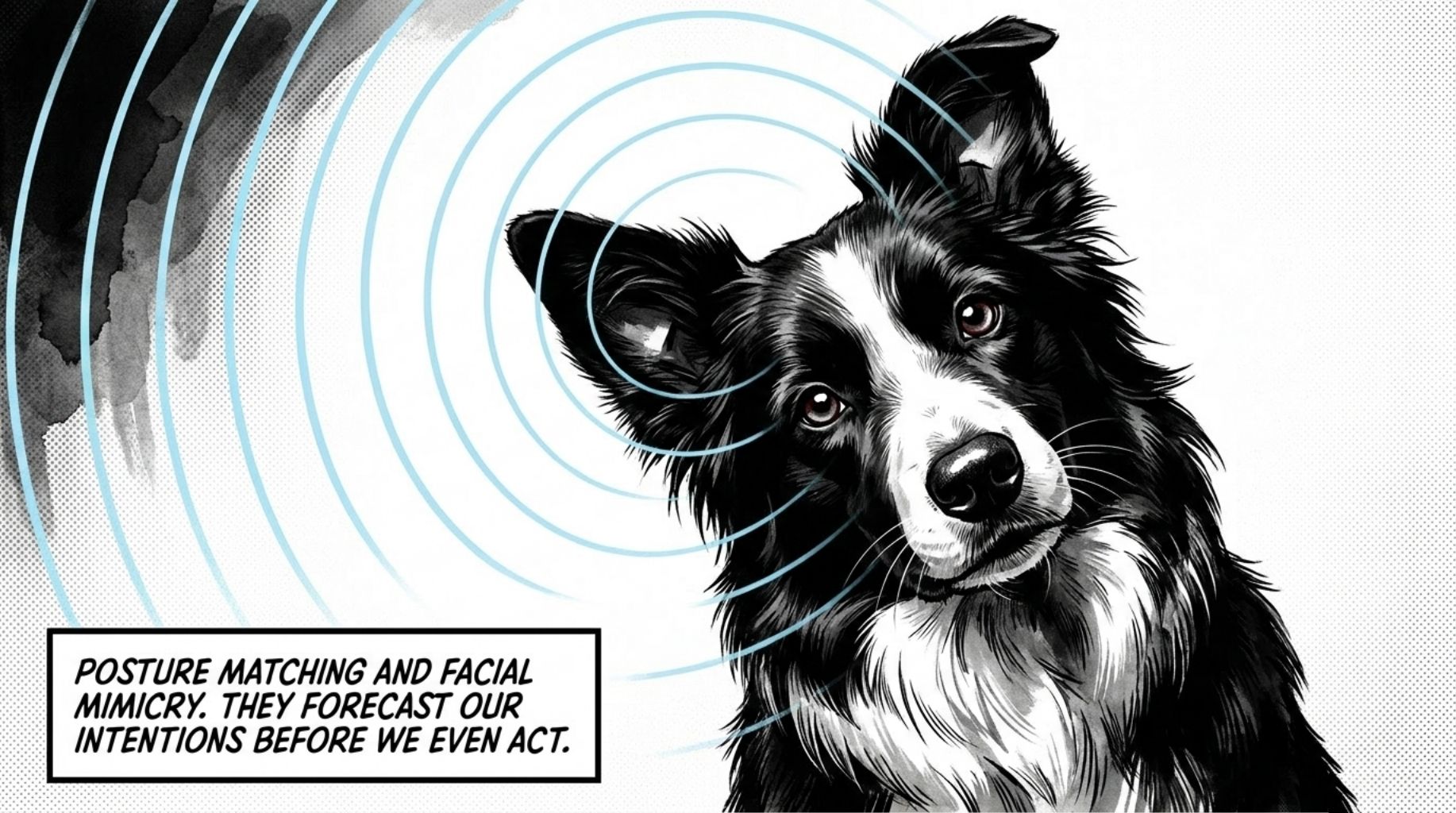
Body language forms the silent backbone of dog-human communication and compels us to decode why dogs mirror our every gesture so readily. This finely tuned nonverbal exchange is at the core of our daily interactions and bonds.
Learning Routines Shows Why Dogs Imitate Their Owners at Home
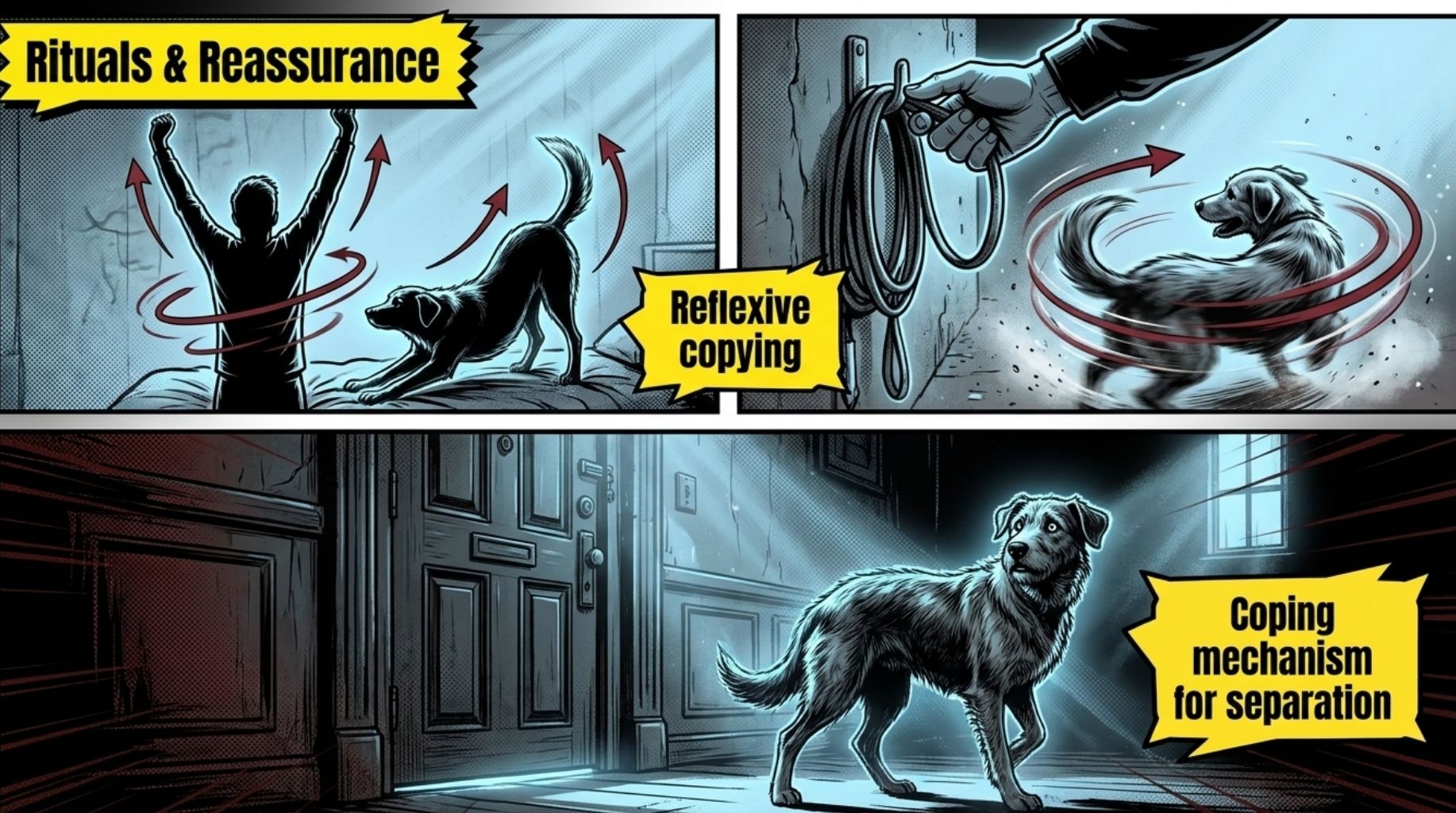
Dogs love routine and predictability. Dogs often are tilting their heads when we speak as if decoding an invisible code. They watch you to learn when to eat. They notice when you grab the leash for a walk. By copying your schedule, they feel secure. This helps them fit into your daily life. Understanding why do dogs imitate their owners in this context shows how much they depend on us for guidance. Your routine becomes their routine.
Following the Leader Explains Why Dogs Imitate Their Owners
Your dog sees you as the pack leader. Mirroring your posture is a sign of respect. When your dog copies your calm behavior, it shows trust. It also indicates a high level of social cohesion, dogs who align their stance with humans are more likely to follow commands and engage in cooperative tasks. This reduces confusion in the household. It creates a peaceful environment for everyone. This leadership dynamic clarifies why do dogs imitate their owners in their daily lives. They are showing they follow your lead.
Using Imitation to Cope with Stress
Dogs look to us when they feel scared. In stressful moments, they copy our behavior to calm down. If you stay relaxed, your dog will try to relax too. This is why why do dogs imitate their owners is so important for anxious pets. Your calm actions become their safety blanket. Copying helps them manage their own emotions.
🔑 Key Points: Dogs imitate owners primarily due to social learning, perceiving humans as pack members. Observing and copying human actions helps them feel secure, fit into the family unit, and refine communication, cementing teamwork and harmonious coexistence.
WHAT THE LATEST RESEARCH REVEALS ABOUT DOG IMITATION
This topic is not just for dog lovers, it is a hot area in scientific research. Recent studies have uncovered surprising facts about why and how dogs copy us. These findings are changing the way we think about canine intelligence and the human-animal bond.
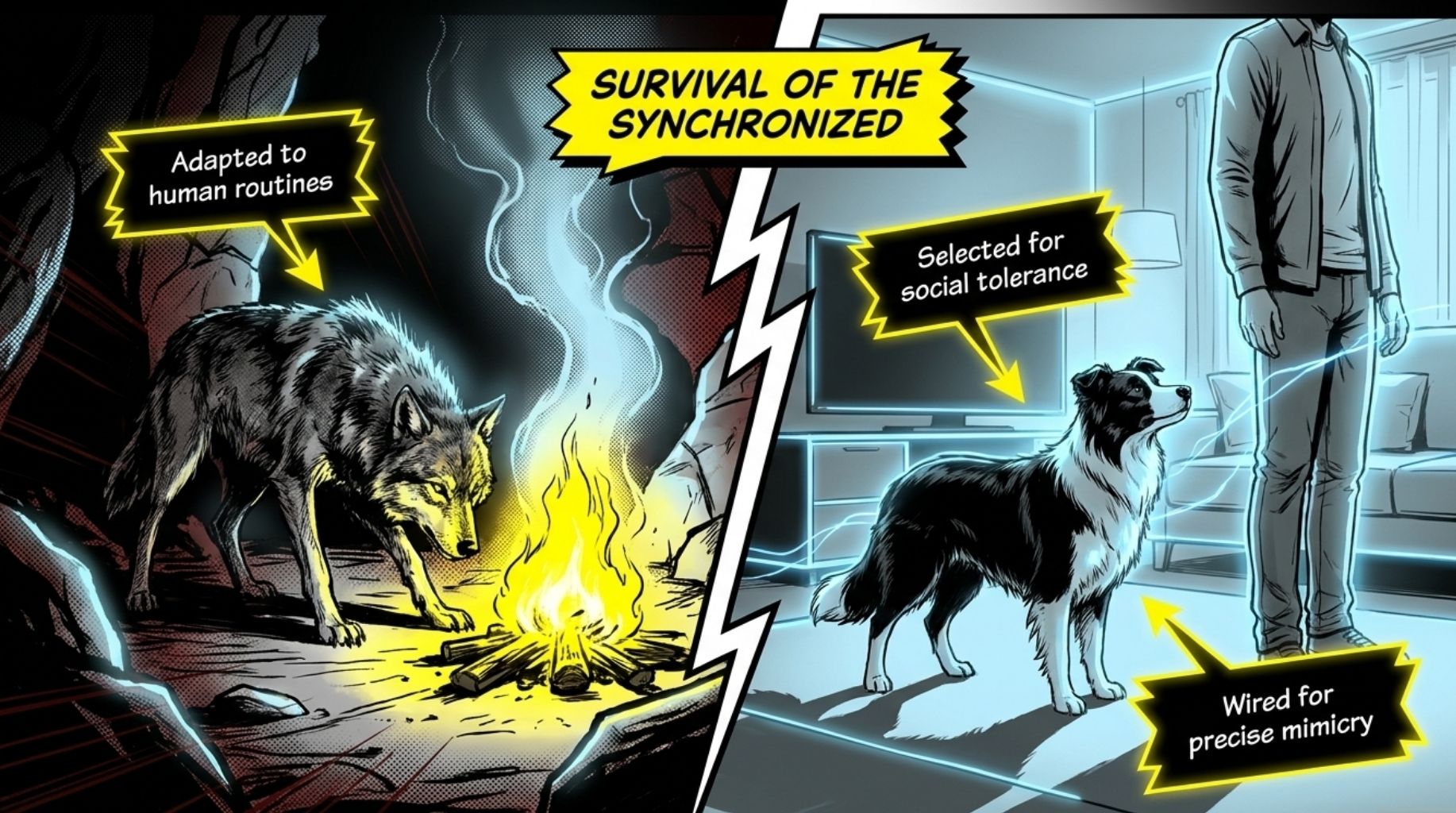
Genetic studies confirm that dogs possess unique gene expressions for social tolerance and communication absent in their wild cousins. Modern dogs retain these inherited skills, effortlessly linking our body language to their own responses.
The “Copy-All, Refine-Later” Strategy in Dogs
A 2026 study compared dogs with children. Children copied every action every time. Dogs, however, copied less over time. This shows dogs use a smart plan. They copy everything first, then figure out what works. This research directly answers why do dogs imitate their owners with such flexibility. They are thoughtful learners, not just mindless copycats. Dogs can reflect our day-to-day energy, curling up when we relax or bouncing along during our zoom calls.
Overimitation and the Role of Attention
A 2025 study looked at whether dogs copy us more when we watch. Surprisingly, attention did not change their copying of useless actions. But dogs copied useful actions more when watched. This shows dogs have two goals, getting a reward and connecting with us. Understanding why do dogs imitate their owners helps clarify these dual motivations. They want to succeed and bond at the same time.
Assistance Dogs Versus Family Pets
A 2025 study compared assistance dogs and family dogs. Surprisingly, assistance dogs did not copy more than family pets. Only about 34.7% of all dogs showed this behavior. This proves that personality matters more than training. Every dog is unique in its copying habits. This study adds nuance to why do dogs imitate their owners differently. Understanding this when training them can help in pacing sessions to match dogs’ cognitive rhythms.
Humans Learn from Dogs Too
Research shows that humans copy dogs as well. A 2025 study found adults following a dog’s choices. This proves the influence goes both ways. We mimic our pets just as they mimic us. This mutual learning strengthens the bond. It shows that asking why do dogs imitate their owners is only half the story. We copy them too.
Word Learning Through Overhearing Conversations
In 2026, researchers made a fascinating discovery. Some dogs can learn words just by overhearing us talk. This ability is similar to an 18-month-old toddler. It shows dogs are always learning from us. They absorb information even when we are not teaching. This passive learning is closely tied to why do dogs imitate their owners in everyday life.
🔑 Key Points: Dog imitation stems from both instinctual roots (like observing mothers) and learned behavior through mirror neurons. Watching human routines allows dogs to map actions to rewards, adapting seamlessly to human environments and forecasting intentions.
REAL-LIFE EXAMPLES OF DOGS THAT IMITATE THEIR OWNERS
Science is fascinating, but nothing beats real-life stories. Dog owners around the world share amazing tales of their pups copying them. These stories bring the research to life and show just how common and heartwarming this behavior is.
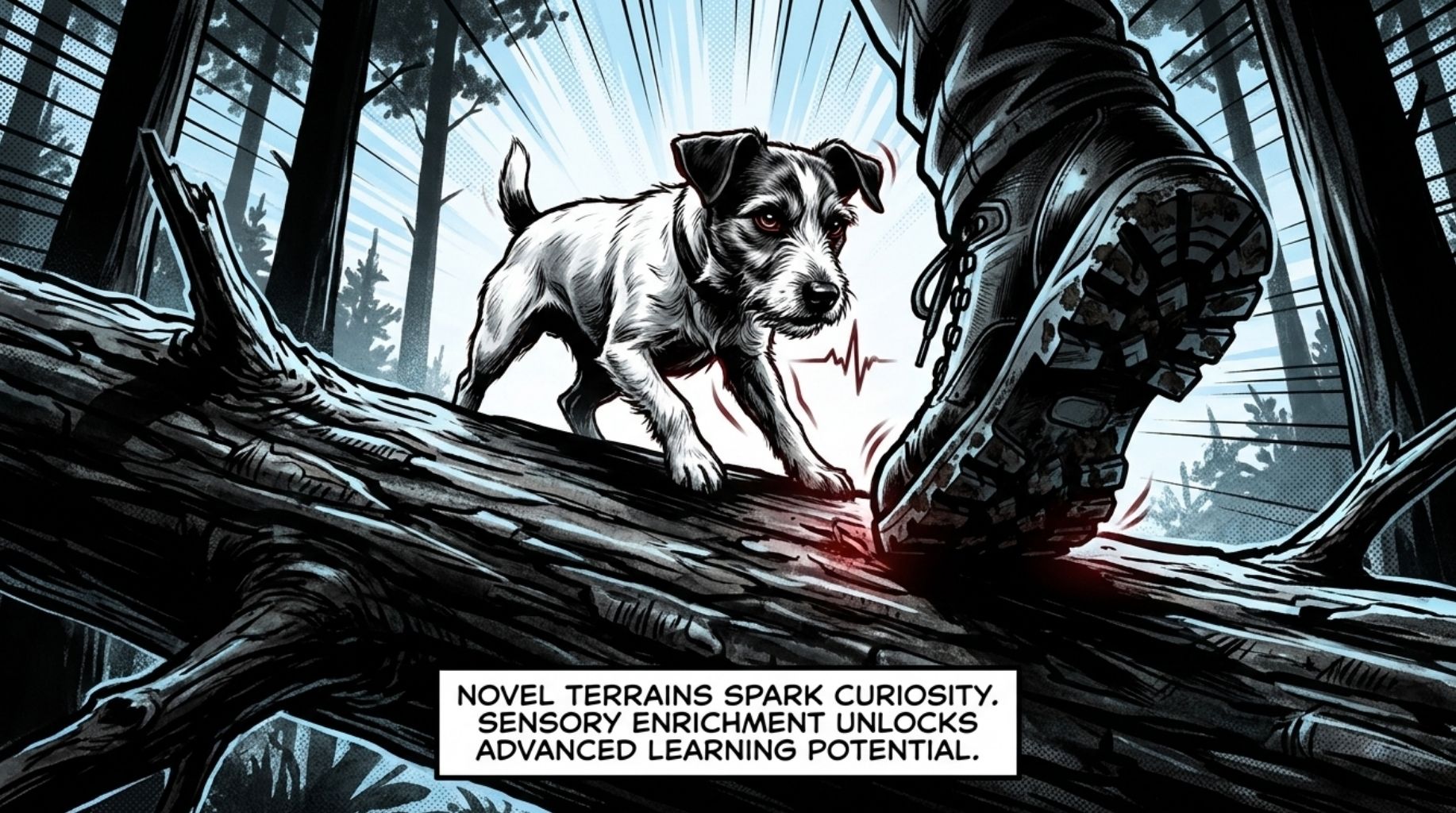
By exposing our dogs to varied environments, we can unlock latent imitative skills adapted to context-specific challenges.
The Contagious Yawn Phenomenon
Yawning is a common form of dog imitation. When you yawn, your dog often yawns back. This is not about being tired. It is actually a sign of empathy. Connected animals yawn together. This is a perfect example of why do dogs imitate their owners. It shows emotional bonding in action.
Copying Human Postures and Poses
Have you seen a dog sit like a human on the couch? Some dogs cross their paws just like their owners. Others lean back in chairs like we do. These examples show observational learning. Dogs copy our body language to feel part of the family. These funny moments remind us why do dogs imitate their owners so adorably.
Learning to Use Communication Buttons
Some dogs learn to press buttons to “talk.” These clever pets are imitating our technology use. They watch us press buttons and copy us. This is a high-level cognitive skill. It proves dogs can generalize imitation to new objects. This advanced mimicry deepens our understanding of why do dogs imitate their owners.
Mimicking Emotional Expressions
Dogs are experts at reading our emotions. When you smile, your dog wags its tail. When you frown, your dog may nuzzle you. This emotional mimicry shows deep connection. Your dog is sharing your feelings. This empathy is the heart of why do dogs imitate their owners. They feel what you feel.
🔑 Key Points: Dogs unconsciously mirror owners’ emotional states (calmness, stress) through emotional contagion, creating a physiological echo. This synchrony, measurable in cortisol levels, fosters deep empathy and explains therapy dogs’ attunement, making owner composure crucial for the dog’s well-being.
HOW TO USE DOG IMITATION FOR TRAINING?
Imitation is not just a cute quirk, it is a powerful training tool. You can use your dog’s natural tendency to copy you to teach new behaviors. This makes training fun, effective, and bonding.
Did you know that some dogs love music. So, try to use music, colorful props, and dynamic pacing to keep sessions lively. Dogs engaged in imitation games display reduced stress markers and increased willingness to try new tasks.
The “Do As I Do” Training Method
Trainers use a method called “Do As I Do.” You show your dog an action. Then you give a command like “Do it!” Your dog watches and copies you. This method works because it taps into their mimicry instincts. It is the best practical example of why dogs imitate their owners. It turns observation into action.
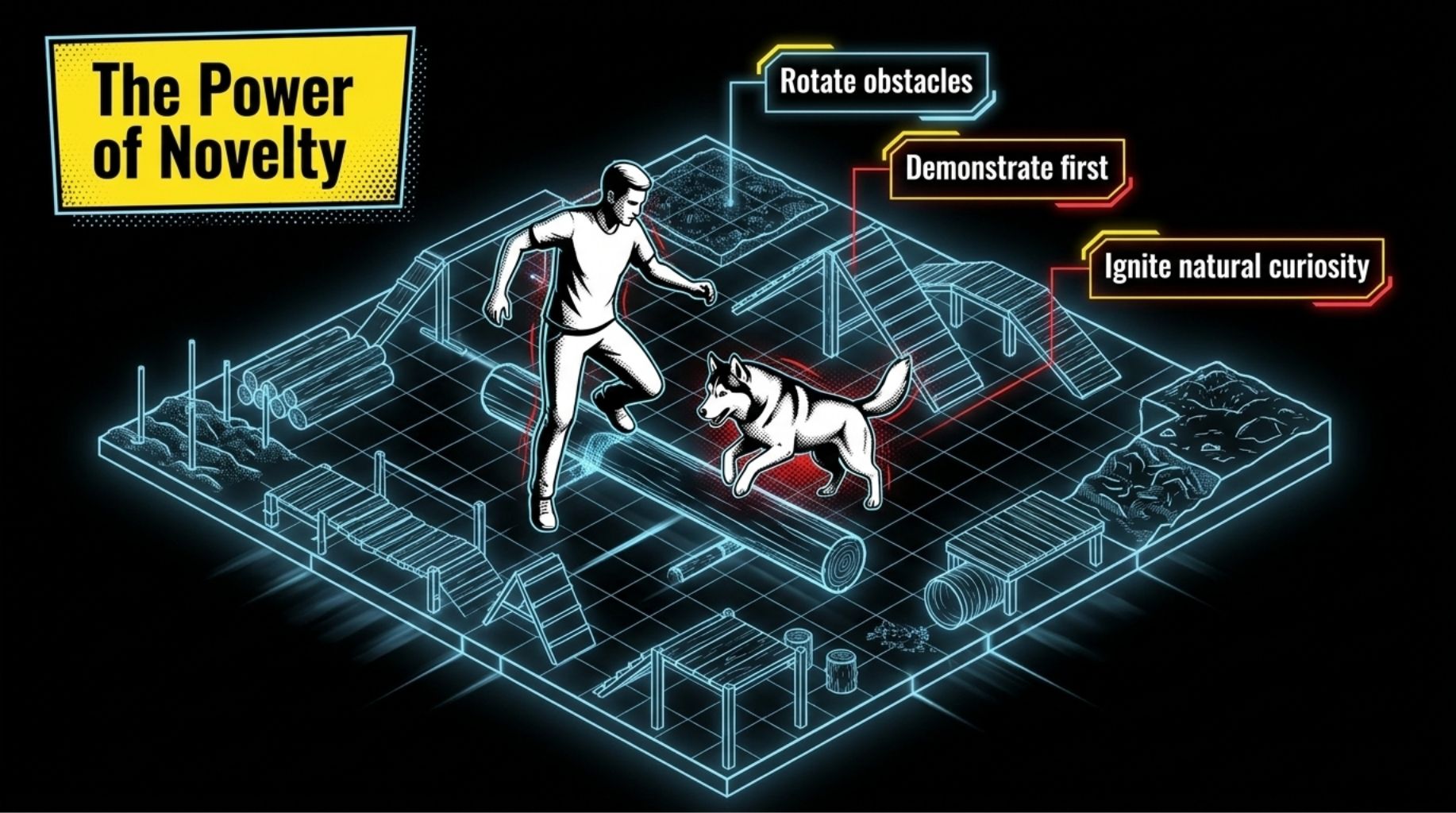
By rotating enrichment elements every few days, swapping out toys, rearranging furniture, or introducing new treats, we maintain a sweet spot of familiarity and surprise. Too little change risks stagnation, while too much novelty overwhelms dogs’ processing capacity.
Each rotation invites dogs to observe and imitate our interactions with the renewed objects. Trainers note that this rotation strategy can double the rate of trick acquisition compared to static environments. It also sustains dogs’ enthusiasm for learning throughout their lives.
Outdoor Enrichment Strategies That Reveal Why Dogs Imitate Their Owners Even In Natural Settings
Outdoor spaces offer infinite enrichment opportunities, from hiking trails to agility obstacles. When hiking through uneven terrain, pause at rocky outcrops to demonstrate careful foot placement, encouraging dogs to mirror your cautious steps.
In the backyard, arrange logs for balance beams or low hurdles for jumping and rolling exercises. Natural elements like streams and fallen branches become props for synchronized exploration and imitation. This immersive approach transforms every outing into a live-action training ground where dogs eagerly copy our adventurous feats.
Using Imitation for Problem-Solving Games
You can use imitation to help your dog solve puzzles. Show your dog how to open a treat toy. Let your dog watch you find a hidden snack. Your pet will learn by watching you. This mentally stimulates your dog and builds confidence. These games are fun ways to explore how dogs imitate their owners. By framing new tasks as joint adventures rather than isolated drills, we honor dogs’ social learning strengths.
Strengthening the Bond Through Playful Mimicry
Dogs with fear-based or avoidance behaviors can benefit from carefully staged imitation exercises. Imitation games are fantastic for bonding. Try copying each other’s movements. When your dog copies you, reward it with praise. This positive reinforcement makes mimicry enjoyable. It turns learning into a shared adventure. Playful imitation reinforces dogs to imitate their owners in the best way possible. It is all about having fun together.
Integrate Technology To Enhance Training Precision
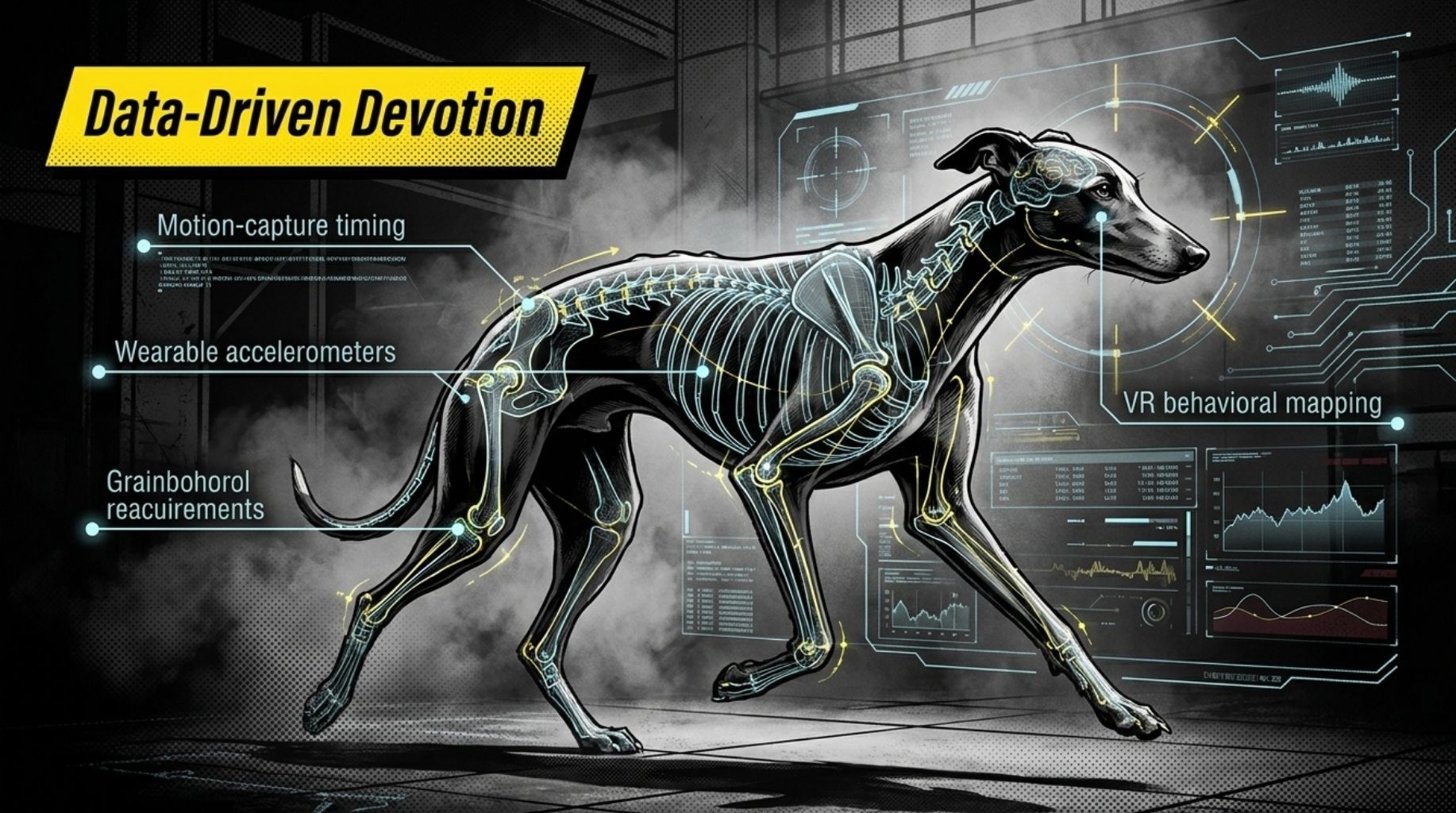
Attaching lightweight accelerometers to collars and harnesses records dogs’ movement profiles throughout the day. These trackers highlight peaks of imitative behavior, perhaps after morning walks or post-lunch breaks. Trainers use this information to schedule formal practice sessions at times when dogs naturally exhibit higher mimicry rates.
Over weeks, patterns emerge that reveal each dog’s personal prime learning windows. Capitalizing on these windows maximizes session efficiency and depth of learning. A growing array of mobile apps designed for dog training offer step-by-step imitation modules.
Users receive visual prompts to demonstrate behaviors and can record their dog’s attempts directly through the app interface. Automatic scoring algorithms rate alignment between human demonstration and canine execution, offering constructive feedback. Earning badges for streaks and mastery levels keeps both trainers and dogs motivated through digital rewards.
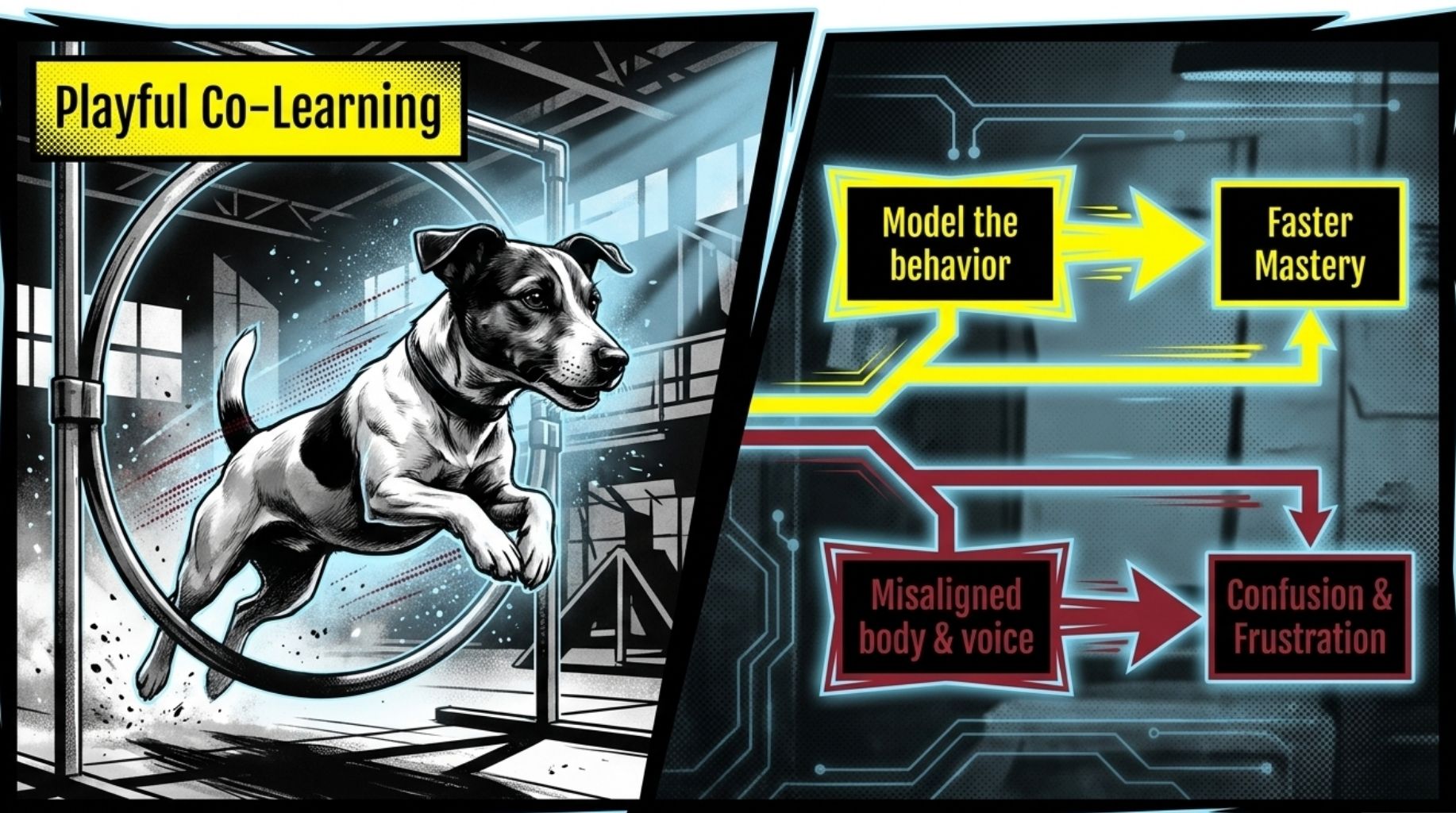
When we view training as a two-way street, dogs become our teachers as much as our students. Their mimicry offers a continuous feedback loop, guiding us to refine our communication, patience, and creativity. By adopting co-learning mindsets, we unlock mutual growth and turn every interaction into an opportunity for discovery.
🔑 Key Points: Dogs prioritize nonverbal cues over words, instinctively mirroring posture, energy levels, and micro-movements. This alignment signals understanding and solidarity (“I get you“), forming a silent language fundamental to teamwork, loyalty, and interpreting safety or intent.
WHY SOME DOGS IMITATE THEIR OWNERS MORE THAN OTHERS?
Not all dogs are equal when it comes to copying. Some breeds and individual dogs are more prone to imitation than others. Understanding these differences can help you better connect with your unique pup.
Breed Differences in Observational Skills
Some breeds are natural observers. Border Collies are famous for their watching skills. Poodles and German Shepherds also score high in mimicry. These breeds were bred to work closely with humans. Their genetics make them watch and copy. Breed tendencies influence why dogs imitate their owners at different rates. It is in their blood.
Individual Personality and Temperament
Dogs have unique personalities, just like people. Some are social and love to be in sync. Others are more independent. Your dog’s temperament affects its copying. A confident dog may copy less. Personality is a key factor in why do dogs imitate their owners. Each dog is different.
Age and Life Experience Matter
Puppies are more likely to imitate than older dogs. They are in a critical learning phase. They soak up information like sponges. Older dogs can still learn through mimicry. But they may rely on old habits. Age and experience shape why do dogs imitate their owners differently. Young dogs are usually more eager to copy.
🔑 Key Points: Imitation is an ancestral survival trait. Proto-dogs that mimicked human behaviors near settlements gained resources and safety. Domestication and selective breeding (e.g., herding breeds’ precision, companion breeds’ mood-matching) honed this genetic predisposition for social cognition and synchrony.
WHAT HEALTH BENEFITS DOGS HAVE WHEN IMITATE THEIR OWNERS?
Mimicry is not just about behavior. It also affects your dog’s health. Copying you can reduce stress and improve well-being.
Separation Triggers Imitation as A Coping Mechanism for Anxiety
Dogs experiencing mild separation anxiety often increase mimicking behaviors as a strategy to maintain psychological closeness. They may pace in tandem with humans, replicate our sitting posture by the door, or copy our pacing patterns indoors. By mirroring us, they attempt to recreate the comforting presence they miss.
Behaviorists suggest channeling this impulse into controlled imitation exercises to provide healthy outlets for anxiety. Turn waiting times into mini training sessions focused on mimicry to redirect stress into bonding activities. This approach not only alleviates anxiety but also strengthens the imitation bond in positive contexts.
Reducing Stress Through Synchronization
When dogs copy our calm behavior, their stress drops. Synchronized movements lower cortisol. This is helpful during vet visits or storms. Your dog finds comfort in matching you. It is a natural stress reliever. This calming effect is a hidden benefit of why do dogs imitate their owners. It keeps them relaxed.
Encouraging Physical Activity
Dogs often copy our exercise routines. If you stretch, your dog may stretch too. If you run, your dog will run with you. This shared activity keeps both of you fit. Imitation encourages more movement and play. Active mimicry is a healthy outcome of why do dogs imitate their owners. It promotes an active lifestyle.
Boosting Mental Sharpness
Imitation uses observation, memory, and motor control. These mental tasks keep your dog’s brain sharp. Regular mimicking delays cognitive decline. It keeps their minds active and engaged. Learning through copying is a great brain workout. This cognitive boost is another reason why do dogs imitate their owners. It keeps them smart. Too little change risks stagnation, while too much novelty overwhelms dogs’ processing capacity.
🔑 Key Points: Imitation is a powerful expression of affection and a desire for closeness. Dogs copy owners to seek psychological proximity, triggering rewarding dopamine/oxytocin surges. Shared routines amplify this, turning daily rituals into reflexive bonding moments, while separation anxiety can increase mimicry as a coping mechanism.

DEBUNKING MYTHS ABOUT WHY DOGS IMITATE THEIR OWNERS
There are many myths about why dogs copy us. Let us clear up the confusion. The truth is often more interesting.
Myth: Imitation Means Your Dog Is Dominant
Some people think copying is a dominance challenge. That is false. Imitation is actually a submissive and bonding behavior. Your dog copies you because it respects you. It is a sign of trust, not a power struggle. The real reason why dogs imitate their owners is about connection. It is not about control.
Myth: Only Smart Dogs Can Imitate
All healthy dogs can imitate to some degree. It is a basic survival instinct. Even less “trainable” breeds show mimicry. The difference is in frequency and context. Intelligence is not the only factor. The question of why do dogs imitate their owners applies to all breeds. Every dog can copy.
Myth: Imitation Is Always Conscious
Dogs do not always think before they copy. Much of it is automatic. It happens without effort. This is why researchers call it “automatic imitation.” Do not overthink it. Sometimes it is just a reflex. This automaticity is part of why dogs imitate their owners so naturally. It is built into them.
Myth: You Can Stop Imitation Easily
You probably should not stop it entirely. Imitation is natural and beneficial. However, if your dog copies a bad habit, redirect its attention. Teach an alternative behavior instead. Suppressing mimicry is not necessary. Embrace the reasons why dogs imitate their owners as a positive trait. It is a good thing.
The Final Fetch: Your Furry Mirror is the Greatest Compliment
So, there you have it, pack! From ancient survival instincts firing in their DNA to mirror neurons doing a happy dance, from heart-bursting adoration to pure playful goofiness, the reasons why do dogs imitate their owners are as complex and beautiful as the bond itself. Every synchronized sigh, every mirrored stretch, every perfectly paced walk is a testament to your dog’s profound connection to you.
They watch, they learn, they feel, and they become a little reflection of your world. It’s their ultimate love language, written in the silent poetry of shared movement and emotion. The next time your dog copies your yawn, steals your seat, or matches your goofy dance move, don’t just laugh (though definitely laugh!).
🔑 Key Points: Stimulating environments (novel textures, obstacles) spark curiosity and increase imitation as dogs seek guidance. Technology like motion-capture systems and wearable trackers provides precise data on mimicry timing and patterns, enabling optimized training sessions and deeper insights into the cognitive mechanisms behind imitation.
FREQUENTLY ASKED QUESTIONS (FAQs)
Take a second to appreciate the incredible science and deep, deep love behind that furry impersonation. It’s not just imitation, but it’s a dog devotion in its purest, most fascinating form.
Now, go give your little mirror a well-deserved ear scratch, they’ve earned it just by being wonderfully, uniquely, adoringly you, but furrier.