
Your dog’s nose is an incredible superpower. While we see the world, our dogs are busy smelling an entirely different universe, rich with stories and information invisible to us. This journey explores that hidden world, answering the fascinating question of just how far can dogs smell and what makes their sniffers so extraordinary.
These super hero dogs are really special and have helped humanity for centuries. From dogs finding lost hikers to dogs detecting diseases, their noses are tools of wonder. Let’s dive in and see the world from their perspective.
„Ever wondered how your dog can find a treat hidden in a different room or detect a squirrel from across the park? The answer lies in a secret superpower that turns their world into a rich tapestry of invisible scents.“
Quick Summary About HOW FAR CAN DOGS SMELL
This article explores the incredible science and real-world magic behind your dog’s sense of smell. We’ll dive into the anatomy that makes their nose a biological marvel, uncover the factors that determine just how far they can detect scents, and reveal how different breeds use this ability. From life-saving search missions to fun games you can play at home, you’ll learn how to appreciate and engage with your dog’s most important sense.

HOW FAR CAN DOGS SMELL UNDER PERFECT CONDITIONS?
When conditions are just right, a dog’s smelling ability seems almost limitless. They can detect scents over astonishing distances, far beyond anything a human can perceive. Research and real-world case studies with working dogs consistently show their range is measured in miles, not feet.
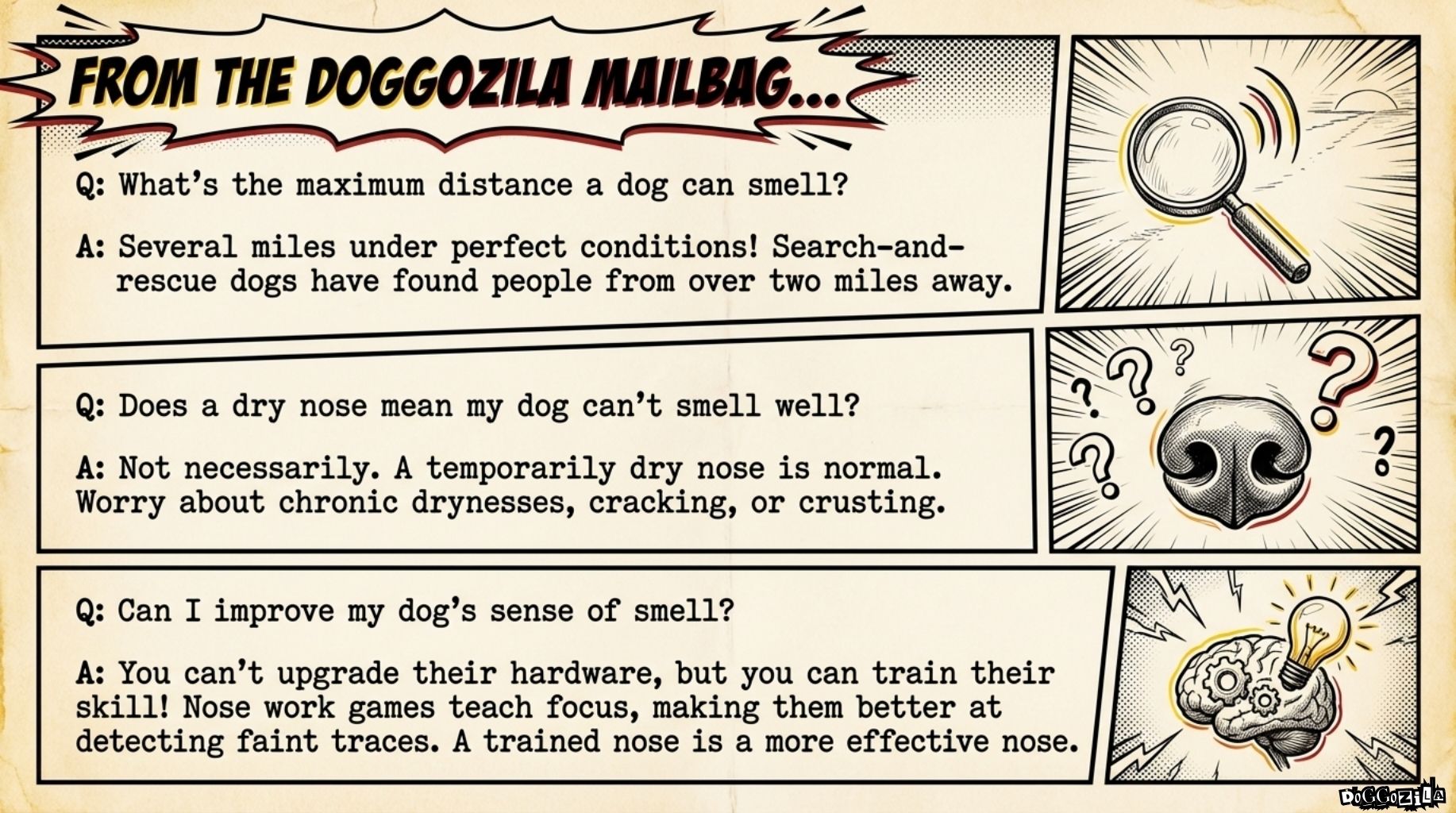
For instance, search-and-rescue dogs have been known to pick up a human scent from several miles away when the wind and environment cooperate. So, how far can dogs smell in an ideal scenario? The answer highlights the incredible gap between dog and human abilities. Understanding this vast range helps us appreciate why dogs excel in tracking and detection roles.
How Far Can Dogs Smell? It Starts With Their Nose Anatomy
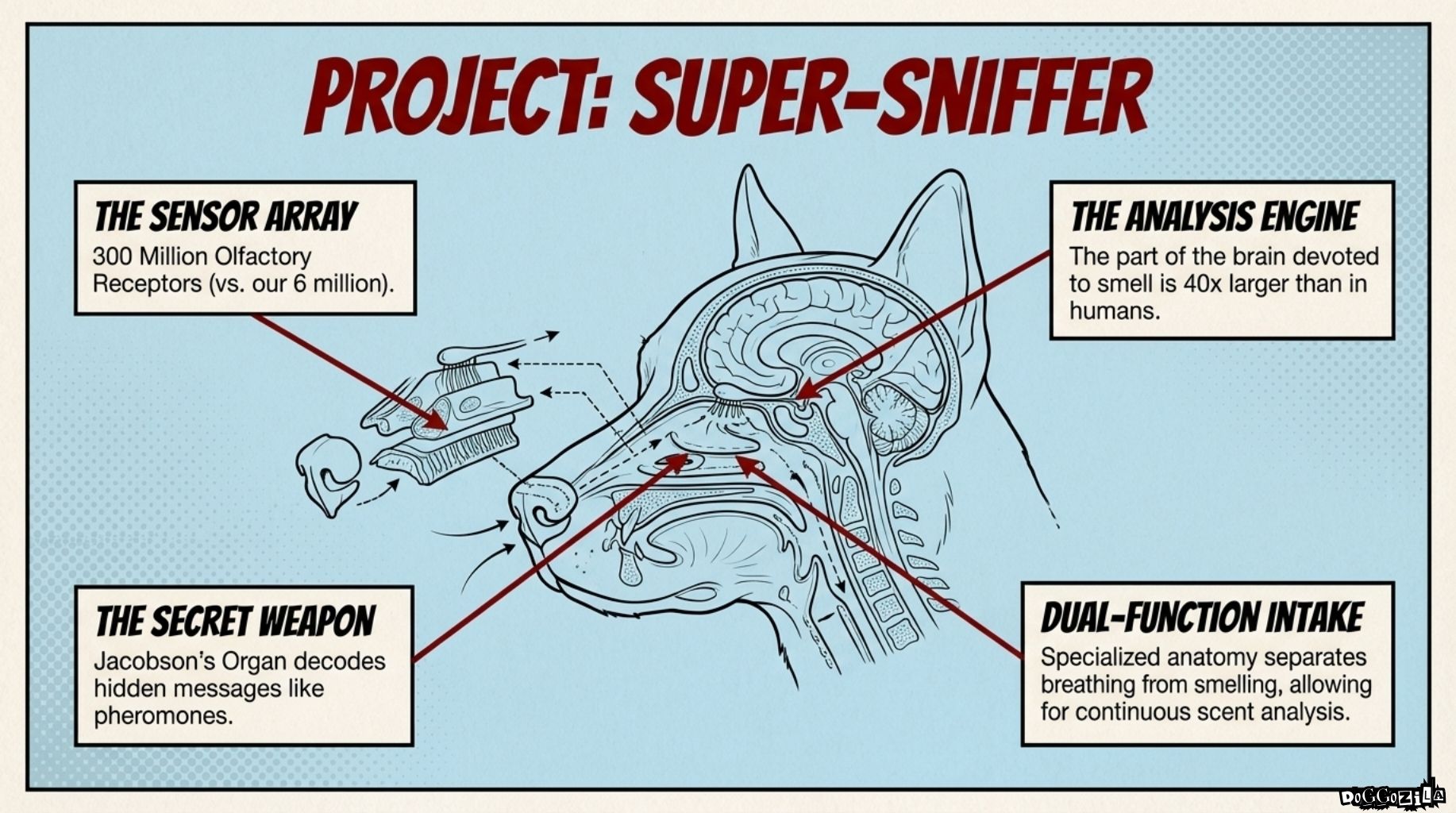
To truly understand how far can dogs smell, you must first look inside their nose. It’s not just a wet snout, it’s a complex, high-efficiency odor processing machine. Every part, from the external nostrils to the internal turbinate bones, has a specific role in capturing and analyzing scent.
This specialized anatomy separates breathing from smelling, allowing for continuous scent analysis. It’s this biological design that transforms a simple sniff into an information-rich experience.
The Science That Determines How Far Dogs Can Smell
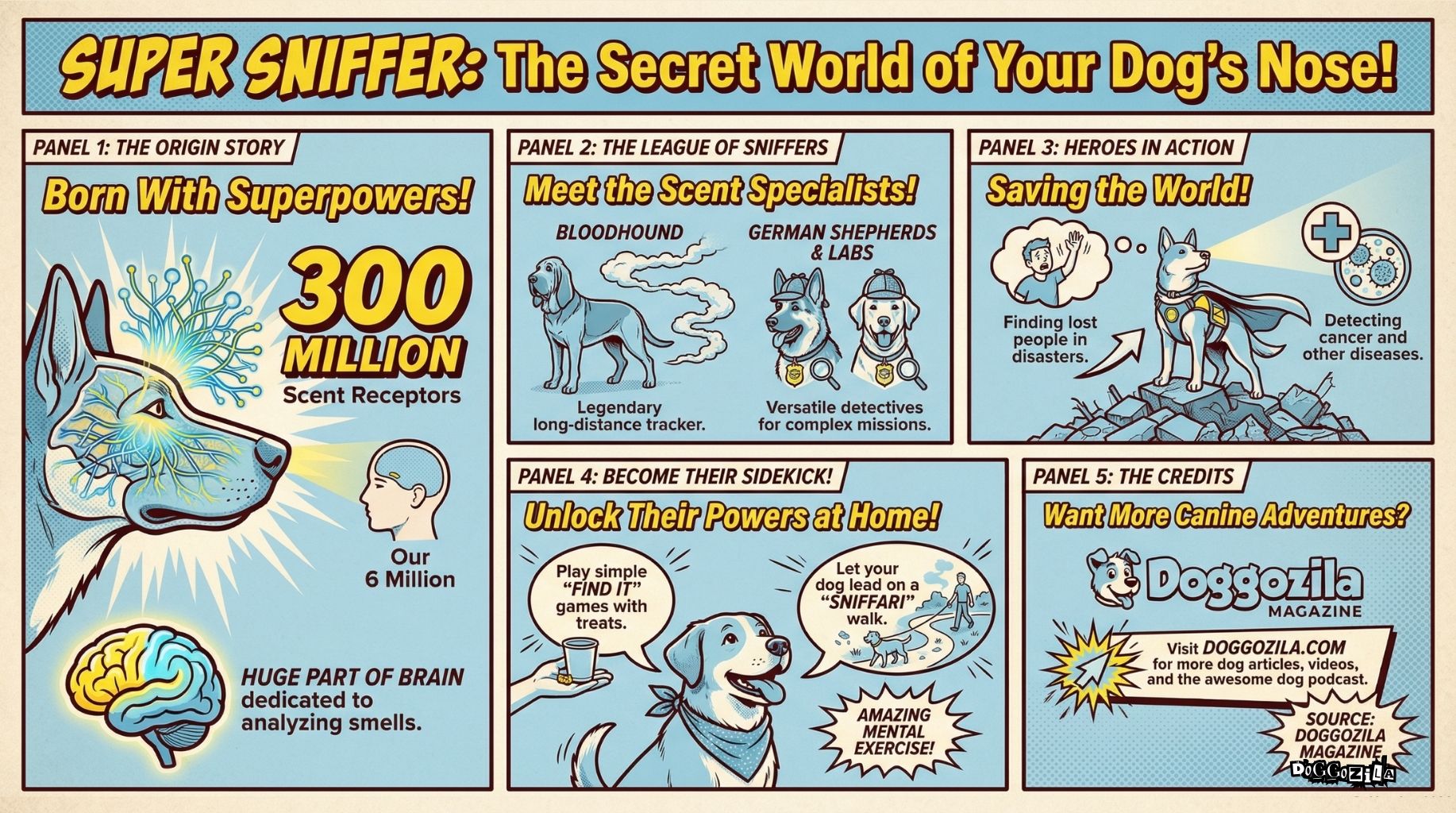
A dog’s nose is a biological marvel, specifically engineered for long-range detection. First, they possess up to 300 million olfactory receptors, compared to our mere 6 million. This massive sensor array catches even the faintest scent particles floating in the air.
Second, a large part of their brain, about 40 times larger than the comparable part in humans is devoted solely to analyzing smells. This powerful processor can identify a specific scent in a swirling sea of other odors. Finally, their nostrils work independently, allowing them to pinpoint the exact direction a smell is coming from, which is crucial for tracking over long distances.
The Role of the Vomeronasal Organ in Scent Detection
Beyond the primary smelling system, dogs have a secret tool called the vomeronasal organ, or Jacobson’s organ. Located in the roof of the mouth, this organ detects heavy, non-volatile chemical signals like pheromones. These are odorless chemicals animals release that convey social information.
When you see a dog curl its lip after a good sniff, it’s opening a duct to this organ. This “second sense of smell” provides a layer of social and biological data that is completely hidden from us, adding depth to what they perceive.
🔑 Key Points: A dog’s nose is a dedicated odor-processing machine, not just for breathing. Its specialized structure, including up to 300 million receptors and a brain devoted to smell, is the fundamental reason for their incredible long-range detection abilities.
HOW BREATHING AND SNIFFING MECHANICS WORK TOGETHER?
Dogs have a unique breathing system that lets them smell continuously. They can breathe in and out while still trapping scent molecules in a special area in the back of their nose. This means the scent analysis never has to stop.
The actual act of sniffing is a powerful, rapid action that forcefully draws air into the nose. This mechanism is so effective it can pull scent from a much wider area than passive breathing, directly influencing how far can dogs smell by actively pulling distant odors toward them.
What Key Factors Influence How Far Can Dogs Smell?
The maximum distance isn’t a fixed number. Think of it like a radio signal, some days you get clear reception from far away, and other days there’s static. A dog’s detection range is a dynamic interplay between their incredible biology and the world around them.
Elements like weather, landscape, and the scent source itself either help or hinder the nose. Knowing these factors helps explain why your dog might find a biscuit hidden in the sofa one day but miss a squirrel in the yard the next.
How Wind and Weather Change the Scent Landscape?
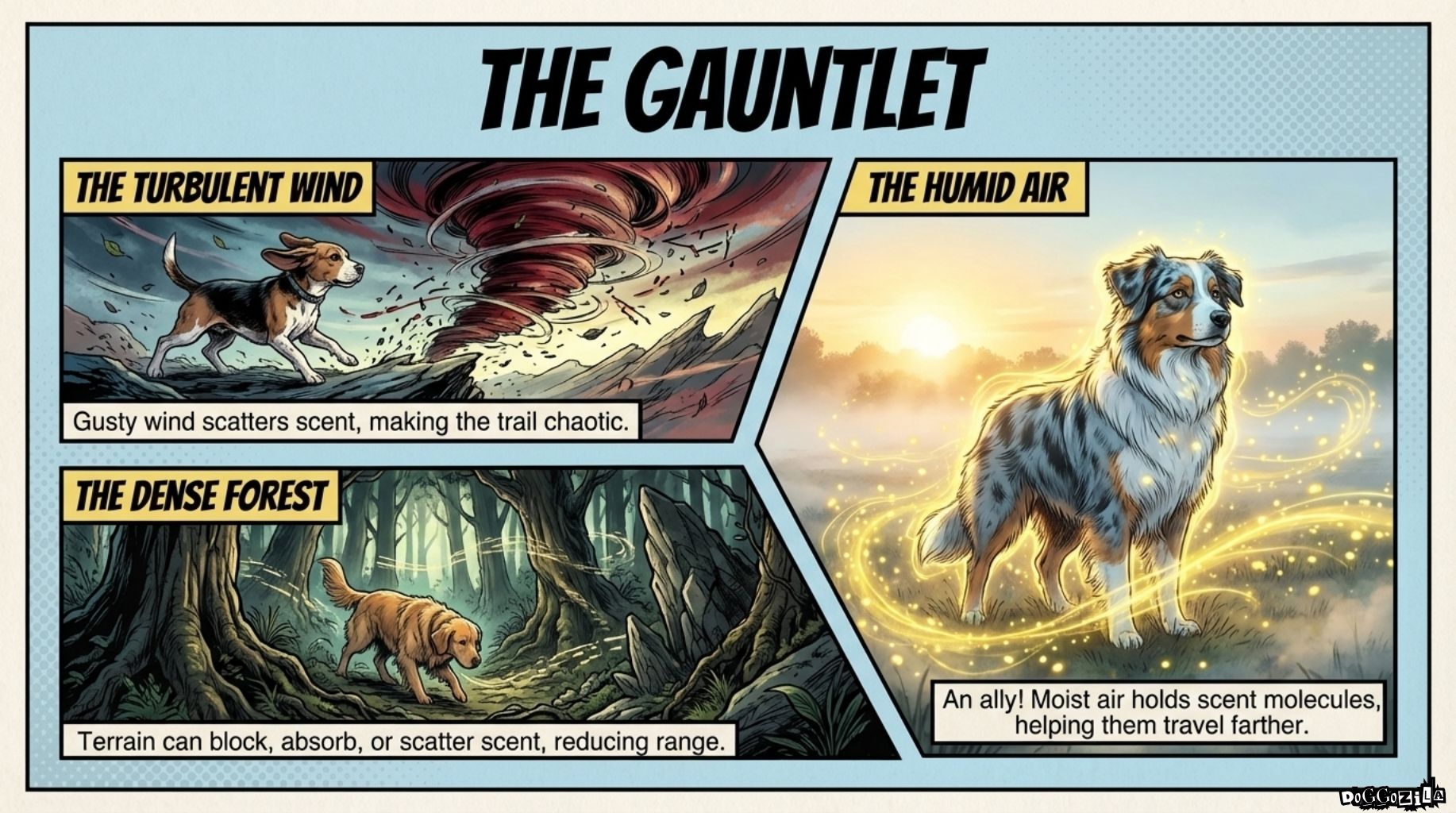
Wind is the courier that delivers scent. For a dog to detect something far away, the wind must blow steadily from the source toward the dog. A dog downwind of a deer can smell it from much farther away than a dog upwind. Turbulence, like gusty or swirling wind, scatters scent particles, making the trail chaotic.
Weather dramatically alters the scent game too. Humidity is a dog’s friend, as moist air holds scent molecules aloft better than dry air. Temperature creates layers, on a cool morning, scent may pool in low areas, while heat can cause it to rise and dissipate.
Why the Scent Source Itself Is So Important?
The nature of the scent source itself is crucial to how far can dogs smell. Concentration is key, a teaspoon of spilled bacon grease emits a stronger, farther-traveling odor cloud than a single crumb. Age matters too, a fresh trail has more abundant, volatile molecules than one that’s hours old.
Dogs are also tracking skin rafts (tiny cells we shed), breath vapor, and the unique bacterial cocktail that lives on every person and animal. This complex mixture is what makes your personal scent unique and trackable over impressive distances.
🔑 Key Points: Distance isn’t static, it’s shaped by the environment. Wind direction, weather, terrain, and the strength of the scent source itself all work together to either carry odors for miles or break them down quickly.
HOW TERRAIN AND ENVIRONMENT HELP OR HINDER SMELL?
Where the scent is traveling makes a big difference. Open fields or bodies of water allow scent to flow freely for miles. Dense forests, urban canyons, or rocky terrain can block, absorb, or scatter scent particles, reducing effective range.
For instance, a dog may be able to smell a rabbit from hundreds of yards away across a meadow, but that range drops significantly in thick brush. Understanding terrain helps search-and-rescue teams decide how to best deploy their canine partners to cover an area effectively.
Breed Specifics: Which Dogs Smell the Farthest?
While all dogs have amazing noses, some breeds are olfactory Olympians. Genetics have shaped certain dogs for specific scenting tasks, giving them physical and mental advantages. From the long, droopy ears that help trap scent to the single-minded focus on a trail, these breeds show us the upper limits of canine olfaction. If you’re wondering which dog might win a long-distance smelling contest, look to the hounds and working breeds.
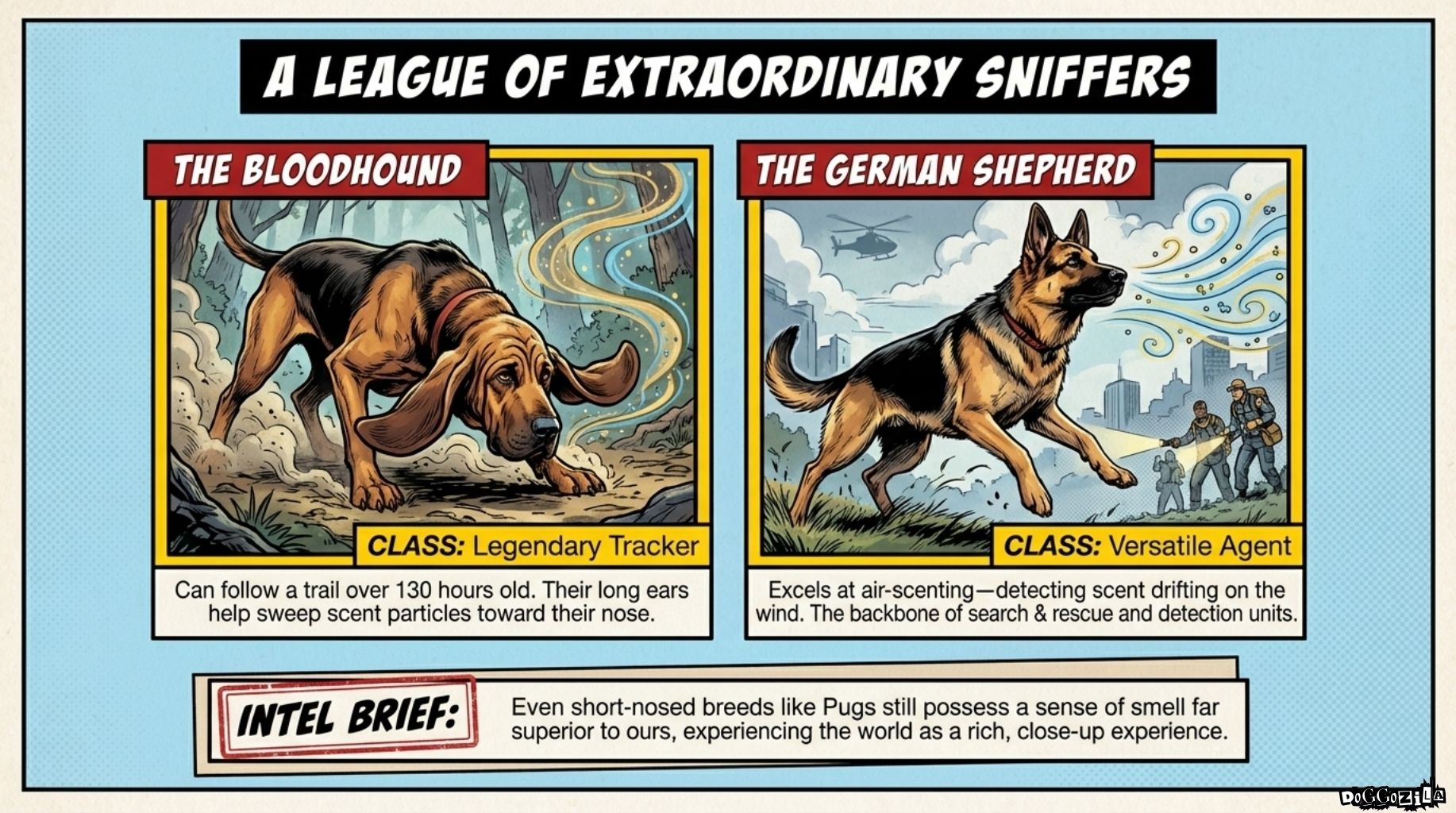
The Tracking Champions: How Far Can Bloodhound Dogs Smell?
The bloodhound is the undisputed champion of the tracking world. Bred for centuries to follow cold trails for miles, they have the perfect storm of scenting attributes. They possess enormous, fluid-filled scent receptors, and their long ears sweep scent particles upward toward their nose.
Their relentless focus means they can follow a trail for over 130 hours! When people ask how far can dogs smell at the maximum, the bloodhound’s legendary performance provides the answer, often tracking scents that are several days old over many miles.
Versatile Working Breeds and Their Detection Range
For versatile detection work, breeds like the German Shepherd, Labrador Retriever, and Springer Spaniel are top choices. These dogs are the backbone of many police, military, and detection dog units. They combine a great nose with a strong desire to work cooperatively with humans.
Their noses are excellent for air scenting, finding a scent drifting in the air, and are often used as search-and-rescue and explosives detection dogs. These dogs showcase a different aspect of how far can dogs smell, focusing on precision in complex environments rather than pure distance.
🔑 Key Points: While all dogs have superior sniffers, genetics tailor some breeds for extreme scenting. Bloodhounds are legendary long-distance trackers, while working breeds like Shepherds and Labs excel at precise detection in complex environments.
THE SURPRISING TRUTH ABOUT SMALL AND SHORT-NOSED BREEDS
Dogs with short, pushed-in faces like Pugs, Bulldogs, and Boxers face a challenge. Their compressed nasal passages and smaller olfactory areas can limit their smelling efficiency compared to longer-nosed breeds. This doesn’t mean they have a “bad” sense of smell, it’s still leaps and bounds better than ours, but they are not built for extreme scenting marathons.
For these dogs, the world of smell is a rich, close-up experience. Even small terriers, however, can have powerful noses used for hunting vermin, proving that size isn’t the only factor.
Can Training Extend How Far Dogs Can Smell Effectively?
A dog’s nose is a powerful tool from birth, but training can hone it into a precision instrument. Detection dogs aren’t born knowing how to find explosives or a lost child, they are taught to identify specific odors and communicate their find.
This scent training for dogs leverages their natural instincts and channels them into a focused, reliable behavior. It also demonstrates the incredible learning capacity and memory of the canine nose, pushing the practical limits of their ability.
How Professional Detection Dogs Maximize Their Range?
Training starts with creating a strong, positive association with a target odor, often by pairing it with a favorite toy or treat. The dog learns that finding that particular smell leads to a great reward. They are then taught a specific “alert” behavior to tell their handler, “I found it!”
This training is progressive, starting in simple environments and moving to complex, distracting ones. For example, the TSA canine training program is a 16-week intensive course that prepares dogs for the chaotic environment of an airport, teaching them to focus on one scent amid thousands.
Building a Dog’s Scent Focus and Stamina
A key part of training is building the mental stamina for the task. Just as an athlete trains for endurance, detection dogs practice maintaining focus over longer periods and in more distracting settings. Handlers use scent games for dog training and progressively harder searches to build this skill.
They also learn to work effectively with the wind, using a sweeping pattern to catch scent plumes. This disciplined approach directly impacts how far can dogs smell in a operational sense, as a focused dog will not give up on a faint, distant scent.
🔑 Key Points: Professional training hones a dog’s natural instinct into a focused skill. Through motivation and practice, dogs learn to identify specific odors and persevere in following faint traces, maximizing their practical, working range.
THE CRITICAL ROLE OF REWARD AND MOTIVATION
At the heart of all scent training is motivation. Whether the reward is a ball, a treat, or praise, it must be something the dog values immensely. This reward tells the dog that the difficult work of pinpointing a distant or faint odor is worth the effort.
A highly motivated dog will push through physical and mental fatigue, persevering to find the source. This drive is what transforms the natural, curious sniffing of a puppy into the determined, long-range search of a working dog, effectively extending their functional range.
Real-World Applications: How Far Can Dogs Smell To Help People?
Humanity has partnered with dogs for millennia, largely because of their noses. Today, we apply this natural ability in ways that save lives, catch criminals, and protect health. From the battlefield to the hospital, dogs are on the front lines, using their sniffers to make the world a safer and better place. These real-world jobs show the profound impact of answering the question of how far can dogs smell.
Search and Rescue Dogs: The Ultimate Test of Range
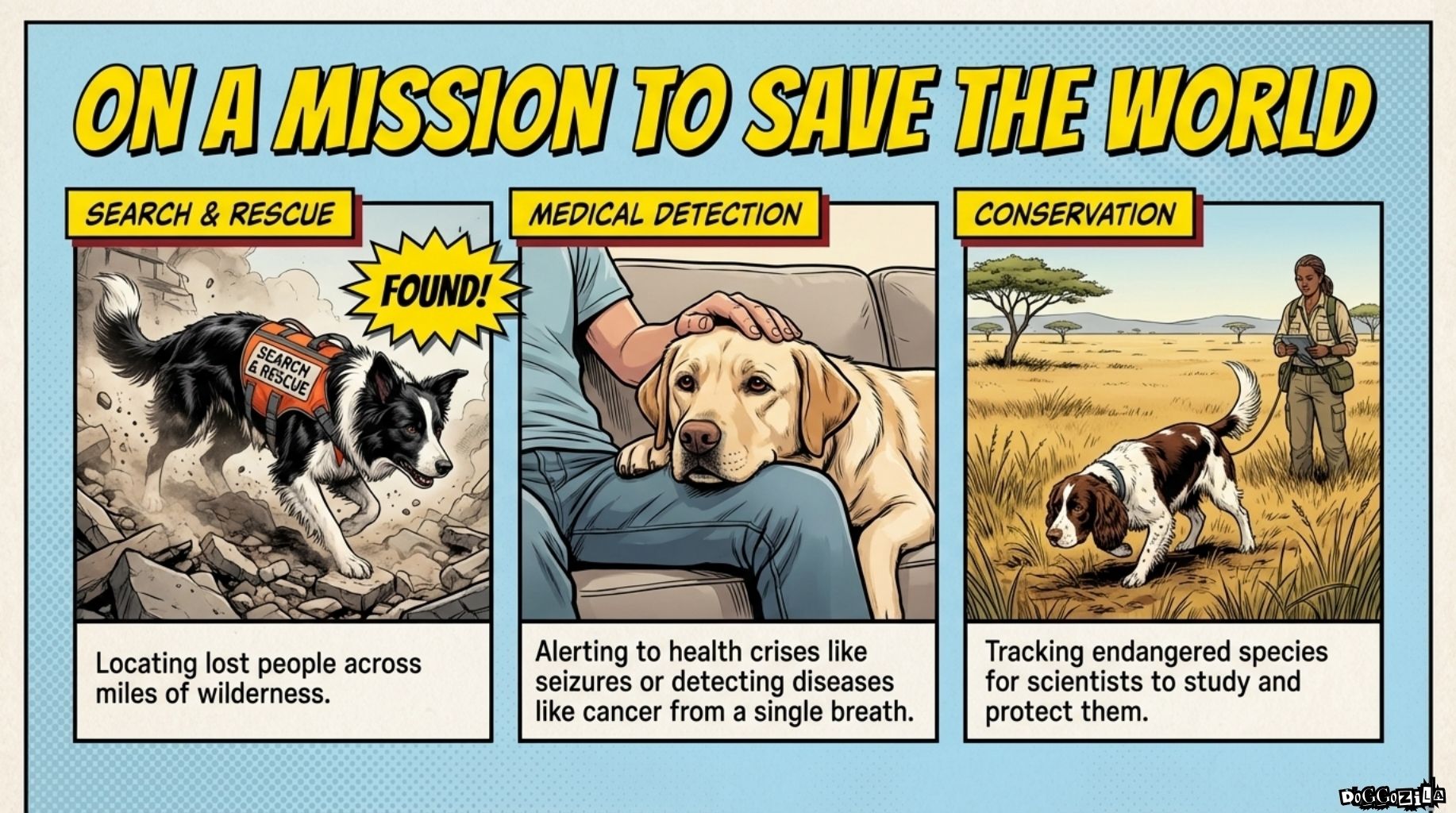
This is one of the most vital applications of a dog’s nose. Air-scenting dogs work off-leash in disaster zones or wilderness areas to locate living people, often working across areas measured in square miles. They demonstrate how far can dogs smell a human scent when a life is on the line, with scent traveling for miles on favorable winds.
Cadaver dogs, both on land and in water, can locate human remains, providing crucial closure for families. These dogs work in incredibly difficult conditions, and their success often hinges on those key environmental factors.
Medical Detection: Sensitivity Over Distance
This is a rapidly growing and inspiring field. Dogs are now being trained as bio-detectors for human diseases. Clinical studies have shown promising results with dogs detecting various cancers from samples of breath, skin, or urine. Other dogs alert to oncoming diabetic hypoglycemia or seizures.
In these roles, the critical factor isn’t raw distance, but incredible sensitivity at a molecular level. They are detecting the subtle chemical shifts that occur in the body, sometimes at concentrations as low as one part per trillion, showcasing a different dimension of their power.
🔑 Key Points: This dog superpower has vital applications. Dogs use their range and sensitivity for search and rescue across vast areas, detecting medical conditions, and aiding in conservation efforts by tracking wildlife.
CONSERVATION AND PROTECTION: SNIFFING FOR SCIENCE
Dogs are now key partners in environmental protection. Conservation detection dogs are trained to sniff out wildlife scat (feces) so scientists can study animal populations without disturbing them. They can find invasive plant species or insects, like spotted lanternflies, to help with eradication efforts.
Some dogs even patrol wildlife reserves to sniff out poachers or snares. In these roles, they answer the question of how far can dogs smell by covering vast tracts of land to gather data and protect ecosystems, proving their noses are tools for science.
How You Can Test And Engage Your Dog’s Sense Of Smell?
Understanding your dog’s olfactory world changes how you interact with them. That nose is not just for finding food crumbs, it’s the center of their cognitive universe. Honoring this can deepen your bond and make your dog happier and more fulfilled. Here are simple ways to engage your dog’s most important sense every day and see their amazing abilities in action.
Fun Games That Challenge Your Dog’s Scent Range
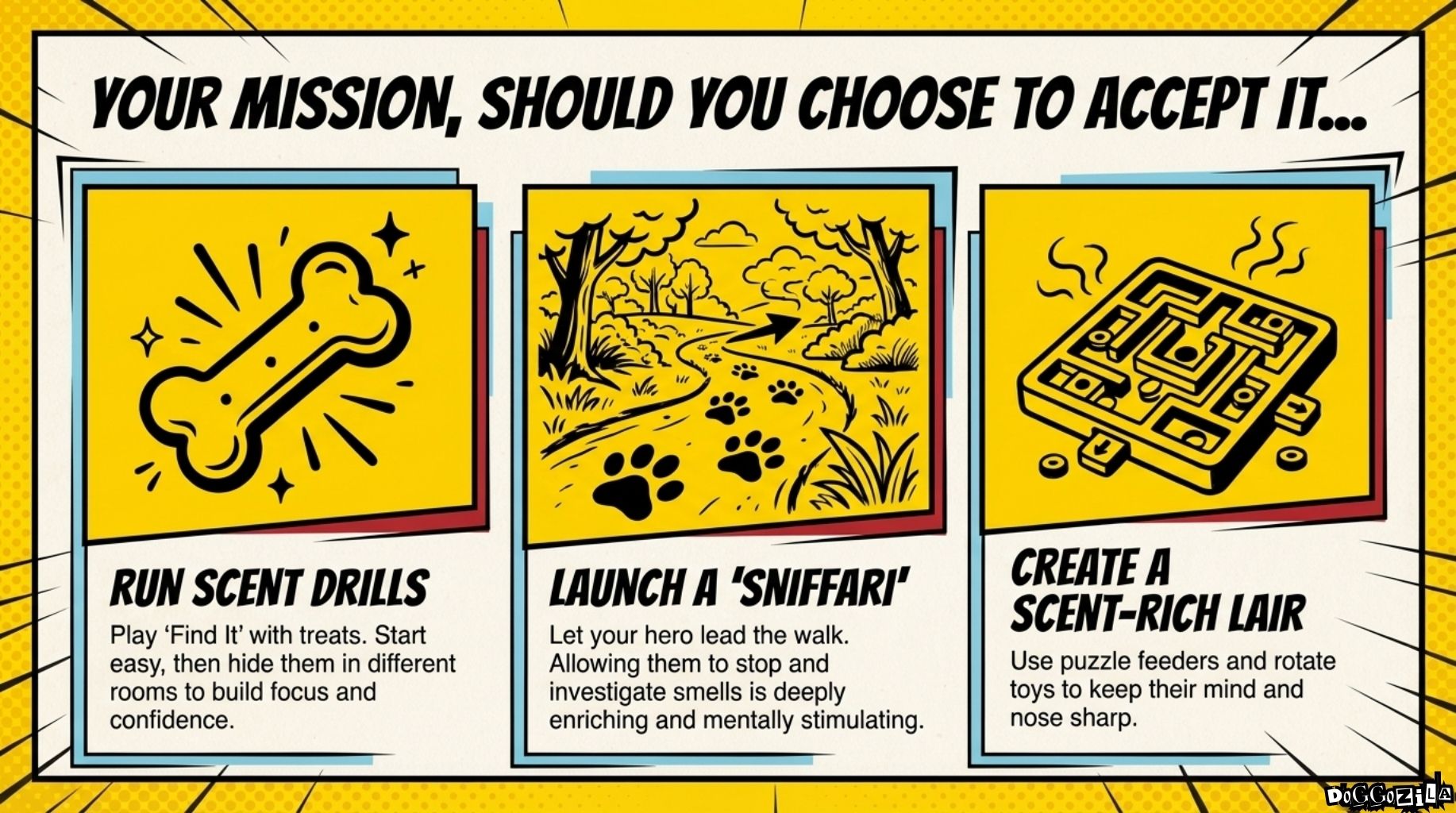
You don’t need special equipment to play nose games. Start by hiding treats in plain sight, then under a towel, and eventually in different rooms. Teach a “find it” command. Use muffin tins with tennis balls covering some of the cups that hold treats.
You can even create a simple “scent trail” by dragging a treat along the ground in your yard and letting your dog track it. These games build confidence and provide excellent mental exercise, letting your dog practice the natural skills that define their incredible abilities in a fun, rewarding way.
The “Sniffari” Walk: Letting Your Dog Lead
Transform your daily walk from a march into a “sniffari.” Allow your dog to stop, linger, and investigate interesting smells. This is mentally enriching and reduces pulling, as the walk becomes more rewarding. Try letting them choose the path for a few minutes, following their nose.
You’ll likely see a more content and calmer dog afterward. This simple act respects their nature and directly engages the sense they value most. It allows them to gather information, check in on the neighborhood, and simply enjoy being a dog.
🔑 Key Points: You can tap into your dog’s natural love for sniffing through simple games like “find it” or “sniffari” walks. These activities provide deep mental stimulation and are more tiring than a regular walk.
CREATING A SCENT-RICH ENVIRONMENT AT HOME
You can make your home more engaging for your dog’s nose. Rotate different types of chews and toys to keep interesting smells available. Use puzzle feeders that require them to sniff out their food. When introducing new objects, let your dog sniff them thoroughly first. You can even hide their kibble around a room for them to find at mealtime.
Providing these opportunities for “foraging” and problem-solving through scent taps into their natural instincts and provides deep satisfaction, keeping their amazing nose sharp and active.
Caring For The Amazing Tool That Lets Dogs Smell So Far
Your dog’s nose is a delicate and powerful instrument. Just as a musician cares for their violin, you can help care for your dog’s nose to keep it in top condition. Being mindful of their primary sense shows them love and respect. It also ensures they can continue to experience the world in all its fragrant glory for years to come.
Things That Can Harm Your Dog’s Sensitive Nose
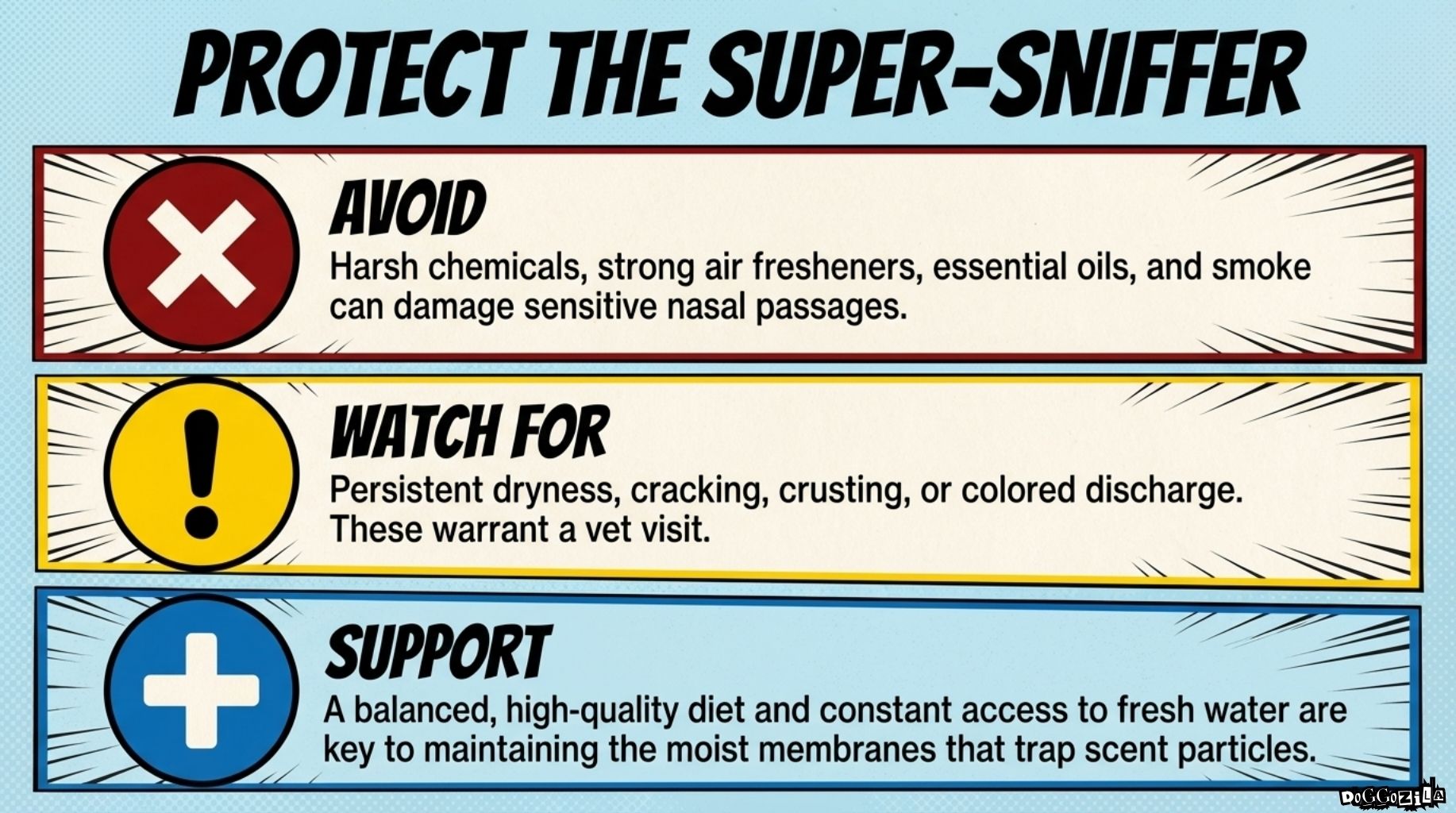
Be mindful of strong chemicals that can overwhelm or damage your dog’s nasal passages. Avoid spraying strong cleaners, air fresheners, or perfumes directly near them. Be very cautious with essential oils, as many are toxic to dogs and can cause irritation or worse.
Smoke from fireplaces or cigarettes is also harsh on their sensitive systems. Also, be aware that some dogs can suffer from “nose blindness” or fatigue if exposed to an overwhelmingly strong odor for too long, temporarily reducing their sensitivity.
Signs of a Healthy Nose and When to Worry?
A healthy dog’s nose is typically cool and moist, but a warm, dry nose isn’t always a sign of illness, it can be normal after sleep or play. Look for consistent changes. Signs of a problem include persistent dryness and cracking, crusting, a runny discharge (especially if colored), sores that won’t heal, or a sudden loss of pigmentation.
A sudden change in their smelling behavior, like bumping into things or not finding treats, also warrants a vet visit. Regular check-ups help ensure this vital tool stays healthy.
Supporting Olfactory Health Through Diet and Hydration
Overall health supports a healthy nose. Provide a balanced, high-quality dog diet rich in antioxidants to support all your dog’s bodily systems, including their sensory organs. Ensure they always have access to fresh, clean water, as hydration is key for maintaining the moist mucous membranes in the nose that trap scent particles.
Some owners add omega-3 fatty acids (like fish oil) to their dog’s diet for skin and coat health, which may also support nasal tissue. A healthy dog is a dog whose super sniffer is ready for adventure.
🔑 Key Points: Your dog’s nose is sensitive and needs care. Avoid exposing it to harsh chemicals or strong essential oils, and watch for signs of dryness or injury to keep this vital sense sharp.
FREQUENTLY ASKED QUESTIONS