
You’re making a snack, and those big, hopeful eyes are staring up at you. It’s so tempting to share just a little bite. But that single, well-meaning gesture can sometimes lead to a frantic trip to the emergency vet. Our kitchens are full of everyday foods that are safe for us but dangerous for our dogs. Understanding what foods are toxic to dogs is the first step in preventing a scary accident. This guide will walk you through the most common hazards.
Let’s learn together how to spot trouble and create a safer home for our pups. Dogs process foods very differently than humans do. Their bodies lack certain enzymes needed to break down compounds we handle easily. What’s a healthy snack for you can be a serious toxin for them. Understanding this basic difference is the first step in preventing accidental poisoning. It’s all about being a proactive and informed pet parent.
„That innocent bite you share could hide a deadly threat, discover the common kitchen foods that poison thousands of dogs each year.“
Quick Summary About WHAT FOODS ARE TOXIC TO DOGS
This guide outlines the critical kitchen foods and beverages that are toxic to dogs, explaining the biological reasons behind their danger, detailing the symptoms of poisoning, and providing essential steps for prevention and emergency response to keep your pet safe.
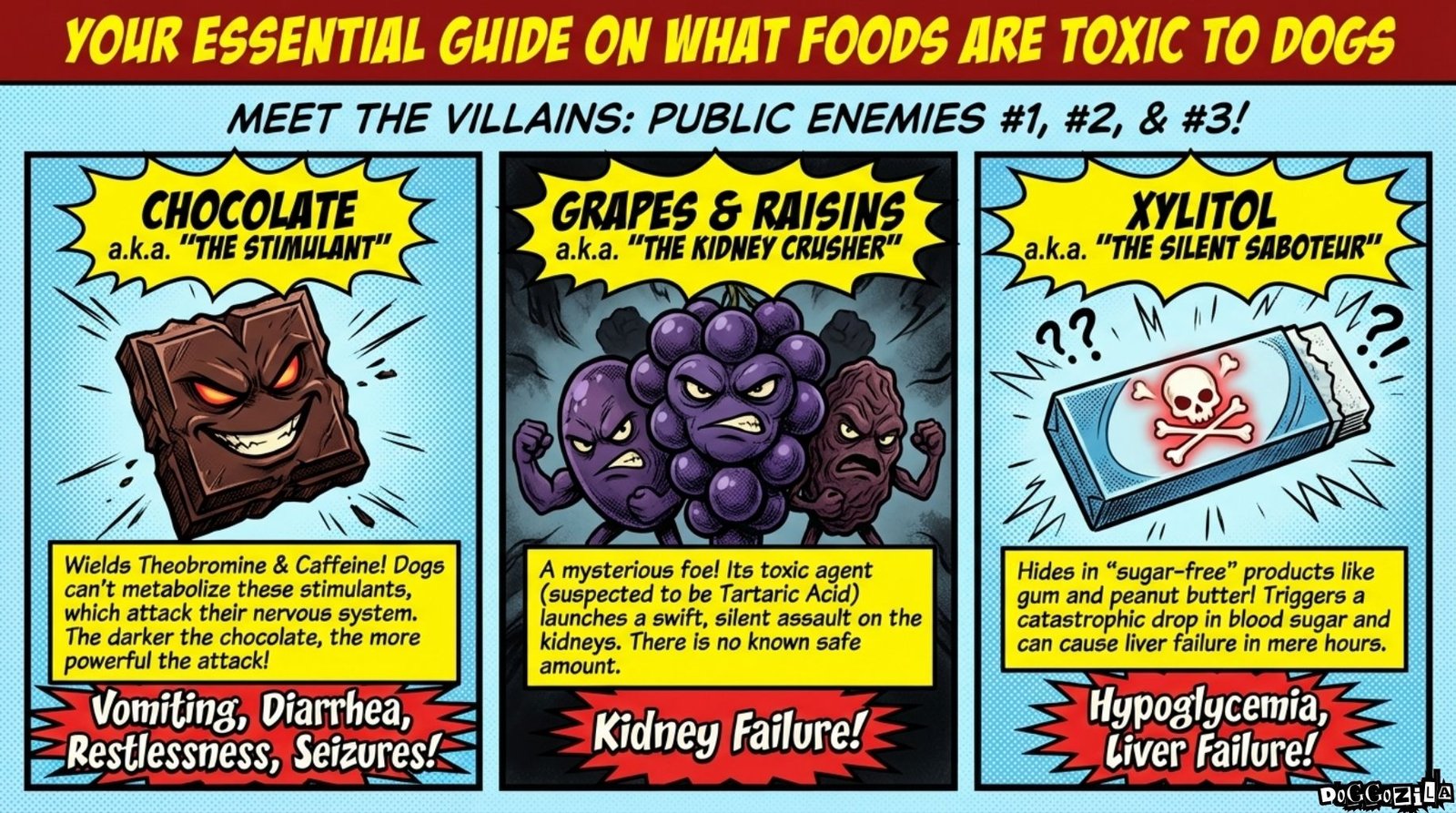
YOUR ESSENTIAL GUIDE ON WHAT FOODS ARE TOXIC TO DOGS
Every dog owner needs a clear, reliable list for reference. Some foods are famous for their danger, and for good reason. These are the items that cause the most pet poisonings every year. They act fast and can cause severe illness with very small amounts.
Knowing precisely what foods are toxic to dogs can help you act quickly in an emergency. It includes the treats we often have within easy reach that pose the biggest threat. Memorizing this list is your first and best line of defense.
Chocolate: How to Understand What Foods Are Toxic to Dogs?
You’ve probably heard that chocolate is bad for dogs, but do you know why? Chocolate contains theobromine and caffeine, which are stimulants dogs cannot metabolize well. Even a small amount can cause vomiting, diarrhea, and extreme restlessness.
Dark chocolate and baking chocolate are the most concentrated and dangerous forms. The toxicity depends on the type of chocolate and your dog’s size, so it’s never worth the risk. If your dog snags some, contact your vet immediately with the type and amount eaten.
Grapes and Raisins: A Key Lesson in What Foods Are Toxic to Dogs
Perhaps one of the most surprising toxins is the humble grape and its dried form, the raisin. The exact substance that causes kidney failure is still being studied, with tartaric acid being a recent suspect. There is no known safe amount, and sensitivity varies wildly from dog to dog.
Symptoms start with dog vomiting and lethargy and can progress to irreversible kidney damage within days. This means even one grape or raisin stolen from the counter requires an urgent call to your veterinarian for advice.
Xylitol: A Critical Part of What Foods Are Toxic to Dogs
This artificial sweetener is a stealthy poison found in many sugar-free products. Xylitol is in gum, candy, peanut butter, baked goods, and even some toothpaste. It causes a rapid and severe drop in a dog’s blood sugar and can lead to liver failure. Check every label of any “sugar-free” or “low-sugar” product before sharing. The effects are so fast-acting that prompt veterinary care is critical for survival and a full recovery.
🔑 Key Points: Memorize the high-risk foods like chocolate, grapes, and xylitol, these common items cause the most poisonings and require immediate action if ingested.
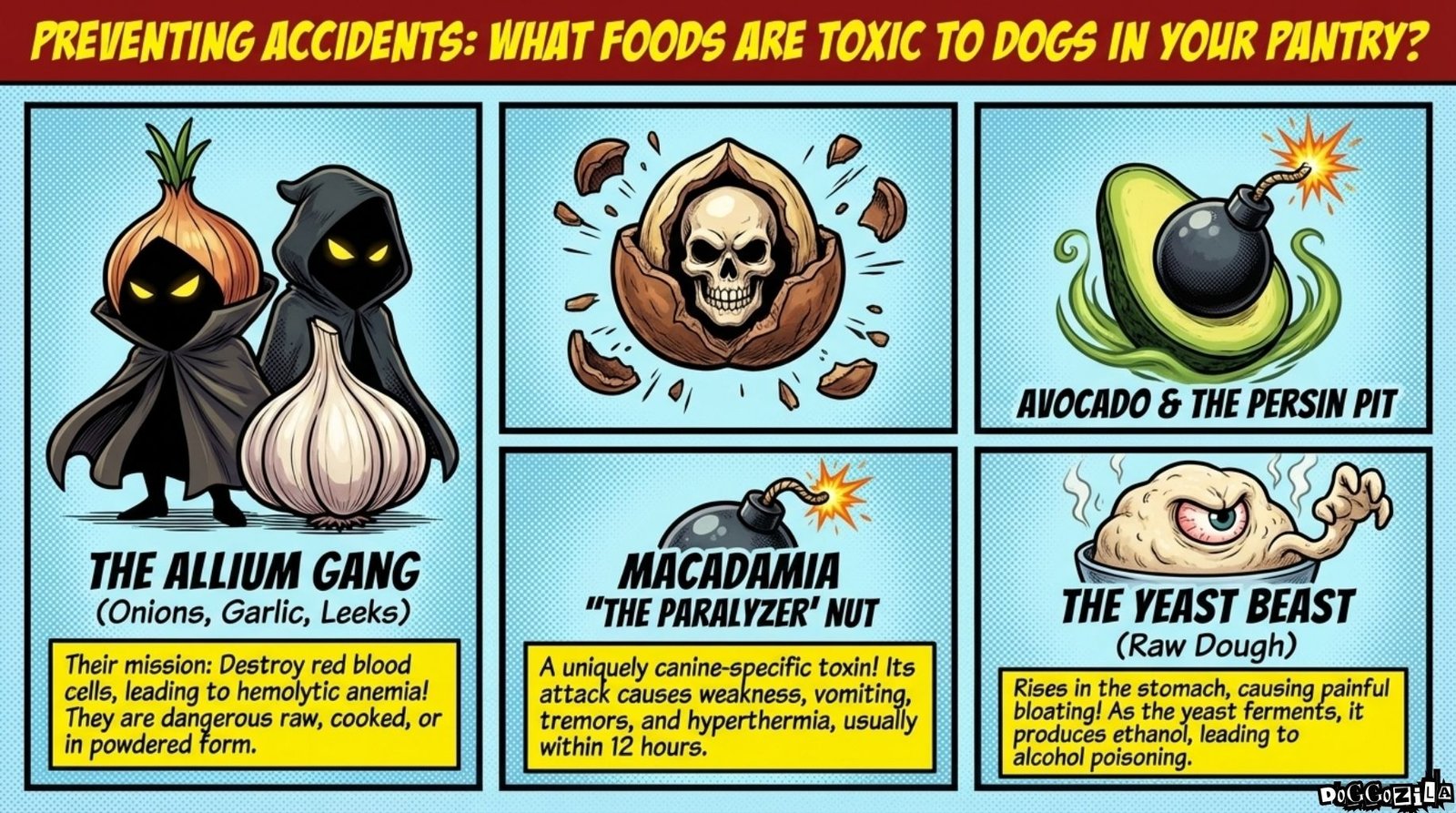
PREVENT ACCIDENTS: WHAT FOODS ARE TOXIC TO DOGS IN YOUR PANTRY?
Onions, garlic, chives, and leeks are kitchen staples that add flavor to our food. For dogs, however, they contain compounds that damage red blood cells, leading to a dangerous condition called hemolytic anemia. This damage can happen from raw, cooked, powdered, or dehydrated forms.
When checking what foods are toxic to dogs, always consider these common cooking ingredients. It’s crucial to check ingredient lists on broths, soups, and seasoned foods you might share. A little vigilance keeps your pup safe.
Onions and Garlic: What Foods Are Toxic to Dogs in Disguise?
Onions and garlic are primary culprits in this toxic family. They contain thiosulphate, which causes red blood cells to burst. The anemia that results leads to weakness, pale gums, and red-tinged urine. This toxicity can occur days after ingestion, making it hard to connect the symptoms to the cause. Keep all forms, including powders in seasoning blends, far away from your dog to avoid any risk.
Macadamia Nuts: Understanding What Foods Are Toxic to Dogs
Macadamia nuts are uniquely toxic to dogs, though the exact compound is unknown. Ingestion can cause a distinct set of symptoms, weakness, depression, vomiting, tremors, and hyperthermia. These signs usually appear within 12 hours. Fortunately, the effects are typically not fatal and often resolve with supportive care within 48 hours. Still, it’s an unpleasant experience that is best avoided completely for your dog’s comfort.
Avocados and Yeast: More Foods Toxic to Dogs
The issue with avocados is two-fold. First, the pit is a major choking hazard and can cause a life-threatening blockage. Second, the leaves, skin, and pit contain persin, a toxin that can cause stomach upset. Meanwhile, unbaked bread dough is a serious threat. The warm stomach causes the dough to rise, leading to painful bloating. As the yeast ferments, it also produces ethanol, leading to alcohol poisoning and further complications.
🔑 Key Points: Be vigilant with alliums like onions, garlic, chives, and leeks. They damage red blood cells and can cause anemia whether raw, cooked, or powdered. Always check ingredient lists on broths, soups, and seasoned foods before sharing. These common cooking ingredients are often hidden in processed foods.
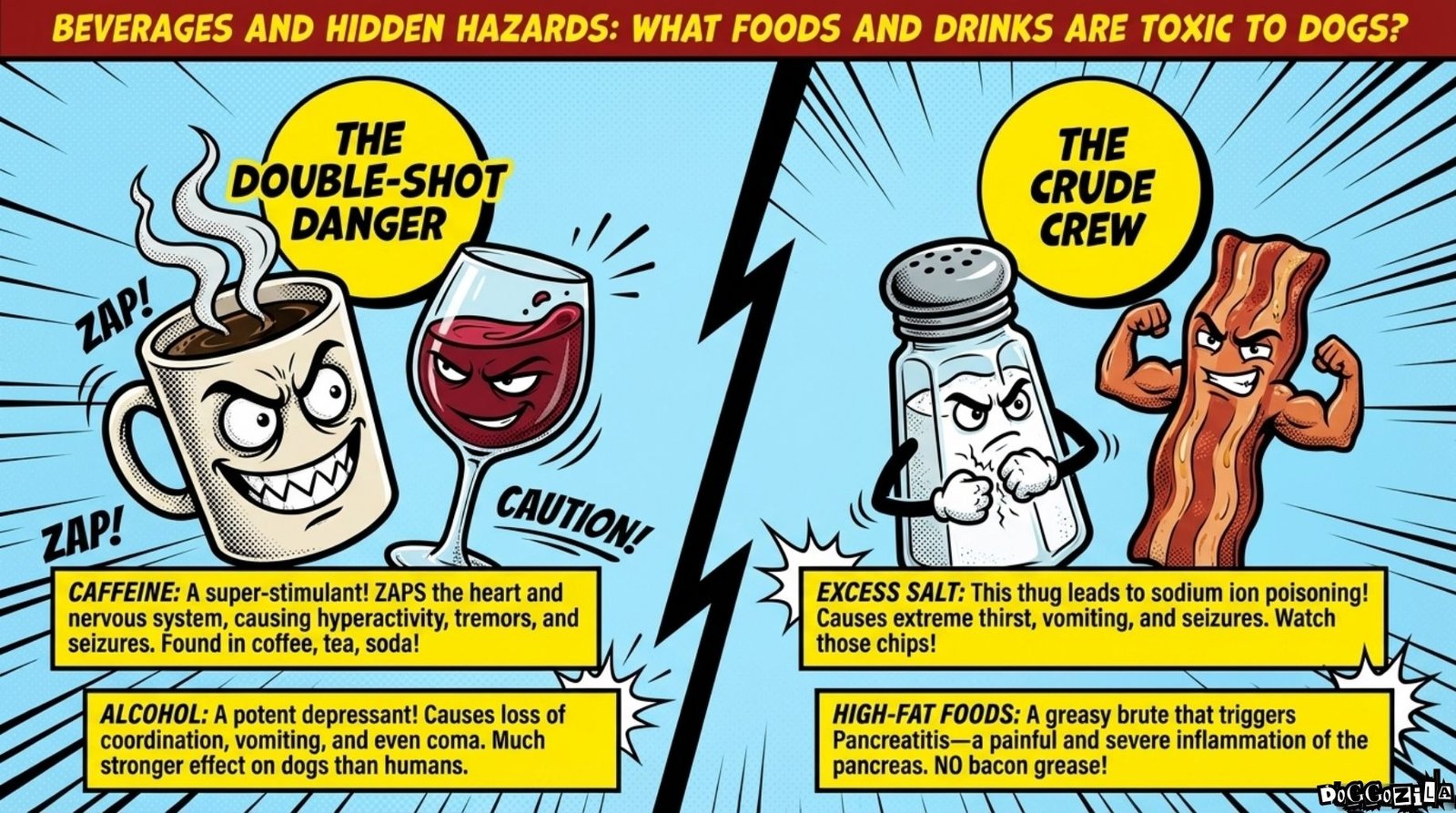
BEVERAGES AND HIDDEN HAZARDS: WHAT FOODS AND DRINKS ARE TOXIC TO DOGS?
Dogs are curious about what we drink, but our favorite beverages can be poisonous to them. From your morning coffee to a celebratory glass of wine, liquids pose unique risks.
The list of what foods are toxic to dogs importantly extends to common liquids. They are easy to spill and lap up quickly, so vigilance with your cups and glasses is key. A moment’s inattention can lead to a big problem for a thirsty pup.
Caffeine and Alcohol: A Double Threat
Coffee, tea, soda, and energy drinks all contain caffeine, a powerful stimulant for dogs. It can cause hyperactivity, tremors, seizures, and dangerous heart issues. Alcohol has a much stronger effect to dogs, depressing their nervous system quickly and causing vomiting, loss of coordination, and even coma. Never offer these intentionally and clean up spills immediately after parties or gatherings to prevent accidental ingestion.
The Salt and Fat Problem
While not “toxic” in the same way, excessive salt and fat are major hazards. Salty snacks like chips can lead to sodium ion poisoning, causing vomiting and seizures. High-fat foods (like bacon grease or butter) are a common trigger for pancreatitis. This painful inflammation of the pancreas is dangerous and requires veterinary treatment. Stick to low-fat, unsalted treats made specifically for dogs to keep them healthy.
What Foods Are Toxic to Dogs in Your Fruit Bowl?
Beyond grapes, other fruits can be problematic. The cores and seeds of apples and cherries contain cyanide compounds. While a fleshy apple slice is okay, the seeds are not. The pits of peaches, plums, and apricots also pose a cyanide risk and a choking hazard. It’s easier to just share fruits that are specifically known to be safe, like blueberries or peeled apple slices, to avoid any worry.
🔑 Key Points: Common beverages like coffee and alcohol are toxic to dogs, causing stimulant effects or nervous system depression, spills must be cleaned immediately.

SIGNS OF TOXIC FOODS TO DOGS: WHAT SYMPTOMS ARE SIGNALS OF TROUBLE?
Dogs can’t tell us when they feel sick, so we must watch for clues. Symptoms of poisoning can vary widely depending on what was eaten. Some signs appear quickly, while others take days. Knowing what to look for helps you act fast.
Early intervention often leads to a better outcome and can save your dog’s life. Always trust your gut, if something seems off, it probably is.
What Gastrointestinal Red Flags Are from Toxic Foods to Dogs?
The most immediate signs often involve the stomach. Look for vomiting, diarrhea, drooling, or a loss of appetite. Your dog might also show signs of abdominal pain, like whining or a hunched back. These symptoms are common with many toxins, including chocolate, xylitol, and fatty foods. They are your first clue that your dog may have eaten something they shouldn’t have.
Neurological Warning Signs
Some toxins directly affect the brain and nervous system. Be alert for stumbling, tremors, seizures, or unusual restlessness. You might also see disorientation, weakness, or collapse. These serious symptoms are associated with caffeine, dark chocolate, or xylitol poisoning. They require immediate emergency veterinary care without any delay.
When to Rush to the Vet?
Certain symptoms are clear red flags. These include any difficulty breathing, seizures, loss of consciousness, or pale gums. Also, if you know your dog ate a large quantity of a toxic item, don’t wait. It is always better to be safe and get professional help. Call your vet or an emergency clinic on the way so they can prepare for your arrival.
🔑 Key Points: Learn the key symptoms of poisoning, gastrointestinal signs like vomiting often appear first, while neurological signs like tremors or seizures indicate a critical emergency.
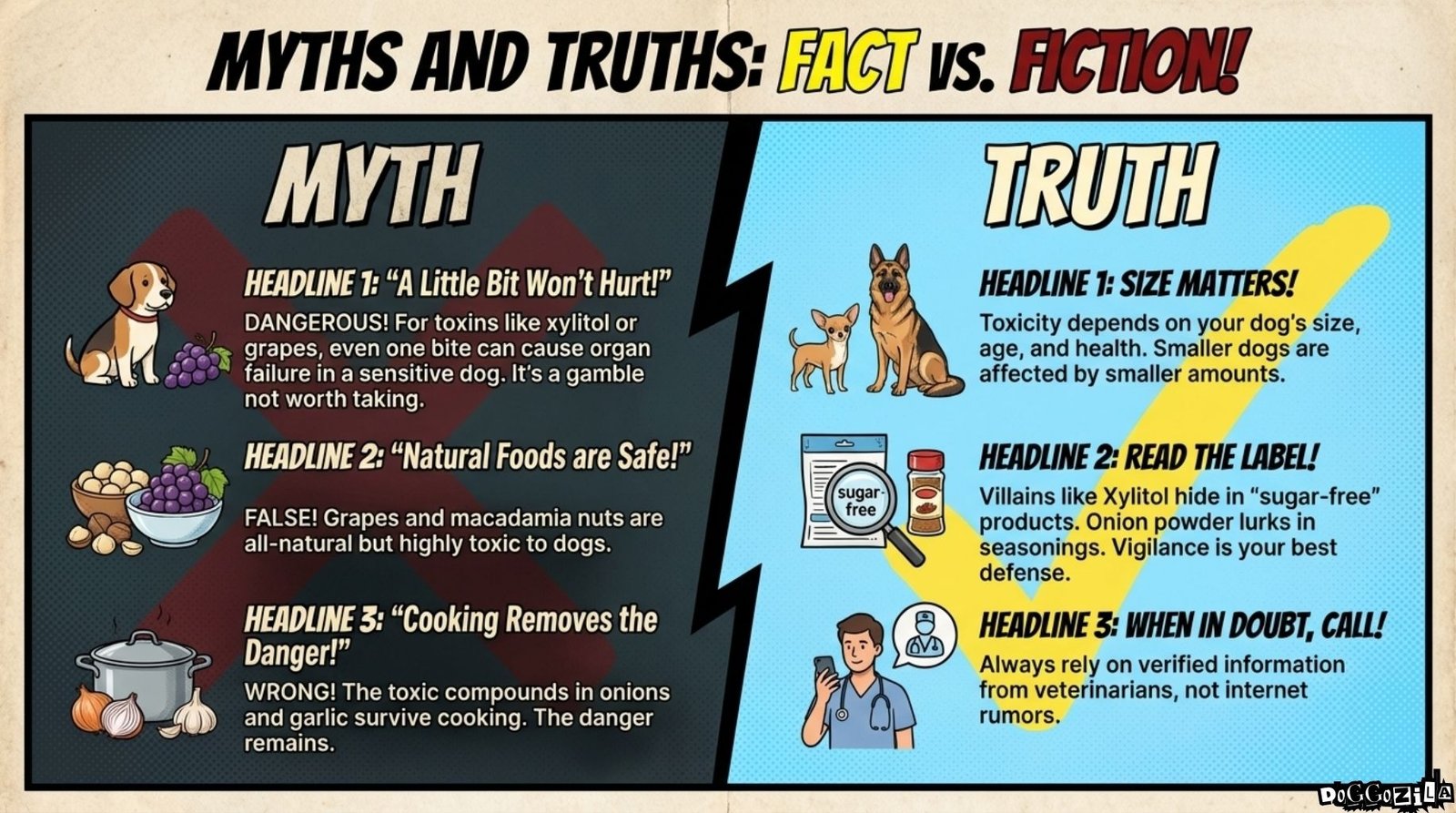
MYTHS AND TRUTHS ABOUT WHAT FOODS ARE TOXIC TO DOGS
There’s a lot of misinformation out there about what dogs can and can’t eat. Some old wives’ tales are downright dangerous. Let’s clear the air and separate fact from fiction. Getting the facts straight protects your dog from well-intentioned mistakes.
After all, knowing the truth about what foods are toxic to dogs is how we become better pet parents.
Myth: “A Little Bit Won’t Hurt”
This is one of the most dangerous myths. For many toxins, there is no safe “little bit.” A single raisin or a small piece of sugar-free gum can be enough to cause organ failure in a sensitive dog. Toxicity depends on your dog’s size, age, and health. Why gamble with your best friend’s life? It’s simply not worth the risk.
The Truth About What Foods Are Toxic to Dogs in Small Amounts
The hard truth is that for some foods, a tiny amount is all it takes. Xylitol, for example, can cause a crisis with just a few granules. Onion powder sprinkled in food over time can build up and cause anemia. This is why it’s so important to learn which items are dangerous in any quantity. This knowledge empowers you to create a truly safe environment.
Common Misconceptions Debunked
Some people think if a food is “natural,” it’s safe. Not true! Grapes and macadamia nuts are all-natural but very toxic. Others believe cooking removes the danger from onions and garlic, but it doesn’t. Cooking may change the flavor, but the harmful compounds remain. Always rely on verified information from veterinarians, not internet rumors.
🔑 Key Points: Dismiss the dangerous myth that “a little bit won’t hurt“, for many toxins like xylitol or grapes, even a tiny amount can cause severe organ damage.
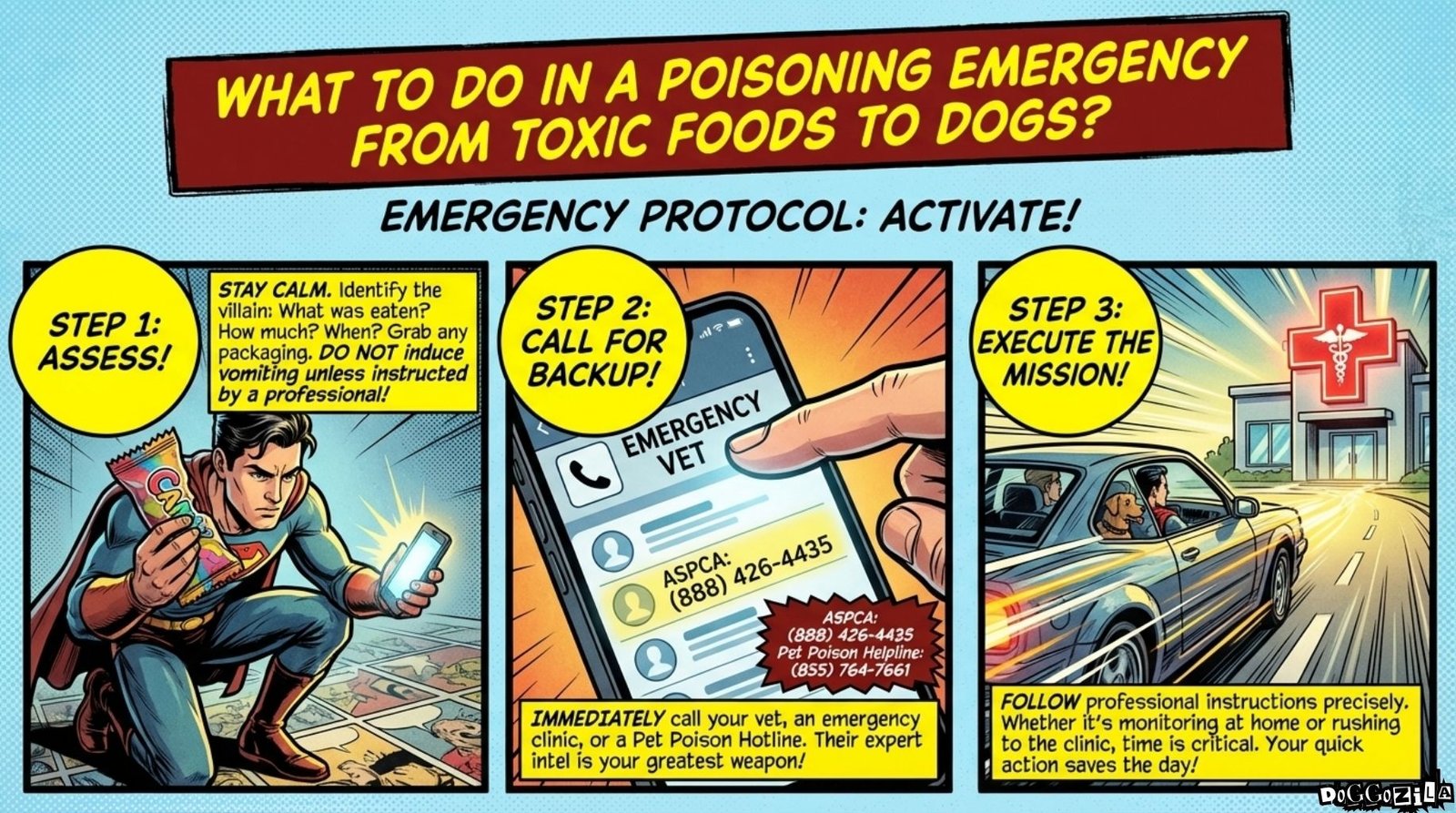
WHAT TO DO IN A POISONING EMERGENCY FROM TOXIC FOODS TO DOGS?
Even with the best prevention, accidents happen. A quick and calm response is your dog’s best chance. Do not wait for symptoms to appear, as some toxins cause damage long before your dog seems sick.
Your knowledge of what foods are toxic to dogs is vital now for informing the vet. Having a plan in place saves precious time and can make all the difference.
Step 1: Don’t Panic, Assess the Situation
First, try to determine what your dog ate, how much, and when. Look for wrappers, crumbs, or a half-chewed container. This information is critical for your vet or poison control expert. Do not try to induce vomiting unless specifically instructed by a professional. It can be harmful with certain substances or if your dog is already showing neurological signs.
Step 2: Make the Call Immediately
Call your primary veterinarian, an emergency animal clinic, or a pet poison control hotline right away. The ASPCA Animal Poison Control Center (888-426-4435) and the Pet Poison Helpline (855-764-7661) are available 24/7. There is usually a fee, but their advice is expert. They will tell you if the amount ingested is toxic and what to do next.
Step 3: Follow Professional Instructions
The expert may instruct you to bring your dog in immediately or to induce vomiting at home with hydrogen peroxide. They might recommend giving activated charcoal to bind the toxin. Always follow their directions precisely. Bring the packaging or a sample of what your dog ate with you to the vet. Quick, professional intervention is the key to a good outcome.
🔑 Key Points: In a suspected poisoning, act quickly and calmly, assess what was eaten, immediately call a vet or pet poison hotline, and follow their instructions precisely.

FIRST-AID KIT FOR PREVENTING YOUR DOGS TO EAT TOXIC FOODS
Prevention is your strongest tool. A little preparation goes a long way in creating a safety net for your pet. This involves both having the right supplies on hand and “dog-proofing” your living spaces.
Part of understanding what foods are toxic to dogs is learning how to store them safely. Think like a curious dog to spot potential risks and you can relax, knowing you’ve done everything to keep your friend safe.
Essential Items for Your Pet First-Aid Kit
Your kit should include, a pet poison hotline number saved in your phone, a fresh bottle of 3% hydrogen peroxide, a syringe to administer it, and a pack of activated charcoal. Also include your vet’s and the nearest emergency clinic’s contact info. Keep this kit in an easily accessible place and check expiration dates regularly. Being prepared helps you stay calm and effective.
Dog-Proofing Your Kitchen and Dining Area
Store all human food in secure cabinets or the refrigerator. Use trash cans with locking lids to prevent dumpster diving. Be extra careful during parties or holidays when food is left out on low tables. Remind guests not to feed your dog from their plates. A simple “Please don’t feed the dog” sign can be a helpful and polite reminder for visitors.
Training and Safe Alternatives
Train a strong “leave it” command. This can stop your dog from grabbing something dangerous off the ground. Always have plenty of healthy, dog-specific treats on hand. When you want to share, offer a safe alternative like a piece of plain, cooked chicken or a carrot stick. This satisfies their begging without the risk and reinforces your role as a caring owner.
🔑 Key Points: Assemble a pet-specific first-aid kit containing essential items like 3% hydrogen peroxide, a syringe and activated charcoal. Save the contact numbers from your vet, emergency clinic, and a pet poison hotline. Proactively dog-proof your home by storing human food securely, using locking trash cans, and training a strong “leave it” command to prevent access to toxic items.
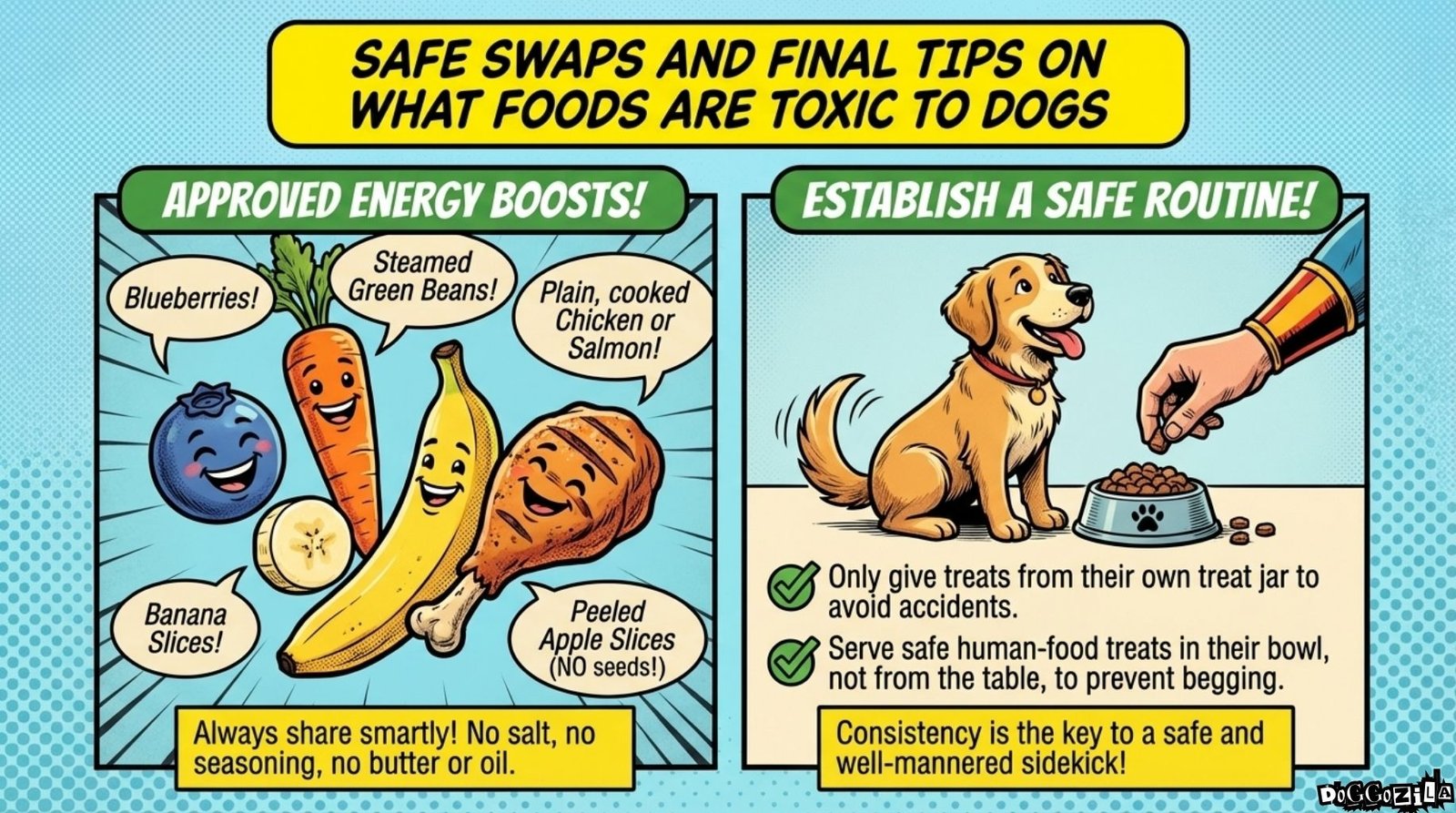
SAFE SWAPS AND FINAL TIPS ON WHAT FOODS ARE TOXIC TO DOGS
Living with a dog doesn’t mean you can never share. It just means sharing smartly. Plenty of human foods are perfectly safe and healthy for dogs in moderation. The key is knowing the difference. Let’s end on a positive note with some safe choices.
This final knowledge completes your education on what foods are toxic to dogs and what’s happily allowed.
Healthy Human Food Alternatives
Many fruits and veggies make great treats. Try offering slices of banana, watermelon (seedless), blueberries, or steamed green beans. For a protein boost, plain cooked chicken, turkey, or salmon are excellent choices. Always avoid seasoning, oils, and butter. These swaps let you include your pup in snack time safely and joyfully.
Recommended Articles with Homemade Dog Food Recipes on The Links Below:
- Homemade Dog Food Recipes for Balanced Dog Diet
- Homemade Dog Treats: Delicious and Healthy Recipes
- 10 Healthy Homemade Dog Food Recipes
Creating a Safe Sharing Routine
Make a house rule, only approved treats come from the dog’s treat jar. This prevents kids or guests from accidentally giving something harmful. When you do share safe human food, give it in their bowl, not from the table. This discourages begging and keeps mealtimes peaceful. Consistency is the secret to a well-mannered and safe dog.
Final Thoughts on What Foods Are Toxic to Dogs
Being a dog owner is a wonderful adventure filled with love. Part of that love is protecting them from hidden dangers in our homes. You are now equipped with the knowledge to do just that. Bookmark this guide, share it with fellow dog lovers, and always err on the side of caution. Here’s to many happy, healthy, and safe years with your furry best friend!
🔑 Key Points: You can safely share healthy alternatives like plain cooked chicken or blueberries, and establish a routine where only approved treats are given to prevent accidents.
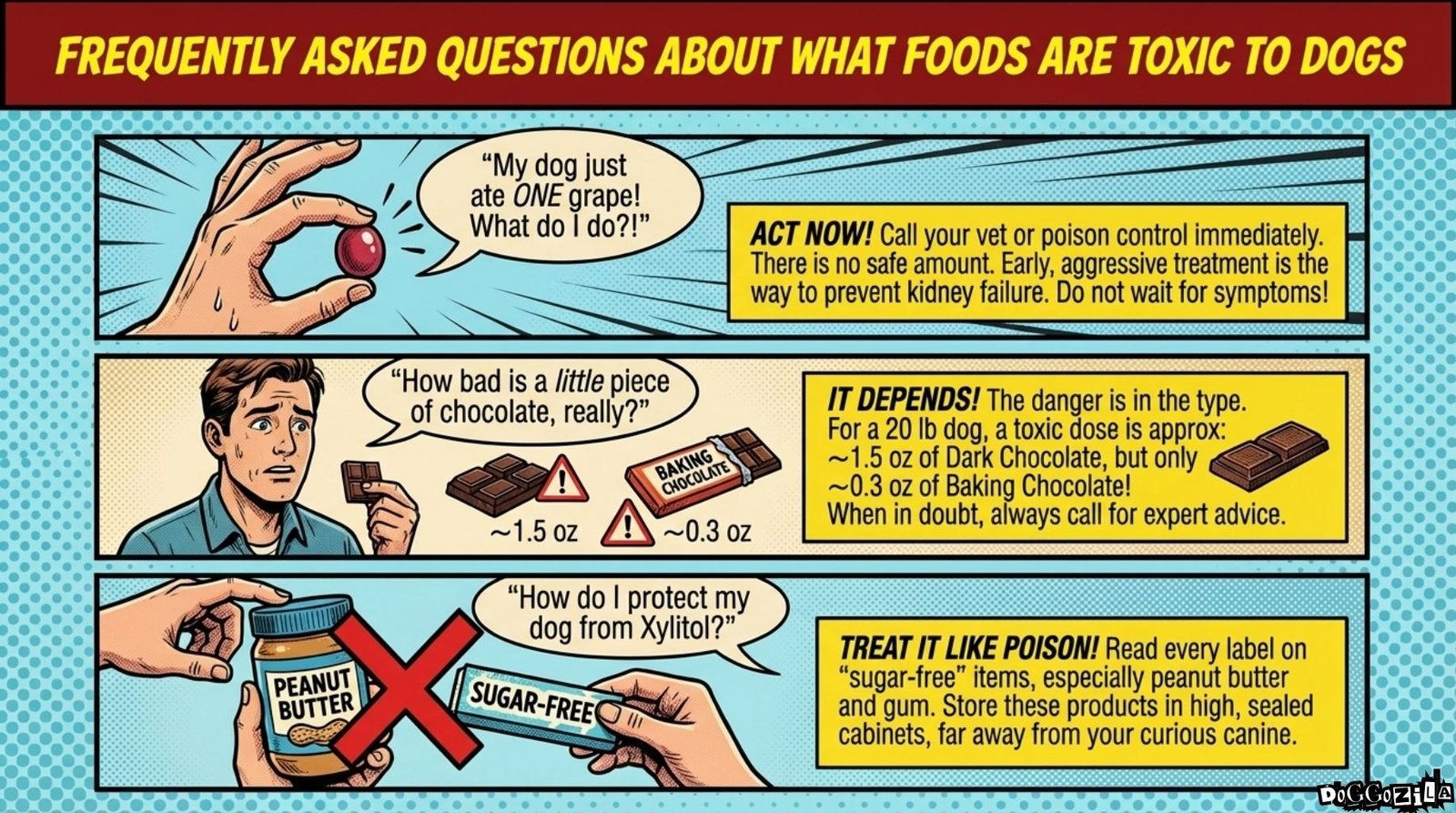
FREQUENTLY ASKED QUESTIONS ABOUT WHAT FOODS ARE TOXIC TO DOGS