
Have you ever looked at your dog and wondered about their past? That funny habit or strong instinct might be a whisper from ancient times. Our furry friends have stories that stretch back thousands of years. They walked with pharaohs and hunted with samurai. These animals are not just pets. They are living history. Let’s go on a journey to meet them. We will discover the resilient survivor dogs of the Arctic and the silent hunters of Africa. Let’s uncover the amazing tales of the oldest dog breeds together. Their past makes our bond with them even more special today.
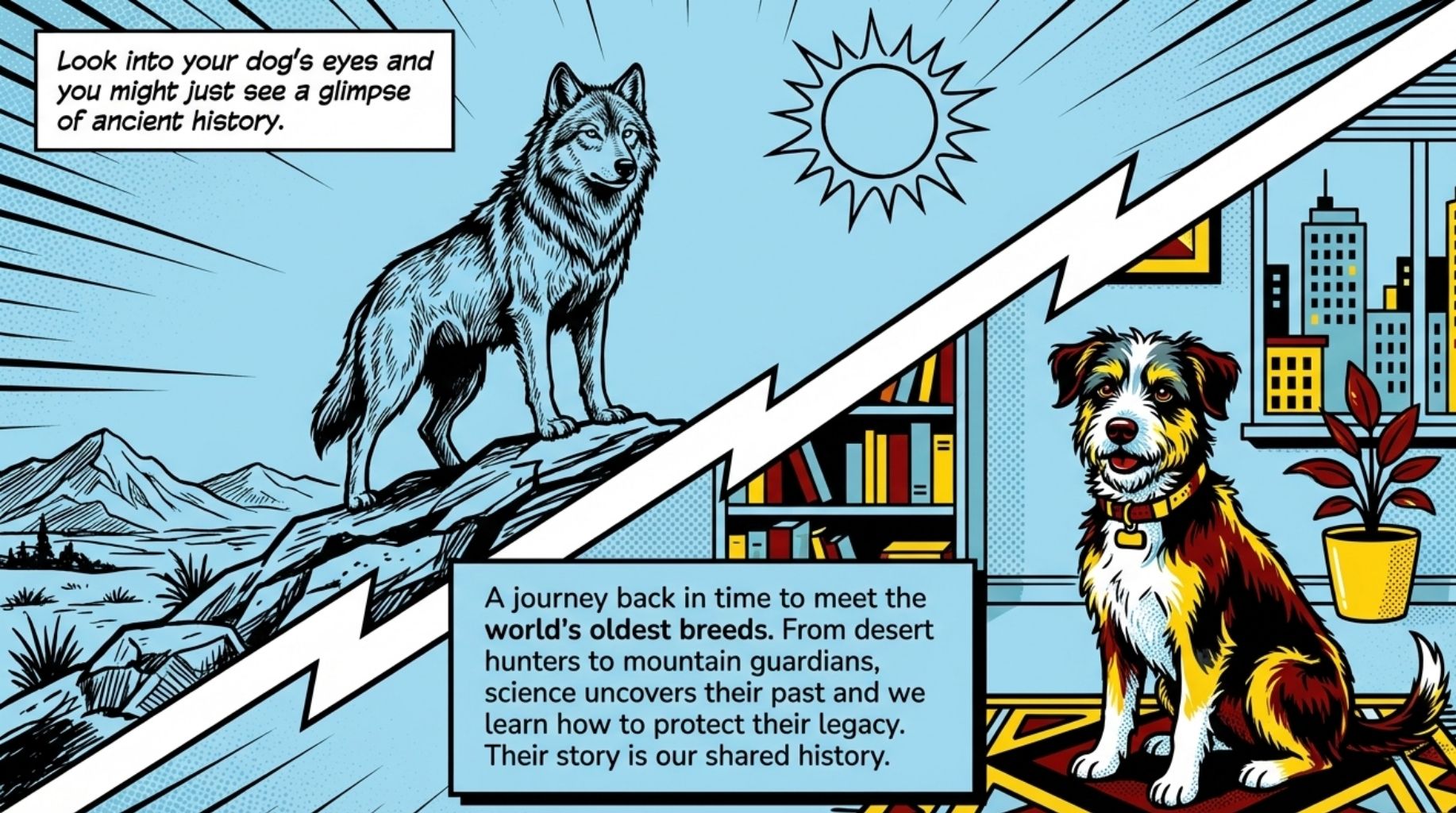
“Look into your dog’s eyes and you might just see a glimpse of ancient history, a loyal companion whose story began thousands of years before our modern world.”
Quick Summary About THE OLDEST DOG BREEDS IN THE WORLD
This article is a journey back in time to meet the world’s oldest dog breeds. We explore how science uncovers their past. Will visit the desert hunters and mountain guardians. We learn how these ancient dogs moved from vital work to modern homes. Finally, we see how to protect their legacy for the future. Their story is our shared history.
UNVEILING THE ANCIENT WORLD OF THE OLDEST DOG BREEDS
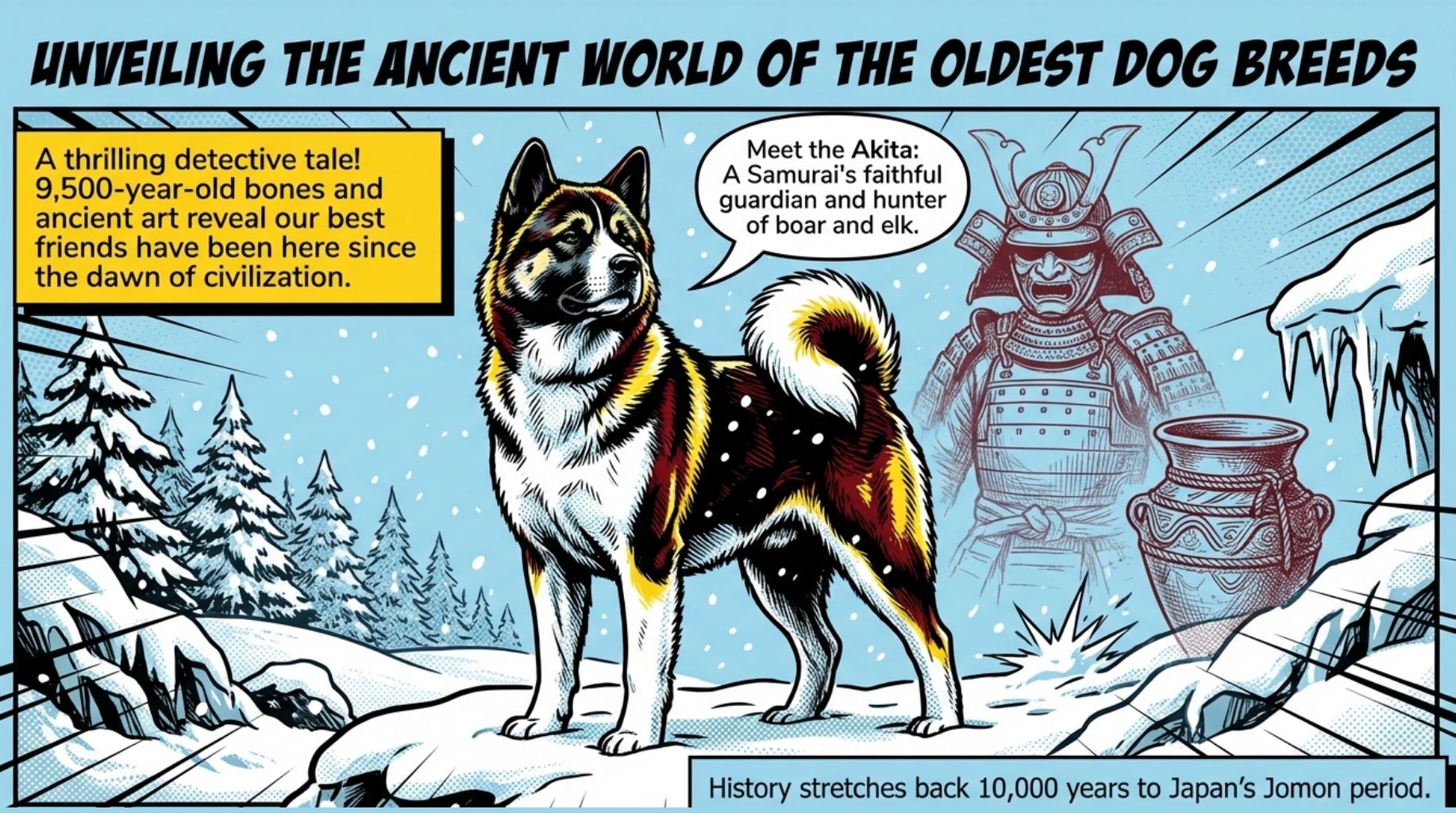
The story of the oldest dog breeds is a thrilling detective tale. Scientists use clues from archaeology and genetics. They even study ancient art. Experts once used cave paintings to name ancient breeds. New genetic tools now rewrite that story.
A study of a 9,500-year-old Siberian dog changed everything. It showed some lineages began earlier than we thought. Our list of ancient companions keeps evolving with new science. It reminds us our best friends have been here since civilization dawned. Their loyalty truly stands the test of time. These oldest dog breeds are a direct link to our shared past.
Meet the Akita: A Samurai’s Faithful Guardian
The Akita Inu is a monument to loyalty. We find it high on the list of oldest dog breeds. Its history may go back 10,000 years to Japan’s Jomon period. Researchers found ancient bones with teeth worn from hunting. This hints at the Akita’s early job. These strong dogs hunted boar and elk in the mountains.
Later, they won the deep respect of samurai. The samurai loved the Akita’s dignity and courage. Today, the Akita is a Japanese national treasure. It is a symbol of good health and a protector of the home. Its noble spirit is a legacy of an ancient past. When you look at an Akita, you see a living piece of history.
The Greenland Sled Dog: An Arctic Survivor’s Tale among Oldest Dog Breeds
The tale of the oldest dog breeds gets frosty with the Greenland Sled Dog. Genetics show a stunning fact. This hardy worker comes from dogs pulling sleds 9,500 years ago in Siberia. It shows no wolf interbreeding in all that time. Its body is a marvel of Arctic adaptation.
It thrives on a high-fat diet. It can regulate its heat in the worst cold. For millennia, it was a partner to Arctic peoples. Climate change and disease now threaten this ancient line. Their story is about teamwork and survival. It is a powerful chapter in the saga of the oldest dog breeds.
The Basenji: The “Barkless” Dog of the Pharaohs
Our tour of the oldest dog breeds leads to Africa with the Basenji. Art from ancient Egypt shows dogs just like them. It is the “barkless dog.” It makes a unique yodel or chortle instead. This clever and independent breed acts in cat-like ways. It cleans itself fastidiously. It also lacks a typical doggy smell.
Isolated in Central Africa for centuries, it kept its ancient traits. Hunters valued its keen sight and explosive speed. It even developed a vertical leap to see over tall grass. Today, this quiet, alert dog is a living link to a distant past. It is a classic example of the enduring oldest dog breeds. This barkless dog from Ancient Egypt have enormous history!
🔑 Key Points: The search for the oldest dog breeds is a detective story. It uses clues from bones, art, and now DNA. New science constantly updates our list. It proves some dogs are far older than we ever imagined.
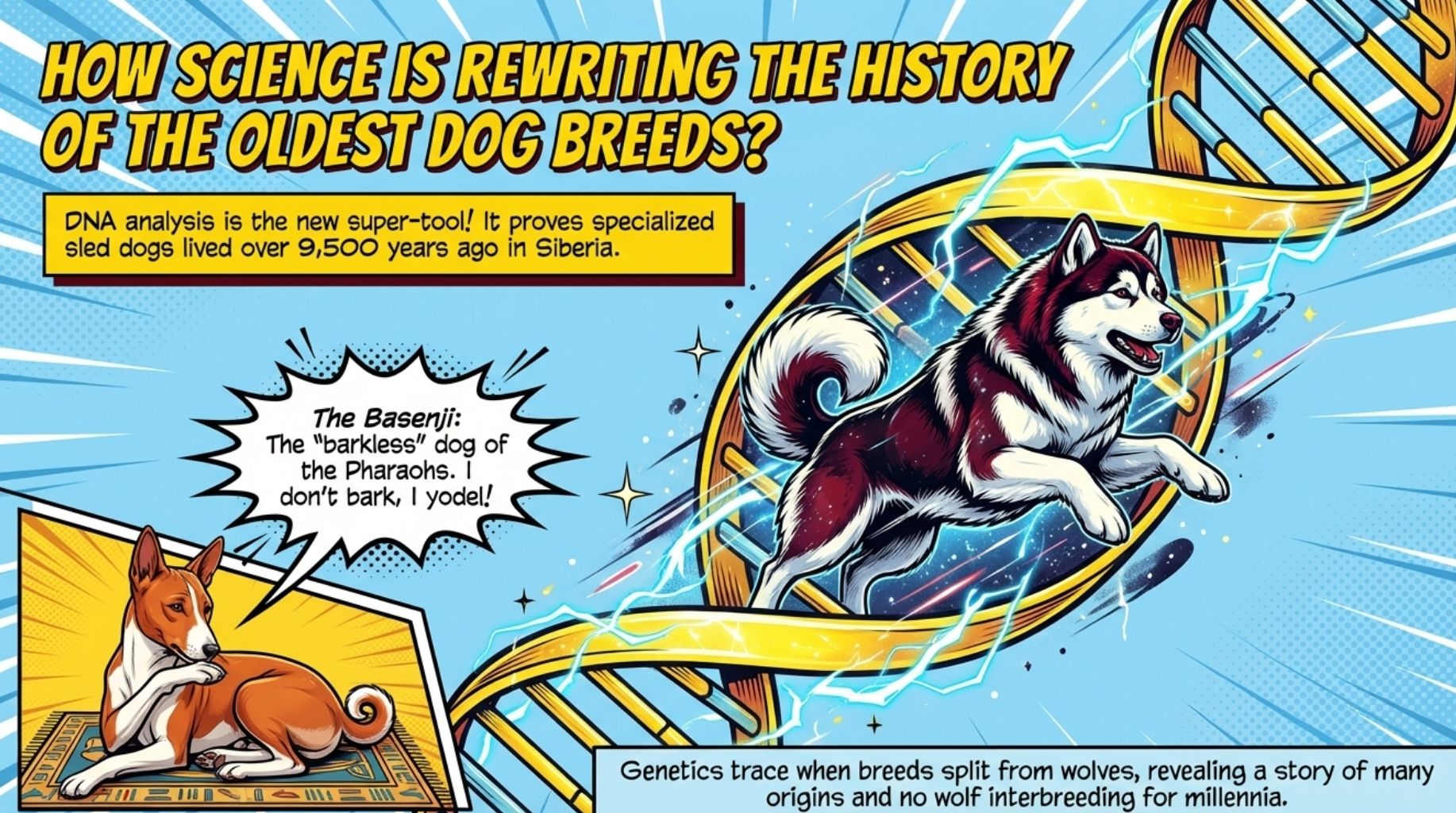
HOW SCIENCE IS REWRITING THE HISTORY OF THE OLDEST DOG BREEDS?
We used to rely on art and bones to date dogs. DNA analysis is now the super-tool. It lets scientists see the genetic blueprint of modern and ancient dogs. This led to big surprises. The Zhokhov dog study proved specialized sled dogs lived over 9,500 years ago. That was far earlier than anyone guessed. Genetics can trace when breeds split from wolves.
One study said the Tibetan Mastiff’s ancestors split from wolves around 58,000 years ago. New science paints a detailed picture of dog domestication. It shows a story of many origins and great adaptability. The narrative of the oldest dog breeds is always being updated.
Genetic Clues from Ancient Bones Redefine the Oldest Dog Breeds
The search for the oldest dog breeds happens in high-tech labs. Scientists take tiny DNA from ancient bones at dig sites. They compare this code to modern dogs. It is like finding a missing puzzle piece. The Greenland Sled Dog study used this method for its big find.
Researchers can spot unique genetic adaptations too. They found Greenland Dogs have special genes for processing high-fat diets. This hard proof tells us how these dogs thrived with humans for so long. Every ancient genome adds a chapter to our shared story. It solidifies the status of certain lineages as the true oldest dog breeds.
The Impact of New Research on Our Understanding of Oldest Dog Breeds
New genetic data changes our understanding a lot. It moves us beyond myths to solid proof. Breeds once called ancient are now seen in a new way. Others, like the Greenland Dog, leap to the front of history. This research shows the value of geographic isolation.
Breeds from remote areas kept more ancient DNA. The Basenji in Africa is a perfect case. Dog history is not one story but many parallel tales. Different human groups forged partnerships with wolves. Together, they created amazing dog diversity. The group we call the oldest dog breeds is a special club shaped by time and isolation.
A Timeline of Domestication and the Emergence of Oldest Dog Breeds
Let’s sketch a timeline of how dogs became friends. It likely started between 15,000 and 40,000 years ago from gray wolves. By 10,000 years ago, distinct types like the Akita’s ancestors were in Japan. By 9,500 years ago, specialized workers like sled pullers lived in Siberia.
Later, breeds like the Saluki were prized in the Middle East. This was not a straight line but a sprawling web. Natural selection and human choice worked together. They shaped wolves into helpers and then family members. The oldest dog breeds we know today are the remarkable result of this long journey.
🔑 Key Points: DNA analysis is the newest tool. It has changed everything we thought we knew. It shows specific types like sled dogs existed over 9,500 years ago. Genetic proof now guides our understanding of dog history.
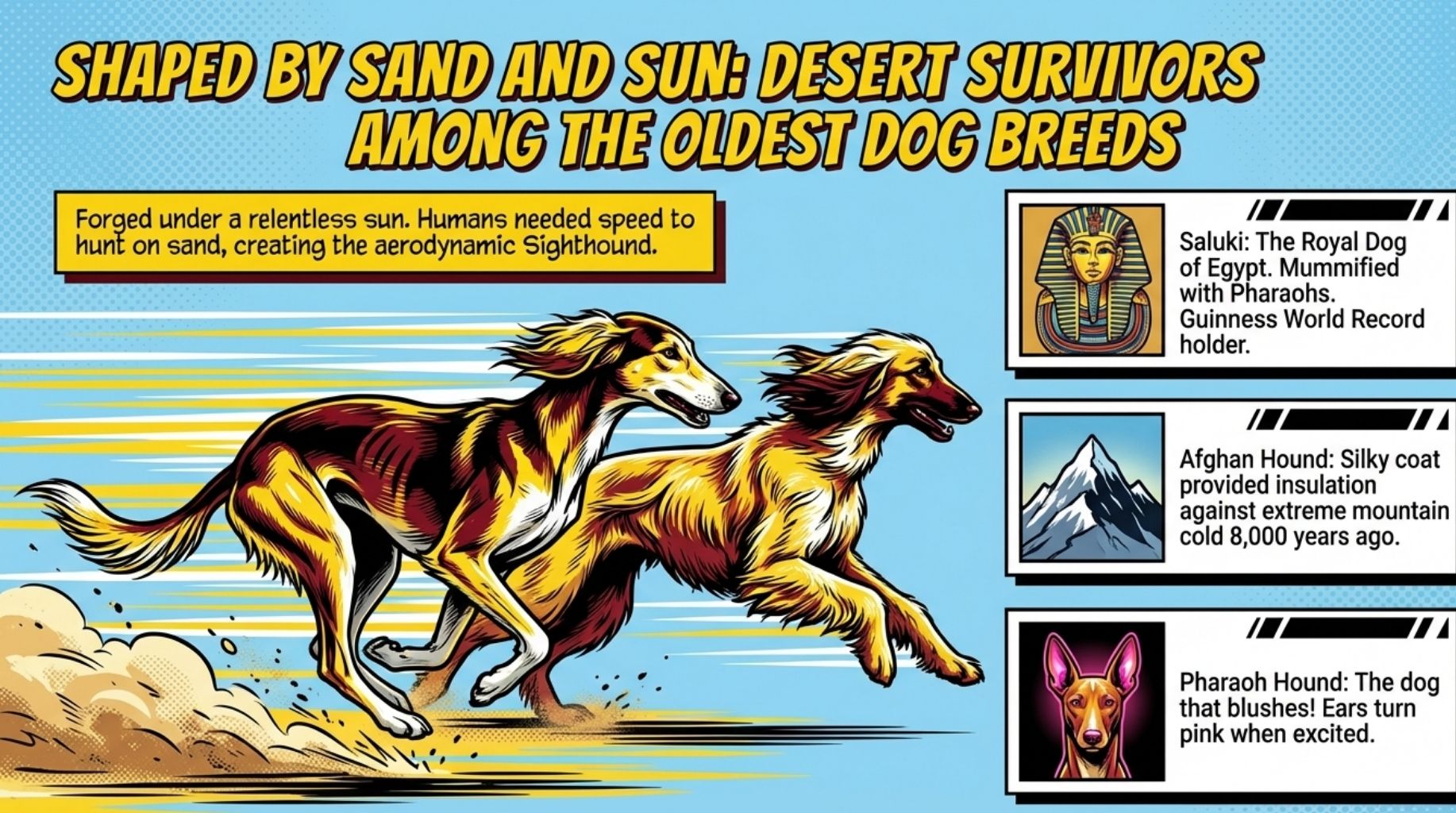
SHAPED BY SAND AND SUN: DESERT SURVIVORS AMONG THE OLDEST DOG BREEDS
Harsh deserts created graceful and enduring oldest dog breeds. In the deserts of the Middle East, speed and sight were key. Humans needed partners to hunt swift game on sand. This need created sighthounds. These are lean, aerodynamic dogs built for speed. They were so valuable they were buried with royalty.
These dogs images adorn ancient tombs. They are symbols of nobility and grace. Their legacy is elegance and fierce independence. It is a partnership forged under a relentless sun. These desert survivors are a proud category within the oldest dog breeds.
The Saluki: The Royal Hound of Ancient Egypt
The elegant Saluki always gets a royal mention. It is a standout among the oldest dog breeds. Called the “Royal Dog of Egypt,” its image is in tombs from 3,300 BCE. Egyptian nobility cherished them. Some were even mummified. They were bred for amazing speed to hunt gazelle.
The Saluki is so ancient it holds a Guinness World Record. Today, they are gentle and dignified companions. They have a strong hunt instinct and love to run. Their graceful shape is a window into the world of pharaohs. They are a true canine treasure from the ancient past.
The Afghan Hound: A Silky Hunter from the Oldest Dog Breeds
The Afghan Hound adds majestic glamour to the oldest dog breeds. Its origins go back 8,000 years to Afghanistan. Nomadic people bred them to hunt leopards and antelope. Their long, silky coat was not just for show. It gave insulation against extreme mountain cold.
British soldiers brought them West in the 1800s. People loved their striking looks. They are aloof and independent but loyal. These dogs can be quite clownish at home. They remind us that the oldest dog breeds were about function and beauty. Their survival is a testament to their adaptability.
The Pharaoh Hound: A Blushing Member of the Oldest Dog Breeds
The Pharaoh Hound is a living artifact. Many believe this breed is unchanged for over 5,000 years. Its look appears in ancient Egyptian art. It later hunted rabbits on Malta. This sleek sighthound has a charming trait. It blushes! When excited, its nose and ears turn rose-pink.
They are smart, playful, and affectionate. Their short coat and build match dogs on pharaohs’ tombs. Owning one is like having a cheerful piece of history. It is a delightful example of how the oldest dog breeds keep their unique charm.
🔑 Key Points: Deserts created sleek, fast sighthounds. Breeds like the Saluki and Afghan Hound are living artifacts. They were bred for speed and stamina in harsh, open landscapes. Their form is a direct result of their ancient function.
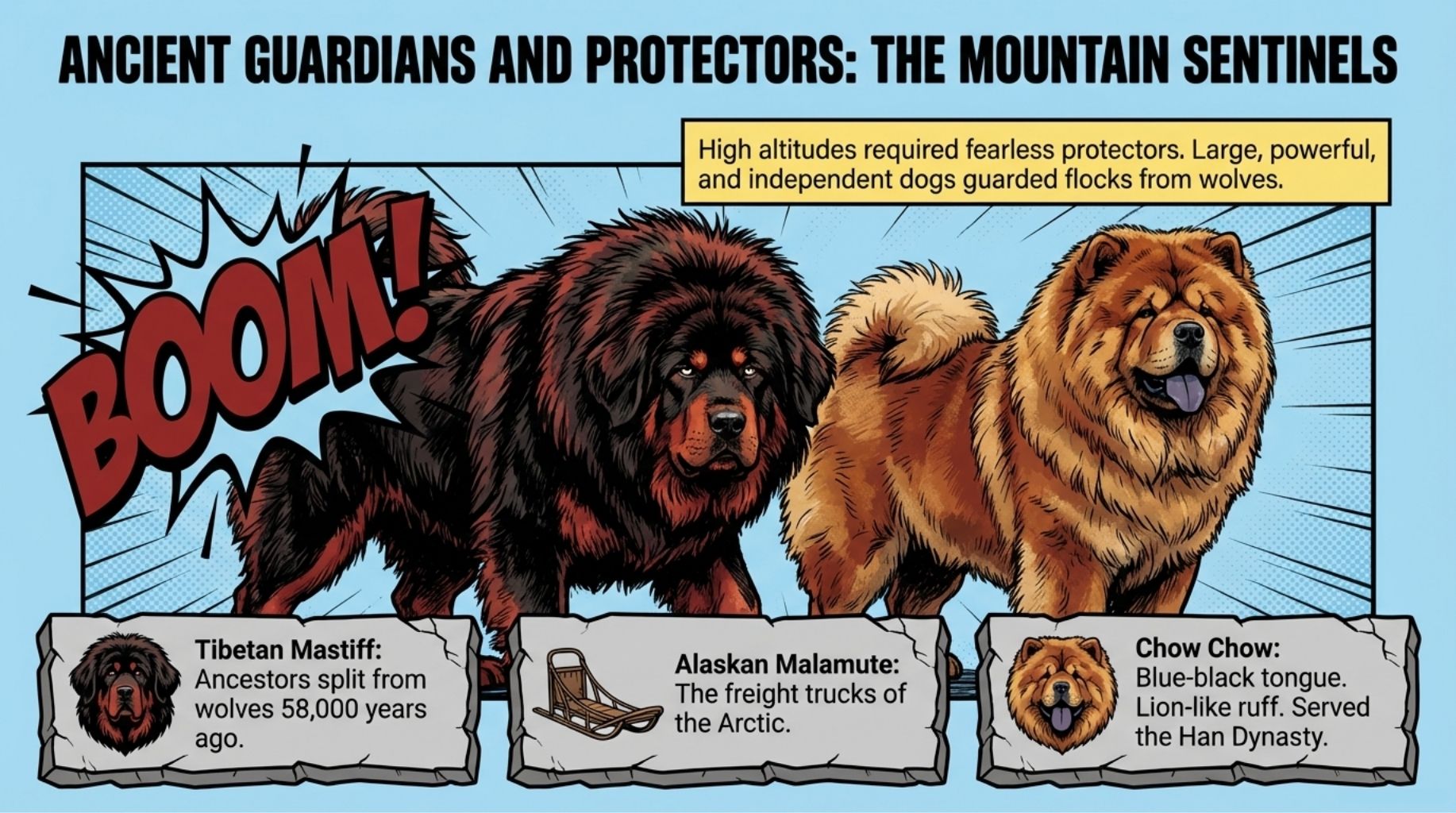
ANCIENT GUARDIANS AND PROTECTORS: THE MOUNTAIN SENTINELS
While sighthounds ruled deserts, other oldest dog breeds mastered mountains. In high, rugged lands, humans needed protectors. They needed fearless dogs to guard flocks from wolves. These dogs watched over isolated homes too. They had to be strong, loyal, and tough. These dogs survived harsh climates with little shelter. They were often alone with herds for days. Independence was a key trait.
These ancient guardians are large and powerful. They have a deep bark to warn off intruders. Their presence alone deterred predators. They show the protective side of the human-dog bond. They are the steadfast sentinels of the oldest dog breeds.
The Tibetan Mastiff: A Legendary Guardian of the Oldest Dog Breeds
The Tibetan Mastiff is a colossal protector. Genetics suggest its line is very old. It comes from the severe Tibetan plateau. It guarded monasteries and flocks from wolves. These dogs are massively built with a thick mane. They are loyal to family but wary of strangers.
In ancient times, they were living alarm systems. Their deep, booming bark is legendary. Today, they are a rare and imposing breed. They carry the solemn spirit of the mountains. They are a profound example of the protective nature found in the oldest dog breeds.
The Alaskan Malamute: The Heavy Hauler of the Arctic
The Alaskan Malamute is a powerhouse with ancient roots. Its ancestors crossed into Alaska from Siberia millennia ago. The Mahlemiut Inuit people bred them. They needed strength to pull heavy sleds with supplies. Malamutes were the freight trucks of the Arctic. Their dense coat and build handled brutal cold.
They also hunted seals and guarded against polar bears. These dogs are friendly and sociable with a strong pack mind. They love family work or play. These dogs show the spirit of strength and endurance. They are a key part of the working group within the oldest dog breeds.
The Chow Chow: The Ancient Dog with a Blue Tongue among Oldest Dog Breeds
The Chow Chow is very distinctive. Its history in China goes back to the Han Dynasty, around 200 B.C. It likely goes back further. It served as a hunter, herder, and guardian. Its most famous feature is its blue-black tongue. Its dense, lion-like ruff gave protection in cold China.
Chows are known for cat-like aloofness and dignity. They are loyal to one person. They are clean, quiet, and surprisingly sedentary. A Tang Dynasty emperor kept a kennel of 5,000 Chows. This breed is a noble and ancient companion. It has a truly regal presence in the family of oldest dog breeds.
🔑 Key Points: Mountains required strong, independent guardians. Dogs like the Tibetan Mastiff and Alaskan Malamute were bred for this. They protected flocks and homes in isolated, tough climates. Their size and strength were essential for survival.

FROM ANCIENT HUNTERS TO MODERN COMPANIONS
The journey of the oldest dog breeds to our sofas is remarkable. These dogs were not bred for cuteness. They were tools for human survival. They hunted, guarded, and hauled. As human societies changed, so did dog roles. The rise of aristocracy turned some hunters into status symbols.
The move to cities created demand for smaller companions. Yet, ancient instincts never fully vanish. Knowing this history is key to living with these legacy breeds. Understanding their past makes us better owners for the oldest dog breeds in a modern world.
The Greyhound: From Desert Hunter to Couch Champion
The Greyhound shows this transition well. Its ancestors are in Egyptian art from 6,000 years ago. For ages, they were the ultimate hunting machines. They used incredible speed to course hare. By the Middle Ages, they were so noble that commoners could not own them.
Today, they are retired racing athletes. They are the world’s fastest dog. Yet they are famously lazy at home. They are gentle, quiet, and love a soft bed. Their story shows a breed’s true nature can be peaceful. Even the fastest of the oldest dog breeds can be a perfect couch companion.
The Lives of Ancient Breeds in a Modern Apartment
Living with one of the oldest dog breeds in an apartment is an adventure. You must respect their ancient DNA. A Saluki will need safe, full-speed runs. A protective Tibetan Mastiff needs careful socialization. An independent Basenji needs clever puzzles. The key is to give an outlet for their bred-in purpose.
Lure coursing can satisfy a sighthound‘s chase instinct. A weighted pull toy can give a Malamute a job. It is not about changing the dog. It is about channeling its ancient talents in fun ways. This builds a stronger bond with your living piece of history. The oldest dog breeds can thrive anywhere with understanding.
Why Their Ancient Traits Still Matter Today?
The traits that made these dogs survive still define them. Their independence or strong prey drive are not flaws. They are a blueprint for survival. For owners, this means celebrating their uniqueness. That stubborn Akita loyalty makes them devoted. The Basenji’s quiet cleanliness is a home bonus.
The Malamute’s strength is great for canine sports. When we choose an ancient breed, we steward a genetic legacy. We commit to understanding their needs and history. In return, they offer a deep connection to the past. The oldest dog breeds teach us about resilience and partnership every day.
🔑 Key Points: The oldest dog breeds had jobs crucial for human survival. Today, they live in our homes. Understanding their original purpose is the key to their happiness. We must channel their ancient instincts in positive, modern ways.

PRESERVING THE LEGACY OF THE OLDEST DOG BREEDS
Many of the oldest dog breeds face modern threats. Climate change, lost traditions, and small gene pools are risks. The Greenland Sled Dog declines from a warming Arctic. Preserving these breeds is about more than saving a dog type. It is about conserving living history and genetic diversity. Responsible breeding for health is crucial.
Supporting groups that help traditional working dogs matters too. For lovers of the oldest dog breeds, preservation starts with education. Choose ethical breeders. Give these incredible dogs the specialized homes they deserve. We must protect the legacy of the oldest dog breeds for the future.
The Threat of a Changing World
The world changes fast. Some ancient breeds struggle to adapt. Dogs like the Greenland Sled Dog need a frozen ecosystem. Traditional Inuit hunting life is under threat. Other breeds face popularity booms and busts. This can harm genetic health. When a breed becomes a fad, irresponsible breeding follows.
It can bring health problems. It can dilute unique traits. Urban sprawl takes spaces where these dogs once worked. Protecting them means supporting the cultures that created them. It means making wise choices as owners. The future of the oldest dog breeds depends on our awareness.
How Responsible Ownership Contributes to Preservation?
You can help preserve the legacy. You do not need to be a breeder. Responsible ownership is a powerful act. Start with deep research before getting a puppy. Choose a breeder who health-tests their dogs. Find one who champions the breed’s original traits. Find out why dogs are important for the ecosystem and how to protect them!
Be ready for your breed’s specific needs. That might be miles of running or patient training. Advocate for your breed by sharing good information. Consider adopting a retired adult dog. Every ancient breed in a knowledgeable home is a success. It ensures their ancient line continues with health. Caring for the oldest dog breeds is an honor and a joy.
Looking to the Future of Ancient Lines
The future needs balance. We must respect the past and adapt for tomorrow. Scientists can use genetics to guide breeding. Breed clubs can emphasize working ability, not just looks. Enthusiasts can join sports that let these dogs do their born jobs. There is growing love for “landrace” dogs. Discover the dog sports and see which one is best for your friend!
These are regional types shaped by function over centuries. Valuing health, temperament, and purpose is key. It ensures these magnificent living historians thrive. They survived empires and ice ages. With our care, they will walk beside us for more millennia. The story of the oldest dog breeds is still being written.
🔑 Key Points: These ancient lineages now face modern threats. Climate change and shrinking gene pools are real dangers. Their preservation relies on responsible breeding and informed, committed ownership. Saving them means saving living history.
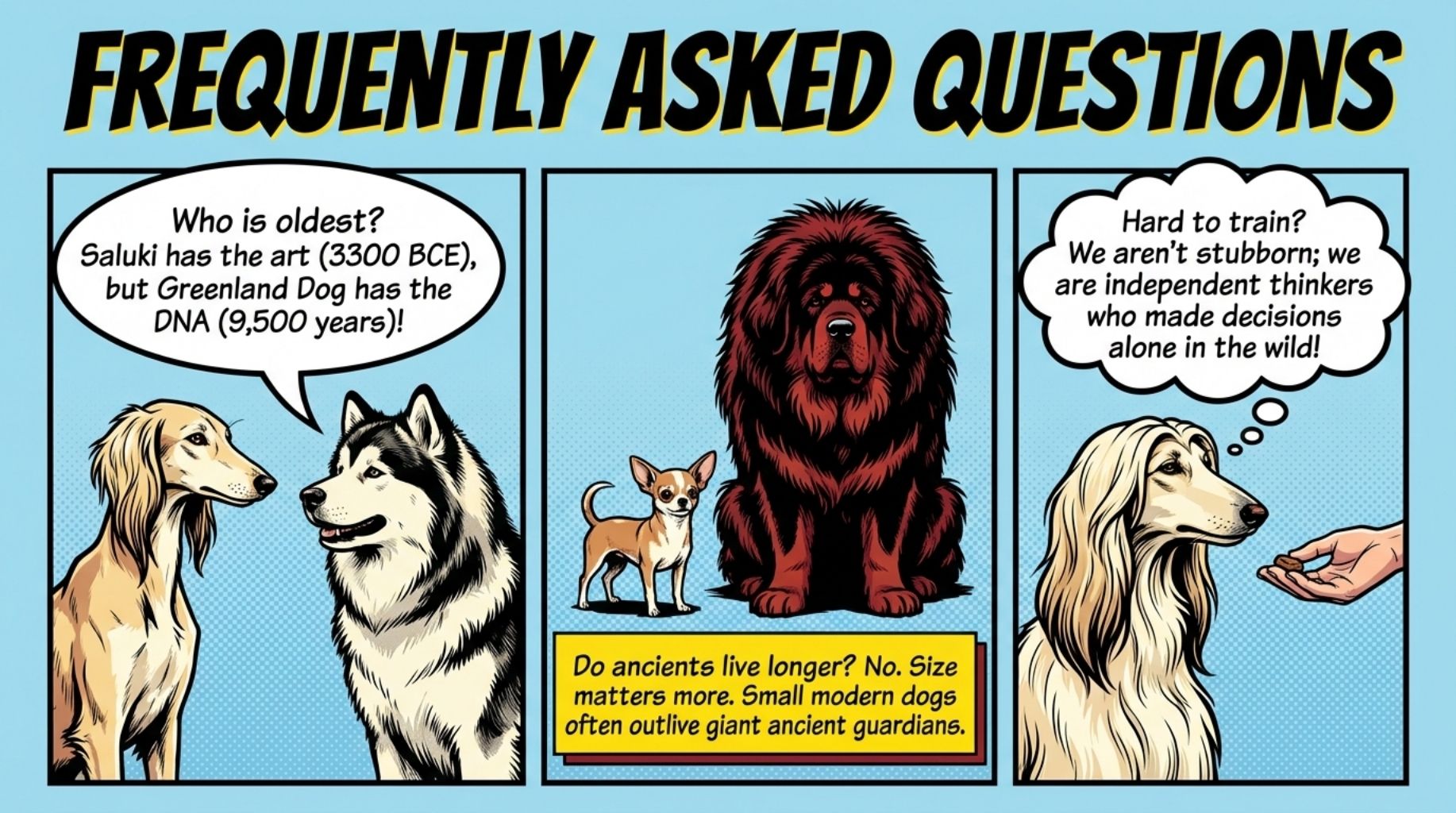
FREQUENTLY ASKED QUESTIONS
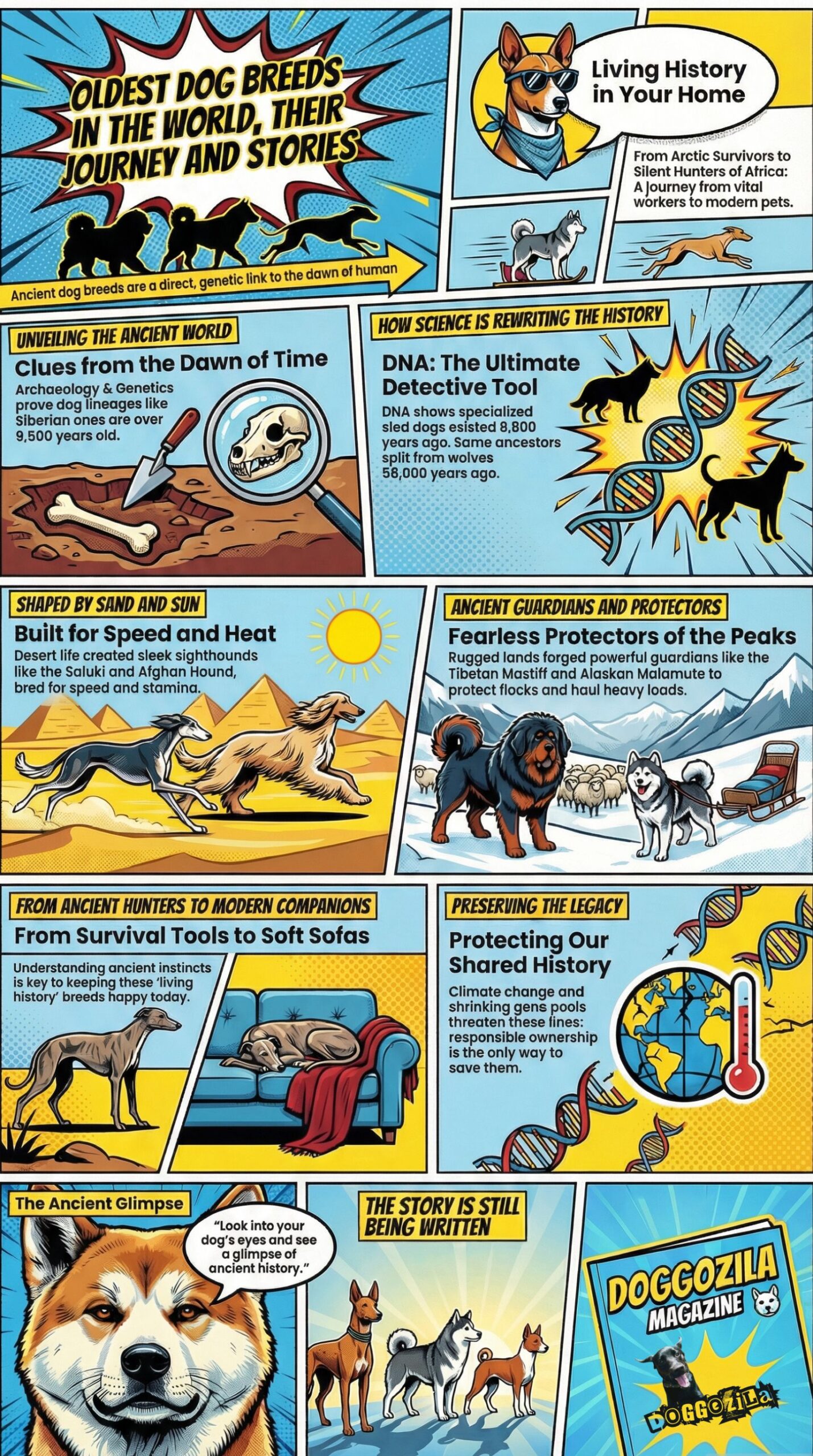
Key Points and Takeaways to Remember
- The search for the oldest dog breeds is a detective story. It uses clues from bones, art, and now DNA. New science constantly updates our list. It proves some dogs are far older than we ever imagined.
- DNA analysis is the newest tool. It has changed everything we thought we knew. It shows specific types like sled dogs existed over 9,500 years ago. Genetic proof now guides our understanding of canine history.
- Deserts created sleek, fast sighthounds. Breeds like the Saluki and Afghan Hound are living artifacts. They were bred for speed and stamina in harsh, open landscapes. Their form is a direct result of their ancient function.
- Mountains required strong, independent guardians. Dogs like the Tibetan Mastiff and Alaskan Malamute were bred for this. They protected flocks and homes in isolated, tough climates. Their size and strength were essential for survival.
- The oldest dog breeds had jobs crucial for human survival. Today, they live in our homes. Understanding their original purpose is the key to their happiness. We must channel their ancient instincts in positive, modern ways.
- These ancient lineages now face modern threats. Climate change and shrinking gene pools are real dangers. Their preservation relies on responsible breeding and informed, committed ownership. Saving them means saving living history.

There is no single “oldest” breed, it depends on the evidence. Age does not guarantee a longer lifespan. These ancient breeds often have strong, independent personalities. They require owners who understand and respect their deep history.