
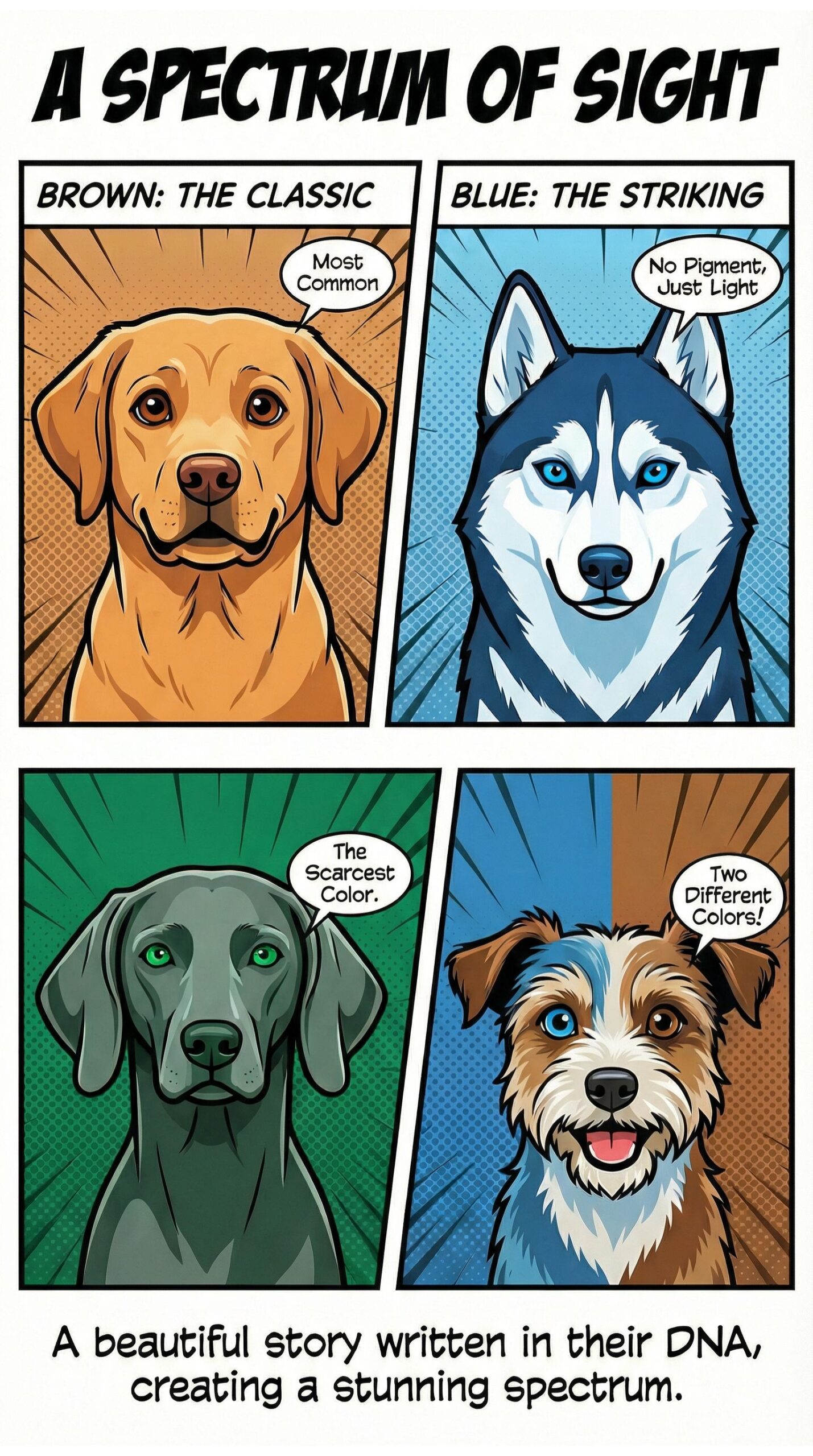
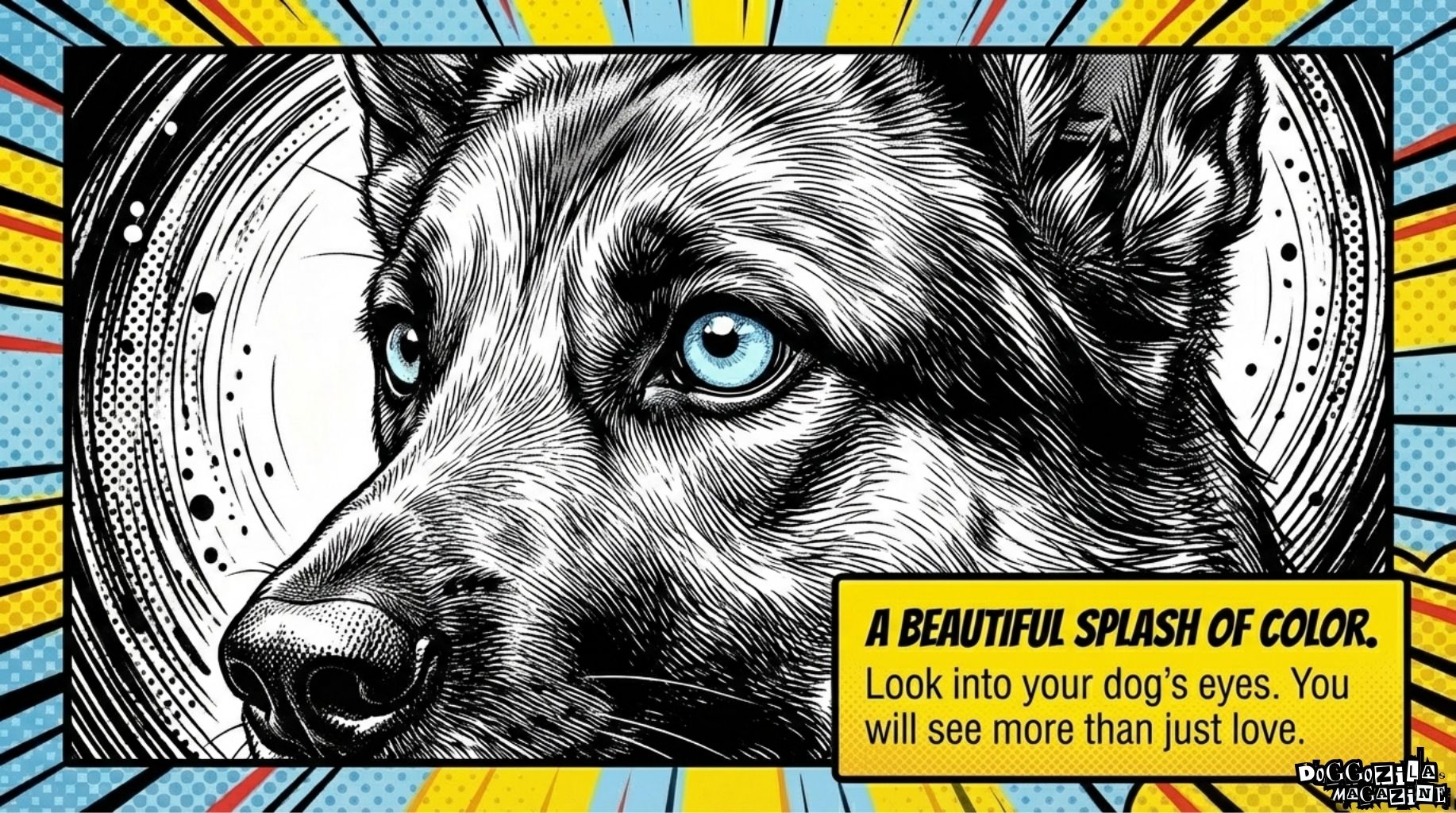
Look into your dog’s eyes. You will see more than just love. You will see a beautiful splash of color. Dog eye colors come in a wonderful variety. They range from deep brown to icy blue and even rare green. This variety tells a story of genes, development, and breed history.
Understanding these colors is fun. It also helps you know your dog better. This guide will show you the rainbow in your dog’s eyes. You will learn what creates it and what makes it special. Each shade has a unique origin and meaning. Discovering it deepens the bond with your furry friend.
“Look into your dog’s eyes. The color you see is a amazing story”.
Quick Summary About THE DOG EYE COLORS
This guide is all about dog eye colors. We will explore common browns and rare blues. You will learn why eyes are different colors. You will see how puppy eyes change. We will talk about health and genes. It is a simple guide to a beautiful topic.
UNDERSTANDING THE BASICS OF DOG EYE COLORS
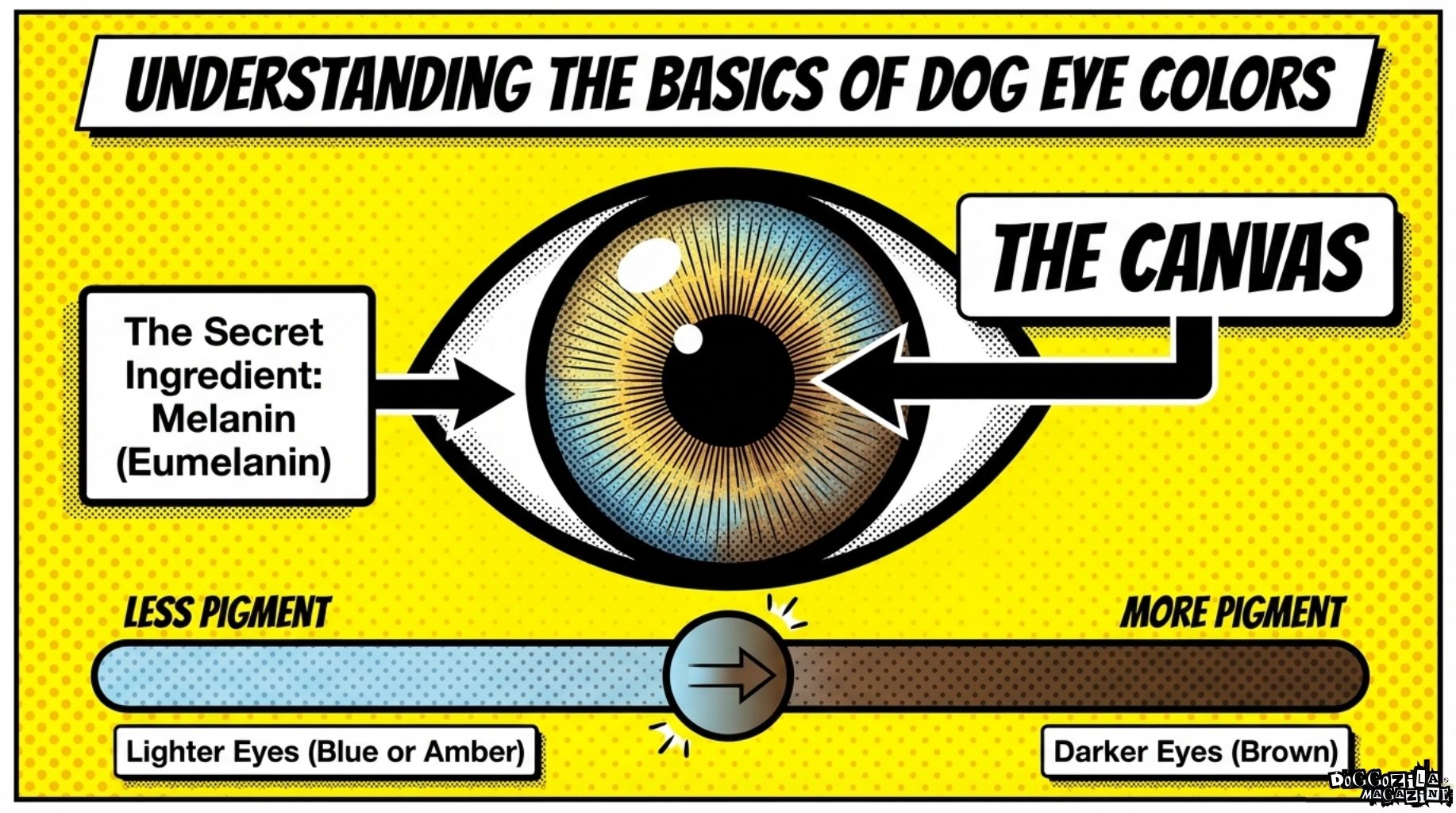
Let’s start with a simple fact. A dog’s eye color is the color of its iris. The iris is the colorful ring around the dark pupil. The colors we see are not made from blue or green paint. They come from a natural pigment called melanin, specifically a type called eumelanin.
The amount and type of this pigment create all the shades. More pigment usually means a darker eye, like brown. Less pigment leads to lighter eyes, like blue or amber. It is a simple but beautiful system. It gives every dog a unique and special look. This pigment is the same that colors their skin and fur. The iris is like a canvas painted by genetics.
What Are the Most Common Dog Eye Colors Found?
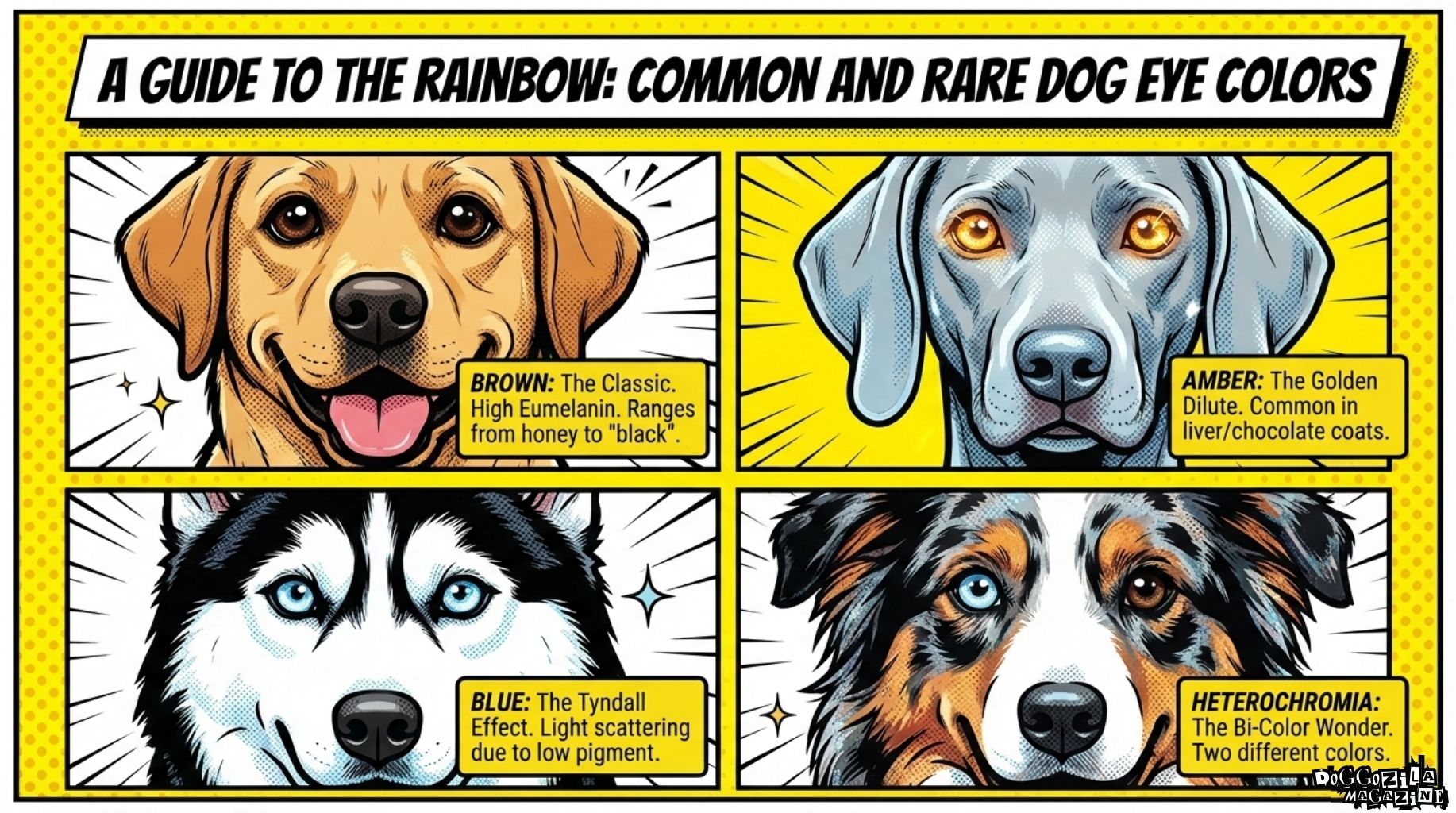
Brown is by far the most common eye color in dogs. This is because the default pigment in dogs is a dark eumelanin. Brown eyes can come in many lovely shades. They can be light hazel-brown, warm chocolate, or so dark they look almost black. You will see brown eyes in most breeds and countless mixed-breed dogs.
Popular breeds like Labrador Retrievers, German Shepherds, and Golden Retrievers typically have brown eyes. It is a classic and beautiful look. This color provides excellent protection against bright sunlight. It is a sign of a fully pigmented and healthy iris in most cases.
What is the Normal Color of a Dog’s Eyes?
For most dogs, a normal, healthy eye color is a shade of brown. This shows the iris has a good amount of protective pigment. Amber or light golden eyes are also normal for many dogs. These are often seen in dogs with liver or chocolate-colored coats.
The “normal” color is really what is standard for your dog’s specific genetics. Whether dark brown or light amber, a clear and bright eye is a sign of good health. A sudden change from this normal color can be a warning sign. Always note what is typical for your individual pet.
Do Most Dogs Have Black Eyes?
You might hear someone say a dog has “black” eyes. What they are usually seeing is a very, very dark brown. Truly black eyes, where the iris has no light reflection, are extremely rare in dogs. The pupil in the center is black. A very dark brown iris can look black from a distance or in certain lights.
So, while it is a common description, most “black” dog eyes are actually the deepest shade of brown. This is perfectly normal and very common. It is just the richest expression of the brown pigment in their iris.
🔑 Key Points: Dog eye colors come from a pigment named melanin. More pigment makes darker brown eyes. Less pigment makes lighter blue or amber eyes. This simple system makes every dog unique.
THE SCIENCE AND GENETICS BEHIND DOG EYE COLORS
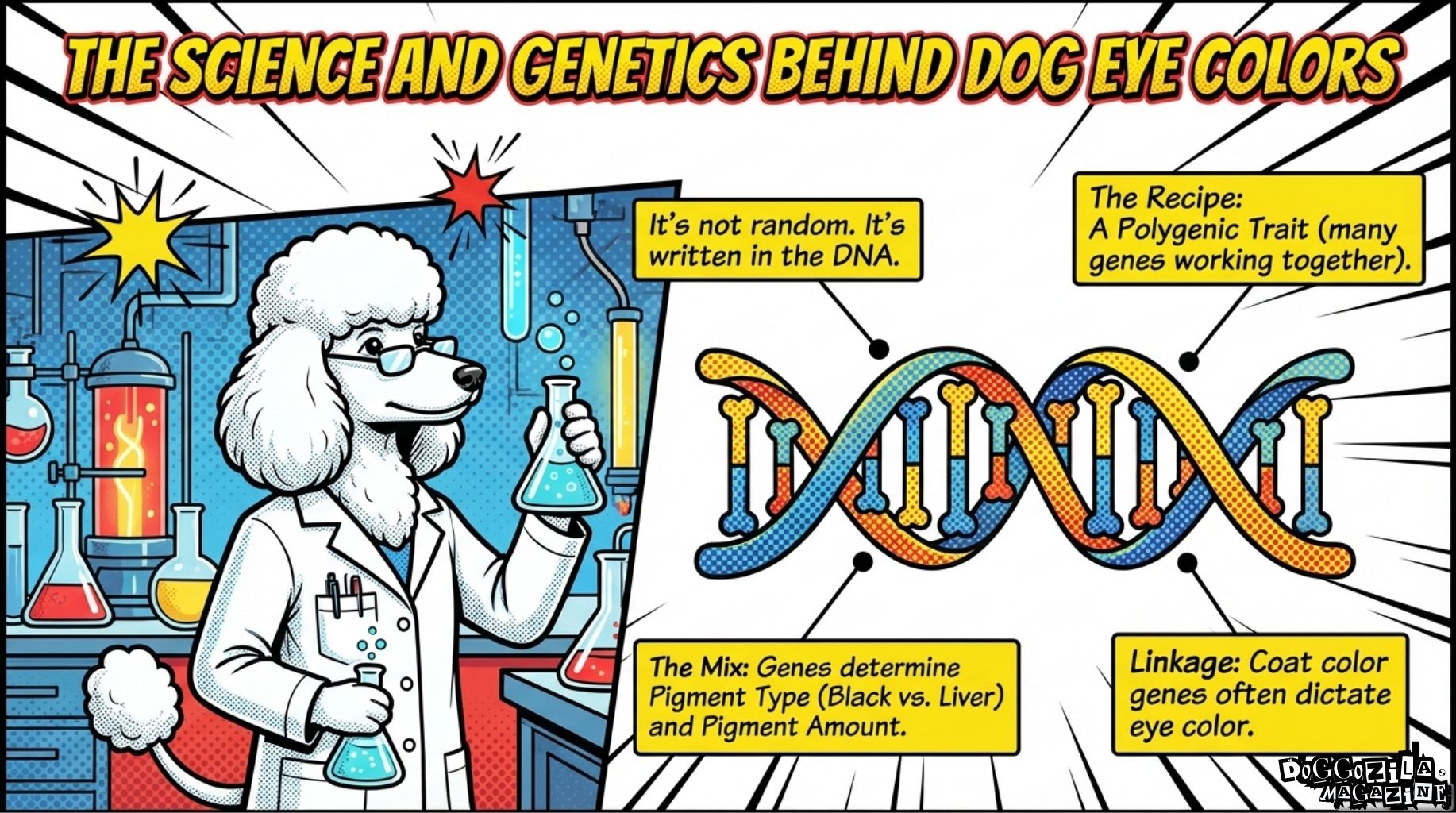
The color of your dog’s eyes is not random. It is written in their DNA. Eye color is a polygenic trait. This means many genes work together to create the final shade. The most important genes control the type and amount of eumelanin pigment. Think of it like a recipe. The genes are the instructions. They tell the body how much pigment to make and what color it should be.
This genetic recipe is why puppies from the same parents can have different eye colors. Scientists are still discovering all the genes involved. It is a fascinating puzzle of canine biology.
What Causes Different Dog Eye Colors?
Two main factors cause the variety in dog eye colors. The first is pigment color. A dog’s genes determine if their eumelanin is black, brown (liver), or a diluted shade like blue or lilac. The second is pigment amount. Some dogs produce a lot of pigment granules in the iris.
Others produce very little. A dog with black pigment and a high amount will have dark brown eyes. A dog with brown pigment and a low amount may have light amber eyes. All the colors come from mixing these two factors. Sometimes, special patterns like merle affect pigment distribution. This can create stunning blue eyes or multi-colored irises.
How Coat Color Links to Dog Eye Colors?
You have probably noticed a link between coat color and eye color. This is not a coincidence. The same genes that affect coat pigment often affect eye and nose pigment. For example, the gene that turns a black coat to chocolate (liver) also affects the eyes. That is why dogs with solid chocolate coats often have beautiful amber or yellow eyes.
The merle gene, which creates a mottled coat pattern, is also famous for causing blue eyes or mismatched eyes. The piebald or white spotting gene can also limit pigment, leading to blue eyes. This genetic linkage is why you can often predict a puppy’s eye color from its parents’ coats.
The Genetics of Rare Dog Eye Colors
Rare colors happen with rare genetic combinations. Green eyes, the rarest, occur when there is a very specific, low level of pigment in the iris. The stunning ice-blue eyes in some Huskies come from a specific genetic duplication on chromosome 18, separate from the merle gene.
For a dog to have a very pale color like light green-yellow, it often needs two recessive traits, like both liver and dilution genes. These rare combinations are what make some dog eye colors so special and unique. They are like winning the genetic lottery. Each rare color tells a complex story of inheritance.
🔑 Key Points: Eye color comes from your dog’s DNA. Many genes work together like a recipe. They decide the pigment type and amount. This links coat color and eye color often.
A GUIDE TO THE RAINBOW: COMMON AND RARE DOG EYE COLORS
Now let’s tour the rainbow. Dog eyes come in a spectrum of shades. Each color has its own charm and cause. From the common brown to the rarest green, each tells a part of your dog’s story. Here is your guide to identifying the beautiful dog eye colors you might see. You will learn to recognize the subtle differences between them. This makes looking at dogs even more interesting and fun.
Amber, Hazel, and Yellow Dog Eye Colors
These warm, light colors sit between brown and blue on the spectrum. Amber eyes are a rich, honey-yellow or copper color. They are common in dogs with liver pigment, like Chesapeake Bay Retrievers. Hazel eyes are a mix of green, gold, and brown. Yellow eyes are a pale, greenish-yellow sometimes called “bird of prey” eyes.
All these colors result from moderate or low levels of brown pigment in the iris. They give dogs a striking and warm expression. You often see these shades in Weimaraners and some hounds. They glow beautifully in the sunlight and look very intense.
Blue and Green Dog Eye Colors
Blue and green eyes are caused by a lack of pigment, not a blue pigment. When light enters an iris with very little melanin, it scatters. Blue light scatters back out more easily. This is called the Tyndall effect, and it makes the eye look blue. Blue eyes are often linked to the merle gene or white spotting patterns.
Green eyes are the rarest. They happen when there is just a tiny bit more pigment than in a blue eye. Breeds like the Siberian Husky are famous for blue eyes. Australian Shepherds sometimes have striking green hues. These light eyes can make a dog’s expression seem very piercing and alert.
Heterochromia: When One Dog Has Two Eye Colors
Heterochromia is a captivating condition where a dog has two different eye colors. It is more common in dogs than in humans. Complete heterochromia means each eye is a different solid color, like one blue and one brown. Sectoral heterochromia (or partial) means one iris has two colors, like a brown eye with a blue wedge.
This is often caused by genes like merle that affect pigment distribution. It is usually harmless and creates a uniquely beautiful, striking look. Australian Shepherds, Huskies, and Dalmatians often show this trait. It gives each dog an unforgettable and unique face.
🔑 Key Points: Dogs have a spectrum of eye colors. Warm ambers and hazels are common. Rare blues and greens have less pigment. Some dogs even have two different colored eyes.
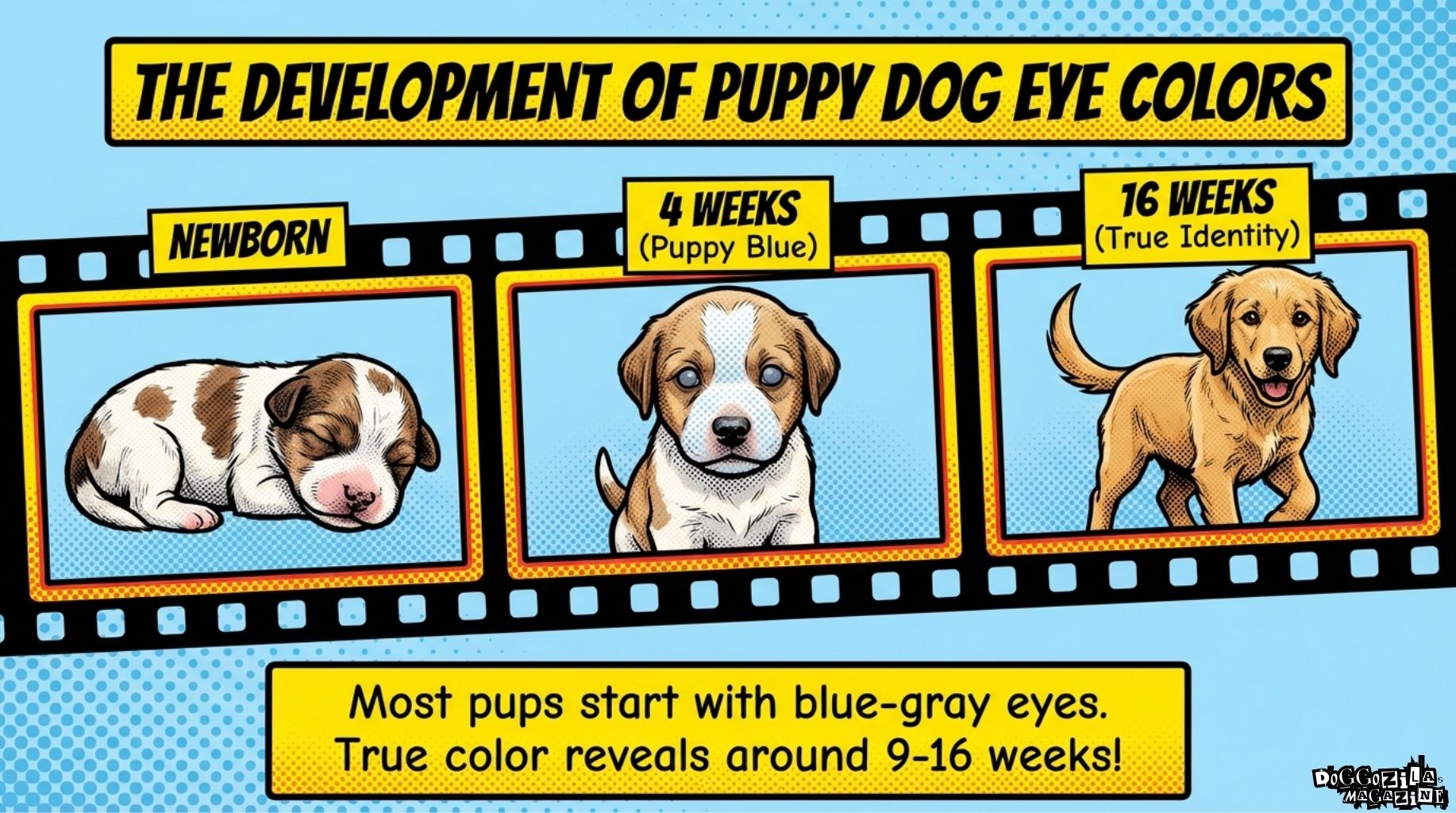
THE DEVELOPMENT OF PUPPY DOG EYE COLORS
All puppies are born with their eyes closed. When they open them, a journey of color begins. Most puppies start life with blue-gray eyes. This is because the melanin in their iris has not yet fully developed. Watching the color change is a special part of puppyhood. It is a sign they are growing up. The change happens gradually over several weeks. It is one of the most noticeable transformations in a young dog’s life.
When Can You Tell a Puppy’s Eye Color?
You can start to see the true color developing at around 3 to 4 weeks of age. This is when pigment starts to build up. The initial “puppy blue” will begin to change. For dogs that will have brown eyes, you might see hints of green or gold first.
However, the final, permanent color can take months to settle. You often need to wait until a puppy is 9 to 16 weeks old to be completely sure. The change can be slow, so be patient. The wait makes the final reveal even more exciting for new puppy owners.
Do All Puppies Start With Blue Eyes?
Most, but not all, puppies have blue-gray eyes when they first open them. This “puppy blue” is a temporary, milky blue. It is different from the clear, bright blue of a dog that will keep blue eyes. Some puppies, especially those from darker-eyed parents, may have darker eyes from the start.
The blue phase is very common. It is a normal part of development for the majority of pups. Even puppies that will have very dark brown eyes often go through this blue stage. It’s a universal sign of canine infancy.
What Color Are Puppies’ Eyes at 10 Weeks?
At 10 weeks old, a puppy’s eye color is still changing, but it is getting closer to the final shade. A puppy destined for brown eyes may have a light brown or hazel color by now. A puppy that will have amber eyes might show a clear golden hue.
If the eyes are still a clear, bright sky-blue at 10 weeks, there is a very good chance they will stay blue. This age gives you a strong hint, but the color may still deepen slightly. It’s a great time to take photos to document the change. Comparing pictures from week to week can show the fascinating progression.
🔑 Key Points: Most puppies start with blue-gray eyes. Their true color develops as they grow. You can see the final color by 4 months old. The change is a normal part of puppyhood.
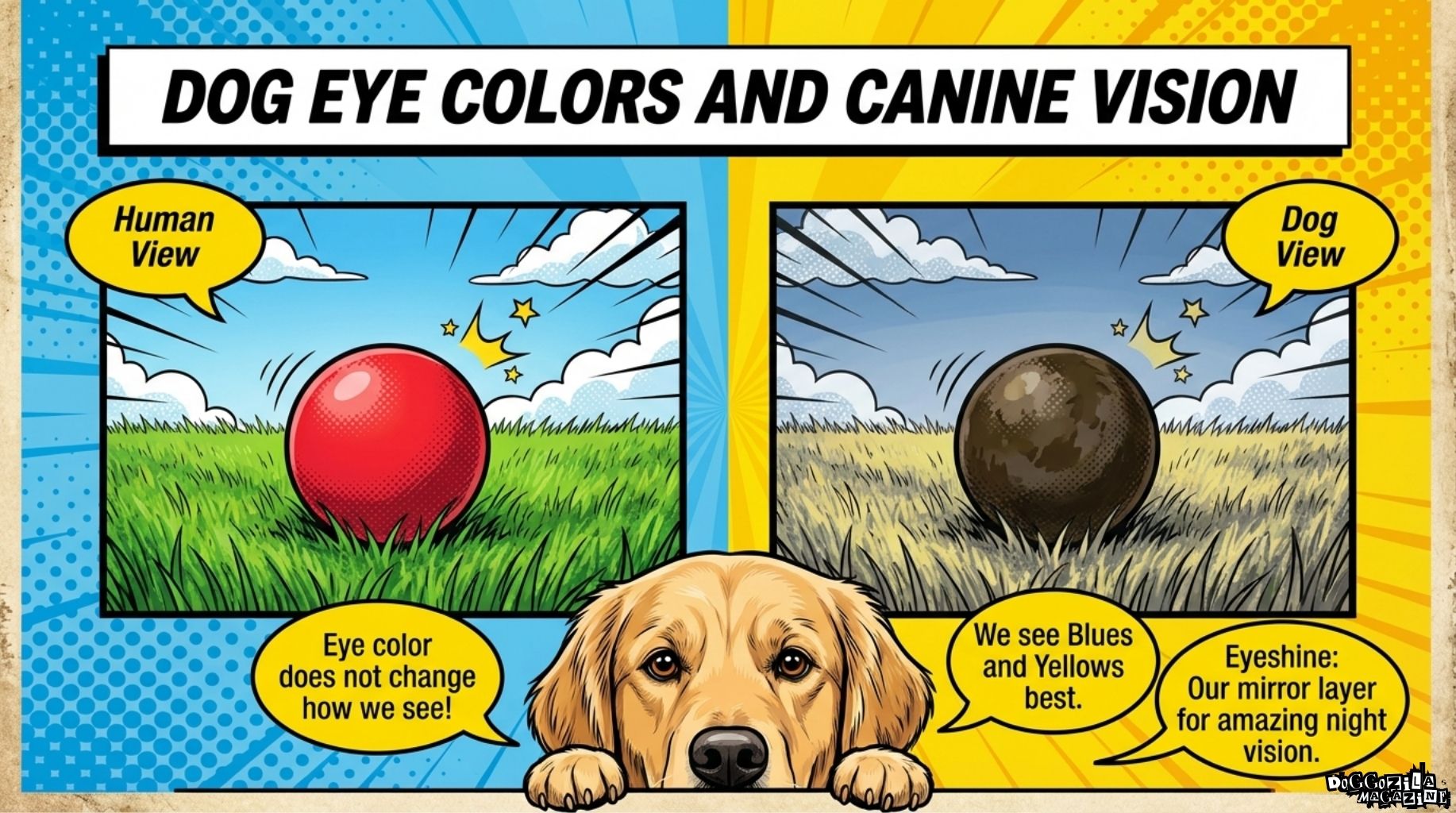
DOG EYE COLORS AND CANINE VISION
A dog’s eye color is about beauty. It is not about how they see the world. The color of the iris does not change a dog’s eyesight. However, the structure of a dog’s eye does mean they see colors differently than we do. Their world is still full of detail, just in a different color palette. Their vision is perfectly adapted for their needs as companions and hunters. Find out more about How Do Dogs See!
What Are Dog Eyeshine Colors?
Have you seen your dog’s eyes glow in a photo or car headlights? That glow is called eyeshine. It comes from a special layer behind the retina called the tapetum lucidum. This layer acts like a mirror. It helps dogs see better in dim light. The color of the eyeshine can vary. It is often green, yellow, or blue.
The exact color depends on the dog’s breed, age, and the pigments in their eye. It is a cool reminder of their amazing night vision. The tapetum reflects light back through the retina, giving it a second chance to be captured. This is why dogs can see so well at dusk.
How Dog Eye Colors Relate to Their Color Vision?
Dogs are not colorblind in a black-and-white sense. They see colors, but a more limited range than humans. They have two types of color-detecting cones (we have three). This means they see blues and yellows well, but reds and greens appear as shades of gray or brown.
Whether a dog has brown or blue eyes does not change this. All dogs share this similar color vision. It is perfect for their needs as hunters who detect motion best at dawn and dusk. Their world is not dull, it’s just filtered through a different lens. Understanding this can help you see the world from their perspective.
Choosing Toys for Your Dog’s Vision
Knowing how your dog sees can make playtime more fun. Since they see blue and yellow best, a bright blue or yellow toy will be easier for them to spot. A red toy on green grass may look like a dull brown blob. Picking high-contrast toys in the colors they see best can make games of fetch more engaging and successful for your pup. This simple trick can improve training and play. It helps your dog use their natural abilities to the fullest. Try it and see if they find their toys faster!
🔑 Key Points: Eye color does not change how dogs see. All dogs see blues and yellows best. Their glowing “eyeshine” helps at night. It is a cool trait for better night vision.
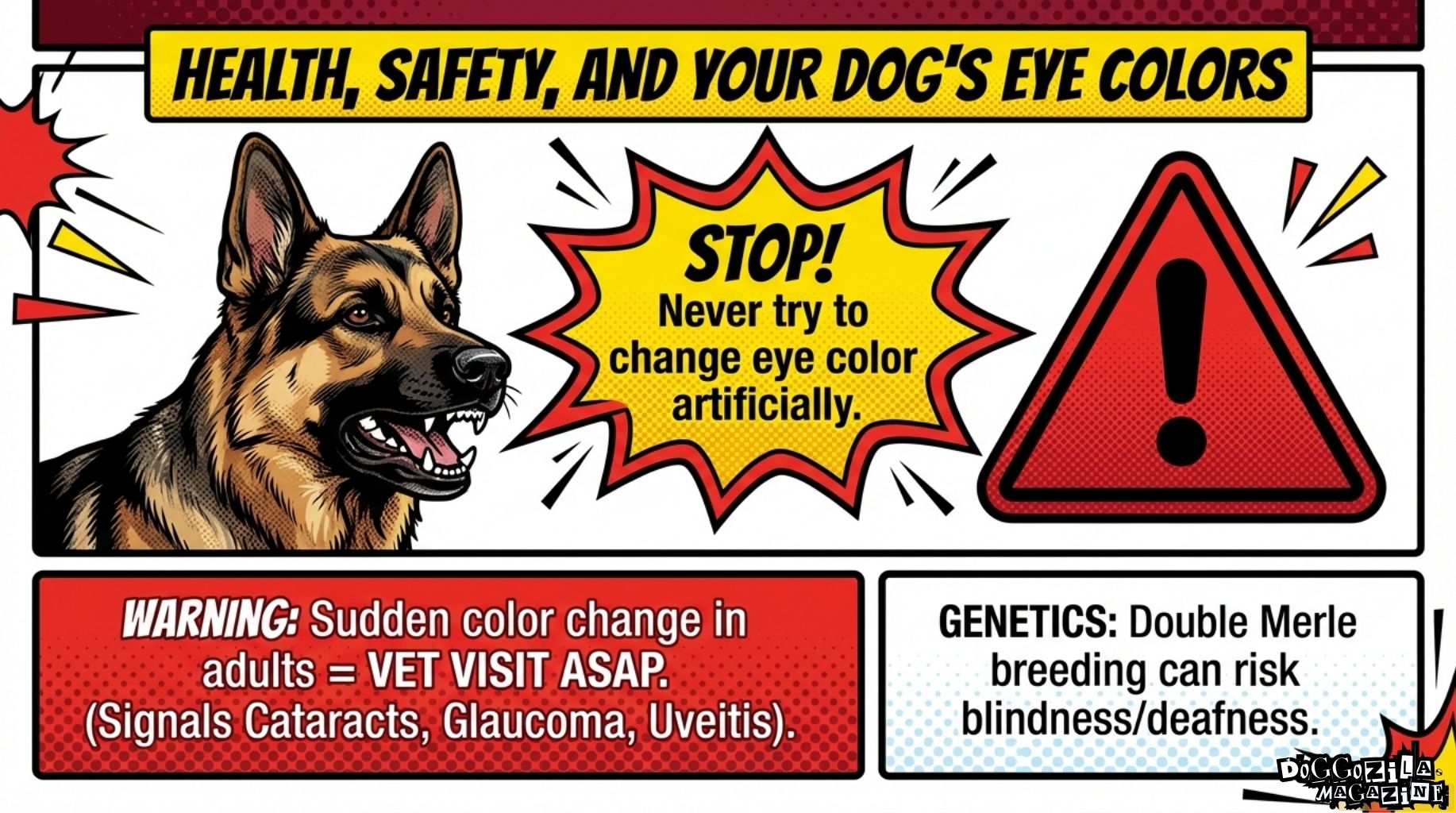
HEALTH, SAFETY, AND YOUR DOG’S EYE COLORS
A dog’s eye color is usually just a cosmetic trait. However, sometimes it can be linked to health. It is important to know the difference between normal beauty and a sign of a problem. Protecting your dog’s sight is the most important thing. Always monitor your dog’s eyes for any changes. Regular check-ups with your vet help ensure their eyes stay healthy.
Can I Change My Dog’s Eye Color Safely?
No, you should never try to change your dog’s eye color. Their eye color is determined by genetics and is permanent after puppyhood. Any product or method claiming to change eye color is dangerous and could seriously damage your dog’s eyesight.
Love and appreciate the beautiful eyes your dog was born with. They are perfect just the way they are. Tampering with their eyes can cause infections, ulcers, or blindness. There is no safe or ethical way to alter this natural trait. Your dog’s health is far more important than their eye color.
When a Color Change Signals a Problem?
A sudden change in eye color in an adult dog is a warning sign. If a brown eye starts to look cloudy blue or white, it could indicate a serious problem like cataracts, glaucoma, or uveitis. A previously clear eye becoming red or cloudy also needs immediate attention.
Unlike the gradual change in puppies, any new color change in an adult dog means a trip to the veterinarian is urgent. Early treatment can save their vision. Other signs include squinting, tearing, or pawing at the eye. Never ignore these symptoms, as eye conditions can worsen quickly.
Health Links to Specific Dog Eye Colors
Some genetic patterns that cause light eyes can be linked to other traits. The merle gene, which often creates blue eyes, needs careful breeding. If two merle dogs are bred, the resulting “double merle” puppies have a high risk of being born deaf, blind, or with vision problems.
Reputable breeders avoid this. It is also worth noting that blue eyes themselves are not unhealthy. Many blue-eyed dogs, like Siberian Huskies, have excellent health. The key is responsible breeding practices. Always choose a breeder who tests for genetic health and avoids risky pairings.
🔑 Key Points: Eye color is usually just for looks. A sudden change in an adult dog is a warning. It can mean a health problem. Never try to change your dog’s eye color.
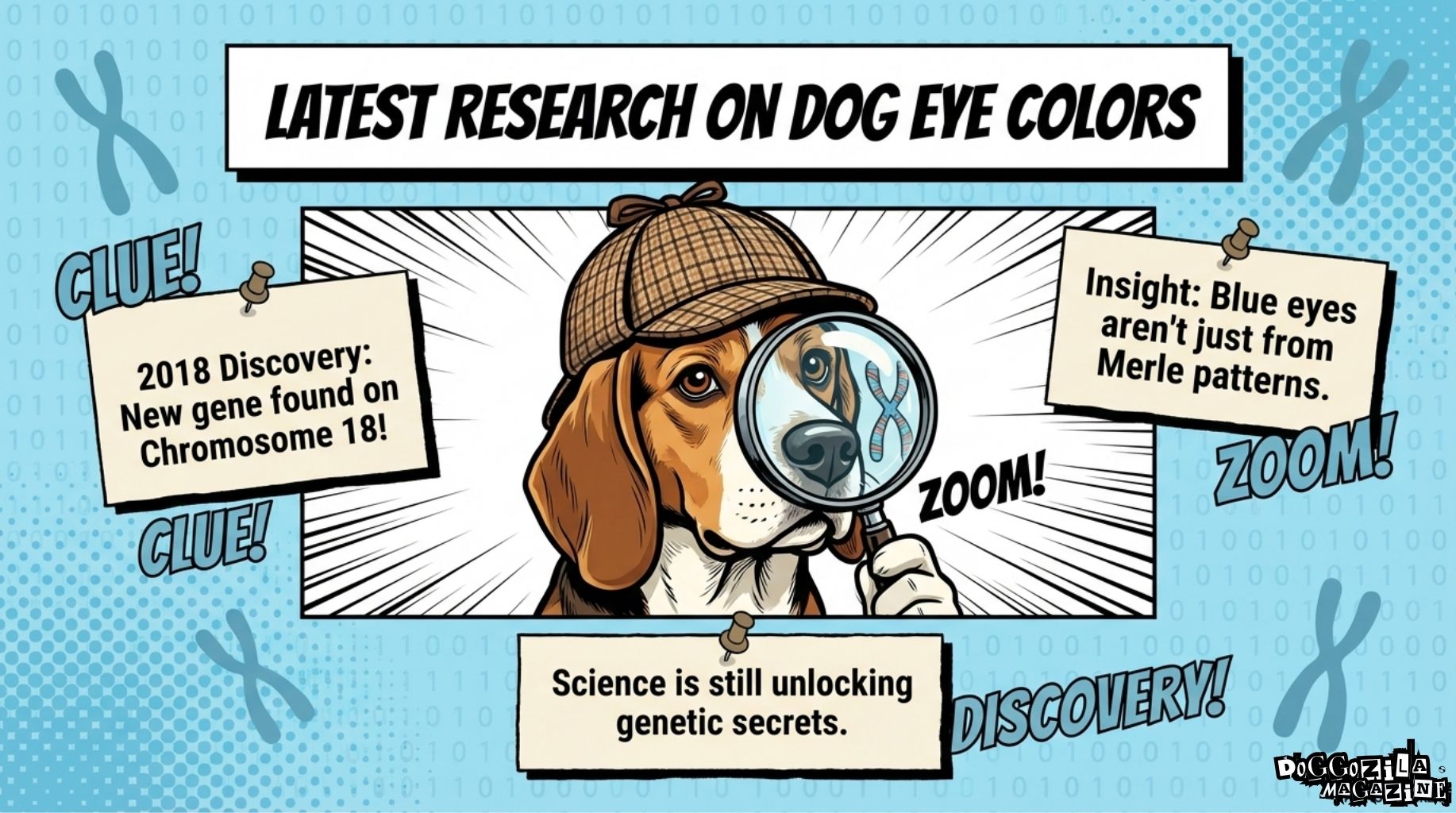
LATEST RESEARCH ON DOG EYE COLORS
Science is always learning more about our dogs. Recent genetic studies have given us exciting new insights into where those beautiful blue eyes come from. This research uses modern technology to solve old mysteries. It helps us understand our canine friends on a deeper level. Every year, new discoveries are made in canine genetics.
New Genetic Discoveries for Blue Eyes
A landmark 2018 study analyzed the DNA of over 6,000 dogs. Researchers discovered a specific genetic duplication on chromosome 18 linked to blue eyes in Siberian Huskies and non-merle Australian Shepherds. This was a major finding. It showed that blue eyes can be caused by a separate, stand-alone genetic trait, not just the merle coat pattern.
This helps explain why Huskies so often have blue eyes without having merle coats. This discovery changed how scientists view the inheritance of this trait. It showed that a simple test could now predict blue eyes in certain breeds.
The Future of Canine Genetics Research
Studies like the one from Embark and Cornell University show the power of consumer genomics. By combining DNA tests with owner surveys, scientists can make big discoveries. This research helps us understand not just eye color, but many other inherited traits and health conditions in dogs. It is a fast-moving field.
Each discovery helps breeders make healthier choices and helps owners understand their pets better. As more dogs are tested, the genetic map becomes clearer. This research promises to improve the health and well-being of all dogs in the future.
What We Are Still Learning About Dog Eye Colors?
Despite the advances, there is still much to learn. Experts note that eye color is a “polygenic trait with many unknown modifiers“. This means scientists know the main genes involved, but not all the tiny details that create every single shade of hazel or amber.
The interaction between different genes is complex. Ongoing research will continue to map this fascinating genetic landscape. The mystery of rare green eyes is still being solved. Each new study brings us closer to a complete understanding of the beautiful palette of dog eye colors.
🔑 Key Points: New science studies dog genes. A big study in 2018 found a gene for blue eyes. This research helps us understand inheritance better. We are always learning new things.
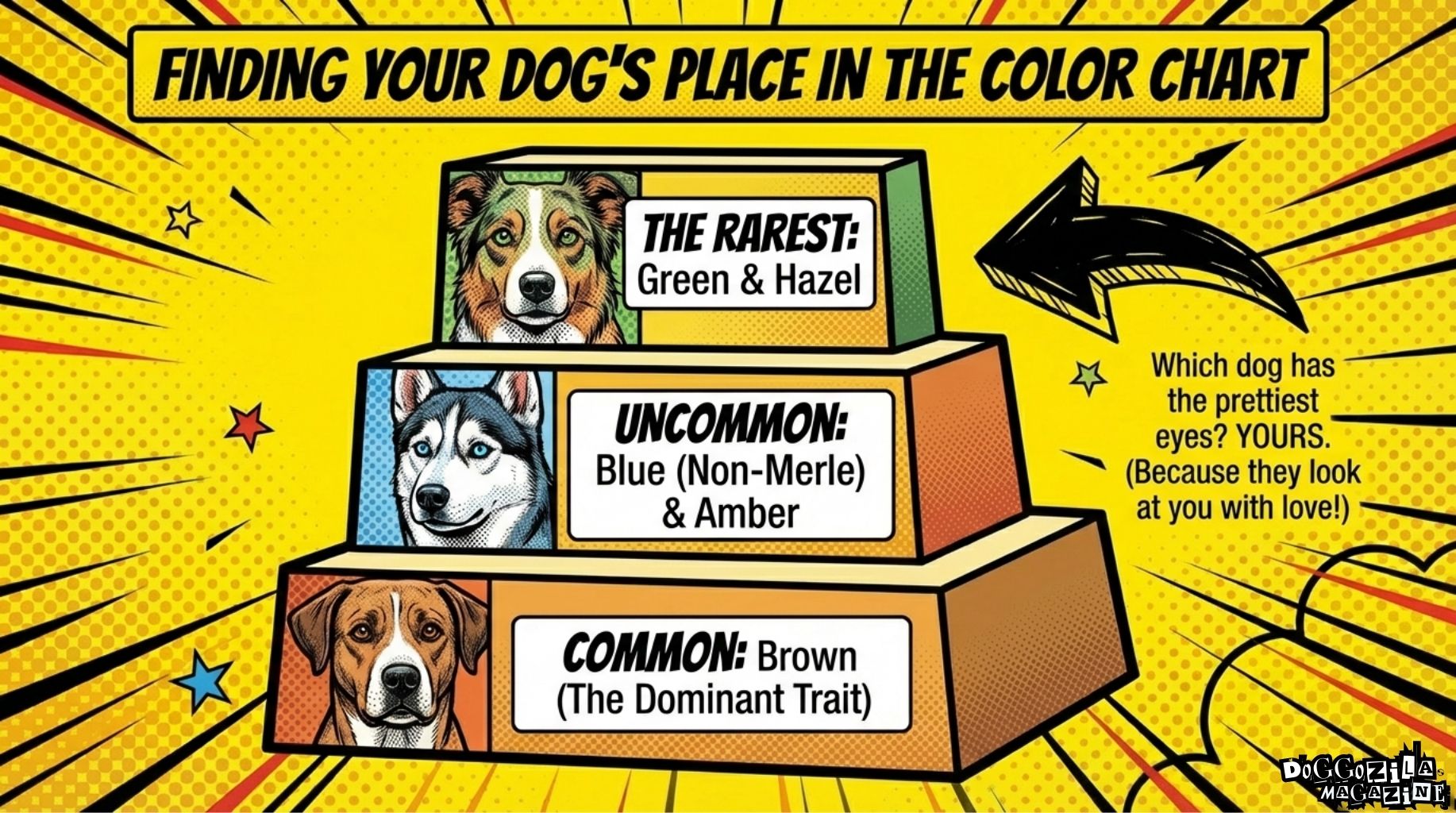
FINDING YOUR DOG’S PLACE IN THE COLOR CHART
Every dog’s eyes are unique. You might be wondering where your own dog fits on the spectrum of dog eye colors. From common brown to rare green, each has its own story and beauty. Appreciating this diversity is part of the joy of dog ownership. Your dog’s eyes are a special part of their identity.
What Are the Top 3 Rarest Dog Eye Colors?
Based on current knowledge, the rarest eye colors in dogs are:
- Green: The scarcest of all, requiring a very specific, low level of pigment.
- Hazel: A mixed, greenish-brown color that is less common than solid amber or brown.
- Blue (in non-merle breeds): While blue is common in merle dogs and Huskies, it is very rare in many other breeds without those specific genes.
Seeing any of these colors is a special treat. They are the result of unique genetic combinations. If your dog has one of these, you have a particularly special pup!
Which Dog Has the Prettiest Eyes?
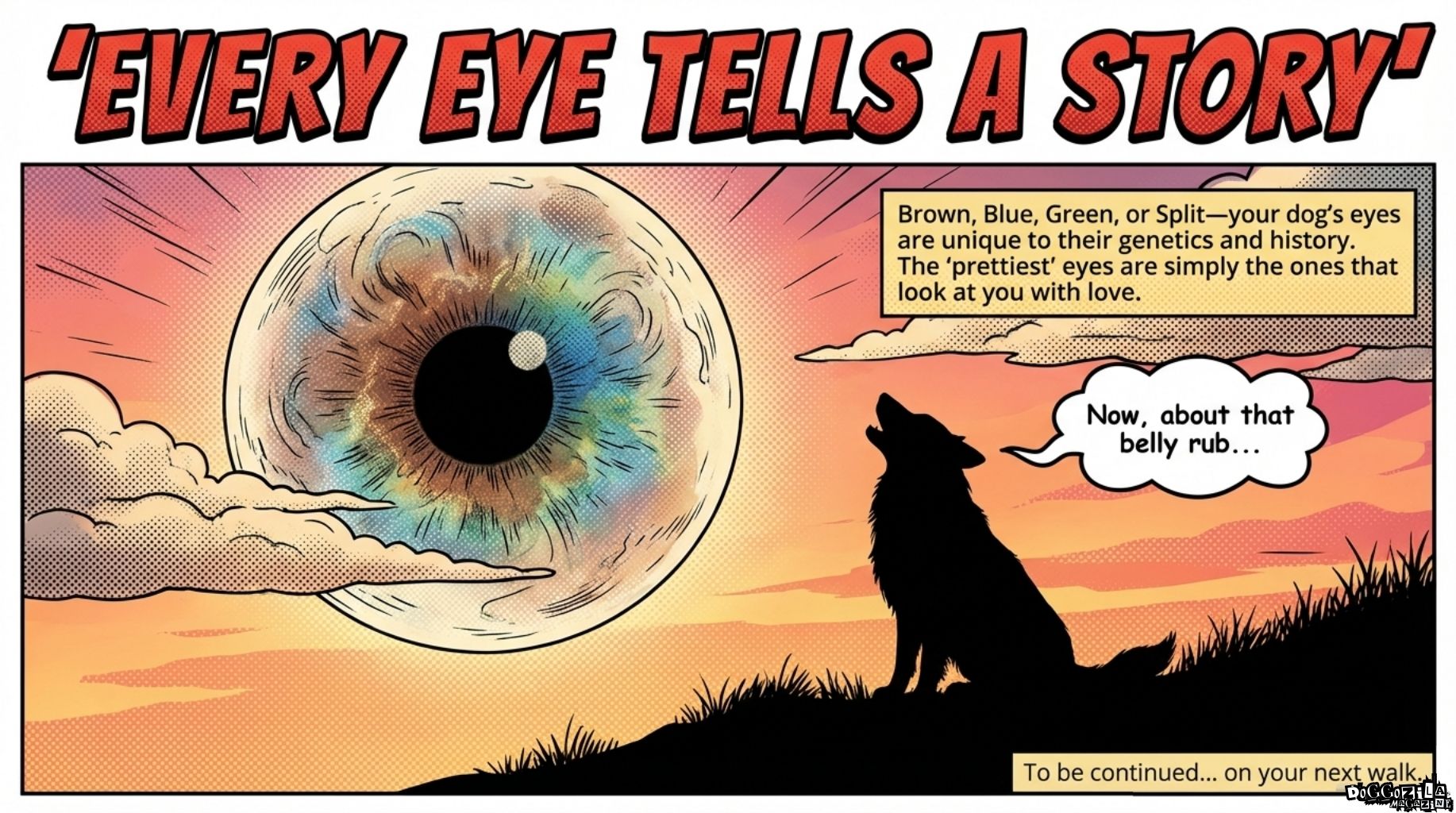
This is a question with no wrong answer! Beauty is in the eye of the beholder. Some people love the depth of dark brown eyes. Others are captivated by the striking ice-blue eyes of a Husky. Many find the unique look of heterochromia especially beautiful.
The “prettiest” eyes are the ones that connect you to your own dog. They are the ones that look at you with love and trust every single day. Every dog’s eyes are pretty in their own way. The most important thing is the loving gaze you share with your pet.
Appreciating Your Dog’s Unique Eyes
Your dog’s eye color is part of what makes them, them. It is a result of their unique genetic history. Whether common or rare, their eyes are a window to their health and personality. Take a moment to appreciate their special color.
Now you know the fascinating science and story behind it. Share this knowledge with other dog lovers. Help them see the amazing story in their own dog’s eyes. Celebrate the beautiful diversity of our canine companions.
🔑 Key Points: The rarest dog eye colors are green and hazel. Blue eyes in certain breeds are also rare. The prettiest eyes are the ones your own dog has. They are special and unique.
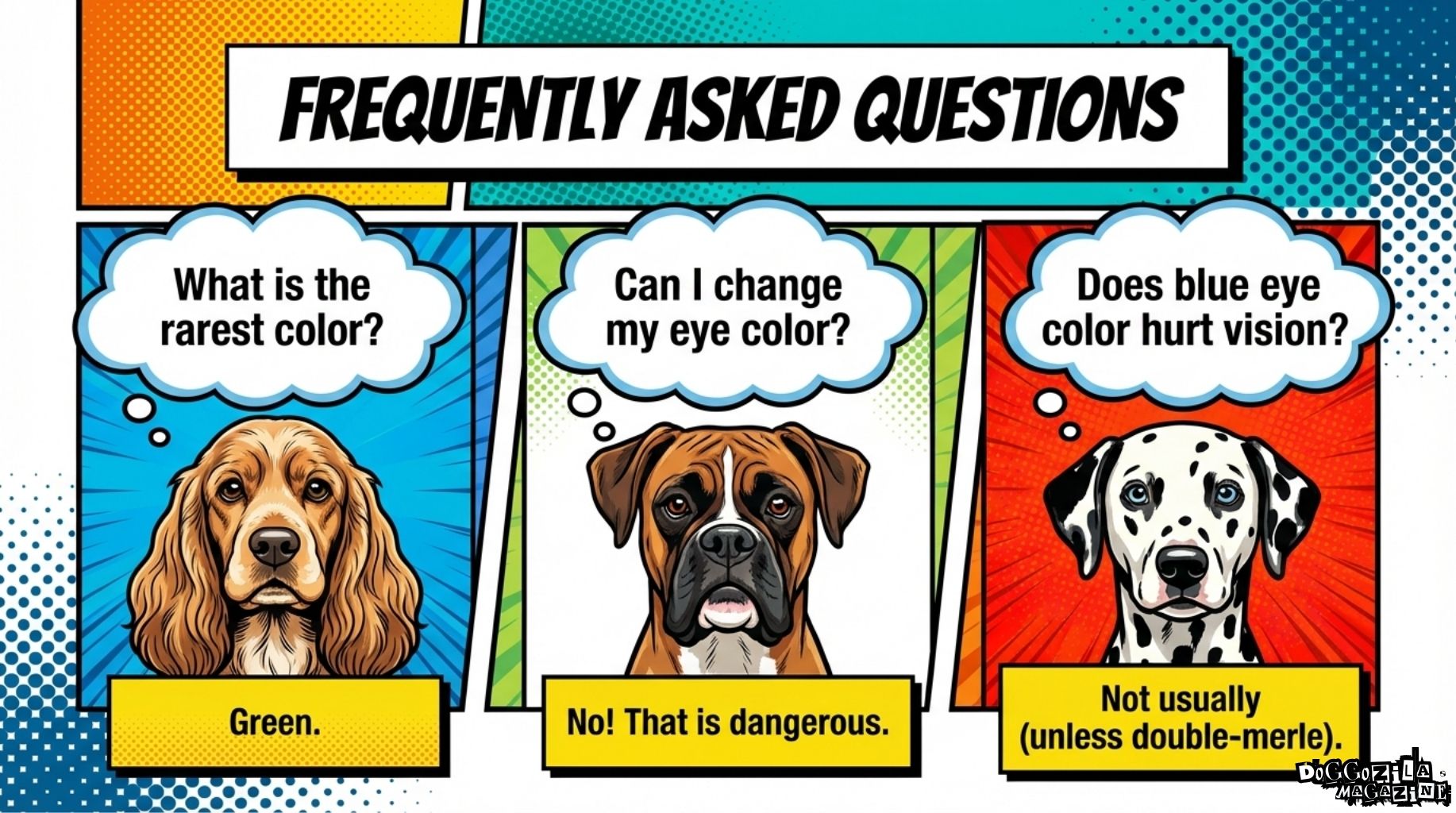
FREQUENTLY ASKED QUESTIONS
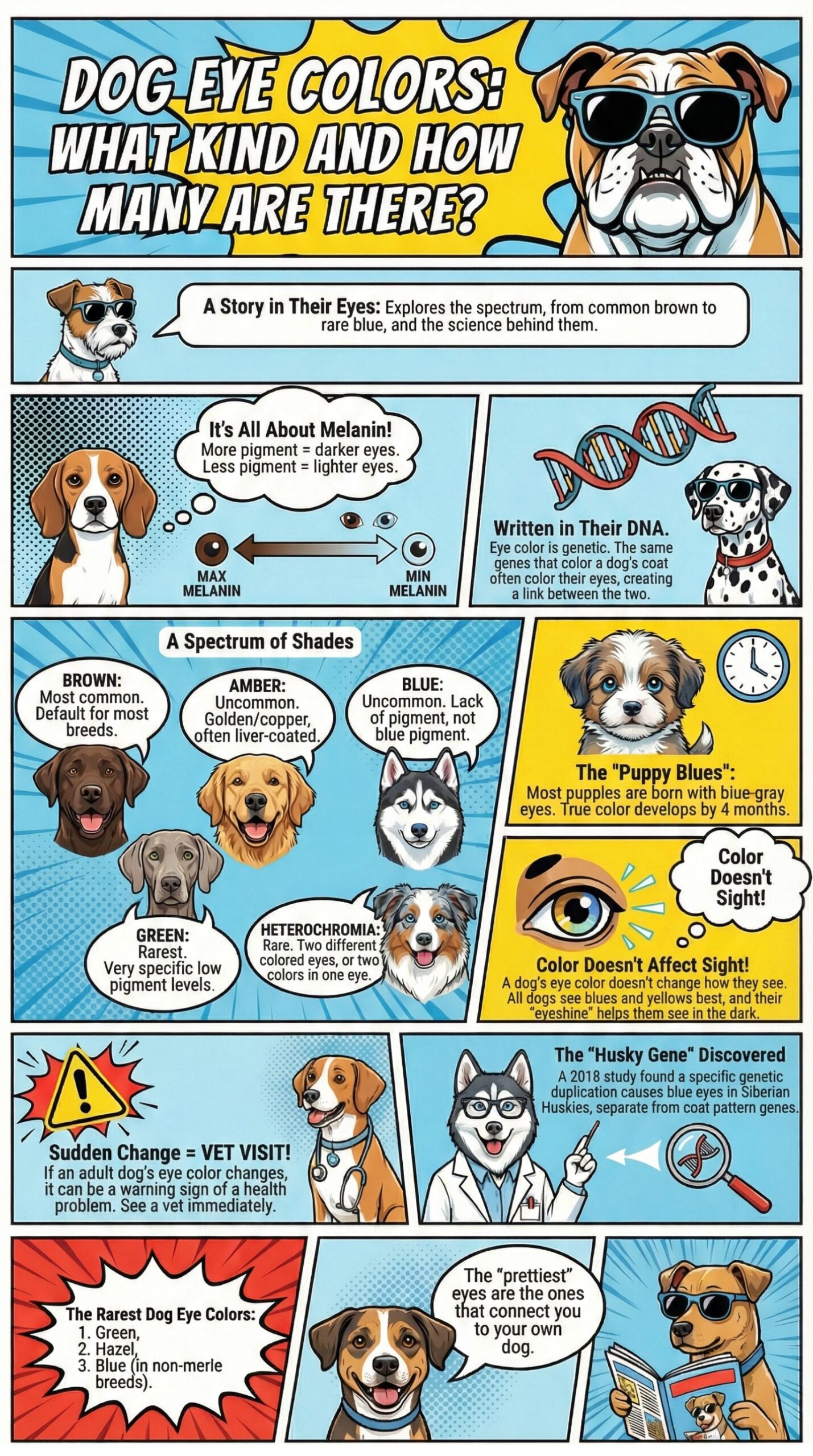
Key Points and Takeaways
- Dog eye colors come from a pigment named melanin. More pigment makes darker brown eyes. Less pigment makes lighter blue or amber eyes. This simple system makes every dog unique.
- Eye color comes from your dog’s DNA. Many genes work together like a recipe. They decide the pigment type and amount. This links coat color and eye color often.
- Dogs have a spectrum of eye colors. Warm ambers and hazels are common. Rare blues and greens have less pigment. Some dogs even have two different colored eyes.
- Most puppies start with blue-gray eyes. Their true color develops as they grow. You can see the final color by 4 months old. The change is a normal part of puppyhood.
- Eye color does not change how dogs see. All dogs see blues and yellows best. Their glowing “eyeshine” helps at night. It is a cool trait for better night vision.
- Eye color is usually just for looks. A sudden change in an adult dog is a warning. It can mean a health problem. Never try to change your dog’s eye color.
- New science studies dog genes. A big study in 2018 found a gene for blue eyes. This research helps us understand inheritance better. We are always learning new things.
- The rarest dog eye colors are green and hazel. Blue eyes in certain breeds are also rare. The prettiest eyes are the ones your own dog has. They are special and unique.
Green is the rarest eye color.
Puppy eye changes are normal. Two different eyes is usually harmless.
See a vet if an adult dog’s eye color changes.