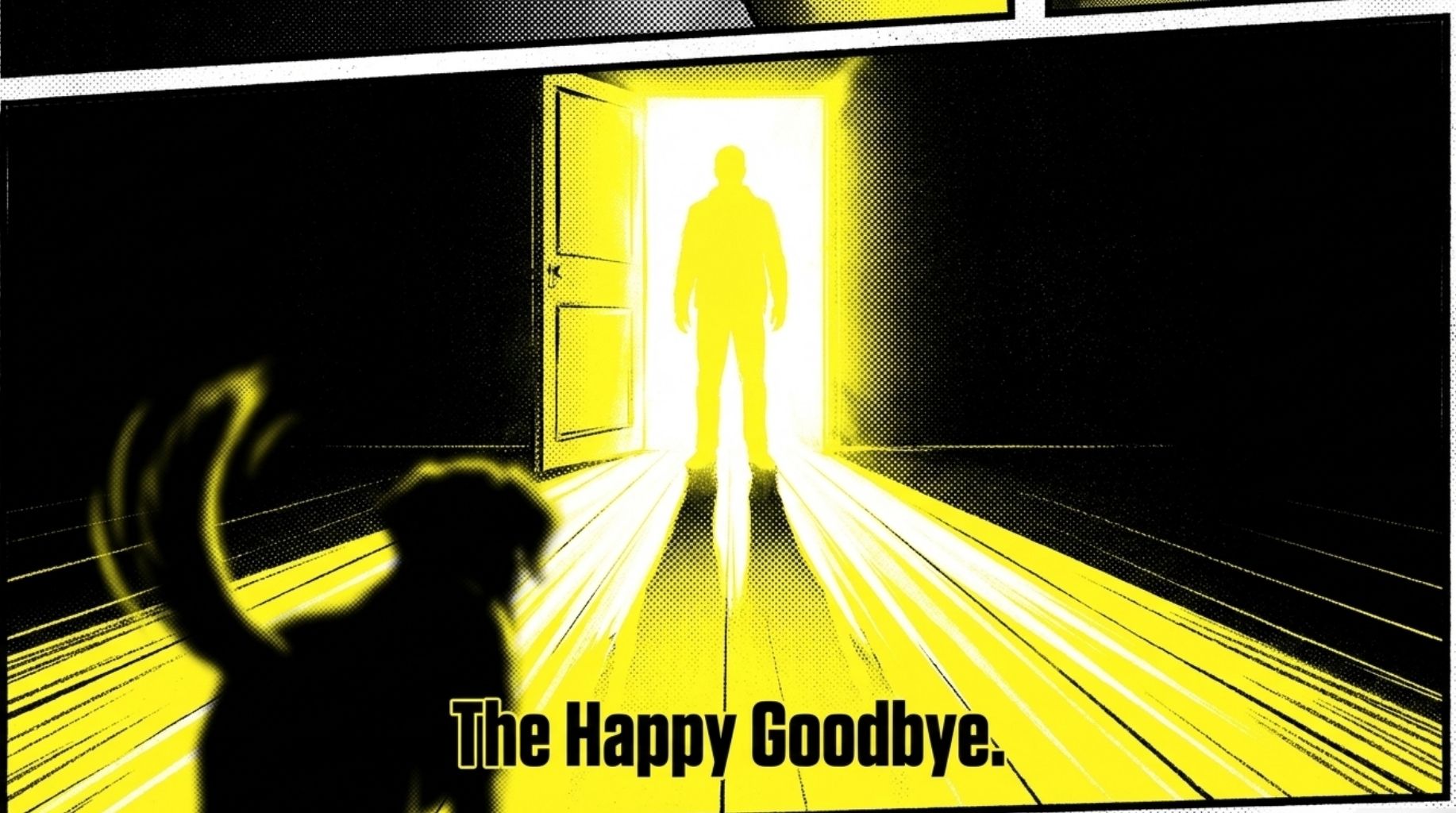

You grab your keys, put on your jacket, and head for the door. Your dog watches every move with those big, worried eyes. Your dog feels your absence more than you know. It is usually a mix of scent tracking, memory snapshots, and sometimes real panic. Modern science confirms that dogs are deeply social creatures with complex emotions. This article answers the most important questions owners ask about what your dog thinks when you leave the house. Understanding that inner world is the first step to a happier goodbye. Get ready to see your furry friend in a whole new light.
“Your dog isn’t plotting revenge on your sofa. They are trying to survive your absence.”
Key Takeaways
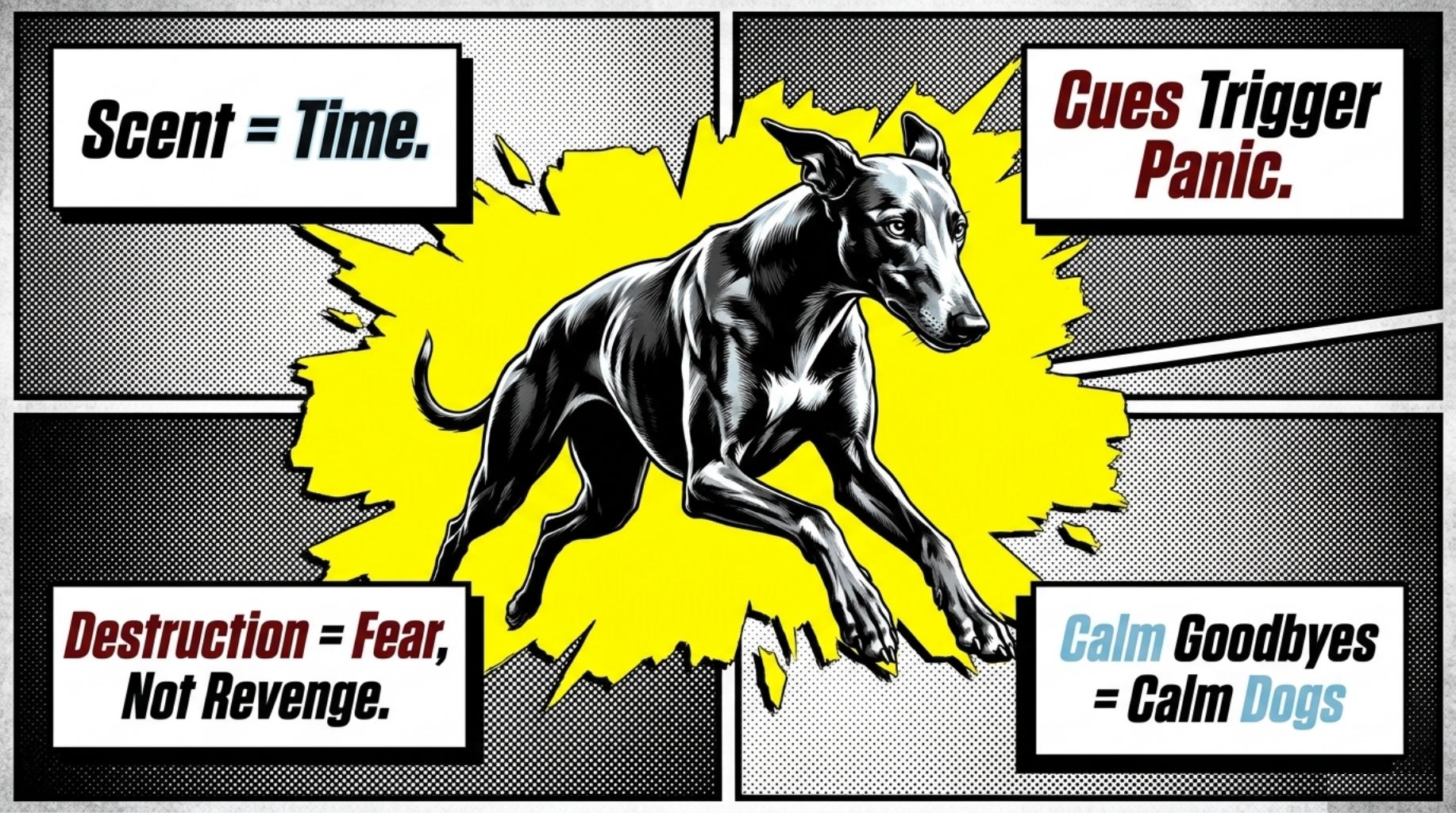
- Dogs smell time. Their nose tells them how long you’ve been gone.
- Pre‑departure cues (keys, jacket) trigger anxiety before you even leave.
- Half of all dogs show signs of separation‑related stress.
- Calm goodbyes = calm dogs. Frantic goodbyes = panic.
- Never punish destruction. It’s fear, not revenge.
- Desensitization training rewires the anxious brain.

Quick Summary About What Your Dog Thinks When You Leave the House
Dogs live in a world of smells, sounds, and routines. When you leave, they don’t see a clock, but they feel the weight of your absence. Some dogs stay calm and nap. Others panic and pace. This article explores the secret thoughts behind those sad eyes at the window. You will learn the science, the signs, and the simple fixes for a happier goodbye.
Listen the Episode by The Bark Brigade Podcast About How Your Dog Smells How Long You Are Gone from Home!
TO UNDERSTAND WHAT YOUR DOG THINKS WHEN YOU LEAVE THE HOUSE STARTS WITH THEIR NOSE
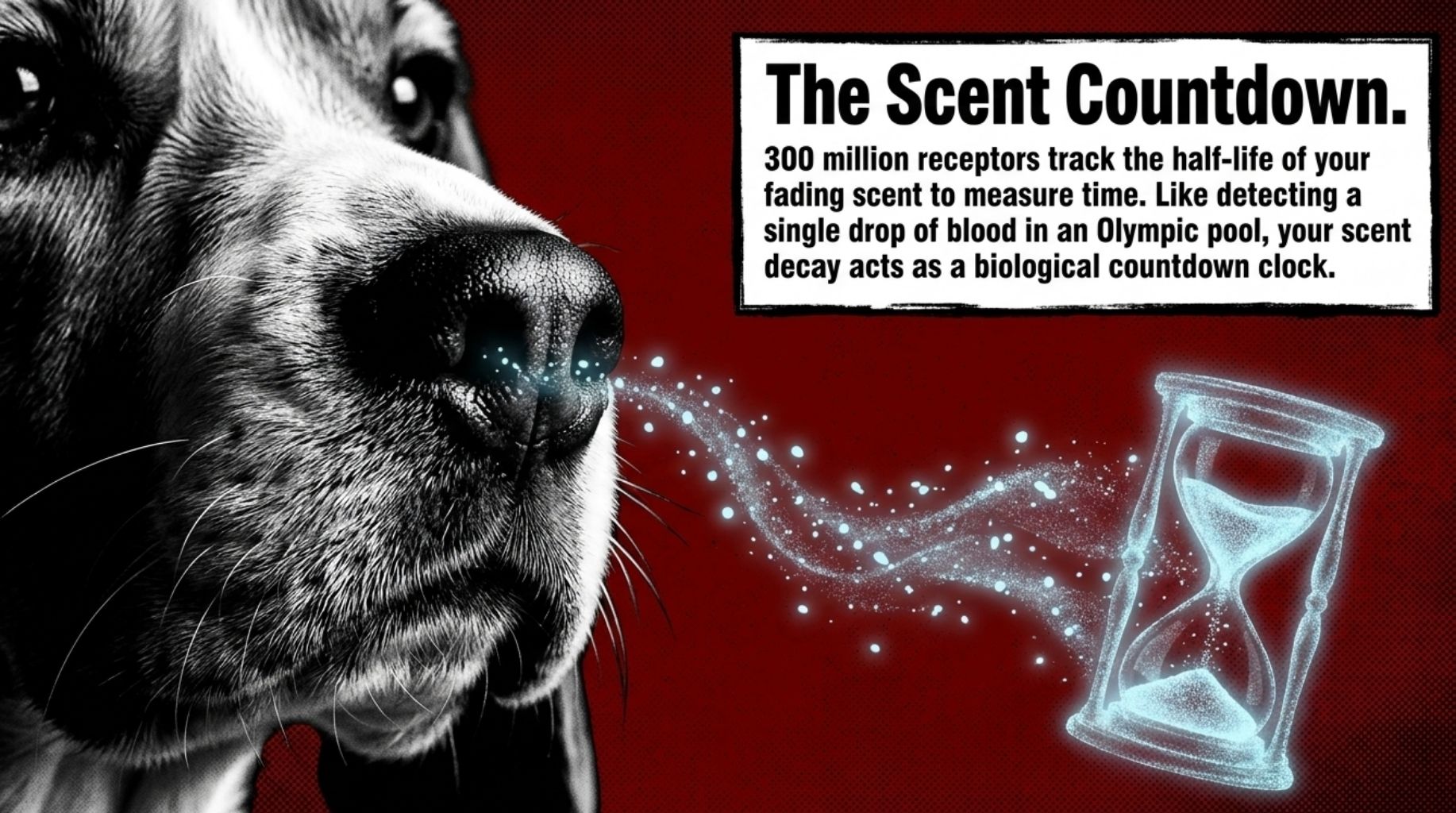
Your dog’s nose is their superpower. It contains up to 300 million scent receptors. While you worry about traffic, your dog tracks the fading trail of your body odor. This scent clock tells them exactly how long you have been gone. When the smell drops to a certain level, anxiety can spike. Knowing what your dog thinks when you leave the house begins with respecting this nasal superpower.
Here Is What Your Dog Thinks When You Leave the House About Your Scent Decay
A study on canine olfaction shows that dogs can detect a single drop of blood in an Olympic‑sized pool. They use that same precision to measure your scent’s half‑life. As your perfume or deodorant molecules scatter, your dog notices the change.
This biological timer is more accurate for them than any wall clock. When your smell gets faint, they often move to your last known spot, like your bed or chair. So what your dog thinks when you leave the house is largely a scent‑based countdown.
The Science Behind What Your Dog Thinks When You Leave the House and Cortisol
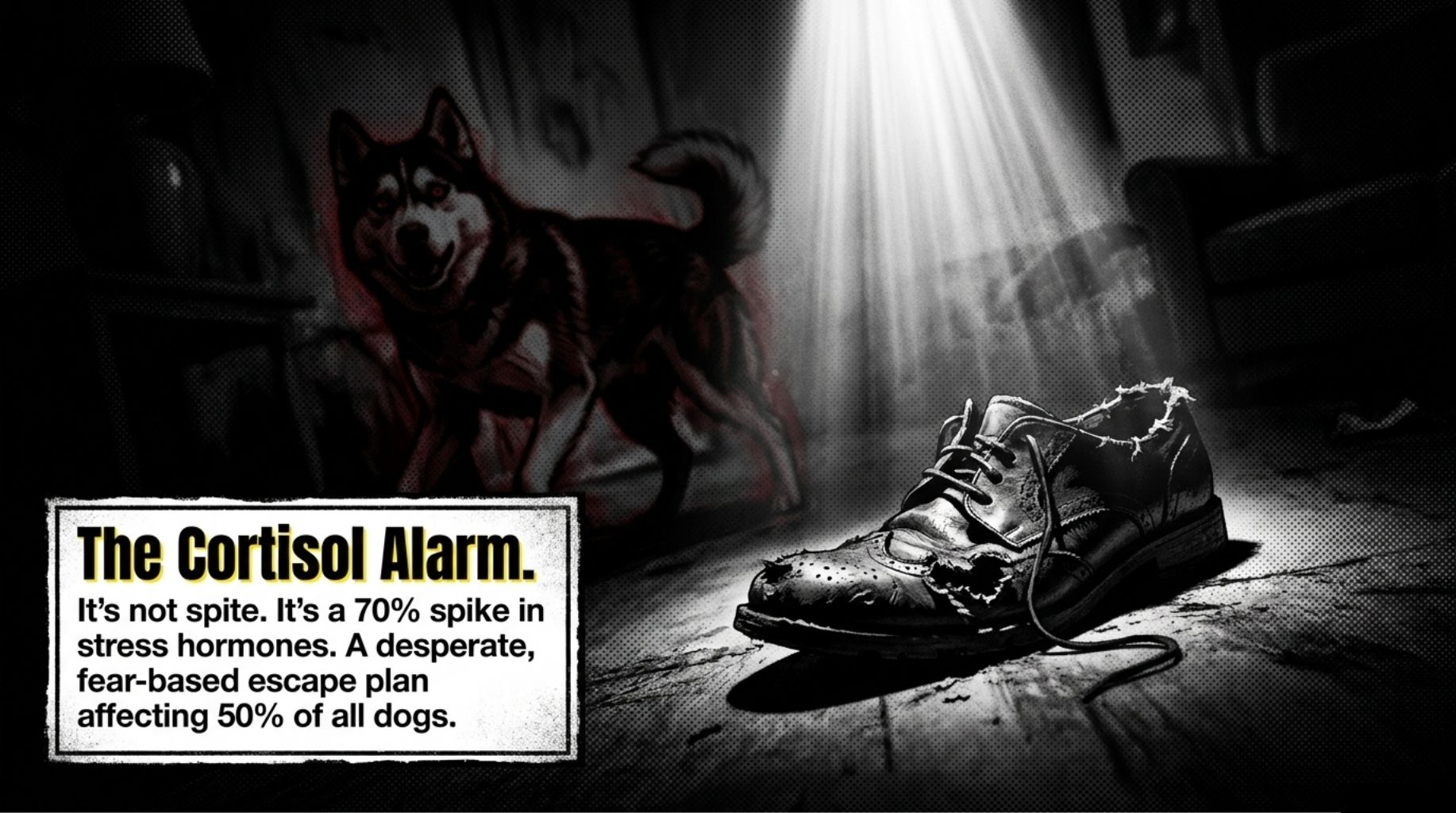
Cortisol is the stress hormone. Researchers from the University of Helsinki measured cortisol levels in dogs left alone for 30 minutes. They found spikes of up to 70% in anxious dogs. This means your dog can panic and this is not a calm daydream. It is a physiological alarm response.
High cortisol leads to pacing, panting, and destructive digging. Your dog isn’t choosing to be dramatic, their body is sounding a fire alarm. Understanding what your dog thinks when you leave the house through cortisol helps you see their panic as a medical issue, not bad behavior.
What Your Dog Thinks About Your Pre‑Departure Cues?
Dogs are masters of pattern recognition. They notice you grabbing your wallet, putting on shoes, or picking up keys. These are called Pre‑Departure Cues (PDQs). Within two weeks, your dog learns to associate these actions with your absence.
By the time you touch the doorknob, their heart rate is already elevated. So what your dog thinks when you leave the house starts long before you actually leave. Changing your routine slightly can trick their brain into feeling safer.
WHAT YOUR DOG THINKS WHEN YOU LEAVE THE HOUSE OFTEN INCLUDES PANIC AND HERE IS WHY
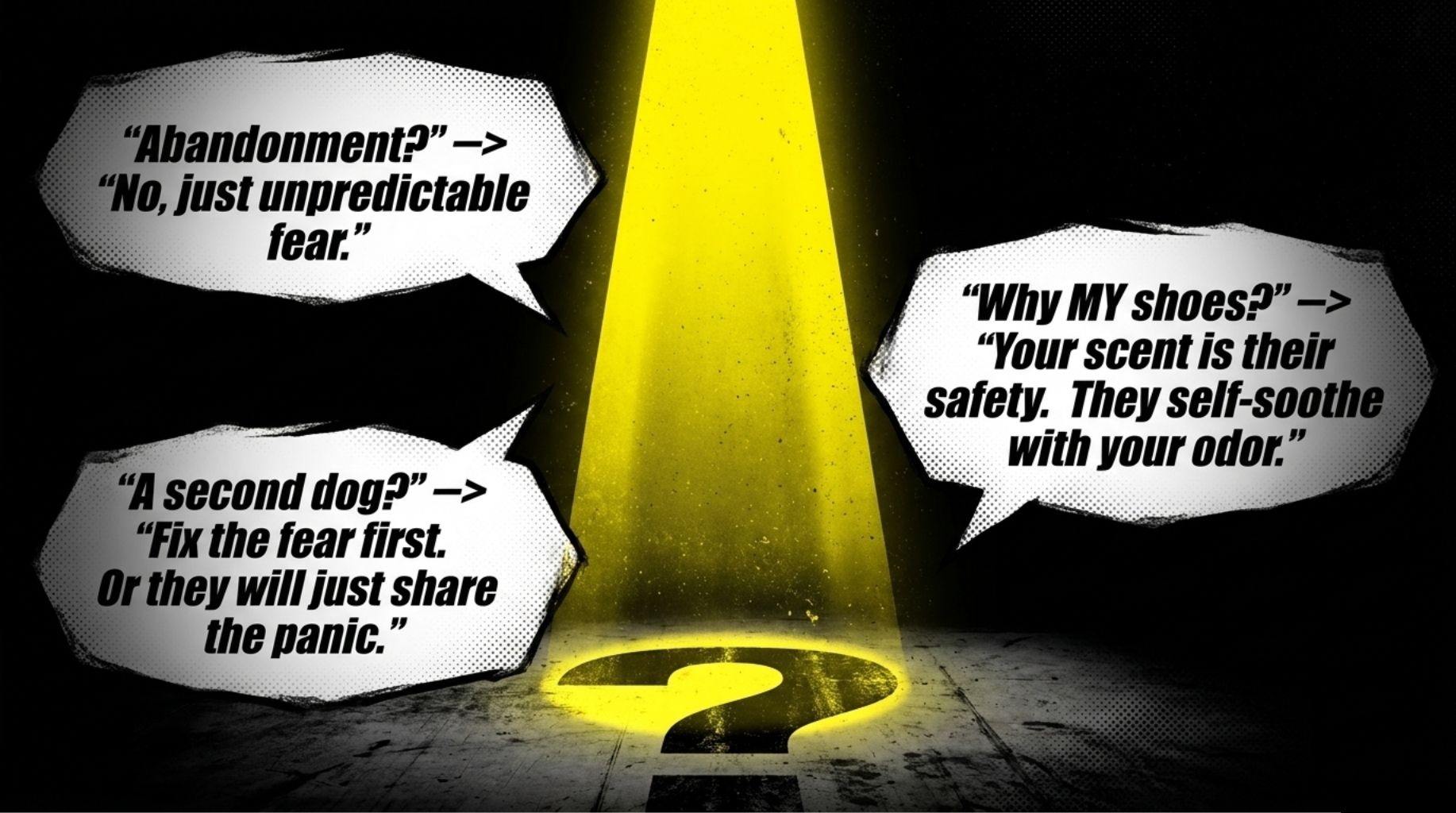
Not all dogs wait calmly. Many enter a true separation anxiety state. This is not disobedience. It is a fear‑based disorder recognized by veterinary behaviorists. A panicking dog does not think, “I will chew this shoe to get back at you.” Instead, their brain screams, “I must escape and find my pack.” That is why you see scratched doors and broken blinds. To understand what your dog thinks when you leave the house during panic, you have to forget human logic and think like a frightened animal.
The Most Searched Signs of What Your Dog Thinks When You Leave the House in Distress
Owners search Google for “dog howling when alone” over 10,000 times every month. Other top searches include “dog destroys house while I’m at work” and “dog pees inside after I leave.” These are all clear symptoms of separation‑related stress.
A 2025 survey from the Royal Veterinary College found that 50% of dogs show at least one of these signs. If your dog checks any of these boxes, they are not being bad. They are being scared. Recognizing what your dog thinks when you leave the house through these signs is the first step to helping them.
What Your Dog Thinks When You Leave the House Versus What an Owner Sees?
You see a chewed pillow. Your dog sees a failed escape attempt. You see a puddle on the floor. Your dog sees a fear response they cannot control. This mismatch of interpretation leads to punishment. Punishment, however, only makes the anxiety worse.
When you yell, your dog doesn’t understand “don’t chew.” They learn that your return is unpredictable and scary. That cycle breaks trust. Aligning what your dog thinks when you leave the house with what you see saves your relationship.
What Your Dog Thinks When You Leave the House Changes With Age and Here Is How
Puppies under six months rarely show true separation anxiety. They simply have not learned that you always return. Senior dogs, on the other hand, may develop new anxiety due to canine cognitive dysfunction (dog dementia).
A 2024 study tracked 200 older dogs and found that 32% developed new alone‑time fears after age ten. For these older dogs, leaving the house may cause confusion rather than panic. They literally forget you said goodbye. Adjusting your expectations based on age helps you respond correctly.
LATEST RESEARCH AND SCIENCE STUDIES ON THIS TOPIC (2024–2026)
Science has moved beyond guessing. We now have brain scans and hormone tests that prove our dogs feel our absence.
Research on Short Calm and Emotional Long Dog Goodbyes
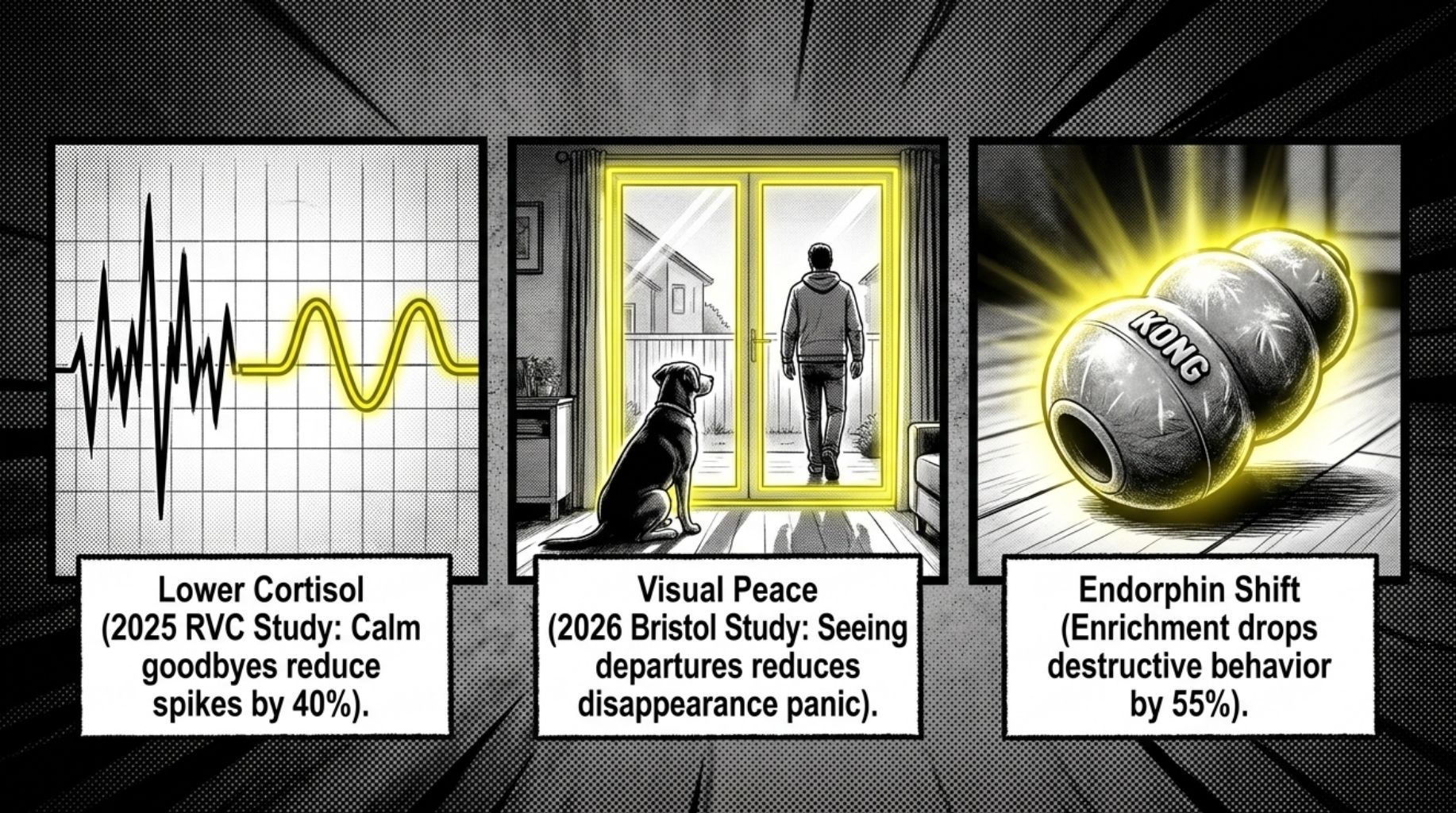
In 2025, the Royal Veterinary College published a trial with 200 dog owners. They split owners into two groups. One gave calm goodbyes, the other gave emotional, long goodbyes. The calm‑goodbye group had dogs with 40% lower cortisol spikes.
The emotional‑goodbye group had dogs that destroyed furniture twice as often. This research shows that your behavior directly changes what your dog thinks when you leave the house.
Study About The Visual Dog Goodbyes
Another 2026 study from the University of Bristol used video cameras and heart monitors. They discovered that dogs who watch their owners leave through a window or glass door stay calmer. Visual confirmation of departure reduces the panic of “disappearing.”
Dogs who cannot see you leave have a harder time understanding where you went. That is why a window facing the driveway helps many anxious dogs. This study gave us a concrete window into what your dog thinks when you leave the house.
The Study with The Frozen Stuffed Kong
A third recent experiment looked at enrichment. Researchers gave 150 dogs a frozen stuffed Kong every time the owner left. After four weeks, destructive behaviors dropped by 55%. The act of licking releases calming endorphins.
So what your dog thinks when you leave the house can shift from “danger” to “treat time” with the right tools. These studies prove that small changes create big results. Science now agrees, what your dog thinks when you leave the house is measurable, changeable, and deeply tied to your actions.
WHAT YOUR DOG THINKS WHEN YOU LEAVE THE HOUSE IS NOT WHAT YOU IMAGINE
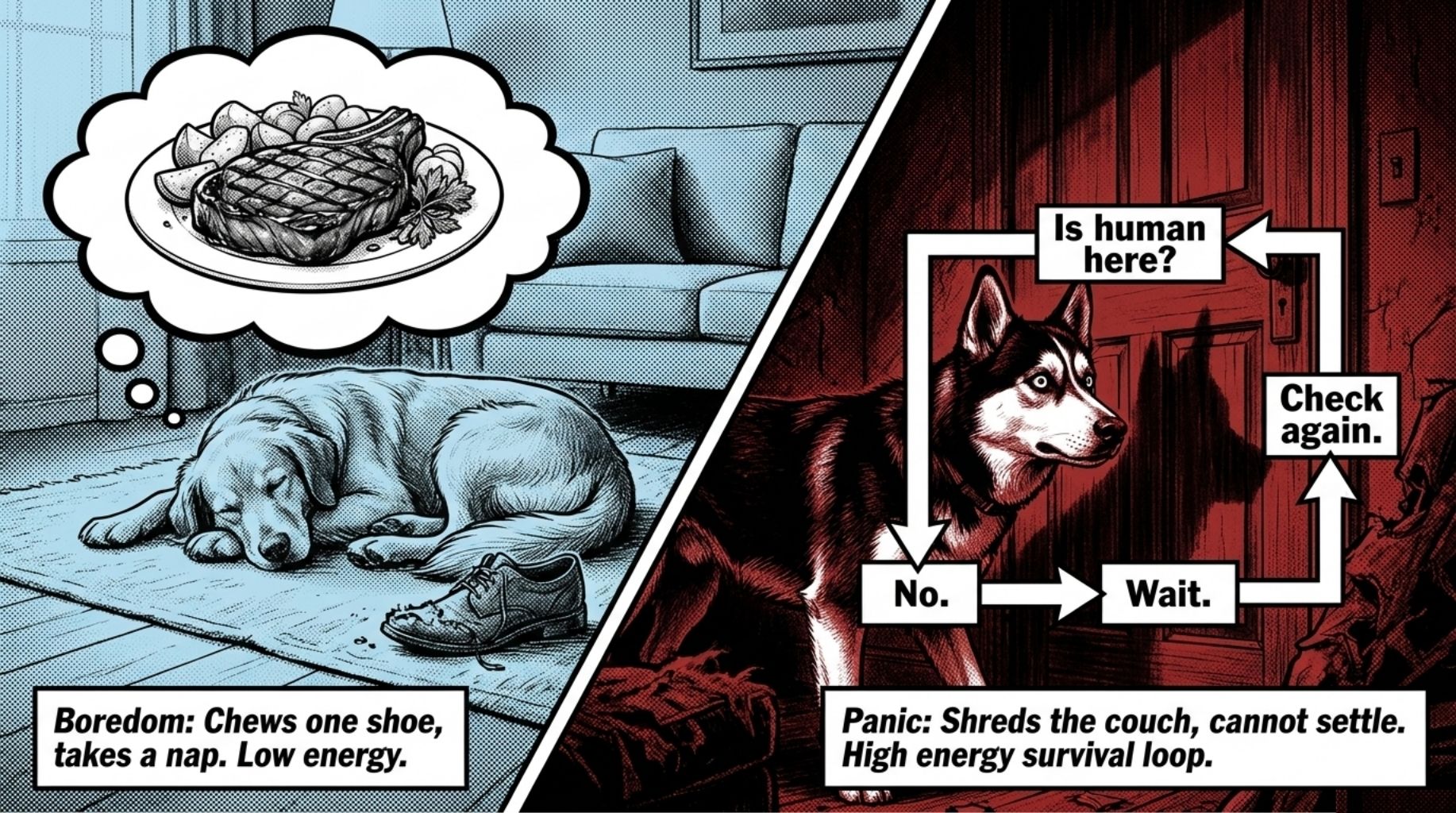
You might imagine your dog dreaming of a steak dinner. The reality is more primal. Your dog thinks about safety, pack location, and survival. They do not hold grudges or plan parties. Their brain runs a simple loop, “Is my human here? No. Wait. Check again. No.” This loop repeats until you return. So what your dog thinks when you leave the house is actually very simple, a repetitive check for your presence.
The “Snapshot” Method Reveals What Your Dog Thinks When You Leave the House
Animal behaviorist Dr. Alexandra Horowitz popularized the “snapshot” idea. Your dog takes a mental picture of you leaving. That image stays in their short‑term memory. Throughout the day, they return to that snapshot and compare it to the empty room.
Each comparison triggers a small stress response. Over eight hours, that adds up to a lot of stress. Understanding what your dog thinks when you leave the house through snapshots helps you realize why short absences feel long to them.
What Your Dog Thinks When You Leave the House About the Sound of Your Car?
Dogs have exceptional hearing. They can distinguish your car engine from every other vehicle on the block. A 2025 study played recordings of various cars to dogs left alone. When the dog heard the owner’s specific car sound, their tail wagged and heart rate dropped.
This proves they are constantly listening for your return. So what your dog thinks when you leave the house includes a soundtrack of hope, not just silence. That hopeful listening is a sign of attachment, not anxiety.
Why Boredom and Anxiety Are Not the Same in What Your Dog Thinks When You Leave the House?
Bored dogs nap. Anxious dogs destroy. Bored dogs chew one shoe and stop. Anxious dogs shred an entire couch. The difference is the emotional state. Boredom is low energy. Dog anxiety is high energy with fear.
You cannot fix panic with a bigger toy. You fix panic with desensitization and safety cues. Knowing what your dog thinks when you leave the house as either boredom or panic saves you money on furniture and saves your dog from suffering.
HOW TO CHANGE WHAT YOUR DOG THINKS WHEN YOU LEAVE THE HOUSE?
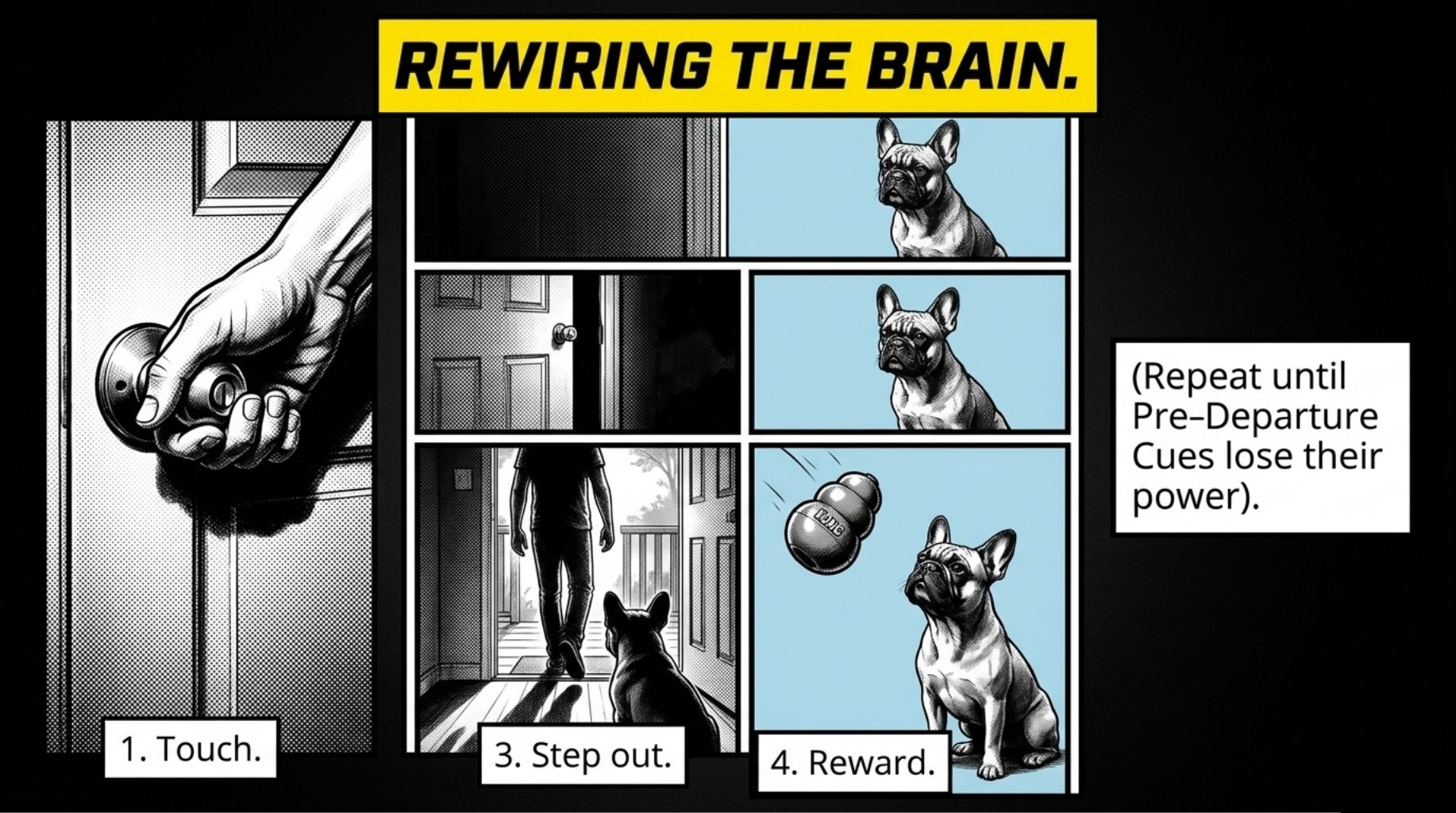
You are not stuck with a stressed dog. You can retrain their brain in just a few weeks. The key is desensitization. This means practicing fake departures over and over until the trigger disappears. Start by picking up your keys while watching TV. Do not leave. Just hold the keys. Repeat this 20 times a day. Soon, keys will mean nothing scary. Changing what your dog thinks when you leave the house is 100% possible with consistency.
Step‑by‑Step Desensitization
- First, put your hand on the doorknob and take it off. Do this ten times without leaving.
- Second, open the door one inch and close it. Repeat.
- Third, step outside for one second and come back.
- Then three seconds. Then ten seconds. Then thirty seconds.
- Work up slowly over a week.
- If your dog shows any stress, go back a step.
- This method rewires what your dog thinks when you leave the house by calming the fear center of the brain.
Enrichment Tools That Rewire What Your Dog Thinks When You Leave the House
A frozen Kong filled with peanut butter lasts 20 to 30 minutes. A lick mat with yogurt takes another 15 minutes. A snuffle mat with hidden kibble keeps their nose busy. Licking and sniffing are natural stress relievers for dogs.
They lower heart rate and release feel‑good hormones. When you pair enrichment with your departure, your dog starts to think, “Yes! Alone time means fun time.” That is a complete mental shift in what your dog thinks when you leave the house.
When to Call the Vet About Excessive Dog Reaction When You Leave The House?
If your dog injures themselves trying to escape, call a vet immediately. Call the vet if they stop eating entirely when you are gone, that is a red flag. If training and enrichment do nothing after six weeks, ask about medication.
Modern vet medicine offers SSRIs (like fluoxetine) specifically for dog anxiety. Medication does not sedate your dog. It lowers their baseline fear so they can actually learn new habits. There is no shame in needing medical help to fix what your dog thinks when you leave the house.
REAL STORIES AND CASE STUDIES FROM OUR READERS
Reading about what your dog thinks when you leave the house is one thing. Seeing it happens to real dogs makes it click. Other owners’ successes and failures teach you what works without you having to make the same mistakes. A case study shows you that panic pacing can turn into peaceful napping in just two weeks. That hope is powerful. Real stories turn abstract science into action steps you can use tonight.
A Dog Owner Shares a Story About Her Rescue Lab Mix Luna
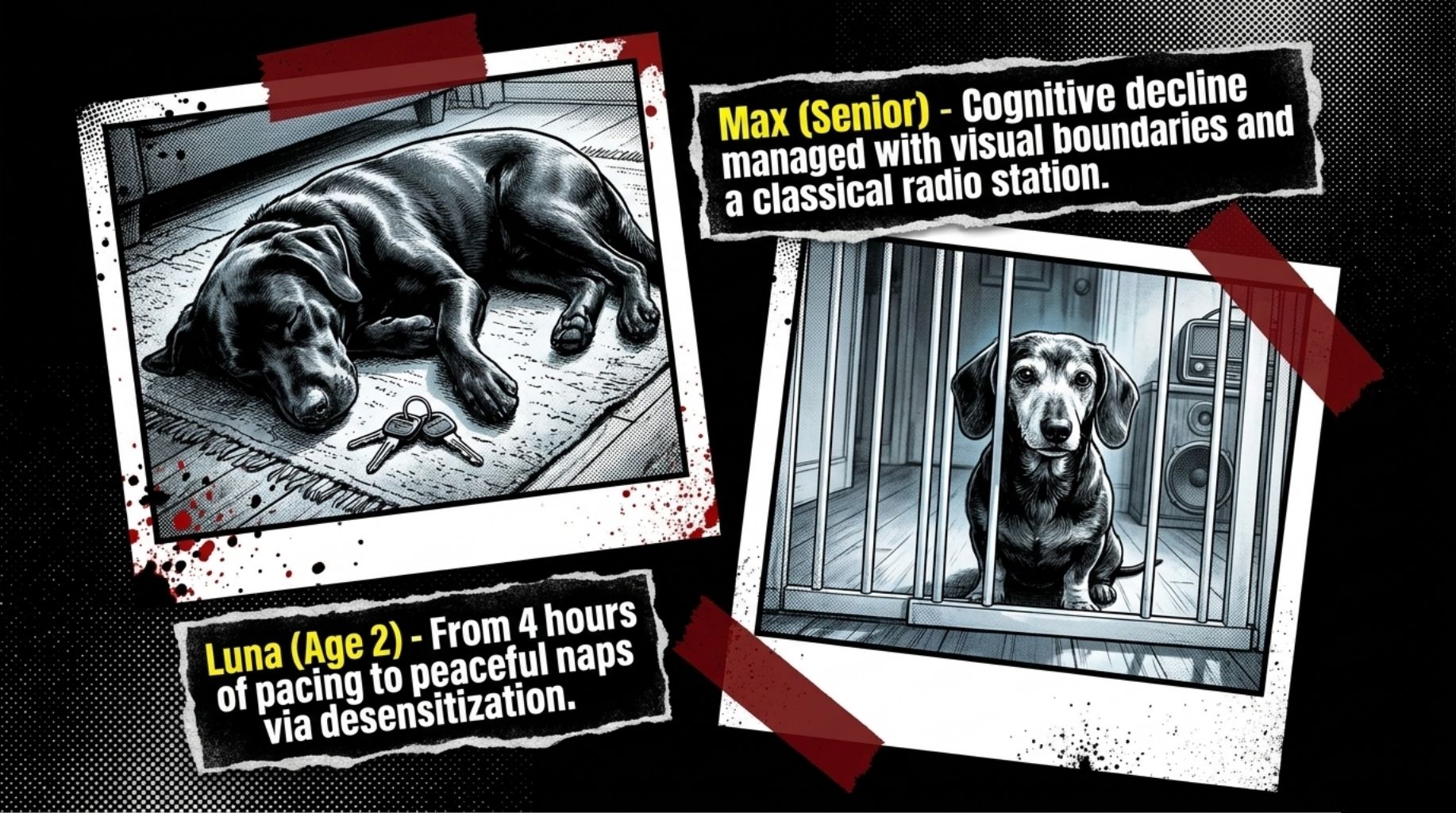
Meet Luna, a two‑year‑old rescue lab mix. Her owners filmed her while at work. Luna paced for four hours straight. She ignored food and water. After two weeks of desensitization training and a daily stuffed Kong, Luna now sleeps for seven out of eight hours.
Her owner reported, “She wags her tail when I pick up my keys now. She knows a treat is coming.” That is a complete turnaround when you asked about what your dog thinks when you leave the house.
The Story About The Senior Dachshund Called Max
Another case involved Max, a senior dachshund with cognitive decline. His vet prescribed a low dose of trazodone. Combined with leaving the radio on a classical station, Max stopped howling.
His owners also installed a baby gate so he could see the front door. Within a month, your dog’s thoughts will be shifted from terror to tolerable waiting. Max’s story proves that age does not have to mean suffering.
The Foster Study With 50 Anxious Shelter Dogs
A 2024 foster study tracked 50 anxious shelter dogs. Foster parents used a protocol of calm departures, puzzle toys, and short alone‑time sessions. After eight weeks, 44 of the 50 dogs were adopted and stayed in their new homes.
The six that failed had underlying medical issues. This proves that most separation anxiety in dogs is treatable. With patience, your dog thoughts when you leave the house can go from panic to peace.
FREQUENTLY ASKED QUESTIONS (FAQ)
FINAL NOTE
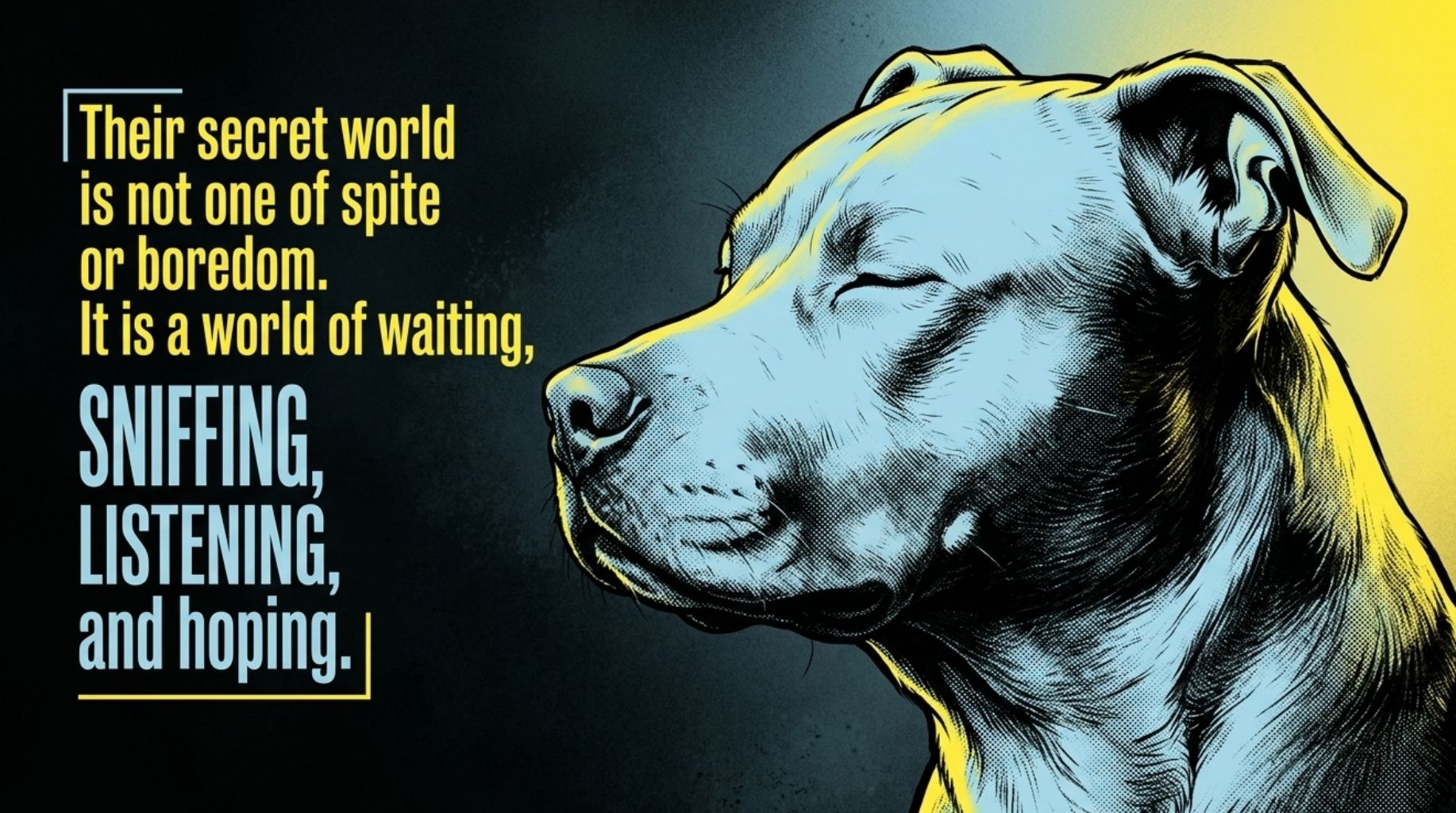
Your dog loves you more than you know. Their secret world is not one of spite or boredom. It is a world of waiting, sniffing, listening, and hoping. Now you know what your furry friends thinks when you leave the house. Use that knowledge to make every goodbye a little bit easier for both of you.