
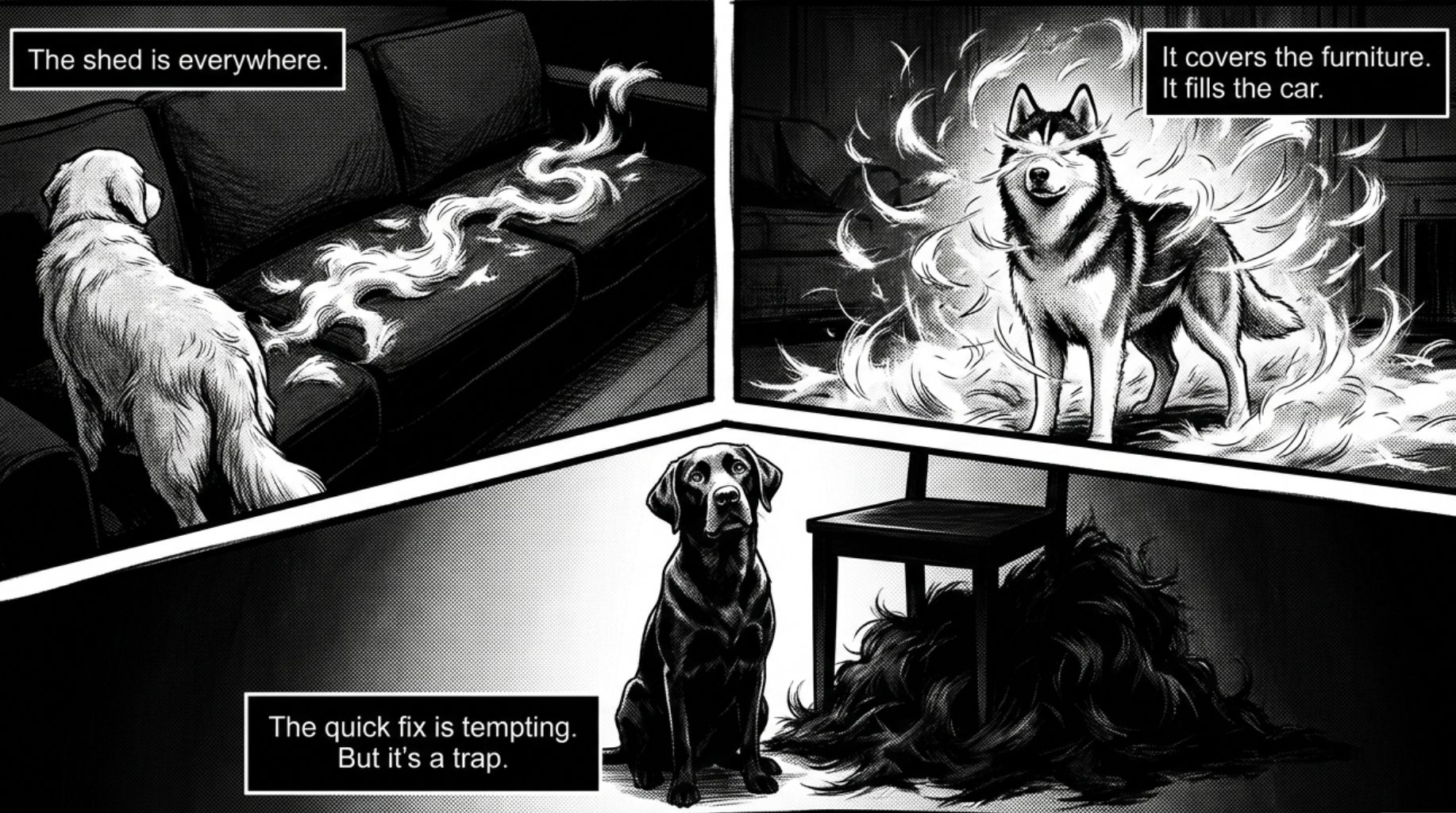
A Labrador can leave hair everywhere without looking especially furry. It gathers beneath chairs, sticks to dark clothes and appears in the car long after the dog has gone home. During a heavy shed from your Labrador, shaving can seem like the obvious fix. Less coat should mean less mess. The coat does not work that way.
A Labrador carries two layers that grow at different rates and do different jobs. Cutting both close may change the way the coat returns. It can also expose skin that has spent years under cover. The shedding cycle continues underneath it all. Most healthy Labradors need loose coat removed, not the whole coat clipped away. Medical cases are different and should follow veterinary advice.
“Shaving your Labrador might seem like the quickest way to a cleaner home and a cooler dog, but this popular “fix” often creates a host of problems that every owner needs to understand.”
Key Takeaways
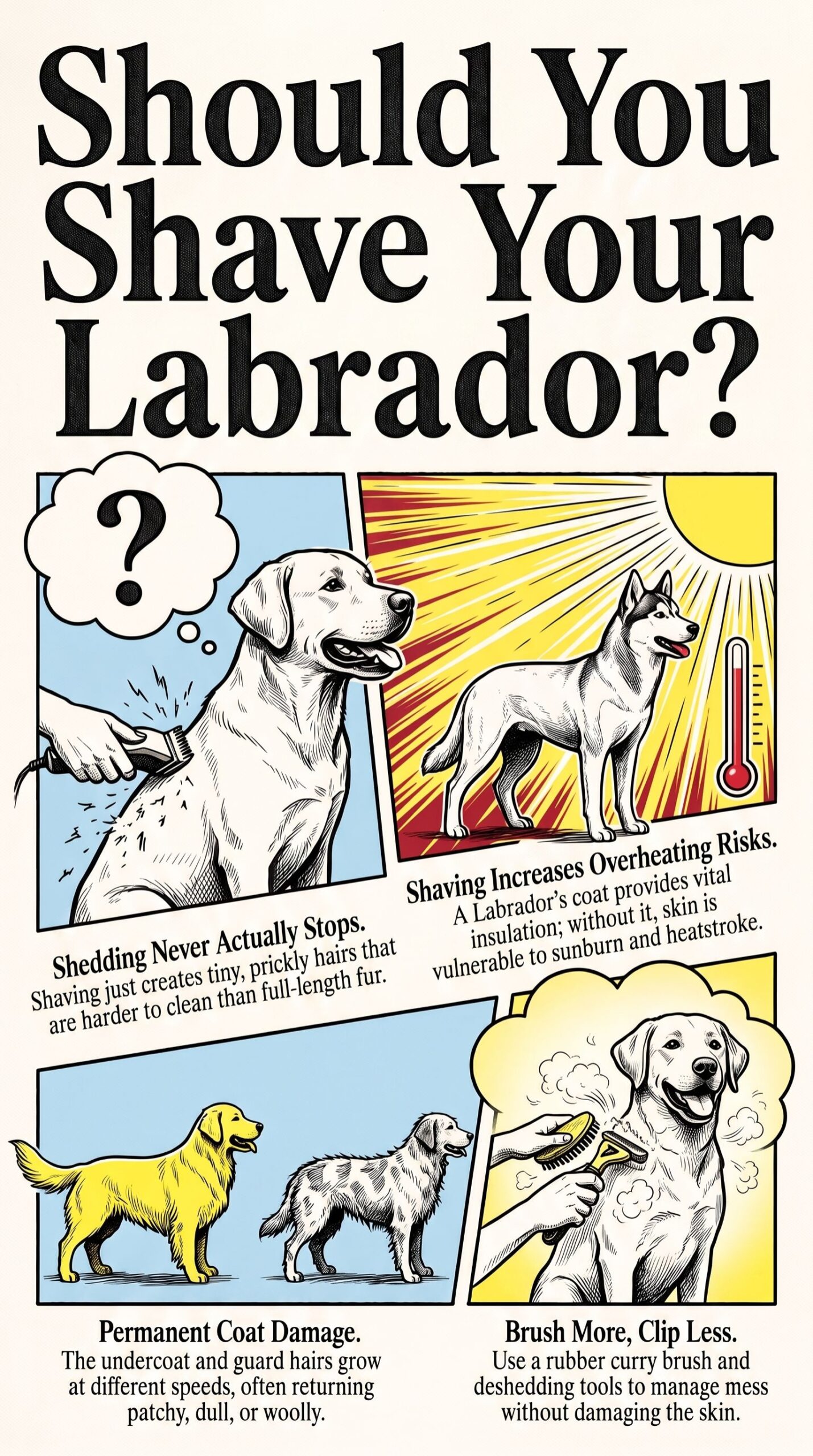
- Do Not Shave for Convenience: Shaving does not stop shedding and damages the coat’s natural protective function.
- The Double Coat Matters: The two layers (guard hairs and undercoat) grow at different rates. Shaving can lead to patchy, uneven, or permanently damaged regrowth.
- Shaving Increases, Not Decreases, Heat Risk: Removing the coat removes sun protection and natural insulation, making your dog more vulnerable to overheating and sunburn.
- Address the Root Problem: Instead of shaving, tackle shedding with regular brushing and professional deshedding. Manage heat with shade, water, and shorter walks.
- Medical Shaving Only: The only time a Labrador should be shaved is for necessary veterinary procedures, not for cosmetic or “shed-control” purposes.
Quick Summary About Shaving Your Labrador dogs!
This article explains why shaving a Labrador is almost always a bad idea. A Labrador’s double coat is a complex system designed for protection and temperature regulation. Shaving disrupts this system, leading to uneven regrowth, potential skin damage from sun exposure, and does not stop the shedding cycle. The article argues that the real solution to shedding and heat management is regular brushing, proper bathing and drying, and sensible environmental management, not a close shave.
Listen to the Episode by The Bark Brigade Podcast About Why Shaving Your Labrador Backfires!
UNDERSTANDING A LABRADOR’S DOUBLE COAT
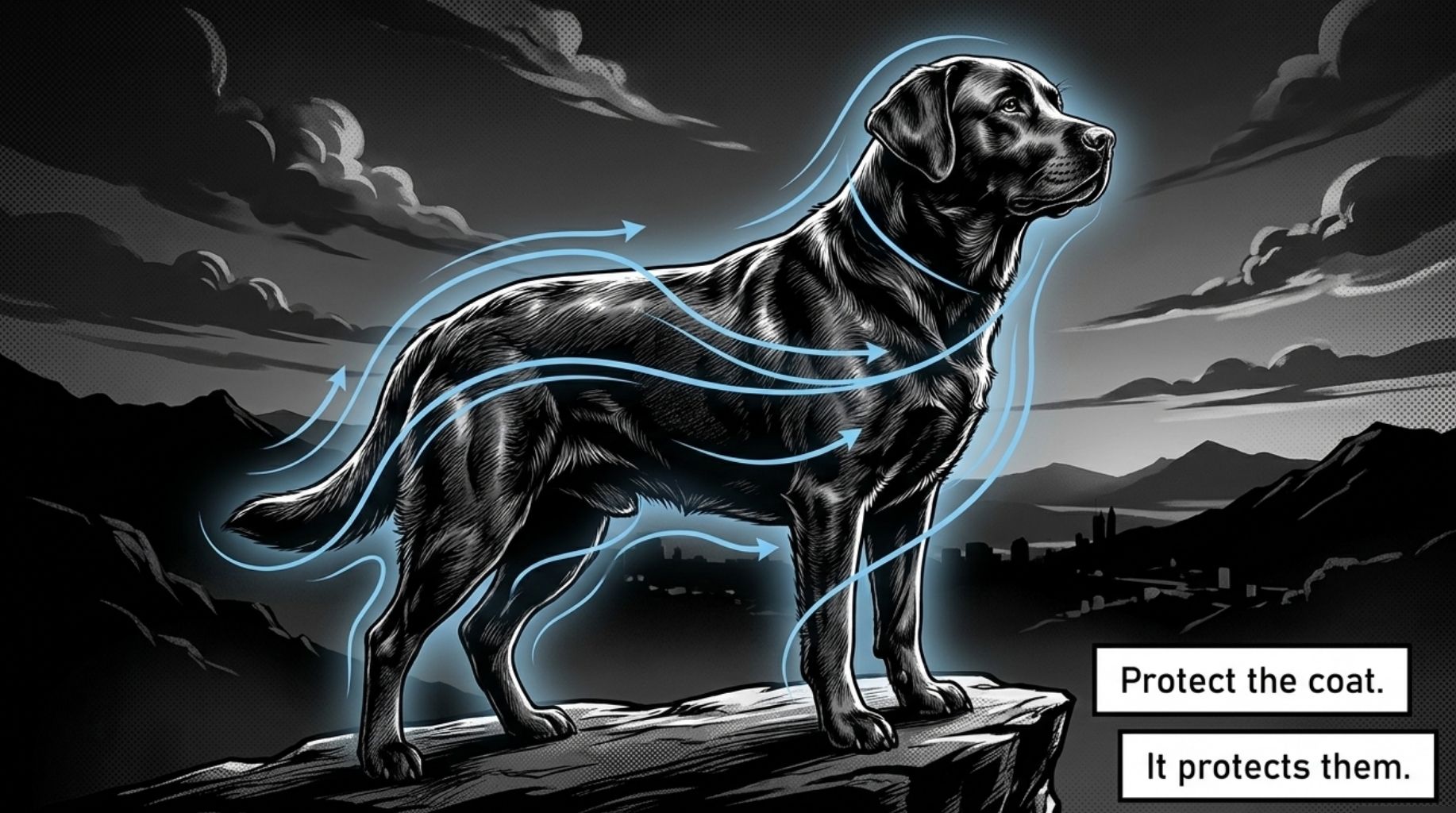
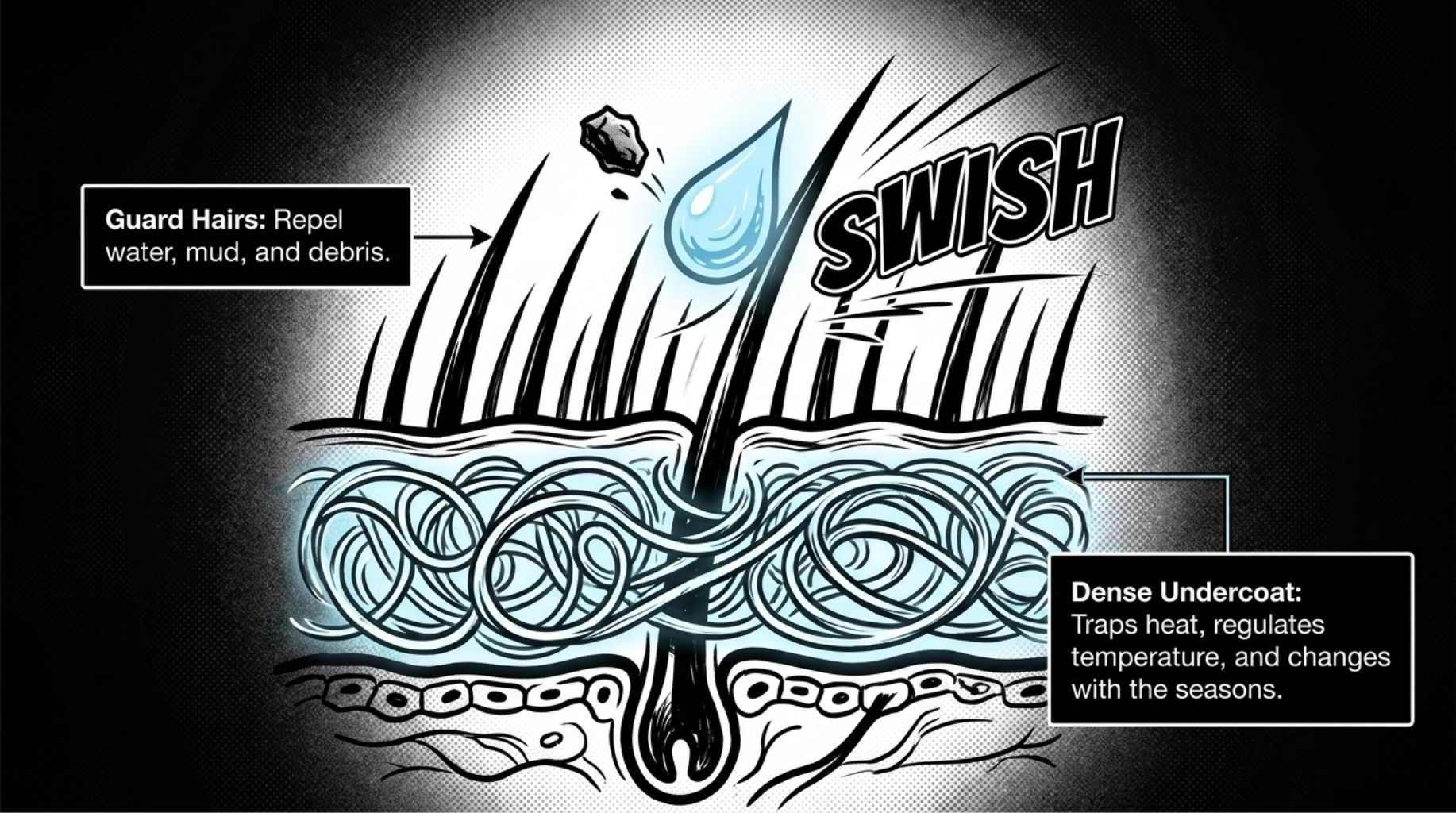
A Labrador’s coat looks simple from across the room. It is short, flat and close to the body. A hand move against the growth reveals how densely packed it really is. The outer layer is made up of firmer guard hairs. These help repel water, mud and light debris. Beneath them sits a softer undercoat that changes more noticeably with the seasons.
Guide To The Labrador Coat
That undercoat explains why one brushing session can fill a bag even while the dog still looks fully coated. Loose hair often stays trapped below the surface. It may come away in tufts around the shoulders, rump and back legs. A black Labrador shows the shed on furniture. A yellow Labrador leaves it on dark clothing.
Either way, the coat is following its normal cycle. The two layers do not return at exactly the same pace after clipping. Soft undercoat may appear first. Guard hairs can take longer. For a while, one area may look fluffy while another seems thin or dull. Some dogs recover quickly. Others do not.
What is The Function of Your Labrador Coat?
Coat growth may be slower or less even in older Labradors, dogs taking certain medicines or those already dealing with a skin problem. No careful groomer should promise that every coat will look normal again within a set number of weeks.
The coat also shades the skin. Once that cover is removed, sunlight reaches areas that were not used to direct exposure. Scratches from branches, insect bites and rough play can reach the skin more easily too.
A Labrador can still overheat. Hard exercise, humid weather and time in a warm vehicle remain genuine risks. Weight, age, fitness, shade, water and activity level all matter. Shaving does not replace sensible heat management.
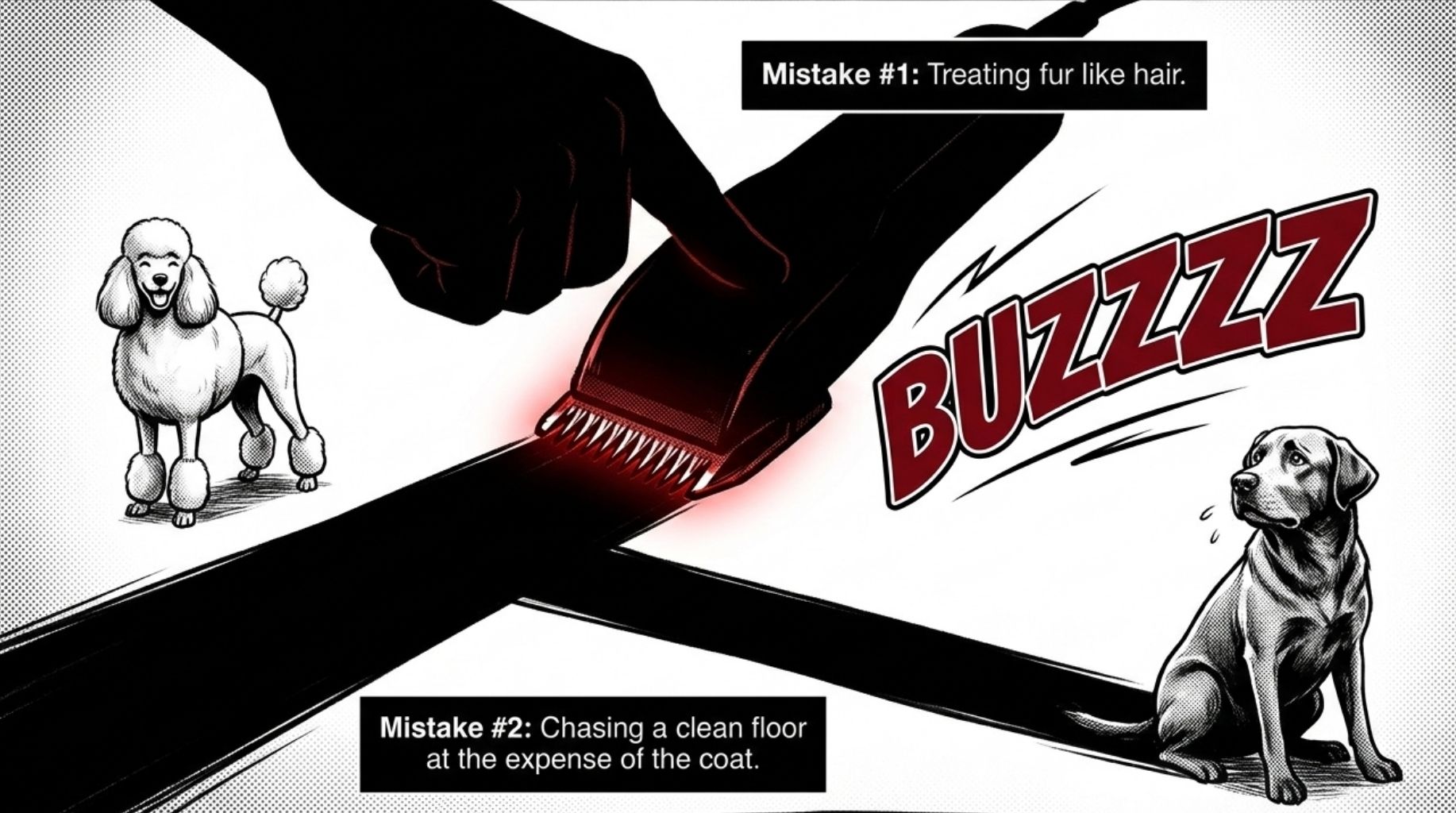
THE BIGGEST MISTAKES GROOMERS MAKE WHEN SHAVING A LABRADOR
The first mistake often happens before the clippers start. A groomer hears “take it short for summer” and treats the request as a styling choice. The reason behind it needs to be understood first. Some owners are tired of hair on the floor. Others think the dog is too hot. A few are trying to solve itching, smell or a coat that stays damp after swimming. Those concerns need different answers.
What Should Every Labrador Owner Need to Know?
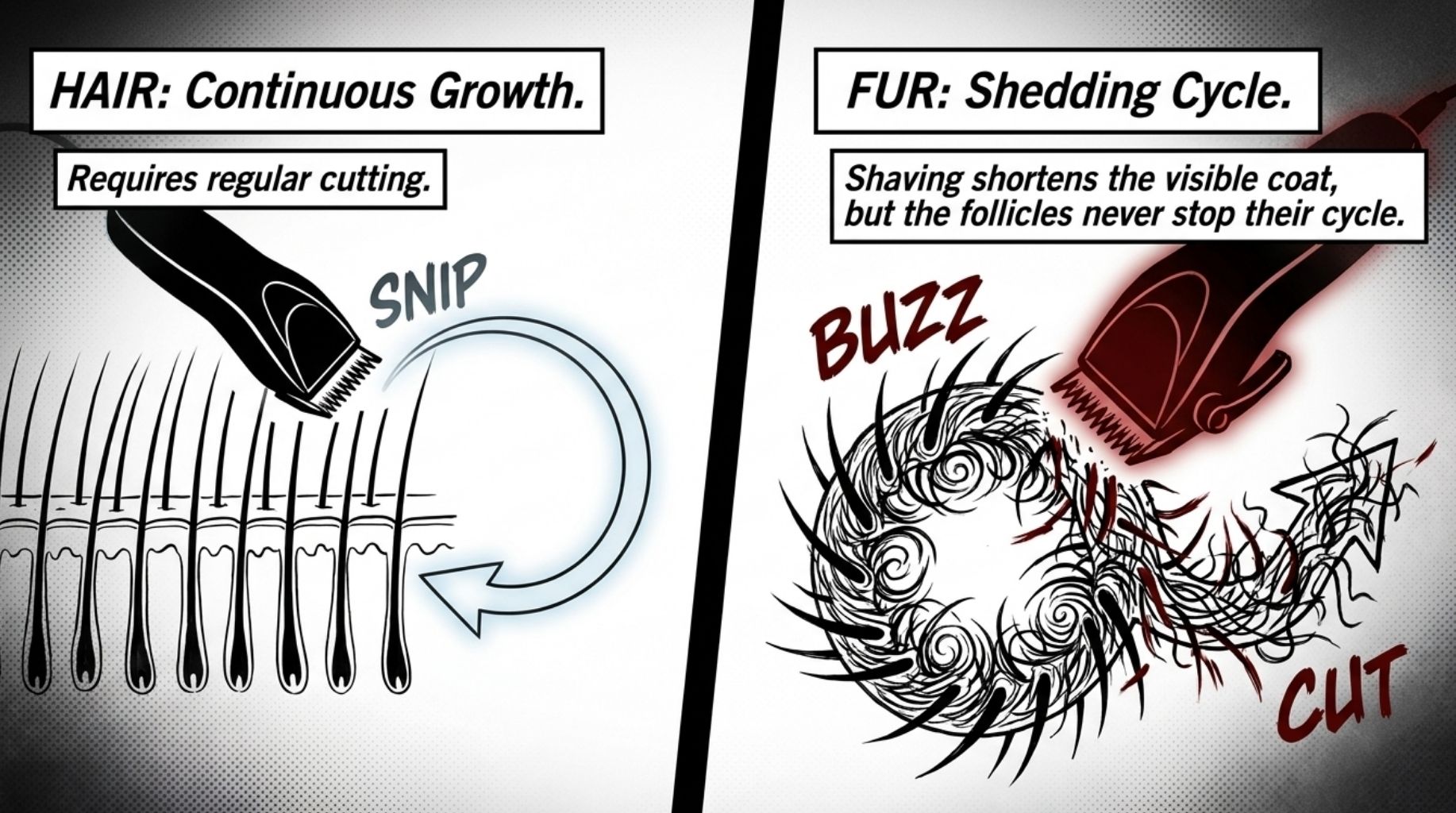
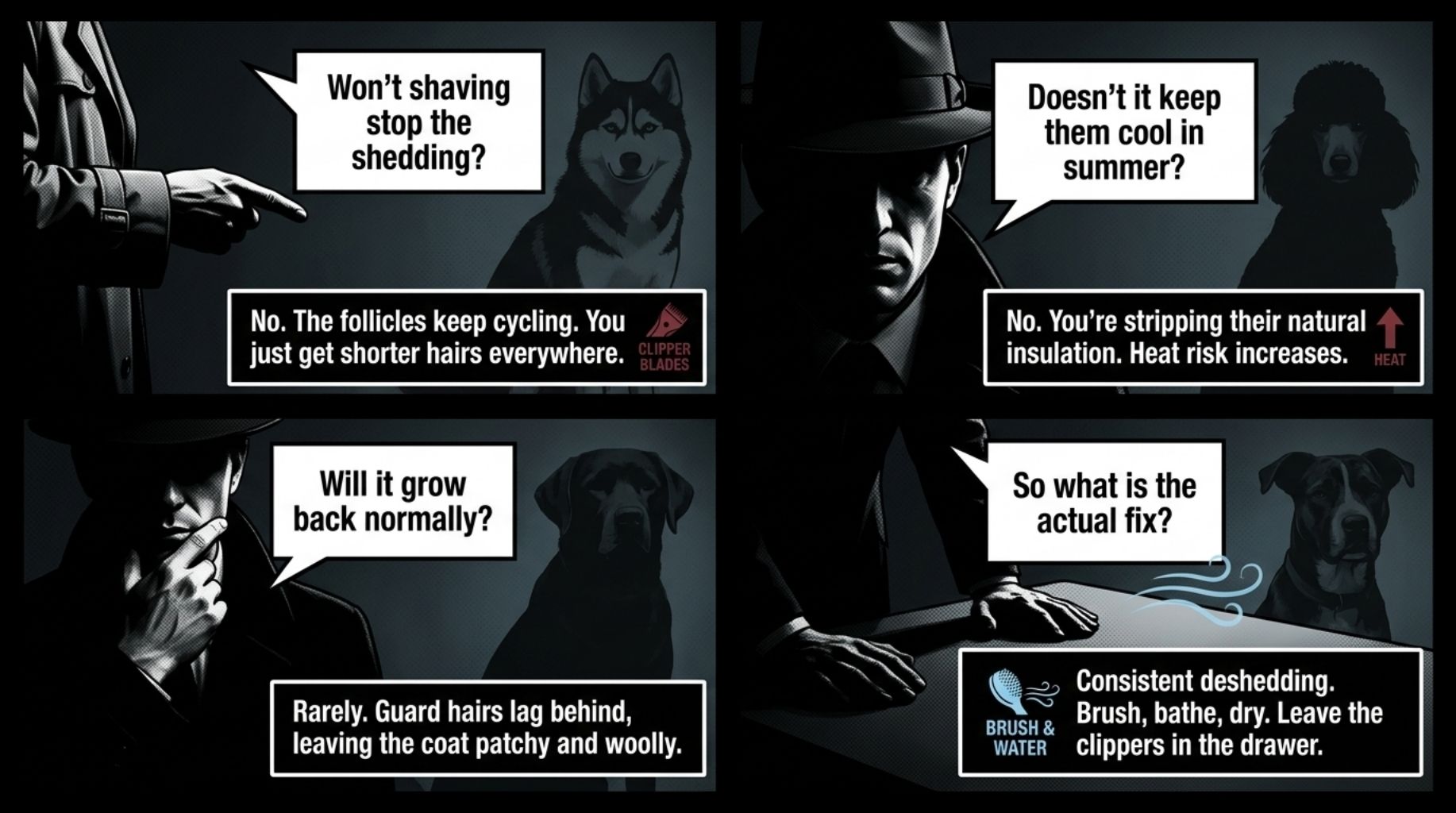
Treating a Labrador like a continuously growing coat is another mistake. A poodle needs regular cutting because the hair keeps growing. A Labrador sheds and replaces coat on a different cycle. A blade shortens what can be seen. It does not stop what is happening in the follicles.
Promising less shedding creates false expectations. At first, the house may look cleaner because the remaining hair is short. Then tiny clipped hairs begin working into sofas, bedding and car seats. Once regrowth starts, loose undercoat returns.
Heat is often misunderstood too. A Labrador may pant after a car journey, a noisy reception area or ten minutes of excited wriggling. The room may be warm. The dryer may be too hot. Removing the coat does not fix any of those conditions.
Poor blade work can leave the dog sore. A close blade heats quickly. Repeated passes over one spot may cause redness around the shoulders, belly, groin or elbows. The dog starts licking later at home, when the cause is less obvious.
When A Groomer Is Needed
A groomer should also recognize when the issue is not cosmetic.
Warning signs include:
- Moist patches near the neck or tail
- Strong odor coming from the skin
- Bald areas present before grooming
- Thick flakes, crusts or obvious redness
- Pain when one area is touched
- Chewing that has broken the skin
Medical clipping belongs under veterinary guidance. Routine coat care belongs in trained hands. For you see, a legitimate case of an Online Dog Grooming Courses Certification for Beginners can give new groomers a starting point for coat identification, safe tool use and client consultation before practical experience develops.
A groomer should point out what is visible and leave the diagnosis to a veterinarian. A groomer should point out what is visible and leave the diagnosis to a veterinarian. Shaving over a sore patch can hide the cause and leave tender skin feeling worse.
WHAT HAPPENS AFTER SHAVING A LABRADOR?
The first result can look convincing. The outline appears neat. Loose coat is gone from the surface. The dog feels smooth. Then the coat begins to return.
Regrowth of Your Labrador Coat After the Shaving
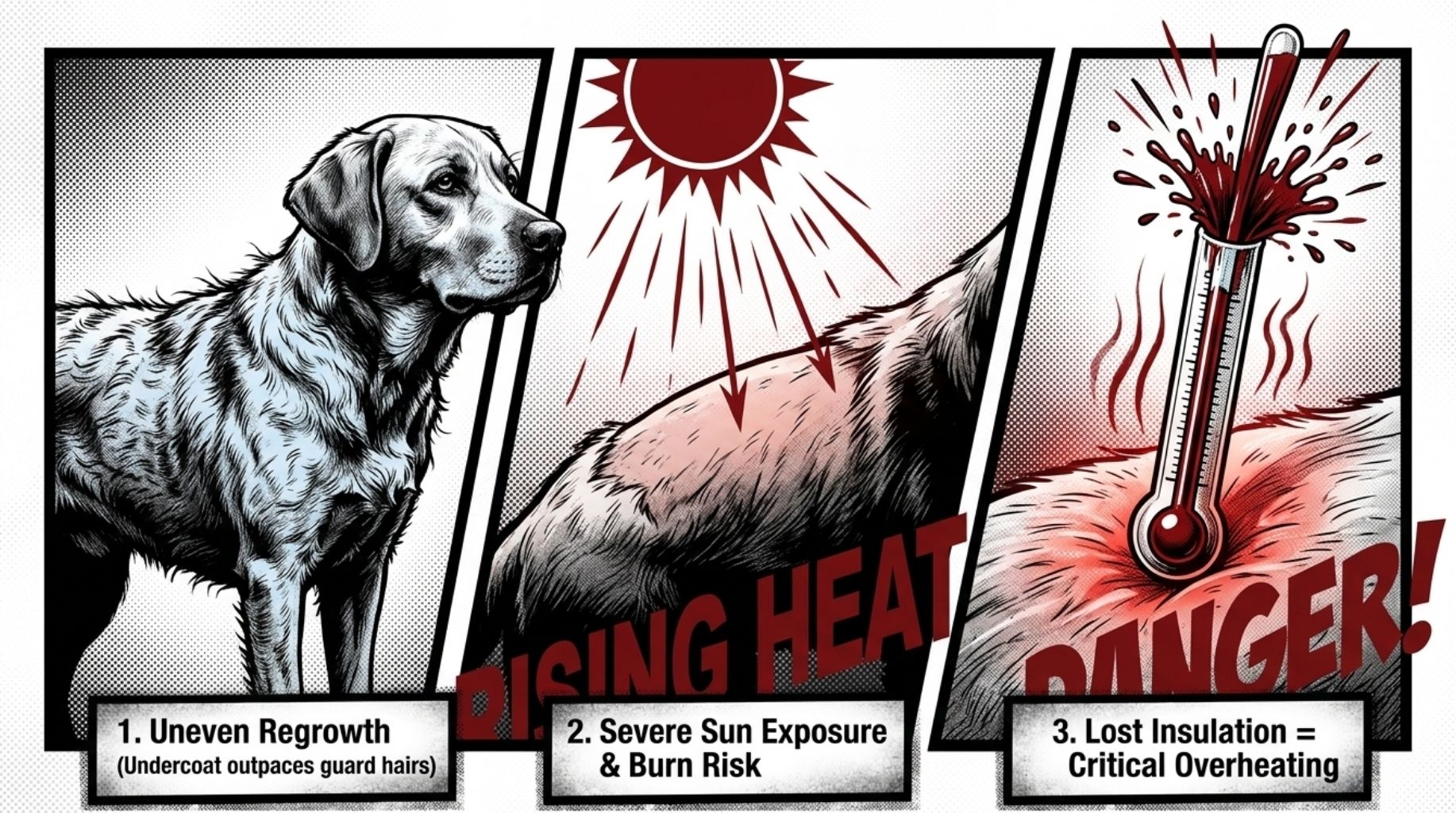
Regrowth is rarely even. Soft hair may show first around the neck, thighs and back. Guard hairs can lag behind. One side may look fuller than the other. A collar line can remain visible for weeks.
On some Labradors, the coat feels woolly before it settles. The new coat can come in soft and fluffy because the undercoat often shows up first. When the guard hairs are slow to return, that quick shave can start to feel like a mistake.
How The Coat of Your Labrador is Coming Back After The Shaving?
Plenty of dogs regrow without a lasting problem. The trouble is that nobody can know in advance which coat will recover quickly. That uncertainty matters when the shave was not medically necessary. Newly exposed skin can feel strange. A dog may rub against carpet, scratch more often or lick the sides. Mild awareness may settle. Constant licking, swelling, broken skin or obvious soreness needs attention.
Sun exposure becomes a practical concern as well. The dog still wants the same garden time and walks. The skin now has less protection. A pale Labrador may redden quickly. Darker skin can still burn. Midday sun becomes harder to manage after a close clip, not easier.
Then there is the shedding. It does not stop. The follicles continue their cycle. Short pieces may be less visible for a while, but they still come loose. As the undercoat returns, brushes and floors begin filling again. The shave has added a regrowth period without removing the original maintenance problem.
Sometimes clipping reveals fleas, small lumps, crusts or areas of hair loss. That discovery can help, but shaving is not a treatment. The groomer should record what was found and explain where it was found. A veterinarian can decide what it means.
Heavy panting after grooming should not automatically be blamed on the coat. Warmth, stress, excitement, pain and poor airflow can all play a part. Drooling, weakness, vomiting, confusion or collapse are different. Those signs need urgent veterinary care.
Owners sometimes overcorrect after a shave. The dog is bathed again, sprayed with fragrance or brushed hard because the coat feels uneven. That can make tender skin worse. Shade, clean bedding and a light touch are usually more useful.
BETTER ALTERNATIVES TO SHAVING YOUR LABRADOR
Most shaving requests begin with loose hair, smell or heat. Each one has a more direct answer.
Why Brushing Matters?
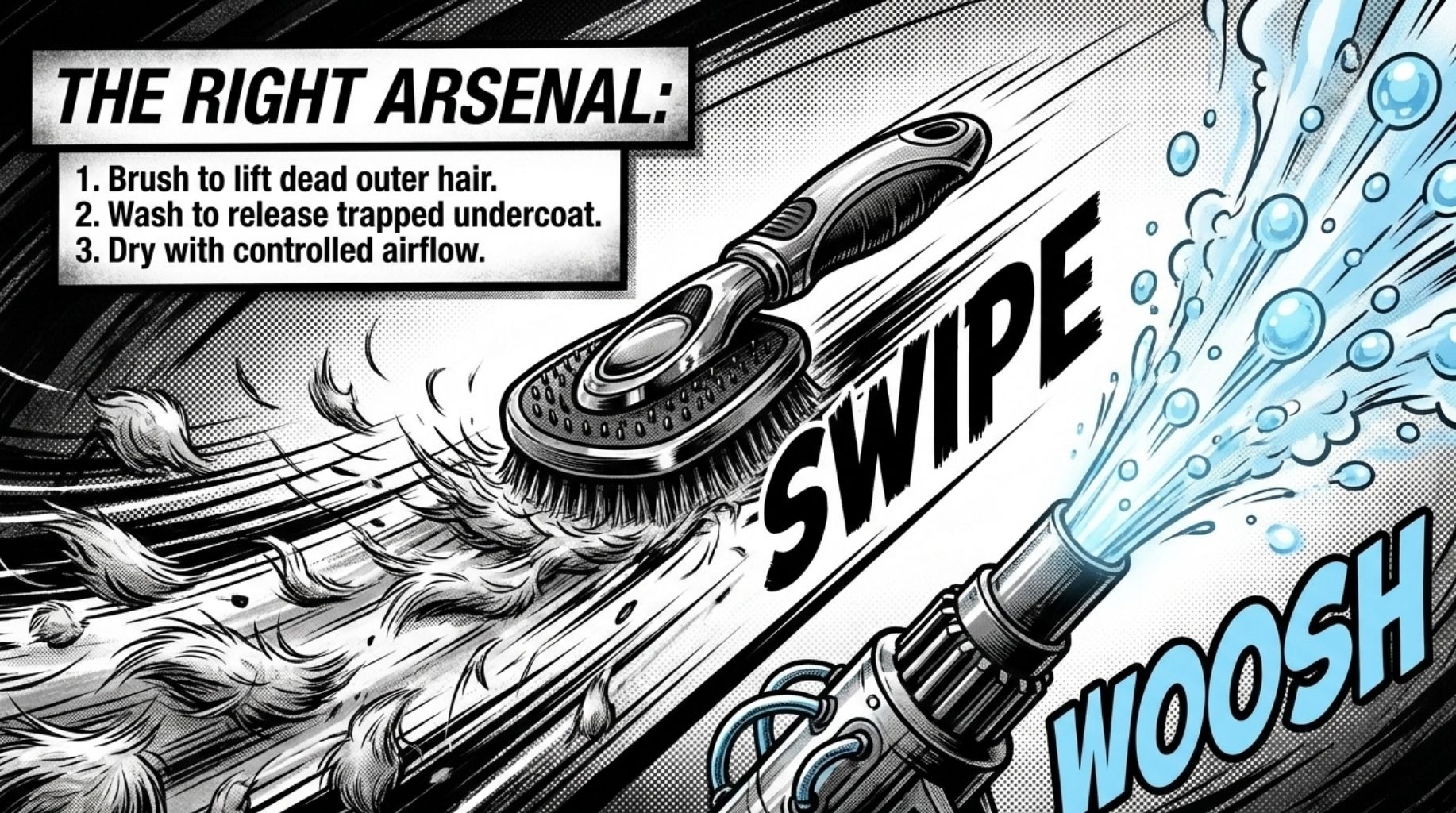
Loose hair responds to regular brushing. A rubber curry brush can lift dead hair from the short outer coat without scraping the skin. During a heavier shed, a suitable undercoat tool may remove hair that has already loosened below the surface.
Pressure matters. Working the same patch until no hair appears may remove healthy coat or irritate the skin. The shoulders, thighs, belly and rump deserve regular checks. More hair on the floor does not always mean better grooming.
Bathing and Drying
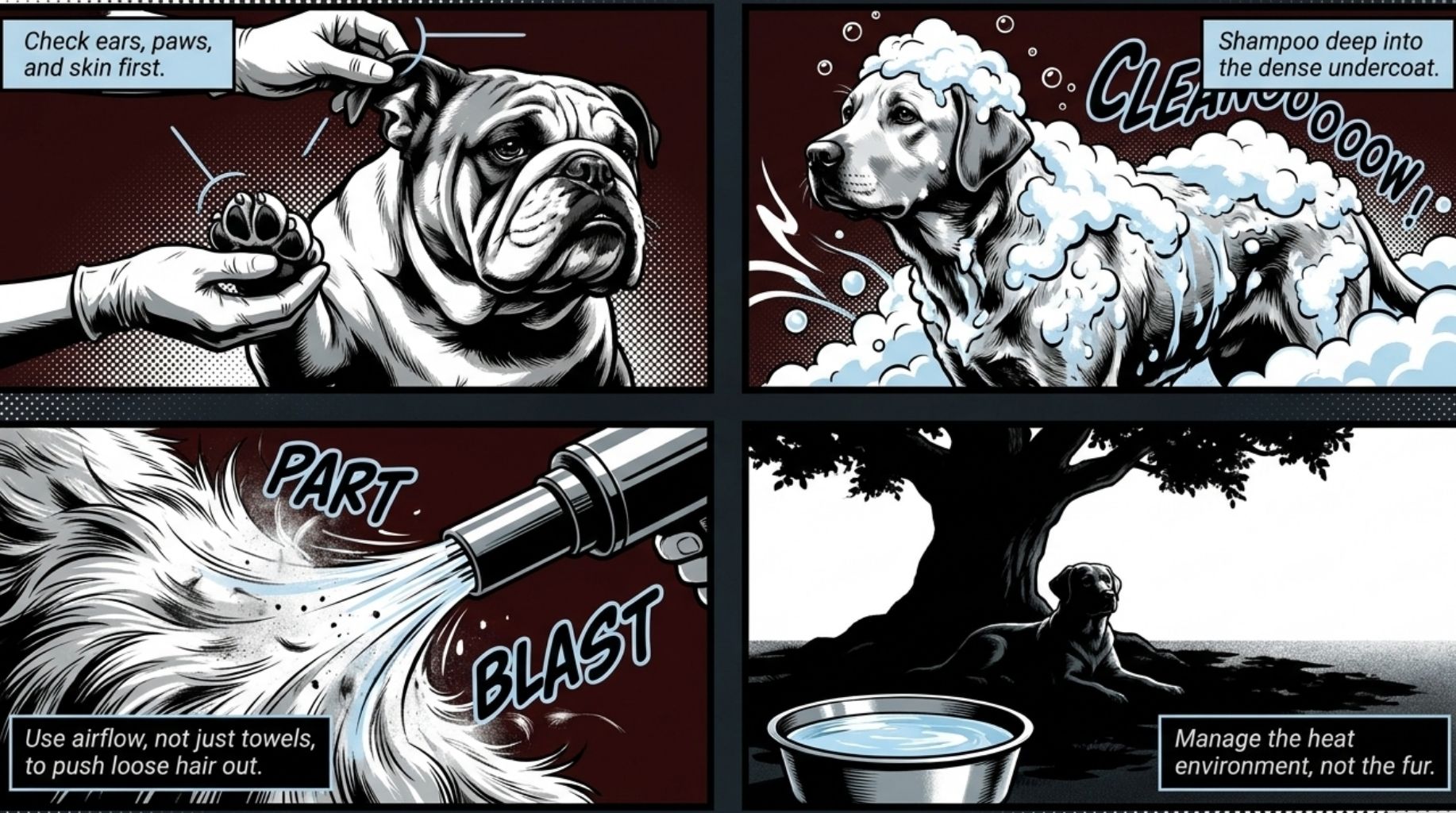
Bathing can release a surprising amount of undercoat. Shampoo needs to reach the skin. It also needs to rinse away fully. A dense coat holds residue around the neck, chest and back legs long after the back looks clean.
Drying is where many home routines fall short. A towel removes surface water. The undercoat may still be damp. Controlled airflow separates the coat and moves loose hair out. The air should stay comfortable. A dog that spins, freezes or keeps trying to escape may need a lower setting or a break.
Routines for Your Labrador’s Coat
A realistic routine may include:
- Brushing once or twice a week during quieter months
- More frequent brushing during a seasonal shed
- Bathing when the coat is dirty or genuinely smelly
- Drying the undercoat fully after swimming
- Checking the ears, paws and skin during each session
- Seeking veterinary advice when itching or odor keeps returning
Smell deserves proper attention. A Labrador that swims often may carry a damp coat smell. Dirty bedding can make it worse. A sour or yeasty odor is different. Strong fragrance may cover it for an afternoon. It does not solve the cause.
Heat needs management outside the grooming room. Early walks, fresh water, shade and shorter play sessions are more useful than stripping away the coat. Sticky air can tire a Labrador faster than the temperature suggests. Older dogs, heavier dogs or those with heart or breathing trouble may slow down first.
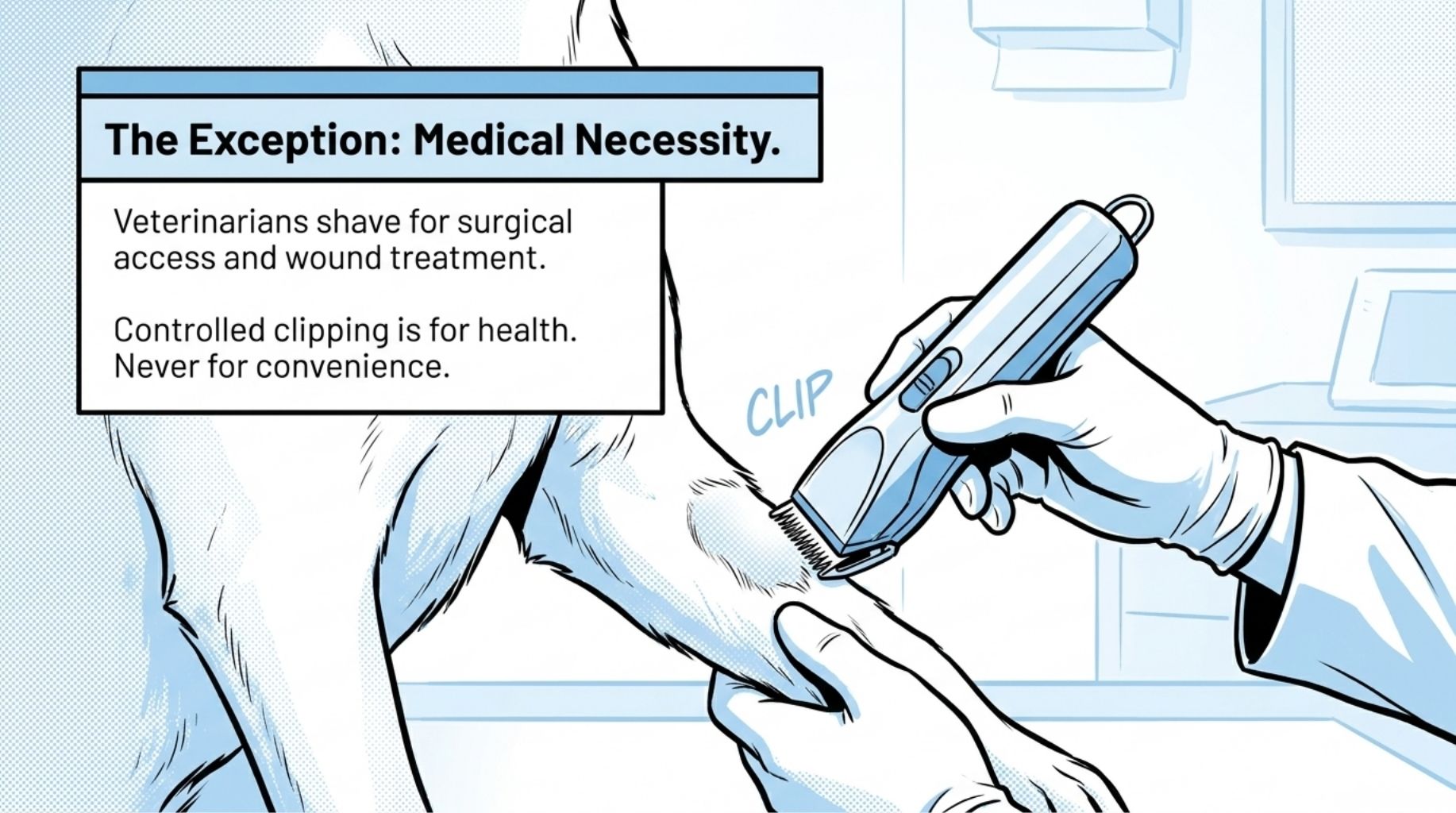
A ball obsessed Labrador may not stop chasing even when the body is overheating. The adult supervising the game has to stop it. Medical clipping still has a place. A veterinarian may remove hair around a wound, surgical site or treatment area. That is controlled clipping for access. It is not the same as shaving the whole dog for convenience.
WHY GROOMING TRAINING MATTERS BEFORE SHAVING A LABRADOR?
The hardest dog grooming skill is not making a coat shorter. It is knowing when shortening it is the wrong call.
How to Choose the Right Tools?
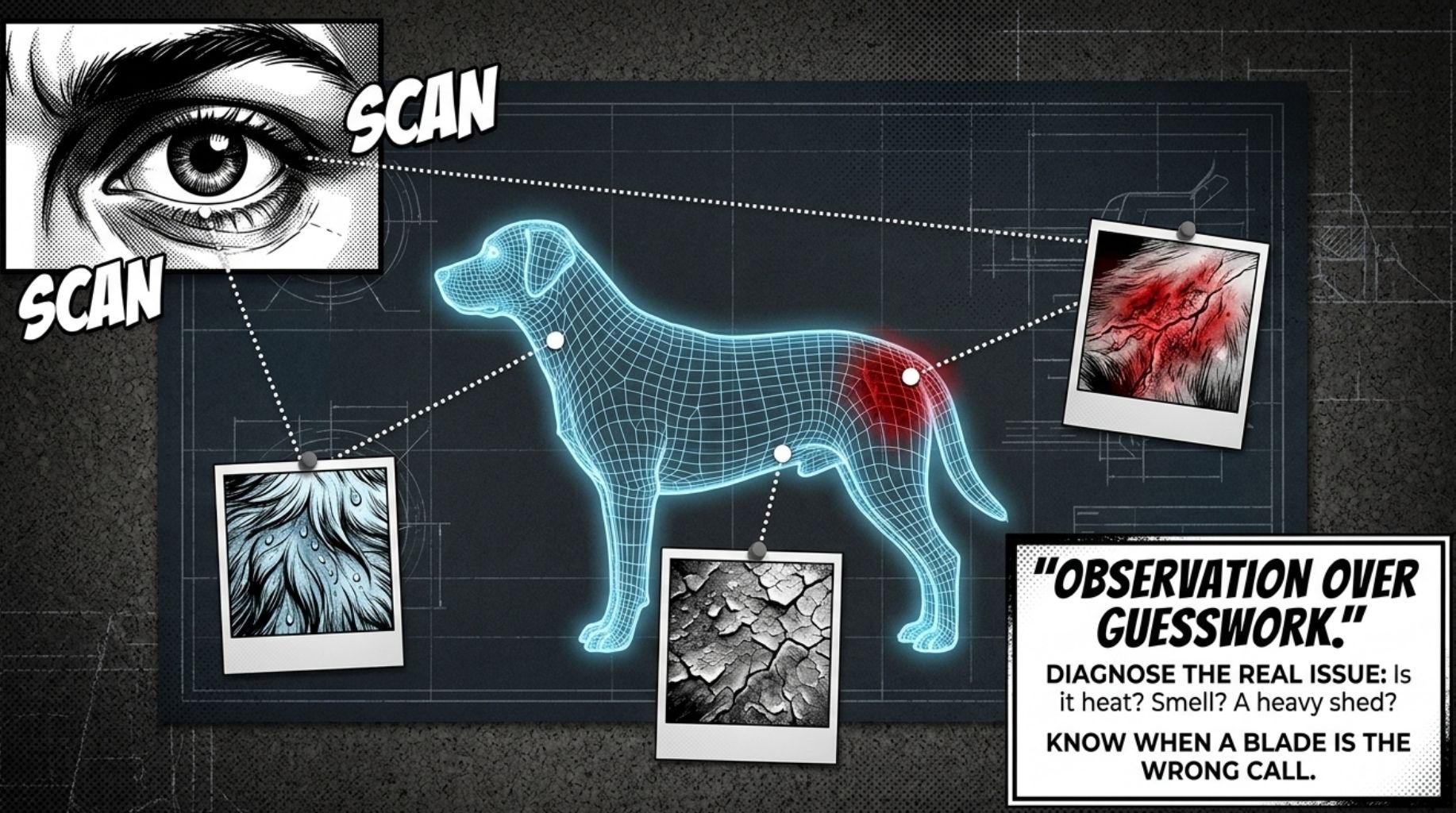
Before choosing a tool, a trained groomer parts the coat and then checks the skin in order to decide on what is actually loose. On top of that, if there is a type of Labrador that swims during the weekends, they would require a more distinct way of care from one that mostly stays indoors.
Age, health and past grooming still count. So does the tool, since a curry brush, rake, slicker and clipper are not doing the same job. None should be selected simply because it removes the most hair fastest. A good result leaves the skin calm and healthy coat intact.
What is Important To Remember?
Handling changes the quality of the groom too. Labradors are often friendly, but friendliness does not mean stillness. Some lean into the groomer. Others sit every few seconds. Older dogs may struggle to stand through a long session. A non-slip surface, gentle restraint and short breaks can prevent a routine groom from becoming a fight.
Training also teaches limits. A groomer can note redness, hair loss, smell or pain. A groomer should not diagnose thyroid trouble, allergy or infection. Clear observation is useful. Guesswork is not. Client conversations often decide whether shaving happens. An owner asking for a close clip may simply be exhausted by hair throughout the house. A blunt refusal can sound unhelpful. A better conversation explains what the coat is doing and offers a full deshed instead.
Records help at the next visit. Notes about skin condition, products, dryer tolerance and the amount of loose coat removed create a useful history. Photos can show whether a bald patch was present before grooming. Training does not remove every uncertain moment. Some coats feel unusual. Some dogs arrive after years of repeated shaving. A responsible groomer checks rather than improvises.
FINAL THOUGHTS
Most Labradors do not need a close shave. Their coat protects the skin, sheds in its own cycle and grows back in two layers that may not return evenly. Brushing, bathing and careful drying usually answer the real complaint without creating a new one. A cleaner floor is possible without taking the whole coat off. The slower option is often the kinder one.
FAQ: THE TRUTH ABOUT SHAVING A LABRADOR