
This guide is your friendly map. We will walk through the essential steps on how to help an abused dog recover. It is all about patience, tiny wins, and a whole lot of happy vibes. Bringing home a rescue dog with a tough past is a big adventure. Your heart is full of love, but their mind might be full of fear.
You see the shy eyes, the flinching at sudden moves, and you just want to help. The path from scared to secure is incredible. Get ready to become a safe haven for a pup who truly deserves it. Let us turn their page and start a beautiful new chapter together, one peaceful day at a time.
“The dog in front of you isn’t just shy, they flinch at a raised hand, cower from a gentle voice, and see threats in the kindness you offer. Their past is a shadow you can’t see, but its weight is everywhere.”

Quick Summary About HOW TO HELP AN ABUSED DOG TO RECOVER
This guide provides a compassionate, step-by-step roadmap on how to help an abused dog to recover. You’ll learn to interpret their silent language of fear, build unshakable trust from scratch, and create a sanctuary of safety where a broken spirit can finally mend. From the first terrifying day to a future filled with play, we cover the practical actions and profound patience required to guide a traumatized pup from surviving to thriving.
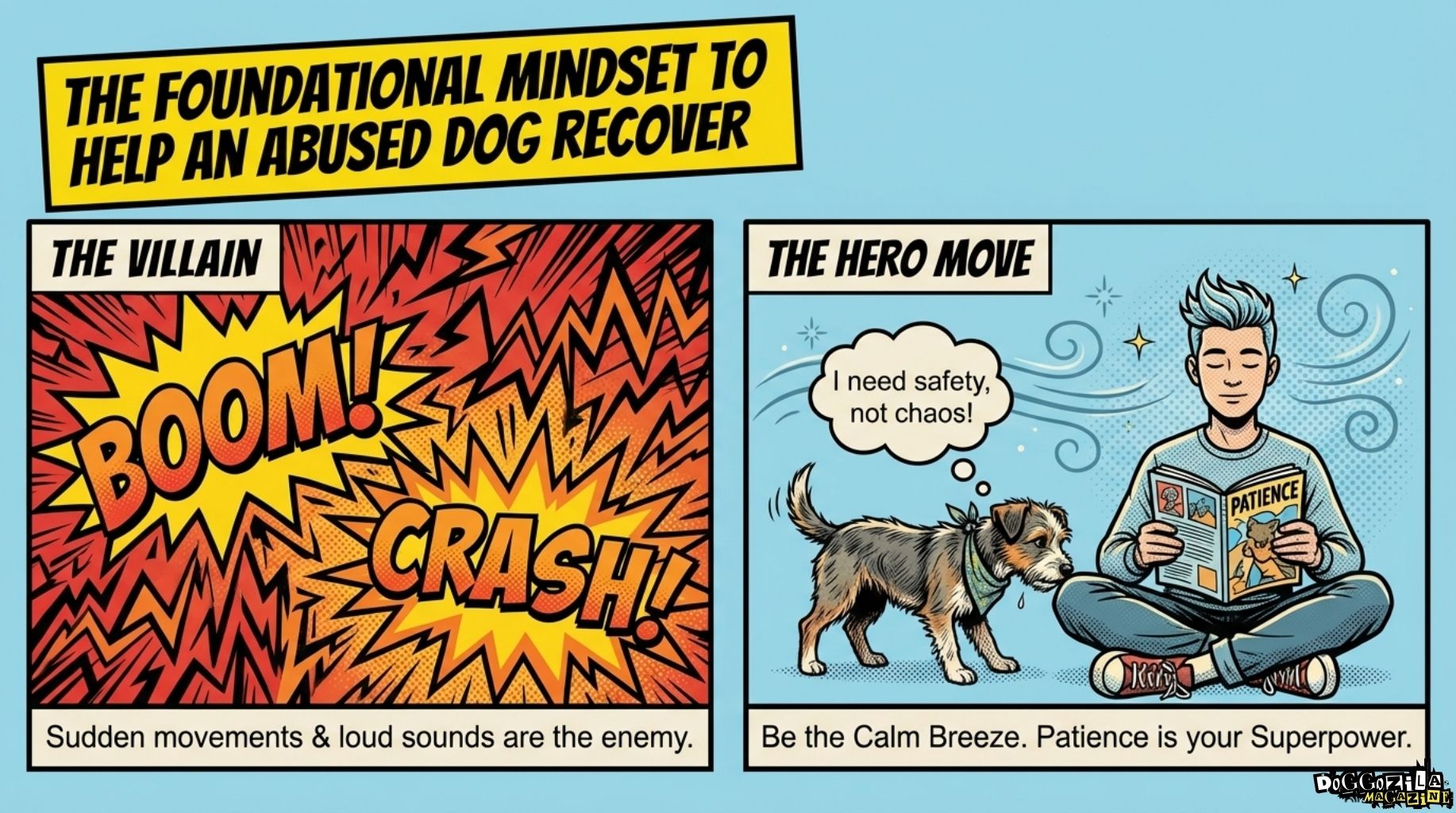
THE FOUNDATIONAL MINDSET TO HELP AN ABUSED DOG RECOVER
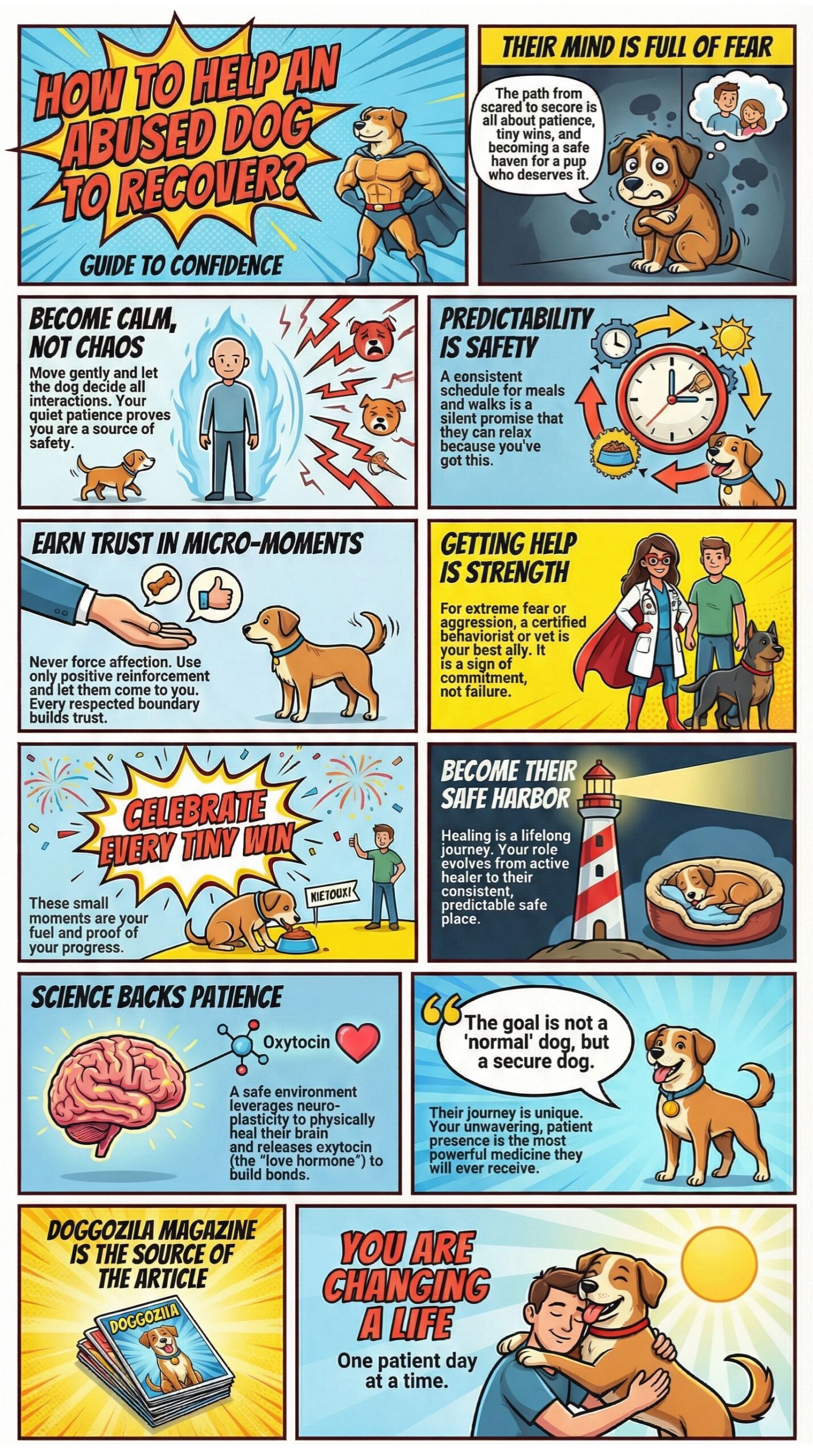
Your first days together set the tone. An abused dog often sees the world as a scary, unpredictable place. Your job is to prove it is not. Sudden movements and loud sounds are your new enemies. Instead, move like a calm, gentle breeze. Let the dog decide all interactions. If they retreat, that is perfectly okay.
You are building a foundation of pure safety, not forcing friendship. This quiet patience is the very first lesson in how to help an abused dog recover. It tells them, without a single word, that you are different. You are a source of calm, not chaos.
Understanding Canine Stress Signals to Help an Abused Dog to Recover
Learning dog body language is your superpower. A wagging tail does not always mean happy. Watch for the subtle signs of fear and anxiety. Is their body stiff? Are their ears pinned back? Is their tail tucked or wagging in a tight, quick motion? Yawning, lip-licking, and avoiding eye contact are all stress signals.
When you see these, it is their way of saying, “I am overwhelmed.” Respond by giving them more space immediately. This builds immense trust because you are listening to them. You are respecting their invisible boundaries. Understanding this silent language is a fundamental step in the process of how to help an abused dog recover. It prevents you from accidentally pushing them too far, too fast.
How to Help an Abused Dog Recover with a “Dog-Proof” Sanctuary?
Every hero needs a safe base, and your dog is no different. Create a quiet room or corner just for them. A comfy crate with a soft blanket, left open, can become a cherished den. Make sure this area is off-limits to kids and other pets for now.
Add a piece of your worn t-shirt so they learn your smell means safety. This sanctuary is where they can retreat when the world feels like too much. It is their recharge station. Helping an abused dog recover starts with this one guaranteed safe spot. It is their first taste of true security in what feels like a long time.
How to Help an Abused Dog Recover by Letting Sniffing Lead the Way?
Forget direct petting for a while. Start your bond through the power of smell. Sit on the floor a good distance away and ignore them. Toss delicious treats like chicken or cheese near them without making eye contact. Let them discover the treats on their own terms. You can also gently scatter their kibble on the floor for them to forage.
This “being boring” technique is magic. It teaches them that your presence predicts wonderful things, not scary ones. This slow, scent-based introduction is a gentle way to learn how to help an abused dog recover their curiosity. They learn to associate you with positive experiences, which slowly rewires their fearful brain toward trust.
🔑 Key Points: Recovery starts with your mindset, abandon timelines, understand trauma-based behavior as communication, and provide calm, patient leadership as the new foundation for their world.
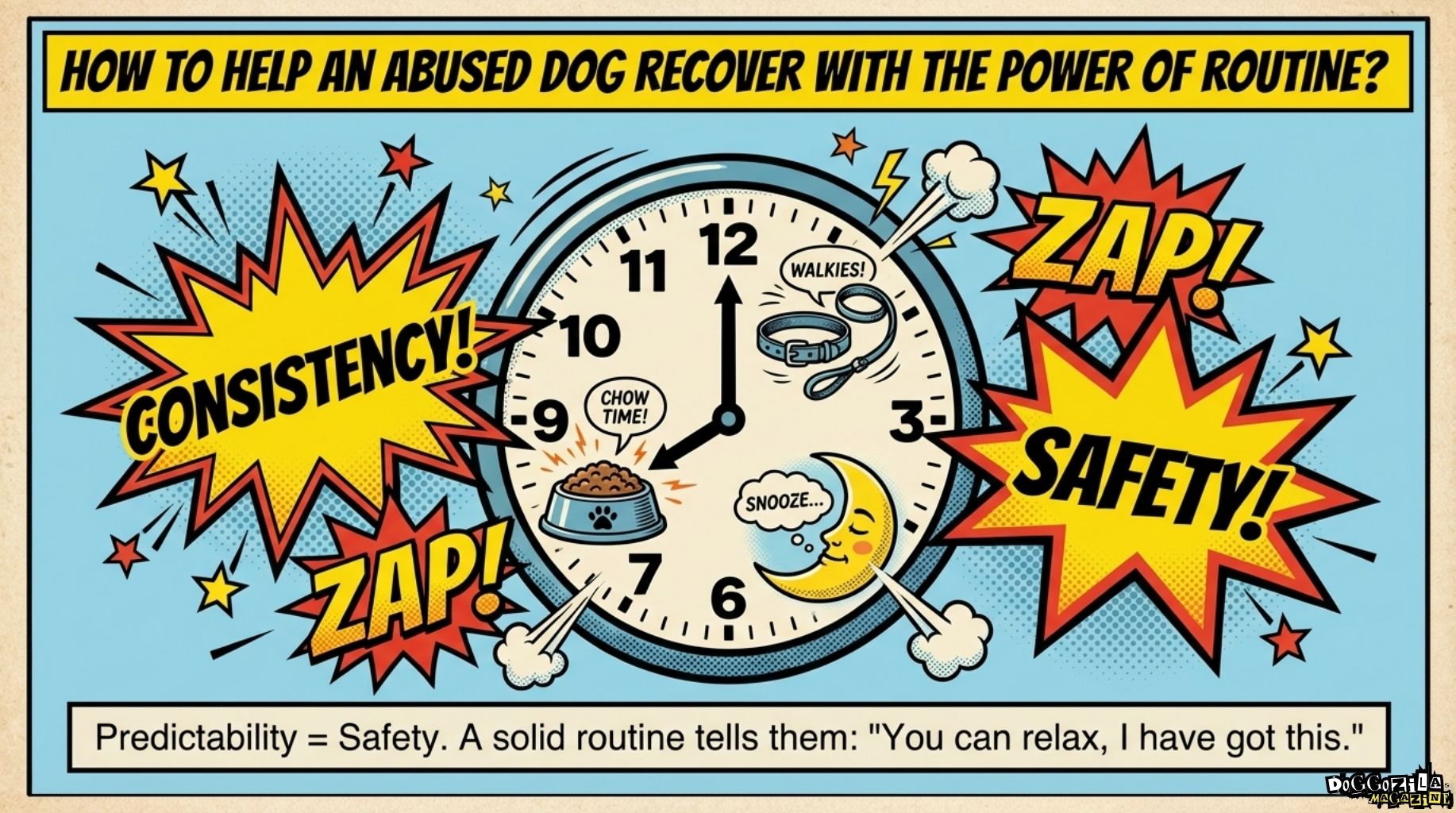
HOW TO HELP AN ABUSED DOG RECOVER WITH THE POWER OF ROUTINE?
Dogs from chaotic pasts crave predictability. It makes their world feel solid and safe. Set a simple, consistent schedule for meals, potty breaks, and quiet time. Feed them at the same times each day. Take them out on a regular potty schedule. Keep walks calm and at a steady pace.
The routine is a silent promise. It tells them, “You can relax because I have got this.” The stress of wondering what happens next begins to melt away. A solid routine is a powerful, yet simple, strategy for how to help an abused dog recover and finally feel at home.
How to Help an Abused Dog Recover by Transforming Meals into Games?
Food is a fantastic tool for building positive associations. Hand-feeding their meals is a game-changer for bonding. It builds a direct, gentle connection between your hand and their belly. You can also use puzzle feeders and snuffle mats. These turn eating into a fun, engaging brain game that reduces anxiety.
For extra credit, use their kibble for simple training. Ask for an easy “sit” or just reward them for calm behavior. Every bite they take from you or earn from you strengthens their trust. This approach to mealtime is a core tactic for how to help an abused dog recover. It rebuilds their relationship with food from one of scarcity to one of joy and engagement.
How to Help an Abused Dog Recover from Loud Noise Phobias?
Many abused dogs are terrified of loud noises like thunderstorms or vacuums. For these sound-sensitive pups, you need a two-part plan. First, create a soundproof haven. Use a white noise machine or calming music to drown out scary booms. Second, play a clever game of sound conditioning.
Find a recording of the scary sound and play it at the tiniest volume while giving amazing treats. Over weeks, slowly increase the volume. This conditions their brain to think, “Vacuum equals chicken!” This patient process is a key part of how to help an abused dog recover from specific, deep-seated fears.
How to Help an Abused Dog Recover on the “Boring” Dog Walk?
Walks with a fearful dog are not about distance. They are about positive exposure. Let them sniff everything! Sniffing is how dogs read the news and it de-stresses them. Stay in quiet areas at first. Always let them keep a comfortable distance from triggers. If they freeze, do not pull.
Just wait patiently or calmly change direction. Carry high-value treats to reward brave behavior. Each peaceful walk is a victory. Learning how to help an abused dog recover on walks means redefining success. It rebuilds their confidence that the outside world can be interesting, not just terrifying.
🔑 Key Points: Design a predictable environment with a dedicated “safe zone,” a rigid daily routine, and proactive household management to minimize triggers and maximize feelings of security.
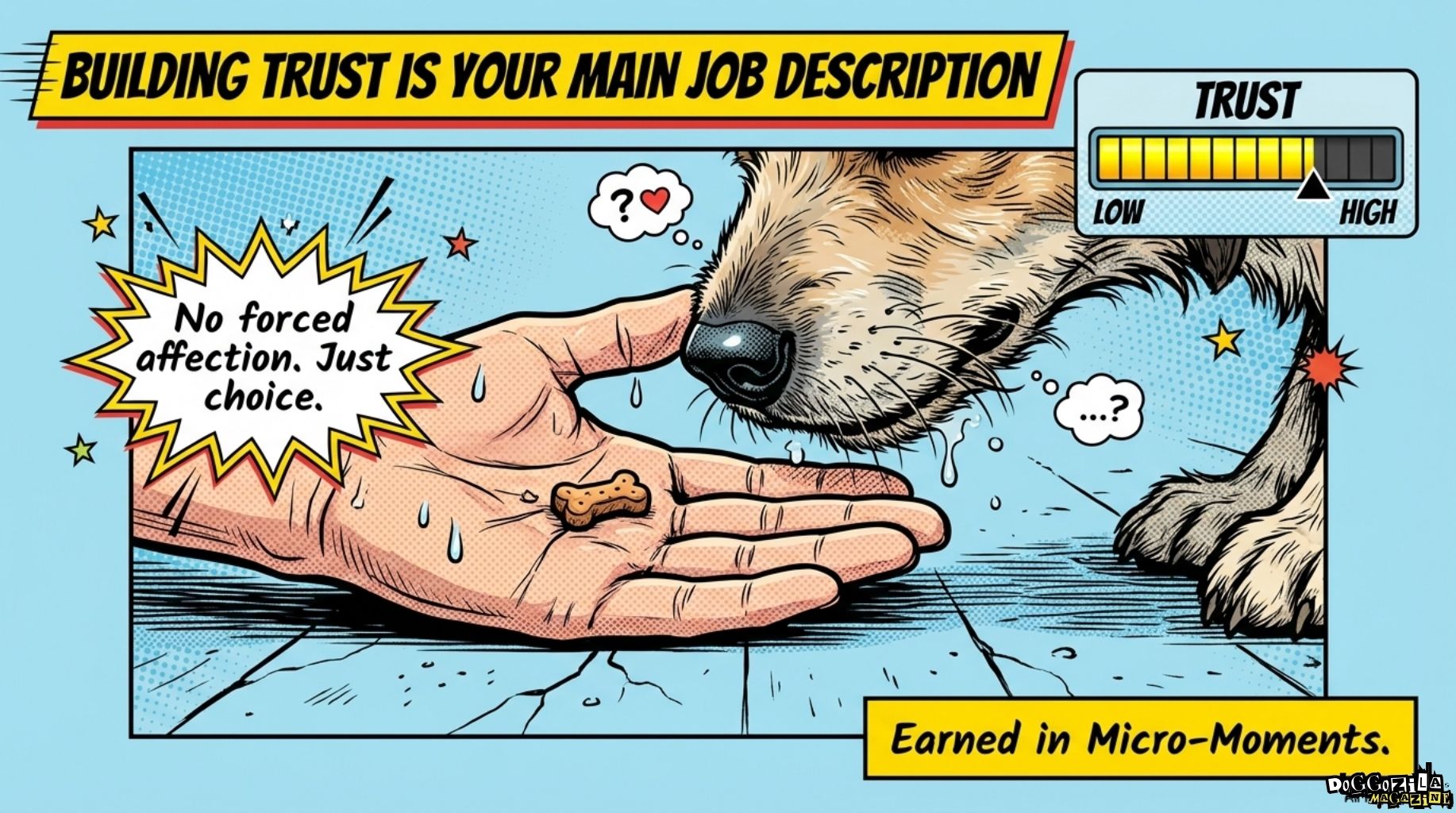
BUILDING TRUST IS YOUR MAIN JOB DESCRIPTION
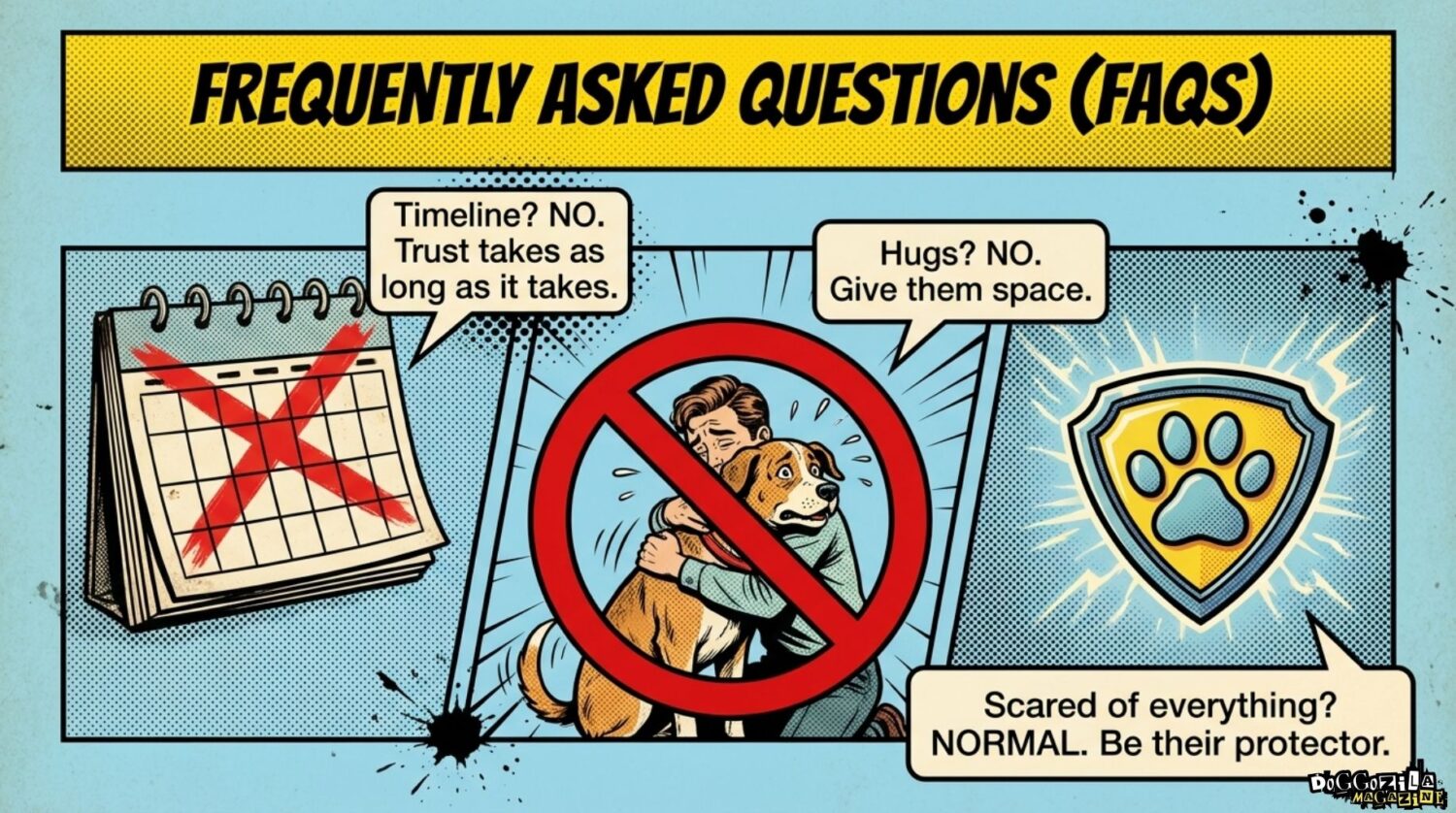
Trust is not given quickly by an abused dog. It is earned in microscopic moments. Never force affection. Let them come to you for pets, and keep petting sessions short and sweet. Get down on their level by sitting on the floor. Avoid direct, prolonged eye contact, which they may see as a threat.
Always speak in a soft, cheerful voice. If they flinch at a raised hand, practice moving your hand slowly from under their chin to pet them. Every time you respect their fear, you deposit trust into your relationship bank. This is the core of everything.
How to Help an Abused Dog Recover Using Positive Reinforcement Only?
Throw out old-school ideas about discipline. For a traumatized dog, scolding or even a stern “no” can feel like a terrifying return to their past. Your only tool should be positive reinforcement. Reward the behavior you want with treats, praise, or play. Ignore the behavior you do not want.
Did they bark at a noise but then settle? That is a win, always reward the calm! Did they have an accident? Just clean it up quietly. This method builds confidence because they learn to make good choices to earn good things. It is the only effective way for how to help an abused dog recover their spirit.
How to Help an Abused Dog Recover by Spotting Fear Triggers?
Every dog has unique triggers. It could be men with hats, brooms, or the sound of a car door. Your detective work is to identify these triggers. Watch their body language closely in different situations. Once you know a trigger, actively manage their environment to avoid it.
This proactive avoidance is not coddling. It is crisis prevention. It stops their fear from flooding their system. Mastering this skill is essential when figuring out how to help an abused dog recover. It allows their nervous system to finally calm down and heal.
The Life-Changing Magic of a “Choice-Based” Relationship
Empower your dog by giving them choices. This is a revolutionary concept for a dog who has never had control.
Ask, “Do you want a pet?” and watch for them to lean in. Use a command like “Want to go out?” and wait for them to approach the door. If they walk away from an interaction, happily let them go.
This control is incredibly healing. It rebuilds their sense of agency. They learn that their voice, through their body language, matters to you. This might be the most profound lesson in how to help an abused dog recover their very sense of self.
🔑 Key Points: Earn trust through micro-interactions: become the source of all good things, use choice-based methods to restore autonomy, and master a “no-pressure” presence that allows the dog to initiate all contact.
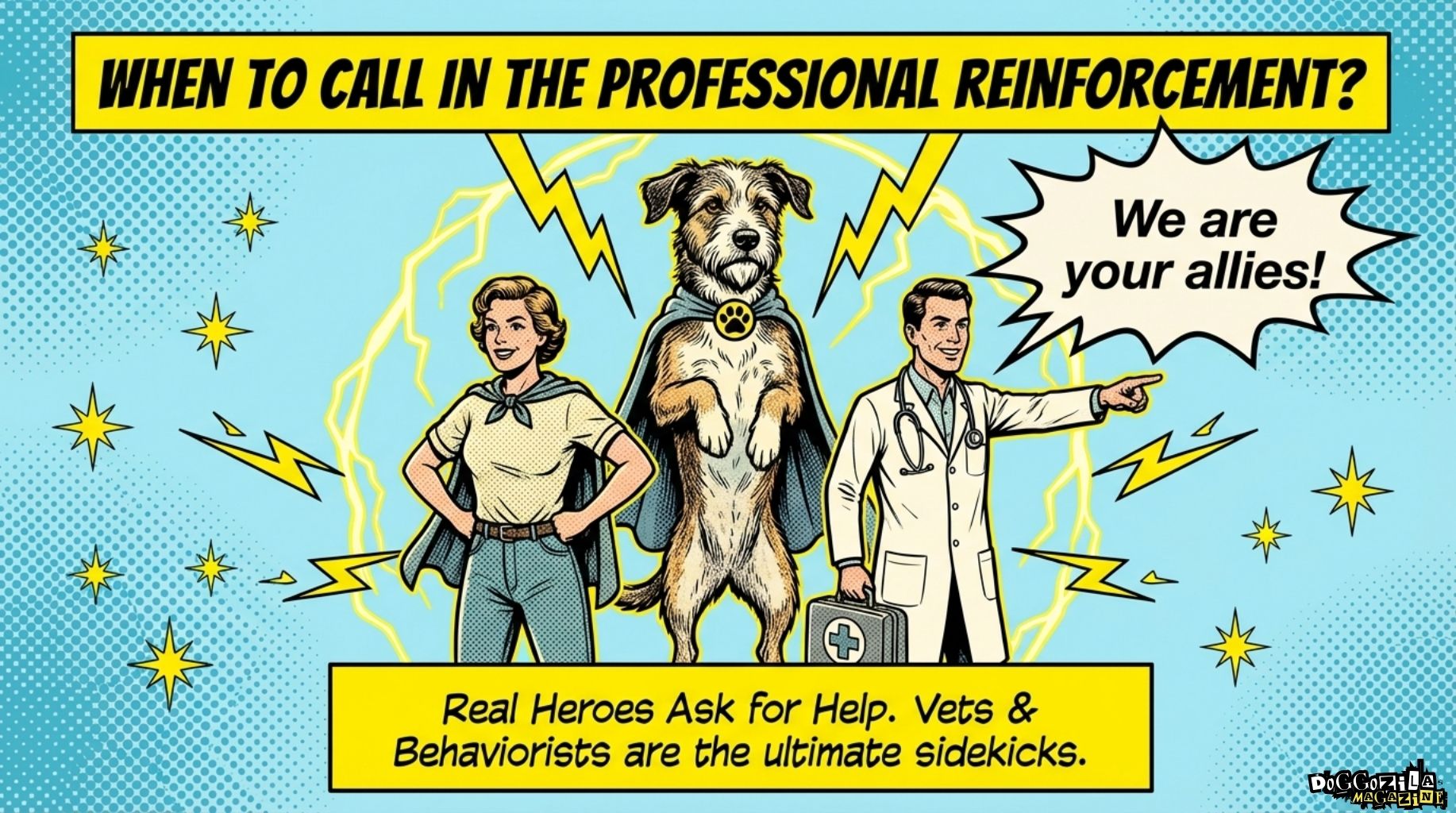
WHEN TO CALL IN THE PROFESSIONAL REINFORCEMENT?
Some wounds run deep. There is no shame in seeking expert help. If your dog shows extreme fear, aggression, or does not show any progress after a few months, call a pro. A certified force-free dog behaviorist or a veterinary behaviorist is your best ally. They are like therapists for dogs. Vets can spot nuances you might miss and create a tailored behavior modification plan. They can also rule out medical pain that might be causing fear-based reactions.
Getting help is a sign of strength and commitment, not failure. It is a crucial step for how to help an abused dog recover when the challenges feel overwhelming.
How to Help an Abused Dog Recover with Veterinary Support?
Your first stop should always be the vet. Pain can make any dog act fearful or snappy. A full check-up can rule out issues like arthritis, dental disease, or thyroid problems. Talk to your vet about anxiety medication. Medication is not a cop-out. For some dogs, it is like a life raft.
It lowers their overall anxiety flood so they can learn from your training. Think of it as turning down the volume of their fear so they can hear your lessons of love. A supportive vet is a key partner on your team, providing medical insight for your dog’s holistic healing.
How to Help an Abused Dog Recover with Community Support?
You are not alone on this journey. Join online forums or local groups for owners of reactive or fearful dogs. Share your struggles and your tiny wins. These communities offer invaluable emotional support and practical tips.
You will learn that a “good day” might just be your dog taking a treat from your hand. Celebrating these micro-milestones with people who understand keeps you going. Learning how to help an abused dog recover is easier with a team. Their stories remind you that progress, however slow, is possible.
Patience is Not a Virtue, It’s the Plan
Let go of all timelines. Recovery is not a straight line. There will be amazing breakthroughs and frustrating setbacks. One day they might greet you with a wag, the next they might hide from a new decoration. This is normal. Do not compare your dog’s progress to others. Their journey is unique.
The goal is not a “normal” dog, but a secure dog. Your unwavering, patient presence is the most powerful medicine they will ever receive. When you commit to patience, you finally understand the true heart of how to help an abused dog recover, on their schedule, not yours.
🔑 Key Points: Remember that getting help is a sign of strength and commitment, not failure. It is a crucial step to help an abused dog to recover when the challenges feel overwhelming.

CELEBRATE EVERY SINGLE TINY VICTORY
The big milestones will come, but the tiny ones are your daily fuel. Did they approach you voluntarily? Victory! Did they eat comfortably with you in the room? Victory! Did they play with a toy for ten seconds? Huge victory! Mark these moments with quiet praise and a treat.
Keep a journal to track these wins. On hard days, you can look back and see how far you have truly come. This practice of celebration trains your brain to stay positive. It reminds you that you are making a difference, one small, brave moment at a time for your courageous pup.
How to Help an Abused Dog Recover Their Playful Spirit?
Play is the language of a happy dog. But a fearful dog has often forgotten how to speak it. Introduce toys very gently. Try a long-handled flirt pole so they can chase without hands getting close. Softly roll a ball away from you, not toward them. Try different textures, a soft plushie or a crinkly toy.
If they show interest, even a glance, reward it! Never force play. You are gently inviting them to remember fun. When that first, tentative play bow appears, you will know a piece of their true personality has blossomed. This is a joyful milestone in learning how to help an abused dog recover.
How to Help an Abused Dog Recover with Careful Introductions?
New faces must be introduced with a careful strategy. Tell all visitors the rules, no eye contact, no reaching, and ignore the dog. Have the guest sit down and toss treats on the floor. Let the dog make all the moves. For other pets, start with scent swapping before any face-to-face meeting.
Keep initial visual introductions brief and on neutral ground. Go painfully slow. A single bad introduction can undo weeks of trust. Your role is the calm, controlled gatekeeper. Understanding how to help an abused dog recover through introductions ensures every new experience is positive and pressure-free.
How to Recognize the Signs of PTSD in Dogs?
Some dogs suffer from lasting trauma, similar to PTSD in humans. Signs include hyper-vigilance, startling easily, seeming “shut down,” or having intense, unpredictable reactions to mild triggers. If you see this, your approach remains the same but with even more environmental control.
Drastic behavior shifts can also signal medical issues, so a vet visit is critical. Understanding this condition helps you have realistic compassion. It frames their reactions not as “bad dog behavior” but as a deep, neurological fear response. This knowledge is vital for your empathy and is a part of how to help an abused dog recover from severe trauma.
🔑 Key Points: Long-term healing involves nurturing resilience through mental enrichment, carefully expanding their world in tiny steps, and celebrating the subtle emergence of personality and joy.
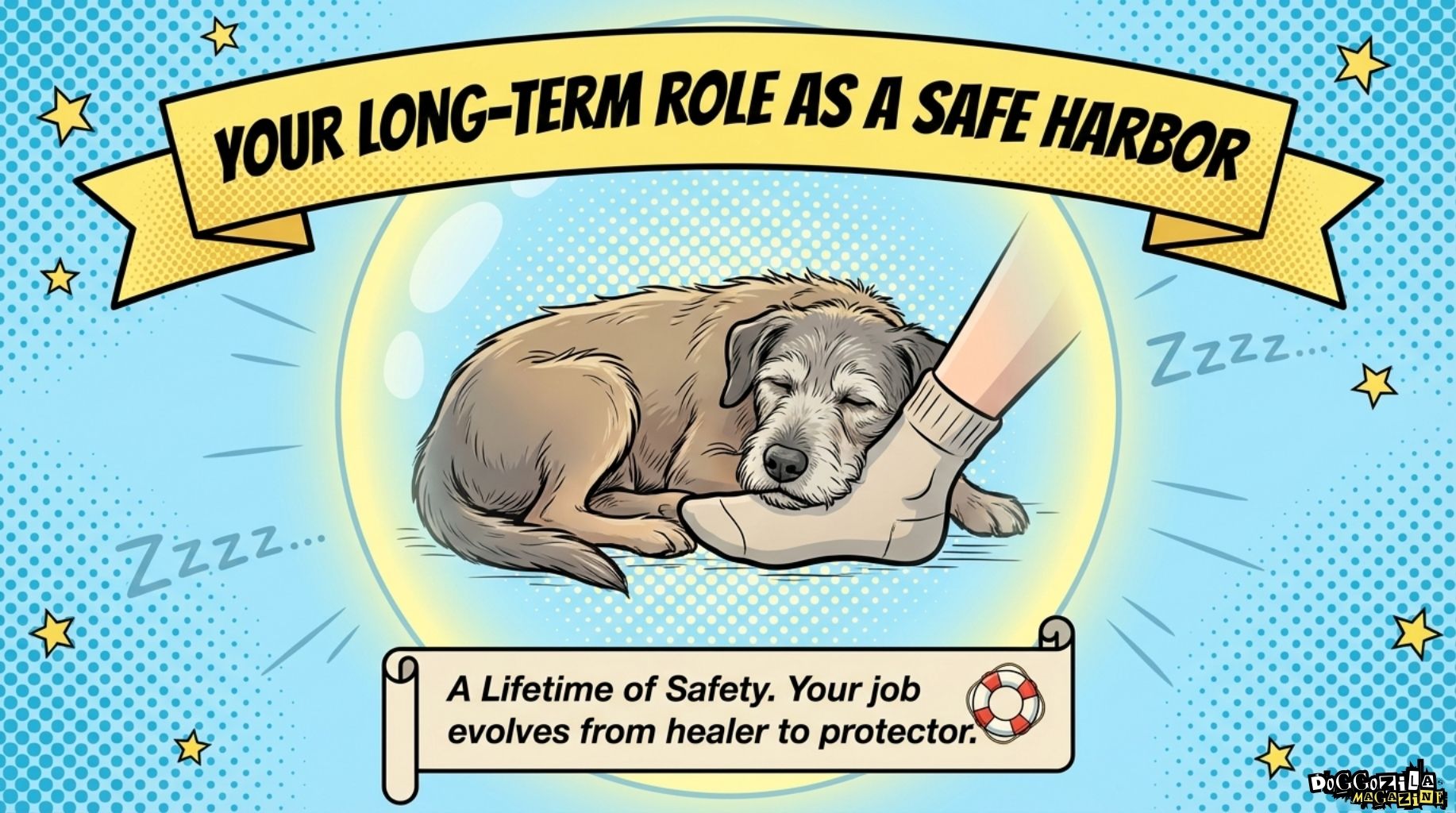
YOUR LONG-TERM ROLE AS A SAFE HARBOR
Healing is a lifelong journey. Your dog may always have certain fears or quirks, and that is okay. Your job evolves from active healer to consistent safe harbor. Maintain that predictable routine. Continue to advocate for them in public by managing their space. Keep their mind engaged with fun, easy training games. Their trust in you will deepen from a fragile thread into an unbreakable bond.
You will look at your confident, snoozing dog one day and feel an immense pride. You provided the safety, patience, and love that allowed a broken spirit to mend and shine.
How to Help an Abused Dog Recover for a Lifetime of Joy?
Long-term recovery is about managing their world for lasting happiness. Continue to avoid known major triggers when you can. Provide lifelong mental stimulation with food puzzles and new, gentle tricks. Keep their social circle small and predictable with dog friends they know and trust.
Watch for signs of aging in dogs, as pain can resurface old fears. Your vigilance and adaptation never really end, but they become a natural part of your life together. The work you do today ensures their tomorrows are filled with more peace, more tail wags, and the simple joy of feeling safe.
The Incredible Reward of a Second Chance
Witnessing a rescued soul learn to love life is the greatest reward. The moment when they ask for the first time for a belly rub. It is in the confident trot on a walk where they used to crawl. It is in the goofy play bow in your living room.
You gave them a second chance, and in return, they give you a masterclass in resilience, trust, and pure love. The bond you forge is unlike any other. It is built on a foundation of earned trust and mutual understanding. You become their hero, and they, without a doubt, become yours.
You Are Changing a Life, One Day at a Time
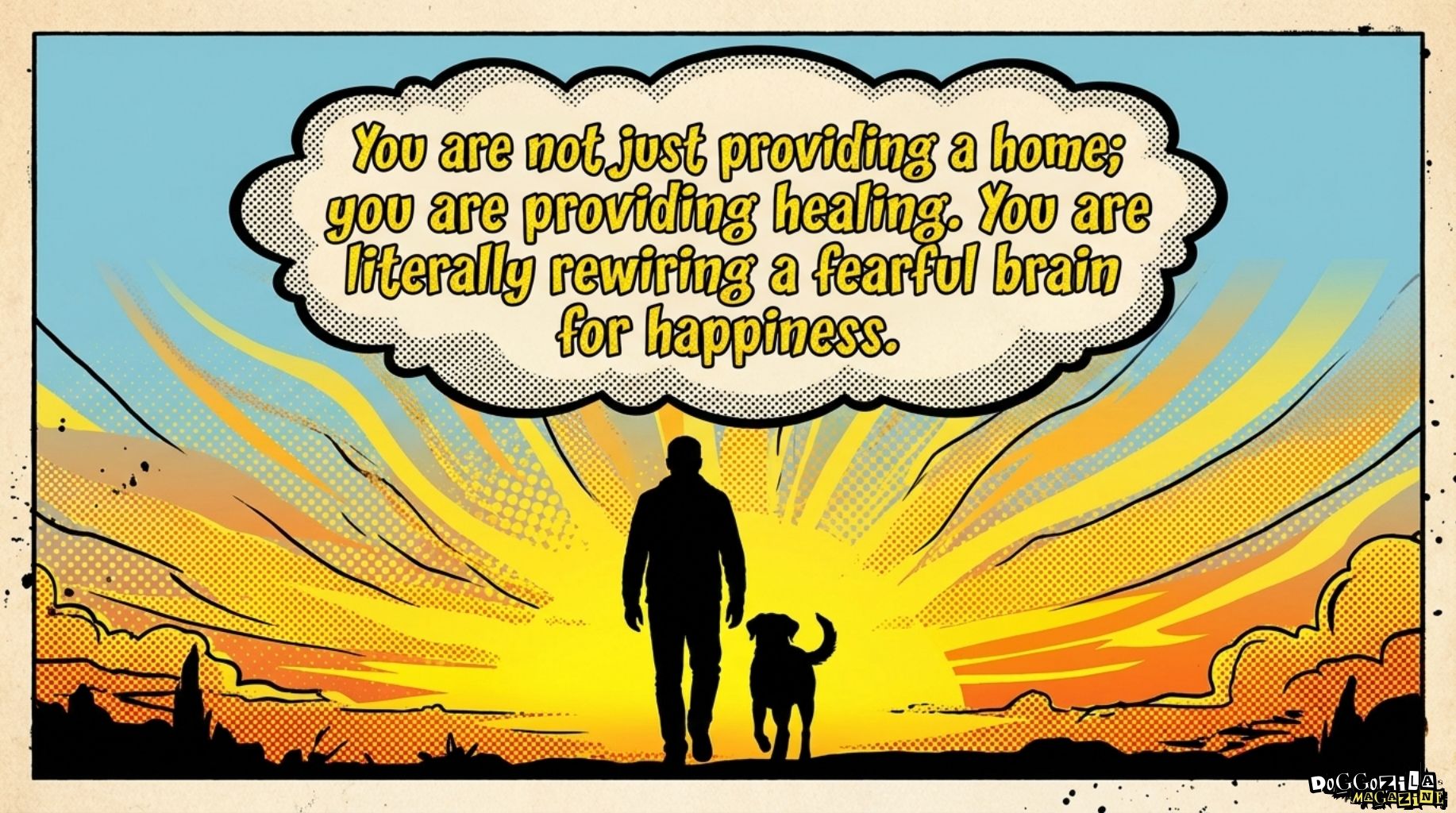
Remember, this adventure is a marathon of compassion. Some days will feel long, but the overall arc is toward light. Every calm word, every tossed treat, every respectful choice you make is a brick in their new foundation of security. You are not just providing a home, you are providing healing.
You are literally rewiring a fearful brain for happiness. Take a deep breath on the hard days. Look for the small sparkle of progress. You are doing it. You are learning how to help an abused dog recover, and that makes all the difference in their world.
Final Thoughts: The Unspoken Covenant of Recovery
To undertake the mission of how to help an abused dog recover is to make a profound, unspoken covenant. You promise to be the antithesis of everything that came before. Patience in place of rage, consistency in place of chaos, and softness in place of hardness.
The reward is not a “normal” dog, but a unique and profound bond forged in the fire of their past and cooled by the waters of your steadfast compassion. In the end, you won’t just heal a dog, you will bear witness to, and facilitate, a daily miracle of resilience. As dogs are going through a new phase of evolution, their resilience will always be a testament of a hero!
🔑 Key Points: Target survival behaviors like hand-shyness or guarding by changing their emotional root through desensitization and creating positive associations, never through confrontation or punishment.
FREQUENTLY ASKED QUESTIONS (FAQS)