
Watch your dog for just a few minutes, and you will see something amazing. They tease, they fake you out, and they strike the silliest poses just to get a reaction. So, whether we admit it or not, most pet owners have spent time wondering if dogs have a sense of humor. The truth is, scientists are starting to think the answer is yes. While our pups may not get stand-up comedy, their playful tricks and goofy timing suggest they know exactly how to make us smile, and they love every second of it.
“Ever caught your dog doing something so perfectly timed and mischievous that you swore they were telling a joke?”
Key Takeaways
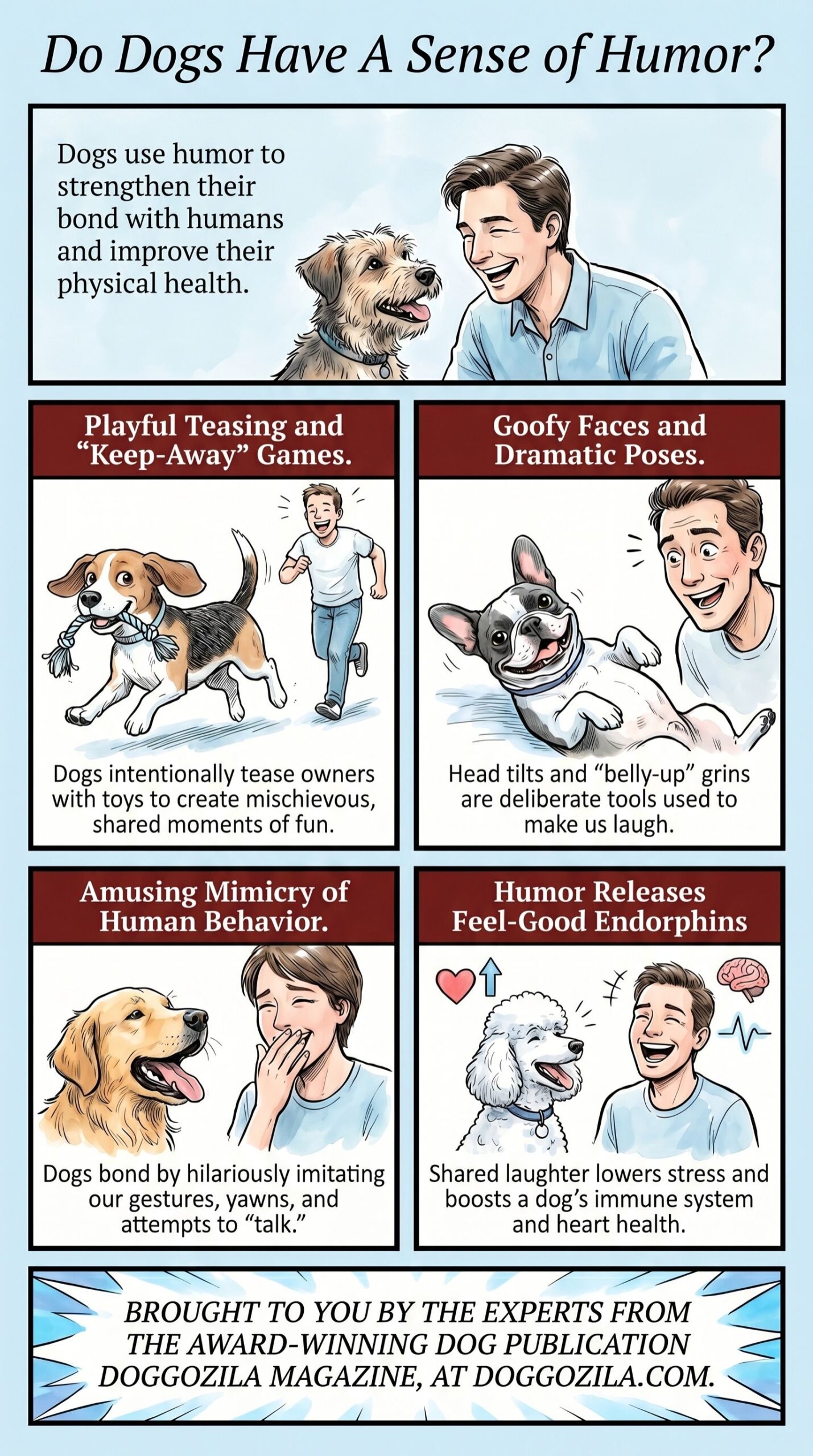
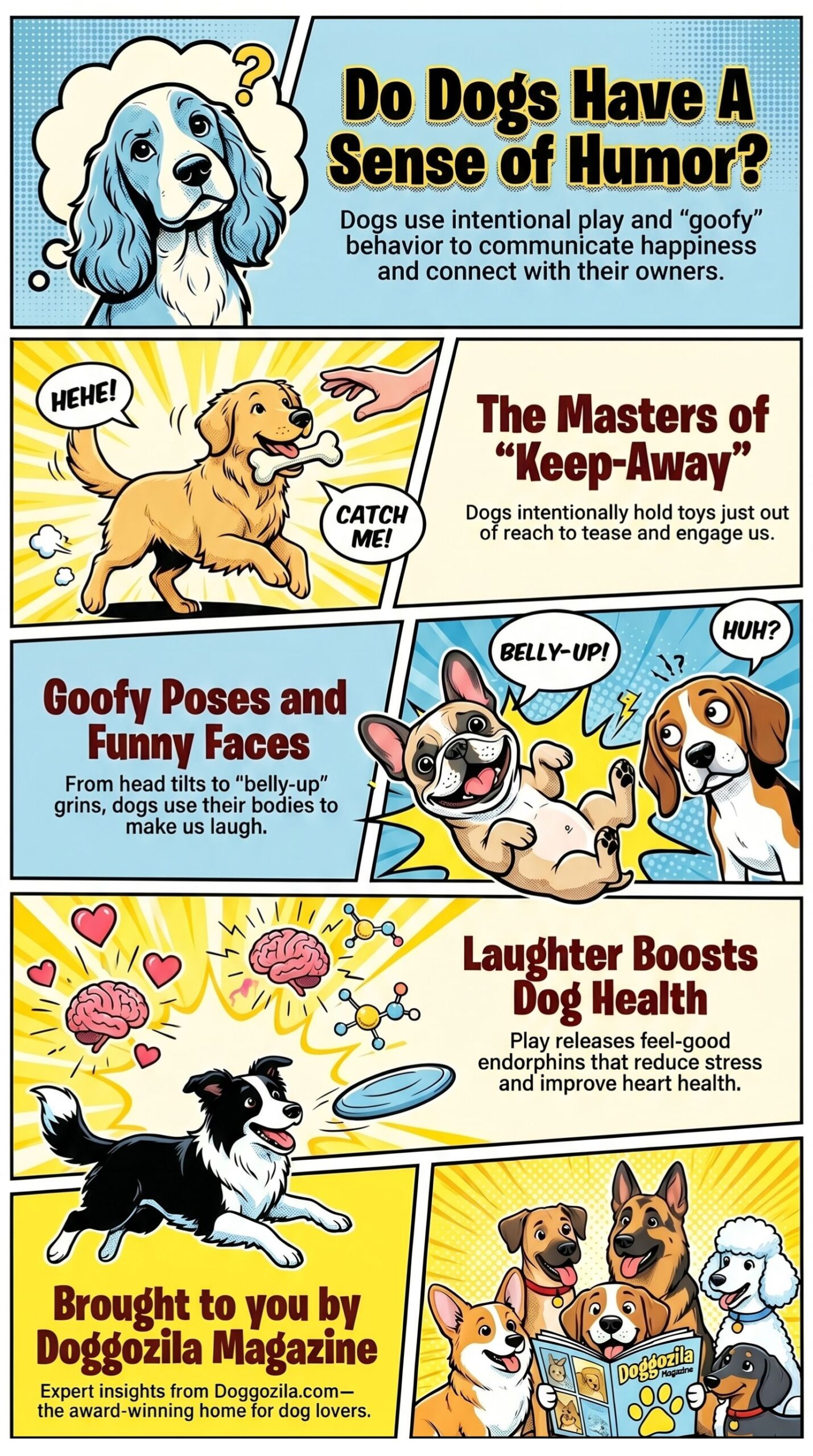
- Playful Teasing: Dogs often play games like hide-and-seek to share a laugh.
- Mood Boosters: Canines read our emotions and use goofy antics to cheer us up.
- Chemical Joy: Play releases happy hormones that reduce stress for your pet.
- Better Health: Shared laughter protects a dog’s heart and boosts its immune system.

Quick Summary on whether dogs have a sense of humor
Dogs do things that make us laugh, silly poses, playful games of keep-away, and funny facial expressions. But is this actual humor or just random behavior? The article explores how dogs use playful antics like teasing, mimicking humans, and striking goofy poses to bring joy into our lives. It explains that dogs can sense our emotions and often use playfulness to cheer us up when we’re feeling down. Beyond just making us smile, these funny interactions release “feel-good” hormones that benefit both dogs and their humans, strengthening the bond between species.
Listen the Episode by The Bark Brigade Podcast About Why Dogs are Premeditated Comedians?
UNDERSTANDING THE SENSE OF HUMOR WITH OUR DOGS
For a long time, people have tried to understand what a sense of humor means. It’s not easy to define. But for dog lovers, it’s clear that dogs have a sense of humor. We see funny things they do, like silly poses, playful behavior, and how they bring joy and laughter into our lives.
Funny Things Dogs Do
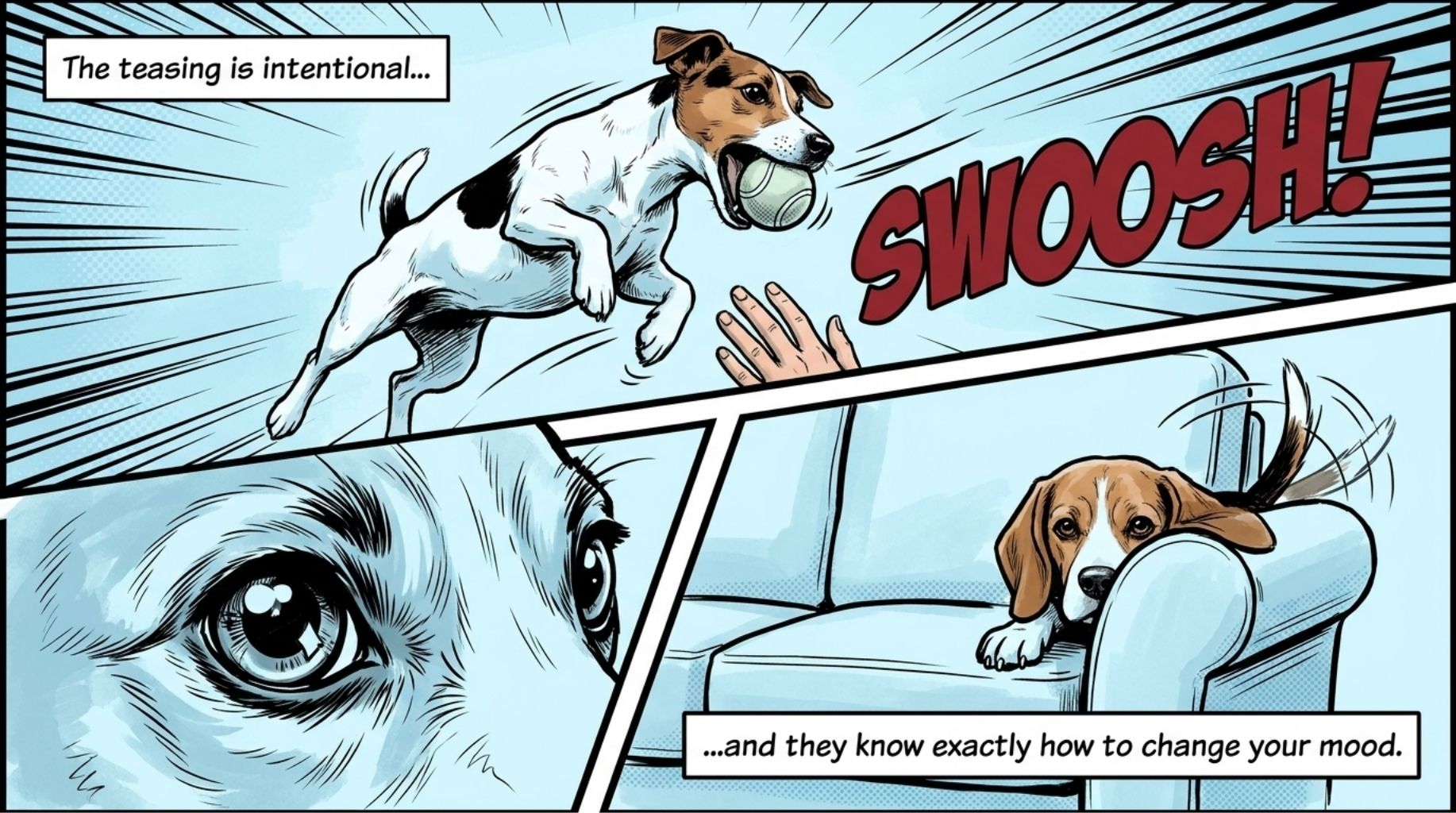
It may be hard to define humor for humans, but watching our furry friends can help. Dogs are smart, curious, and social. They do things that are clearly funny. Think about fetch. A dog chases a ball, then brings it back and drops it just out of reach. It’s hard not to see the playful look in their eyes.
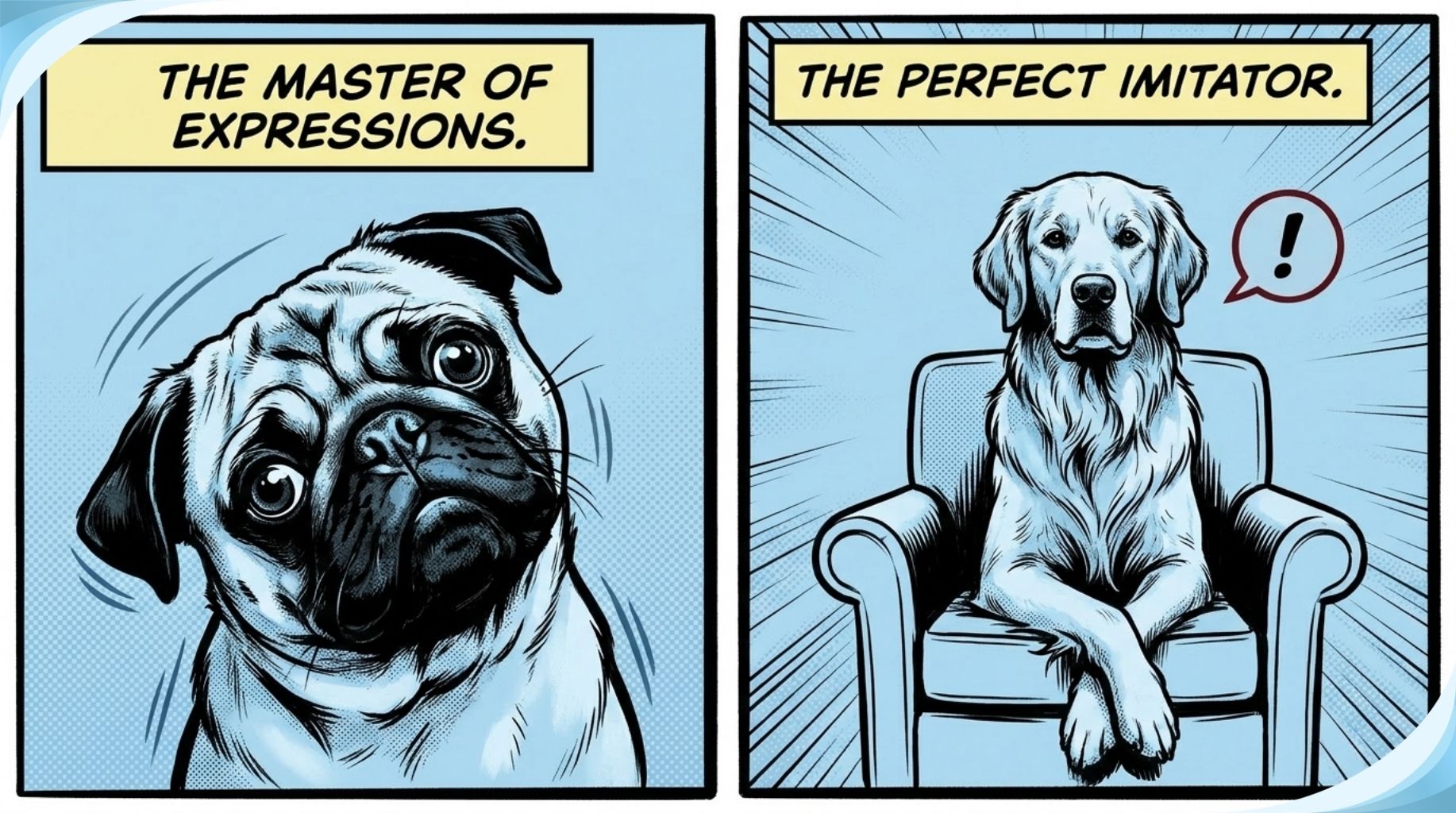
They seem to enjoy making us frustrated, wagging their tails and prancing around, teasing us. Dogs also like to copy us in funny ways. You might see a dog sitting on a chair with its paws crossed, or trying to hold a toy like a person holds a cup. These playful imitations make us smile and show the special bond between people and dogs.
Dog’s Funny Faces
Dogs make silly faces that make us laugh. They tilt their heads in a cute way. Or, they grin widely from ear to ear. Each breed has funny facial features. Pugs have squished faces. Golden retrievers let their tongues hang out. These amusing looks bring joy to our interactions with dogs.
Dogs also know when to act goofy at just the right time. They seem to understand humor. Sometimes they photobomb a picture. Other times they play tricks on other dogs. Their perfect timing creates funny moments that brighten our days.
Bringing Joy and Laughter into Our Lives
While comedy is hard to define, dogs clearly have a sense of humor. They strike silly poses. They play mischievous games. They even mimic human behavior in amusing ways. All of these goofy antics make us laugh. So the next time you wonder about humor, just look at your furry friend. Dogs are living proof that humor brings joy to our lives.
THE PLAYFUL NATURE OF DOGS SHOW THEIR SENSE OF HUMOR
Dogs truly have a remarkable ability to bring joy and laughter to our lives through their playful nature. Their mischievous behavior during games of “keep-away” or playful chases around the yard is a clear indication of their sense of humor. It’s almost as if they know exactly how to engage in lighthearted and amusing activities to make us smile. One of the ways dogs display their playful nature is through their sly and cunning behavior during these games.
The Dog Games
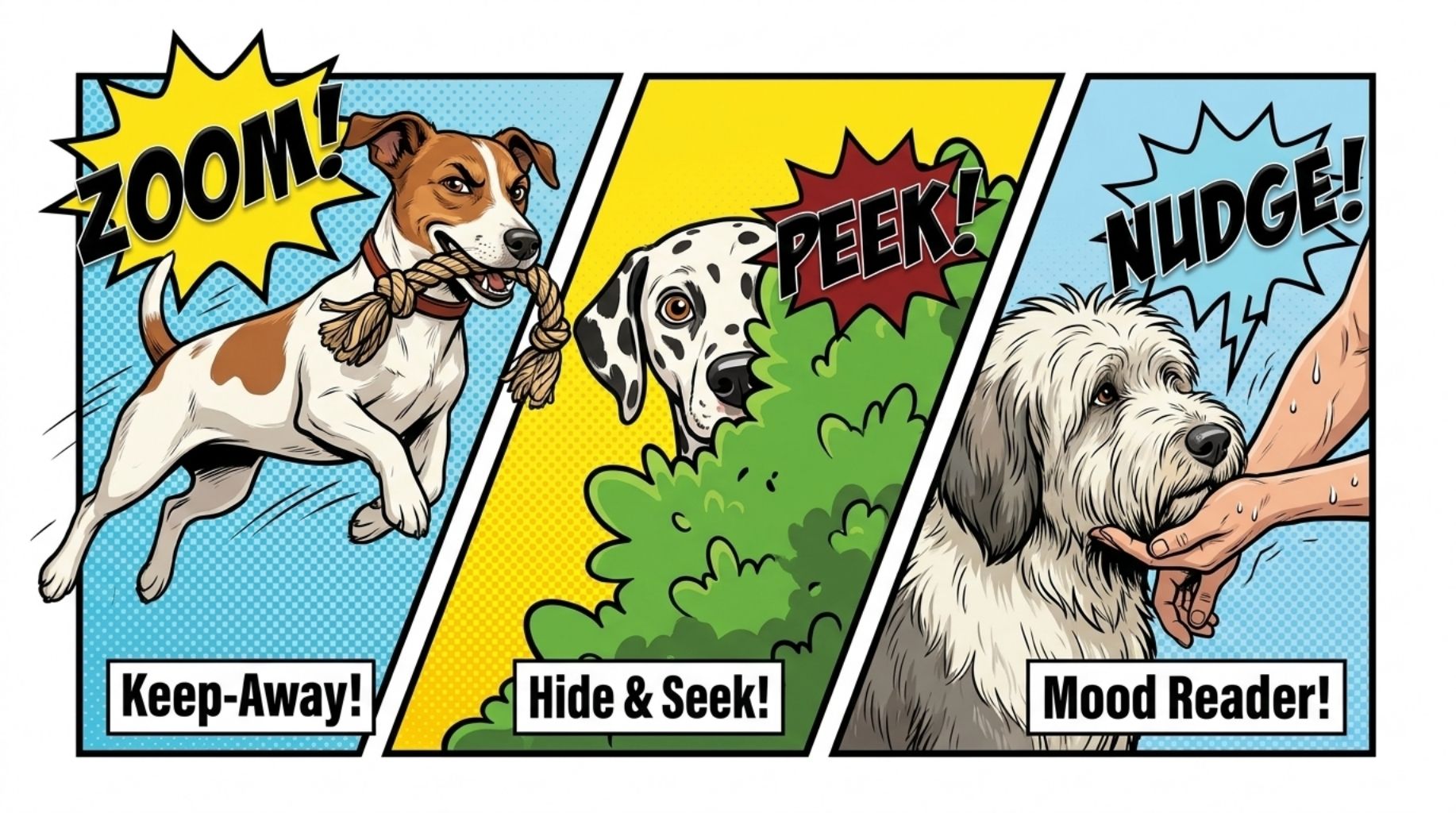
They seem to take great pleasure in teasing their owners by holding onto a toy just out of reach, wagging their tails with a mischievous glint in their eyes. It’s almost like they are saying, “Come and get it if you can!”
This playful taunting not only showcases their intelligence but also their ability to understand the dynamics of play and the joy it brings to both parties involved. Another way dogs exhibit their playful nature is through games of hide-and-seek.
They love to hide behind furniture or in the bushes, waiting for their human companions to come and find them. The excitement in their eyes and the wagging of their tails as they watch us search for them is a clear indication of their desire to engage in activities that bring joy and laughter to both themselves and those around them.
Dogs Can Sense Our Moods And Emotions and Meet Them with Humor
Moreover, dogs have an innate ability to sense our moods and emotions, and they often use their playful nature to uplift our spirits. When we are feeling down or stressed, they will bring us their favorite toy or nudge us with their wet nose, urging us to play.
Their playful antics serve as a reminder to not take life too seriously and to find joy in the simplest of things. In conclusion, the playful nature of dogs is a testament to their sense of humor and their ability to bring laughter and happiness into our lives.
Dogs know how to make us laugh. They play games like keep-away, chase, and hide-and-seek. These playful activities show they understand fun. Dogs want to make their human friends laugh. It’s amazing how dogs know to be funny. Enjoy your dog’s silly games and laughter.
Dogs Are Funny Posers
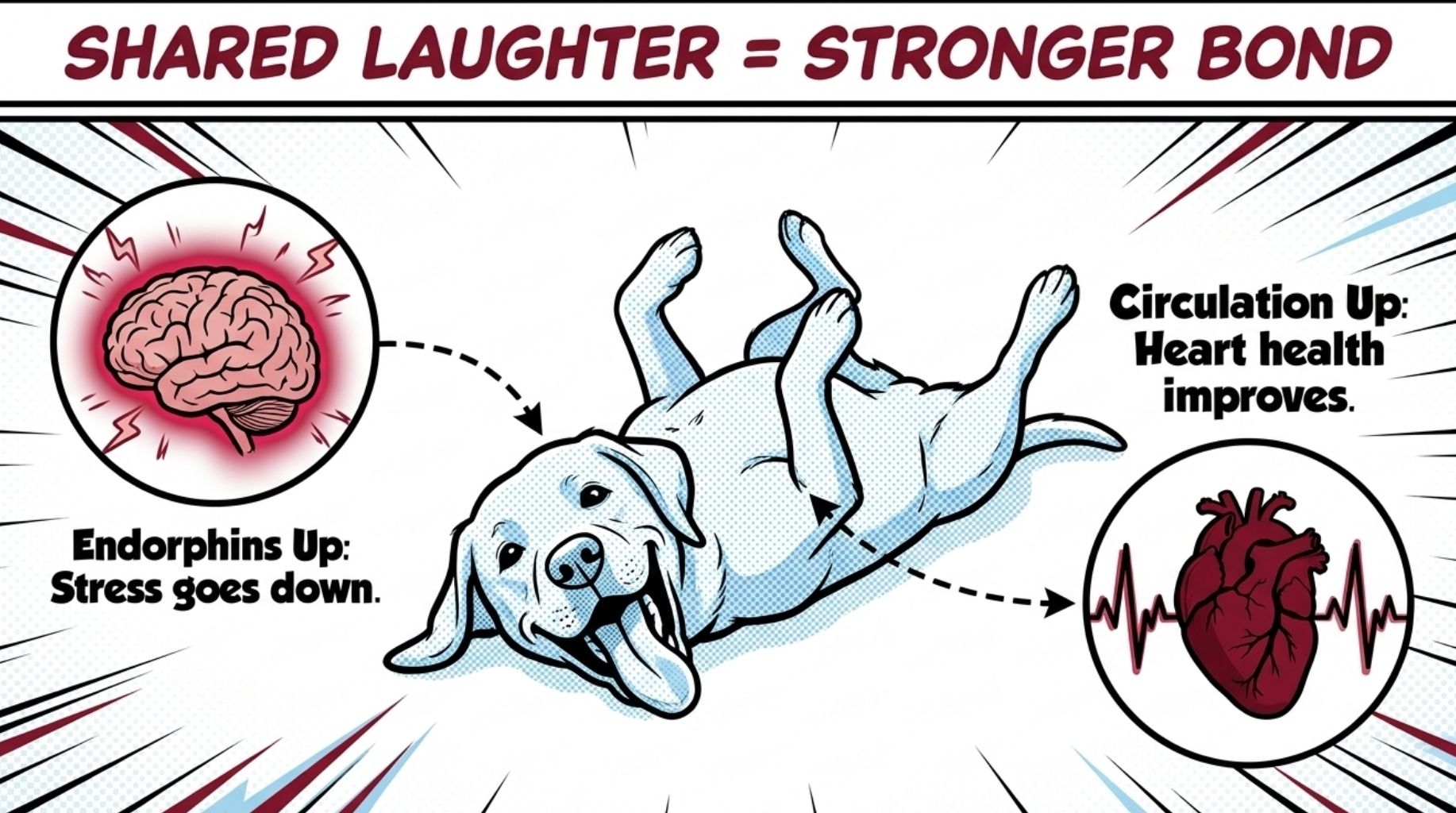
Dogs also strike funny poses that crack us up. Picture a dog lying on its back, legs in the air, tongue sticking out, and a goofy grin. This silly pose shows dogs don’t worry, they just have fun. Dogs are carefree and enjoy feeling joyful.
But it’s not just poses. Dogs make hilarious facial expressions too. They furrow their brows, raise their eyebrows, look innocent or mischievous. Their expressive faces instantly make us smile. Dogs’ funny faces lighten our moods.
Plus, dogs mimic human behavior in amusing ways. They copy our yawns, gestures, and attempt to talk. Dogs love to imitate us. Their mimicking brings a sense of shared humor into our lives. Dogs use imitation to bond with us in a funny way.
THE FUNNY BEHAVIOR OF DOGS CAN EXPLAIN THEIR SENSE OF HUMOR
Our dogs often do silly things that make us laugh. But those funny actions are not just for fun. Dogs use body language to show their feelings and what they want to say. Their amusing poses help them connect with their humans. By making us giggle, dogs strengthen the bond between us. Their humor brings joy and happiness to our lives.
Furry Comedians
Dogs have an amazing sense of humor. Their goofy poses and faces always make us smile. Like when they tilt their head in a cute way. Or strike a hilarious position with their body. Or make a silly expression on their face.
Dogs often find themselves in funny situations. And they like to copy us humans too. That’s part of their charm. So whenever your furry pal does something amusing, enjoy the moment. Appreciate their playful spirit and the laughter they bring.
Laughing isn’t just good for people, it benefits dogs too. When we laugh together with our furry friends, it deepens our bond. Dogs can sense our emotions, like laughter. When they see us giggling, they’ll usually join in. They’ll wag their tails and bark happily.
This shared laughter creates a special connection between humans and dogs. We understand each other better. Besides the emotional benefits, laughter can also help dogs feel better physically. Like us, dogs can feel stress and worry. Laughter is a natural way for them to relax.
The Feel Good Hormones
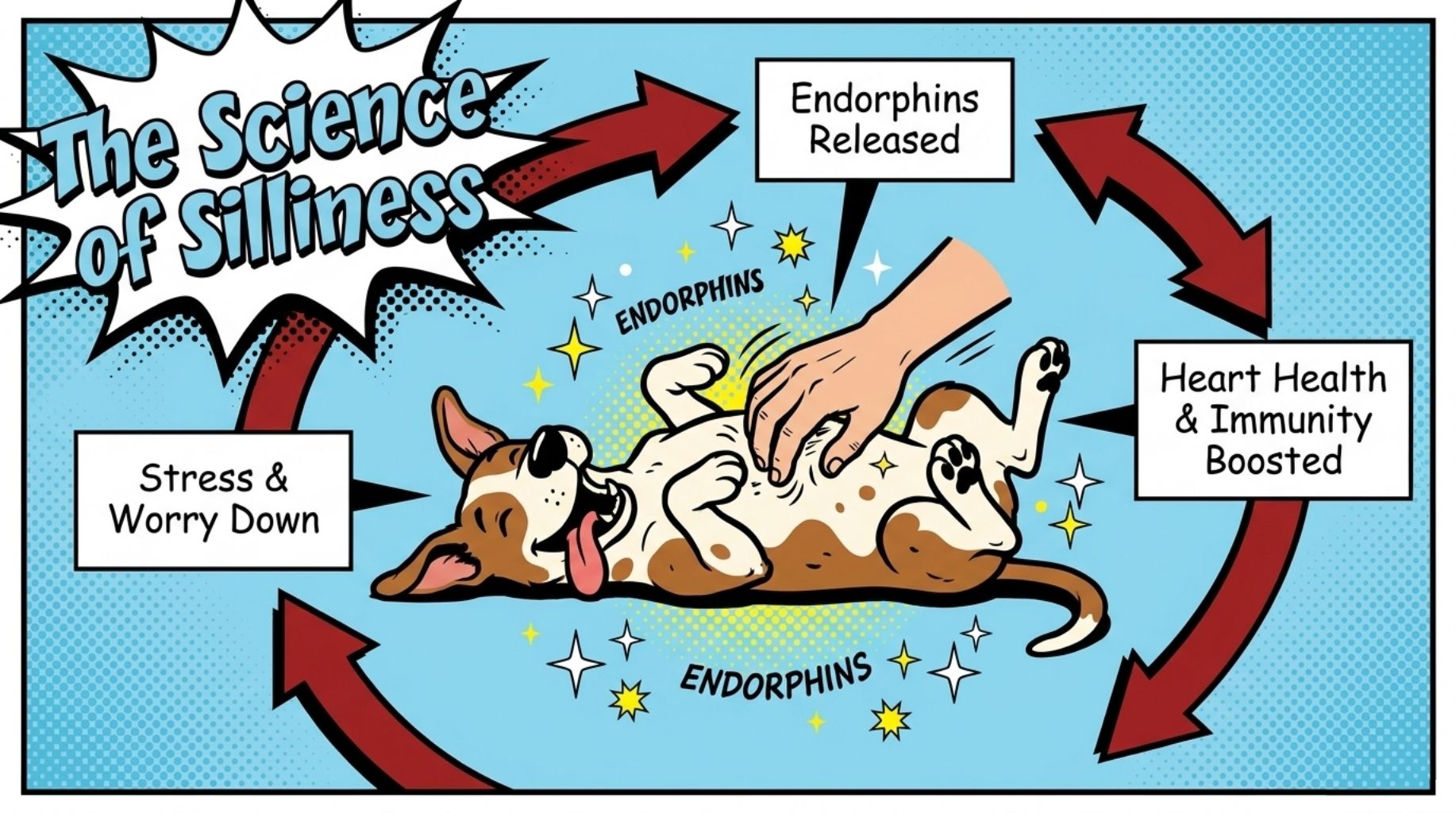
Dogs feel happy when they play and make us laugh. This is because playing releases endorphins in dogs. Endorphins are called “feel-good” hormones. They help dogs feel relaxed and less stressed. Laughter is also good for a dog’s health. Studies show laughter can boost a dog’s immune system and heart health. It can even help with pain.
When dogs play and make us laugh, their blood flows better. Better blood flow means better circulation. This keeps a dog’s body healthy. The laughter between people and dogs is very powerful. It creates joy and happiness for both. So laugh at your dog’s silly behaviors! Enjoy the benefits laughter brings to you and your dog.
SCIENCE AND ANECDOTES ABOUT DOGS AND THEIR SENSE OF HUMOR
Scientific Studies on Dog Laughter
Research led by Patricia Simonet at Sierra Nevada College tested 15 dogs in a control group and 15 in an experimental condition. When puppies heard a recording of a dog “laugh,” they responded by picking up chew toys and romping around.
Interestingly, recordings of growls, whines, and barks alone did not trigger play behaviors, only the laugh-like breathy exhalation did. This suggests that dog laughter is a specialized form of communication with a specific purpose.
Brain Research on Emotion Recognition
A study examining dogs’ brain activity found that one area of their brains showed significantly more activity when hearing positive human sounds like laughter compared to negative sounds like crying. This neurological evidence supports the idea that dogs don’t just hear laughter, they process it as something meaningful and positive.
The Play Bow as a Communication Tool
Scientific studies have shown that the “dog play bow“, where a dog lowers its front body while keeping its rear end up, is a deliberate signal used to initiate or continue play. Research found that when one dog starts losing interest in playing, a play bow from their partner can effectively restart the session. This shows that dogs have intentional strategies for keeping fun going, a key component of humor and social bonding.
Anecdote: The 14-Year “War”
Psychology professor Stanley Coren shared a wonderful story about his cairn terrier, Flint, and his wife Joan. Joan prized order and quiet, and one day she shooed Flint out of the room while hosting friends for coffee, telling him to “go find something interesting to do.”
Flint, a clever dog with a mischievous streak, dashed off and returned moments later carrying one of Joan’s undergarments, proudly snapping it from side to side to the great amusement of her guests. That’s a dog with a sense of comedic timing!
Anecdote: The Poodle’s Revenge
In another story from Professor Coren, a standard poodle named Brandy grew annoyed with a pestering pomeranian visitor. Brandy grabbed the smaller dog by the scruff of its neck, carried it into the bathroom, and dropped it into an oversized bathtub with walls too high for the pom to escape. Then Brandy twirled around with her tail wagging proudly, as if to say, “Look at that. Haven’t I cracked the greatest joke in the world?“
Laughter in Other Animals
Research shows that dogs aren’t alone in their playful vocalizations. Rats make a joyful squeak similar to a giggle when tickled. Dolphins emit sounds of joy during play-fighting. And great apes have been observed engaging in 18 distinct teasing behaviors, including sneaking up behind adults and poking them to get a reaction, very much like human children do. This suggests that a sense of humor may have appeared early in our evolutionary timeline.
What Online Videos Reveal About Dogs And Their Sense of Humor
A 2011 study analyzing dog videos on a free video-sharing website found that laughter was recorded in 55% of tail-chasing videos, and nearly half of all viewer comments described the behavior as “funny” or “cute“. This shows just how much we humans perceive dogs’ actions through a lens of humor, and how our laughter reinforces their playful behaviors.
The Canine Laugh Study
In 2001, animal expert Patricia Simonet recorded dogs at play. She found they make a unique, forced panting sound. When she played this sound to shelter dogs, it instantly calmed them down and stopped their barking. Scientists call this sound the “dog laugh.”
Charles Darwin’s Notes About Dogs and Their Sense of Humor
Even the famous scientist Charles Darwin wrote about dog humor back in 1872. He noted that dogs clearly have a sense of fun. He observed that if you throw a stick, a dog might pick it up and carry it away, waiting for you to try and grab it.
FREQUENTLY ASKED QUESTIONS (FAQS)
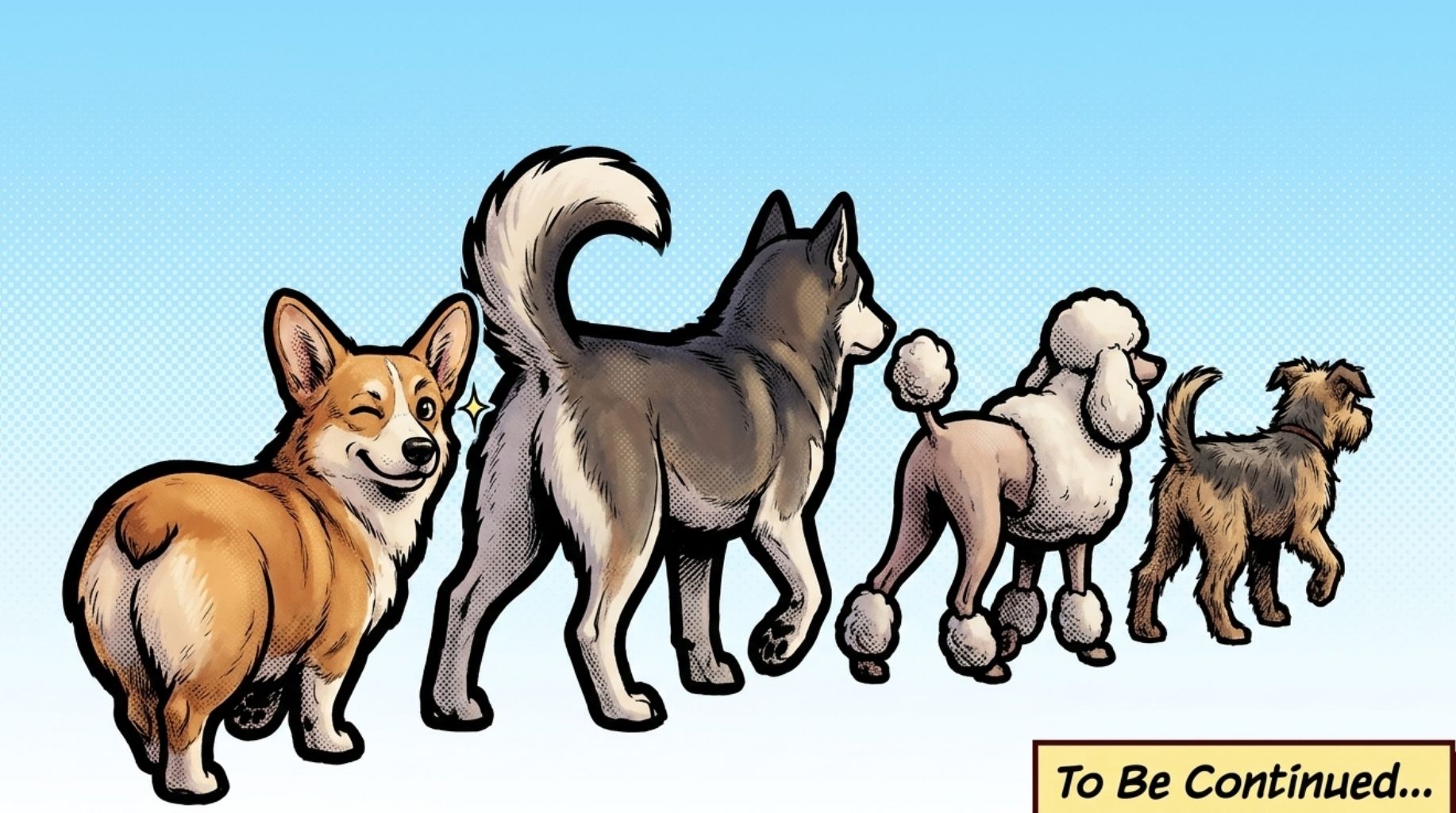
Read more about funny dog behaviors and more about dogs that have a sense of humor at Fresh Pet! They explain these behaviors well.