For a long time, old stories praised the special tracking hounds called cadaver dogs. These dogs can solve deep mysteries. They do this by smelling dead bodies. The dogs find lost people in busy cities. They find hidden bodies deep in the dirt. Most people think this is a magic skill. But modern science studies the real body parts that help. These help Human Remains Detection (HRD) dogs do search jobs. This guide looks at the science behind their skills. It looks at history and how weather changes their accuracy.
“Can a dog really smell a three-thousand-year-old bone or locate a body hidden deep under water?
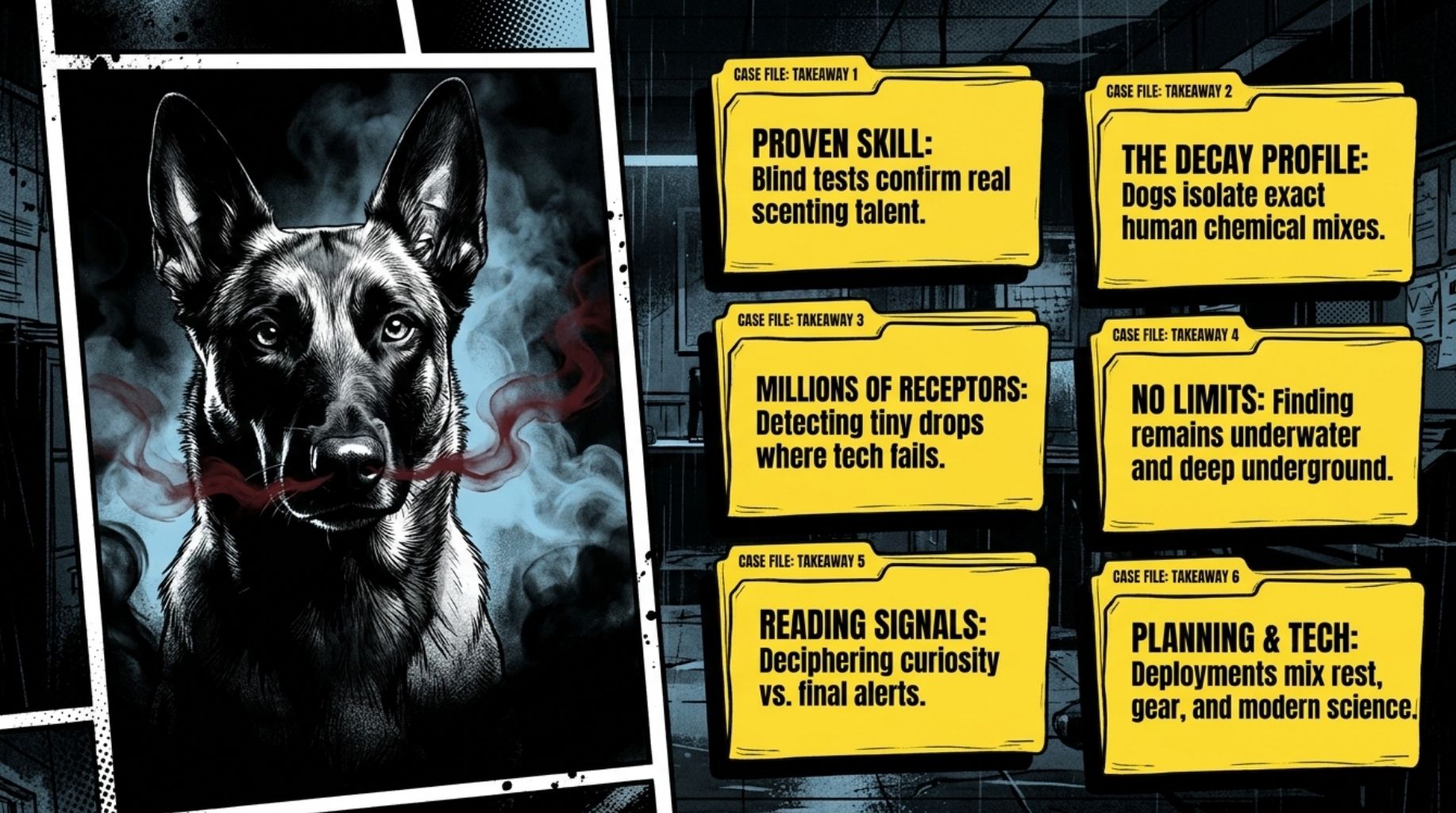
Key Takeaways
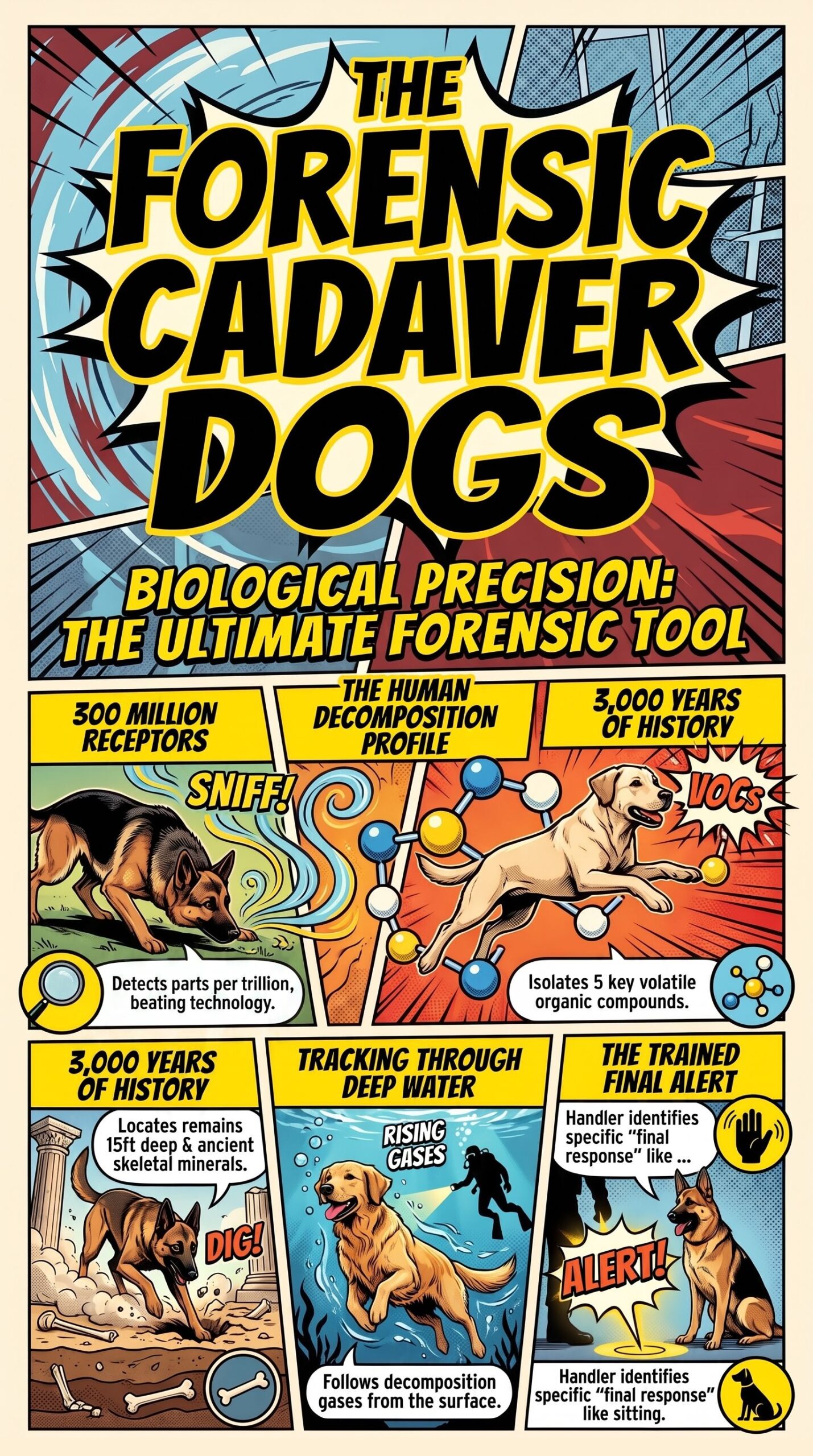
- Science Proves It: Blind tests prove dogs have a steady, real skill for finding hidden clues.
- The Decay Profile: Labs show that dogs pick out the exact chemical mix of human decay.
- Millions of Receptors: A dog’s nose finds tiny drops of scent where human tools fail.
- No Grave Too Deep: Dogs find bodies deep under water and ancient graves in dirt.
- Reading the Signals: Handlers must tell simple dog curiosity apart from a final signal.
- Careful Planning: Real field searches require fast notes, special gear, and dog rest.
- Mix with Tech: Teams must always mix animal skills with modern technology.
Quick Summary About The forensic cadaver dogs
This guide explores how forensic cadaver dogs track human remains. You will learn about their amazing sense of smell, how weather changes their accuracy, and how teams combine dog skills with modern science to solve crimes.
Listen to the Episode by The Bark Brigade Podcast About How Dogs Smell 3000 Year Old Bones!
ANECDOTES ABOUT HOW CADAVER DOGS TRACK WHAT IS HIDDEN
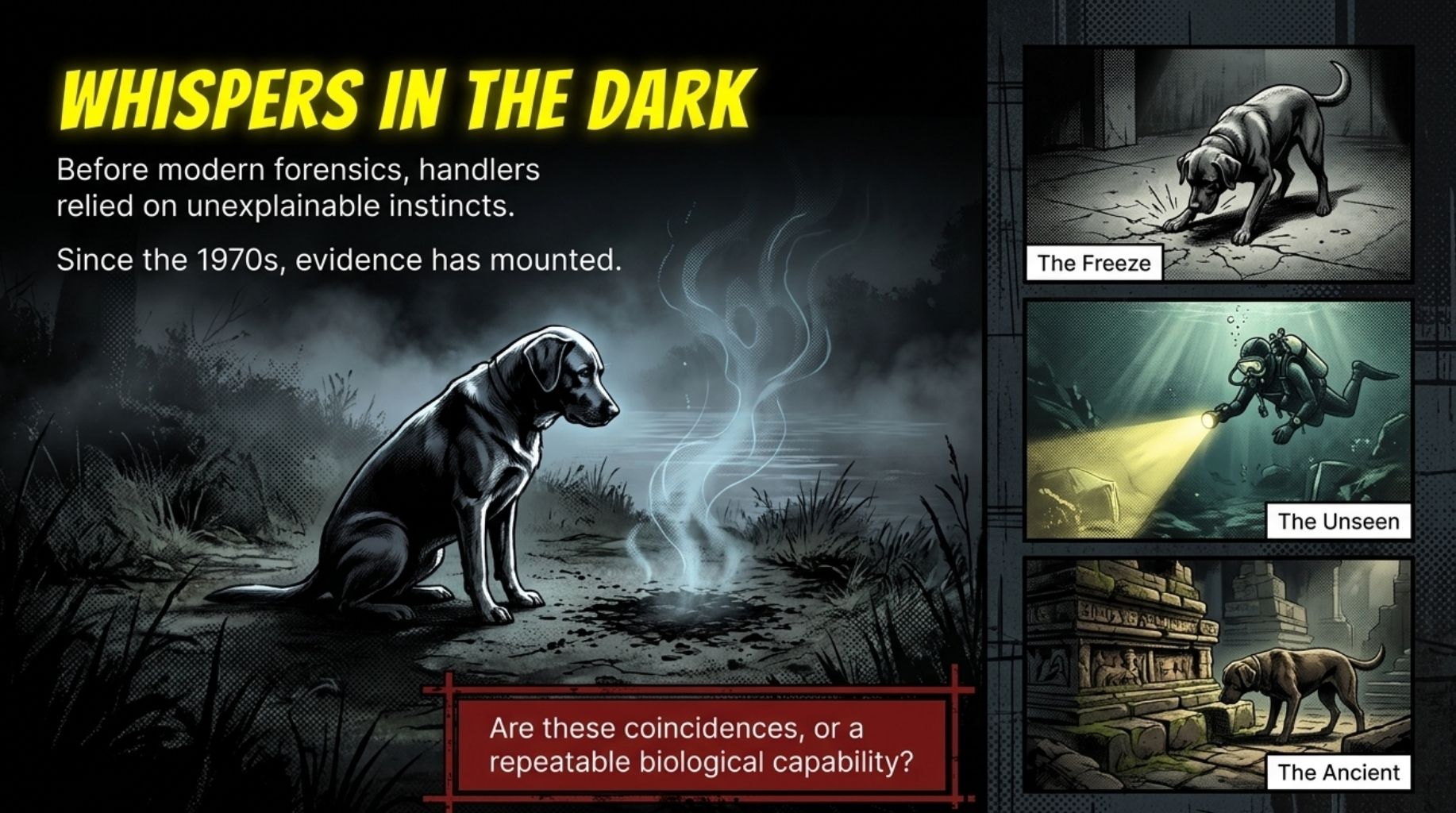
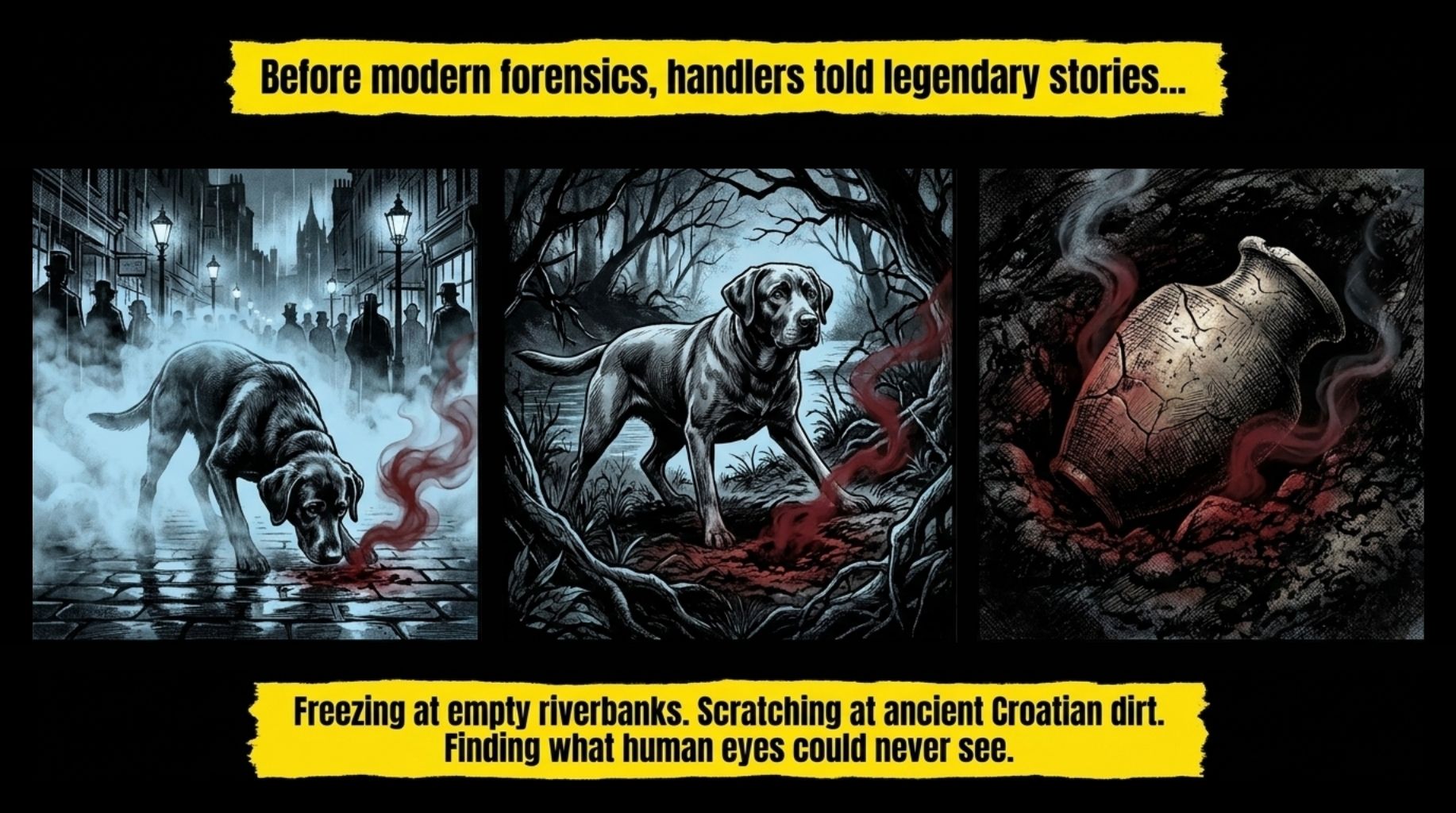
Long before we had new tech, humans used pets to find secrets in nature. Police dog programs started back in the 1970s. Since then, facts show these pets find vital clues. They find items at crime scenes and big crash sites. Handlers often tell stories of dogs focusing on one spot. The dogs scratch, bark, or sit. They do this on spots that look empty to us.
Handlers Who Believe Their Dog Cracked the Case
K9 handlers often tell of dogs that freeze on a random spot. This might be a new concrete floor or a muddy riverbank. This sudden focus helps people find hidden clues. One official paper talks about a Labrador on a riverbank.
The dog refused to leave the mud. Because of this, a dive team went into the water. They found hidden clues that sonar tools missed. These stories happen all over the world. This shows the dogs have a real, steady skill.
Historical Evidence of Animal Behavior Preceding Discoveries
Old tales say animals can find very old graves. Now, real science proves these old stories are true. In clean tests in Croatia, special dogs found ancient bones. These graves were hundreds of years old. This proves the smell of old human bones stays in the dirt for a very long time.
Separating Coincidence from Genuine Scent Identification
Doubters say these dog habits are just random luck. They think the dogs react to other things in nature. Also, handlers might only recall the times their dogs win. They might forget the times they fail. Because of this, we need strict, blind science tests. These tests tell the difference between real tracking and handler hints.
🔑 Key Points: Old stories and reports show dogs are great at finding clues. Now, real science is testing them.
WHAT RESEARCH TELLS US ABOUT HUMAN REMOVAL DETECTION
Science now goes way past old stories. It checks exactly how dogs smell decay. Scientists trace how scent moves in the air. They use special scent boxes to check a dog’s brain waves. They look for the exact scent chemicals that make up the human decay smell.
Groundbreaking Studies on Decomposition Scents
Tests show over 400 distinct scent chemicals come off a dead body. The smell shifts as the body rots. Teams in Belgium found a specific mix of five key chemicals. HRD dogs lock onto this exact mix. This helps experts make fake training tools. These fake tools do not carry any sick germs for the teams.
The Archaeological Scent Projects and Their Findings
Blind field tests show great dog skills. Trained German Shepherds and Malinois find 3,000-year-old bones. They find them easily in old dirt digs. This research proves the specific smell of human bone stays in the dirt for thousands of years.
Why the Scientific Community Remains Cautiously Optimistic?
Dog tracking is mostly very exact. Still, science and law teams stay careful. They want to see the same great results every time. Shifting wind and high heat make tests hard to control. In court, tracking signals are just helpful extra clues. Other real lab facts must back them up.
🔑 Key Points: Lab tests and field trials show dogs can pick out specific human decay smells.
THE DOG SUPERPOWERS: HOW DO CADAVER DOGS WORK IN THE FIELD?
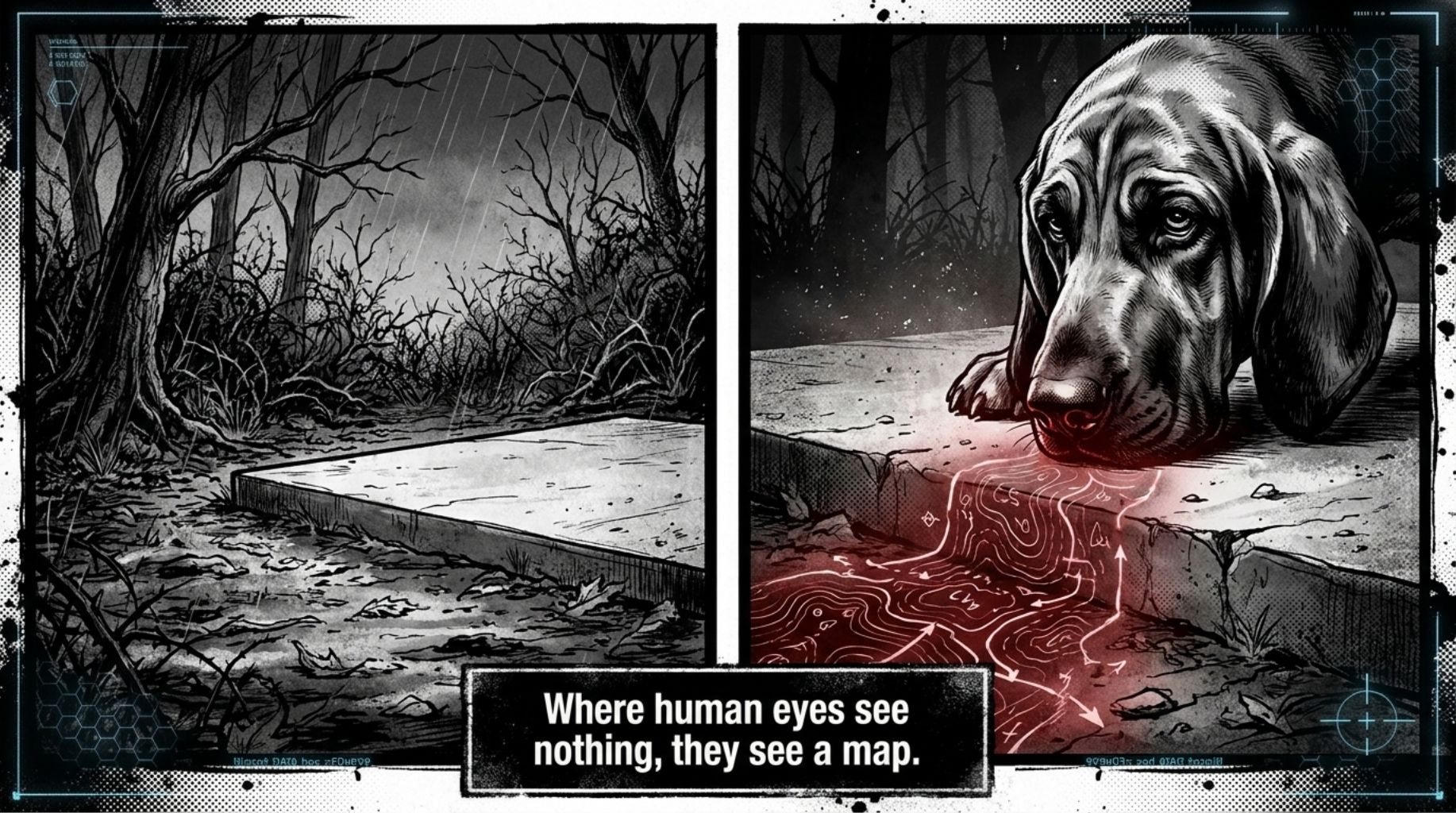
A dog’s nose is the main key to its success. We must look at their inside biology to see how they work. Their brain paths easily beat any tool made by humans.
How Do Cadaver Dogs Work to Detect Chemical Changes?
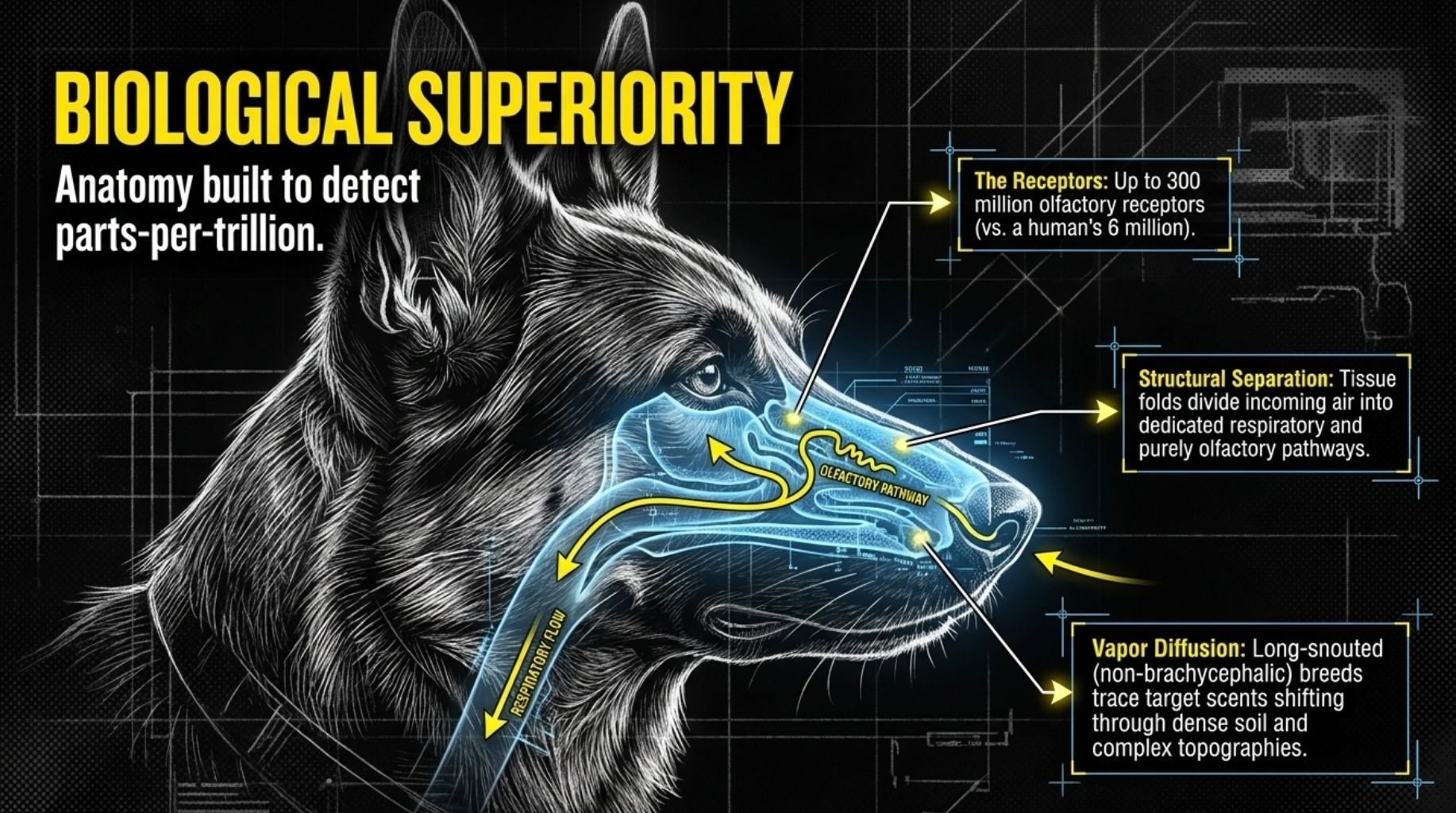
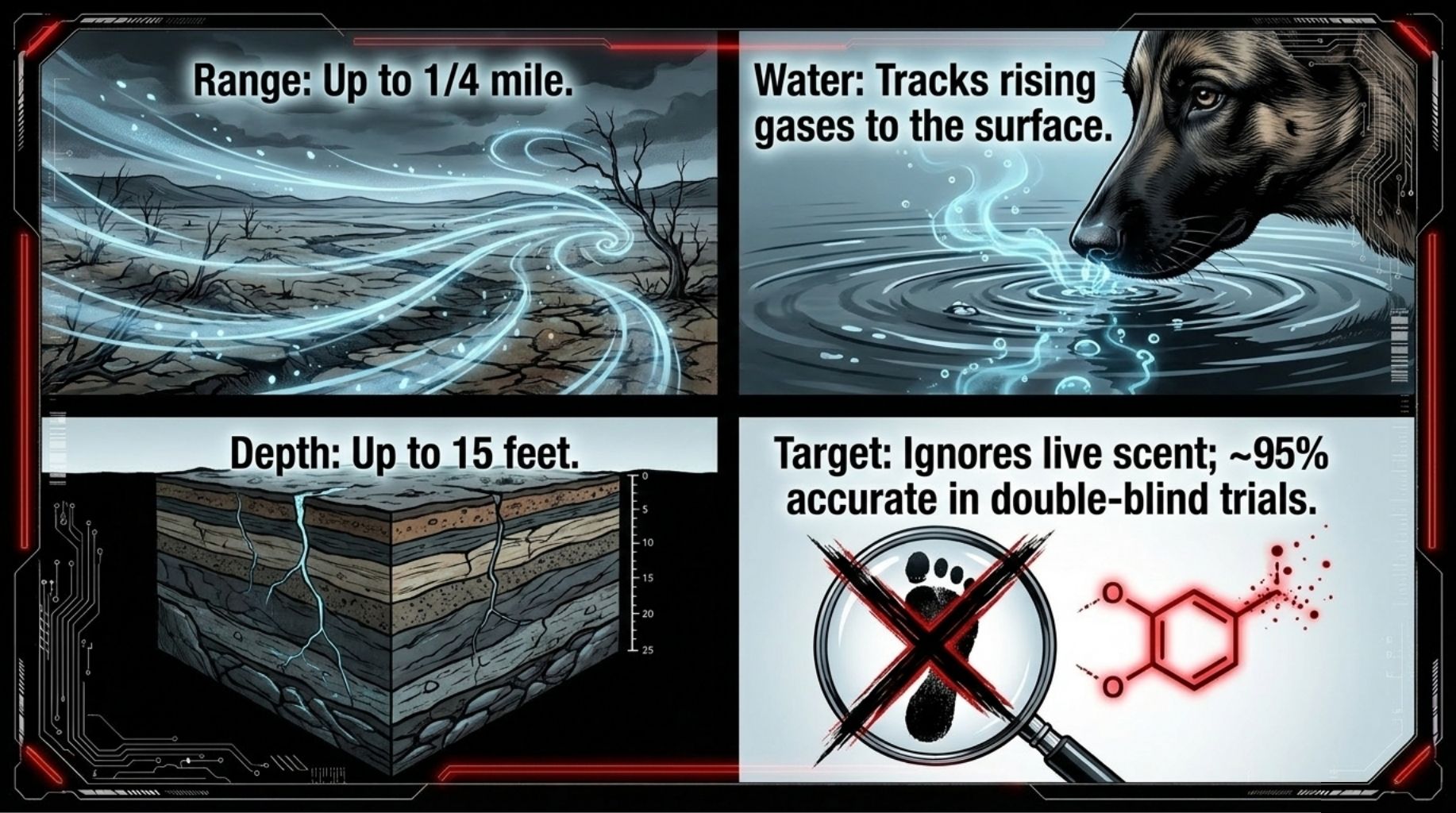
When a body rots, it breaks down into specific items. These items make strong smells. A human nose has just six million scent parts. A dog nose has up to 300 million scent parts. This lets dogs smell things that are tiny drops in a huge space. This deep skill lets dogs work in tough spots when tools fail.
How Do Cadaver Dogs Work Using Structural Separation?
A dog’s nose splits air into two paths. One path is for breathing. The other path is just for smelling. When a dog sniffs, a flap of skin sends air to a special scent pocket. This lets smells get very strong. Long-nosed dogs work much better than flat-faced dogs because of this nose shape.
How Do Cadaver Dogs Work via Vapor Diffusion?
Target smells drift up through thick dirt or move across hills. Dogs can still find and track these faint smells. Wet air and hot days do not stop them. This skill lets dogs work as great partners in rough woods.
🔑 Key Points: A dog’s special nose has millions of parts. This structure lets it pick up faint death smells.
BEYOND THE SURFACE: DETECTING SUBMERGED AND ANCIENT REMAINS
HRD dogs find more than just bodies in shallow dirt. Teams often use these special dogs in deep water searches. They also use them at old dig sites to uncover hidden history.
Tracking the Unseen Currents: Submerged Recovery Operations
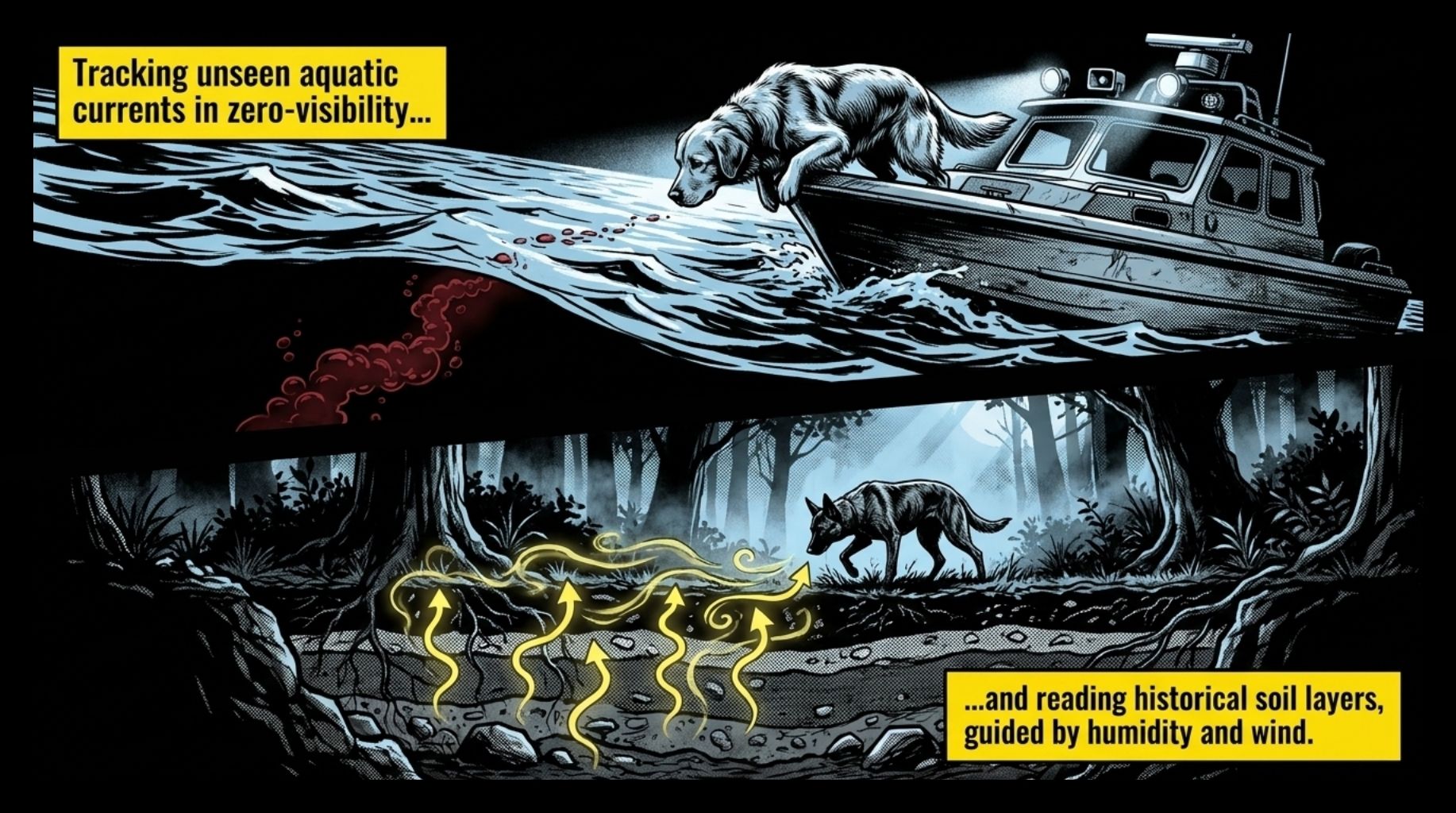
HRD dogs do well in deep water searches. In lake or river searches, dogs smell decay gases. These gases drift up to the top of the water. Dogs sit on the front of search boats to sniff. They follow the scent trail back to the start. This helps divers find bodies when the water is totally dark.
Reading the Soil Layers: Locating Historical and Prehistoric Burials
Facts show HRD dogs find decay clues even when the skin and flesh are gone. These dog experts spot tiny shifts in dirt layers. They easily tell human decay apart from old dead animals.
The Role of Static Weather Conditions in Scent Pool Dispersion
The weather controls how a smell moves. Thick, wet air keeps smells close to the grass. This makes a strong pool of scent. Heavy winds blast the smell miles away. Good handlers watch these small weather shifts. They know why a dog might signal a few yards away from the body. Then, they fix their search paths.
🔑 Key Points: Special training helps dogs find bodies deep under water or buried for years. But weather alters the scent path.
INTERPRETING THE SIGNALS: WHAT DOES AN “ALERT” REALLY MEAN?
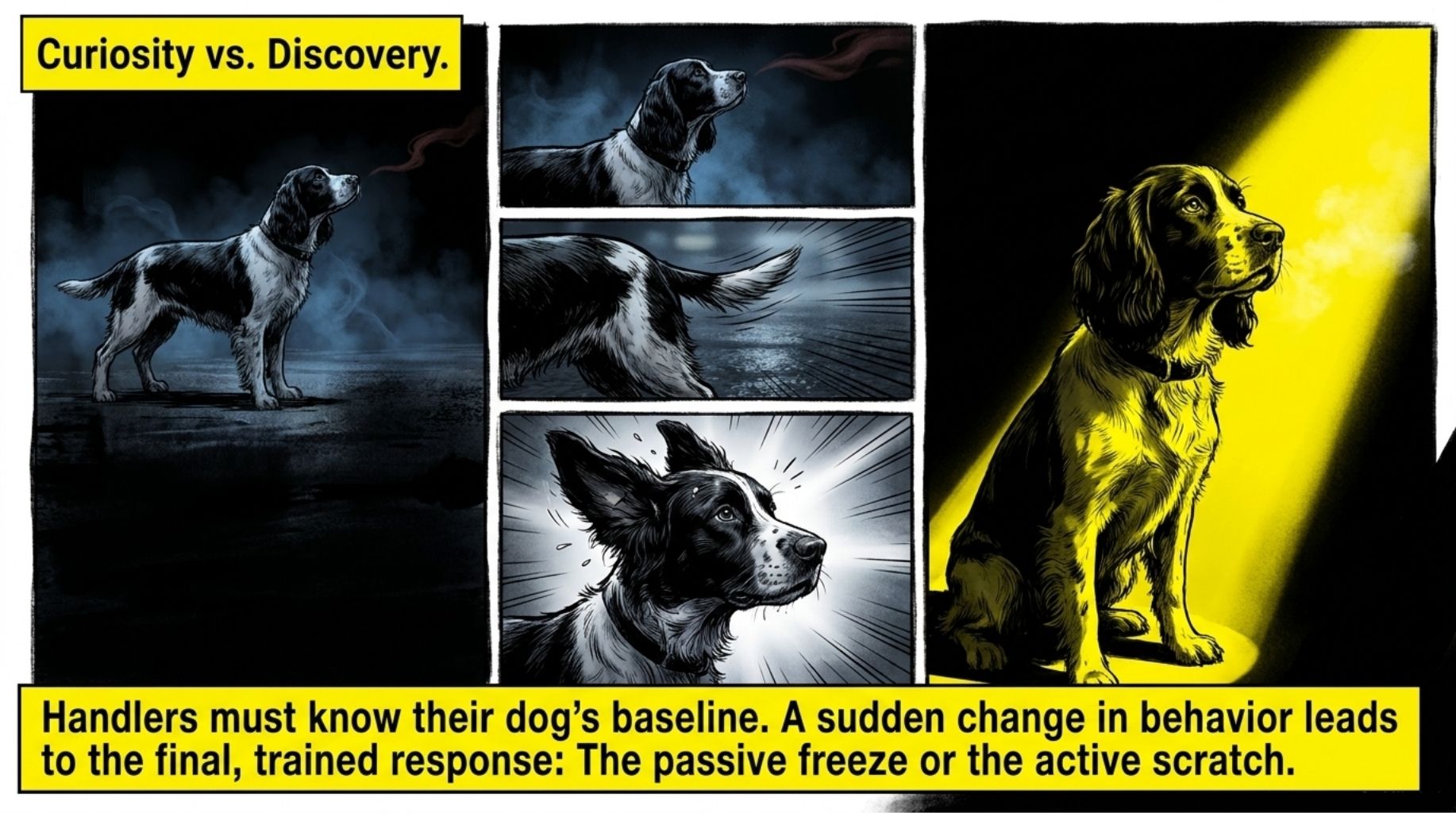
A dog looking at a spot does not mean it found a body. Handlers must watch their dog’s body style closely. They must tell the difference between simple curiosity and a real trained signal.
Common Behaviors That Might Indicate a Dog Senses a Target
When a dog hits a scent path, its body shifts fast. Common signs are a quick head tilt, a fast tail wag, and deep, steady sniffing. This first step is a change of behavior. It tells the handler that the dog found a real scent trail.
How to Differentiate Between Curiosity and a Genuine Final Response?
A real signal is a clear, trained act. The dog only does this act when it finds the exact source. Quiet dogs will sit, lie down, or freeze on the spot. Active dogs will bark or scratch. Handlers look for this exact act to rule out distractions like a dead wild animal.
Creating a Baseline for Your Dog’s “Normal” Working Style
Every team must find a basic baseline in easy training. Handlers must know how a dog acts when it is tired or mad. They must watch the dog track a weak scent to be sure. This baseline stops a handler from misreading tiredness as a false signal.
🔑 Key Points: Handlers must tell curiosity apart from a final signal. They use a clear baseline to get true results.
PRACTICAL STEPS FOR PROFESSIONALS WORKING WITH DETECTION K9S
Using HRD dogs for court or history tasks takes careful planning. Treating dog signals as one piece of a puzzle works best. Good management turns raw animal skill into real proof for court.
Training Protocols: How Do Cadaver Dogs Work with Real Aids?
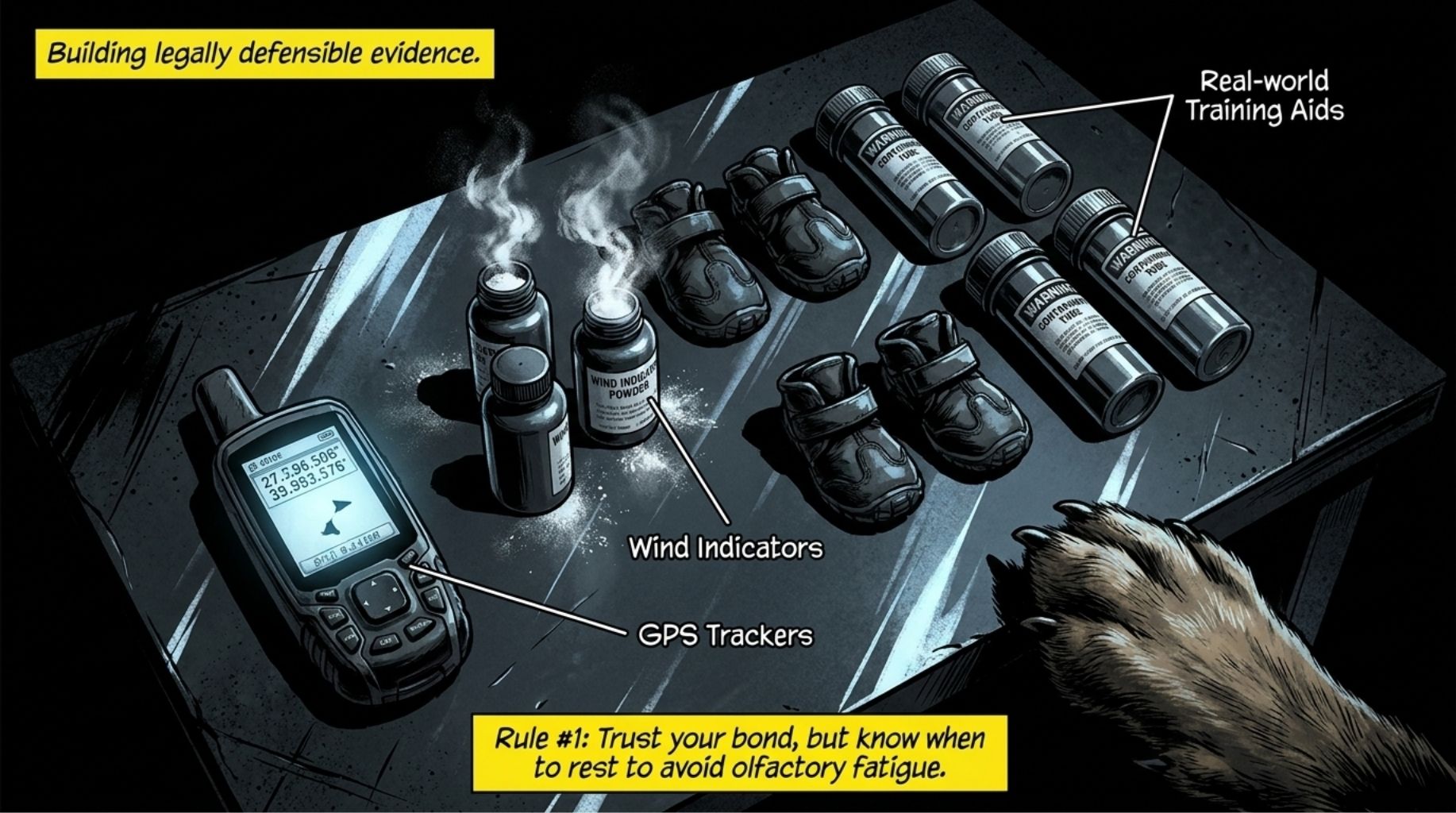
To hold up in court, training must look like real life. Handlers use real human blood, bones, and rot fluids. This hard practice teaches dogs the exact smells they will face. Because of this, dogs track well without stopping for old animal bones.
How Do Cadaver Dogs Work Alongside Specialized Gear?
A handler’s kit must help the dog and keep the search clean. Along with food and water, it has wind tools to track scent paths. Handlers use GPS tools to map their walks. They also pack small dog shoes. This tracking data gives courts real proof of the search.
Trust Your Bond: When to Keep Searching and When to Rest?
The link between a handler and a dog takes years of work. A handler must trust the dog’s nose. But they must also know when the nose gets tired. If a dog works in high heat for hours, its skill drops fast. Knowing when to take a break is a vital skill.
🔑 Key Points: Real searches need fast notes, special gear, and a clear plan for dog rest to avoid mistakes.
THE ETHICAL QUESTION: SHOULD WE RELY ONLY ON DOG RECOVERY?
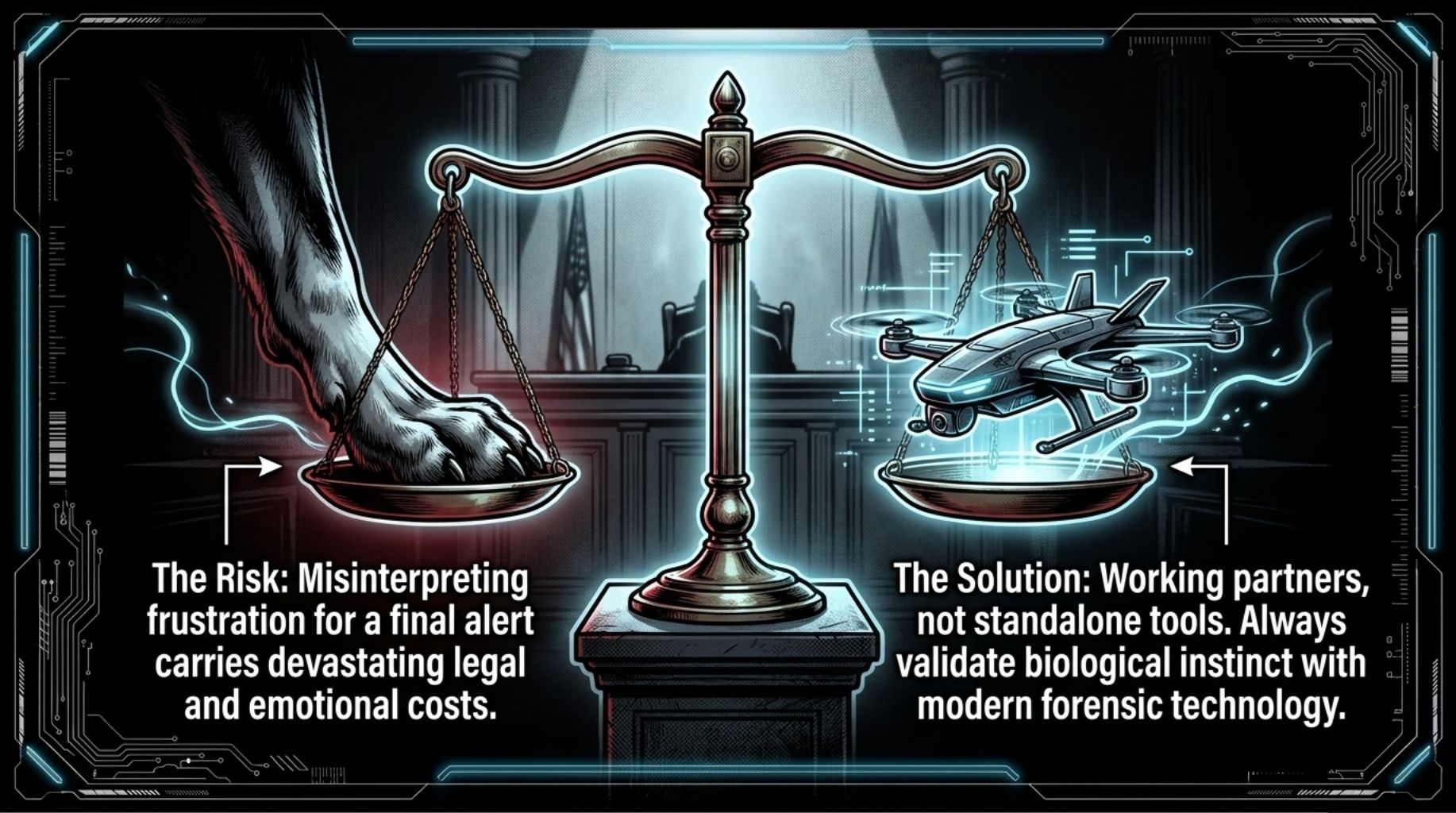
The skills of cadaver dogs impress search teams all over the world. But relying only on animal gut feelings brings up legal doubts. Putting a whole court case on a dog is a very heavy job.
The Dangers of Misinterpreting Dog Behavior in Legal Cases
Reading a dog wrong can cause huge mistakes. It can lead to wrong search papers or lost clues. If a handler misreads stress as a win, it causes useless digging. It also brings deep sadness to families. Juries believe dog signals easily, so accuracy is a must.
Balancing Technology with Animal Instinct for Public Justice
The best search plan mixes dog skill with new tools. Ground radar, soil tests, and drones work great with dogs. A dog can shrink a huge search field down to a few small feet. Then, scientists use costly tools exactly where they need them most.
Respecting the Dog’s Role: Working Partner First, Tool Second
Handlers must see their dogs as living partners, not tools. Asking a dog to work perfectly in intense heat or toxic waste is wrong. Keeping the dog safe and happy is the handler’s main job at all times.
🔑 Key Points: Dogs should never be the only tool used. They work best when mixed with new science tech.
HIDDEN MYSTERIES: THREE LITTLE-KNOWN FACTS ABOUT CADAVER DOGS
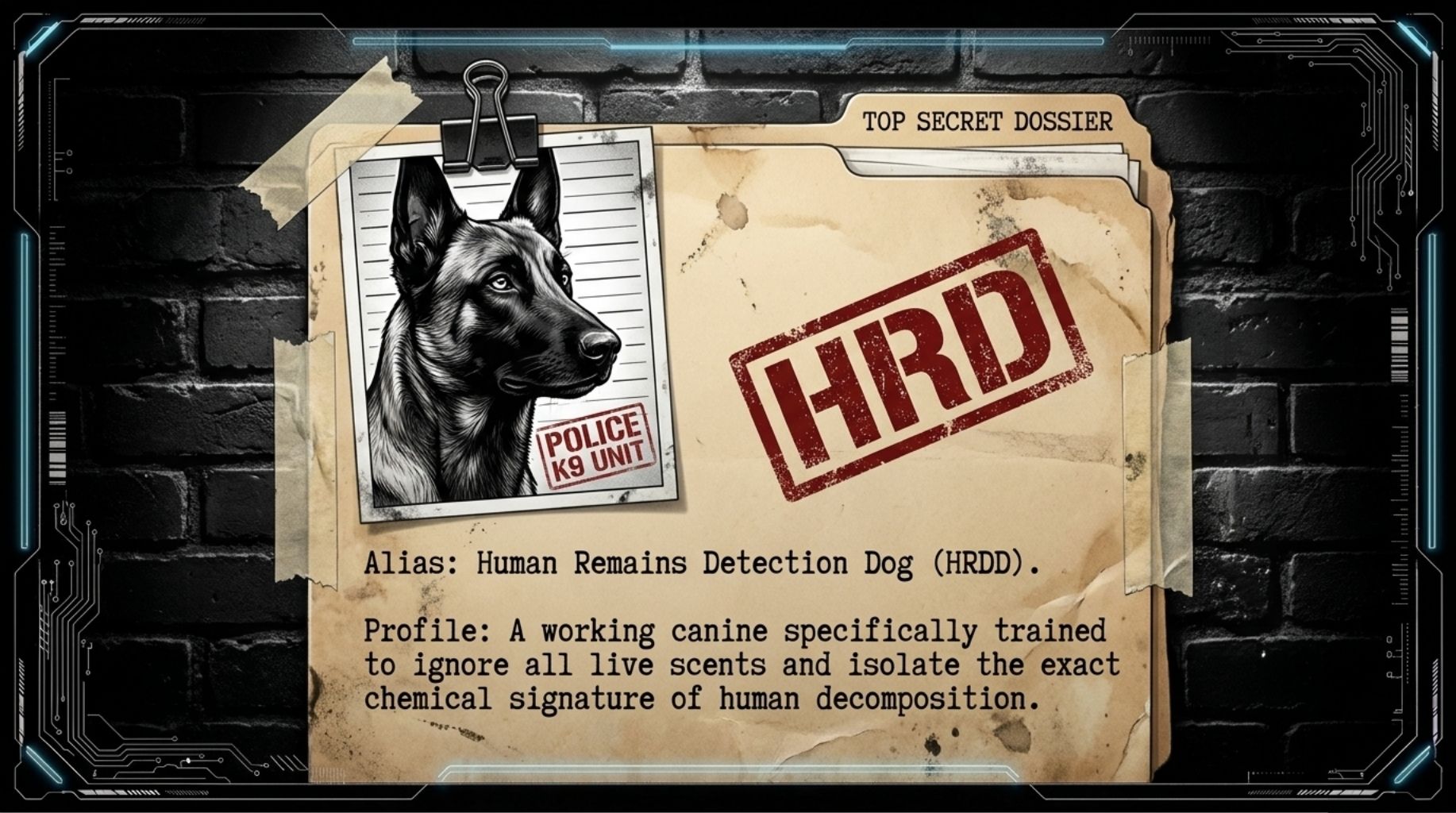
Science continues to reveal surprising details about how these dogs work. Some of their skills seem almost impossible to believe. These hidden facts show why criminals cannot trick a dog’s nose.
Cadaver Dogs Can Track the Ghost of a Removed Body
Dogs do not need a physical body to find a scene. They smell the faint scent left behind. This happens weeks after someone moves the remains. Scent chemicals stick tightly to floors, carpets, or soil. The dog tracks this residual pool easily. They tell handlers where a body used to rest.
Beating the Power of Household Bleach
Criminals often clean crime scenes with strong bleach. This clean smell does not trick a trained dog. Bleach cannot erase the deep smell of human blood. Dogs easily smell past the chemical cleaner. They pinpoint the hidden blood drops underneath. No household chemical can mask the decay profile.
Forensic Cadaver Dogs Smell Through Freshly Poured Concrete
Criminals sometimes hide remains under new floors. They think thick concrete blocks the odor. But scent gases still rise through tiny cracks. Elite dogs easily spot these deep targets. They freeze or scratch on the hard floor to guide police.
🔑 Key Points: Dogs track the scent of a body long after its removal. They smell through heavy cleaning chemicals and thick layers of fresh concrete.
THE VERDICT: SO, HOW ACCURATE ARE CADAVER DOGS?
Real data from field jobs, blind tests, and old digs proves that cadaver dogs are amazing tools. In clean lab tests, certified dogs hit a 95% accuracy rate. On good days, they can catch a smell plume from a quarter-mile away or more.
Dog’s live noses get results that machines cannot match. Still, they can make mistakes. Success depends on hard training, good weather plans, and a handler who reads the dog right.
FREQUENTLY ASKED QUESTIONS ABOUT HOW DO CADAVER DOGS WORK