

Does your heart melt when you see a dog with a guilty look? Does it break a little when your pup stares at you with those big, sad eyes after you find a chewed shoe? We’ve all been there, but what if most of the things we believe about our dogs are totally wrong? Most dog behavior myths start with a loving owner. That owner simply wants to understand their furry friend better. Yet even the most caring pet parents get tripped up by outdated ideas that refuse to die. Welcome to the real world of dog behavior. Let’s bust some myths and clear the fog with real science. We’ll add playful curiosity and a whole lot of tail wags too.
“You come home to a shredded pillow. Your dog gives you big, sad eyes. Your heart says, “He knows he messed up.” Science says something else entirely. Welcome to the strange world where dog behavior myths shape what we think we see, and often get it wrong”.
KEY POINTS AND TAKEAWAYS
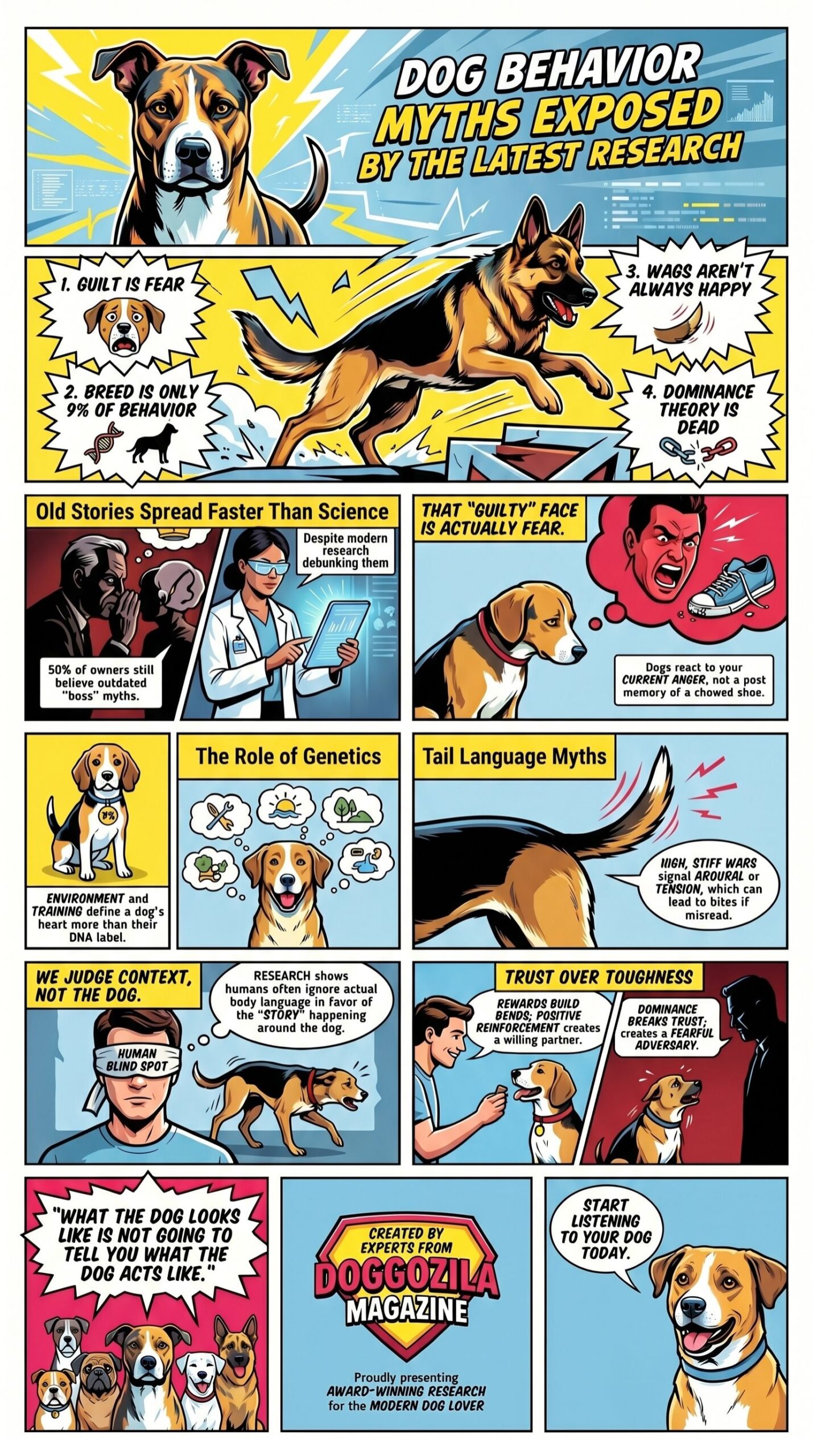
- Myth 1: Dog behavior myths fool smart owners because old stories spread faster than new science.
- Myth 2: That “guilty look” is fear, not remorse. Punishing it breaks trust.
- Myth 3: Breed explains only about 9% of behavior. Judge the dog, not the label.
- Myth 4: A wagging tail does not always mean a happy dog. Hugging can frighten, not comfort.
- Myth 5: New research proves people read context more than the dog. This creates dangerous blind spots.
- Myth 6: Letting go of outdated ideas opens the door to a happier, more trusting friendship.
Quick Summary About Dog Behavior Myths
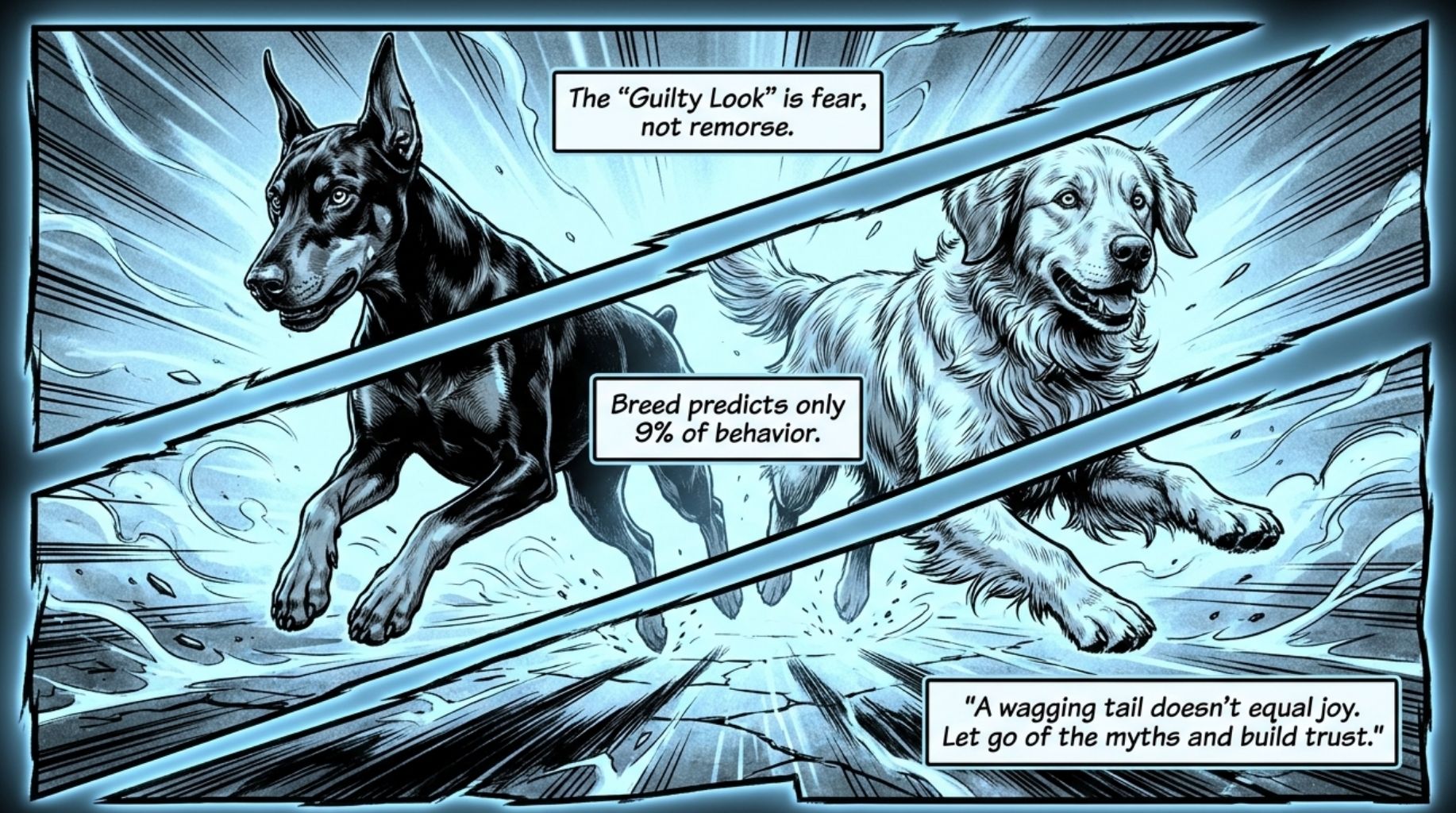
This article busts six common dog behavior myths. Even loving owners believe them. You will learn why the guilty look is not what you think. Also you will see how breed tells you very little about personality. You will understand what your dog’s body language actually means. We also share brand‑new research and simple tips. These will help you build a smarter, kinder bond with your best friend.
WHY DOG BEHAVIOR MYTHS FOOL SMART OWNERS EVERY DAY?
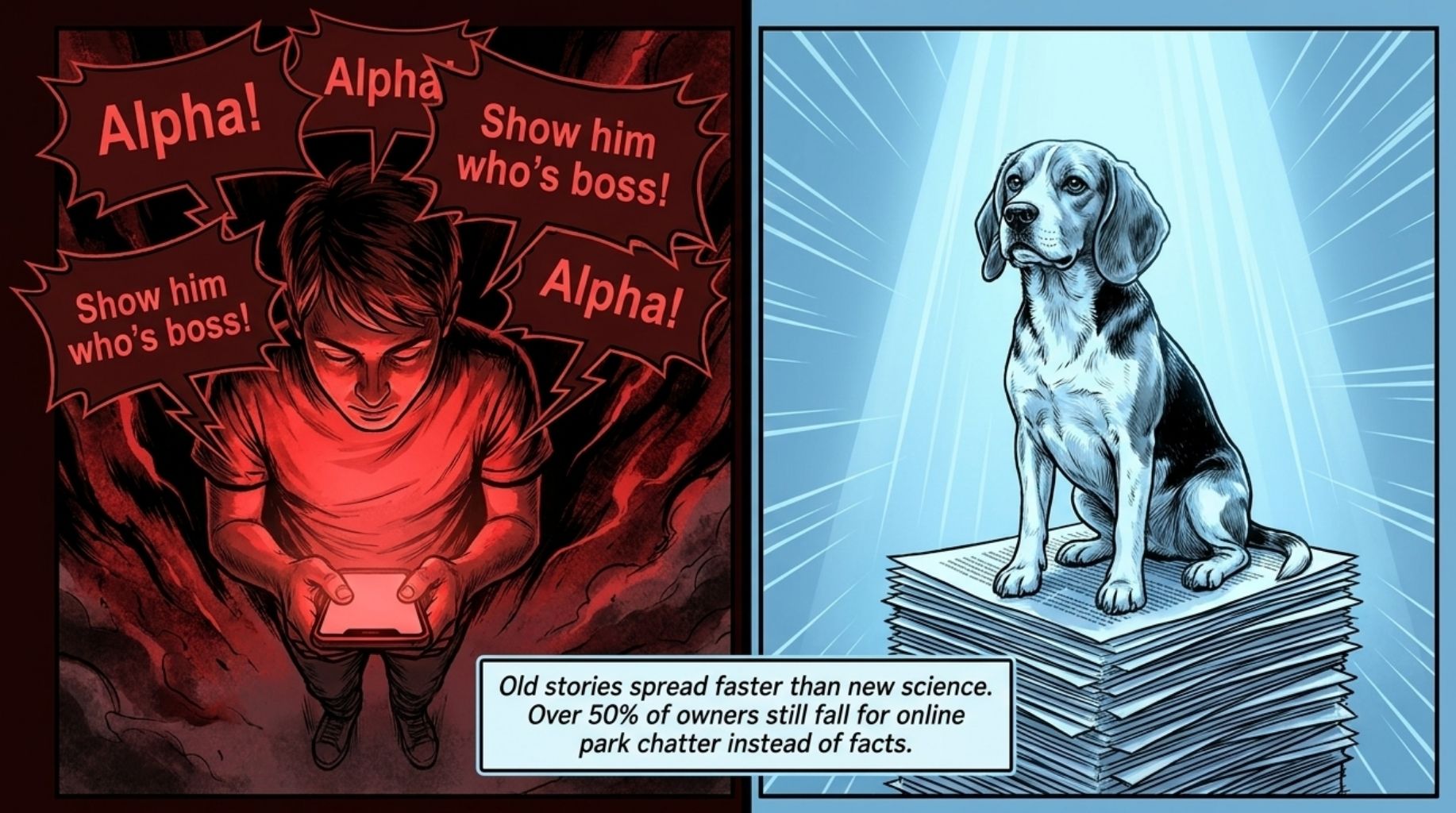
You are a careful, loving dog parent. You genuinely want the best for your pup. Yet you still hear truth in sayings that belong in the past. That happens because old stories feel like common sense. A 2024 Spanish study found that more than half of respondents still believed two key dog behavior myths. They thought dogs need a boss and that a wagging tail always means joy. These ideas did not come from research. They came from TV trainers and park chatter. That chatter weaves into everyday belief.
What a 2024 Survey Taught Us About Common Beliefs?
Researchers collected 1,186 surveys about dog behavior myths across Spain. The results raised eyebrows. Over 50% agreed that dogs must know who is in charge. Many also agreed that dog parks are perfect for puppy socializing.
Plenty still believed a wagging tail guarantees a happy dog. The study appeared in Anthrozoös. It showed that age, pet‑ownership history, and animal‑related jobs explain about 34.5% of why people fall for these tales.
Dog behavior myths spread because we repeat them without pausing. We forget to ask if they still make sense. So, the next time someone tells you a dog must be dominated, you can smile. Remember that science disagrees.
Why Old‑School Dog Behavior Myths Spread Like Wildfire Online?
Scroll through TikTok for five minutes. You will spot a trainer pinning a dog down. Someone else claims wolves run your Labrador’s mind. Those videos pop because drama captures attention. Calm science rarely goes viral.
False beliefs jump from screen to screen. Peer‑reviewed studies sit behind paywalls. Most pet parents never open them. You hear the same dog behavior myths repeated by influencers. They have millions of followers.
Slowly, those ideas start to feel like common sense. A friend tags you in a reel. It says your dog pulls to dominate you. The idea sticks. Breaking that chain starts with one habit. Pause, question, and check what real researchers actually say.
Even Smart, Caring Owners Get Tangled in Dog Behavior Myths
You have a college degree, and you read the news every day , but you still might believe your dog feels guilt. You might think a German shepherd needs a firm hand. A January 2025 study confirmed this. Even educated, devoted owners hold onto dominance‑training theory.
Those ideas feel logical when you are frustrated. Your dog tears up the couch. Your brain grabs a story that makes sense of the mess. Dog behavior myths offer simple answers to complicated emotions. That makes them hard to shake. Being smart does not protect you. Being curious does.
THE “GUILTY LOOK” AND OTHER DOG BEHAVIOR MYTHS THAT BREAK TRUST
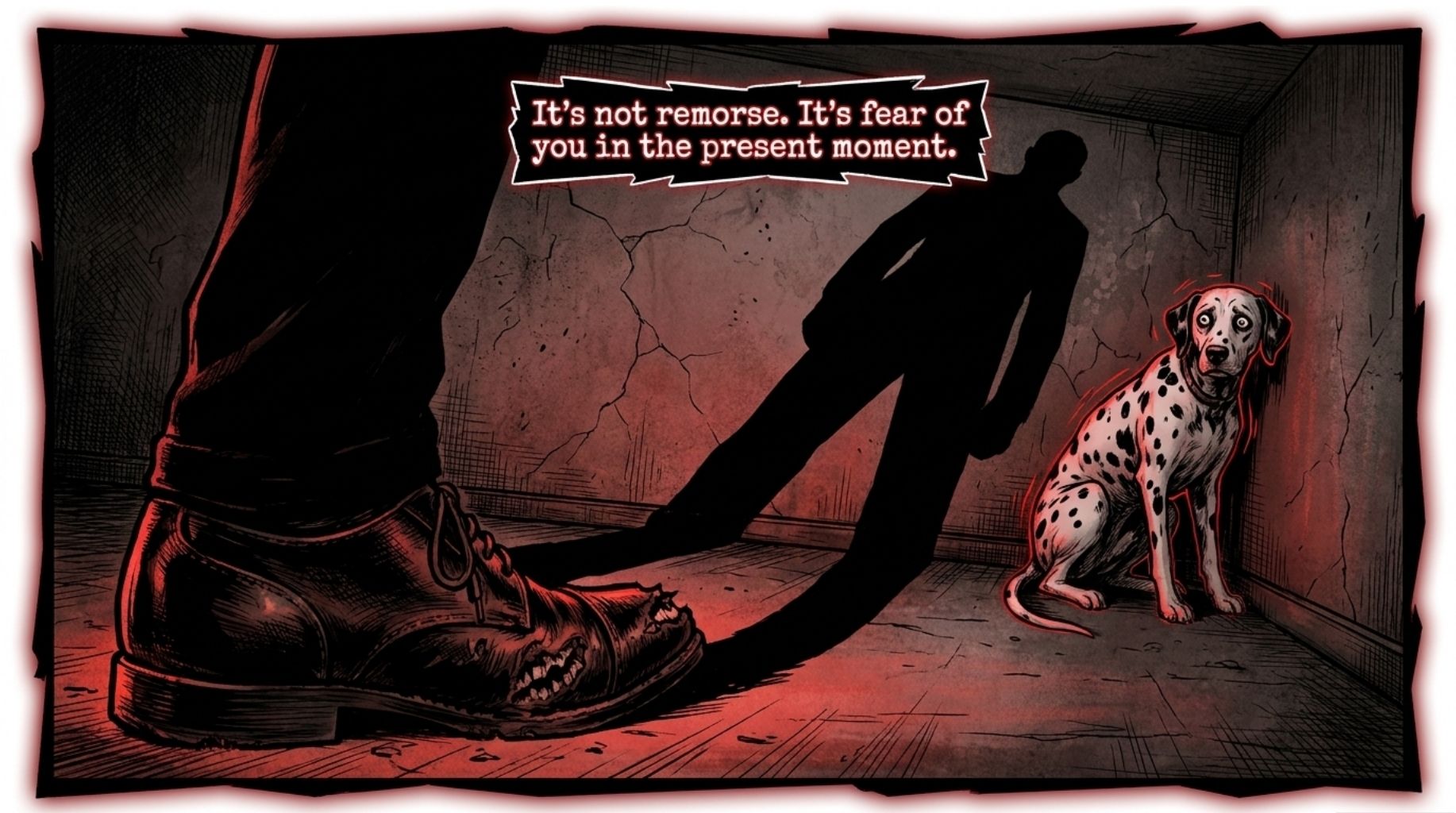
You walk through the door. You spot a chewed shoe. Your dog slinks away with his head low. The story writes itself. He knows he did wrong and feels bad about it. That guilty‑face story is one of the most stubborn dog behavior myths out there. It actually hurts your friendship.
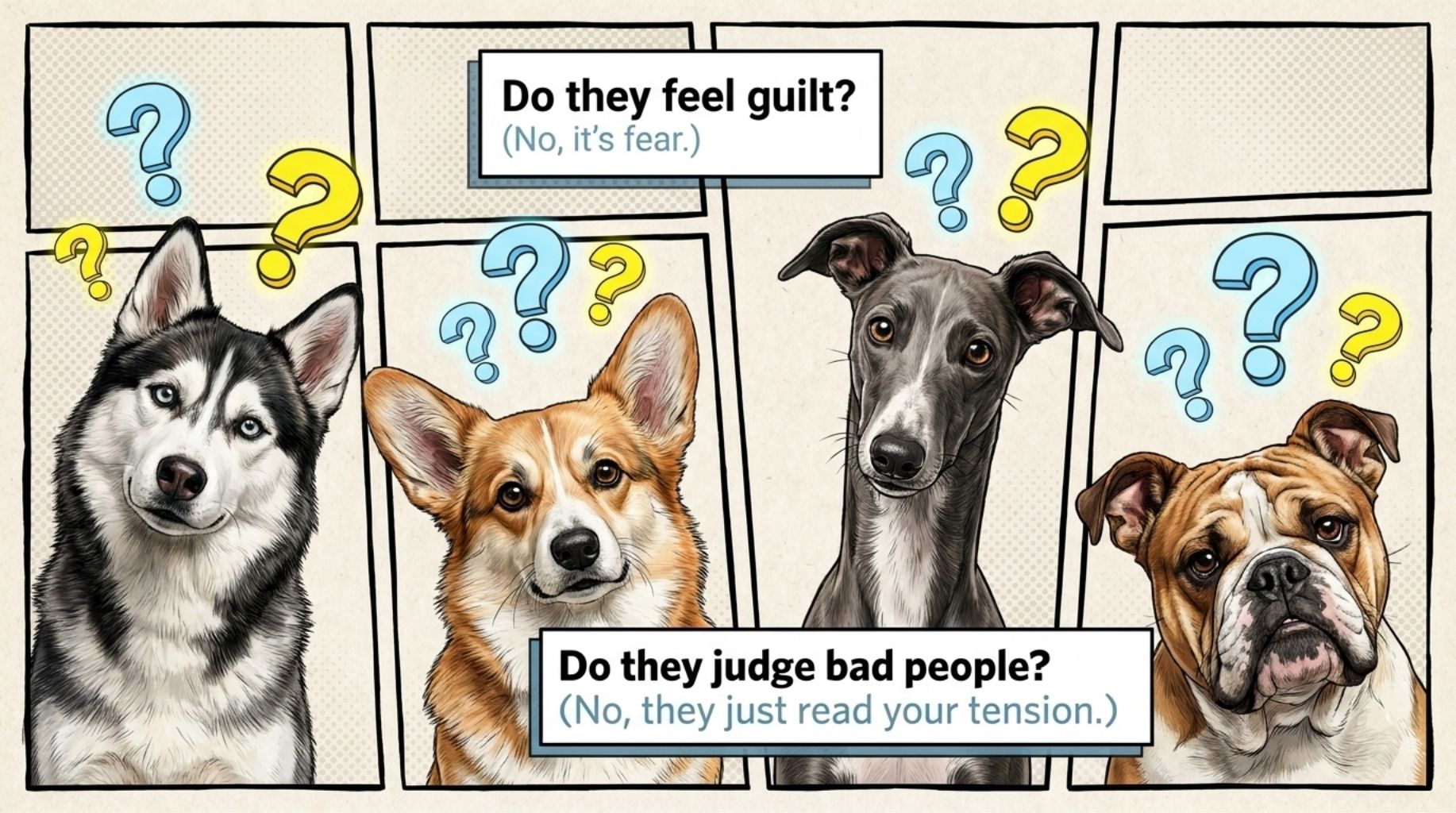
Studies from 2009 and again in 2025 show the truth. The sad eyes and tucked tail are not remorse. They are fear. Your dog reacts to your anger the moment you walk in. He does not recall a wrongdoing from hours ago. Punishing that expression erodes trust piece by piece. Eventually your dog learns to fear the sound of your keys.
Why Your Dog Looks Guilty Even When He Did Nothing Wrong?
Researchers set up a clever experiment. They told owners their dog had eaten a forbidden treat. Some of those reports were lies. The results flipped everything. Dogs scolded for a crime they did not commit showed an even stronger guilty look than the real sneaky ones.
The expression had zero to do with knowing right from wrong. It had everything to do with reading a tense human. Your dog does not wake up at noon and remember the shredded cushion. He does not spiral into moral reflection.
He simply remembers the last time you came home to a mess. You stood stiffly and spoke sharply. Dog behavior myths around guilt live in that gap between what you feel and what he feels. Close the gap. You will start to see your dog for who he truly is.
Punishing the Past Never Works, Yet the Myth Sticks Around
Your dog peed on the rug three hours ago. You discover it and call him over to scold. The scene feels right because you were raised to believe in consequences. But a dog’s brain works in the here and now. Cognition research confirms a fact.
A consequence must arrive within about one second for the animal to connect it to a behavior. If you rub his nose in a dried puddle, you teach him nothing about house rules. You teach him that you are unpredictable and sometimes scary.
Do that often enough and anxiety rises. That usually leads to more problem behaviors. A calm cleanup and a smarter prevention plan will always beat a lecture. Your dog simply cannot understand that lecture.
Letting Go of Guilt‑Based Dog Behavior Myths Creates a More Joyful Home
Imagine walking through your front door without tension. Your dog greets you with a wiggle instead of a crouch. That happens when you stop believing that every mess needs a blame story. Instead, you scan your dog’s face for actual emotion.
You notice the soft eyes, you see the relaxed mouth, and you spot the easy pant. You start to realize that most of what you labeled as “bad” was simply a dog being a dog in a human world.
Many dog behavior myths exist only because we forget one thing. Dogs see life very differently than we do. That one shift from judge to observer, can turn a stressful household into a haven of trust.
DOG BEHAVIOR MYTHS ABOUT BREEDS DON’T MATCH WHAT RESEARCHERS FOUND
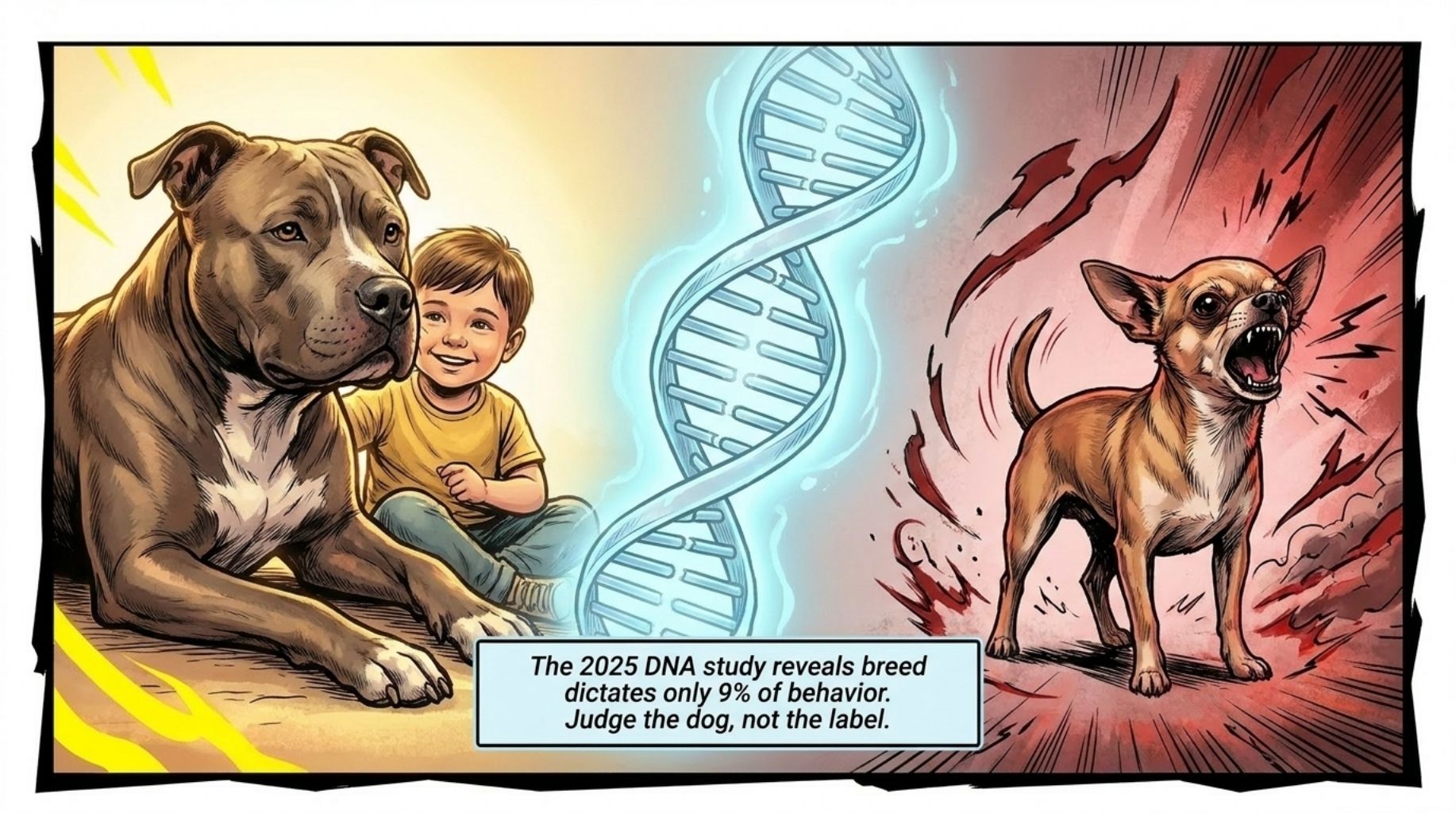
Walk into any shelter and you will hear old labels. “Pit bulls are unpredictable.” “Chihuahuas are feisty.” Those tags feel natural after decades of painting breeds with the same brush. Yet a massive genetic study dropped a bomb on those stories. It was published in Science in 2025. The researchers looked at DNA from more than 2,000 dogs. They also used over 200,000 owner surveys. They found that breed accounted for only about 9% of behavioral differences between individuals. That means a golden retriever can refuse to fetch. A pit bull can cuddle like a pro. Dog behavior myths about breed die hard. The people who let go of them often discover a dog they never expected.
The 2025 Genetic Study That Shook Up Breed‑Based Dog Behavior Myths
Lead researchers examined DNA from a sweeping sample of companion dogs. They matched genetic markers to reports of real‑world habits. Yes, functional traits like howling in beagles showed a breed link. But personality traits did not belong to any single breed.
Friendliness and aggression toward strangers spread across all kinds of dogs. Labrador retrievers scored high on human sociability. This matched their gentle‑giant reputations. American pit bull terriers are often banned and feared, scored just as high on that same friendly‑to‑humans scale.
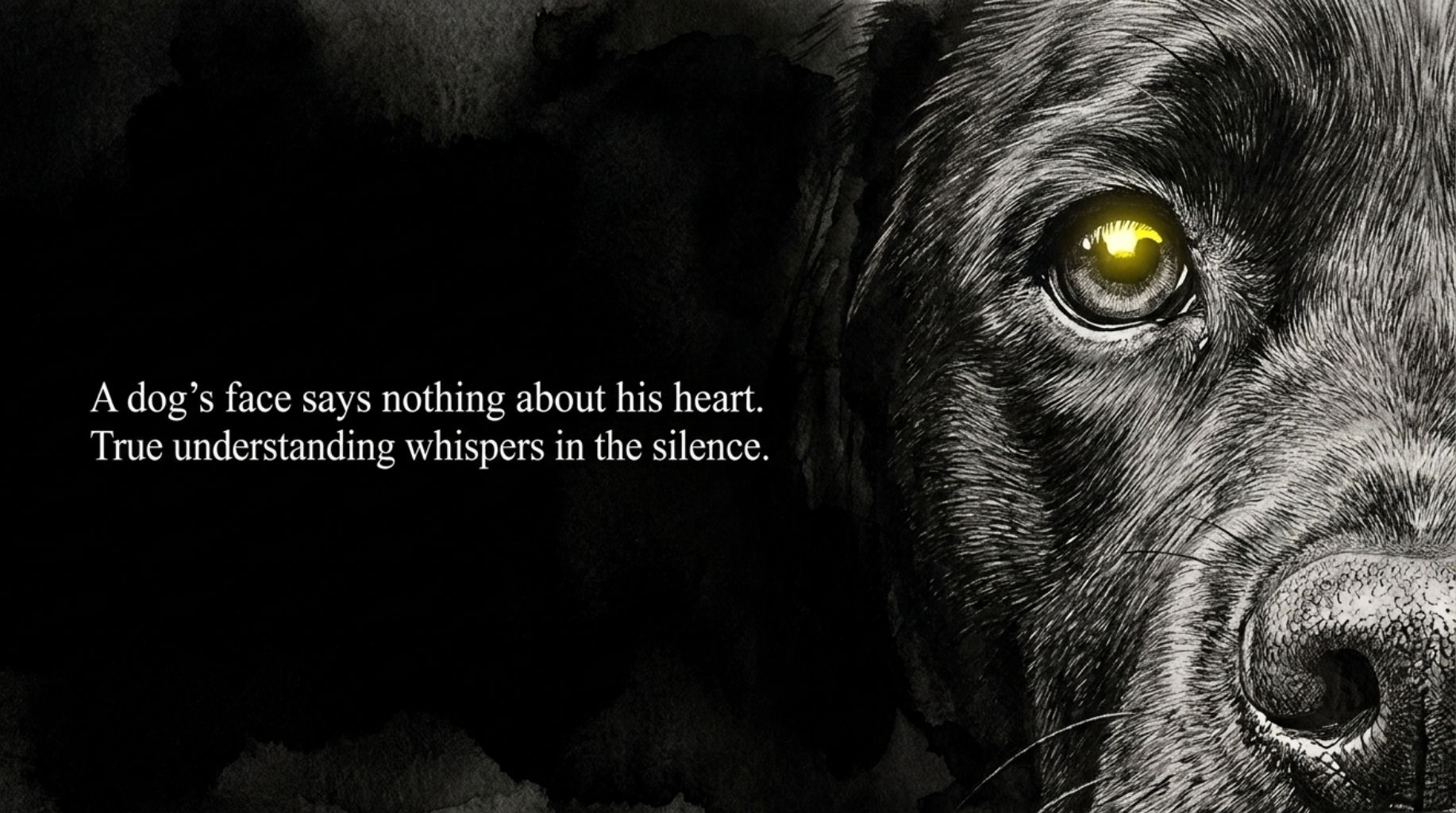
One co‑author said, “What the dog looks like is not going to tell you what the dog acts like.” When you truly absorb that finding, you see how many dog behavior myths rest on appearance alone. A dog’s face says nothing about his heart.
Why Your Mixed‑Breed Mutt Defies Dog Behavior Myths Every Day?
Your scruffy rescue probably has twelve different breeds swirling in his DNA. He digs like a terrier, and he lounges like a bulldog. He herds the kids when the doorbell rings. That beautiful mix is exactly what the genetic data predicts. Behavior comes from environment, experience, and only a tiny slice of breed blueprint.
When you stop expecting him to act like a “typical” anything, you free yourself. You notice who he actually is. You see he loves swimming even though his breed mix suggests land‑lover roots. Dog behavior myths rely on labels. Your dog lives outside any label. He writes his own story, and it usually surprises you.
How Letting Go of Breed Labels Led to a Happier Adoption Story?
A family arrived at a shelter looking for a golden retriever. They had read that goldens were great with children. They walked past a brindle pit‑mix named Olive three times, they did not even glance.
A volunteer finally said, “Watch the dog, not the sign.” They sat with Olive in a quiet room. Within ten minutes, she rested her big head in their six‑year‑old’s lap. Today Olive sleeps under the same quilt as the family cat.
She greets strangers with a happy wag. That story is not rare. It happens when people look past dog behavior myths. They look straight at the animal in front of them. Breed tells a tiny part of a story. You hold the pen for the rest.
BODY LANGUAGE MISUNDERSTANDINGS: DOG BEHAVIOR MYTHS THAT PUT PEOPLE AT RISK
A chocolate lab trots toward you with a sweeping tail. Your hand reaches out because the scene screams “happy dog.” Then a low growl freezes you in place. The tail was high arousal, not an invitation. Body language blur creates some of the riskiest dog behavior myths we face. The Spanish survey found most people still believe a wagging tail equals pure joy. Science disagrees. The gap between what you see and what your dog says can lead to snapped fingers and injured families. A dog speaks constantly with ears, eyes, tail, and posture. We only listen when the volume hits ten. Learning to read the quiet whispers protects everyone you love.
The Wagging Tail Myth and Other Body Language Dog Behavior Myths
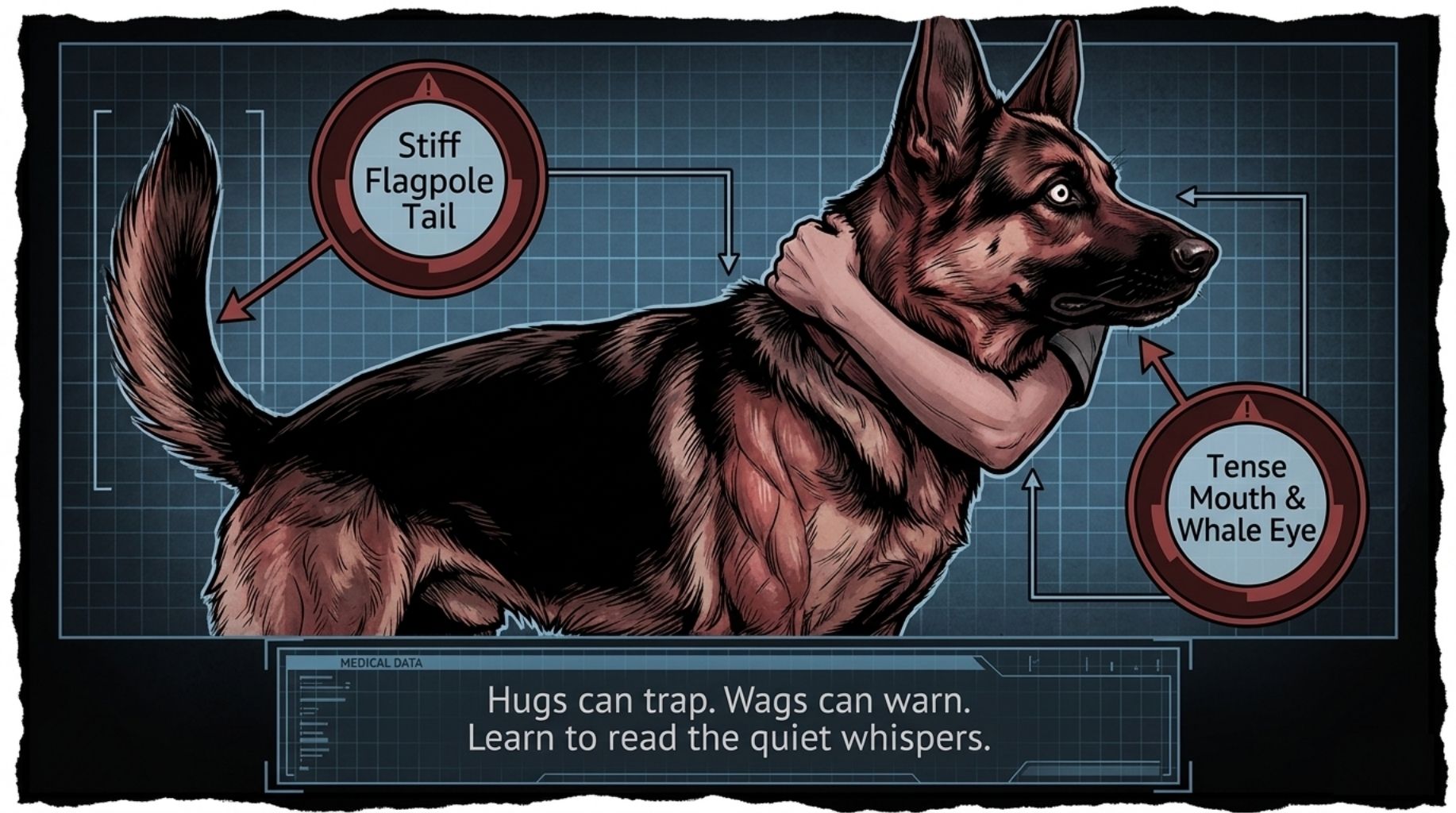
A high, fast wag often signals excitement. That excitement can tip into over‑arousal in a heartbeat. A low, slow wag often means uncertainty, not friendliness. A stiff tail held like a flagpole tells you the dog is on guard. He is not wiggly.
Veterinary behaviorists note a startling fact. Many serious bites come from dogs whose tails were wagging moments before. The warning signs started earlier. Look for a tense mouth and look for a whale eye showing the whites.
Look for a stress yawn in a non‑sleepy moment. Dog behavior myths about body language flatten a rich vocabulary into a single emoji. That cheat sheet fails when you need it most. Start watching your dog’s whole body. You will be amazed at how much he has been telling you.
Why Hugging Your Dog Might Not Say “I Love You”?
You wrap your arms around your shepherd every morning. It feels like love. For many dogs, that embrace feels like restraint, not affection. Dr. Menor‑Campos and his team noted a survey result. Most participants agreed “dogs love being hugged.”
Yet canine experts call hugging a leading trigger for bites to the face. A dog who tolerates your hug might still flick his tongue. He might turn his head. He might stiffen his body. All of these are signals of discomfort.
When a child hugs a dog, the stakes climb. Kids miss those subtle signs. Dog behavior myths that paint hugging as universally safe have put countless faces too close to nervous mouths. A scratch behind the ear often says more than arms ever could.
Reading Real Dog Talk Protects Both You and Your Best Friend
Before you interact, glance at your dog’s whole posture. Check his ears, eyes, mouth, and tail height. Notice the way he carries his weight. If you spot tension, give him space. Wait for a softer signal.
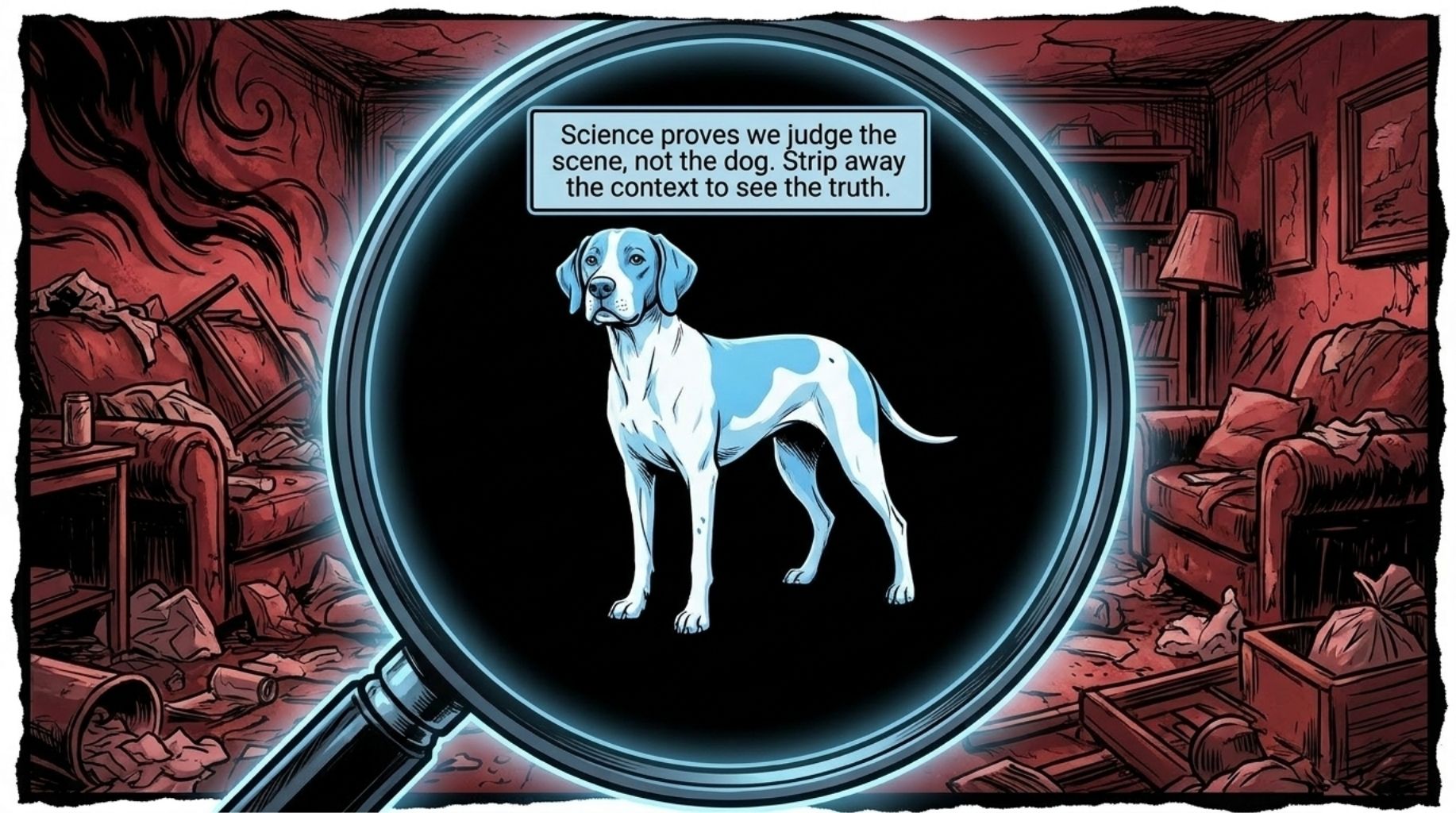
That one pause can prevent a nip. It can stop a snap. It can avoid a lifetime of fear. Arizona State University researchers discovered something important in 2025. People pay far more attention to the scene around the dog than to the dog himself.
When you strip away the background and just watch the animal, dog behavior myths collapse. You finally see what is real. You start to trust what your dog shows you. He starts to trust that you will listen. That builds a safe friendship that handles any surprise.
WHAT THE LATEST SCIENCE REVEALS ABOUT DOG BEHAVIOR MYTHS?
Science never sleeps. Right now researchers are uncovering fresh truths at a dizzying pace. A January 2025 paper surveyed 224 owners. It found lingering belief in dominance theory despite decades of evidence against it.
Another Arizona State study showed a human blind spot. We judge a dog’s emotions based on the scene, not the animal’s actual body language. Meanwhile, a Kyoto University team cracked a big story wide open. They tackled the “my dog judges character” myth. When you follow the data instead of dog behavior myths, your dog wins every single time.
Arizona State’s 2025 Study Exposes Dog Behavior Myths About Emotions
Psychologists at ASU filmed a pointer‑beagle mix named Oliver. He reacted to everyday triggers. They showed him a leash, a vacuum, a treat, and a scolding. Then they showed the footage to nearly nine hundred volunteers. Sometimes the background was visible. Other times it was gone.
When people saw the leash or the vacuum, they assigned emotions based on the scene. They ignored Oliver’s actual body language. Strip away the context and a wild thing happened. Nobody could tell a happy face from a fearful one.
Professor Clive Wynne called this a “huge blind spot.” You may be comforting a stressed dog. You could be correcting a happy one. All of it is based on a guess. Dog behavior myths that shape your daily routines collapse when you realize how much you project onto the scene.
The Kyoto University Study Shows Dogs Do Not Judge Like Humans
Owners love to believe their dogs sniff out bad people. Kyoto researchers tested forty pet dogs across three age groups. The assumption crumbled. Dogs watched strangers behave generously or stingily with food.
Later they showed no consistent preference for the kind person. Some simply chose the shady spot in the yard. The scientists did not deny all social judgment. They proved it does not work the tidy way we imagine.
Dog behavior myths that turn your dog into a moral compass stop you from seeing the truth. He cares about safety, comfort, and the next treat. He does not care about your neighbor’s invisible goodness.
The MDPI 2025 Survey Reveals Even Modern Owners Cling to Old Ideas
The latest survey came out of La Trobe University. It reached 224 participants. They were asked about cat and dog behavior. Owners mostly matched scientific consensus. This cheered researchers. Yet the ghost of dominance theory still lingered.
Some respondents believed you must be the alpha to raise a stable dog. Coercive methods actually increase anxiety and aggression. After the survey, people received a document explaining current science. Their understanding improved.
That proves education works. Dog behavior myths don’t survive when people get clear, factual information. They receive it without shame. You are reading this now. You have already started the shift.
BUILDING A BETTER BOND WHEN YOU LET GO OF DOG BEHAVIOR MYTHS
Every myth you release leaves space for something real to grow. Stop believing your dog needs a pack leader. You start seeing a sensitive friend who learns through kindness. Stop interpreting a tucked tail as guilt. You notice the exact moment your dog feels safe again. Dog behavior myths block the view. Clarity brings you closer. So, watch more, assume less, and reward often. The dog at your feet has been telling you who he is for years. Today you can finally listen without static.
Replace Dominance Thinking with Reward‑Based Training
Researchers at the University of Bristol concluded something years ago. Dominance is a “bad habit” for explaining dog behavior. The American Veterinary Society of Animal Behavior echoes that verdict annually. Reward‑based training does not spoil your dog. It teaches him that cooperating with you leads to good things.
You build brain pathways that choose calm over panic. You gradually reduce treats as the behavior becomes automatic. The myth of the forever‑treat pouch melts away. Dogs trained with positive reinforcement learn faster. They show less stress than those trained with punishment.
That is data, not opinion. Dog behavior myths that champion a tough‑guy approach mostly make dogs scared of their own humans. Scared dogs cost far more in heartbreak than any “alpha” moment could ever be worth.
Socialization Done Right Is Safer Than the Isolation Myth
The idea that a puppy should stay home until sixteen weeks sounds safe. But the critical socialization window slams shut around fourteen weeks. Puppies who miss that gentle exposure often grow into fearful adults. A well‑run puppy class limits entry to dogs of similar age and vaccination status. Disease risk becomes far smaller than the risk of lifelong fear.
The American Veterinary Society of Animal Behavior urges early socialization. Behavior problems kill more dogs than infectious diseases do. Curate positive experiences for your pup. Strangers can offer tiny treats. Quiet children can walk slowly.
Car rides can end in a fun sniff walk. Dog behavior myths that lock puppies away sound protective. But the lifelong cost of an under‑socialized dog is real. Open the door carefully. Let your puppy learn the world is mostly kind.
A Daily Ritual That Builds Trust Beyond Dog Behavior Myths
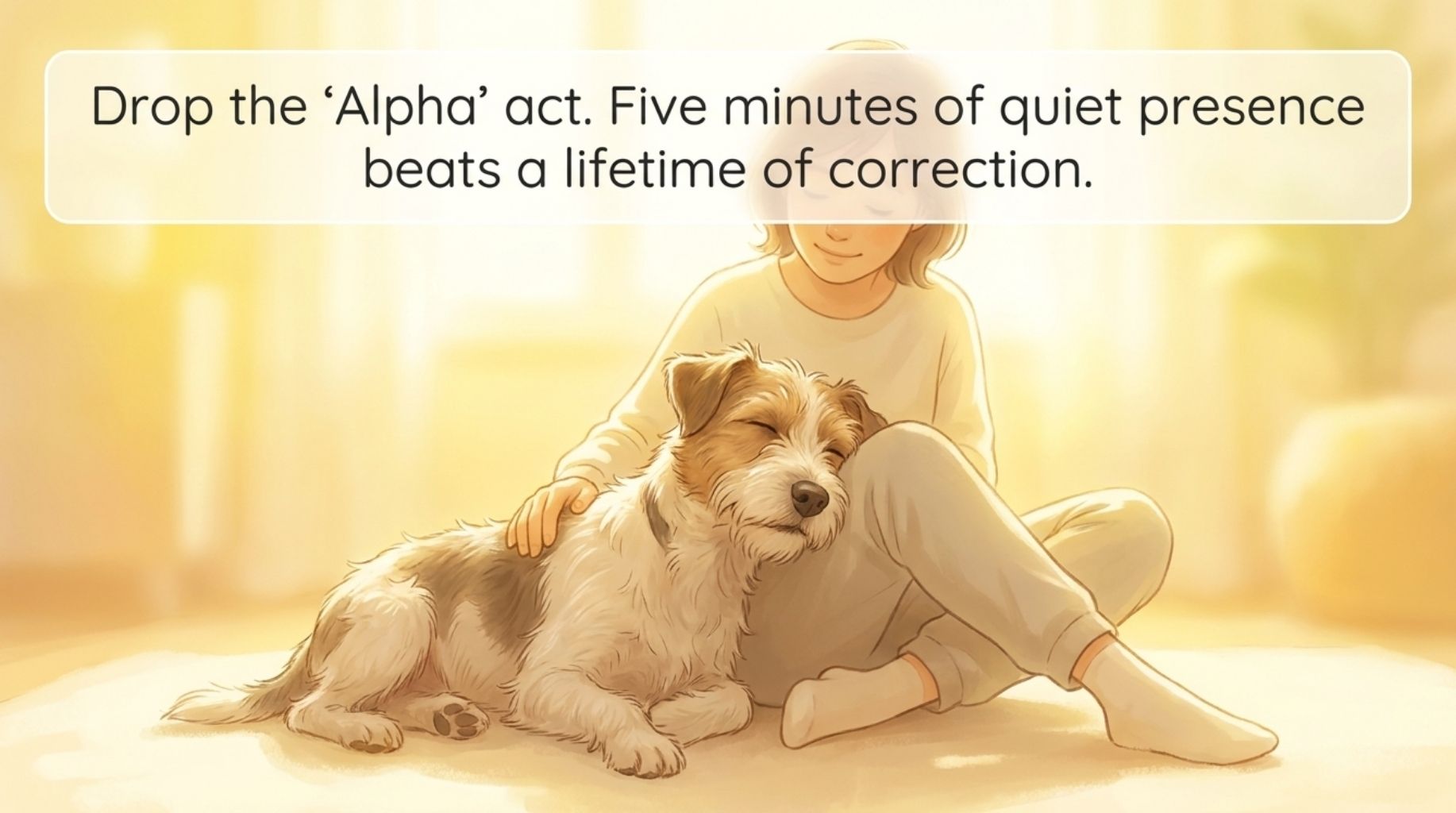
Tonight, sit on the floor with no food and no toys. Bring no agenda. Just breathe and watch. Notice if your dog moves closer. See if he leans against you. Watch if he settles nearby with a long sigh. That moment is the antidote.
Nothing is demanded. Everything is accepted. It counters every dog behavior myth that told you to control, command, or correct. Dogs evolved alongside humans for thousands of years. The deepest bond forms in the quiet spaces.
A five‑minute ritual of still presence does more than any boot camp ever could. Over time you will spot the micro‑signals. You will see the nose lick that says “I need a break.” You will catch the soft blink that says “I trust you.” True understanding whispers in the silence. It waits for you every evening on the living room floor.
FREQUENTLY ASKED QUESTIONS