
The giant dog breeds are truly a sight to behold. I remember the first time I met a Great Dane up close. It was like seeing a real-life mythical creature. But beyond their jaw-dropping size, these giants have so much more to offer. Of course, owning a dog of this magnitude comes with unique challenges. Understanding their needs and emotions is the key to a happy life together. That is exactly what we will explore today.
“Imagine a 200-pound dog that thinks it’s a lap puppy, these gentle giants will steal your heart, your couch, and maybe your dinner, but their silent language is the real key to a lifetime of loyalty”.
Quick Summary About THE GIANT DOG BREEDS
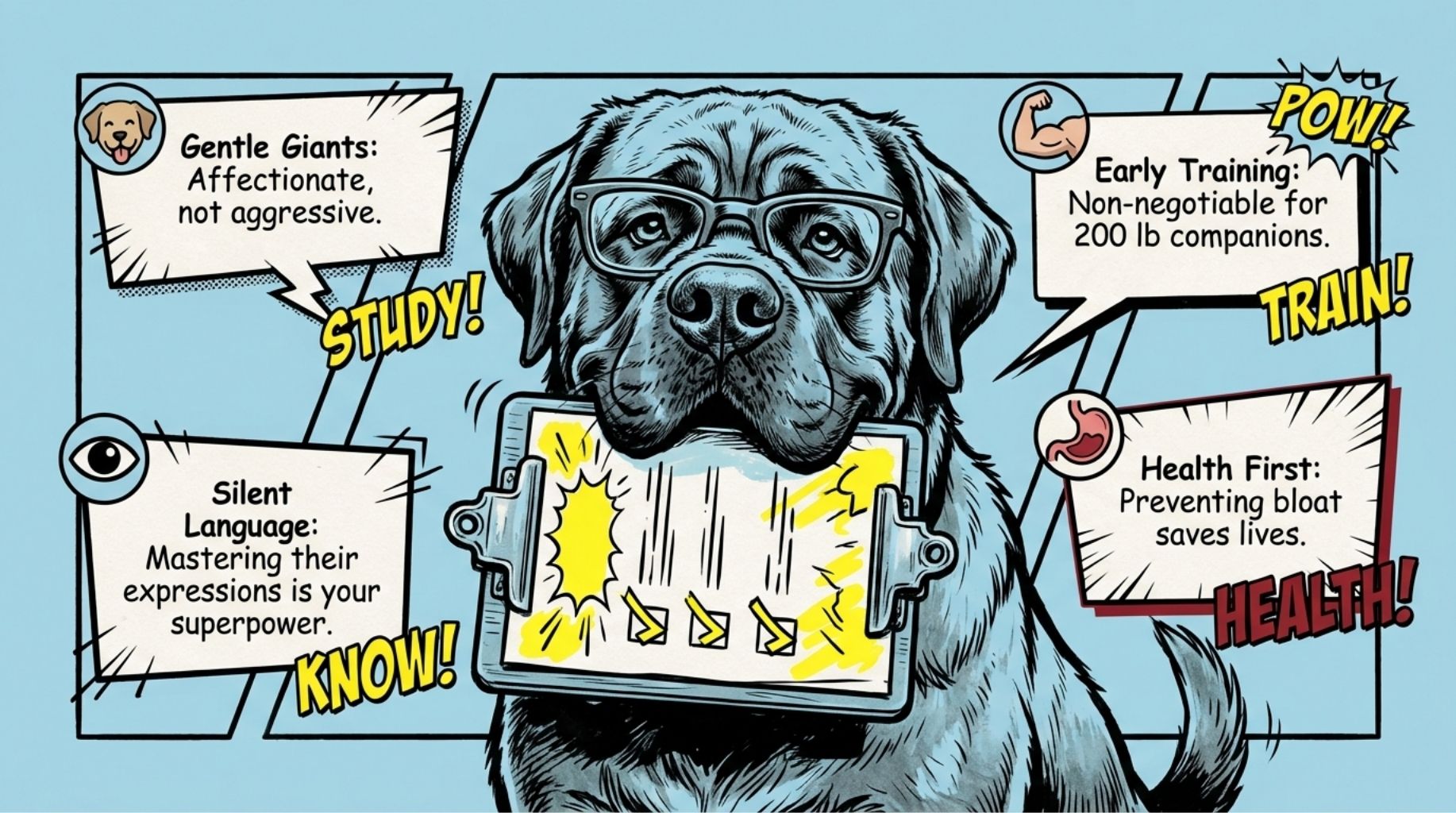
Giant dog breeds like the English Mastiff, Great Dane, and Irish Wolfhound are often misunderstood as aggressive due to their size, but most are famously gentle and affectionate. This article explores how to read their body language, eyes, mouth, ears, and facial tension, to build trust and prevent fear-based reactions. It then profiles the world’s largest breeds, from the heroic Saint Bernard to the lion-hearted Leonberger, while covering essential training, health risks, and living tips. Backed by recent 2025 scientific studies on canine facial expressions, the guide helps owners spot anxiety, prevent bloat, and create a safe, happy home for these magnificent dogs.
THE TRUTH ABOUT GIANT DOG BREEDS
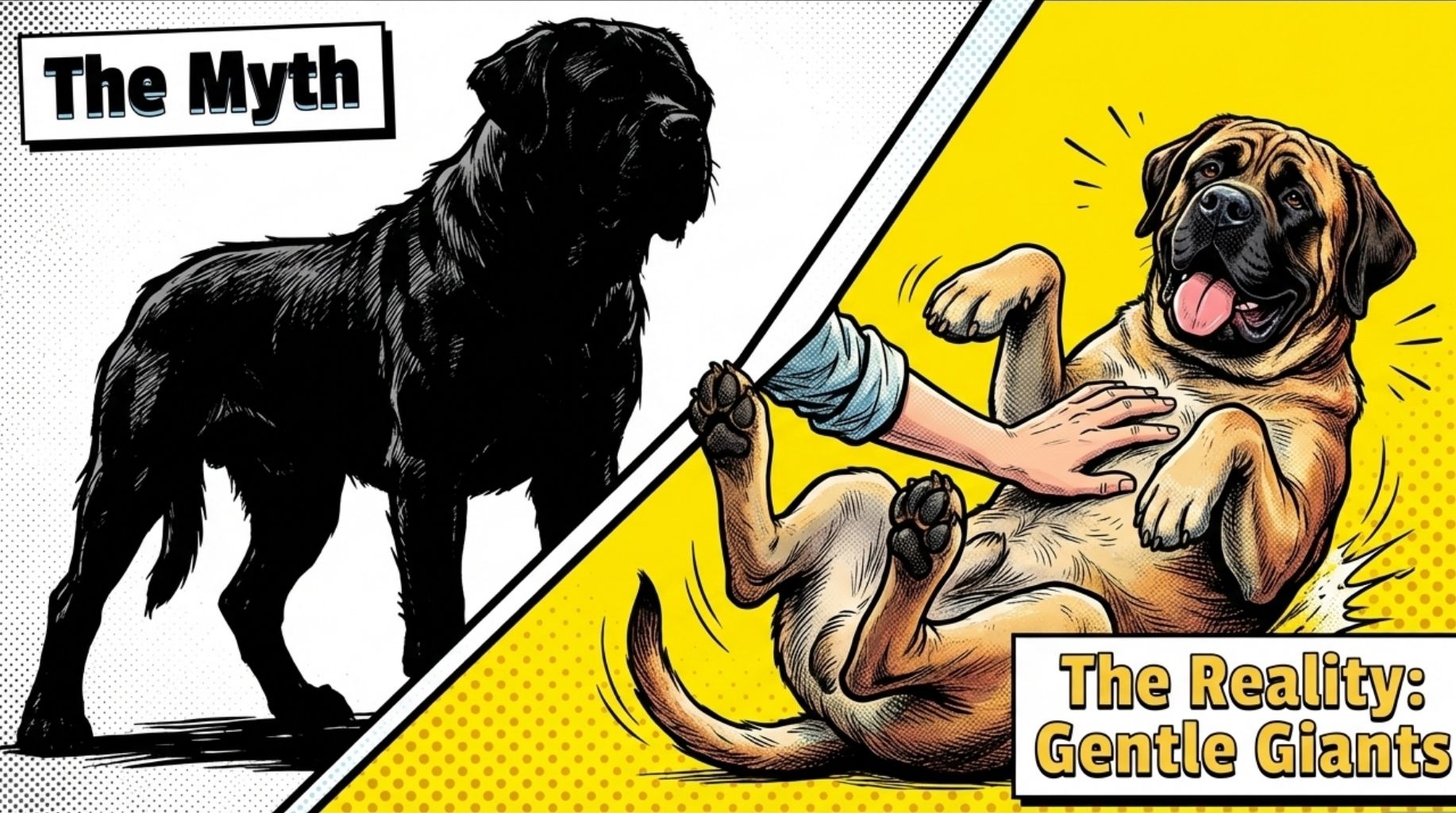
Let’s bust a myth right away. Many people think the largest dogs are automatically aggressive. In reality, most of these towering pups are famously gentle and affectionate. They often earn the nickname “gentle giants” for a reason. Think of the English Mastiff, which holds the record for being the heaviest. Despite its intimidating frame, this breed is known for its tender and loving nature.
How Giant Dog Breeds Communicate with Their Eyes?
Your giant dog’s eyes are a window into their soul. Scientists from the University of Jyväskylä found that when dogs look at other dogs, they focus mainly on the eyes. A soft, relaxed gaze usually means your big buddy feels safe and content.
On the other hand, a hard stare with a tense body can be a sign of stress or a warning. You should always watch for “whale eye,” where you see the whites of their eyes. This often signals anxiety or fear in your gentle giant.
The Subtle Art of Reading A Giant Dog’s Mouth and Lips
Recent studies show that the mouth area provides the most significant cues when humans and dogs communicate across species. When your giant dog pulls back their lips to show their teeth, it is not always a growl.
A “submissive grin” is a soft, non-threatening smile, often seen when they feel very happy or nervous. But a curled lip paired with a stiff body is a clear sign to back off. You will also notice a loose, open mouth with a lolling tongue. That is your dog’s version of a happy laugh, especially during playtime.
Decoding Ear Positions and Facial Tension in Giant Dog Breeds
Your dog’s ears are like little radar dishes constantly sending you signals. When a giant breed feels relaxed, their ears will sit naturally on their head. But if you see them pinned tightly back against the skull, your pup is likely feeling scared or submissive.
Ears that are pulled slightly back and low often mean your dog is feeling friendly or unsure. For breeds like the Great Dane with floppy ears, you have to look at the base of the ear. Tension around the eyes and forehead is another giveaway that your big dog is feeling uncomfortable.
🔑 Key Points: Most giant breeds are “gentle giants,” not aggressive, the English Mastiff is the heaviest but famously tender and loving.
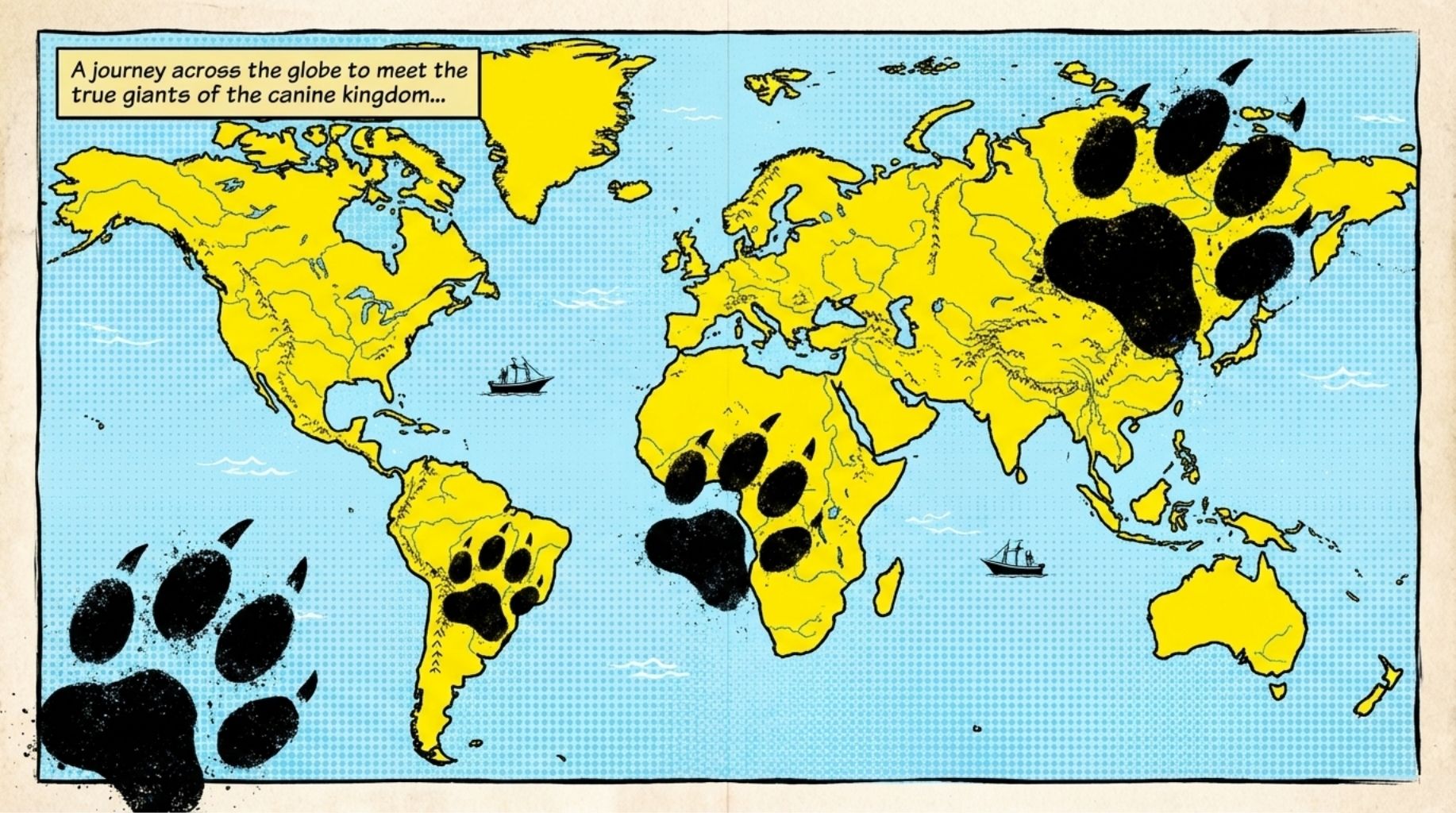
DISCOVER THE WONDERFUL WORLD OF GIANT DOG BREEDS
Let me take you on a journey across the globe. We are going to meet the true giants of the dog kingdom. Each one is unique, with a special history and personality.
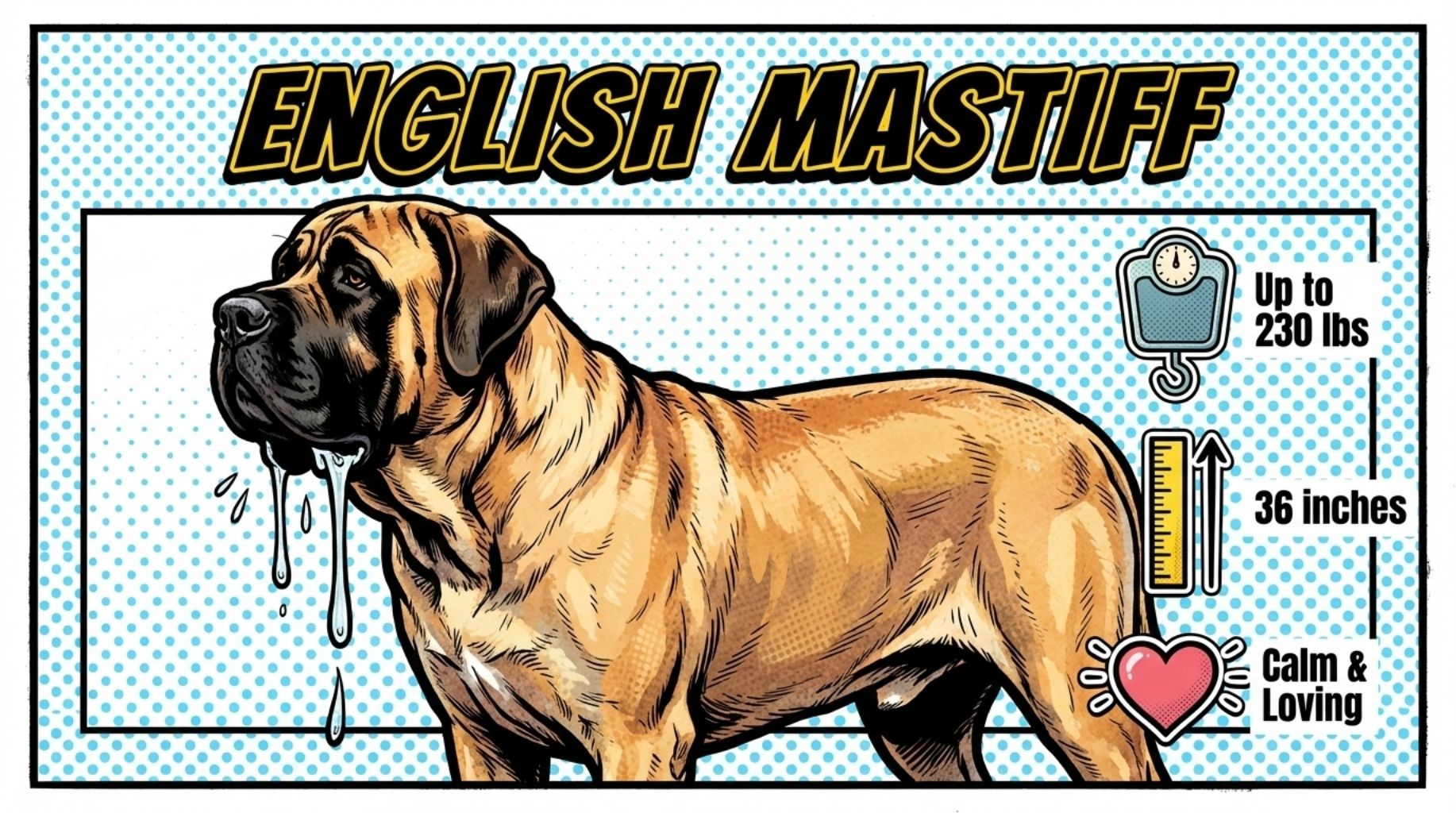
The English Mastiff, A Classic Icon from the Giant Dog Breeds
The English Mastiff is often the first breed people think of when they hear “giant.” Males can reach 36 inches tall and weigh a whopping 230 pounds. But this breed is a classic gentle giant, famous for its calm and loving nature. They are incredibly loyal and wonderful with children, acting as a peaceful, protective presence in the home.
When it comes to care, their short coat is low-maintenance, requiring only a weekly brush. Their short coat is easy to care for with a weekly brush. Just be ready for drool and watch out for bloat, a common stomach emergency in large breeds.
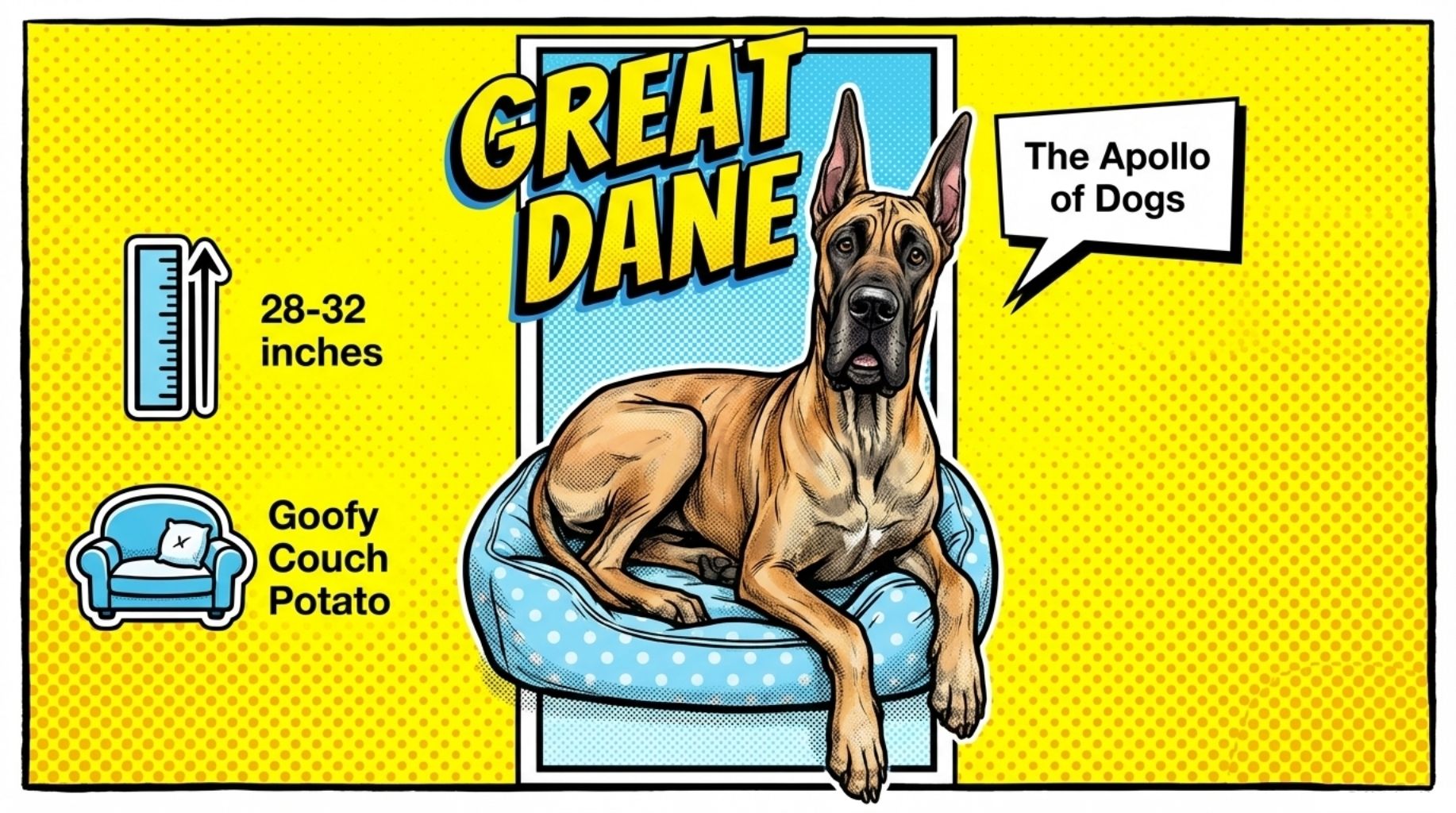
The Great Dane, A Truly Unique Dog from the Giant Breeds
If the Mastiff is the heavyweight, the Great Dane is the skyscraper. Called the “Apollo of Dogs,” it stands 28 to 32 inches at the shoulder. On its hind legs, it can easily tower over a human. Despite that size, the Great Dane is a goofy couch potato dog.
Beneath that imposing stature is a friendly, calm, affectionate dog and loving family member. They do not need a huge yard, just a big soft bed. Be aware of their short lifespan of 7 to 10 years and risks of heart disease and bloat. This breed requires diligent monitoring and care.
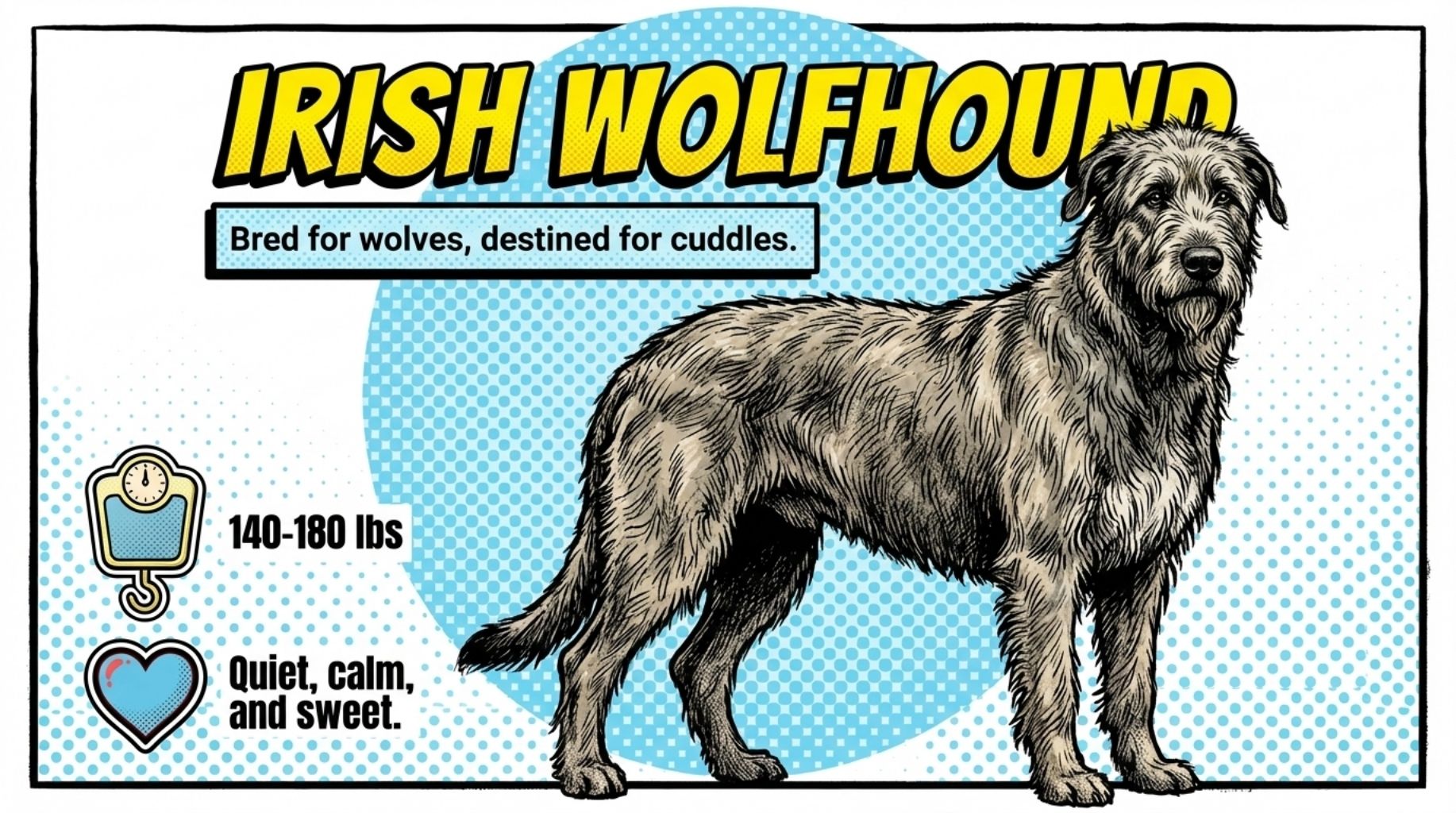
The Irish Wolfhound, Truly Calm and Sweet Giant Dog Breeds
The Irish Wolfhound looks like it stepped out of a Celtic myth. They are one of the tallest dog breeds, with males standing at a minimum of 32 inches tall and weighing between 140 to 180 pounds. This breed was bred in Ireland to hunt wolves.
Today, they are the epitome of a gentle giant, a quiet, calm, and sweet, with a remarkably sweet and patient temperament. Their rough, wiry coat requires regular brushing to keep it tidy and free of mats. The biggest challenge with this breed is their heartbreakingly short lifespan, which is often only 6 to 8 years, so you must make every moment count.
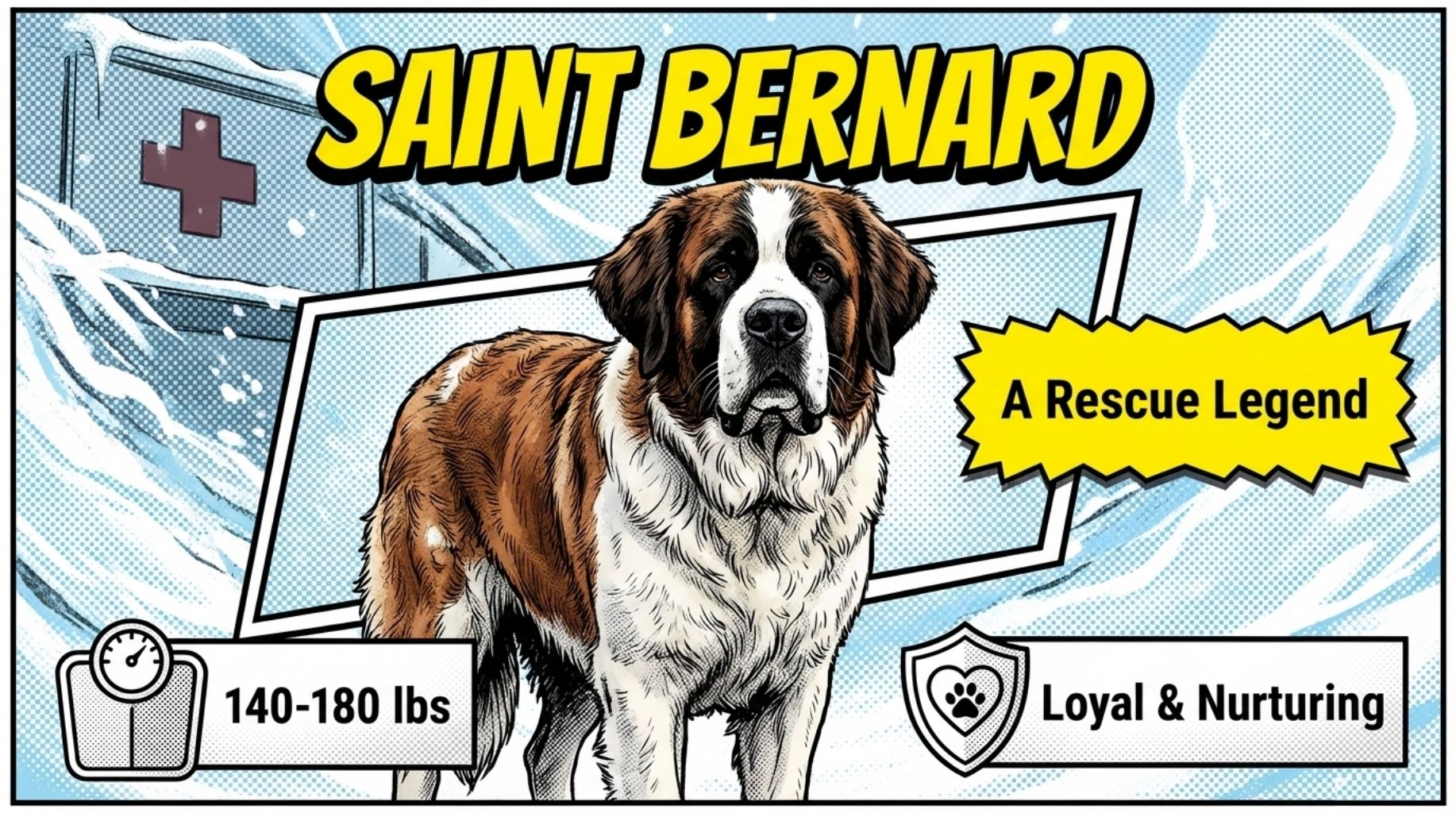
The Heroic Saint Bernard: A Rescue Legend
You know this breed from the famous rescue dogs of the Swiss Alps. The Saint Bernard is a powerful, muscular giant, weighing in at a hefty 140 to 180 pounds. Their iconic dense double coat keeps them warm in the snow, and they come in both short and long-haired varieties.
The Saint Bernard is the perfect example of a gentle giant, being affectionate, loyal, and incredibly gentle, especially with children. They are famously good-humored and trustworthy, rarely barking but always ready to defend their family if needed. Be ready for drool and a bit of stubbornness, as these big thinkers are not always the easiest to train, but their loving nature more than makes up for it.
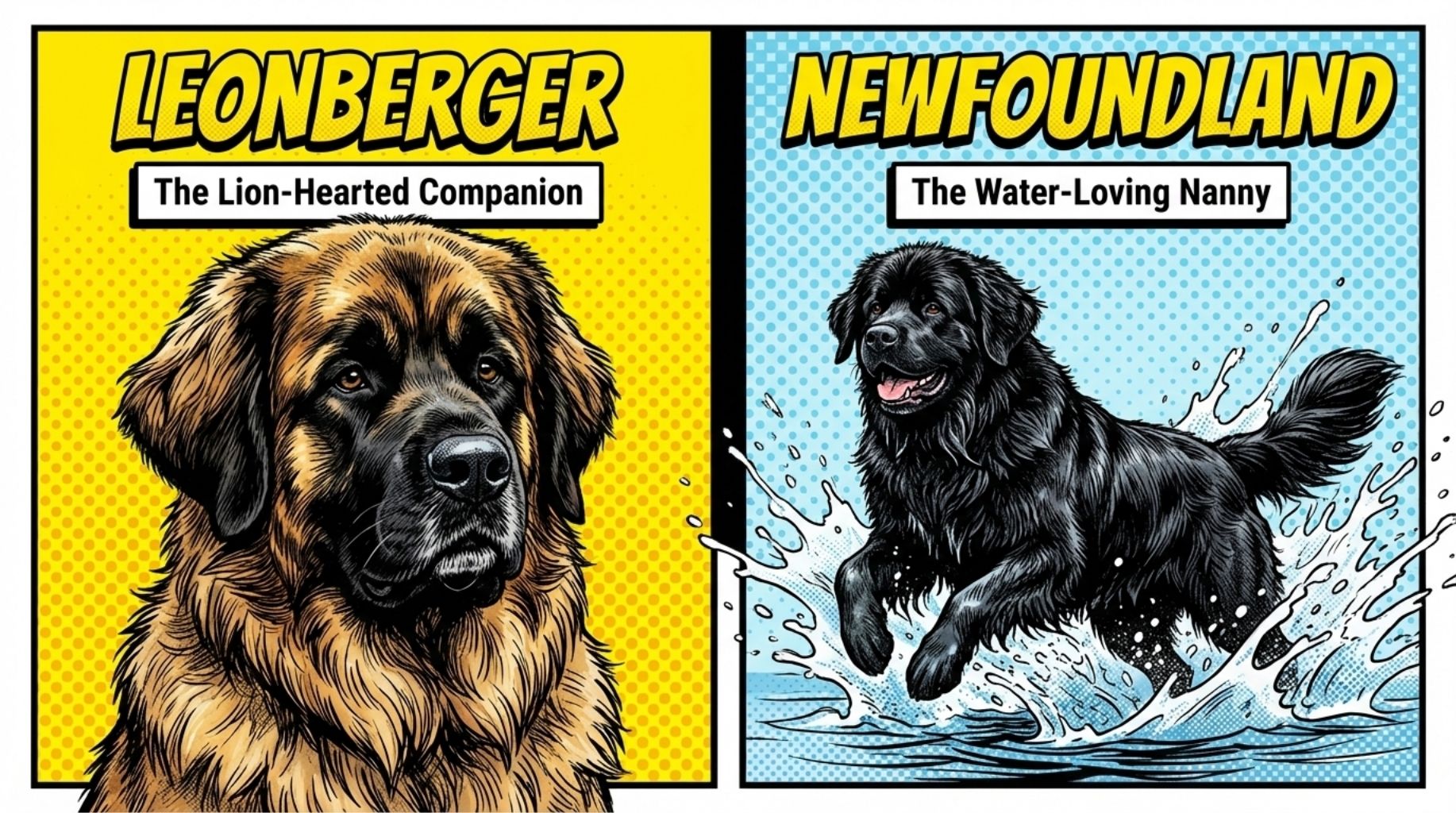
The Majestic Leonberger: A Lion-Hearted Giant
The Leonberger was bred to resemble a lion, and it certainly has the majestic presence to match. This breed is a balanced, muscular, and elegant giant, adorned with a striking black mask on its face. Do not let the lion-like looks fool you, the Leonberger is famous for its friendly, balanced, and affectionate nature.
They are the ultimate family dogs, being playful, tender, and endlessly patient with kids, while also being deeply loyal and sensitive to your mood. They are a higher-maintenance breed because their thick, water-resistant coat requires daily brushing to prevent painful mats and tangles. They also do not like being left alone, as they can suffer from separation anxiety, so you must be prepared to have a constant companion.
The Loyal Newfoundland: A Water-Loving Nanny
The Newfoundland is a giant breed that seems to have a heart as big as its body. This dog is a true giant, with a thick, water-resistant double coat that makes them a natural in the water. They are the quintessential gentle giant, often called a “nanny dog” for their sweet, intelligent, and almost human-like nature. They are incredibly patient and good-natured, but be aware they can be aggressive with other male dogs.
Owning a Newfoundland is a big commitment because they are a high-maintenance breed for grooming. You will need to brush them daily to control their heavy shedding and keep their coat free of mats. They also drool heavily, so keep a towel handy, but the trade-off is getting a loyal, water-loving friend for life.
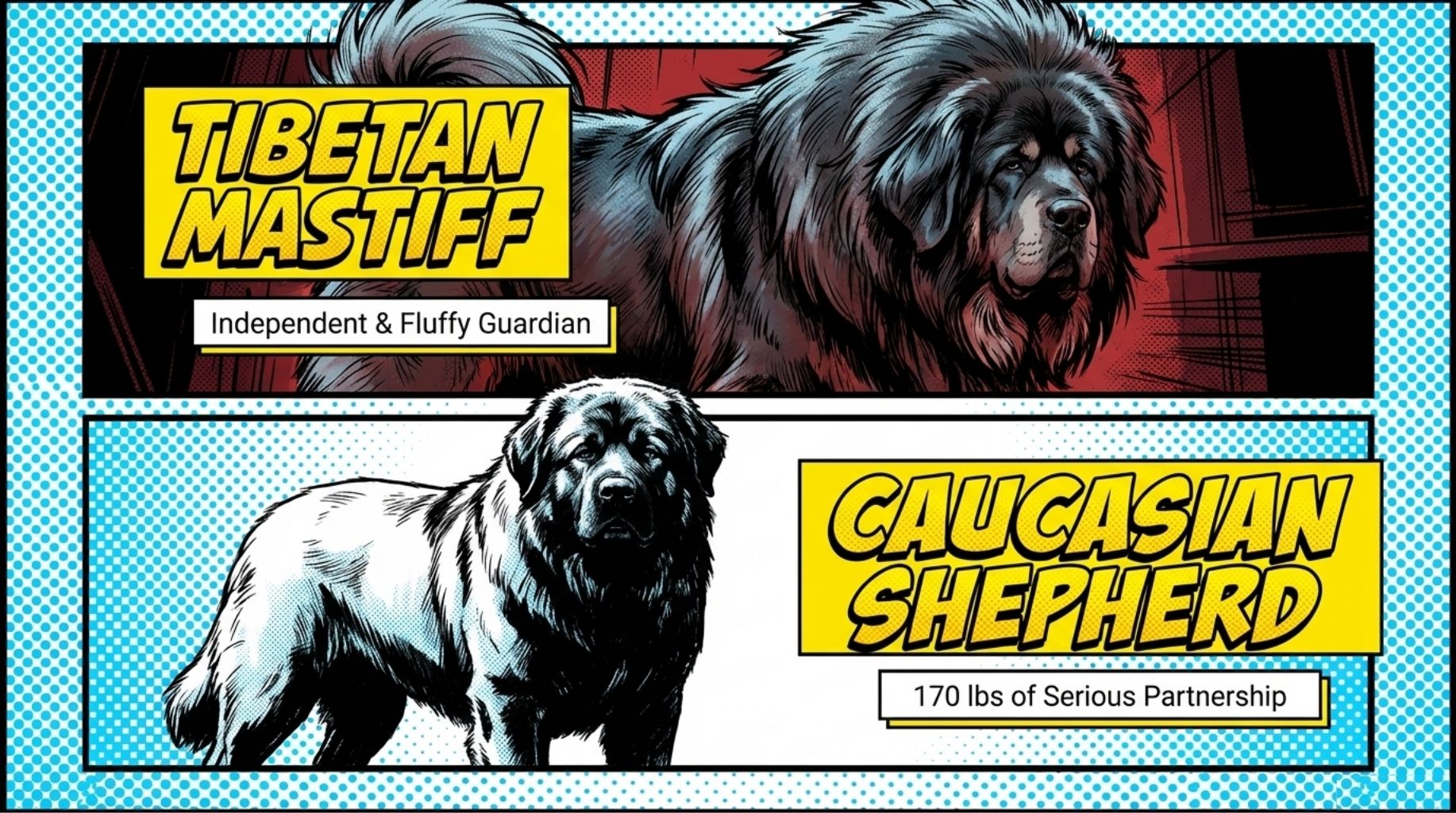
The Independent Tibetan Mastiff: A Fluffy Guardian
The Tibetan Mastiff looks like a lion with its huge, fluffy mane, but its personality is all its own. This is a giant breed that weighs 80 to 150 pounds or more, with a powerful, muscular build that commands respect. The Tibetan Mastiff is not your average cuddly dog, it is independent, territorial, and deeply devoted to its family while remaining aloof and suspicious of strangers.
They are a very sensitive breed that is highly attuned to the emotions of their owners and will become protective if they sense conflict. They are a challenging breed for first-time owners because they are strong-willed and need a confident handler. They are also very agile and need a large, secure yard to patrol and explore, not an apartment.
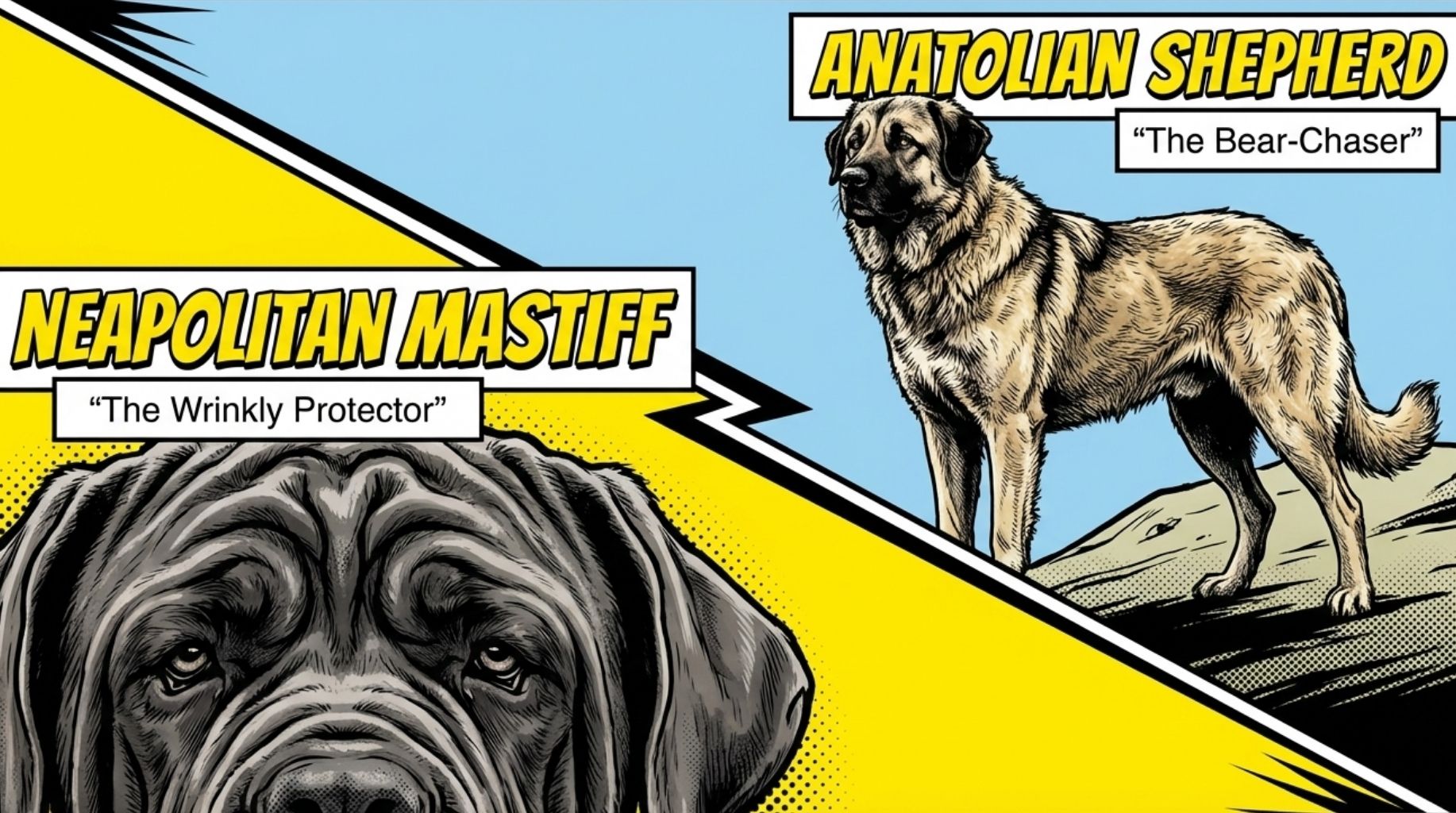
Guardian Dog Breeds: Caucasian Shepherd And Anatolian Shepherd
These dogs are not pets, they are partners bred for a serious job. The Caucasian Shepherd Dog is a fearless giant that can weigh up to 170 pounds and was bred to protect livestock from predators like wolves. The Anatolian Shepherd is another ancient guardian, standing 74-81 centimeters tall, with an athletic build made to chase off bears.
Both breeds are independent thinkers who are confident, strong-willed, and require an experienced owner who can handle their dominant nature. They are not your average family dog for a small apartment; they need a job, lots of space, and a firm, consistent leader. If you can meet those needs, you will gain a fiercely loyal and protective friend.
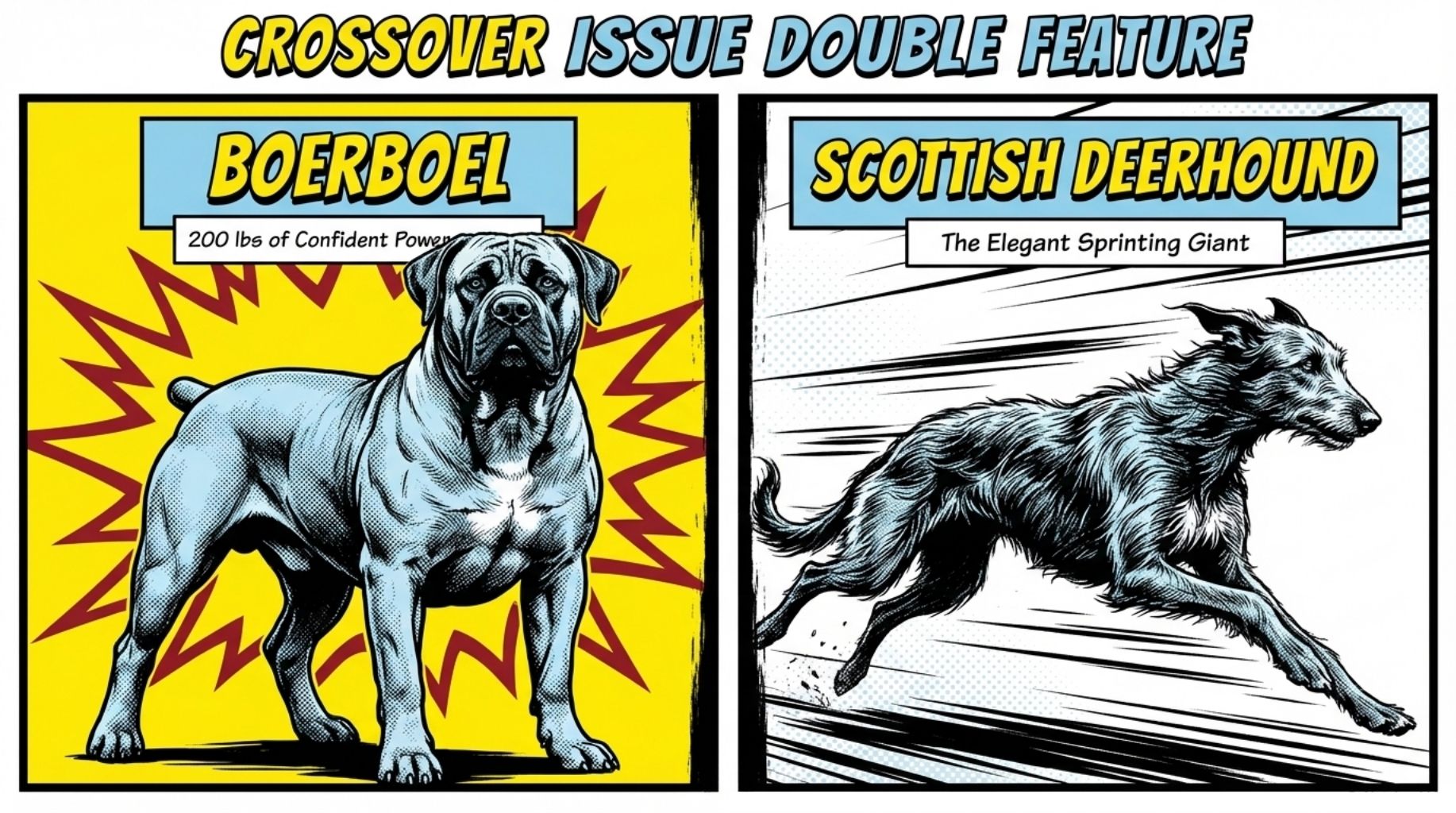
Mastiff-Type Giant Dog Breeds: Neapolitan Mastiff And Boerboel
The Neapolitan Mastiff is the ultimate wrinkled, droopy-faced guard dog. This giant breed has a peaceful and calm nature with its family, but its imposing appearance alone is usually enough to deter any stranger. Their most important care requirement is daily cleaning of their deep facial wrinkles and skin folds to prevent painful infections.
The Boerboel, or South African Mastiff, is another powerful guardian, weighing up to a massive 200 pounds. They are confident, strong-willed, and protective, but they are also known to be incredibly loving and calm with their family, especially children. Both of these mastiff types require an experienced owner and consistent training from a young age, as their dominant nature can be a handful for a novice.
Sighthound Giant: Scottish Deerhound
The Scottish Deerhound is the elegant giant of the sighthound world. This breed is one of the tallest, with a male standing up to 32 inches at the shoulder, but they have a leaner, more athletic build compared to mastiffs. Bred to hunt giant red deer in the Scottish Highlands, they are majestic, athletic, and have a strong instinct to chase anything that moves.
For this reason, you should never let a Deerhound off-leash in an unsecured area, as their hunting drive will kick in. They are a low-maintenance breed in terms of grooming but need a surprising amount of space and long daily walks to keep them happy. They are gentle, dignified, and lovable, but their high prey drive means they are not a good fit for homes with small pets like cats or rabbits.
🔑 Key Points: Each giant breed has a unique history and personality, from the couch-potato Great Dane to the water-loving Newfoundland and the independent Tibetan Mastiff, so match the breed to your lifestyle.
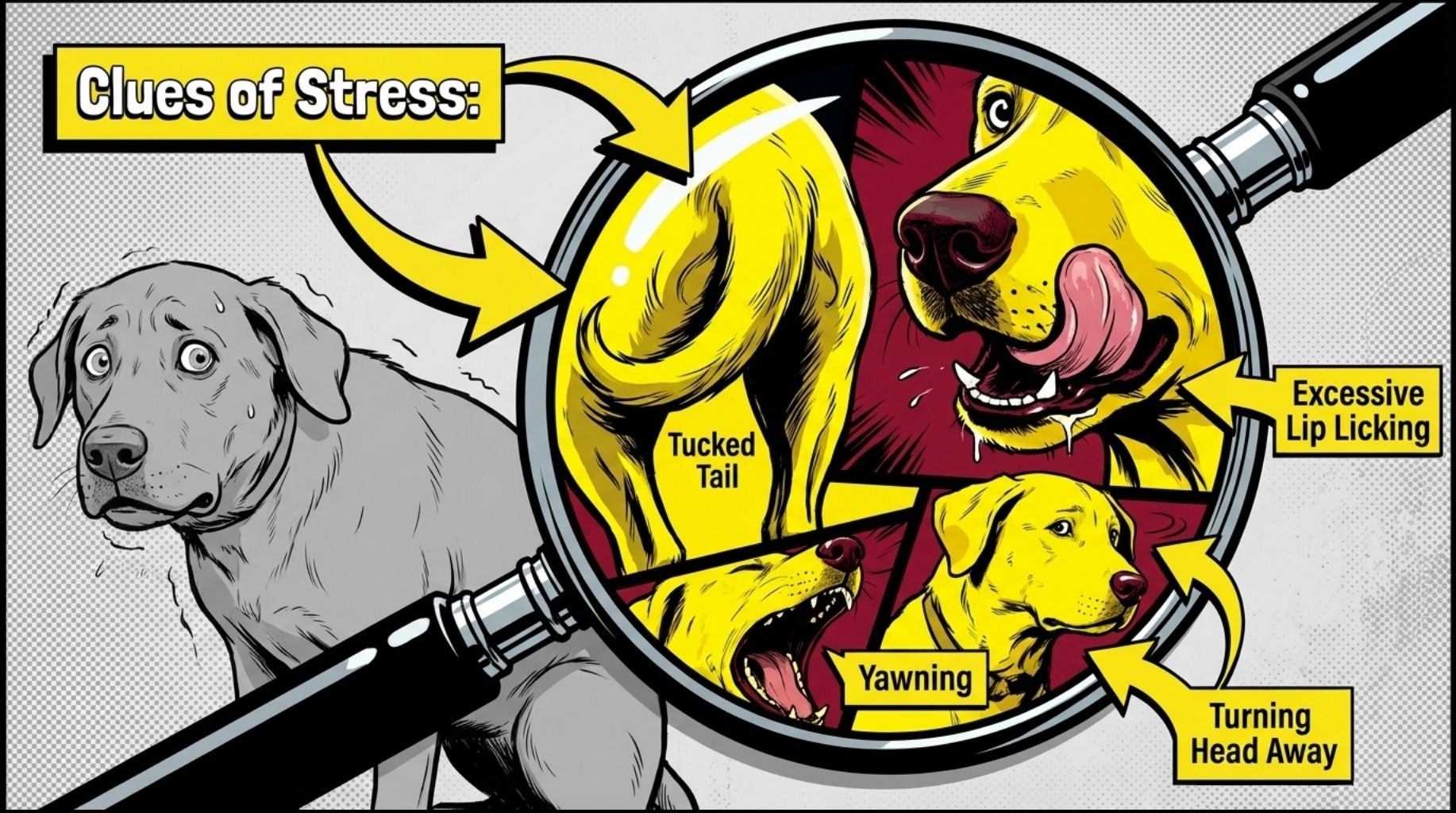
A GIANT DOG BREEDS GUIDE TO SPOTTING FEAR AND ANXIETY
It is heartbreaking to see a big dog feeling scared. Unfortunately, many owners miss the subtle signs until it is too late. A nervous giant can become unpredictable, which is unsafe for everyone involved. Learning to spot anxiety early can prevent a bad situation from happening. Your main goal should always be to make your big companion feel secure.
5 Body Language Clues Your Giant Dog Is Feeling Stressed
- First, look for a tucked tail. A tail curled tightly between the legs is a classic sign of fear.
- Second, watch for yawning that is not about being tired. Dogs yawn to relieve stress when they feel tense.
- Third, notice if your dog starts licking their lips constantly with no food around.
- Fourth, look for shaking or trembling when it is not cold outside.
- Fifth, see if they turn their head away from you or another dog.
These are all calming signals your giant is asking for space.
How To Tell If Your Gentle Giant Is In Pain?
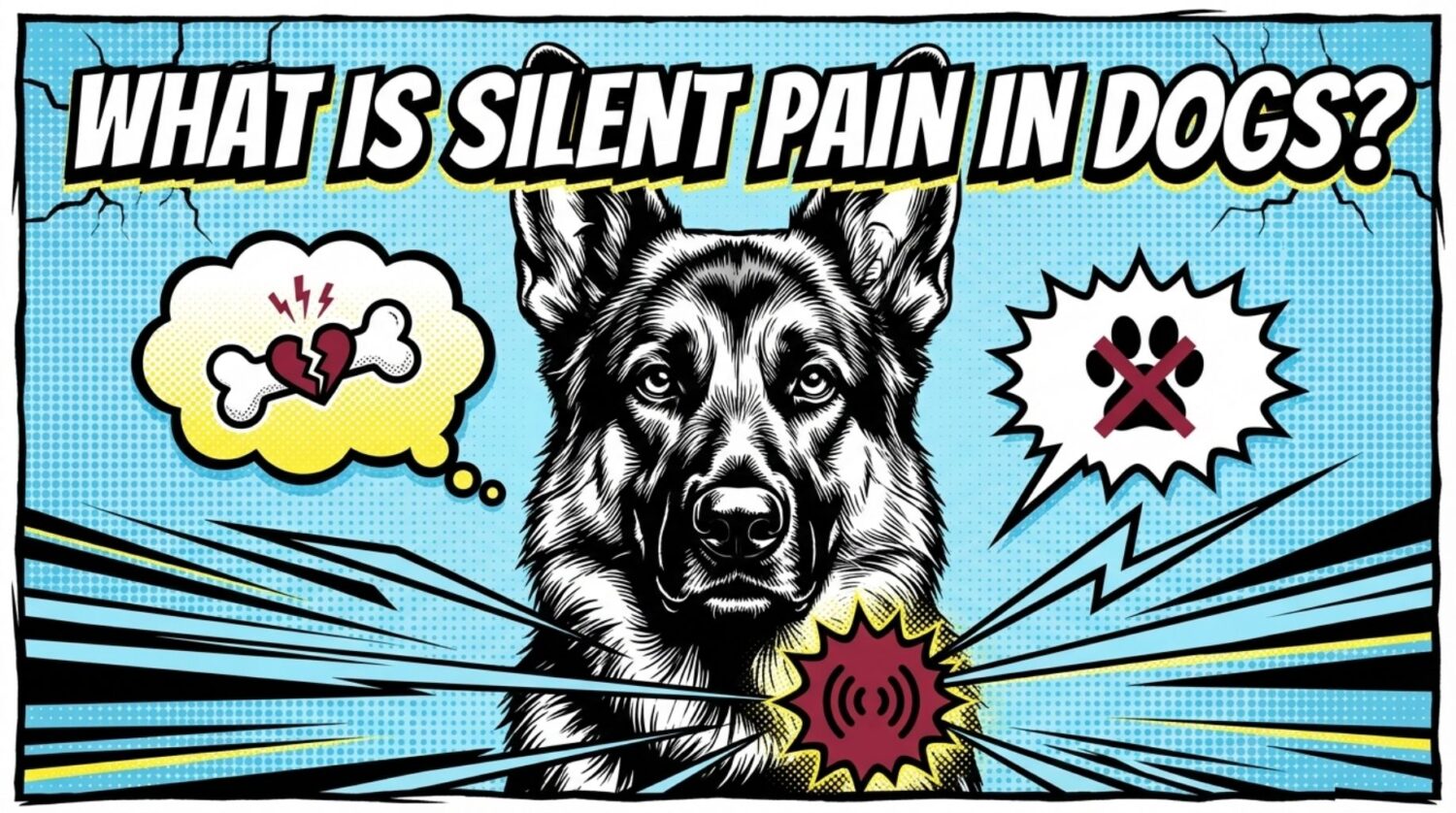
Big dogs are masters at hiding their pain. This is an instinct from their wild ancestors. You have to be a detective for their sake. A normally happy dog might start growling when you touch a certain spot. You might notice them panting heavily even when they are resting.
Changes in their sleeping position or reluctance to climb stairs are huge red flags. Even subtle facial expressions like a furrowed brow can indicate discomfort in these massive breeds.
Creating A Safe Space For Anxious Large-Breed Dogs
Every giant dog needs a quiet retreat in your home. This could be a crate with a comfy bed or a specific corner behind the sofa. Make sure this area is off-limits to guests and other pets. You should never punish your dog for retreating to their safe space.
Use a calm, low voice to reassure them when they look worried. You can also use a white noise machine to block out scary sounds like thunder or fireworks.
🔑 Key Points: Watch for tucked tail, stress yawning, lip licking, trembling, and head turning, these calming signals mean your giant needs space.
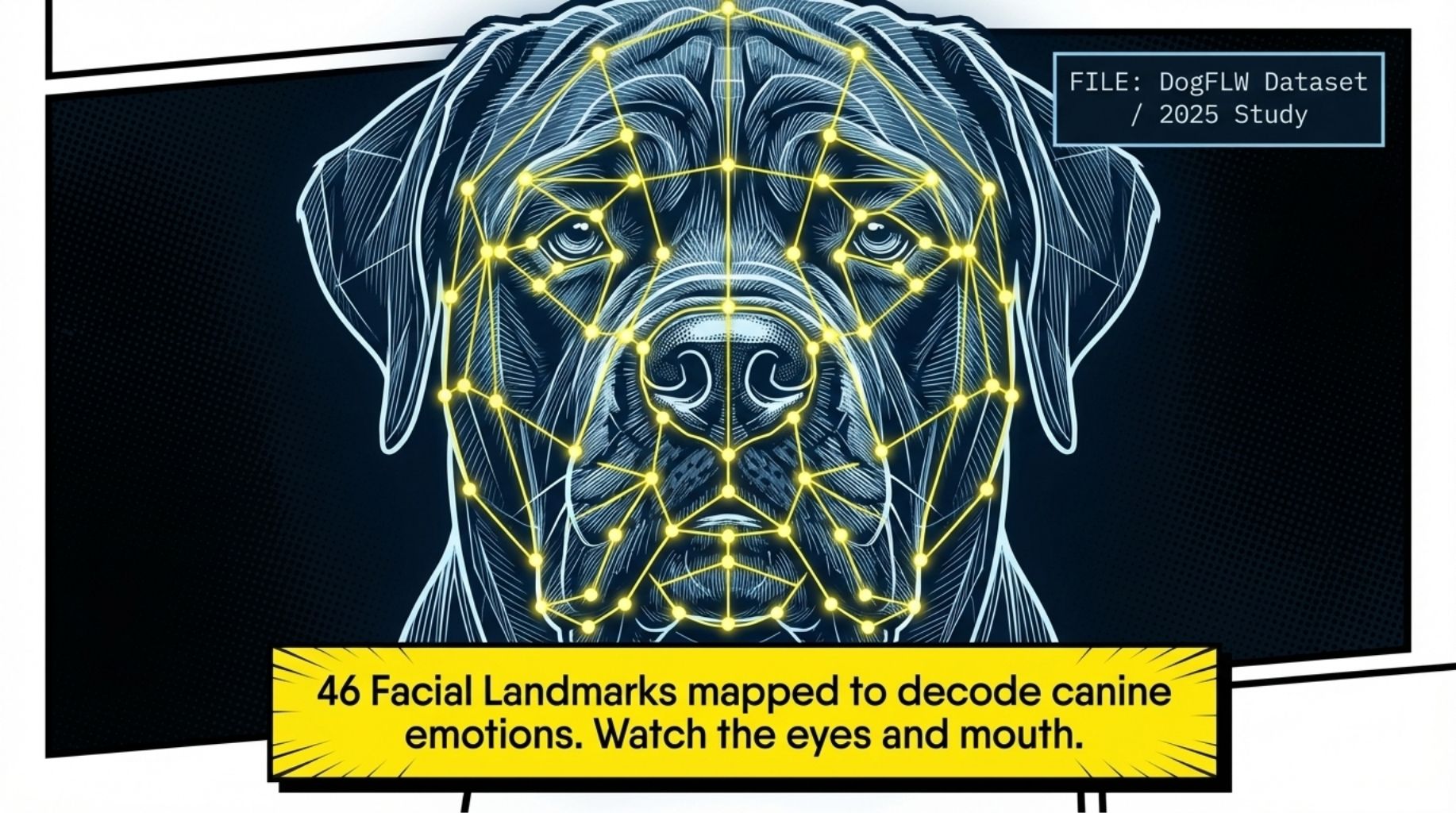
THE LATEST SCIENCE ON DOG’S FACIAL EXPRESSIONS
You do not need to be a scientist to understand your dog. But new research makes it easier than ever to bond with your pet. A major 2025 study developed a system using 46 facial landmarks to map dog emotions. This technology proves that dogs are constantly communicating with us. They just need us to listen.
What The 2025 Dog Facial Landmarks Study Reveals?
This groundbreaking research created a dataset called DogFLW. It contains thousands of images of dogs making different faces. Scientists used this to build an AI that can recognize dog emotions from video clips.
The study confirmed that dogs use specific facial muscles to show happiness, fear, and anger. For owners of giant breeds, this is a game-changer. You can now learn the exact facial movements that signal your mastiff is about to become aggressive or just wants to play.
How Brachycephalic (Flat-Faced) Giants Show Fewer Emotions?
A 2025 study compared flat-faced (brachycephalic) dogs like the Dogue de Bordeaux to normal dogs. The researchers found that flat-faced dogs consistently showed less facial movement. This does not mean they feel less emotion.
It means their anatomy makes it harder for them to physically make the expressions we expect. As an owner, you have to pay extra close attention to their body and posture. Their ears and eyes will do most of the talking for them.
The Best Way To Bond Using Facial Recognition Skills
Dr. Heini Törnqvist’s research shows that both humans and dogs focus on strong facial expressions. A wide human smile or a dog’s bared teeth grabs our attention immediately. You should practice looking at your dog’s face during calm moments.
Notice how their face looks when they are relaxed compared to when they are alert. This baseline knowledge will help you spot danger in seconds. Over time, you will develop a silent language with your gentle giant that goes beyond words.
🔑 Key Points: A 2025 study using 46 facial landmarks (DogFLW dataset) proves dogs constantly communicate emotion; flat-faced giants like the Dogue de Bordeaux show fewer facial movements, so focus on their ears and posture.
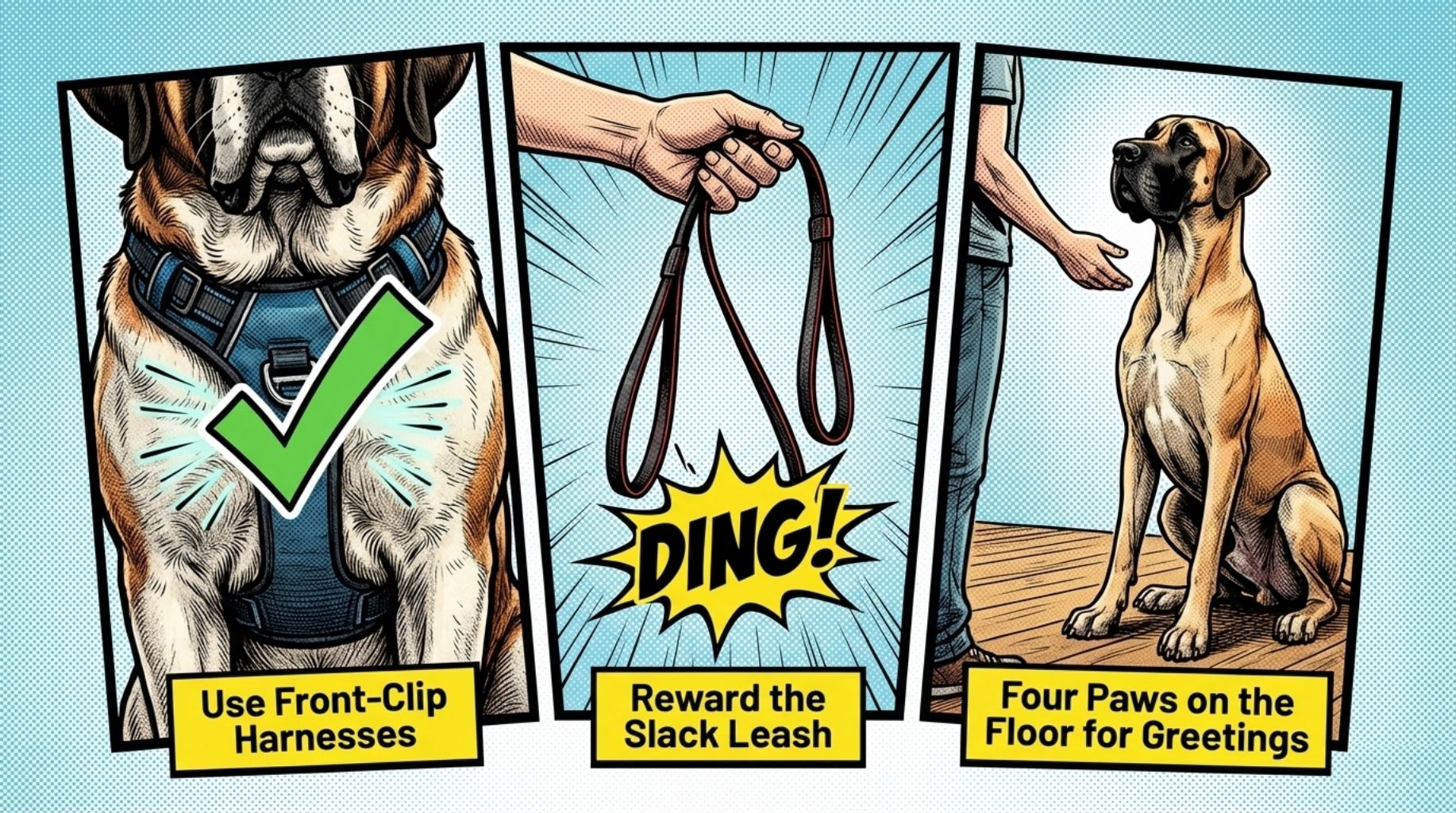
ESSENTIAL TRAINING TIPS FOR GIANT BREED OWNERS
Training a 200-pound dog is non-negotiable. A small bad habit in a Chihuahua is a serious safety issue in a Mastiff. You need to start training your puppy from the very first day. Consistency is your most powerful tool here. Use only positive reinforcement methods for the best results.
Solving The Problem Of Leash Pulling In Giant Dogs
Pulling on the leash is the number one complaint for large breed owners. When a 150-pound dog pulls, they can easily injure you or themselves. Experts recommend using a front-clip harness to redirect their pulling motion.
You should stop walking immediately every time the leash gets tight. Reward your dog with treats when they walk beside you with a slack leash. This technique teaches them that pulling gets them nowhere, while walking nicely gets them everything.
The Danger Of Jumping Up And How To Stop It
A jumping Great Dane can knock over an adult human. This behavior is dangerous even when the dog is just being friendly. You must teach your giant that they get zero attention unless all four paws are on the floor. Turn your back and cross your arms when they jump on you. Only turn around and give praise when they are calm. You also need to train them to sit for greetings, no exceptions.
Socializing Your Gentle Giant For A Calm Life
Early socialization is critical for giant breeds. You need to expose your puppy to many different people, places, and sounds. This prevents them from becoming fearful or reactive as adults. Take them to puppy classes, busy parks, and pet stores often. A well-socialized giant is confident and relaxed. This makes them much safer and easier to live with in any environment.
🔑 Key Points: Use a front-clip harness to stop leash pulling, ignore jumping until all four paws are on the floor, and start early socialization to prevent fearfulness in your 200-pound companion.
COMMON HEALTH ISSUES IN THE LARGEST DOG BREEDS
Sadly, giant breeds often have shorter lifespans than smaller dogs. Their massive bodies put a lot of strain on their internal systems. Knowing the risks ahead of time can help you add years to their life. Prevention and early detection are your best defenses. Regular vet checkups are not optional for these big guys.
Preventing Bloat (GDV) In Deep-Chested Giants
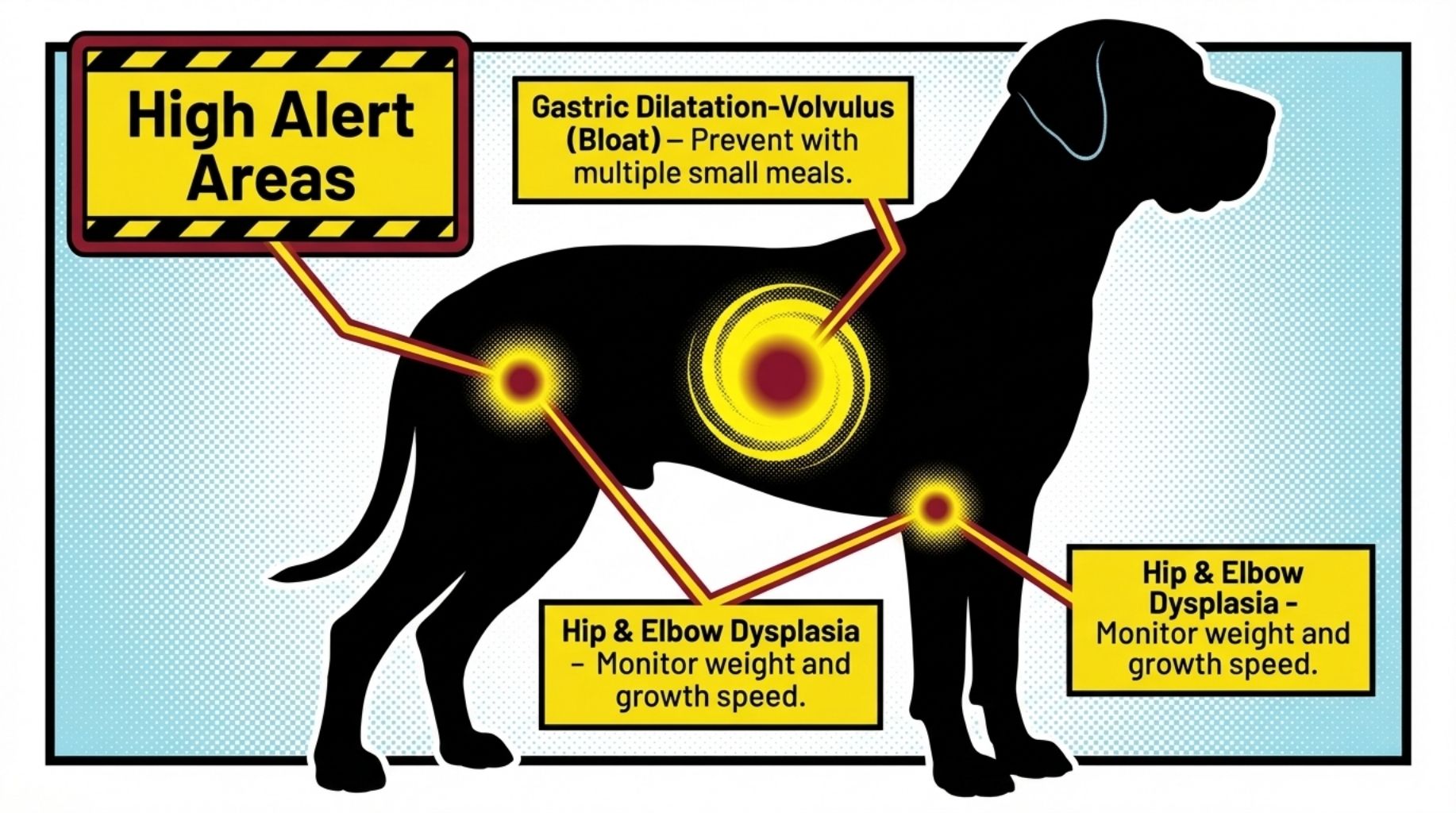
Bloat, or gastric dilatation-volvulus (GDV), is the number one killer of giant dogs. It happens when the stomach fills with air and then twists on itself. This condition requires emergency surgery to save your dog’s life. Every dog owner should educate about bloat in dogs!
You can prevent it by feeding your dog two or three small meals a day instead of one large one. You should also avoid vigorous exercise for an hour before and after eating. Many owners opt for a preventative surgery called a gastropexy to tack the stomach in place.
Joint Problems Like Hip And Elbow Dysplasia
Hip and elbow dysplasia are very common in heavy breeds. These are painful conditions where the joints do not form correctly. They cause the bones to rub together instead of moving smoothly. This leads to arthritis, lameness, and difficulty moving.
As arthritis in senior dogs is more common, all pet parents that have dogs going to the golden ages should research the condition. You can reduce the risk by keeping your giant breed puppy at a lean, healthy weight. Rapid growth is bad for their joints, so never use puppy food that is too high in calories or calcium.
Heart Disease And Bone Cancer Risks
Large and giant breeds are prone to dilated cardiomyopathy (DCM). This disease makes the heart muscle weak and thin. It makes it hard for the heart to pump blood around the body. Discover more about congestive heart failure in dogs.
Osteosarcoma, or bone cancer, is another heartbreaking risk in these big dogs. It usually appears in the long bones of the legs and is very aggressive. Regular cardiac and orthopedic screenings are a must for keeping your giant healthy.
🔑 Key Points: Bloat (GDV) is the number one killer of giant breeds, prevent it by feeding multiple small meals daily, avoiding exercise near mealtimes, and considering preventative gastropexy surgery; joint problems like hip dysplasia and heart disease (DCM) are also common risks.
LIVING HAPPILY WITH YOUR GENTLE GIANT
Life with a giant dog is different from life with a small one. Everything from your car to your couch needs to accommodate them. But do not let that scare you off. The love and loyalty you get in return are absolutely worth it. They are family members who just happen to take up a lot of space.
Can A Giant Breed Live In A Small Apartment?
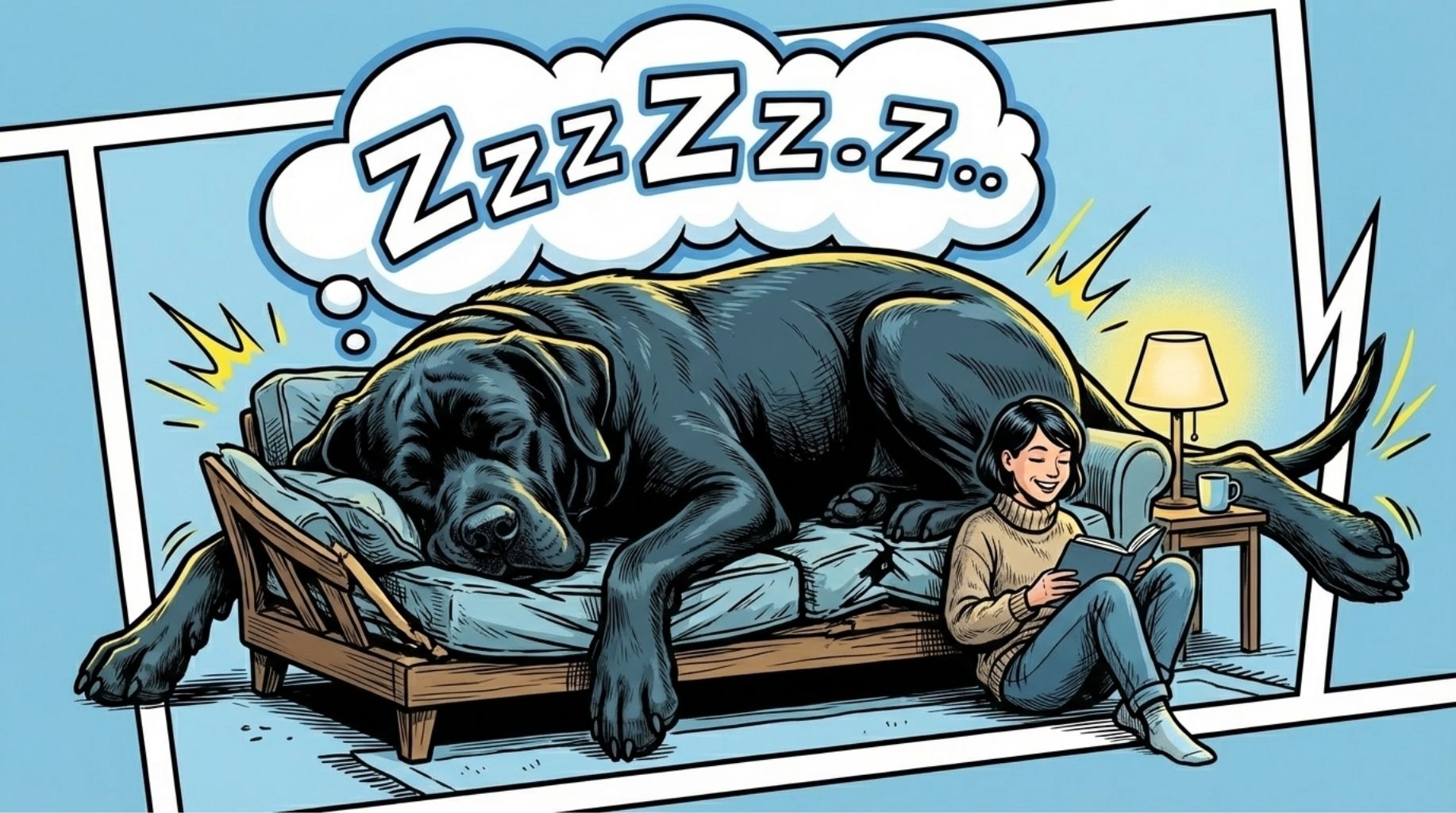
Yes, many giant breeds can thrive in apartments! The key is their personality, not the square footage. Breeds like the Great Dane and the Newfoundland are known for being low-energy indoors. They would rather lounge on the couch than run laps around a yard.
As long as you commit to daily walks for exercise, they will be happy. Just make sure your landlord does not have a weight restriction on pets before you move in. There are some breeds that are perfect for small places, find out what dogs are the best for apartment living!
Finding The Best Nutrition For Your Growing Giant
Feeding a giant breed requires a special diet. You cannot just buy any bag of food from the store. Look for a food specifically labeled for large or giant breed puppies. These formulas have controlled calcium levels to prevent rapid bone growth. An adult giant dog needs a diet rich in glucosamine to protect their joints. Always measure their food to prevent obesity, which is terrible for their heavy frames.
Grooming And Caring For A Massive Coat
Grooming a giant dog is a serious chore. Breeds like the Bernese Mountain Dog have thick, double coats that shed a lot. You will need a heavy-duty vacuum and a good grooming brush. Plan on brushing your giant several times a week to prevent matting.
Bathing them can be a challenge because they barely fit in a standard tub. You might need to invest in a professional groomer or a walk-in dog wash station. Learn more about the difference of daily washing and dog bathing in our article called, How Often Do Dogs Need a Bath and How to Avoid Risky Mistakes?
🔑 Key Points: Many giants like Great Danes thrive in apartments due to their low indoor energy, but they need large-breed-specific nutrition with controlled calcium, regular brushing to manage heavy shedding, and a commitment to daily walks, plus a really big couch.
FAQ ABOUT GIANT DOG BREEDS
Key General Facts: The English Mastiff is the heaviest breed (up to 230+ lbs), while Great Danes and Irish Wolfhounds are tallest. Giants are famously good with kids but can accidentally knock toddlers over. Bloat is the top emergency health issue. Most giants breeds need only moderate exercise. A soft stare means bonding, while a hard stare signals aggression.
Key Communication Facts:
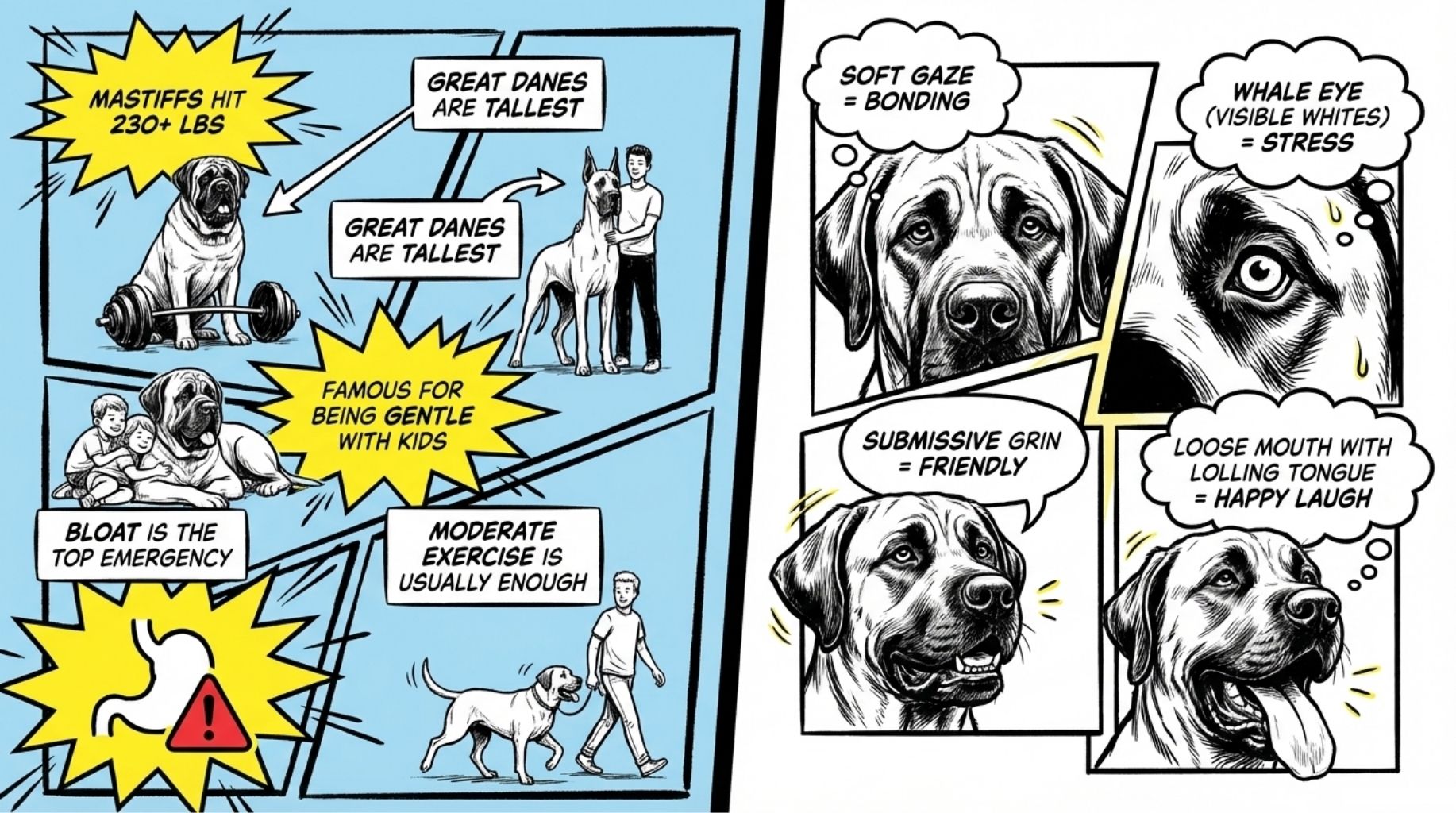
How Giant Dog Breeds Communicate with Their Eyes: A soft, relaxed gaze means safety, while a hard stare or “whale eye” (visible whites) signals stress or anxiety.
The Subtle Art of Reading A Giant Dog’s Mouth and Lips: A “submissive grin” with relaxed lips is friendly, but a curled lip plus stiff body means back off, a loose, open mouth with lolling tongue is a happy laugh.
Decoding Ear Positions and Facial Tension in Giant Dog Breeds: Ears pinned back = fear or submission; ears slightly back and low = friendly or unsure. Tension around eyes and forehead signals discomfort.
Final Thoughts
Bringing one of these majestic dogs’ home is an adventure. You need to be prepared for their specific needs. A little prevention goes a long way in keeping them happy and healthy. Owning one of these magnificent dogs changes your life in the best way. You will learn to read their every glance, ear twitch, and tail wag.
That silent communication becomes a superpower. Remember, the giant dog breeds give you so much love and loyalty. All they ask for in return is your patience, understanding, and a really big couch. Go ahead and welcome a gentle giant into your heart and home. You will not regret it.
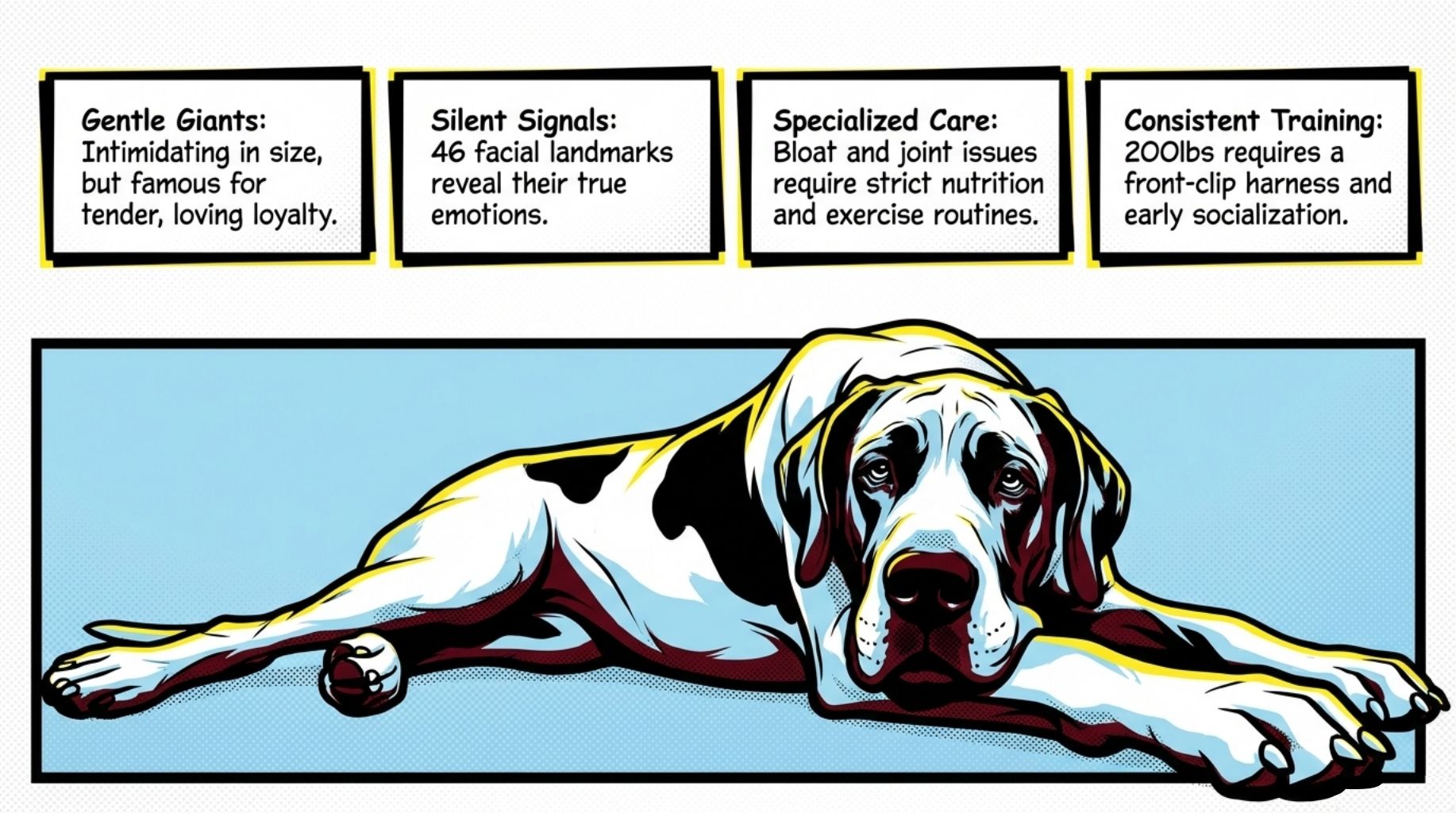
Key Points and Takeaways to Remember
- Most giant breeds are “gentle giants,” not aggressive; the English Mastiff is the heaviest but famously tender and loving
- Each giant breed has a unique history and personality, from the couch-potato Great Dane to the water-loving Newfoundland and the independent Tibetan Mastiff, so match the breed to your lifestyle.
- Watch for tucked tail, stress yawning, lip licking, trembling, and head turning, these calming signals mean your giant needs space.
- A 2025 study using 46 facial landmarks (DogFLW dataset) proves dogs constantly communicate emotion; flat-faced giants like the Dogue de Bordeaux show fewer facial movements, so focus on their ears and posture.
- Use a front-clip harness to stop leash pulling, ignore jumping until all four paws are on the floor, and start early socialization to prevent fearfulness in your 200-pound companion.
- Bloat (GDV) is the number one killer of giant breeds, prevent it by feeding multiple small meals daily, avoiding exercise near mealtimes, and considering preventative gastropexy surgery; joint problems like hip dysplasia and heart disease (DCM) are also common risks.
- Many giants like Great Danes thrive in apartments due to their low indoor energy, but they need large-breed-specific nutrition with controlled calcium, regular brushing to manage heavy shedding, and a commitment to daily walks, plus a really big couch.