
Today we dive into the fascinating world of the strongest dog bite. Have you ever played tug-of-war and felt that incredible pull? It makes you wonder about the power in a dog’s mouth. We measure this force in PSI, or pounds per square inch. Think of it as the pressure a dog can focus with its jaws. For us humans, that’s about 162 PSI.
Now, imagine a force nearly five times stronger. That’s what some dogs have. This power isn’t about aggression. It’s about history and purpose. From guarding flocks to hunting boar, strong dog jaws were a survival tool. Today, understanding this helps us be better pet owners. It lets us appreciate the amazing biology of our furry friends.
“Which friendly dog has a bite stronger than a lion? Let’s find out”.
Quick Summary About THE STRONGEST DOG BITE
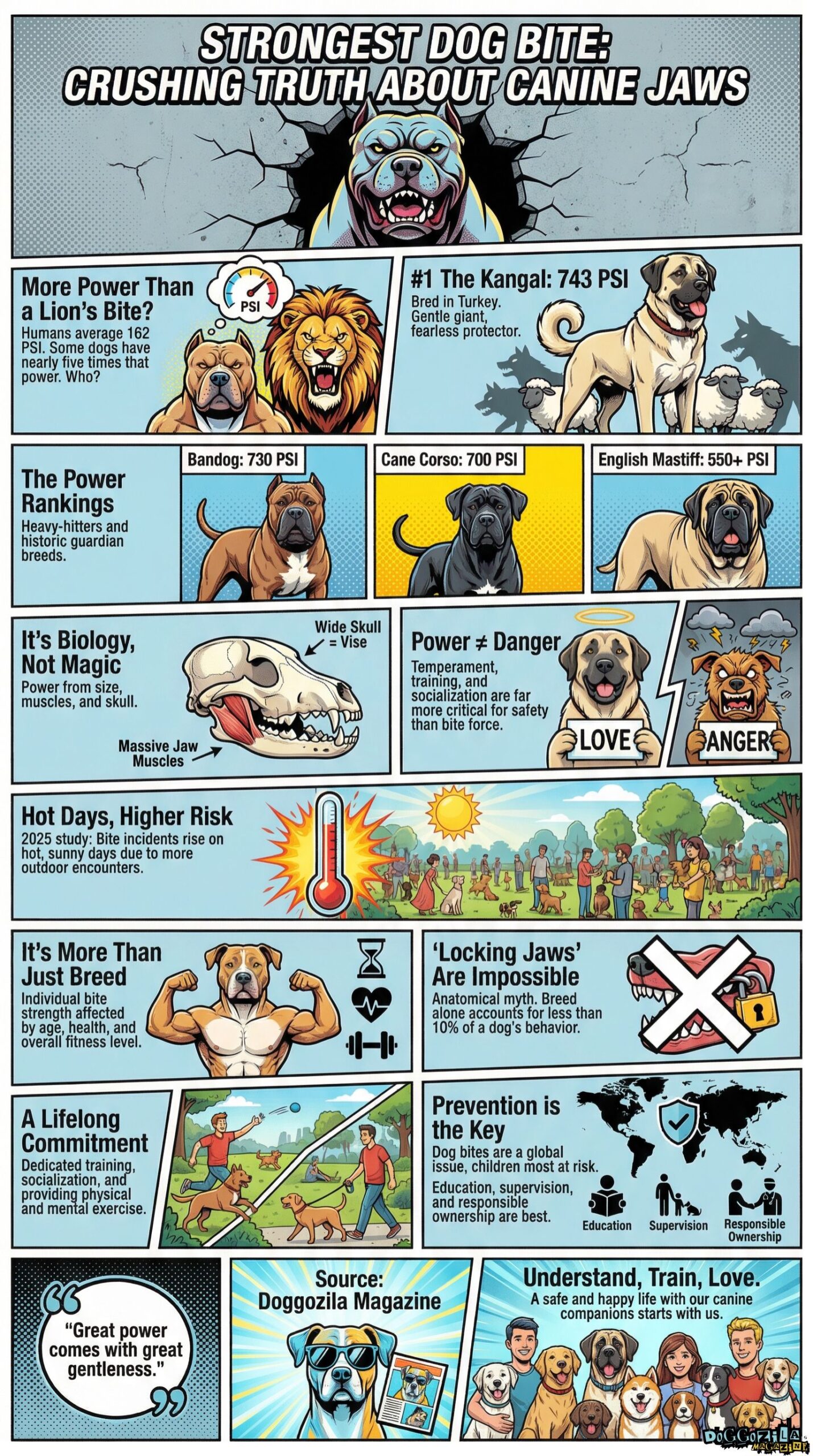
This article is about dog bite strength. We look at which breed has the strongest bite. Also we will explain the science simply. We also give important safety tips for all dog owners. Than we will talk about other powerful breeds too. We explain why being a good owner matters most. The goal is to share knowledge for happy and safe homes.
THE UNDISPUTED CHAMPION WITH THE STRONGEST DOG BITE
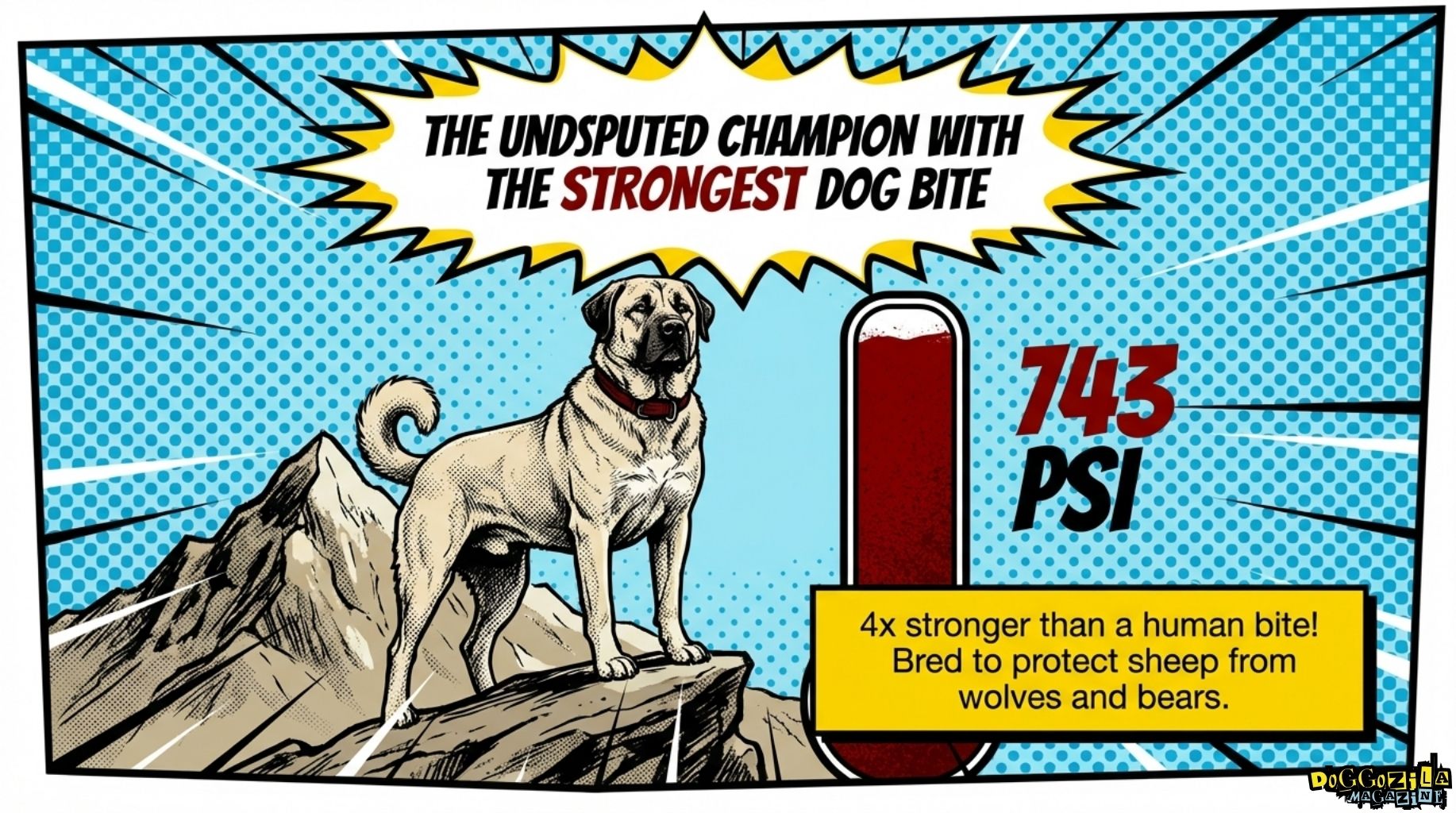
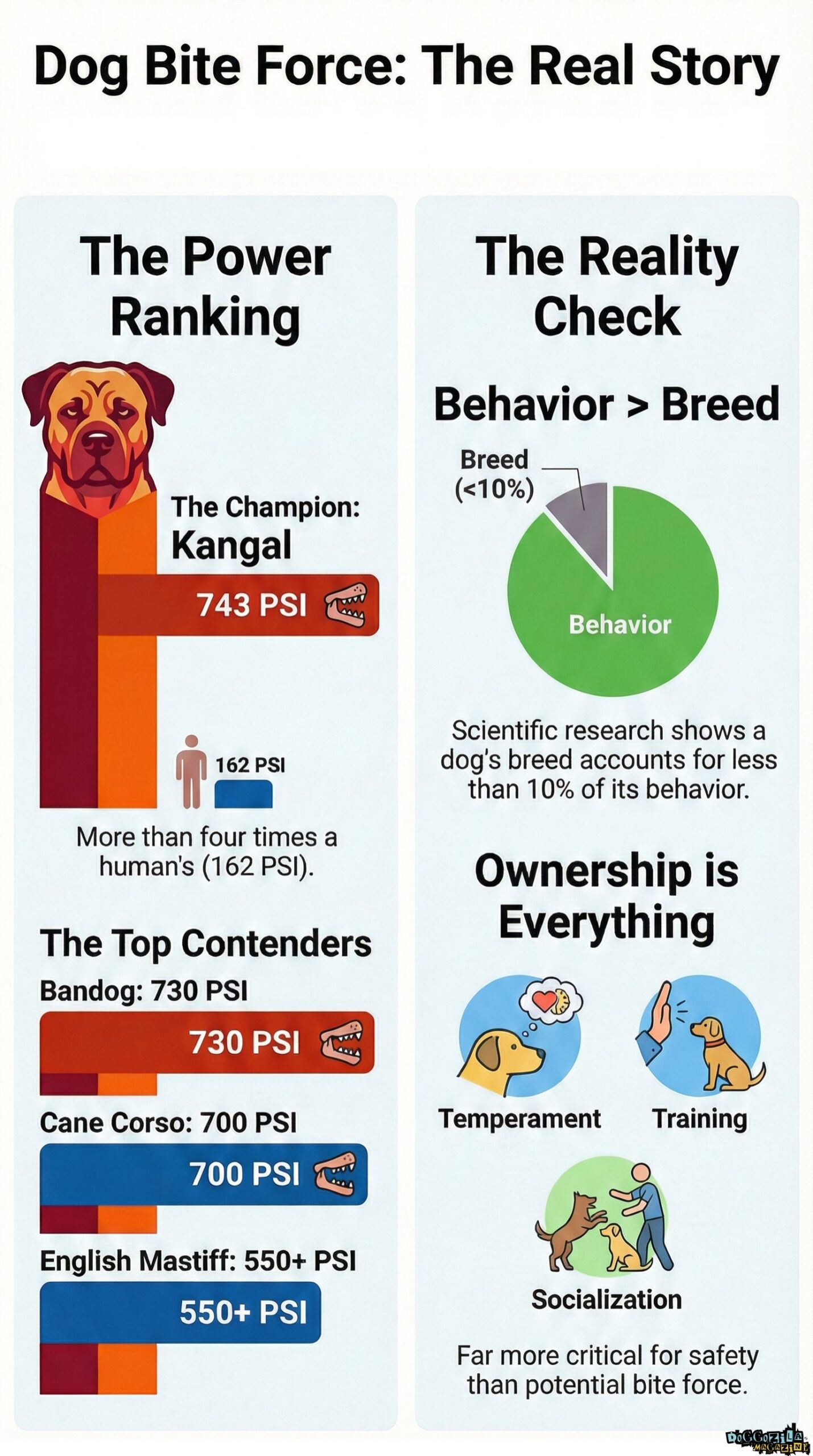
When we talk about the most powerful jaws, one breed stands tall. This champion comes from the mountains of Turkey. With a measured force of 743 PSI, the Kangal is the king. That is more than four times a human’s strength. This power had a vital job. Kangals were bred to protect sheep from wolves and bears. Their immense jaw strength was essential for this dangerous work.
These pups are gentle giants with their families. But they are fearless defenders against threats. This mix of power and purpose is remarkable. Understanding it builds respect for this ancient breed. Knowing which breed has the strongest dog bite is just the start of the story.
The Kangal: The Anatomy Behind the Strongest Dog Bite
The Kangal’s power comes from perfect biological design. Its head is broad and large. This provides space for massive jaw muscles. These muscles work together like a powerful vise. Its skull handles immense pressure without injury. This dog is not just about muscle. It is also about intelligence and discernment. They needed to know friend from foe in a split second.
Today, good breeders focus on this stable temperament. A well-socialized Kangal is calm and confident. They are also deeply loyal. They prove that great power comes with great gentleness. Their strongest dog bite is a tool for protection. It is not a sign of aggression.
How Other Breeds Compare to the Strongest Dog Bite Champion?
The Kangal is the top, but other breeds have formidable strength. The Bandog follows closely with about 730 PSI. Next is the powerful Cane Corso, an Italian mastiff with 700 PSI. The Dogue de Bordeaux and English Mastiff also rank highly. Both have bites over 550 PSI. You might notice a trend.
Many are large guardian breeds. This is no accident. Their historical jobs required stopping large predators. Even popular breeds like the German Shepherd (238 PSI) have strong bites for work. Each breed’s strength links to its original purpose. Comparing them shows the range of the strongest dog bite spectrum.
Why the Strongest Dog Bite is Only Part of the Story?
A high PSI number is just one part of the tale. A dog’s danger level depends on much more. Temperament, training, and socialization are far more critical. For example, a small, nervous dog may bite more readily than a calm giant. Research shows breed explains less than 10% of behavior.
Factors like whether a dog is neutered matter greatly. Studies show intact male dogs are involved in most bite incidents. The situation also plays a huge role. A scared or provoked dog is more likely to bite. Responsible ownership is the ultimate key to safety. This is true regardless of a breed’s potential for the strongest dog bite.
🔑 Key Points: The Kangal dog has the strongest bite. Its bite measures 743 PSI. This power was needed for its old job. It protected sheep from wolves and bears.
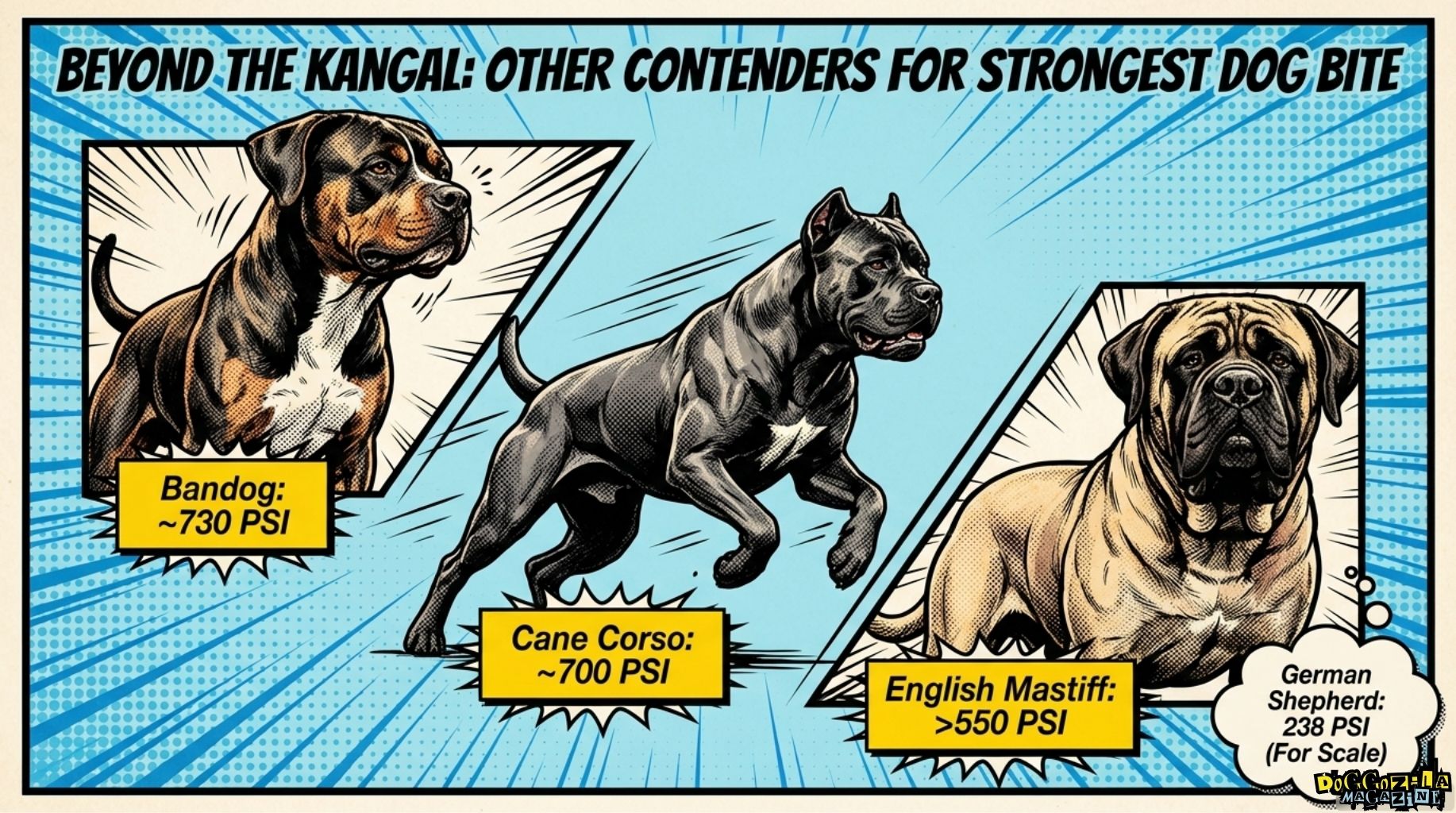
BEYOND THE KANGAL: OTHER CONTENDERS FOR STRONGEST DOG BITE
The Kangal holds the crown, but the list of powerful biters is long. These breeds come from all over the world. Each has a unique history that shaped its strength. From mastiffs bred for war to hunters of large game, their jaws tell a story. You will see giants like the Tosa Inu. You will also see the Dogo Canario. Working dogs like the Dogo Argentino used to hunt boar. Even the loyal Akita Inu boasts a 350-400 PSI bite.
This variety is fascinating. Powerful bites evolved for many reasons. Some were for hunting. Others were for guarding or holding large animals. It shows how humans bred dogs for demanding tasks.
The Mighty Mastiffs with a Strongest Dog Bite Heritage
The mastiff family is synonymous with brute strength. Breeds like the Cane Corso and English Mastiff share this ancestry. Their sheer size contributes to their power. Their skull shape is also key. They often have broad, square jaws. This provides excellent leverage. The Cane Corso was a versatile farm dog in Italy. It guarded property and hunted wild boar.
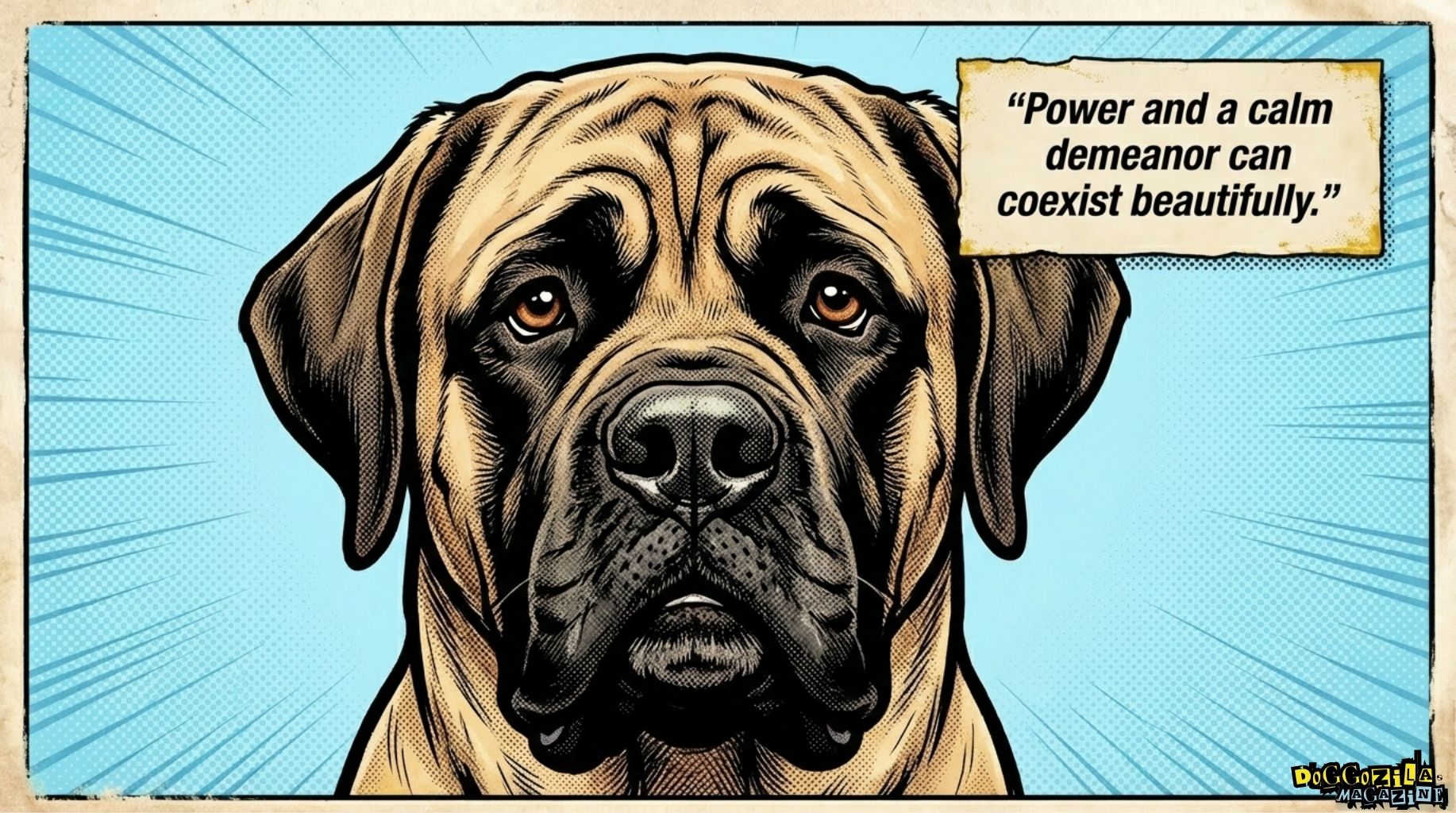
This required strength, intelligence, and control. The massive English Mastiff is known for its gentle soul. Yet it still has a bite over 550 PSI. These breeds show us something important. Power and a calm demeanor can coexist beautifully. Their history is tied to the development of a strongest dog bite.
Working Dogs with a Strongest Dog Grip
Beyond the giants, many working breeds have impressively strong jaws. The Rottweiler has a 328 PSI bite. It was originally a cattle-driving dog. It needed a strong grip to control livestock. The German Shepherd is a cornerstone of police work. It has a bite force of 238 PSI. This strength is crucial for protection work.
Even the Siberian Husky has a powerful bite near 320 PSI. For these dogs, a strong bite was a practical tool. It was for their everyday jobs. That was less about combat. It was more about getting hard jobs done with humans. Their functional strength is a key part of the strongest dog bite conversation.
The Surprising Strength in Popular Family Companions
Some popular family dogs have stronger bites than you think. The friendly Labrador Retriever has about 230 PSI. The sturdy American Bulldog measures around 305 PSI. This shows bite strength is often about size and jaw structure. It is not about aggression. Labs were bred to gently carry birds. This required a soft mouth.
Yet, their size gives them the physical capacity for power. This is a crucial point for all dog owners. Even the gentlest family pet can cause injury. This is true if it is scared, hurt, or poorly trained. It shows why positive training is so vital. It is key for everyone’s safety, no matter the potential for a strongest dog bite.
🔑 Key Points: Many other dogs have very strong bites too. This includes mastiffs and working dogs. Their jaw strength was useful for their specific jobs, like hunting or guarding.
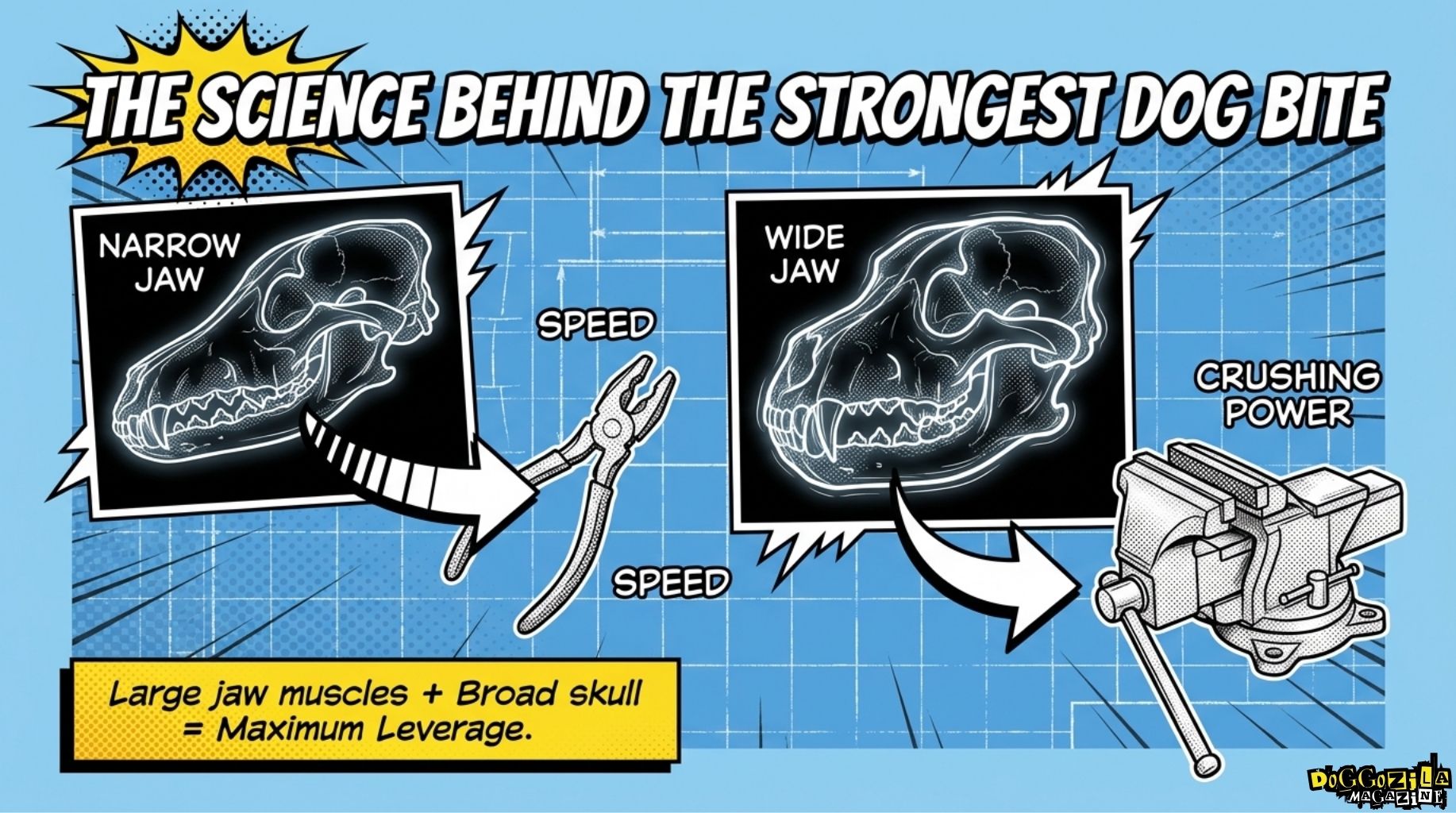
THE SCIENCE BEHIND THE STRONGEST DOG BITE
A powerful bite is not magic. It is biology and physics working together. Scientists look at several key factors. The most obvious is size. A bigger dog has bigger muscles. It can generate more force. But it is not that simple. Skull shape and jaw length are equally important. Think of it like using tools. A long, narrow jaw is faster, like pliers. A short, wide jaw has crushing power, like a vise.
The size of the jaw muscles are critical. They are the “engines” of the bite. Genetics and breeding fine-tuned these traits. They were shaped for specific, powerful purposes over centuries.
Jaw Anatomy: Building the Lever for the Strongest Bite
A dog’s jaw works as a lever system. The pivot point is the joint in front of the ear. The muscles pull on one side to close the teeth on the other. In breeds built for power, this system is optimized for force. It is not for speed. Dogs with broad skulls often have this advantage. The muscles have a better angle to pull from.
This creates more efficient force. This is why a shorter-faced Mastiff can out-bite a longer-faced dog. The two dogs might be a similar size. It is a brilliant piece of natural engineering. It was shaped by hundreds of years of breeding. The goal was often to create the strongest dog bite possible for a job.
The Role of Muscle in Delivering the Strongest Bite
Raw anatomy is just the start. The condition of the jaw muscles plays a huge role. Just like a human athlete, a dog’s muscles can be conditioned. Professional trainers use progressive techniques. They build bite strength safely. They start with soft materials. Then they move to firmer ones. This builds muscle and proper grip. This training can increase natural bite pressure.
It can go up by 15-20%. But this is specialized expert work. For the average family pet, regular chewing helps. Chewing on good toys maintains healthy jaw muscles. Physical strength is separate from behavior. A strong dog must also learn bite inhibition. This is knowing how to control the mouth’s pressure. Muscle is how the potential for the strongest dog bite becomes real.
Measuring the Power of the Strongest Dog Bite
How do we get those specific PSI numbers? Researchers use special tools. They are called bite meters or dynamometers. These devices have sensors. The sensors go between a dog’s teeth. When the dog bites down, the sensors record the pressure. It is not a simple task. The dog must be trained to bite the device consistently.
Measurements are taken in controlled studies. The figure of 743 PSI for the Kangal comes from such research. It is a snapshot of maximum force. In daily life, a dog rarely uses full power. These numbers help us understand canine capability. But they do not predict a dog’s behavior. The measurement of the strongest dog bite is a science of its own.
🔑 Key Points: A strong bite comes from body design. A wide skull and big jaw muscles create power. It is like the difference between pliers and a vise.
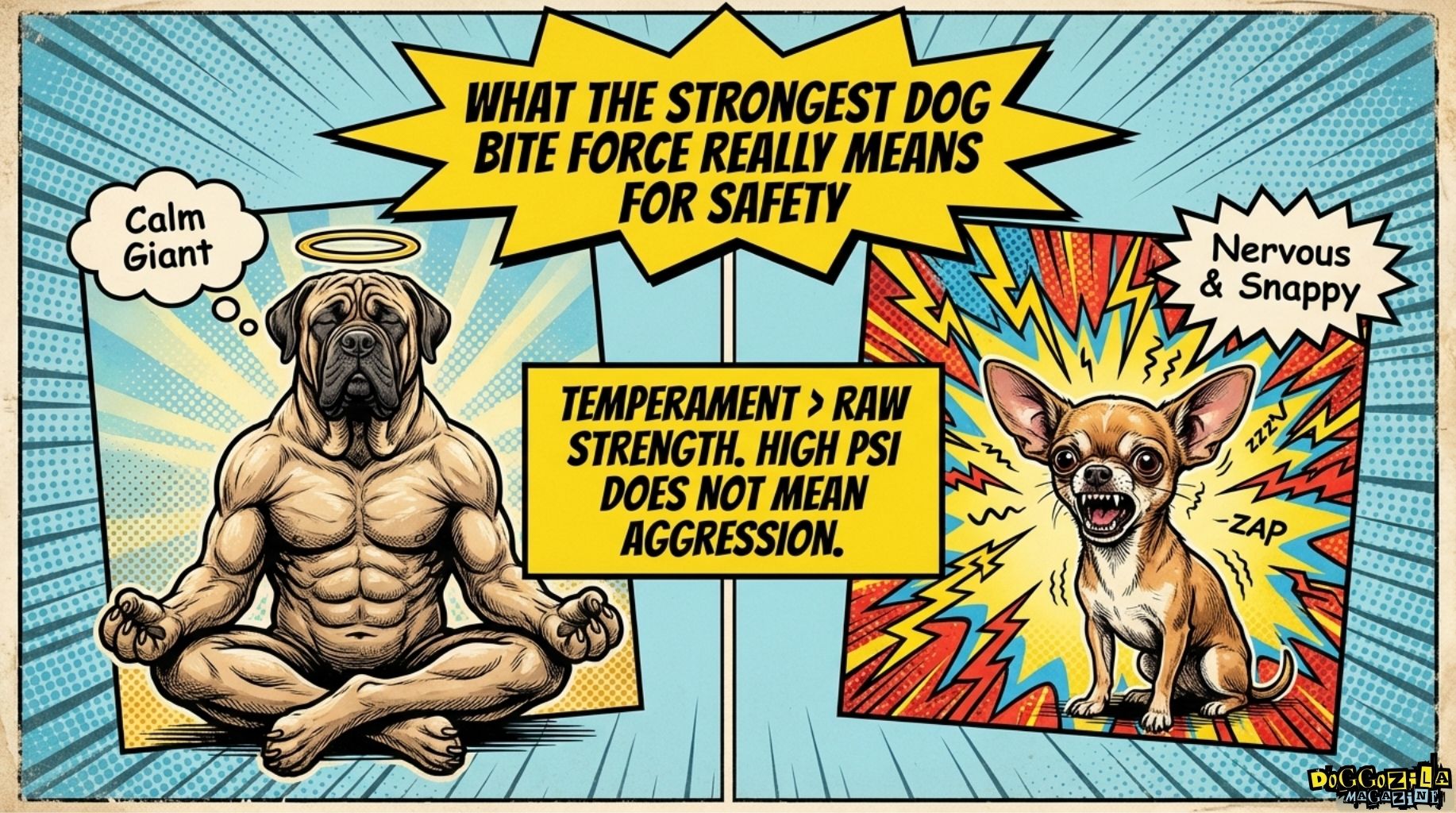
WHAT THE STRONGEST DOG BITE FORCE REALLY MEANS FOR SAFETY?
When people hear about the strongest dog bite, safety concerns follow. We must separate physical potential from real-world risk. A high PSI means a bite could cause severe injury. It does not mean a dog will bite. Most dogs never bite a person. Safety is a complex mix of factors. The dog’s temperament is paramount. Its life experiences and training are crucial. The owner’s responsibility is the biggest factor. Proper socialization prevents incidents.
Secure containment and understanding dog body language are key. A dog’s environment also plays a role. Studies show bites can increase on hotter days. More people and dogs are outside then. This increases encounters.
Responsible Ownership with a Strongest Dog Breed
Owning a powerful dog is a big responsibility. It means committing to lifelong training. For strong breeds, this is non-negotiable. It starts with choosing the right breed for your lifestyle. It continues with puppy classes. Ongoing obedience training is a must. Providing plenty of exercise is critical.
Secure fencing must be followed diligently. Owners must learn their dog’s stress signals. Recognizing anxiety lets an owner act. They can remove the dog from a bad situation. This proactive care is the best safety insurance. It is vital for any breed with the potential for the strongest dog bite. Good ownership makes all the difference.
Understanding Behavior When Living with the Strongest Dog
Dogs almost always give warnings before a bite. They are saying, “I’m stressed, give me space.” Common signals include yawning and lip licking. Turning the head away is another sign. Showing the whites of the eyes is a clue. A stiff body is a red flag. Growling is very clear communication. Punishing a growl is dangerous. It teaches the dog to skip warnings.
Then it might go straight to a bite. We should thank the dog for the clear signal. Then we should help them out of the stressful situation. Teaching children to recognize these signs is vital for family safety. A dog’s bite is a last resort. Understanding their language can prevent the strongest dog bite from ever happening.
Creating Safe Interactions for Kids and Dogs
Children are the most common victims of serious bites. Their small size and unpredictable movements make them vulnerable. Safety needs constant, close adult supervision. Never leave a young child alone with any dog. Teach children the “be a tree” rule. If a strange dog approaches, stand still. Look at your feet and be quiet. They should never run or scream.
At home, teach kids to respect the dog’s space. This is especially important when the dog is eating or sleeping. Do not bother a dog chewing a toy. Create a “safe zone” for the dog. A crate or bed works well. The dog can retreat there without being followed. This is essential for families with kids and pets, especially those with a breed known for the strongest dog bite.
🔑 Key Points: A powerful bite does not equal a dangerous dog. Behavior is more important than strength. Training and a good owner are the best safety features.
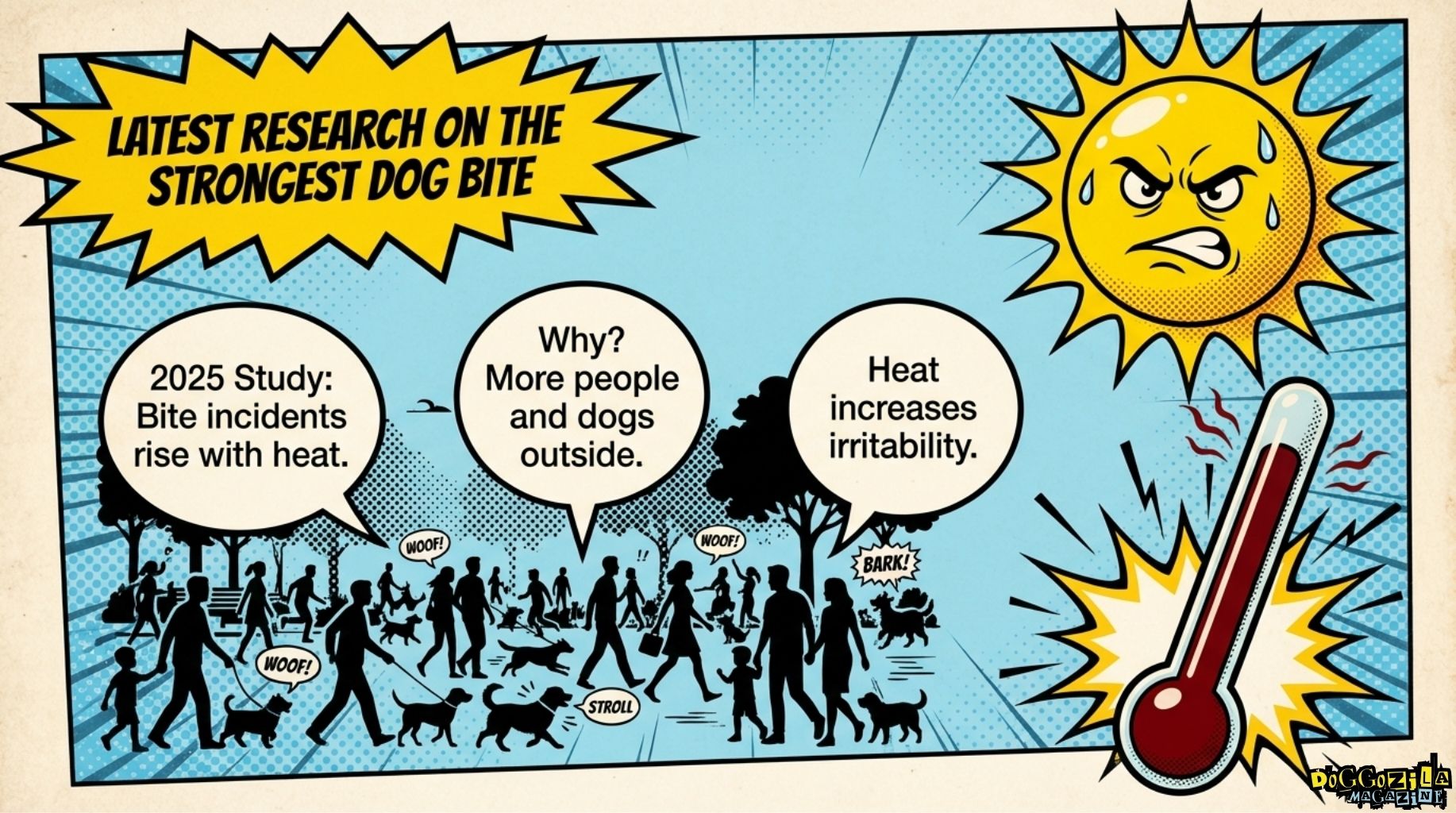
LATEST RESEARCH ON THE STRONGEST DOG BITE
Dog bite research keeps evolving. It gives us new insights for prevention. A fascinating 2025 study from Mumbai analyzed cases. It looked at over 3,000 dog bites. It found clear patterns linked to weather. Bite incidents rose with higher temperatures and more sunshine. They fell with rainfall and humidity. Why? On hot, sunny days, more people and dogs are outside. This increases the chance of encounters.
Stray dogs may also be more active. This Mumbai research is part of the “One Health” approach. It links environment, animal, and human health. It suggests safety messaging could target warmer seasons. This is true even for areas with breeds capable of the strongest dog bite.
Environmental Triggers for the Strongest Dog Bite
The link between weather and bites is not about meanness. It is about behavior and circumstance. High temperatures can make dogs more irritable. More importantly, it changes daily routines. People go for more walks. Kids play outside. Windows are left open. Stray dogs roam more for food and water. This simply increases interactions.
Some of these can go wrong. For pet owners, this means being extra vigilant on hot days. Ensure your dog has a cool place to rest. Do not let it have prolonged heat stress. Be aware that other dogs might feel the heat too. Managing the environment helps prevent incidents. This includes incidents involving the strongest dog bite.
Vulnerable Populations and the Strongest Bite Risk
Recent reports highlight risks for specific groups. A 2025 report discussed children with epilepsy. They may face a unique danger. Some dogs detect chemical changes before a seizure. A trained service dog responds helpfully. But an untrained family dog might react with fear. It might react to the unfamiliar scent. During a seizure, a child is completely vulnerable.
This underscores a vital point. Any change in a person’s health can affect interactions. This is true even with a familiar dog. Caregivers must take extra precautions. They should never assume complete safety. This is crucial with any powerful breed. Understanding context is as important as knowing about the strongest dog bite.
Data vs. Perception of the Strongest Bite
Research challenges stereotypes. People often focus on large, powerful breeds. But studies find smaller dogs often show higher rates of aggressive behavior. They may snap or attempt to bite more. Their small size means these incidents cause less injury. So they are less reported. The science is clear. A dog’s breed is a poor predictor of individual behavior.
Factors like upbringing and training are far more significant. Is the dog neutered? That matters a lot. This research guides modern policies. Good policies focus on responsible ownership. They do not ban specific breeds. The data helps us look past myths about the strongest dog bite.
🔑 Key Points: New studies find interesting patterns. For example, more dog bites happen on hot, sunny days. This is because more people and dogs are outside playing.
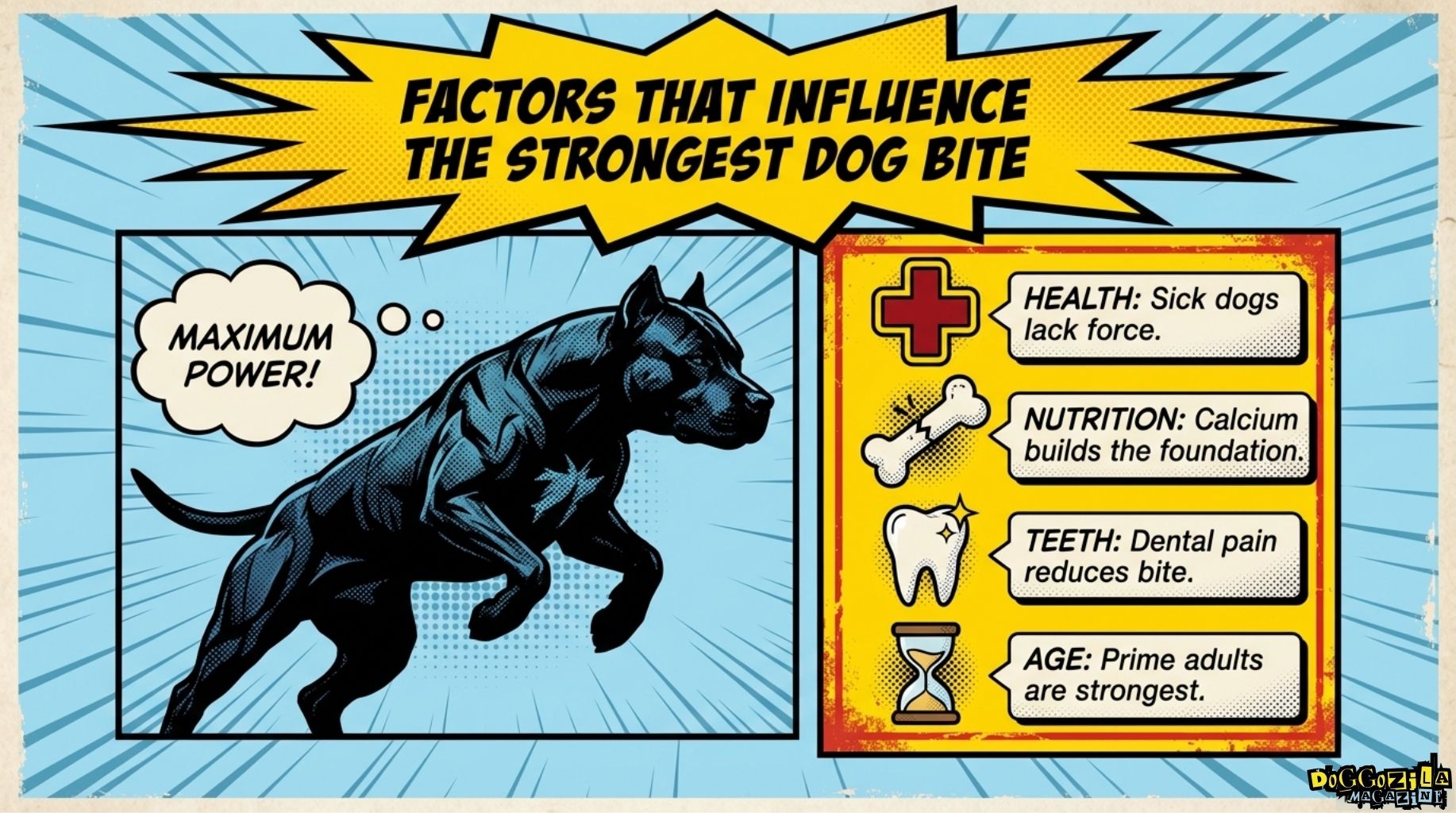
FACTORS THAT INFLUENCE THE STRONGEST DOG BITE
Breed averages are one thing. An individual dog’s bite strength has personal factors. Genetics provide the blueprint. Life builds upon it. A dog’s overall health and fitness play a big role. A well-nourished dog has strong, healthy muscles. It will have more power. A sickly one will not. Dental health is also critical. Painful teeth can affect how a dog bites. Age is another factor. A dog in its prime is stronger than a very old puppy. It is stronger than a senior dog with worn teeth.
Even confidence matters. A fearful bite might be quick and less powerful. A confident dog might bite and hold with greater strength. Many things shape the strongest dog bite potential.
The Impact of Health on the Strongest Dog Bite
A dog cannot perform at its peak if it is not healthy. Good nutrition is the foundation. High-quality dog food supports strong bones and muscles. It supports healthy teeth. Specific nutrients are vital for jawbone strength. Calcium and phosphorus are important. Protein supports muscle mass. Regular vet check-ups are a must. They ensure no hidden health issues exist.
Arthritis in the jaw or dental disease could affect biting. Chewing is a natural, healthy behavior. It strengthens jaws and cleans teeth. Safe, durable chew toys are excellent. They help your dog maintain its jaw health for life. Supporting health supports the dog’s natural physical traits, including the foundation for a strongest dog bite.
Bite Force vs. Bite Severity in the Strongest Dogs
We must distinguish between bite force (PSI) and actual injury severity. PSI is the crushing pressure. Severity depends on other things. The sharpness of the teeth causes puncture wounds. The dog’s behavior matters. Does it bite once and release? Or does it bite and shake? Shaking causes tearing. The location of the bite is critical.
A face or neck bite is more serious than a leg bite. The victim’s size and health also matter. A bite from a small dog can devastate an infant. It might be minor to an adult. Focusing only on the potential for the strongest dog bite is misleading. The real-world outcome is a complex equation. It has many variables.
Can You Change a Dog’s Bite Potential?
For an adult dog, its genetic potential is largely set. You cannot turn a Chihuahua into a Kangal. But you can optimize what the dog has. Proper exercise keeps jaw muscles toned. Chewing on good toys maintains dental and jaw health. For working dogs in protection sports, training is different. Specialized training helps them use strength effectively. It is always done on command.
For the average pet, the goal is different. It should never be to increase bite force. The focus should be on “bite inhibition.” This is the soft, controlled use of the mouth. Puppies learn this from littermates. Owners reinforce it with gentle play. This control is more important than raw power. It manages the strongest dog bite instinct.
🔑 Key Points: A dog’s health and age affect its bite. A healthy, fit dog will be stronger. An old dog or a puppy will not be as strong.
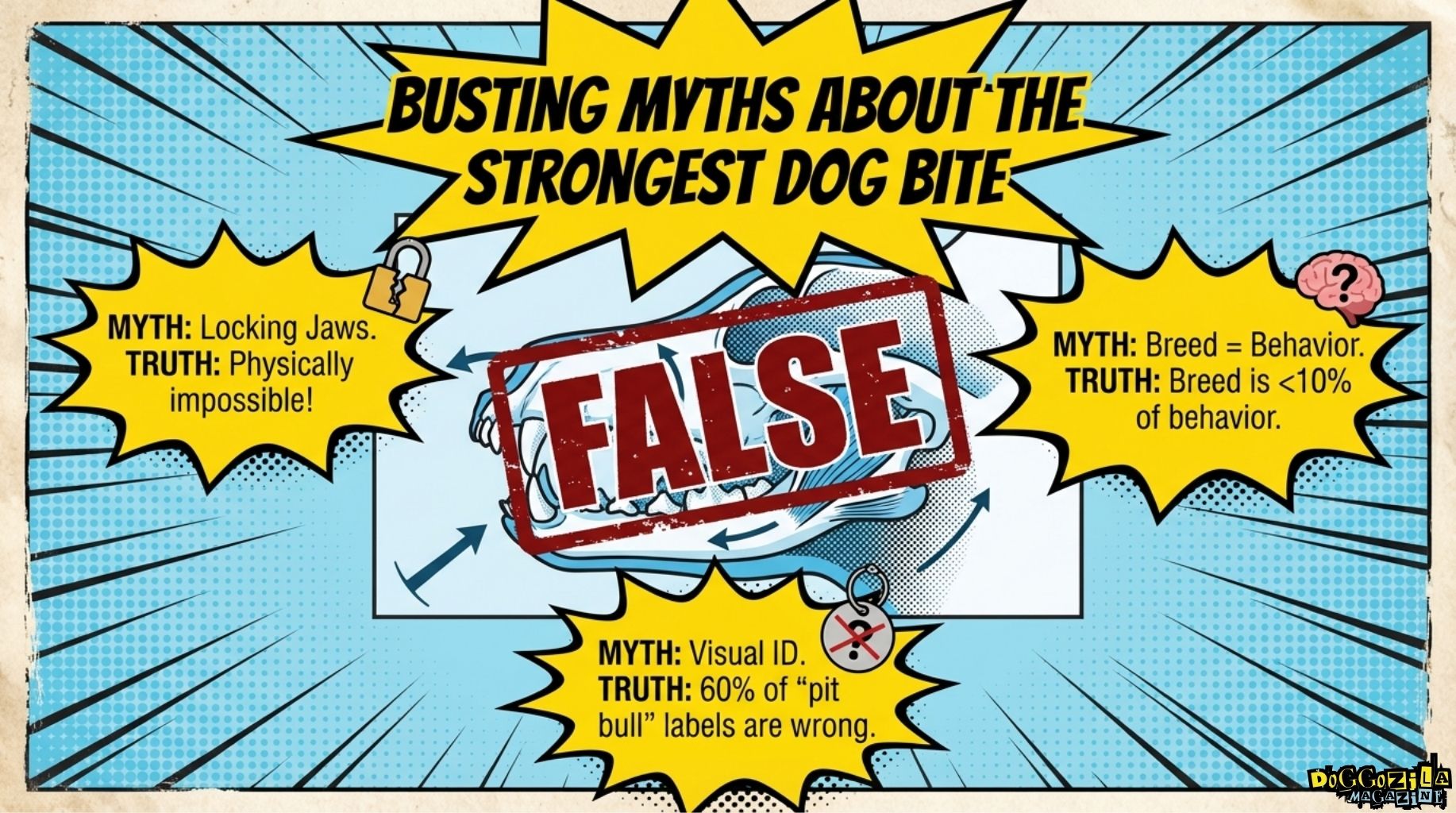
BUSTING MYTHS ABOUT THE STRONGEST DOG BITE
Myths about dog breeds and aggression are common. They are often harmful. The biggest myth is that breed determines aggression. Science tells a different story. Major studies have found that breed accounts for less than 10% of behavior. Over 90% is shaped by environment and upbringing. Training and life experiences matter most. Another myth is “locking jaws.” This is anatomically impossible. All dogs have the same basic jaw structure. Some have a strong desire to bite and hold. But their jaws do not lock. Finally, visual breed identification is often wrong.
One study found professionals misidentify dogs often. About 60% of dogs labeled as “pit bulls” lacked that DNA. Myths cloud the truth about the strongest dog bite.
The Pit Bull and the Strongest Bite Debate
Pit bull-type dogs are often at the center of debate. We must look at data carefully. They are often in severe bite reports. But this is influenced by many factors. These breeds are sometimes sought by irresponsible owners. These owners may want a tough image. They may neglect training. They may not neuter their dogs. This is a huge risk factor.
Studies show intact male dogs cause most bites. Furthermore, “pit bull” is a loose label. It applies to many blocky-headed mixed breeds. This skews statistics. In measured bite force, the American Pit Bull Terrier’s PSI is about 235. This is strong but outside the top 10. The story is more about human responsibility. It is less about the genetics of the strongest dog bite.
The Surprising Aggression of Small Dog Breeds
Data from behavioral studies shows a pattern. Many small dog breeds score higher on aggression measures. Dachshunds, Chihuahuas, and Beagles often top these lists. Why doesn’t this match the news? Their small size means bites rarely cause life-threatening injury. A nip from a Chihuahua might need a bandage. A similar action from a large dog could need surgery.
This does not mean small dogs are “bad.” It often means they are more easily frightened. The world is very big to them! Owners might not give them consistent training. They may not take their behavior seriously. All dogs deserve training and understanding. Size does not determine the risk linked to the strongest dog bite potential.
Why Breed Bans Fail to Address the Strongest Dog Bite?
Many cities ban specific breeds, like pit bulls. This is Breed-Specific Legislation (BSL). Reviews have found that BSL does not reduce bite rates. It does not improve public safety. Why? It targets the breed, not the root causes. The causes are irresponsible ownership and lack of socialization. Failure to neuter is another cause. Owners of regulated breeds may just switch to another powerful breed.
That breed might not be on the list. Effective laws are “breed-neutral.” They focus on responsible practices for all owners. Leash laws and secure containment are examples. Mandatory sterilization for problem animals helps. Penalties for negligent owners work. Good laws look at actions, not just the potential for the strongest dog bite.
🔑 Key Points: Some people believe myths. They think some breeds have locking jaws or are born mean. Science shows this is not true at all.
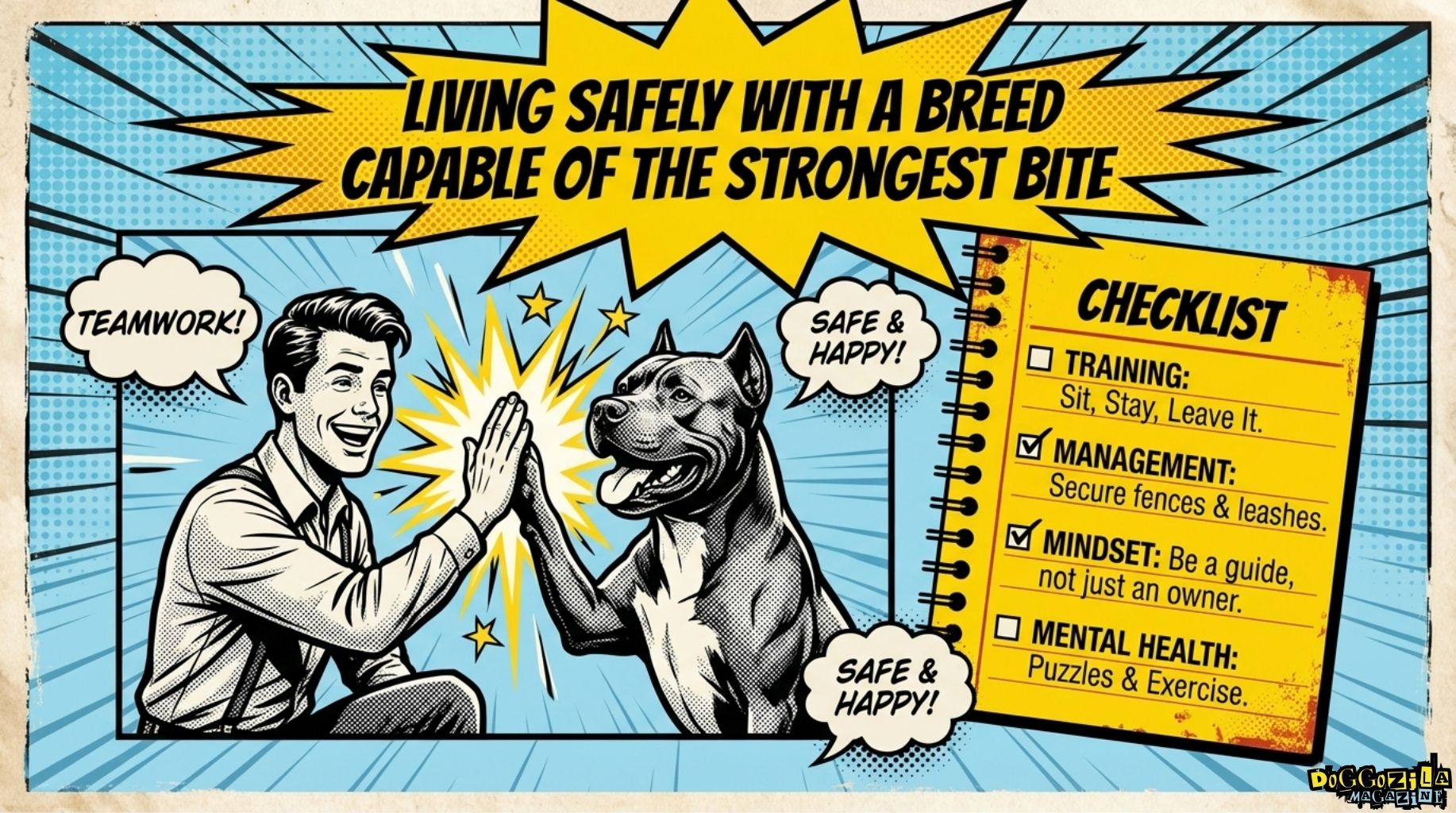
LIVING SAFELY WITH A BREED CAPABLE OF POWERFUL BITE
Choosing a dog with great power is rewarding. But it is a serious commitment. It is about channeling strength into positive outlets. Safety for everyone is the priority. The journey starts before you get the dog. Research breeds thoroughly. Find one that matches your energy and experience. Seek a responsible breeder. They should prioritize health and stable temperament.
A good rescue can match you with an adult dog. Prepare your home with secure fencing. Get high-quality leashes and a comfortable crate. Your mindset is key. You are bringing a powerful athlete into your family. You are its guide, teacher, and protector. This is the reality of living with a breed known for the strongest dog bite.
Essential Training for the Strongest Dog Breeds
Training is not optional. It is the cornerstone of safety. Start the moment your puppy comes home. Enroll in a positive-reinforcement puppy class. Learn the basics there. Get critical socialization too. Socialization is not just meeting others. It is exposing your puppy to various sights and sounds. Do this in a positive way. Teach essential commands. “Sit,” “stay,” “come,” and “leave it” are crucial.
Use high-value rewards. For large breeds, loose-leash walking is a must. It prevents pulling. Most importantly, teach and reward calm behavior. A powerful dog that can relax is a joy. Consider advanced classes as your dog matures. This keeps its mind engaged. It strengthens your bond. Training manages the power behind the strongest dog bite.
Managing Life with Strongest Dog Breeds
You must be your dog’s advocate. This is true in public and at home. In public, always use a secure leash. Be aware of your surroundings. Do not let your dog approach strangers without invitation. At home, manage interactions. Use baby gates to separate your dog from visitors. This is helpful during lively parties. Provide a safe, quiet place for your dog. It can retreat there from children or chaos.
Teach everyone in the family the rules. Guests need to know the rules too. For example, do not bother the dog while it eats. Clear, consistent boundaries make your dog feel secure. They prevent misunderstandings. Good management prevents stress or fear. It is a key strategy for owners of a breed with the strongest dog bite.
The Lifelong Commitment to The Strongest Dog Breed
A powerful dog is often a working dog at heart. It has energy and drive. These need a constructive outlet. Physical exercise is essential. Long walks, hikes, or jogging are great. But mental exercise is just as important. It prevents boredom. Boredom can lead to bad behavior. Engage their brains with food puzzle toys. Scent work games are wonderful.
Advanced training tricks are fun too. Activities like agility can be fantastic. A tired, mentally satisfied dog is well-behaved. This commitment lasts for the dog’s entire life. That is typically 10-12 years. It is a promise to provide an outlet. You channel the very strength that drew you to the breed. This is the heart of living with a strongest dog bite breed.
🔑 Key Points: Owning a strong dog is a big job. You must train them well. You must give them lots of exercise and love.
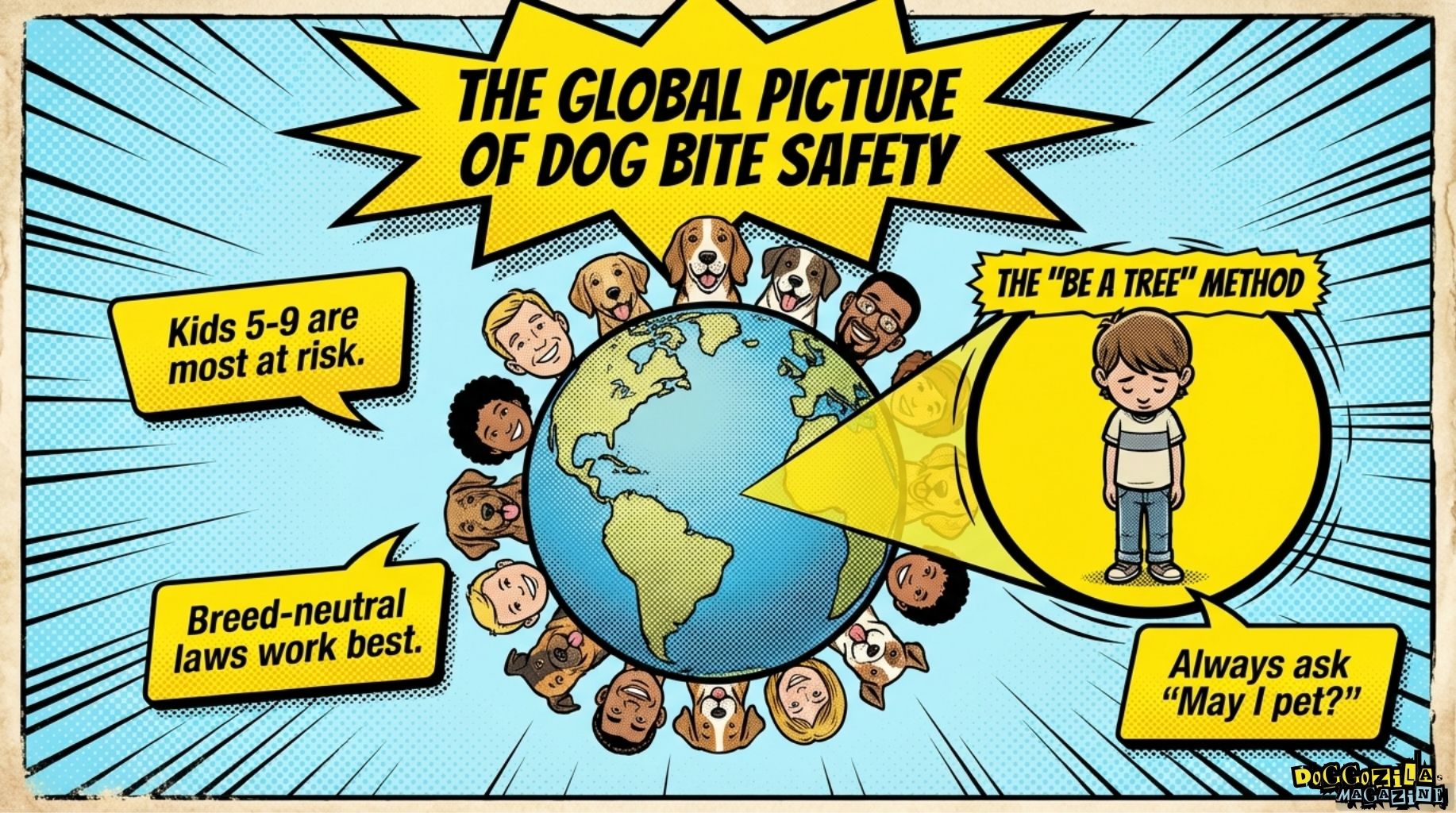
THE GLOBAL PICTURE OF DOG BITE SAFETY
Dog bites are a global public health issue. In the United States, millions of bites happen each year. Many require medical attention. The financial cost is over $1 billion yearly. Children between 5 and 9 are the most common victims. Understanding these stats is about awareness. It is not about fear. Most incidents are preventable. Responsible ownership, education, and supervision are key.
Knowing the risks helps communities. They can create better safety programs. It helps people make smarter choices around dogs. The goal is safety for all. This is true in neighborhoods with every type of dog, including those with the strongest dog bite.
Who is Most at Risk from the Dog Bites?
Children are affected more by dog bites. Their small size makes them vulnerable to serious injury. They often do not understand how to act calmly around dogs. Also they may not see warning signs. They might hug dogs or pull tails. This can scare or provoke a dog. Older people are also at higher risk. People with mobility issues are, too. They may not move away quickly.
Postal workers face consistent risk. They enter properties where dogs may feel protective. Awareness of these groups helps target education. It helps focus safety efforts. Protecting those most at risk is a community priority. This includes understanding the potential impact of the strongest dog bite.
The Proven Path to Prevent Dog Bites
Preventing bites is a shared job. For dog owners, it means proper socialization and training. Secure containment and neutering are vital. For parents, it means constant supervision. Teach kids how to act safely. For communities, it means enforcing leash laws. Supporting breed-neutral dangerous dog laws helps. These laws hold owners accountable.
Public education campaigns are highly effective. They teach people how to read dog body language. Schools can include animal safety in lessons. Simple actions prevent countless incidents. Always ask, “May I pet your dog?” before approaching. When everyone plays their part, communities become safer. They are safer for both people and pets of all kinds, preventing incidents related to the strongest dog bite.
A Positive Future with Our Canine Companions
The future for human-dog relationships is bright. We understand canine behavior better than ever. Positive reinforcement training is the modern standard. The trend is moving away from fear-based breed bans. It is moving toward solutions that work. Licensing, microchipping dogs, and owner education are key. Laws that target negligent owners are effective.
More people see their dogs as family. They invest in training and well-being. By focusing on science and compassion, we can enjoy the incredible bond with dogs. We can minimize risks at the same time. Our goal is a world where every dog is a safe and loved companion. This is true for all, from the smallest pup to the breed with the strongest dog bite.
🔑 Key Points: Dog bites are a serious topic worldwide. Children are most often hurt. We can prevent bites with good laws and smart choices.
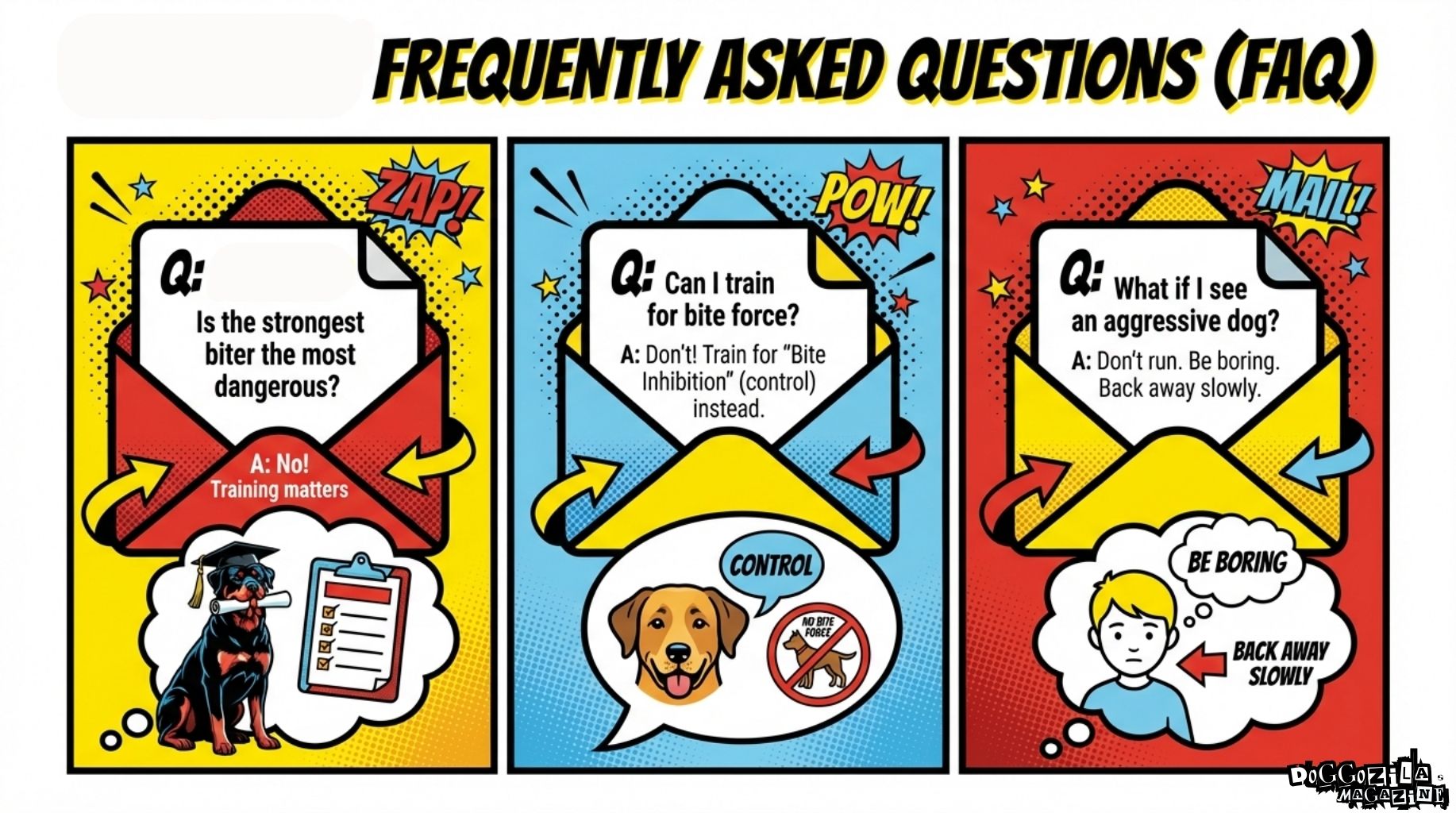
FREQUENTLY ASKED QUESTIONS (FAQ)
Key Points and Takeaways
- The Kangal dog has the strongest bite. Its bite measures 743 PSI. This power was needed for its old job. It protected sheep from wolves and bears.
- Many other dogs have very strong bites too. This includes mastiffs and working dogs. Their jaw strength was useful for their specific jobs, like hunting or guarding.
- A strong bite comes from body design. A wide skull and big jaw muscles create power. It is like the difference between pliers and a vise.
- A powerful bite does not equal a dangerous dog. Behavior is more important than strength. Training and a good owner are the best safety features.
- New studies find interesting patterns. For example, more dog bites happen on hot, sunny days. This is because more people and dogs are outside playing.
- A dog’s health and age affect its bite. A healthy, fit dog will be stronger. An old dog or a puppy will not be as strong.
- Some people believe myths. They think some breeds have locking jaws or are born mean. Science shows this is not true at all.
- Owning a strong dog is a big job. You must train them well. You must give them lots of exercise and love.
- Dog bites are a serious topic worldwide. Children are most often hurt. We can prevent bites with good laws and smart choices.
- We can all live safely with dogs. The key is understanding, good training, and responsible ownership. This is true for every single breed.