
Teaching your dog to wave is about so much more than a cute photo. To learn how to teach your dog to wave it’s a fantastic way to strengthen your bond through fun, positive communication. This trick gives your dog a polite way to greet people, which can be a game-changer for visitors. The process itself is a joyful puzzle that engages your dog’s mind and builds their confidence. Ultimately, mastering this skill is a testament to your great teamwork. So, grab some treats and get ready for a rewarding adventure with your pup!
„Forget paw shakes, imagine your dog greeting guests with a cheerful, royal wave, turning your home into a palace of polite pet manners.“
Quick Summary About HOW TO TEACH YOUR DOG TO WAVE on cue
This step-by-step guide breaks down the charming trick of teaching your dog to wave into simple, positive steps. It’s more than just a cute behavior, it’s a fantastic way to bond with your dog, provide mental stimulation, and offer a polite alternative to jumping on guests. You’ll learn everything from the essential supplies and foundational skills to shaping the perfect wave, adding a verbal cue, and even teaching your dog to wave to other people, all while building a stronger connection and deeper bond.
WHY LEARNING HOW TO TEACH YOUR DOG TO WAVE IS A BRILLIANT IDEA?
You might think this is just about showing off, but the benefits run deep. Learning how to teach your dog to wave builds mental stimulation and reinforces your leadership in a fun way. It’s a cool alternative behavior to jumping up, making your dog a better canine citizen.
This trick utilizes positive reinforcement, which is the kindest and most effective training method. It turns you into a team, working together towards a fun goal. Ultimately, this process is a joyful investment in your shared language and understanding.
To Teach Your Dog To Wave Strengthens Your Bond Through Play
Training shouldn’t feel like work. When you make sessions playful, your dog sees you as a source of fun. This positive association makes them eager to listen and learn more from you. The shared joy of nailing a new trick is an unbeatable feeling that deepens your connection.
Every time you successfully teach your dog to wave, you’re building trust and mutual respect. This strong bond makes all other training and life experiences smoother and more enjoyable for both of you. The entire journey to teach your dog this fun trick is built on this cooperative, happy dynamic.
The Royal Wave Trick Provides Essential Mental Stimulation
Dogs need brain games as much as physical exercise. Figuring out how to wave challenges your dog’s mind, tiring them out in a good way. A mentally tired dog is often a well-behaved, content dog at home. The process of learning this trick works their problem-solving skills and focus.
When you decide to teach your dog to wave, you’re giving them a valuable cognitive workout. This mental enrichment can reduce boredom-related behaviors like chewing or barking, leading to a happier household. The method you use to train your dog directly engages their natural intelligence.
Polite Greeting for Guests Instead of Barking
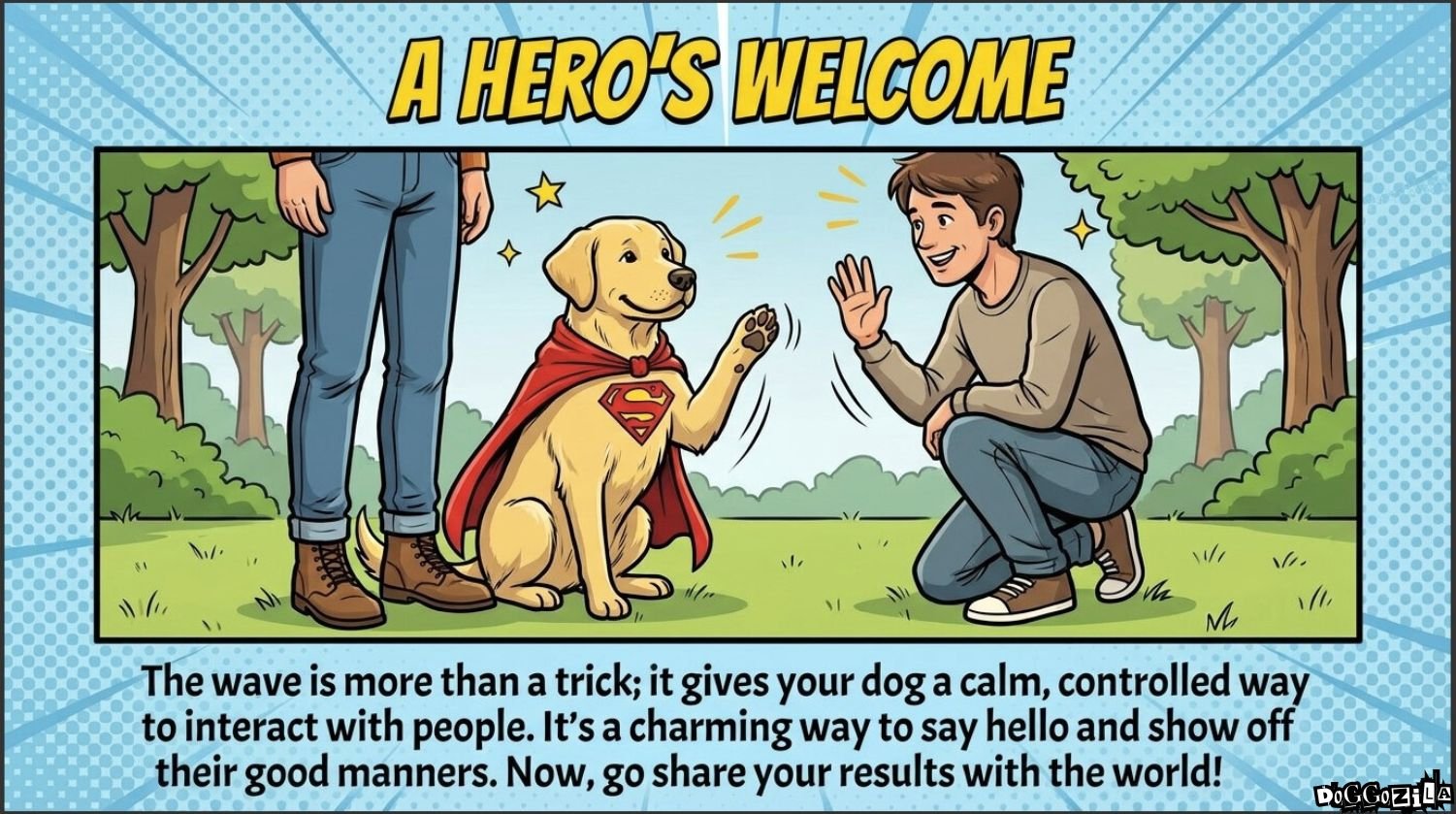
Does your dog get overly excited when someone comes to the door? A wave offers a calm, controlled way to say hello. Guests who are nervous around dogs will appreciate this gentle interaction. It redirects excited energy into a focused, adorable behavior.
The goal when you teach your dog to wave is to provide a default polite behavior. This replaces jumping and makes your dog the star of any gathering with their charming manners. Knowing how to train your dog this awesome trick creates a wonderful first impression for every guest.
🔑 Key Points: This trick is a powerful bonding activity that provides essential mental stimulation and teaches a polite greeting behavior, making your dog a more charming and well-mannered companion.
HOW TO TEACH YOUR DOG TO WAVE AND WHAT SUPPLIES YOU NEED?
Preparation is key to a smooth, fun training experience. You only need a few simple items to get started. Having everything ready means you can focus on your dog and keep the session positive. This prep work prevents frustration and keeps the mood light.
A well-planned session is the first step to success when you want to teach your dog to wave. Let’s get your toolkit ready for this fun project so you’re fully prepared.
The Must-Have: High-Value Treats
Find small, soft treats that your dog goes wild for. Pieces of chicken, cheese, or commercial training treats work perfectly. These special rewards keep motivation high and focus sharp during your lessons. The right treat can make the difference between a distracted dog and an eager learner.
When you use high-value rewards, the process to teach your dog to wave becomes a delicious game for them. Always have a pouch full of these goodies before you start a training session. The treats are your main tool to successfully train your dog anything you want.
Your Communication Tool: A Clicker or Marker Word
A dog clicker is a brilliant tool for marking the exact moment your dog does the right thing. If you don’t have one, a happy, consistent word like “Yes!” works just as well. This clear communication is the secret to fast learning and avoiding confusion.
The marker sound bridges the gap between the action and the reward in your dog’s mind. Using this tool effectively is a core part of the plan to teach your dog to wave clearly and efficiently. It takes the guesswork out of training for your pup. This clear communication is why you can teach your dog quickly.
A Quiet Space for Focused Fun
Choose a quiet room with few distractions for your first few sessions. This helps your dog concentrate on you and the new game you’re playing. Later, you can practice in more exciting places as they master the skill. Starting in a calm environment sets the stage for successful learning and minimizes frustration.
This simple step is often overlooked when people try to teach your dog to wave, but it’s crucial for early success. It allows you both to focus solely on each other and the task at hand. The right environment makes it easier to teach your dog to wave.
🔑 Key Points: Success starts with preparation! Having high-value treats, a clear communication tool (like a clicker), and a quiet space sets the stage for a focused and fun training session.
WHAT FOUNDATIONAL SKILLS YOUR DOG NEEDS TO TEACH HIM TO WAVE?
Before you dive into the wave, ensure your dog has a solid basics. This foundation prevents frustration and sets you both up for success. Think of it as learning the alphabet before you write a sentence. Skipping these basics can make the process confusing and slow.
Ensuring your dog is ready is the responsible first step in your journey to teach your dog to wave. It makes every subsequent step smoother and more enjoyable. You’ll be glad you built this foundation.
A Rock-Solid ‘Sit’ Command
The entire wave trick happens from a sitting position. Your dog must be able to sit calmly and stay seated without wiggling. Practice this until it’s second nature before moving on to more complex behaviors. A stable sit is the launching pad for the wave motion.
If your dog pops up, simply reset them and try again with patience. Mastering this is non-negotiable before you teach your dog to wave properly. A reliable sit is the first skill you need to teach your dog to wave effectively.
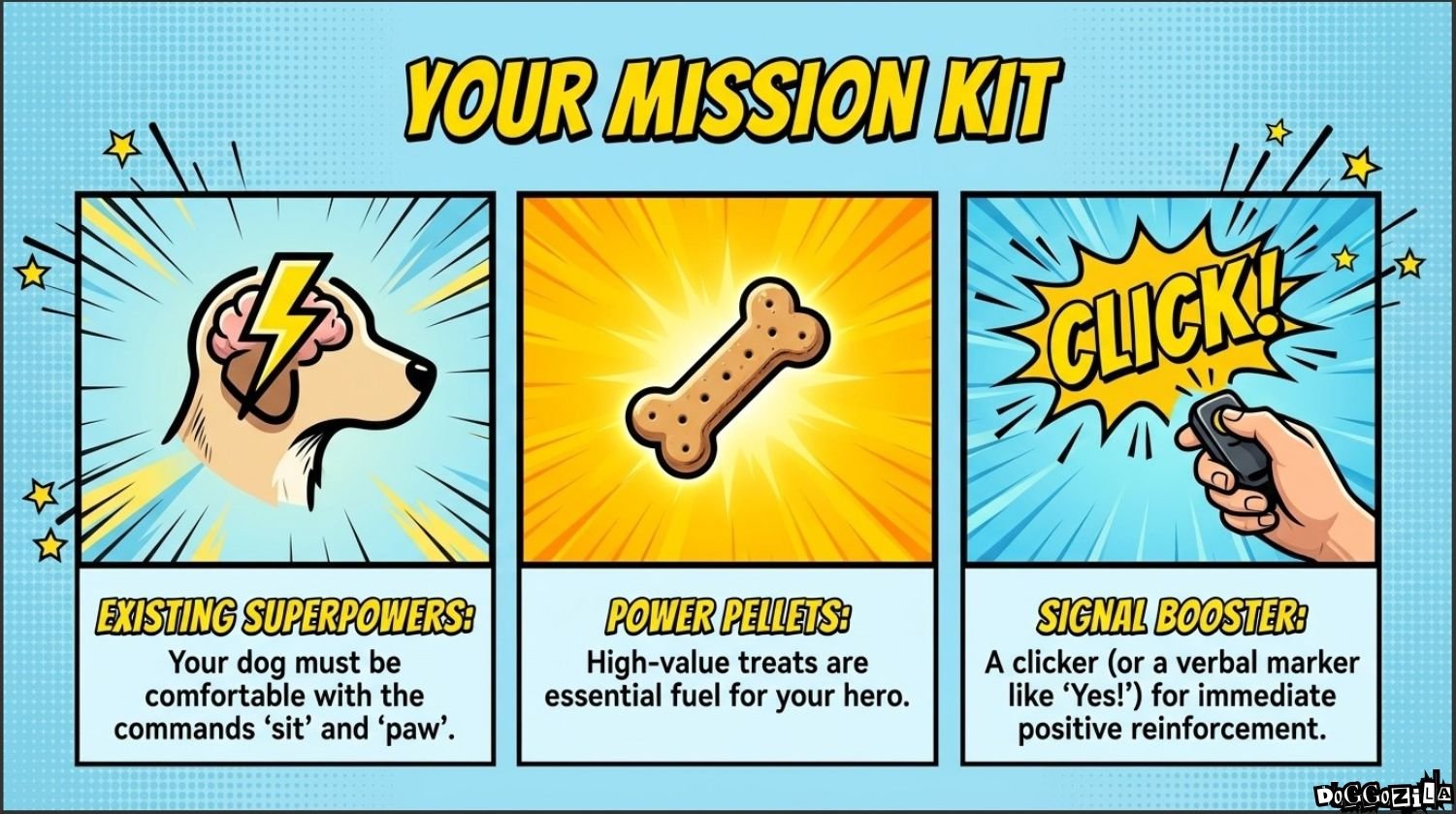
The Helpful ‘Paw’ or ‘Shake’
While not absolutely mandatory, knowing ‘paw‘ gives you a head start. It means your dog already understands the concept of lifting a paw on cue. This can make the first step of our guide much easier and faster to accomplish.
If your dog knows this, they already have the basic muscle memory for the action. This prior knowledge can significantly speed up your mission to teach your dog to wave. However, don’t worry if they don’t know it, we can start from scratch. Either way, you can teach your dog to wave.
Focus and Engagement With You
Your dog should be able to pay attention to you for short periods. If they’re too distracted, work on simple focus exercises first. Training is a team sport, and you need their eyes on you to communicate effectively. Practice in a quiet room, rewarding them for simply looking at you.
This focused attention is the golden key that will unlock your ability to teach your dog to wave and many other fun tricks. It transforms training from a chore into a connected, fun conversation. Without focus, it’s hard to teach your dog to wave.
🔑 Key Points: Before starting, ensure your dog has a rock-solid ‘sit,’ a possible head-start with ‘paw,’ and the ability to focus on you, creating a stable foundation for learning the new wave behavior.
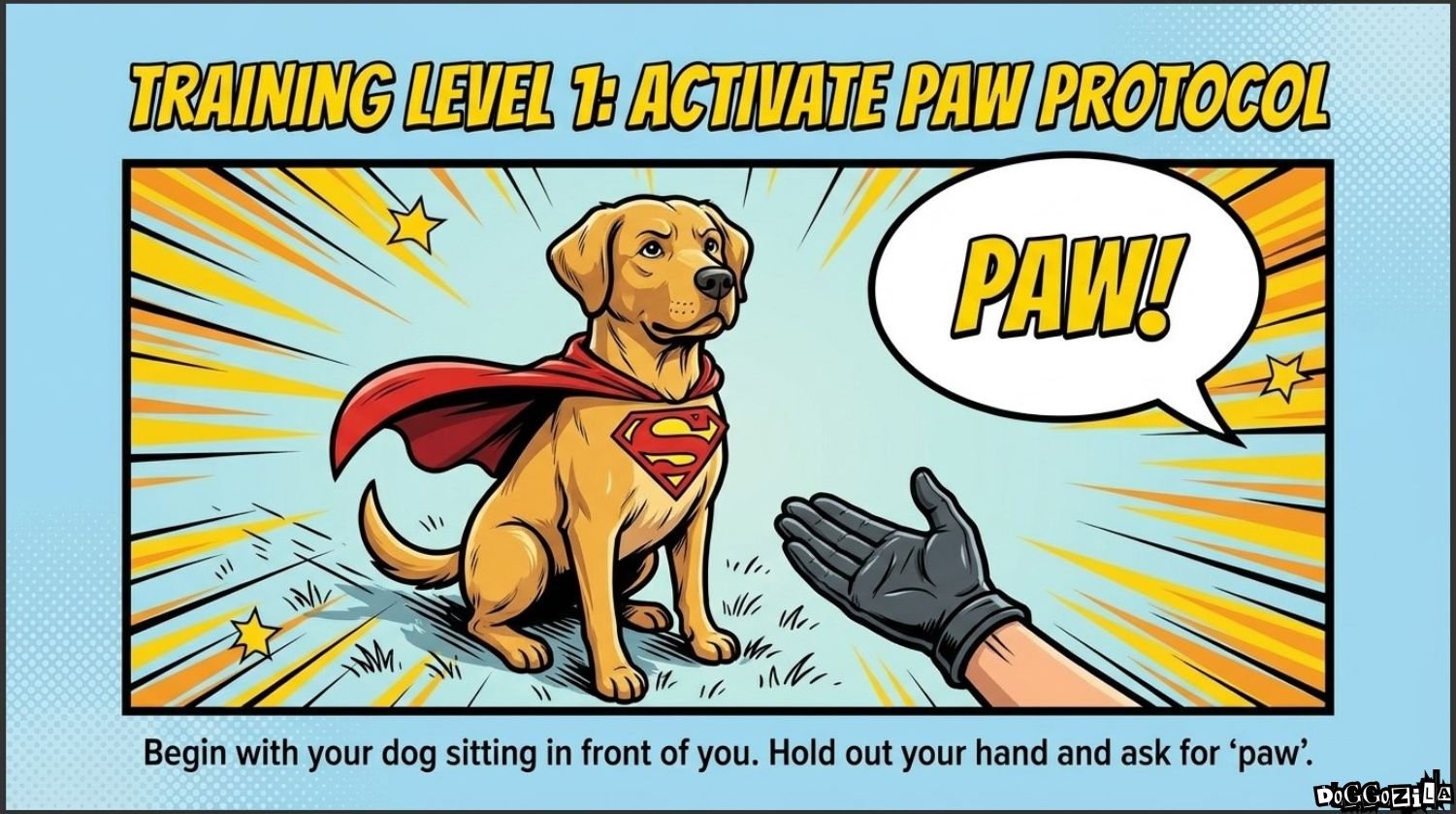
THE FIRST PAW LIFT: HOW TO START TO TEACH YOUR DOG TO WAVE?
This is where the magic begins! The goal here is simple, get any paw movement at all. Remember, keep sessions under five minutes and super positive. Let’s capture that initial action with patience and celebration. The first step to teach your dog to wave is all about encouraging any upward paw motion.
Don’t aim for perfection, aim for effort. We’ll shape that effort into a wave later. This initial step is critical to teach your dog to wave.
Luring the Paw Off the Ground
Start with your dog sitting. Hold a treat in a closed fist and present it at their chest level. Most dogs will naturally paw at your hand to try and get it. The moment their paw lifts, mark with “Yes!” and reward. If your dog uses their nose instead, just wait patiently with your closed fist until they try a paw.
Be a statue and let them problem-solve, the paw will usually come next. This initial lure is the classic first move to teach your dog to wave and it works for most pups. Keep your hand still and let them figure out the action. This is how you begin to teach your dog to wave.
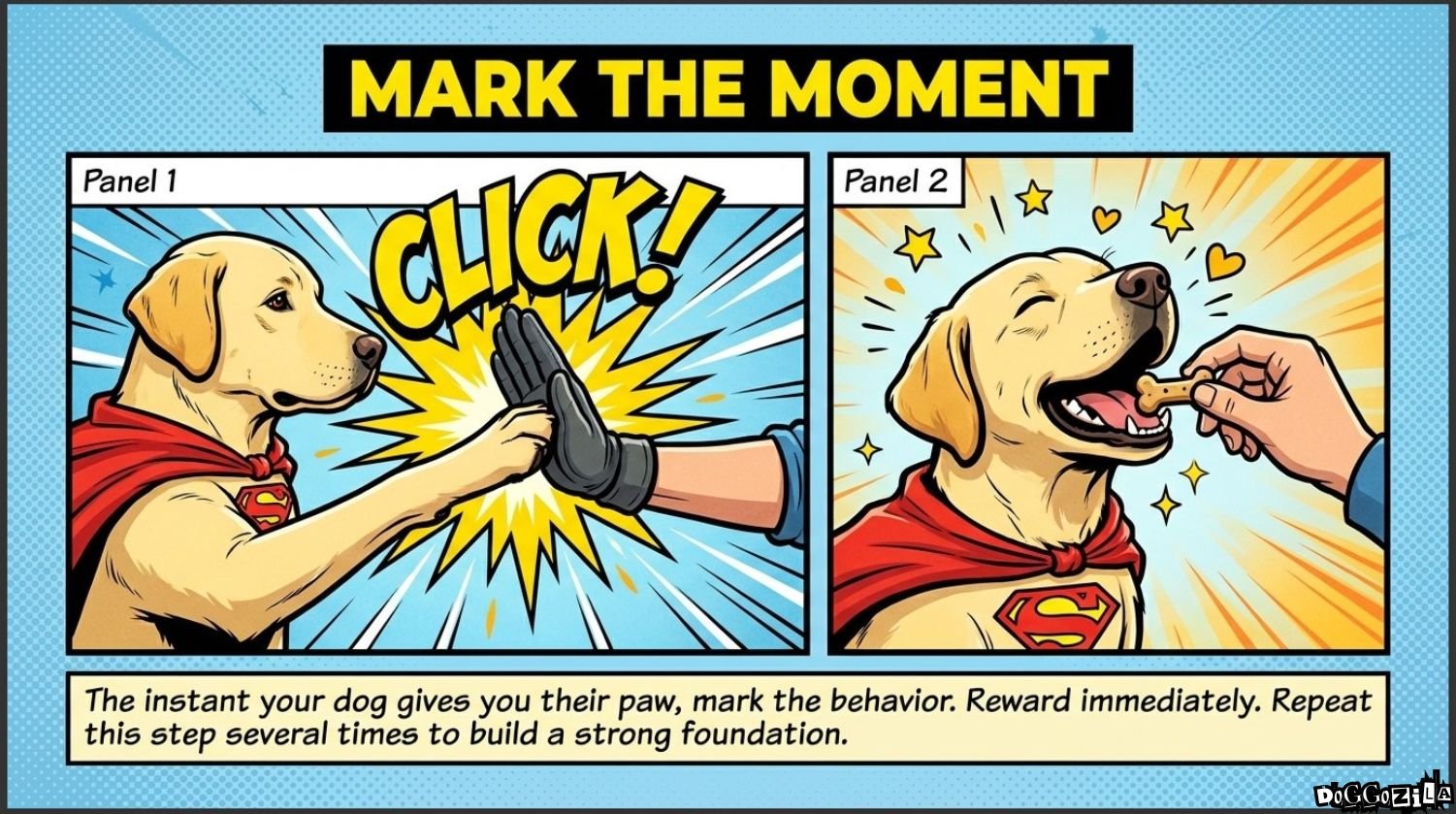
Marking the Exact Moment of Success
Timing is everything. You must click or say your marker the instant the paw leaves the floor. This precise communication tells your dog, “That right there is what I want!” Follow the mark immediately with a tasty treat from your other hand. If you’re late, you might accidentally reward them for putting their paw down.
Practice your timing without your dog first to get the rhythm down. Sharp timing is the most important skill you can develop to successfully teach your dog to wave and any other behavior. It turns a vague notion into a clear instruction for your canine friend. Good timing is essential to teach your dog to wave.
Rewarding from Your Other Hand
Always give the treat from your hand that wasn’t the lure. This stops your dog from just staring at your fist. It teaches them that the reward comes from you, not necessarily from the hand they are targeting. This separation is a key training concept that prevents dependency on the lure.
It’s a subtle but powerful technique in the guide to teach your dog to wave independently. This method encourages them to perform the action for you, not just for the treat in your specific hand. This technique helps you teach your dog to wave the right way.
🔑 Key Points: The initial step is all about capturing any upward paw motion using a treat lure, marking the exact moment of the lift, and rewarding from your other hand to build the core action.
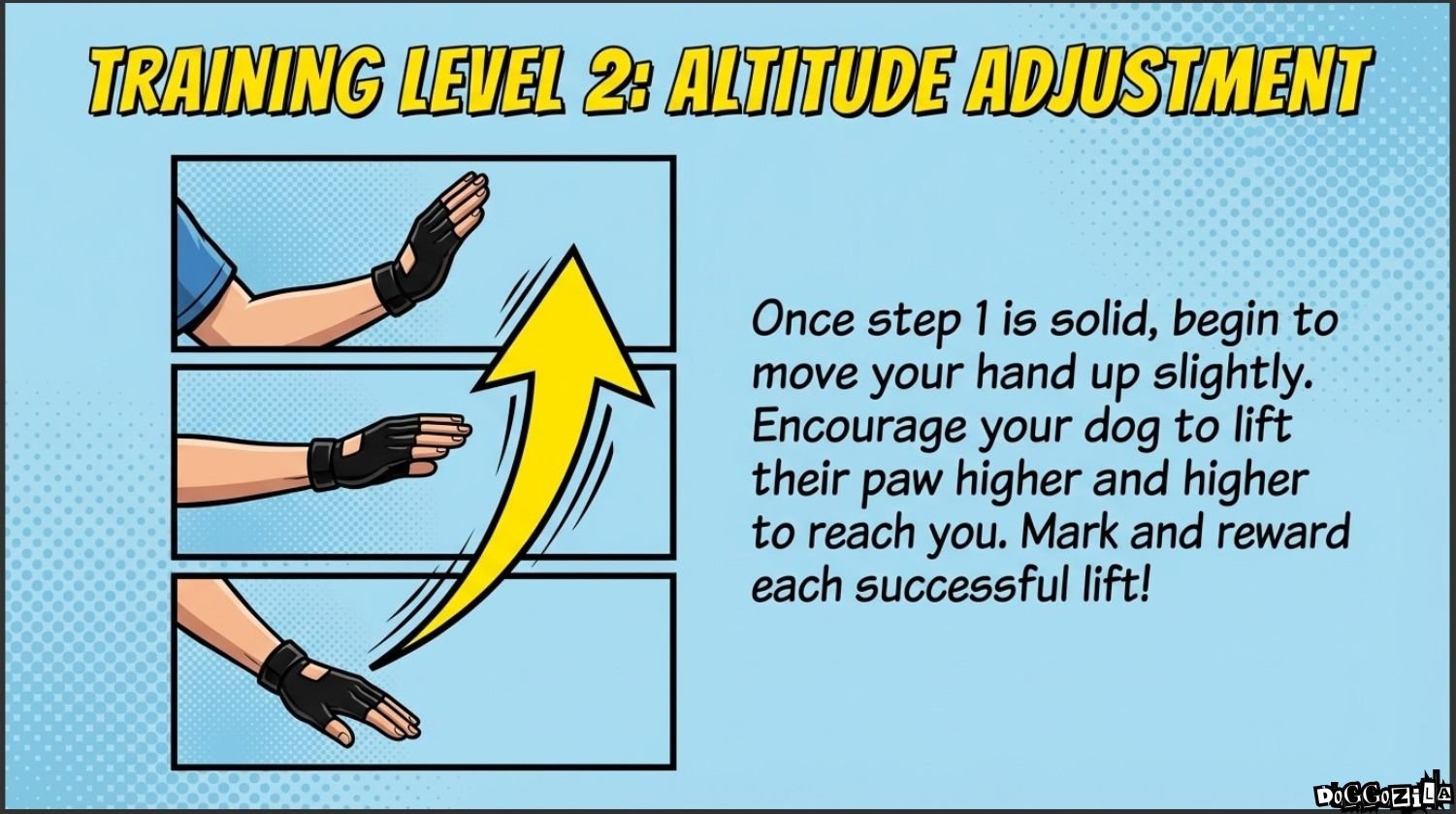
HOW TO TEACH YOUR DOG TO WAVE BY SHAPING THE MOTION?
Now, we’re going to shape that little paw lift into a proper wave. We do this by raising our expectations, bit by bit. The method to teach your dog to wave relies on this concept of “shaping.” You are a sculptor, and each reward shapes the behavior closer to your vision. It requires observation and patience from you.
Remember that every success and reward shapes the behavior closer to your vision. Celebrate every small improvement, this is how complex behaviors are built. This is the core process to teach your dog to wave.
Gradually Raising Your Hand Higher
Once your dog reliably paws at your fist at chest level, start holding your hand a little higher. Encourage them to reach up just an inch more. Mark and reward these higher lifts enthusiastically. If they fail to reach higher, go back to the lower height for a few successful reps to rebuild confidence.
Then, try raising your hand again by a tiny, almost imperceptible amount. This gradual increase is the safest way to teach your dog to wave without causing confusion or frustration. It breaks down a big motion into manageable, rewardable chunks. This patience will help you teach your dog to wave a high, clear wave.
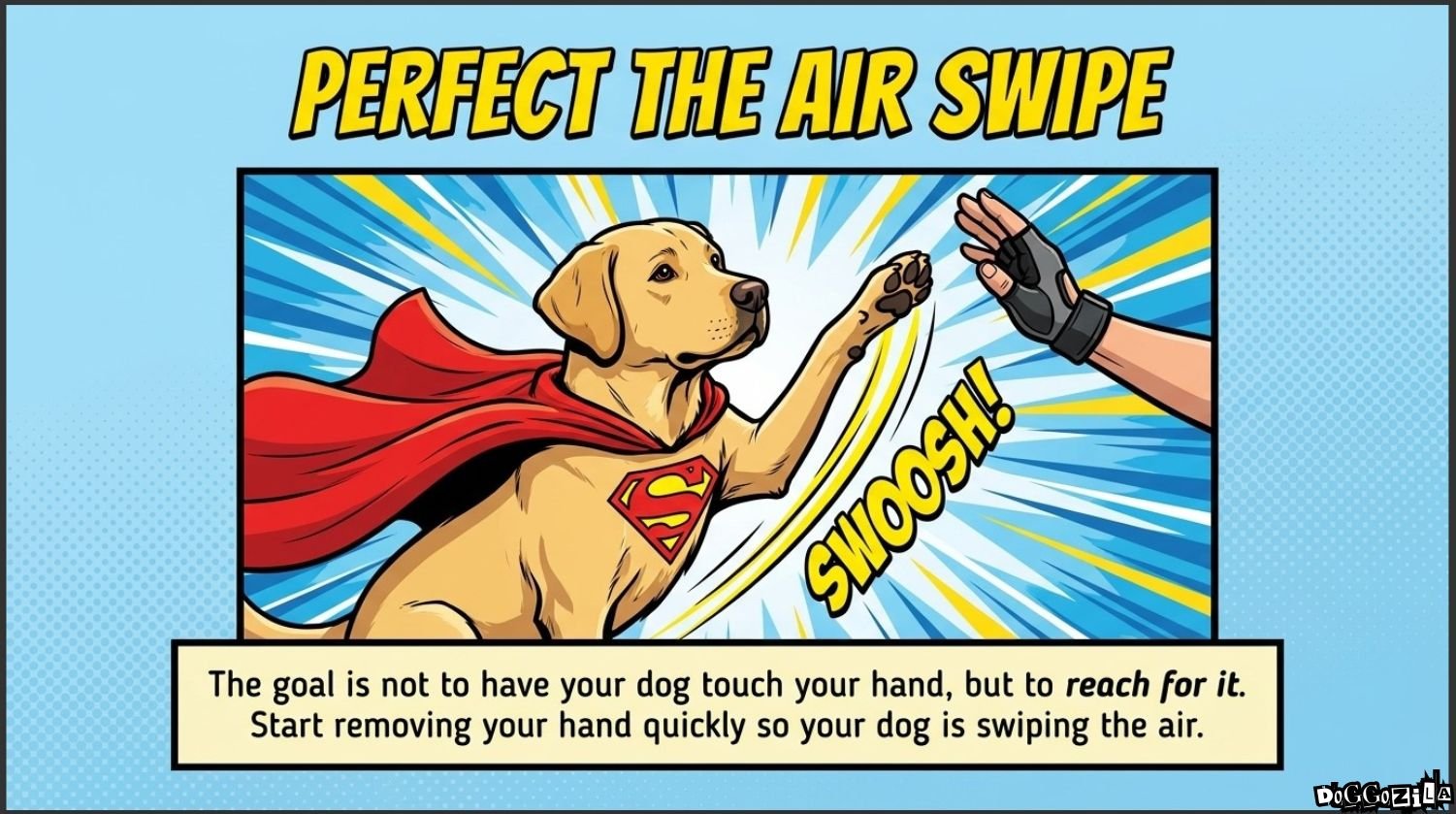
Creating the “Air Swipe” Movement
Here’s a fun step, start pulling your hand away quickly as they reach for it. This causes their paw to swipe through the air. This “air swipe” is the core of the wave! Reward this new motion generously. You might need to do this several times before they understand the game.
The timing of your hand removal is crucial, do it as their paw is on the way up. Mastering this “air swipe” is the pivotal moment when you truly start to teach your dog to wave and not just lift a paw. It’s the transition from a static lift to a dynamic greeting. This step is fun when you teach your dog to wave.
Build Strength and Balance to Teach Your Dog To Wave
Holding a paw up high requires core strength. Your dog might wobble at first, and that’s okay. Keep sessions short to avoid muscle fatigue, and always end while they’re still having fun. You can even practice the “sit pretty” or “beg” trick separately to build those core muscles.
A strong core makes the wave more stable and impressive. Remember, part of the plan to teach your dog to wave involves their physical development. Be their supportive coach, cheering on their growing strength and balance. This support is key as you teach your dog to wave.
🔑 Key Points: You gradually shape the paw lift into a wave by slowly raising your hand higher, creating an “air swipe” motion, and patiently building your dog’s strength and balance for the final gesture.
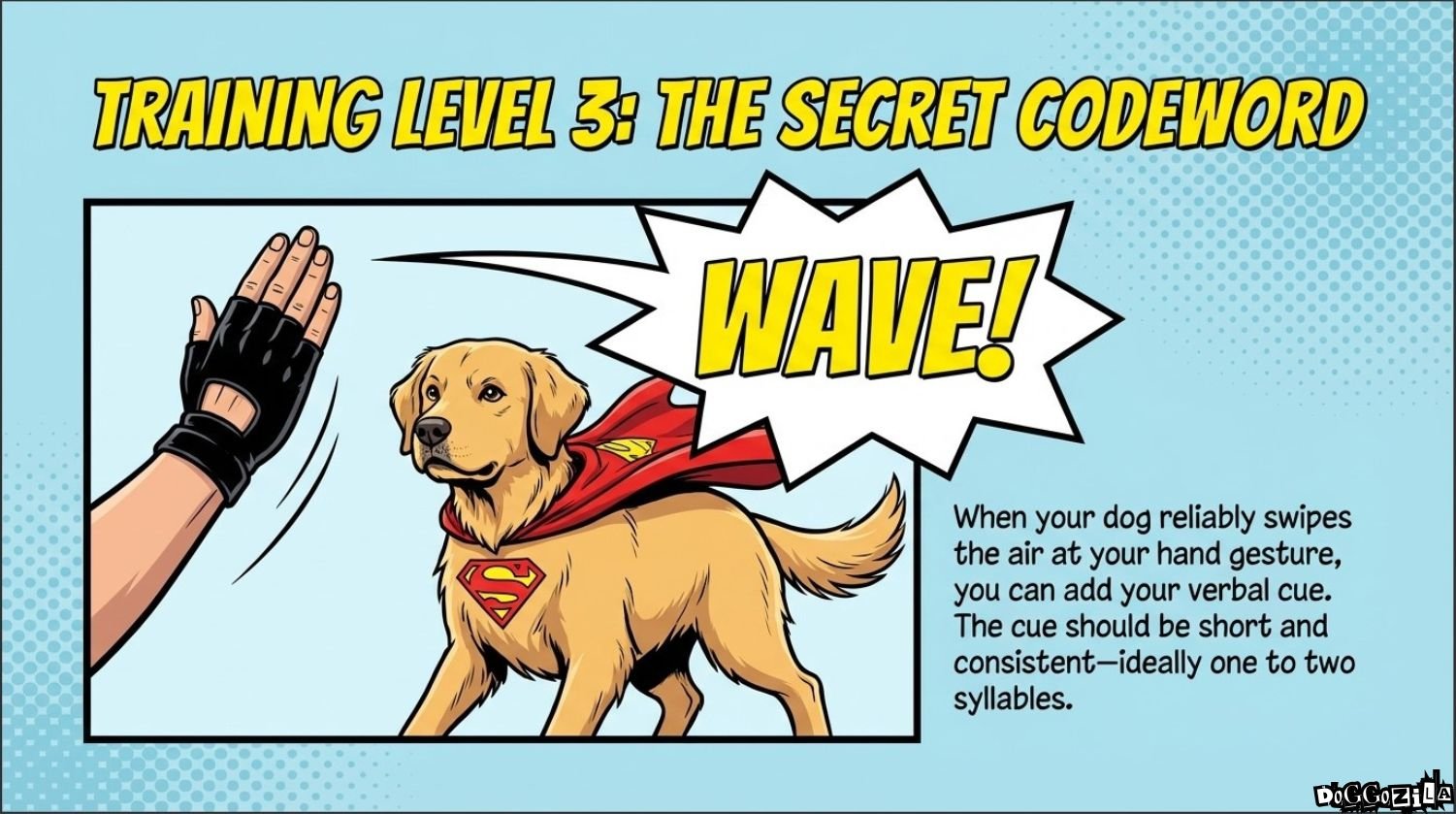
HOW TO TEACH YOUR DOG TO WAVE WITH A VERBAL CUE?
It’s time to name the game! Adding a cue word connects the behavior to a command. Soon, you’ll be able to ask for the wave, and your clever dog will know just what to do. This step is about transferring the behavior from a visual lure to a verbal request.
Learning how to teach your dog to wave on command gives you control and clarity. It’s the moment the trick becomes truly useful. This is a major milestone as you teach your dog to wave.
Choosing the Perfect Cue Word
Pick a short, clear word like “Wave,” “Hello,” or “Bye.” Be consistent and only use this one word for this specific trick. Say it in a happy, upbeat tone every single time. Avoid long phrases like “can you wave?” which are harder for dogs to distinguish.
The best cues are one or two distinct syllables that you don’t use for other commands. This careful choice is a simple but critical part of your strategy to teach your dog to wave reliably. A good cue is easy for both you to remember and your dog to understand. Picking a word is a fun part of how to teach your dog to wave.
Saying the Cue Before the Action
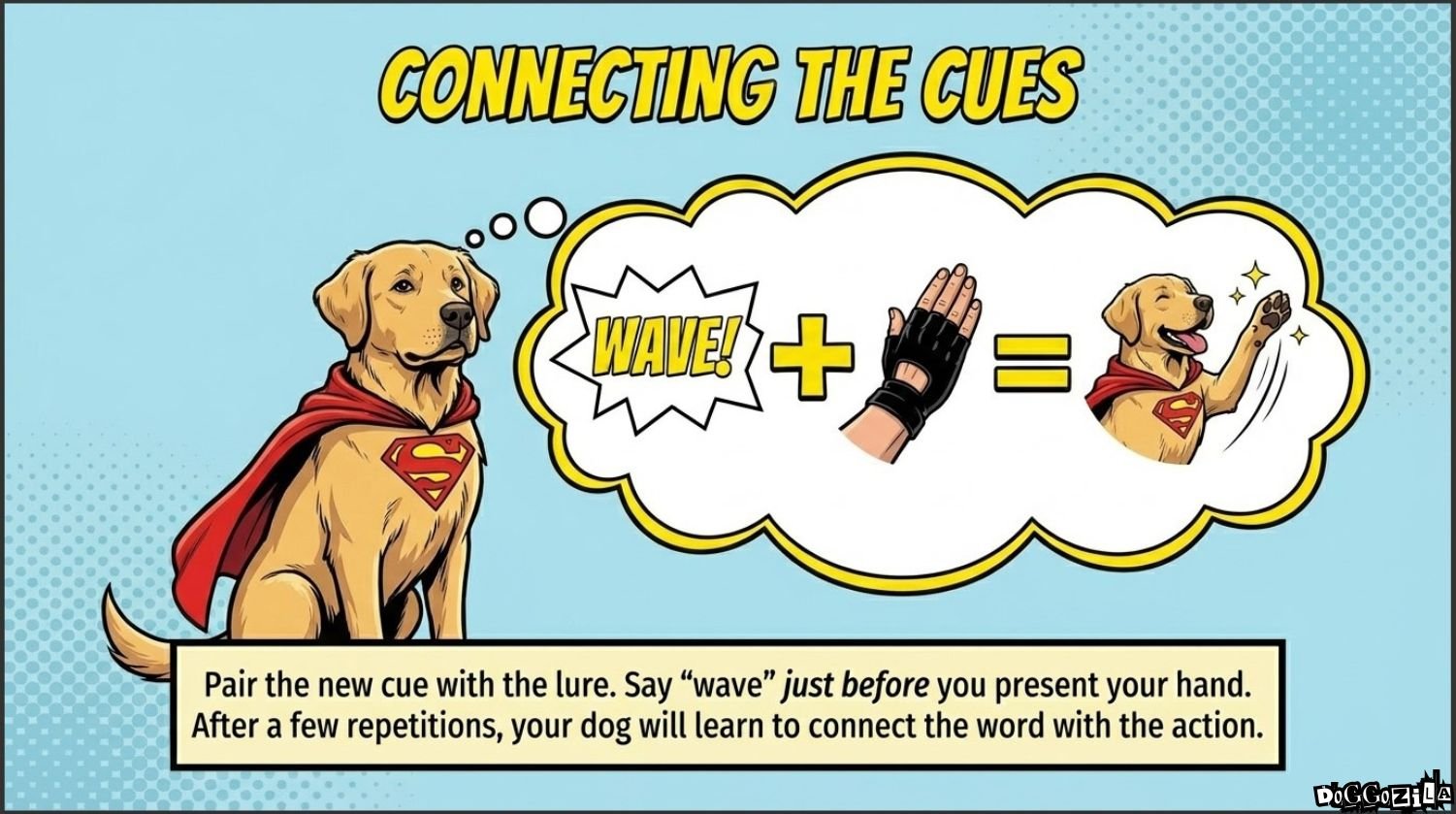
Now, say your new word just before you give the hand signal. The sequence is: say “Wave,” then immediately make your hand gesture. This links the sound of the word to the behavior in your dog’s mind. Repeat this pairing dozens of times over multiple short sessions.
The cue must predict the action consistently for the association to form. This consistent pairing is the mechanical heart of how you teach your dog to wave on a verbal command. It’s a simple but powerful pattern of communication. This step is how you teach your dog to wave on cue.
Practicing the New Connection
Repeat this new step many times over several short sessions. Your dog will begin to anticipate the hand signal after hearing the word. This is a sign they’re making the connection! You might see their ear twitch or their body tense slightly when you say the cue before you even move.
Celebrate these subtle signs of understanding. This practice phase solidifies the learning and is the final stretch to teach your dog to wave on cue. Be patient, some dogs make this connection faster than others. Your consistency will teach your dog to wave.
🔑 Key Points: This phase links the behavior to a command by choosing a consistent cue word, saying it right before the action, and practicing until your dog anticipates the wave from the verbal cue alone.
HOW TO TEACH YOUR DOG TO WAVE WITHOUT A LURE?
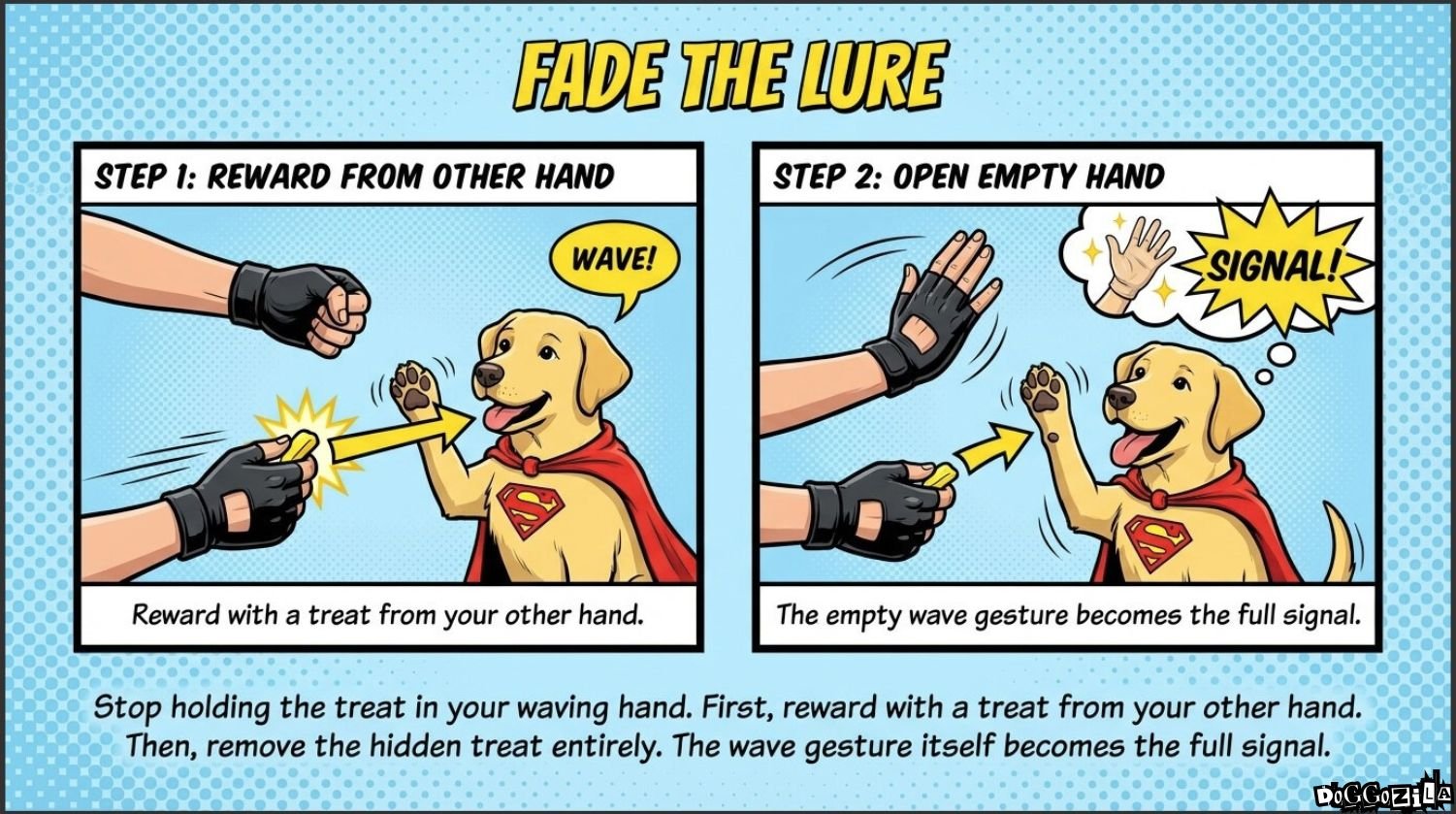
This phase is about fading your help so your dog can perform independently. We remove the original hand signal so they respond to a more natural cue. Be patient, this is a big mental step for them. The goal is to have a trick that works in real life, not just in training sessions.
This is the ultimate test of whether you successfully teach your dog to wave or if they just follow food. It’s the graduation ceremony for the trick. This final step proves you can teach your dog to wave.
Transitioning to an Empty Hand Signal
Start by using the same hand gesture, but with an empty hand. When your dog waves, mark it and reward from your treat pouch or other hand. They learn the gesture itself is the cue, not the smell of food. At first, they might sniff your hand curiously, just wait them out.
The moment they offer the wave to your empty hand, have a party! This transition is a crucial skill to master when you teach your dog to wave like a pro. It proves they understand the action itself, not just how to get a treat from a fist. This shows you know how to teach your dog to wave properly.
Introducing a Natural Waving Motion
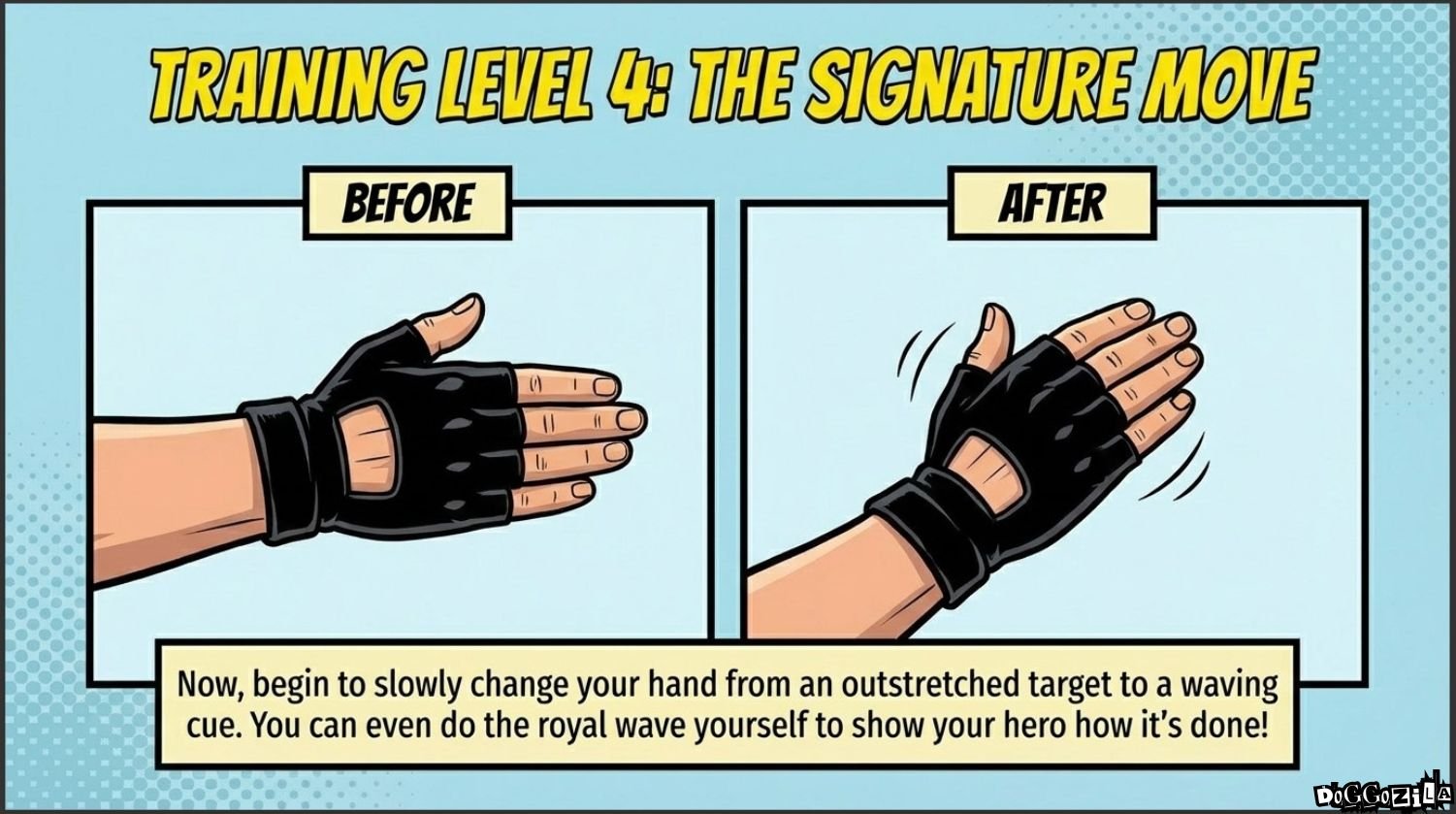
Begin to change your hand signal from a closed fist to an open-palm wave. You can even wave at your dog like you would at a person! Mark and reward when they respond to this new, clearer visual. Make your wave big and obvious at first, then gradually make it smaller.
This morphs the “training signal” into a “real-world signal.” Changing your gesture is a fun part of the creative process to teach your dog to wave in a way that looks natural to an audience. It’s the polish on the trick. This polish is part of how to teach your dog to wave well.
Phasing Out the Initial Gesture
Finally, start making your wave gesture smaller and less obvious. Eventually, just a small flick of your wrist or the verbal cue alone should trigger their wave. Celebrate this independence hugely! You can practice by giving the verbal cue while your hands are at your sides.
If they wave, run over and give them a jackpot of treats. This final fading is how you complete the mission to teach your dog to wave on a truly reliable cue. It’s the mark of a well-trained behavior. You’ve finally managed to teach your dog to wave on command.
🔑 Key Points: The goal is independence, achieved by transitioning to an empty hand signal, introducing a natural waving motion, and gradually phasing out the initial gesture so the dog responds to a subtle cue.
HOW TO TEACH YOUR DOG TO WAVE TO OTHER PEOPLE?
The final frontier! Now your dog can wave to you, but let’s teach them to charm your guests too. This is about generalizing the behavior, a key skill in dog training. The trick isn’t fully learned until they can do it for someone else.
This step ensures the behavior is solid and useful in social situations. Let’s make your dog the friendliest greeter on the block. This social aspect is a fun reason to train your dog to wave.
Practicing with a Willing Helper
Have a friend or family member stand a few feet away. You stand next to your dog and give the “wave” cue. Your helper can wave back enthusiastically to encourage your dog. If your dog looks at you confused, your helper can take a step closer.
Keep the first sessions easy and rewarding. Using a helper is the most effective way to teach your dog to wave to people other than you. It builds their confidence in performing the trick in a slightly new context. A helper makes it easier to teach your dog to wave to others.
Moving to Your Dog’s Side
As your dog gets confident, start giving the cue while standing at their side, not in front. This helps them understand the wave is directed at the person across from them, not just at you. You might gently point towards the helper as you give the cue.
This body positioning change is a small but important detail when you teach your dog to wave to guests. It directs their focus outward and helps them understand the social purpose of the trick. Your position helps teach your dog to wave to the right target.
Adding Distance and Real-Life Scenarios
Practice at the front door when guests arrive. Ask your dog to “wave hello” before they get pet. This reinforces the trick as a practical, polite greeting behavior in daily life. You can also practice on walks with neighbors you meet. The more varied the context, the stronger the behavior becomes.
This real-world application is the ultimate goal when you teach your dog to wave. It transforms a parlor trick into a valuable life skill for your canine companion. Real-life practice completes your goal to train your dog.
🔑 Key Points: This final phase generalizes the trick for real-world use by practicing with a helper, positioning yourself at your dog’s side to direct their focus outward, and integrating the wave into daily greetings at the door or on walks, transforming it from a trick into a practical social skill.
HOW TO SET THE RIGHT MINDSET TO TEACH YOUR DOG TO WAVE?
Your attitude is just as important as the technique. Approaching training with the right mindset ensures the process is enjoyable and effective for both of you. Staying positive and patient is the secret ingredient that many guides forget to mention.
When you cultivate this mindset, you’ll find it much easier to teach your dog to wave. It turns potential frustration into fun puzzles to solve together. This mindset is what allows you to successfully train your dog.
Embracing Patience and Short Sessions
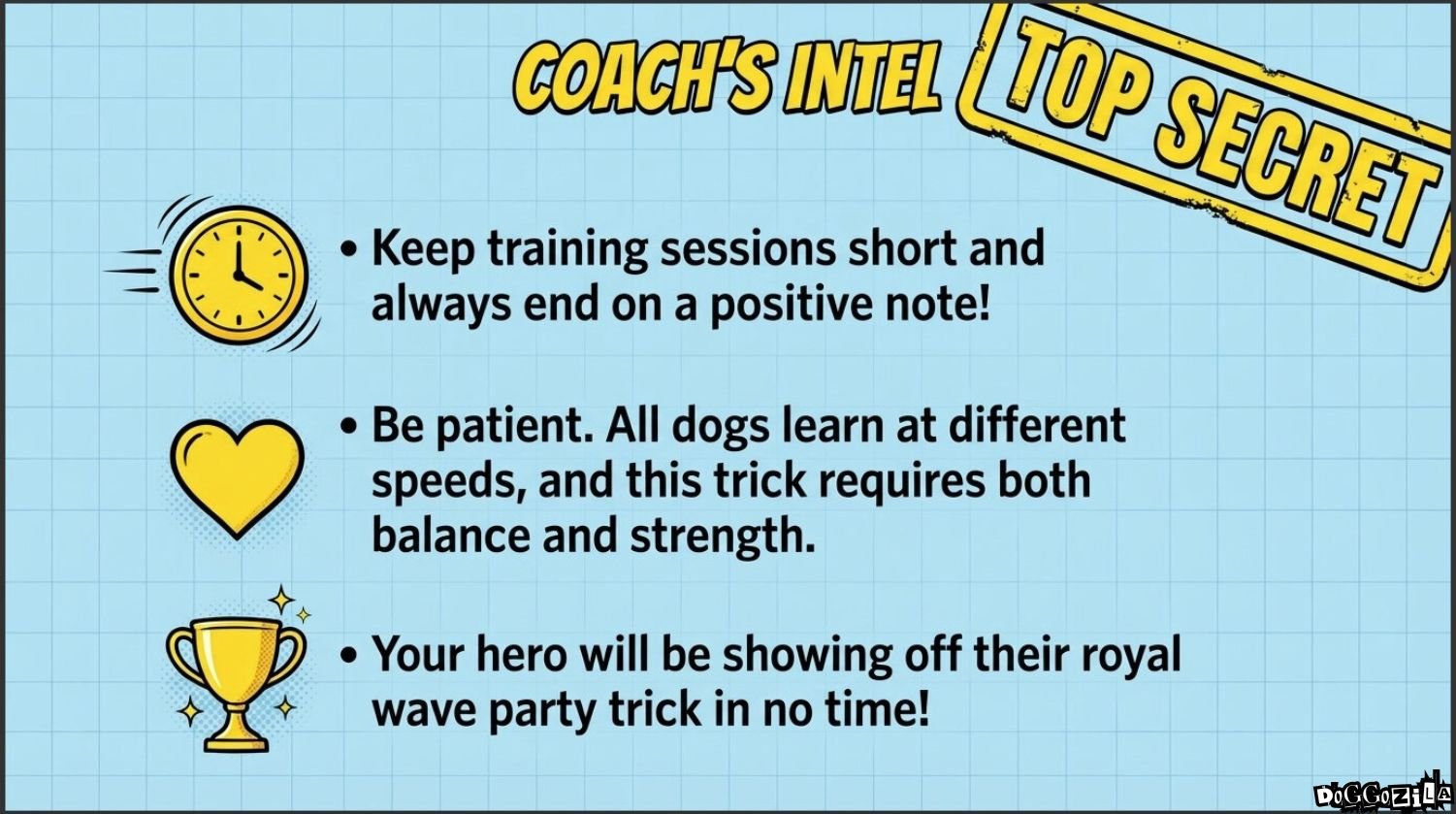
Dogs learn best in short, frequent bursts. Aim for 3-5 minute sessions, once or twice a day. This prevents your dog from getting bored or tired. If you feel frustrated, end the session immediately on a simple, successful note.
Patience means understanding that some days your dog will learn faster than others. This calm, consistent approach is the best way to teach your dog to wave without stress. Rushing is the enemy of clear communication when you are training your dog.
Celebrate Every Small Victory When You Teach Your Dog How to Wave
Did your dog lift their paw a millimeter higher? Celebrate it! This positive reinforcement fuels their desire to try again. Your enthusiasm is a powerful reward in itself. Keep the energy upbeat and happy, even if progress seems slow.
Celebrating micro-successes builds a strong, confident learner. This celebration is a crucial part of the formula to teach your dog to wave. It makes your dog love the process of learning how to wave.
Keeping the Big Picture in Focus
Remember, the goal is a happy dog and a stronger bond, not just a perfect wave. If you hit a roadblock, take a break and try again later. The journey matters more than the destination. This perspective relieves pressure and brings the joy back into training. Keeping this big picture in mind is essential when you set out to teach your dog to wave. It’s all about the shared experience.
🔑 Key Points: Your patience, celebration of small wins, and focus on the bonding journey are just as crucial as the technique, ensuring training remains a positive and joyful experience for both of you.
HOW TO TROUBLESHOOT STEPS WHEN YOU TEACH YOUR DOG TO WAVE?
Every dog learns differently, and you might hit a small snag. Don’t worry, these are common and totally fixable. A little problem-solving is just part of the journey. The key is not to get frustrated but to adapt your approach. Even professional trainers encounter these hurdles.
Let’s solve them so you can successfully teach your dog to wave no matter what. This troubleshooting will help you teach your dog to wave.
My Dog Just Nuzzles My Hand Instead
If your dog uses their nose, ignore it. Wait patiently with your closed fist until they try a paw. The moment they do, even accidentally, mark and reward to make the paw action more rewarding than nuzzling. You can also try holding your hand slightly lower or to the side of their head.
Sometimes a slight change in position triggers a paw response. Overcoming this is a standard challenge when you teach your dog to wave, and patience is your best tool. Remember, you are teaching them a new, specific action. This fix is part of learning how to teach your dog to wave.
My Dog Gets Too Excited and Jumps Up
If breaking their ‘sit‘ is an issue, go back to basics. Practice the ‘sit‘ command with high-value rewards for calmness. Only proceed with wave training when they are settled and focused. You might need to use a leash or practice in a less exciting room.
Managing excitement levels is crucial if you want to teach your dog to wave without a full-blown jumping greeting. Always reward the calm sit first, then ask for the wave. Calmness is key to when you are training your dog.
My Dog Seems Stuck and Won’t Lift Higher
Break it down even smaller. Reward the tiniest lift, then wait for a millimeter higher next time. Sometimes slowing down and making the steps microscopic is the fastest way forward. Also, check if your treats are high-value enough, you might need an upgrade.
A stuck dog often needs the criteria broken down more. This refined shaping is the art behind the science of how to teach your dog to wave through any plateau. Don’t be afraid to take a step back to move two steps forward. This strategy will help you train your dog past any block.
🔑 Key Points: Effective problem-solving involves adapting your approach to common hurdles like nose-nudging, over-excitement, or training plateaus by breaking steps down further, managing energy levels, and reinforcing foundational skills, ensuring you and your dog can overcome challenges and keep the training process positive.

FREQUENTLY ASKED QUESTIONS: HOW TO TEACH YOUR DOG TO WAVE?