
Is your dog’s breath powerful enough to stop a clock? You’re not alone. Every dog owner has faced the dreaded “dog breath” moment. But here’s a secret. That smell is often a cry for help from your dog’s mouth or gut. The good news? You can fix it with simple items from your kitchen. This guide is packed with natural dog breath remedies. We’ll explore fun, safe, and effective ways to freshen things up. Get ready to enjoy those puppy kisses again!
„Tired of turning your head during doggy kisses? Discover how your kitchen cupboard holds the secret to banishing bad breath and unlocking a healthier, happier pup.“
Quick Summary About NATURAL REMEDIES FOR BAD BREATH IN DOGS
This guide tackles a common dog woe, the stinky breath! By exploring its root causes and providing a wealth of safe, natural solutions you can implement at home. From crunchy veggies that scrub teeth to herbs that freshen from within, you’ll learn how to create a simple daily routine that promotes oral health, supports digestion, and ensures those up-close moments are enjoyable again. We’ll also cover when it’s crucial to seek help from your vet.
WHY DOES MY DOG HAVE BAD BREATH AND WHICH NATURAL REMEDIES CAN HELP?
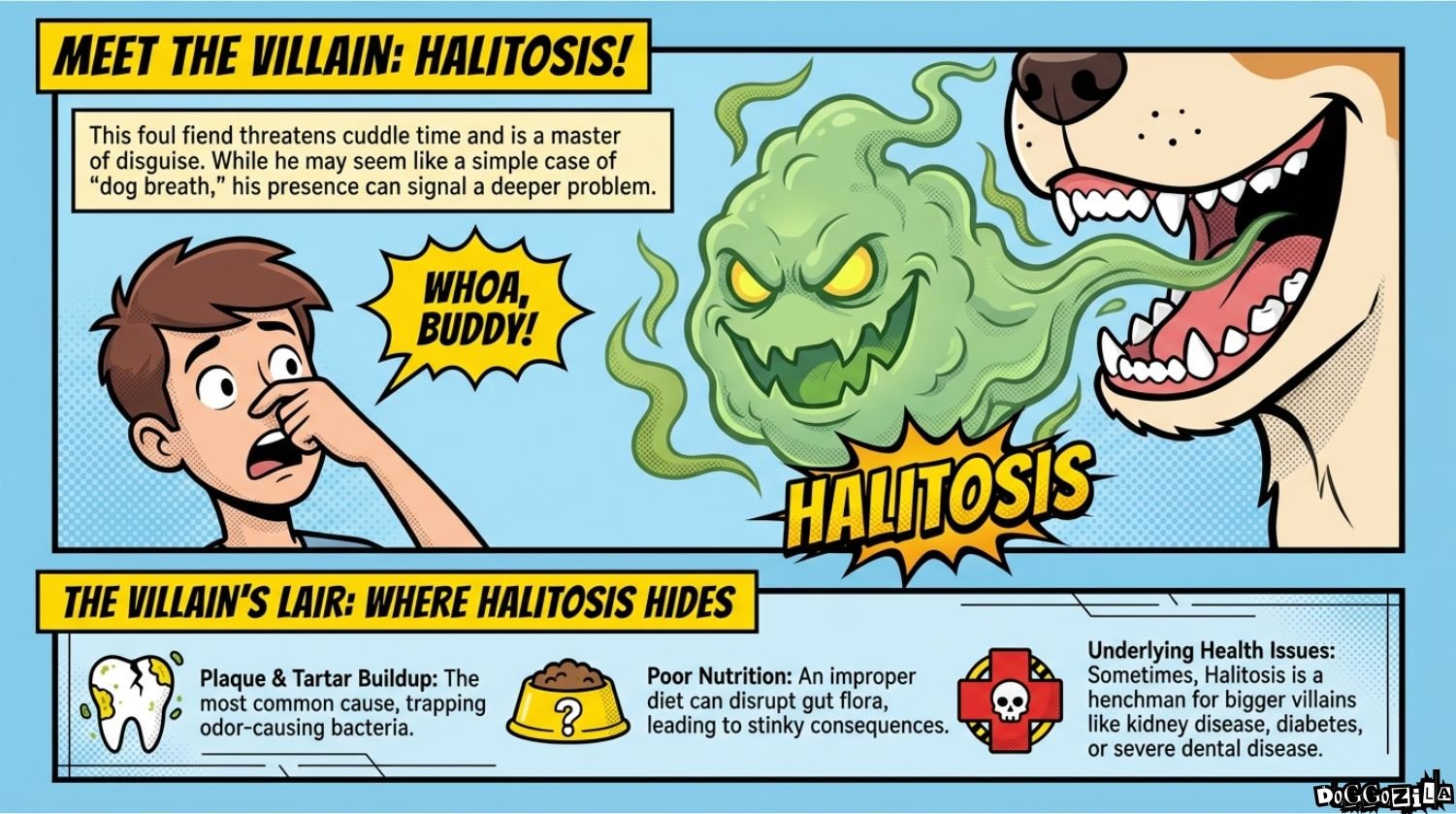
Bad breath, or halitosis, is a common sign of an imbalance. It’s not just about old food. Often, it’s caused by bacteria in the mouth or gut. Plaque buildup on teeth is a top culprit. This sticky film hardens into smelly tartar. Other times, the issue starts in the stomach. Poor digestion can create bad odors. Sometimes, it signals a deeper health problem. Knowing the cause is your first step to a cure.
The first step in addressing your dog’s bad breath is to understand where it’s coming from. While some causes are simple, others can signal deeper health issues. Covering up the smell is only a temporary fix, finding and addressing the source is key to long-term freshness.
What Are The Most Common Causes Of Canine Halitosis?
- Poor Oral Hygiene: This is the leading culprit. The buildup of plaque and tartar on the teeth can lead to gum disease, tooth decay, and trapped odor-causing bacteria.
- Diet and Nutrition: An improper diet, poor gut microflora, or scavenging habits like garbage eating can all contribute to bad breath that seems to come from deep within.
- Foreign Objects: Sometimes a sudden onset of bad breath is caused by a foreign object, like a splinter from a stick, lodged in the mouth.
- Underlying Health Conditions: Persistent bad breath can sometimes be a symptom of more serious medical issues, such as kidney disease, liver disease, or diabetes.
- Dehydration: Just like in humans, a lack of adequate water intake can lead to a dry mouth and more concentrated, heavier breath.
While many of these causes can be managed at home, it’s crucial to remember that persistent or suddenly severe bad breath always warrants a visit to your veterinarian to rule out serious conditions.
The Usual Suspect: Plaque and Tartar Buildup
Daily life for your dog’s mouth is a battle between saliva and bacteria. When bacteria win, they form a sticky film called plaque on the teeth. Plaque is a sticky, bacteria-filled film. It forms on your dog’s teeth every single day. If not removed, it hardens into brown tartar.
Tartar traps even more bacteria against the gums. This irritates the gums and creates a perfect home for odor-causing bacteria. This leads to inflamed gums, called gingivitis. The bacteria produce sulfur compounds. These compounds smell like rotten eggs. This is the most common source of bad breath. Fighting this buildup is key for fresh breath.
When the Gut is the Problem: Digestive Discomfort
Bad breath can come from the stomach, not the teeth. Think of it as internal bad air. Poor diet or imbalance can cause this. Your dog’s gut has good and bad bacteria. When the bad ones overgrow, trouble starts. They produce smelly gases. These gases get absorbed into the blood. Finally, they are exhaled through the lungs. Probiotics are great natural dog breath remedies for this issue.
A balanced, high-quality dog diet is a foundational step for good oral and digestive health. Furthermore, many natural dog breath remedies are effective because they not only address oral bacteria but also support better digestion, tackling the problem at its internal source.
Don’t Ignore These Serious Warning Signs
Most bad breath is simple. But sometimes, it’s a serious red flag. Very foul, abnormal smells need a vet. A fruity smell could mean diabetes. A urine-like odor may signal kidney disease. A metallic scent might point to liver trouble. Always rule out health issues first. Your vet will give you the all-clear. Then you can safely try home natural dog breath remedies.
Your dog’s bad breath can be persistent and accompanied by other symptoms. Look for excessive drooling, lethargy, weight loss, or difficulty eating. It is essential to consult your veterinarian. They can perform a thorough examination to identify and address any underlying medical conditions. Understanding these potential causes is the first step. Now you’re ready to explore the simple and effective remedies you can find right in your own kitchen.
🔑 Key Points: Bad breath often points to plaque buildup or digestive issues, but unusual smells (fruity, urine-like) can signal serious health problems requiring a vet visit.
YOUR KITCHEN HOLDS POWERFUL NATURAL DOG BREATH REMEDIES
You don’t need fancy products. Your fridge and pantry are full of solutions. Crunchy veggies, fresh herbs, and healthy oils can help. These items work by cleaning teeth or fixing gut health. They are safe, affordable, and effective. Let’s turn your kitchen into a doggy dental clinic.
You might be surprised to learn that some of the healthiest foods in your refrigerator, like carrots, apples, and celery, can also serve as powerful tools for improving your dog’s oral hygiene. These crunchy fruits and vegetables can act as natural, edible toothbrushes, helping to maintain a cleaner mouth and fresher breath.
Crunchy Vegetables: Nature’s Toothbrush
Hard, crunchy veggies are amazing cleaners. They scrub plaque off teeth as your dog chews. Think of them as edible toothbrushes. Carrots and celery are perfect for this. They are low in calories and high in fiber. Chewing them increases saliva flow. Saliva is nature’s mouth rinse. It helps wash away food particles. Offer these as fresh, cool treats. They are a top choice for natural dog breath remedies.
Because they are low in calories and packed with vitamins, carrots make for a healthy, guilt-free snack. This mechanical cleaning effect is a core principle behind many of the most effective natural dog breath remedies. Making carrot sticks is a simple and beneficial addition to your dog’s routine.
The Power of Apples as Natural Dog Breath Remedies
Similar to carrots, apple slices offer a satisfying crunch that helps scrub your dog’s teeth. Beyond their fibrous texture, apples contain a beneficial compound called malic acid, which can help remove surface stains and promote a brighter smile.
It is absolutely crucial to be careful when serving apples. Always remove the core and all seeds, as apple seeds contain a compound that is toxic to dogs. When prepared safely, apples are a wonderful, healthy treat that supports your dog’s oral health.
How to Safely Serve These Treats?
To ensure these snacks are both safe and effective, proper preparation is key. Always wash produce thoroughly and cut carrots, apples, and celery into bite-sized, manageable pieces appropriate for your dog’s size. This will maximize the cleaning action while preventing any risk of choking.
Remember that while these foods are healthy, they do contain natural sugars. Therefore, they should be given in moderation as part of a balanced diet. Think of them as healthy treats, not a meal replacement. Beyond these crunchy snacks, the solution to fresher breath might also be growing in your garden.
🔑 Key Points: Common crunchy veggies like carrots and apples act as natural toothbrushes, scrubbing away plaque and freshening breath during snack time.

THE POWER OF HERBS: GREEN NATURAL DOG BREATH REMEDIES
Fresh herbs are not just for enhancing your cooking, certain types possess remarkable properties that can combat your dog’s bad breath. Parsley and mint are two of the most effective and widely available herbs that you can use as powerful natural dog breath remedies.
When using herbs for your dog’s breath, it’s important to use them in small, controlled amounts. They are best used as a dietary supplement, not as a main food source.
The Magic of Fresh Parsley
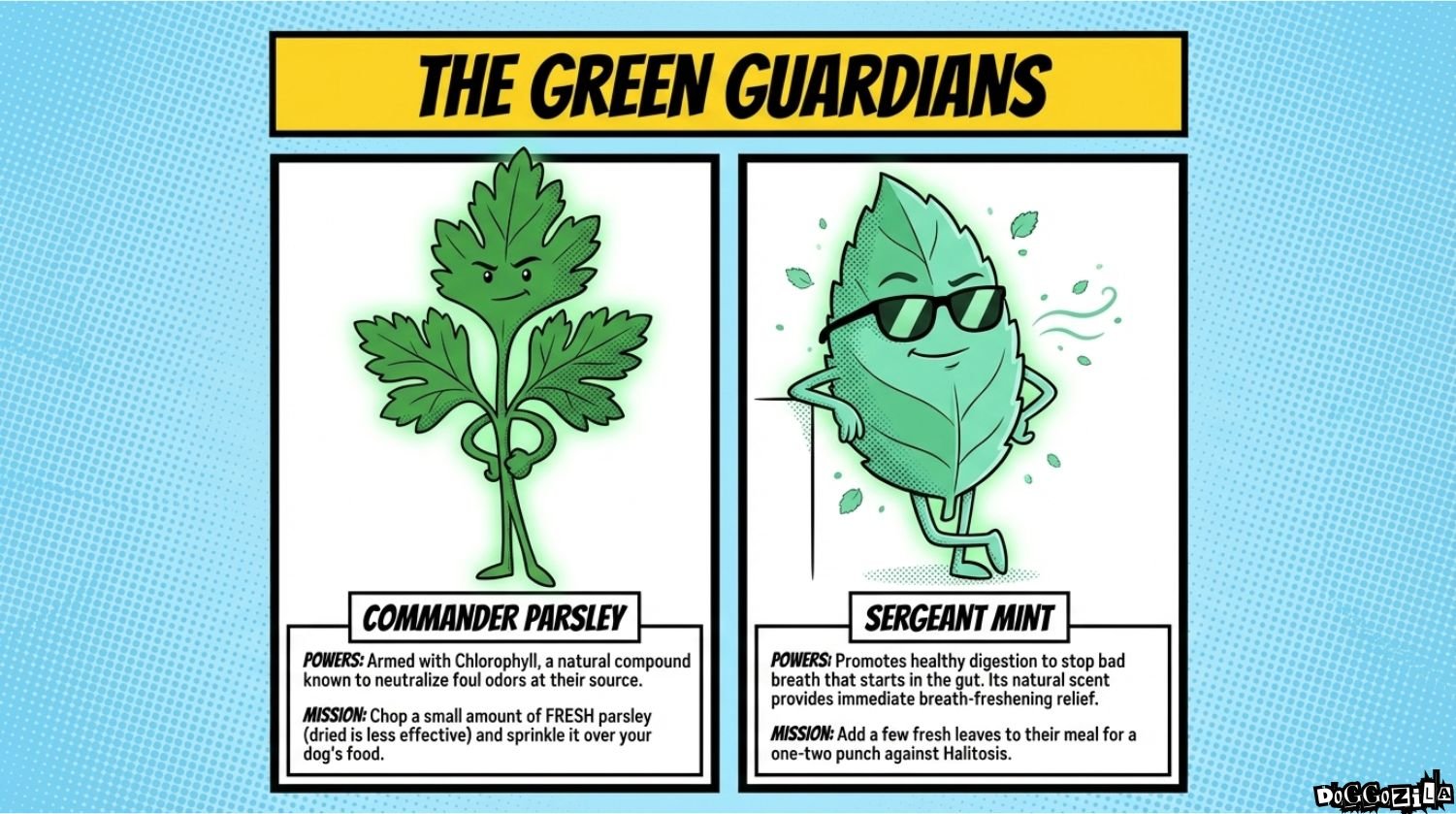
That leafy green garnish on your plate is a powerhouse of oral health benefits for your dog. Parsley is rich in chlorophyll, a plant pigment well-known for its ability to neutralize strong odors by binding to the odor-causing compounds in the mouth and gut.
In addition to its deodorizing effects, parsley is also a good source of antioxidants and essential vitamins. To use it, simply chop a small amount of fresh parsley (about a teaspoon for small dogs) and sprinkle it directly over your dog’s food.
Mint for Freshness and Digestion
Mint is famous for its fresh, clean scent, but its benefits for dogs go beyond simply masking odors. This herb can help soothe the gut and promote healthy digestion, which is crucial because issues like acid reflux can be a hidden cause of bad breath.
By supporting a healthy digestive system, mint helps prevent bad breath from developing internally. A few fresh mint leaves chopped and added to your dog’s food can offer both immediate freshness and long-term digestive support.
Simple Herbal Preparations as Natural Remedies for Bad Dog Breath
In addition to sprinkling herbs on food, you can create a simple breath-freshening “tea.” To do this, chop a small bundle of fresh parsley and steep it in a cup of hot water, just as you would with a tea bag. Allow the water to cool completely, remove the parsley leaves, and then you can offer the infused water to your dog to drink.
For these natural dog breath remedies, using fresh herbs is always recommended over dried versions. Fresh herbs retain a higher concentration of chlorophyll and active compounds, making them much more effective. In addition to greens, certain liquids in your pantry pack a powerful punch against bad breath.
🔑 Key Points: Fresh herbs like parsley and mint are potent, natural deodorizers that neutralize odors from the inside out and support digestive health.
HEALTHY OILS & VINEGARS: LIQUID NATURAL DOG BREATH REMEDIES
The right liquids can offer a simple yet potent way to improve your dog’s oral health. A few pantry staples like coconut oil, apple cider vinegar, and lemon juice, are renowned for their antibacterial and cleansing properties. They are excellent additions to your dog’s wellness routine.
Sometimes, the best remedies come in a jar or a tub. Coconut oil has gained fame for its lauric acid, a fatty acid with impressive antimicrobial properties. When added to food or rubbed on the gums, it can help reduce the population of bad bacteria in the mouth.
The Antibacterial Benefits of Coconut Oil
Coconut oil is celebrated for its wide range of health benefits, and its use as a remedy for bad breath is no exception. It is rich in lauric acid, a fatty acid with powerful antibacterial properties. This helps reduce the harmful bacteria in your dog’s mouth that contribute to plaque, tartar, and bad breath.
There are two easy ways to incorporate it, add a small amount (about one teaspoon) to their food or apply it directly to their teeth and gums. This is a perfect example of a holistic approach, what supports your dog’s oral health also benefits their metabolism, skin, and coat.
Apple Cider Vinegar’s Cleansing Power
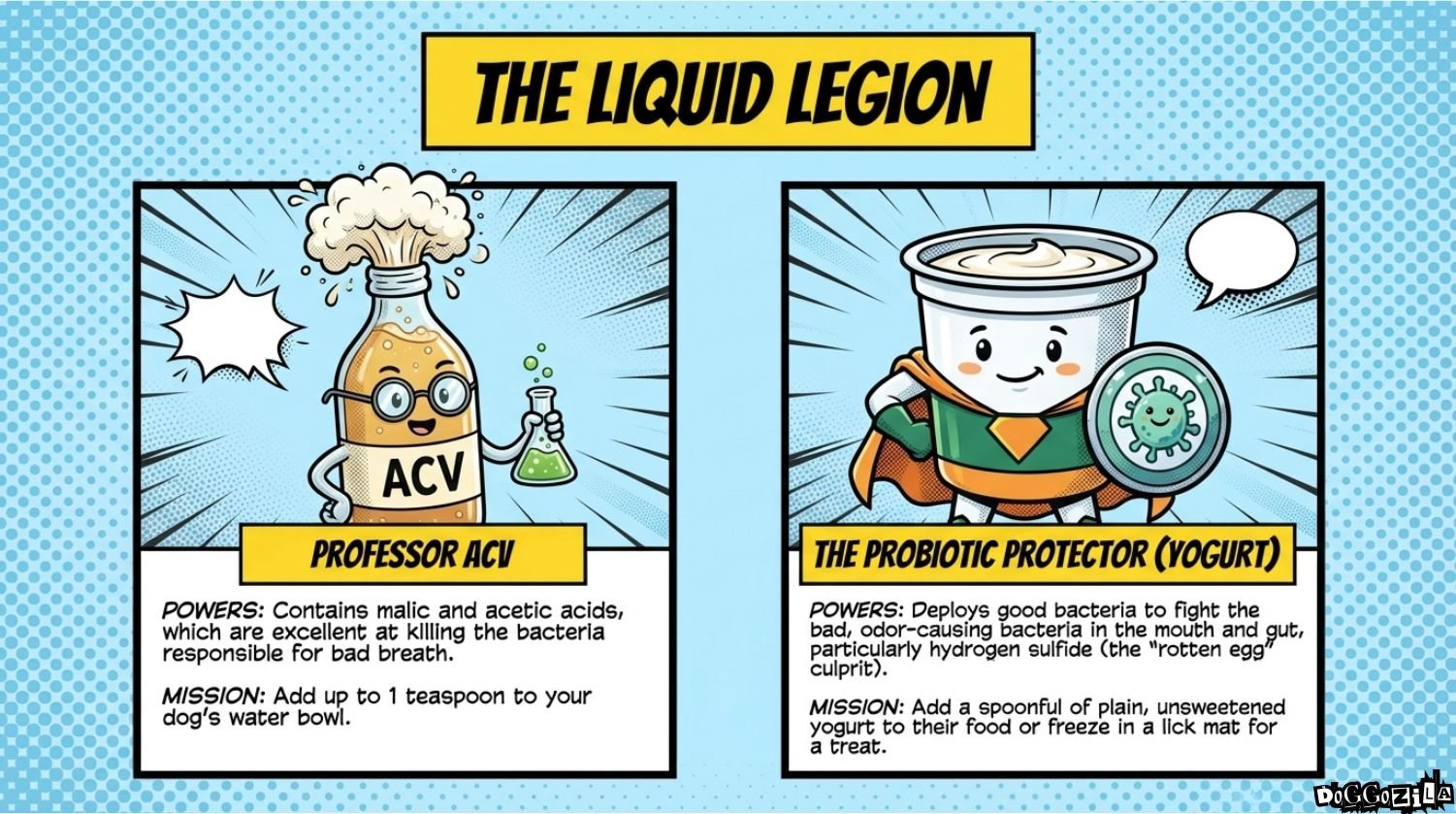
Apple cider vinegar (ACV) is another liquid remedy that effectively fights bad breath. It contains both malic and acetic acids, which work to kill the odor-causing bacteria in your dog’s mouth. This helps create a healthier oral environment.
Beyond its antibacterial effects, ACV is also a natural source of important minerals like calcium, potassium, and magnesium, which are vital for your dog’s overall health and strong teeth.
The Antibacterial Kick of Lemon Juice
Like apple cider vinegar, the natural acidity in lemon juice gives it powerful antibacterial properties that can help control oral bacteria and freshen breath. A little goes a very long way, so this remedy should be used in moderation to avoid upsetting your dog’s stomach. To use these liquids safely, simply add a small amount to your dog’s water bowl each day.
For apple cider vinegar or lemon juice, about half a teaspoon is sufficient. With coconut oil, start with one teaspoon mixed into their food to ensure it doesn’t cause digestive upset. The connection between a healthy gut and fresh breath is a critical piece of the puzzle, leading us to our next set of remedies.
🔑 Key Points: Pantry staples like coconut oil and apple cider vinegar have antibacterial properties that reduce odor-causing bacteria when added to food or water.

CREATING A DAILY ROUTINE WITH NATURAL DOG BREATH REMEDIES
Consistency is your secret weapon. A simple daily habit beats occasional fixes. Combine a few methods for the best results. Your routine should be easy and enjoyable for both of you. This is how you make fresh breath last forever.
Natural remedies are fantastic supplements, but they cannot replace the foundational habits of daily oral care. A truly effective routine combines both the physical removal of plaque (through brushing and crunchy treats) and the control of oral bacteria (using herbs, oils, and probiotics).
The Gold Standard: Brushing Made Easy
Yes, you should brush your dog’s teeth. It’s the best defense. Start slow and be patient. Use a dog toothbrush and canine toothpaste. Never use human toothpaste. Let your dog taste the paste first. Gently lift their lip to brush. Focus on the outer surfaces of the teeth. Praise them and keep sessions short. Doing this daily is the ultimate natural dog breath remedy.
Dental Chews and Toys: Cleaning Through Play
Chewing is a dog’s natural instinct. Use it to your advantage. Select dental chews with a seal of approval from VOHC. Rubber chew toys with grooves can also help. The act of gnawing scrapes off soft plaque. It keeps your dog busy and happy. Always choose the right size for your dog. Supervise them to prevent choking. This turns playtime into clean-teeth time.
Water Additives: The Invisible Helper
Consider a water additive for extra help. These are liquid solutions you add to the water bowl. They contain enzymes or ingredients that fight bacteria. They work throughout the day as your dog drinks. Look for natural options without alcohol or harsh chemicals. This is one of the easiest natural dog breath remedies to use. Just pour it in their bowl. It’s a effortless boost to their oral care.
🔑 Key Points: The most effective strategy combines daily brushing, approved dental chews, and water additives for a layered defense against plaque and odor.
THE GUT-HEALTH CONNECTION: ESSENTIAL NATURAL DOG BREATH REMEDIES
Fresh breath truly starts from within. A happy gut means a fresher mouth. When digestion is off, bad breath often follows. Supporting your dog’s digestive system is crucial. You can do this with simple foods and supplements.
The link between gut health and oral hygiene is often overlooked, but fresh breath truly starts in the gut. Probiotics, the beneficial bacteria that support a healthy digestive system, can be a surprising but highly effective solution for bad dog breath.
Balancing the Inner Ecosystem with Probiotics
Probiotics are beneficial bacteria. They help maintain a healthy balance in the gut. You can find them in plain, unsweetened yogurt. A small spoonful mixed into food is perfect. You can also use a powdered canine probiotic. These good guys crowd out the odor-causing bacteria. They improve overall digestion and nutrient absorption. This internal balance is a core part of natural dog breath remedies.
Pumpkin and Sweet Potato As Source of Fiber for Digestion
Canned pumpkin (plain, not pie filling) is great for gut health. Sweet potato is another excellent choice. They are full of digestive fiber. Fiber helps regulate the dog’s digestive system. It can ease both constipation and diarrhea. A settled stomach produces fewer smelly gases. Steam and mash a little for your dog. Add a tablespoon to their meal. It’s a tasty way to fight bad breath from the inside.
Staying Hydrated for a Rinsed Mouth
Never forget the power of water. Dehydration leads to a dry mouth. A dry mouth lets bacteria grow wildly. Always ensure fresh, clean water is available. Consider a pet water fountain. Some dogs prefer running water. Proper hydration keeps saliva flowing. Saliva constantly rinses the mouth. It’s the simplest natural dog breath remedy of all.
🔑 Key Points: Fresh breath starts internally, probiotics (from yogurt) and high-fiber foods (like pumpkin) balance digestion to prevent internal causes of bad breath.

HEALING WITH ALOE VERA AND OTHER NATURAL DOG BREATH REMEDIES
Some remedies soothe as they freshen. If your dog has mild gum irritation, these can help. Always prioritize safety and consult your vet first. These gentle options provide comfort and healing.
Aloe vera is a medicinal plant renowned for its healing properties. These benefits extend to oral care, making it a unique and soothing addition to your dog’s wellness routine.
The Calming Power of Aloe Vera
Aloe vera is known for its soothing properties. It can help calm inflamed gums. Use only 100% pure, food-grade aloe vera gel. Ensure it contains no xylitol, which is toxic to dogs. Add a tiny amount (pea-sized) to their food. Its anti-inflammatory properties can reduce redness. This creates a healthier mouth environment. It’s a specialized natural dog breath remedy for sensitive mouths.
Chamomile and Calendula: Gentle Herbal Rinses
These gentle herbs are wonderful for oral health. You can make a mild tea with them. Let the tea cool completely. Then, use a soft cloth to wipe your dog’s gums and teeth. Chamomile soothes irritation. Calendula has mild antiseptic properties. This is a very gentle cleaning method. It’s perfect for senior dogs or puppies. It freshens breath without any harshness.
Why Omega-3s are a Secret Weapon?
Omega-3 fatty acids are powerful anti-inflammatories. They help reduce gum inflammation and disease. You can find them in fish oil or phytoplankton supplements. Less inflammation means a less friendly home for bad bacteria. This leads to better overall oral health. Adding a quality Omega-3 supplement supports many natural dog breath remedies. It improves skin, coat, and joint health too.
🔑 Key Points: For sensitive mouths, natural soothers like xylitol-free aloe vera gel and chamomile rinses can calm gum inflammation and freshen breath gently.

THE SCIENCE BEHIND EFFECTIVE NATURAL DOG BREATH REMEDIES
Ever wonder why certain foods work so well? There’s real science behind these natural solutions. Understanding this can help you choose the best options. Simple biology explains how these remedies fight odor and bacteria in your dog’s mouth.
These natural remedies are a helpful supplement to, not a replacement for, a consistent dental care regimen that includes professional veterinary support. Persistent bad breath can be a sign of more serious underlying conditions, such as dental disease, kidney issues, or diabetes.
How Antibacterial Properties Fight Odor at the Source?
Many natural items have antibacterial power. For example, coconut oil contains lauric acid. This acid breaks down the cell walls of bad bacteria. Herbs like parsley have chlorophyll. It neutralizes sulfur compounds in the mouth.
Apple cider vinegar creates an acidic environment. This environment is hostile to bacteria growth. These actions tackle the root cause of the smell. They don’t just cover it up. Using these natural dog breath remedies creates a cleaner mouth.
The Mechanical Action of Crunchy Foods Explained
Crunchy foods work like little scrub brushes. Their fibrous texture scrapes against the tooth surface. This physical action dislodges soft plaque. Carrots and apples are perfect for this job. Chewing also stimulates more saliva.
Saliva is full of helpful enzymes. These enzymes begin breaking down food and bacteria. So, the cleaning is both physical and chemical. This double action makes crunchy snacks fantastic natural dog breath remedies.
Supporting the Oral Microbiome for Long-Term Health
Your dog’s mouth has its own ecosystem of bacteria. We want to support the good bacteria. Probiotics from yogurt help with this balance. A balanced oral microbiome fights off the smelly invaders. It’s like having a good neighborhood watch for your dog’s mouth.
Natural remedies avoid harsh chemicals. Harsh chemicals can wipe out all bacteria, good and bad. A gentle approach with natural dog breath remedies promotes lasting health.
🔑 Key Points: Natural remedies work through antibacterial action (killing bacteria) and mechanical action (scrubbing plaque), supporting a healthy oral microbiome long-term.

CRAFTING YOUR PLAN FOR FRESH DOG BREATH WITH NATURAL REMEDIES
Every dog is unique. A one-size-fits-all plan doesn’t work. You can mix and match remedies to suit your pup’s tastes and needs. Let’s build a custom, weekly plan that is simple and sustainable for a fresher-smelling friend.
Your veterinarian is your most valuable resource in maintaining your dog’s health. If you have concerns about your dog’s breath, schedule a dental exam to get a personalized assessment and a tailored treatment plan.
Sample Weekly Schedule for Natural Dog Breath Remedies
A schedule helps you stay consistent without overwhelm.
Here’s a simple idea.
- Monday: Add coconut oil to breakfast.
- Tuesday: Give a crunchy carrot stick as a treat.
- Wednesday: Sprinkle parsley on dinner.
- Thursday: Use a dental chew toy during playtime.
- Friday: Add a probiotic topper to food.
- Saturday: Try a gentle herbal gum wipe.
- Sunday: Check water and refresh the bowl.
Rotating remedies keeps things interesting. It also provides a full spectrum of benefits from different natural dog breath remedies.
Matching Remedies to Your Dog’s Size and Breed
Small dogs and big dogs have different needs. A Great Dane needs a bigger carrot stick than a Chihuahua. Some breeds are prone to dental issues. Bulldogs and Pugs often have crowded teeth. They might need more focus on brushing.
Greyhounds can have sensitive gums. Softer remedies like aloe vera may help best. Always adjust portion sizes for safety. Tailoring your approach makes natural dog breath remedies more effective.
Tracking Progress and Knowing What Works
How do you know if your plan is working? Start by noting your dog’s breath level today. Is it a “yuck,” “meh,” or “fresh“? Write it down. Try a remedy for two weeks consistently. Then, check the breath again. Notice if your dog enjoys the process.
Are they excited for their coconut oil? Do they chew carrots happily? Their enthusiasm is a great sign. Keeping a simple log helps you see which natural dog breath remedies are winners.
🔑 Key Points: Tailor remedies to your dog’s size and breed, use a weekly schedule to rotate solutions and track progress to see what works best for your pup.

WHEN TO PAUSE HOME CARE: SIGNS YOU NEED A VET
Home remedies are powerful. But they are not a cure for everything. Certain signs mean you must stop and call your vet. Professional care is irreplaceable. Your vet is your partner in your dog’s health.
By combining a consistent at-home care routine with regular professional oversight, you are being a wonderful advocate for your dog’s health. Taking these steps will not only lead to fresher breath but will also contribute to a longer, happier, and healthier life for your beloved companion.
Recognizing Dental Disease Beyond Bad Breath
Look for signs of serious dental issues. These include red or bleeding gums, loose teeth, and yellow-brown tartar. Your dog might drool excessively or paw at their mouth. They may drop food or refuse to eat hard kibble.
These are not issues for home remedies alone. Your vet needs to perform an exam. They might recommend a professional dental cleaning. This is a crucial step before continuing with natural dog breath remedies.
The Smell Test: What Different Odors Mean
Pay close attention to the type of smell. A urine-like odor can signal kidney problems. A sweet, fruity smell might indicate diabetes. An unusually foul, rotten smell could mean an abscess or tumor. If the bad breath is sudden and severe, see a vet. Describe the smell to your veterinarian. It can be an important diagnostic clue. Never ignore a strange, new odor.
Building a Partnership with Your Veterinarian
Always talk to your vet about your home care plan. Schedule regular wellness check-ups. Ask your vet to examine your dog’s teeth and gums. They can show you proper brushing technique. They can also recommend specific products. This partnership ensures your natural dog breath remedies are safe and effective. Your vet helps you create the best overall health plan.
Final Thoughts
Tackling bad dog breath doesn’t have to be a daunting task. You now have a powerful toolkit of simple, natural remedies to improve your dog’s oral hygiene, all supported by the cornerstones of consistent home care and professional oversight. From crunchy carrots to a refreshing parsley tea, these small changes can make a big difference.
By taking a proactive approach, you’re not just fighting a bad smell, you’re actively contributing to your dog’s overall health and strengthening the beautiful bond you share. Now that you have these tools, what is the first small step you will take today to improve your furry friend’s oral health and get back to enjoying those close-up cuddles?
🔑 Key Points: Red flags like bleeding gums, loose teeth, or sudden severe odor mean it’s time to pause home care and partner with your veterinarian for a professional assessment.