
Your dog knows things you do not. That stare into the dark hallway is not empty. That low growl at nothing is not random. Long before we had leashes and kibble, our ancestors knew the truth. They told stories by the fire about hounds who could cross worlds. They believed a dog could change a man’s fate with a single howl. The old dog myths from European folklore reveal a time when the line between pet and spirit guardian simply did not exist.
“Before science gave us GPS collars and DNA tests, European villagers trusted a different kind of tracker, phantom hounds, hellhounds, and hero dogs that prowled the misty crossroads between life and death in the rich dog myths from old European folklore”.
Quick Summary About THE DOG MYTHS FROM OLD EUROPEAN FOLKLORE
Ancient Europeans did not see dogs as simple pets. They viewed them as warriors, omens, and guides for the soul. The dog myths from old European folklore reveal a world where a hound could decide a battle, escort the dead to the Otherworld, or guard a church from demons. These stories still shape how we see our own pups today.
THE CELTIC HOUNDS IN OLD DOG MYTHS FROM EUROPEAN FOLKLORE
The Irish wolfhound is not just a big dog. It is a living monument to ancient warriors and forgotten kings. The Celts did not see these hounds as pets. They saw them as brothers in battle and guides in death. A man’s honor rose and fell with the reputation of his hound. The sagas of Ulster sing of dogs who fought harder than men.
The dog myths from old European folklore focus on this breed because its loyalty changed the course of Irish history. You cannot tell the story of Ireland’s greatest hero without bowing first to the hound.
Cú Chulainn in The Dog Myths from Old European Folklore
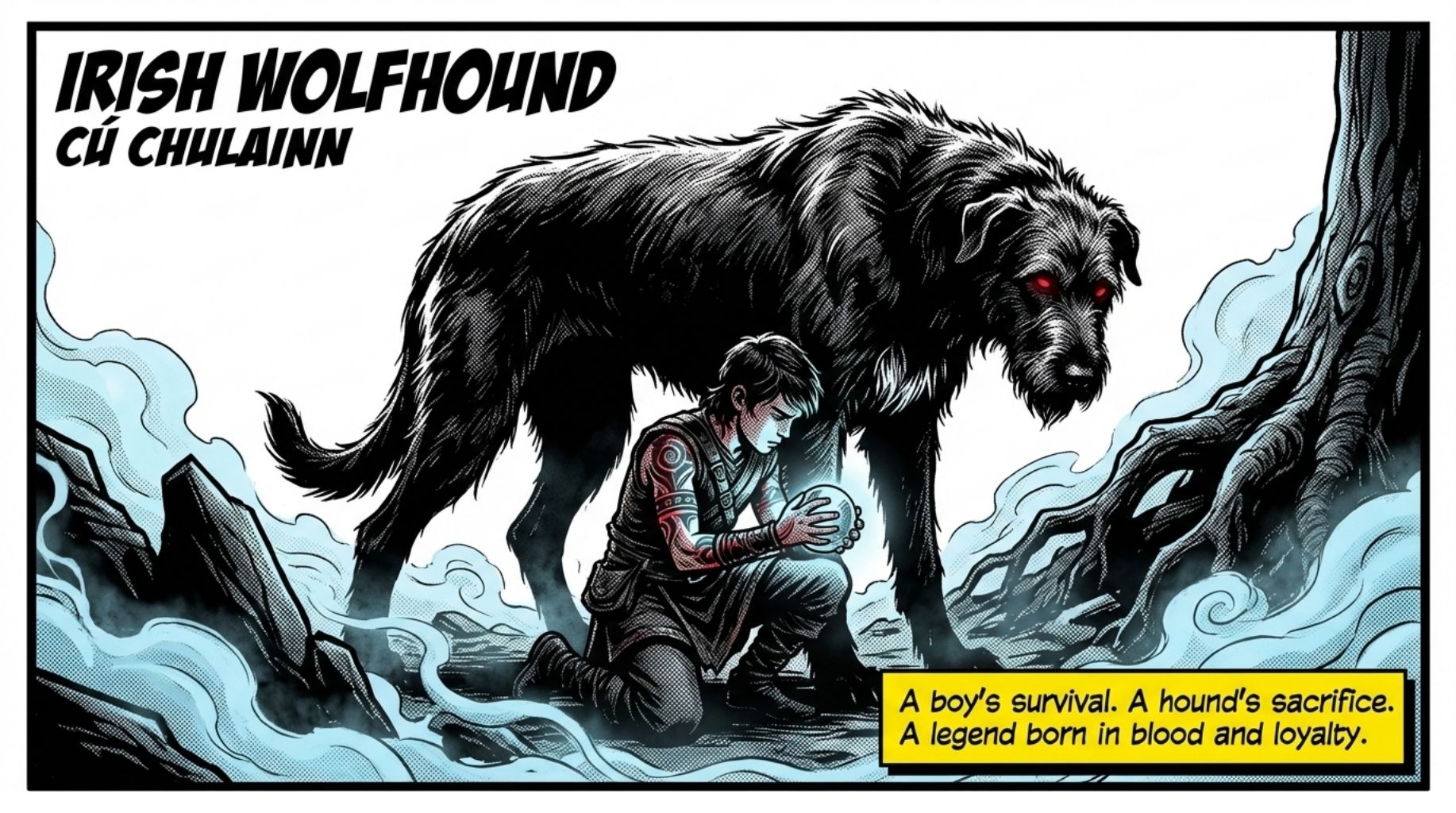
A boy named Sétanta showed up late to a feast. Culann the smith had already unleashed his massive wolfhound to guard the gate. The beast charged. Sétanta did not run. He drove a ball down the hound’s throat and killed it with his bare hands.
The guests rushed out. Culann wept for his lost guardian. The boy felt the weight of what he had done. He looked the smith in the eye and made a vow that echoed through the ages. “I will be your hound,” he said. “I will guard your land until a new pup can take my place.”
That boy became Cú Chulainn. The Hound of Culann. His name was his bond and his curse.
He defended Ulster alone when a spell destroyed every other warrior. He fought like a demon possessed. His body twisted into a monster shape during battle rage. Yet one rule held him back forever. He could never eat dog meat. It would be like eating his own soul. The ancient Irish understood this bond. The dog myths from old European folklore remind us that names carry weight. The hound spirit never left him.
Today, an Irish wolfhound leans against your leg with the same ancient calm. They watch, and they wait. They do not bark at shadows because they have seen real darkness. Their eyes hold the mist of old Éire. They are not just dogs. They are the quiet giants of legend still walking among us.
The Irish Wolfhound Valor in Old Dog Myths from European Folklore
Celtic warriors wanted to die like their hounds. Brave. Fierce. Remembered. They believed a good dog’s soul could cross death’s river and return. That belief made the dog a sacred guardian of roads and secrets. Old Irish law valued a war hound as much as a human life.
Travelers lost in fog often spoke of a silent hound appearing beside them. The beast would guide them away from cliffs and bogs without a sound. Then it would vanish. These stories were not just fantasy. They were memories of wolfhounds saving real lives in treacherous landscapes.
The breed nearly died when the English crushed the old Gaelic chiefs. No more wolf hunts. No more war bands. The giant dogs faded into memory. Captain George Augustus Graham rescued them from extinction in the 1800s. He knew he was saving more than a breed. He was saving a piece of the Celtic soul. Every wolfhound puppy born today carries that fire forward.
Guardians of the Crossroads: How Celts Viewed Dogs as Spirit Guides?
Archaeologists find ancient dog graves full of weapons and food. The Celts buried their hounds like honored warriors. They believed the dog would guide the soul through the Otherworld. Death was just a foggy path. A good hound knew the way home.
The Welsh Cŵn Annwn follow this same ancient rule. They run beside the dead, and do not attack the good. They simply guard the journey. Your own dog hears things you miss. They smell the storm coming. They feel the shift in the air. The ancients called this a sixth sense.
Next time your dog stares at an empty corner, do not laugh. The dog myths from old European folklore ask you to trust that instinct. They see the crossroads. They guard the door, always have.
🔑 Key Points: The legend of Cú Chulainn shows that the dog myths from old European folklore elevated the Irish wolfhound from hunting beast to sacred guardian and symbol of undying loyalty.
THE CWN ANNWN AND WELSH DOG MYTHS FROM OLD EUROPEAN FOLKLORE
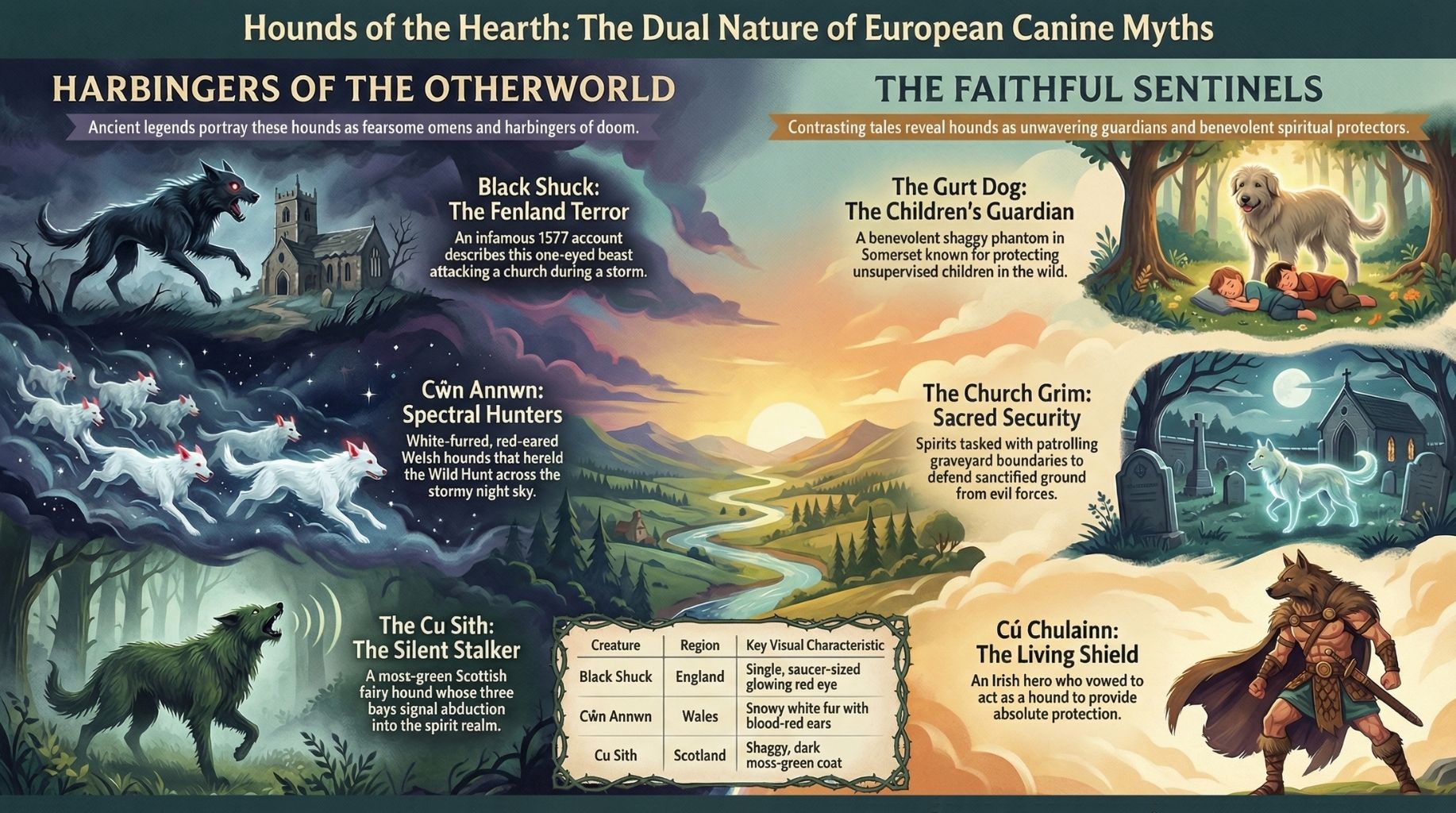
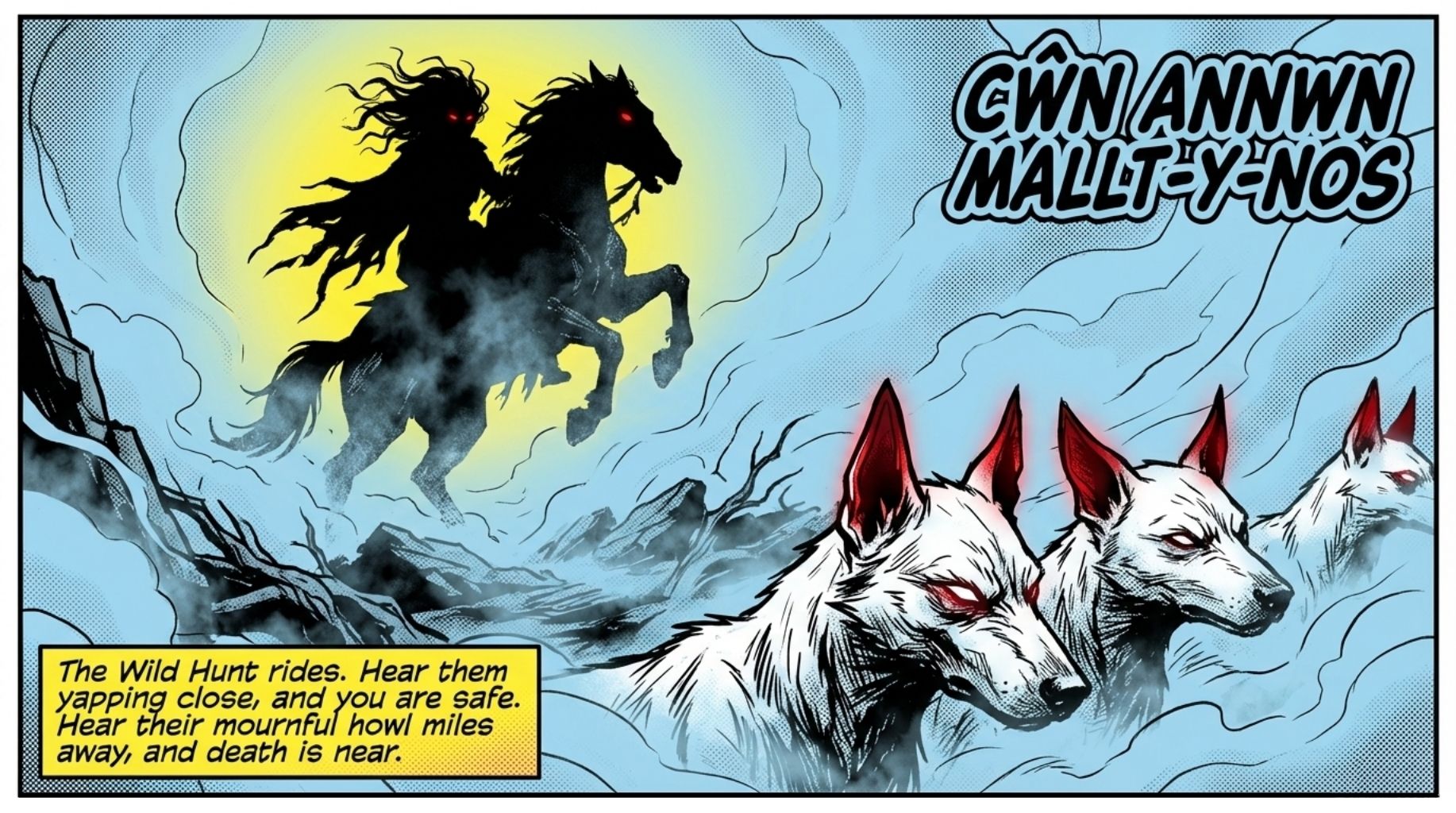
Wales is a land of mist and mountain song. The wind carries voices. The fog hides shapes. It is the perfect home for the most beautiful and terrifying hounds in legend. The Cŵn Annwn are the Hounds of the Otherworld. They are white as bone with ears dipped in blood. Their howl sounds close when they are far. It sounds far when they are right behind you. These dog myths from old European folklore blur the line between angel and omen.
The Ancient Wild Hunt in The Dog Myths from Old European Folklore
The Cŵn Annwn ride with the Wild Hunt. Their master was Arawn, King of Annwn. Later, Gwyn ap Nudd took the lead. The pack races across the stormy sky, chasing souls. Their baying drives men mad. Or it lulls them into a sleep that never ends.
People in rural Wales used to lock their doors on stormy nights. They feared the red ears at the window. They feared the yapping sound that meant the hounds were near. The dog myths from old European folklore used this fear to keep people safe. Stay inside during the storm. Avoid the bog. Respect the dark.
But the hounds are not pure evil. They hunt the wicked. They gather the unshriven. For a good soul, they become silent guides. They lead you past the traps of the spirit realm. They are the security detail for the afterlife. Fierce. Unseen. Loyal to the end.
Mallt-y-Nos in The Dog Myths from Old European Folklore
Mallt-y-Nos rides with the pack. Her name means Matilda of the Night. She is a wild crone with hair like a gale. She loved the hunt more than God. Now she chases forever. Her hounds are her eyes. If she appears near a village, death follows.
But sometimes she chases away a worse evil. Sometimes she just passes by. She is a reminder that the wild is always watching. The dog myths from old European folklore give her a face. She is the sound of the wind that makes your dog whine for no reason.
The Enduring Legacy of Annwn: Why Your Dog Stares at Nothing?
Walk your dog at twilight in Wales. Watch their hackles rise. They stop. They stare into the mist. You see nothing. They see everything.
Scientists say dogs hear frequencies we cannot. They smell the history in the dirt. That is true. But the legend of the Cŵn Annwn offers a better story. Maybe they see the Otherworld. Maybe they hear the hunt passing by.
The dog myths from old European folklore remind us that we lost something when we stopped believing. Our dogs still live in that older world. They are our ambassadors to the wild. They guard us from shadows we forgot how to fear.
🔑 Key Points: Welsh folklore warns that the red-eared hounds of Annwn are neither fully evil nor fully good, they are spectral guides who separate the wicked from the virtuous.
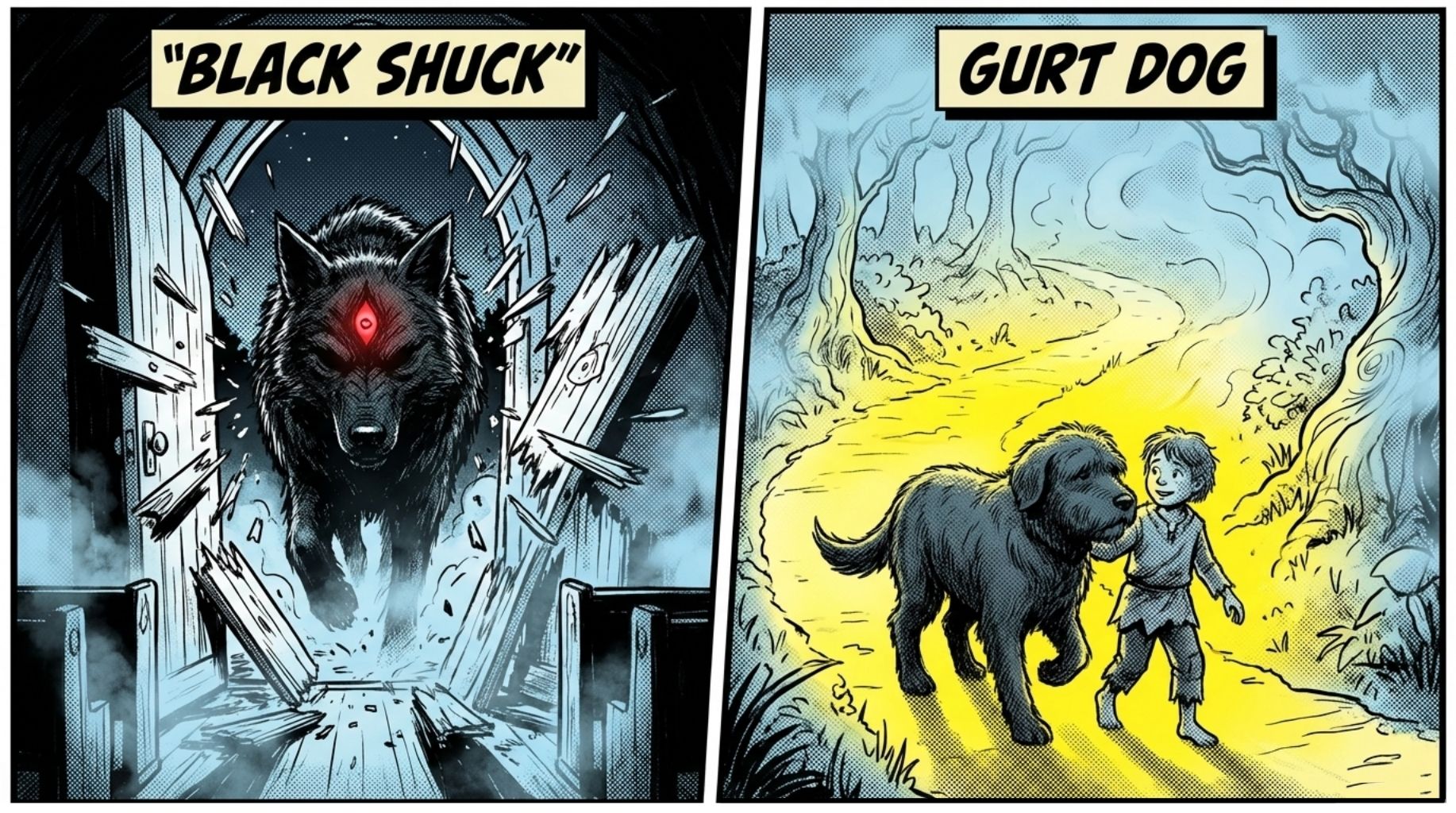
THE GURT DOG, BLACK SHUCK, AND OLD ENGLISH DOG MYTHS FROM EUROPEAN FOLKLORE
England cannot make up its mind about black dogs. In the east, Black Shuck brings death and terror. In the west, the Gurt Dog protects lost children. Same shape. Different soul. The dog myths from old European folklore show us the dog as a mirror. It reflects what we fear most. And what we love most.
The Black Shuck in Dog Myths from Old European Folklore
Black Shuck roams the foggy lanes of East Anglia. He is the size of a calf. His fur is matted and black. His eyes burn like red coals. Some say he has only one eye in the center of his head.
In 1577, Shuck burst through the doors of Blythburgh Church during a storm. He ran up the aisle. He killed a man and a boy. Then he vanished. The claw marks are still on the door. The dog myths from old European folklore rarely come with such physical proof.
But Shuck is not always a killer. Lost travelers in the Fens tell a different story. A warm pressure against the leg. A silent guide through the fog. Safety. Then nothing. Shuck is both demon and guardian. He is the darkness of the marsh made flesh.
The Gurt Dog of Somerset in Dog Myths from Old European Folklore
Move west to Somerset. The black dog changes. Here he is called the Gurt Dog. His eyes glow with calm, not fire. He watches children play in the woods.
Mothers let their kids run wild in the Quantock Hills. They trusted the Gurt Dog. If a child fell or got lost, a warm furry body would appear. The beast would nudge them back to the path. Then vanish.
The dog myths from old European folklore in Somerset are gentle. They show a world where the wilderness itself protects the innocent. The Gurt Dog is proof that our ancestors saw goodness in the dog soul. Even in ghost form.
Church Grim and Barguest: Multitude of English Guardian Hounds
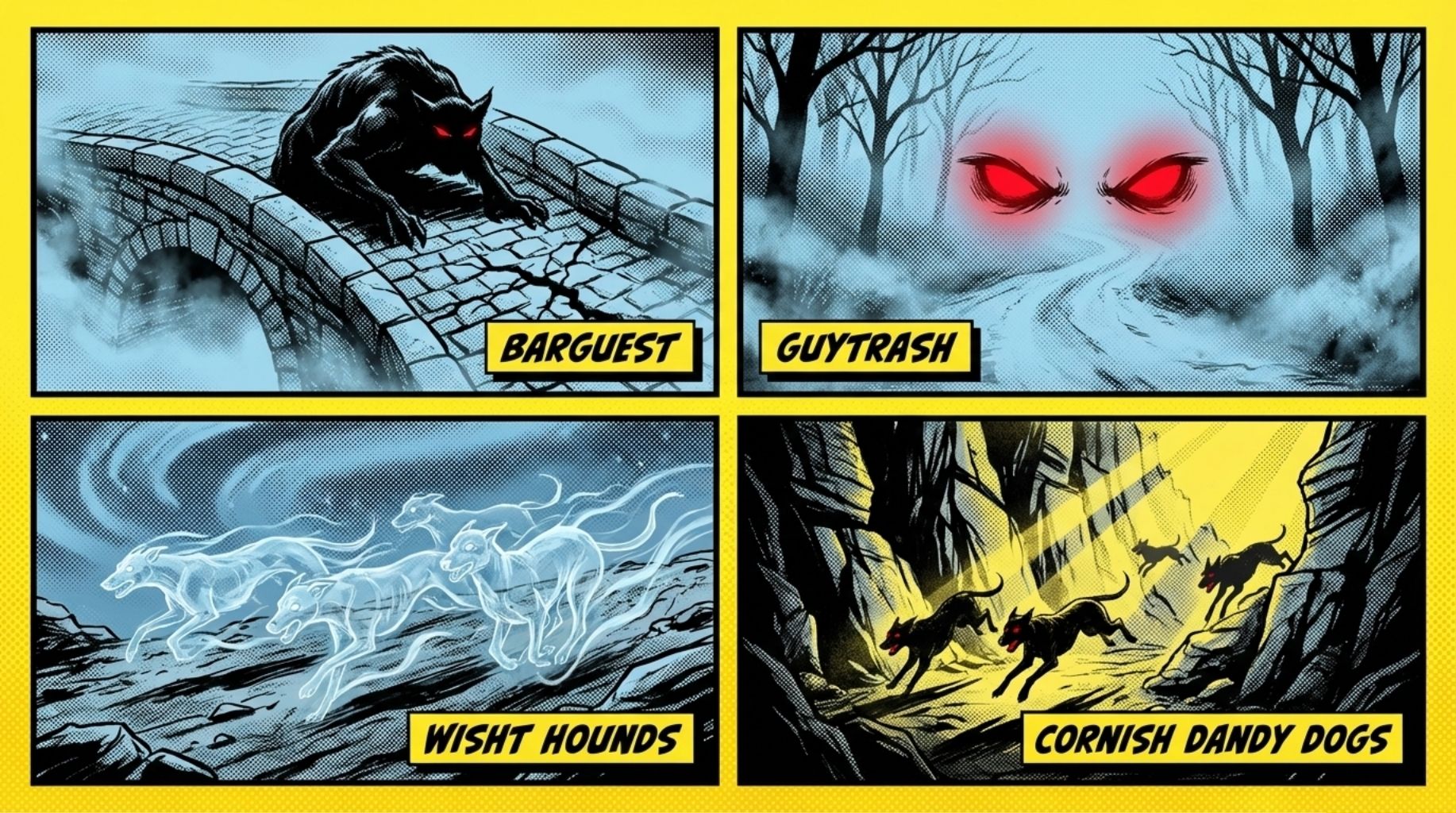
Every English County has its own phantom hound. The Barguest of Yorkshire foretells death. The Guytrash haunts northern roads. The Wisht Hounds chase souls across Devon moors. These local legends kept communities together. You knew your ghost dog like you knew your neighbors.
The Church Grim is the darkest of them all. A black dog buried alive under the church cornerstone. Its spirit guards the graveyard forever. It snarls at devils and grave robbers. The practice horrifies us now. But it shows the power of the dog myths from old European folklore. A dog’s soul could hold back hell itself.
🔑 Key Points: English dog myths from old European folklore reveal a dual nature, the same black dog can be a deadly omen in the fens and a gentle protector in the hills.
THE HELLHOUNDS AND CHURCHYARD GUARDIANS OF FRANCE AND GERMANY
Cross the Channel and the black dog gets religion. In France and Germany, the hound walks the aisle of the church. It guards the bones of the dead. It serves as both Satan’s pet and God’s warden. The dog myths from old European folklore here are tangled in theology and terror.
The French Ghostly Hound in Old Dog Myths from European Folklore
In AD 856, a church in France witnessed something impossible. Doors barred. Candles lit. A massive black hound appeared inside the nave. It walked up the aisle in silence. The light dimmed around it.
It moved as if hunting a specific sinner. It passed the altar without a glance. Then it vanished. The chroniclers wrote it down. The dog myths from old European folklore moved from peasant tale to church record.
After that, a dog in church was no lost pet. It was an invasion. The Black Plague made it worse. Black dogs roamed empty streets. They became the face of death itself.
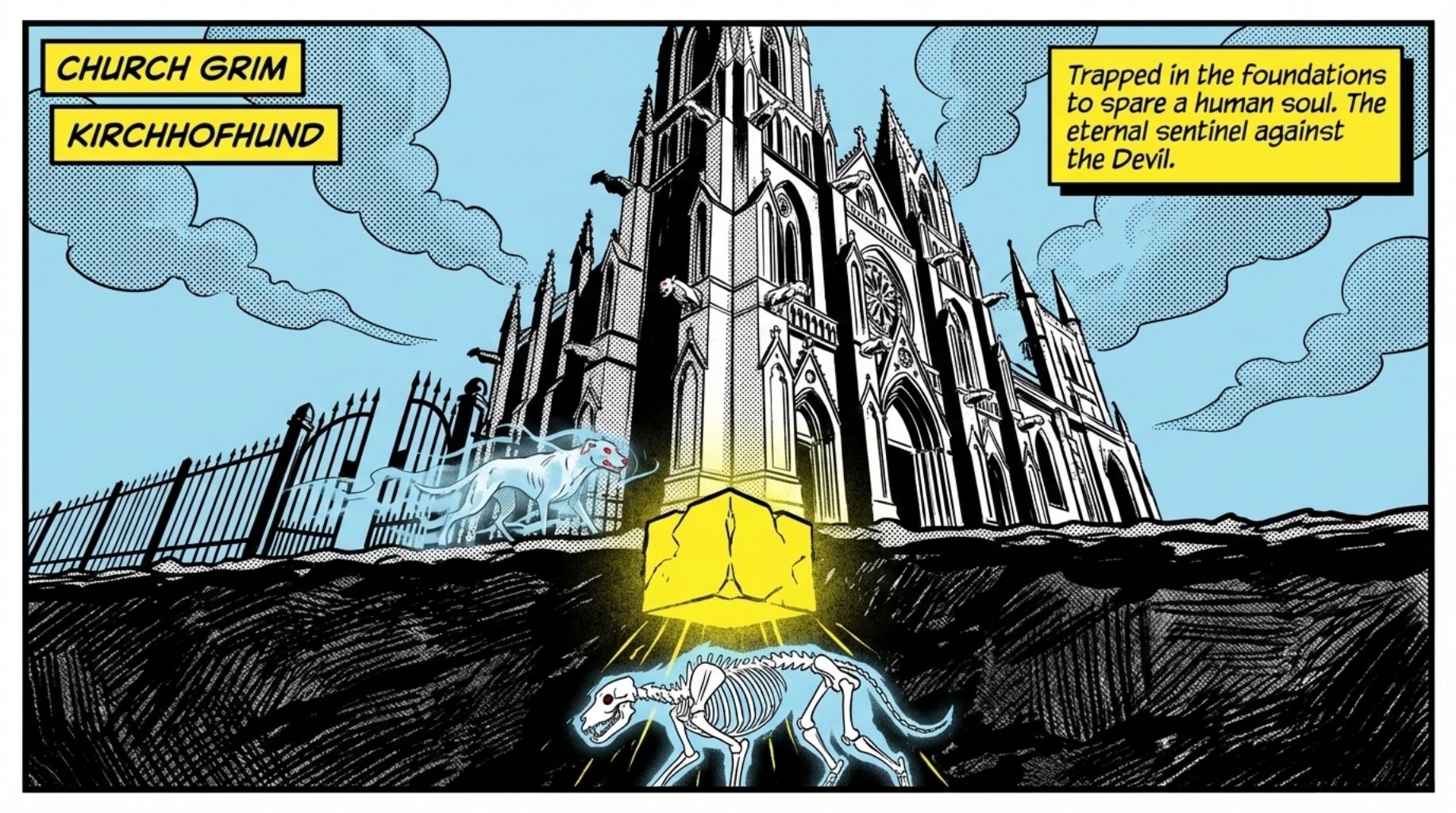
The German Churchyard Guardians and Protectors
German builders had a grim solution for graveyard protection. They buried a large black dog alive under the church wall. The dog’s spirit became the Kirchhofhund. Often patrolled the cemetery at night. It growled at witches, and it snapped at demons.
You can still see dog heads on old church doors in Bavaria. They are not decoration, they are the doorwardens. These dog myths from old European folklore live in that cold iron. They remind us of a terrible pact. A life taken to protect the dead.

French Fairy Tales and the Wild Hounds of the Hunt
French sailors feared the ghost ships of Brittany. These cursed vessels never dock. Hellhounds swarm the decks. They guard the damned crew for eternity. The howl of the wind in the rigging was the sound of the pack.
German fairy tales give us the loyal avenger. In stories from Grimm, a dog will cross death to punish a betrayal. The dog myths from old European folklore paint the dog as a moral force. Justice wears fur.
🔑 Key Points: French and German legends intertwine the canine with Christianity, where a dog’s spirit guards graveyards and church doors against demonic forces.

THE SCOTTISH MOORS: CU SITH AND THE GUARDIANS OF THE THIN PLACES
Scotland is where the veil wears thin. The Highlands hide the Cu Sith. The islands whisper of sea trows. The dog myths from old European folklore here are green, wet, and wild. They smell of peat and salt.
The Cu Sith: The Green Hound of the Scottish Highlands
The Cu Sith is not black. It is the color of moss and shadow. Stands tall as a calf. It moves in perfect silence. It belongs to the Daoine Sìth. The Fair Folk. It bays three times. The sound rolls across the glen like thunder.
Hear the first bay. You have time. Hear the second. Run. Hear the third. You are already inside the fairy mound.
The dog myths from old European folklore used this fear to save lives. The Highlands are deadly. Cliffs. Bogs. Storms. The Cu Sith kept people on the path. Fear of fairies was safer than a broken leg in the mist.
The Guardian Hounds of the Scottish Castles and Clans
Scottish Deerhounds carry the same ancient blood as the wolfhound. They watch, they wait, and they do not bark at shadows. Clan legends speak of war hounds who died defending their masters. Their ghosts still guard the ruins.
One tale tells of a hound who guarded his master’s grave until death took him too. Greyfriars Bobby made the story famous. But the legend is older. The dog myths from old European folklore know this truth. A dog’s loyalty outlasts the grave.

The Sea Trows and the Hounds of the Northern Isles
The Orkney seas churn with sea trows. They look like shaggy dogs. Often they rise from the waves to drag sailors down. They are hunger given form. But the islands also have the Wulver. A man with a wolf’s head.
He fishes alone, and he leaves fresh fish on the windowsills of the hungry ones. He is the quiet kindness hidden in the wild. The dog myths from old European folklore remind us that the beast can be gentle. The guardian can be strange.
🔑Key Points: Scottish Highland myths use the silent, green-furred fairy hound to explain the dangers of the wilderness and the thin boundary between our world and the realm of spirits.
WHY THE OLD DOG MYTHS FROM EUROPEAN FOLKLORE STILL MATTER?
We have GPS collars and vet science. We think we are modern. But when the storm comes and your dog whines at the door, your old brain remembers. The Wild Hunt is passing. The Cu Sith is baying. The dog myths from old European folklore are the operating system of the human heart. We just forgot we installed it.
How Your Dog’s Instincts Echo the Ancient European Protectors?
Watch your dog circle three times before sleep. Science says it flattens grass. The dog myths from old European folklore say it casts a protective ward. They hear a siren and howl. We call it noise. The Welsh called it a greeting to Annwn.
Your dog barks at the mailman like a demon. They are not bad. They are guarding the gate. Just like Culann’s hound. Just like Shuck on a good night. The contract is ancient. They protect. We feed. The deal holds.
Why Black Dog Legends Persist in the Modern Pet Niche?
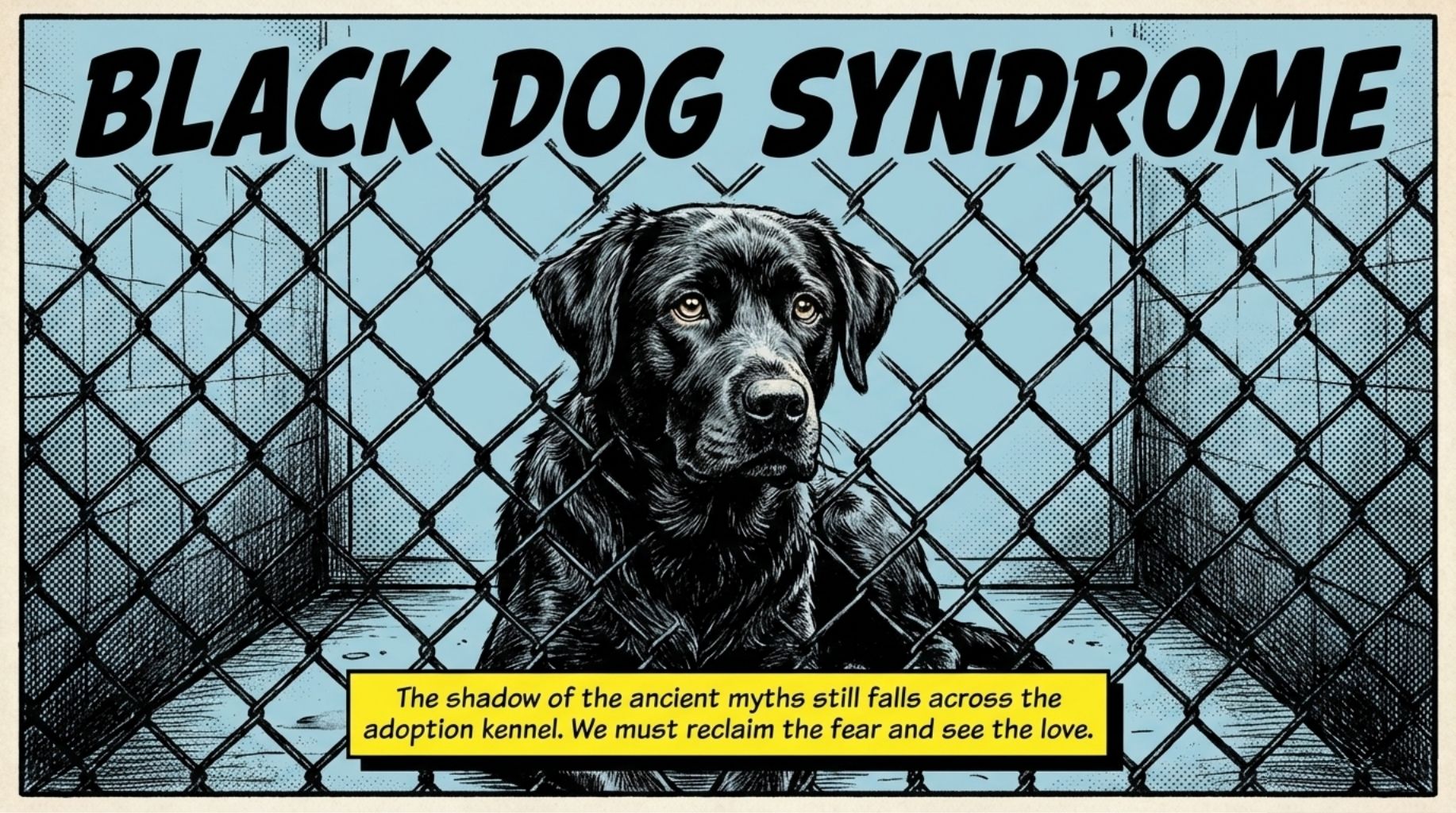
Black Dog Syndrome is real. Shelters know it. Big black dogs wait longer for homes. People think they look scary. They do not photograph well. That is the shadow of Black Shuck. It is the memory of the Church Grim. The dog myths from old European folklore also gave us the Gurt Dog.
The protector. The nanny. Rescue groups fight the stigma with every adoption photo. They show the world that a black coat hides a golden heart. We reclaim the spooky names too. Shuck. Grimm. Annwn. We bring the legend inside and give it a squeaky toy.
Embracing the Myth to Deepen Your Bond with Your Dog
You do not own a pet. You share a couch with a hero. A guardian of crossroads. A guide for the final walk. The dog myths from old European folklore are a gift from our ancestors. They give us words for a love that feels too big for this world.
Next time you walk the foggy field, listen. Those red ears might just be leaves. That howl might just be wind. But the weight against your leg is real. Your dog is there. Fur instead of mist. Loyalty instead of legend. They guard you from loneliness. From boredom. And maybe, just maybe, from things you cannot see.
Give them an extra treat tonight. They have been guarding our souls for a very long time.
🔑 Key Points: The dog myths from old European folklore survive in our homes today through dog instincts, Black Dog Syndrome in shelters, and the unspoken bond of protection we share.
FREQUENTLY ASKED QUESTIONS
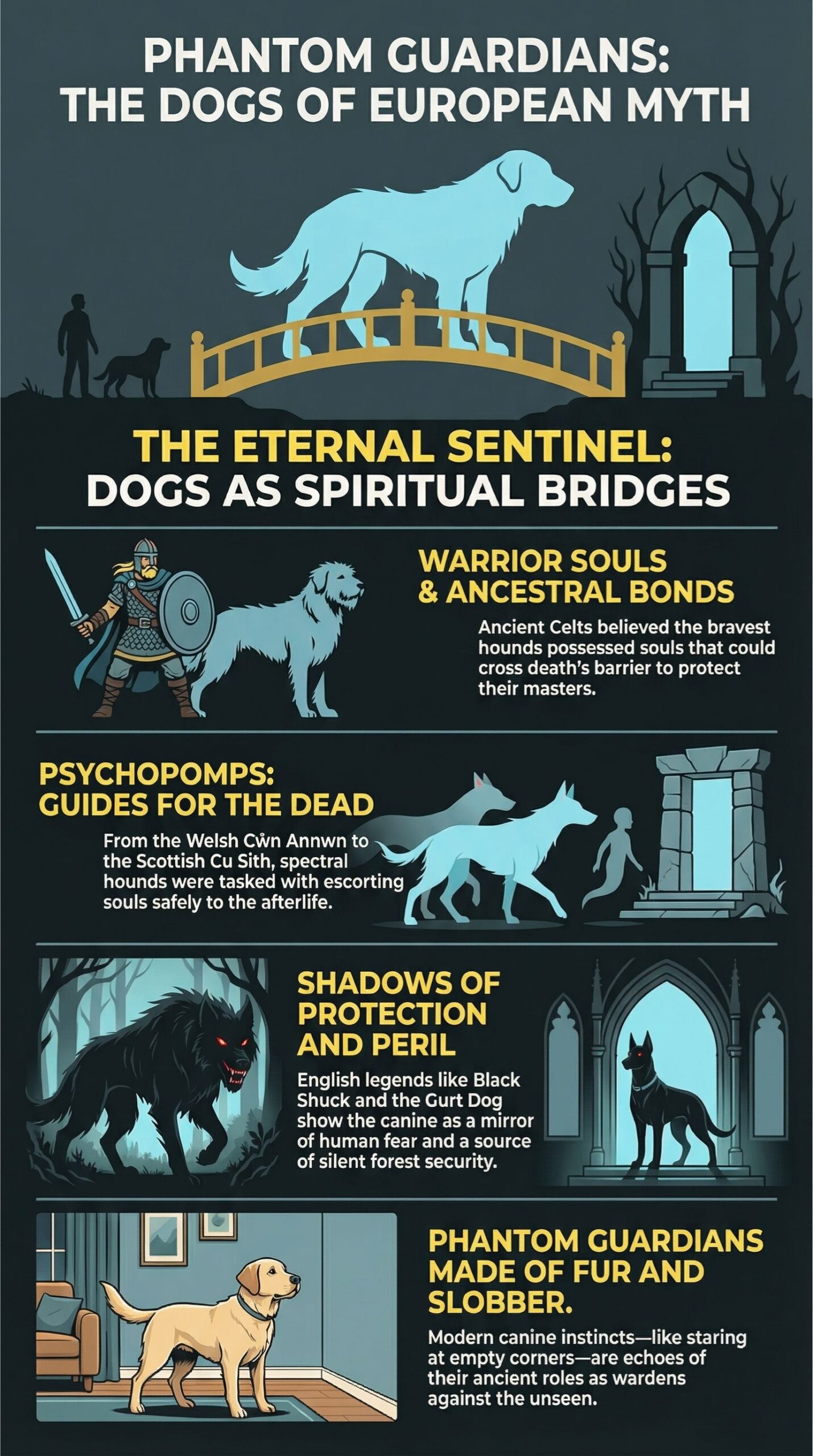
Key Points and Takeaways to Remember
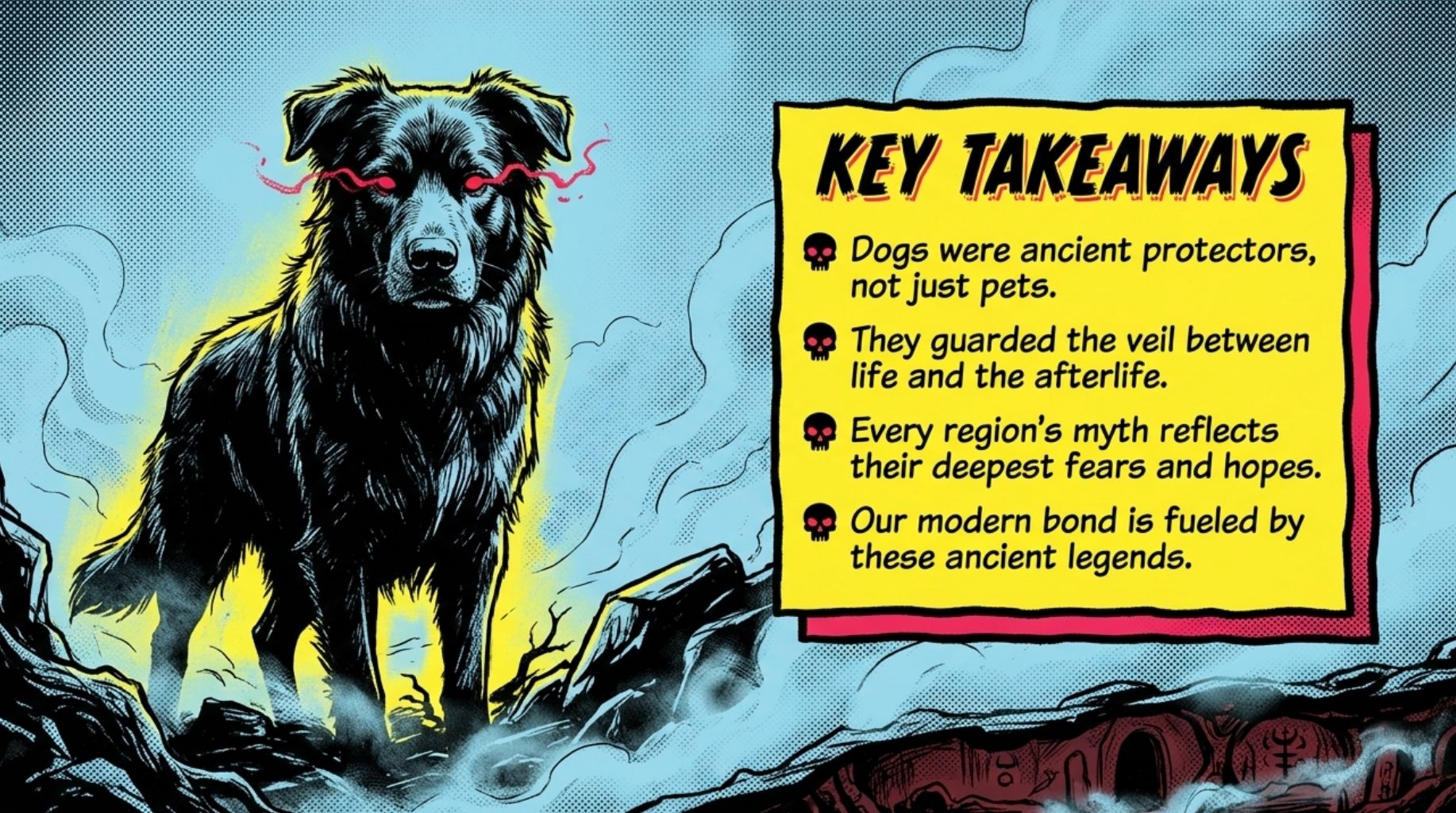
- The Celtic Hound: The legend of Cú Chulainn shows that the dog myths from old European folklore elevated the Irish wolfhound from hunting beast to sacred guardian and symbol of undying loyalty.
- The Cŵn Annwn: Welsh folklore warns that the red-eared hounds of Annwn are neither fully evil nor fully good, they are spectral guides who separate the wicked from the virtuous.
- Black Shuck and Gurt Dog: English dog myths from old European folklore reveal a dual nature; the same black dog can be a deadly omen in the fens and a gentle protector in the hills.
- Hellhounds and Church Grims: French and German legends intertwine the canine with Christianity, where a dog’s spirit guards graveyards and church doors against demonic forces.
- The Cu Sith: Scottish Highland myths use the silent, green-furred fairy hound to explain the dangers of the wilderness and the thin boundary between our world and the realm of spirits.
- Modern Echoes: The dog myths from old European folklore survive in our homes today through canine instincts, Black Dog Syndrome in shelters, and the unspoken bond of protection we share.

Discover More Dog Myths and Legends From Around The World:
- Ancient Dog Myths in Asia: Guardians and Spirit Guides
- Dog Myths in Slavic Folklore: Spirit Hounds and Shape Shifters
- Dogs in the Afterlife: Myths and Cultural Beliefs
- Corgis and Fairies: Legendary Ancient Connection
- Dog Mythology Helps Explain Domestication
- Dog Myths from Scandinavia and Norse History
- The Black Dog Beliefs, Myths and Symbolism
Final Thoughts
We share our homes with legends. Every yawn, every alert ear, and every protective growl connects back to the misty hills of Ireland, the stormy fens of England, and the dark forests of Germany. The dog myths from old European folklore are more than entertainment, they are the ancestral memory of a partnership forged in survival and spirit.
As you close this article and reach down to scratch those floppy dog ears, remember the weight of that history. Your dog does not need a spectral glow or a coat of green moss to be magical. They guard your sleep, they guide your steps, and they wait at the threshold of your own small world. That is the quiet, enduring truth the old stories wanted us to remember. The hound of heroes’ lives on your couch. Treat them accordingly.