

Numerous families adopt dogs to safeguard their loved ones and their homes. However, many people choose the wrong breed for this purpose. Let’s explore how different dogs react to potential threats like thieves or home invasions!
“Your dog may wag at the mailman, but here’s the quiet truth science just uncovered: when a real thief breaks in, that same tail might stop wagging before you even hear a sound.”
Quick Summary About How Dogs React To Thieves and Home Invasion
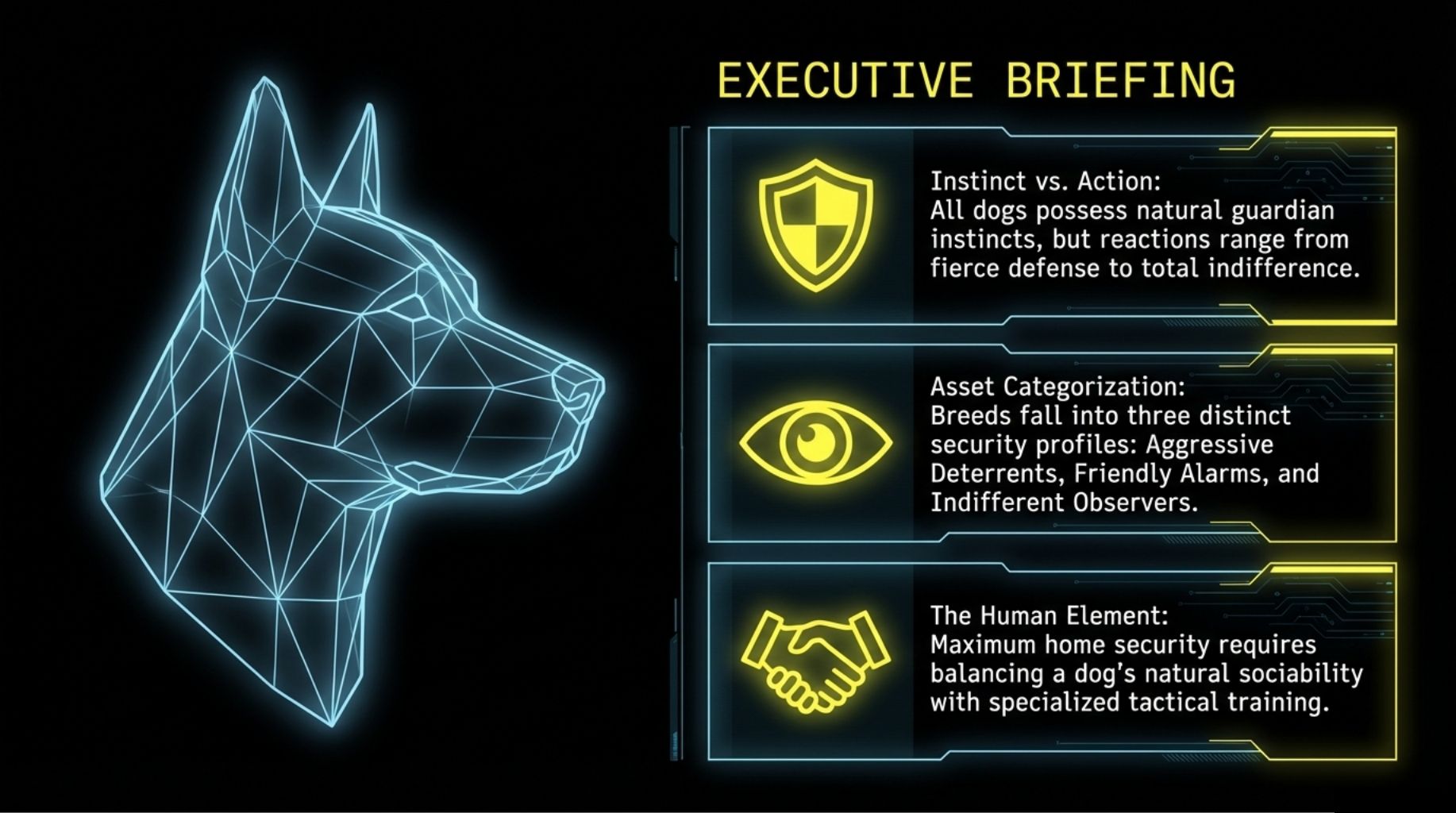
This article explains how different dog breeds react to thieves based on their natural temperament. It groups dogs into three types: alert/aggressive (German Shepherds, Rottweilers, Dobermans) who bark, growl, and attack; gentle/friendly (Labradors, Golden Retrievers, Cavaliers) who may bark but rarely attack; and indifferent (Beagles, Huskies, Greyhounds) who ignore strangers unless directly threatened. The article also offers tips on training dogs as guardians, balancing protection with sociability, and notes that a dog’s presence alone can deter burglars.
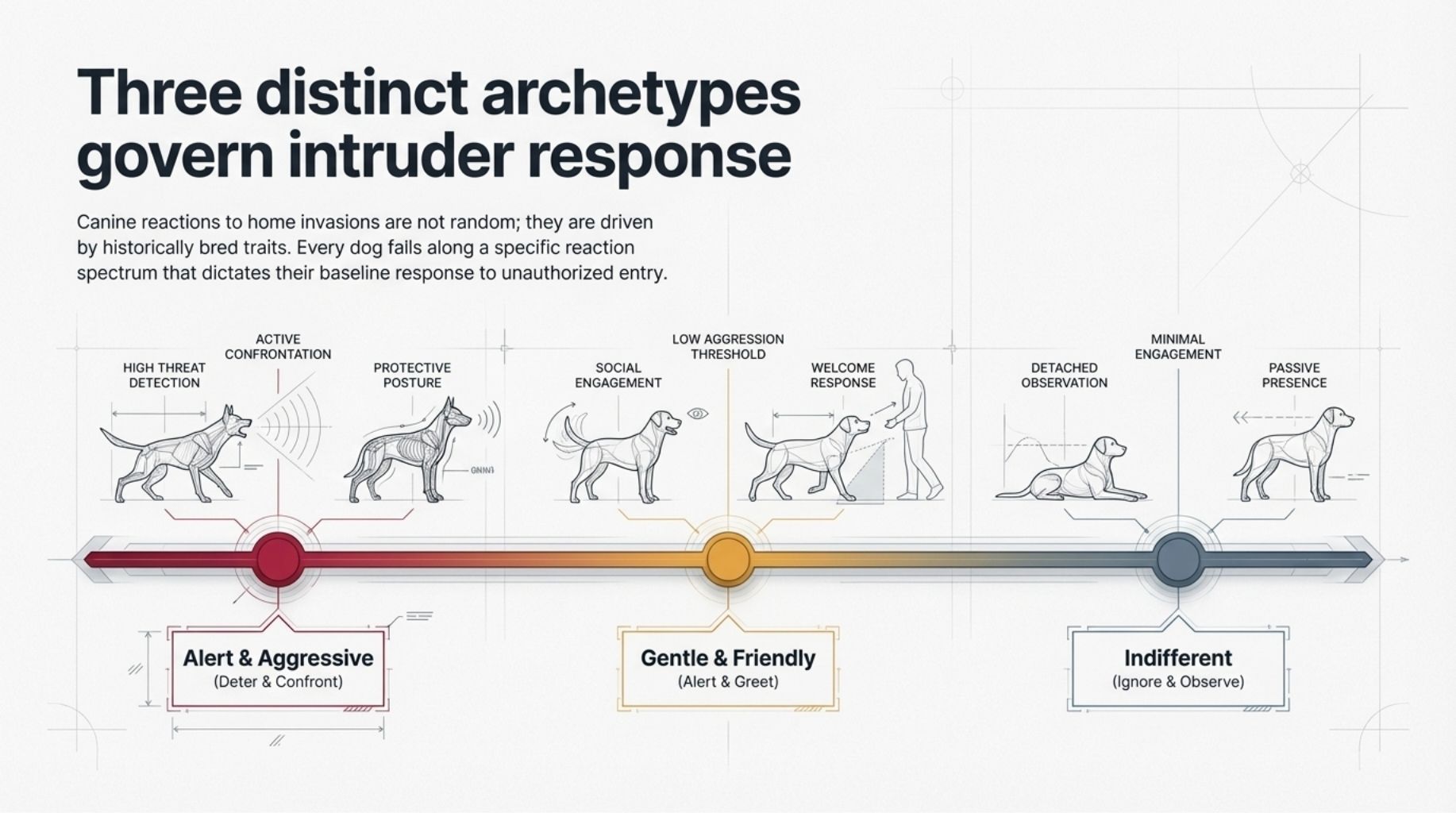
HOW DOGS REACT AND RESPOND IN SITUATIONS INVOLVING THIEVES OR HOME INVASIONS?
When a stranger tries to break into a home, a dog’s brain runs a lightning‑fast calculation. That calculation takes less than a second. It weighs three things, the stranger’s body language, the dog’s own size, and whether the owner is nearby. Researchers at Emory University used brain scans on dogs to watch this process happen. They found that a dog’s amygdala, the fear and alert center, lights up instantly when a person moves oddly or wears a mask.
The key and the dog’s final reaction depends on one simple question: “Do I need to fight, or can I win by noise?” This is why some dogs bark like wild but never bite, while others go completely silent before attacking. Understanding this fast mental math helps owners predict what their own dog might do when a real threat appears.
HOW ALERT AND AGGRESSIVE DOGS REACT TO THIEVES?
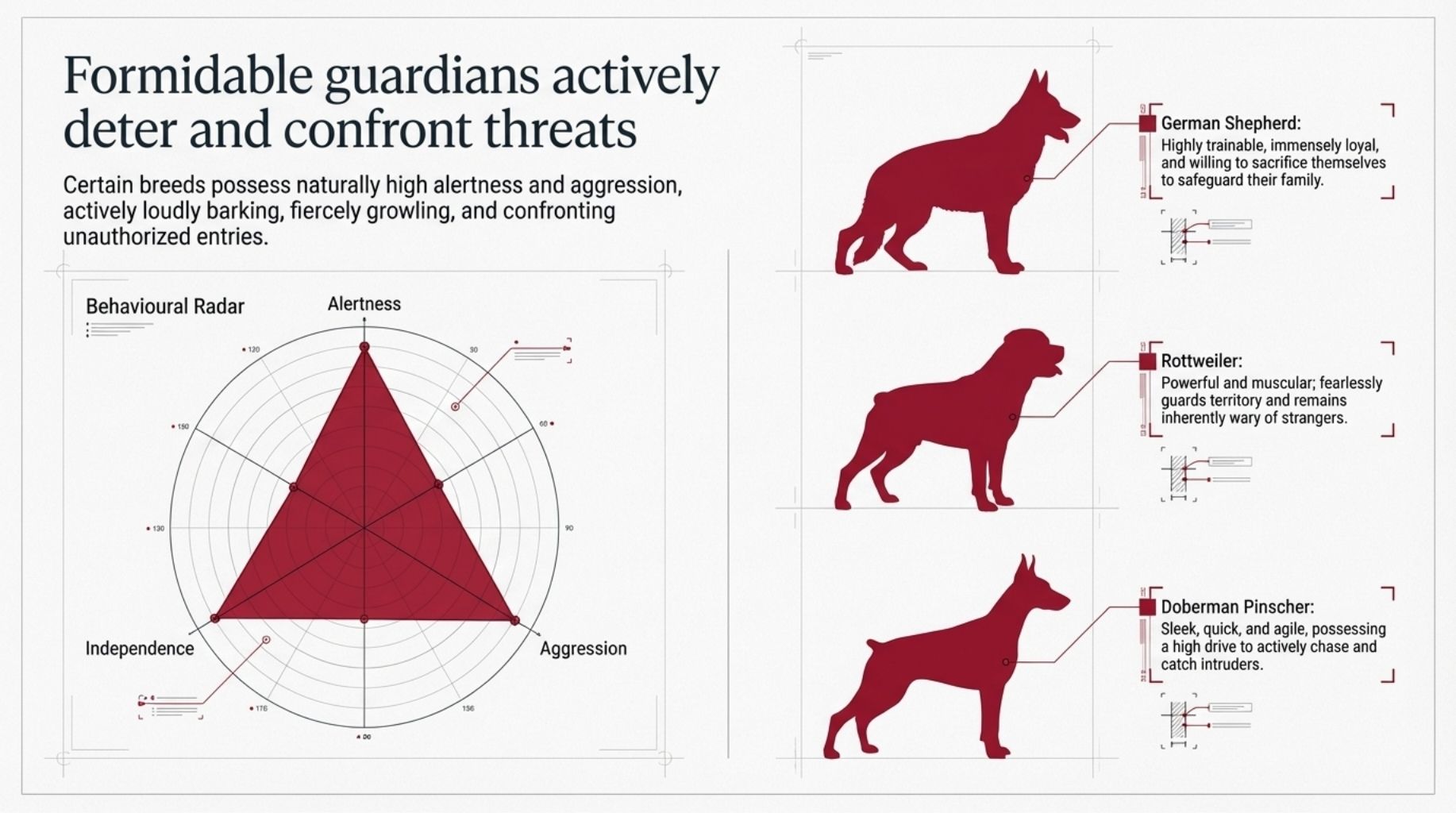
Certain dog breeds possess natural alertness and aggression. They’ll loudly bark, fiercely growl, and attack anyone unauthorized entering their territory. These breeds often serve as guard dogs or watchdogs, deterring or stopping potential intruders with their intimidating presence and behavior.
Some alert and aggressive breed examples include:
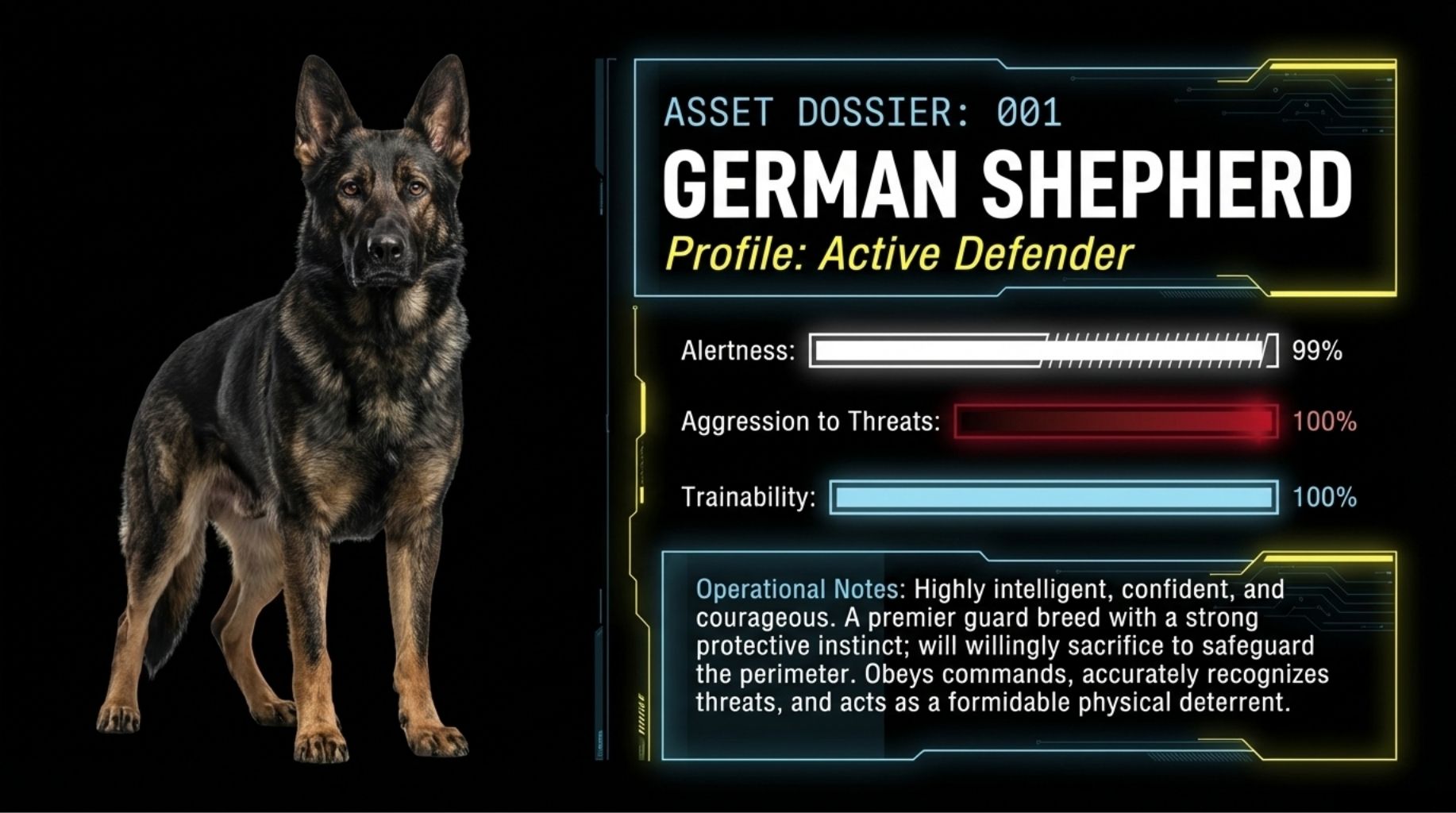
German Shepherd
These intelligent, loyal, confident, and courageous dogs rank among the most popular guard breeds. They have a strong protective instinct, willingly safeguarding their family and home, even sacrificing their lives. Highly trainable, they obey commands and recognize threats.
German Shepherds were first bred in the late 1800s by Captain Max von Stephanitz, who wanted the perfect working dog.
Today, they serve in police K-9 units and military patrols worldwide. A single German Shepherd can detect a stranger from over 100 feet away, thanks to their sharp hearing. They also learn hand signals in just a few days. One real story from Berlin tells of a Shepherd who blocked a burglar’s exit for 20 minutes until police arrived, without ever biting the man.
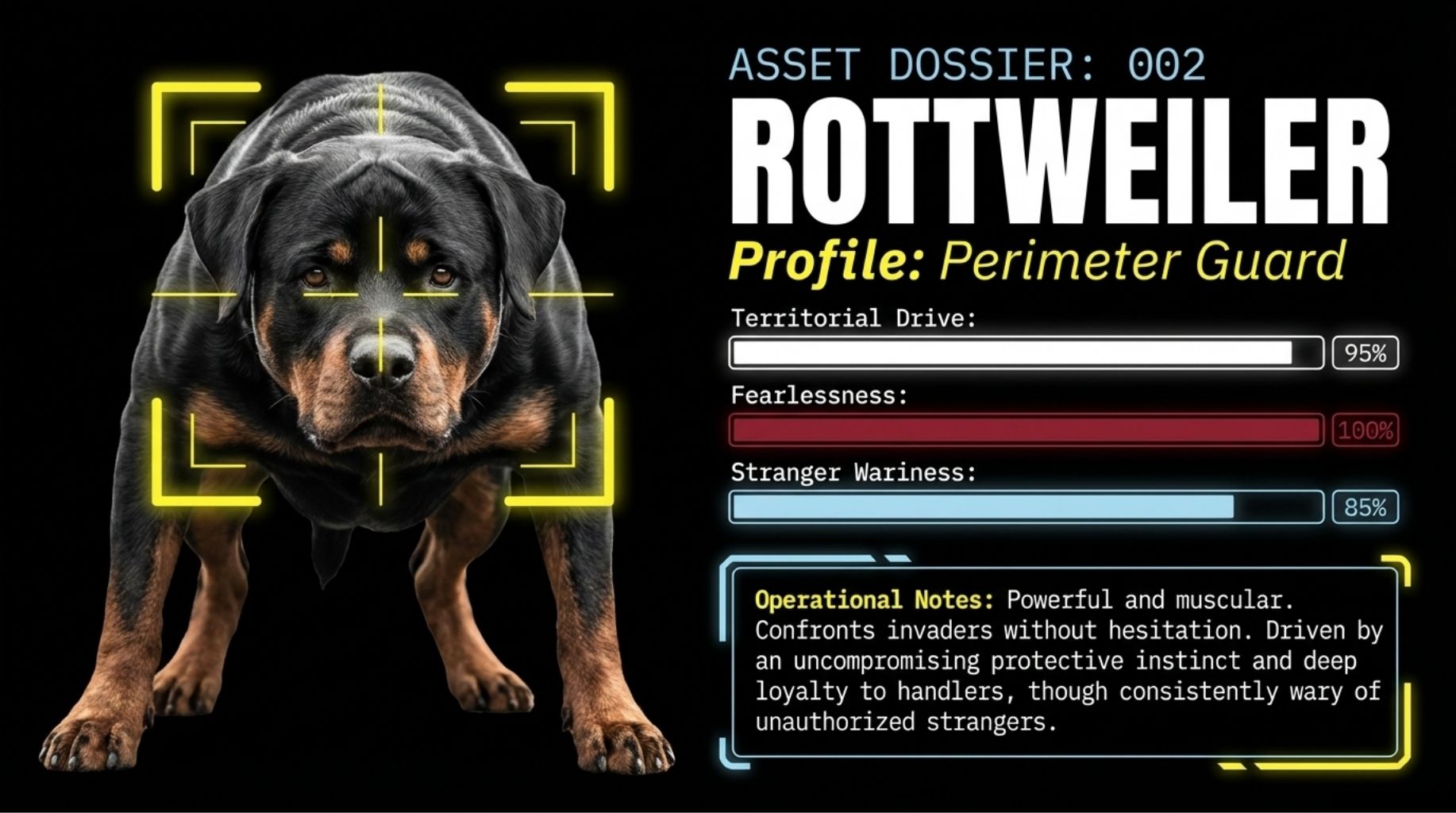
Rottweiler
Powerful and muscular, Rottweilers fearlessly guard their territory. They’ll confront invaders without hesitation, driven by their strong protective instinct. Though loyal to owners, they remain wary of strangers. Rottweilers descend from Roman drover dogs that marched with armies across the Alps.
Their bite force measures 328 pounds per square inch, stronger than a German Shepherd’s.
But they are not mindless attackers. A well-trained Rottweiler will first block an intruder’s path and give a low, rumbling growl that sounds like an engine. Many burglars admit they turn around immediately upon hearing that sound. In a 2019 security survey, Rottweilers ranked second only to German Shepherds in real-world home protection effectiveness.

Doberman Pinscher
Sleek and elegant, Dobermans boast keen alertness and a high drive to protect. Quick and agile, they effectively chase and catch intruders. Intelligent and obedient, they can also be dominant and independent. The breed was created by a German tax collector named Louis Dobermann in the 1890s.
He wanted a medium-sized dog that would guard him while he collected money in dangerous towns.
Today’s Dobermans can sprint up to 32 miles per hour, fast enough to catch a fleeing thief in seconds. They also have a unique way of assessing threats. They do not just bark, but they first tilt their head, then freeze, then emit a sharp, single bark. That pattern is a warning. If the intruder moves forward, the Doberman attacks without another sound.
These breeds’ aggressive demeanor, coupled with their unwavering loyalty and protective nature, make them formidable guardians against thieves or home invasions. Their presence alone can deter potential threats, while their fearless actions safeguard loved ones and property.
HOW GENTLE AND FRIENDLY DOGS REACT TO THIEVES?
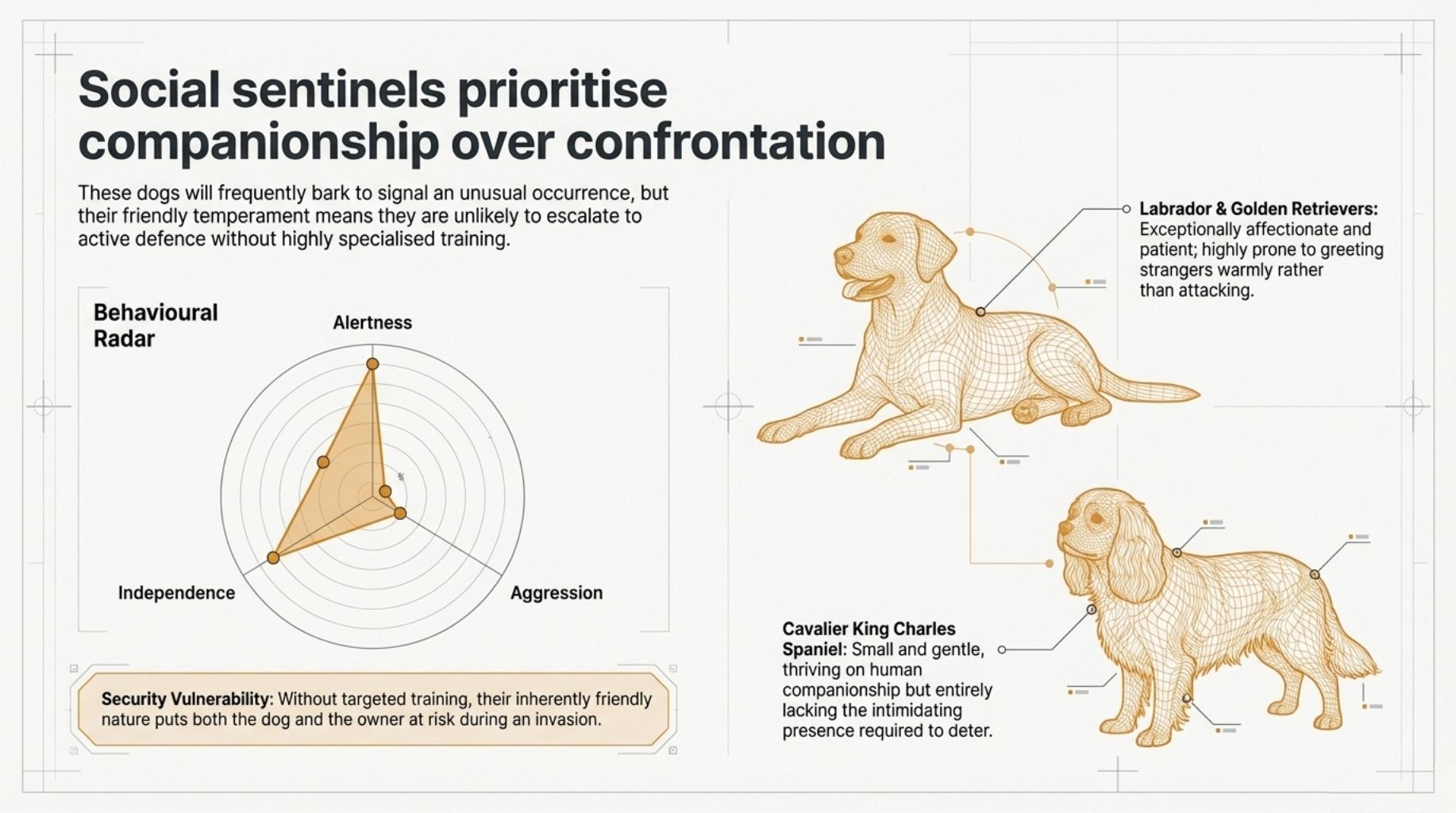
In contrast, some breeds have a gentle, friendly temperament. They may bark to alert their owners, but are less likely to act aggressively towards intruders. These dogs prioritize companionship over guarding duties.
Examples of gentle, friendly breeds include:
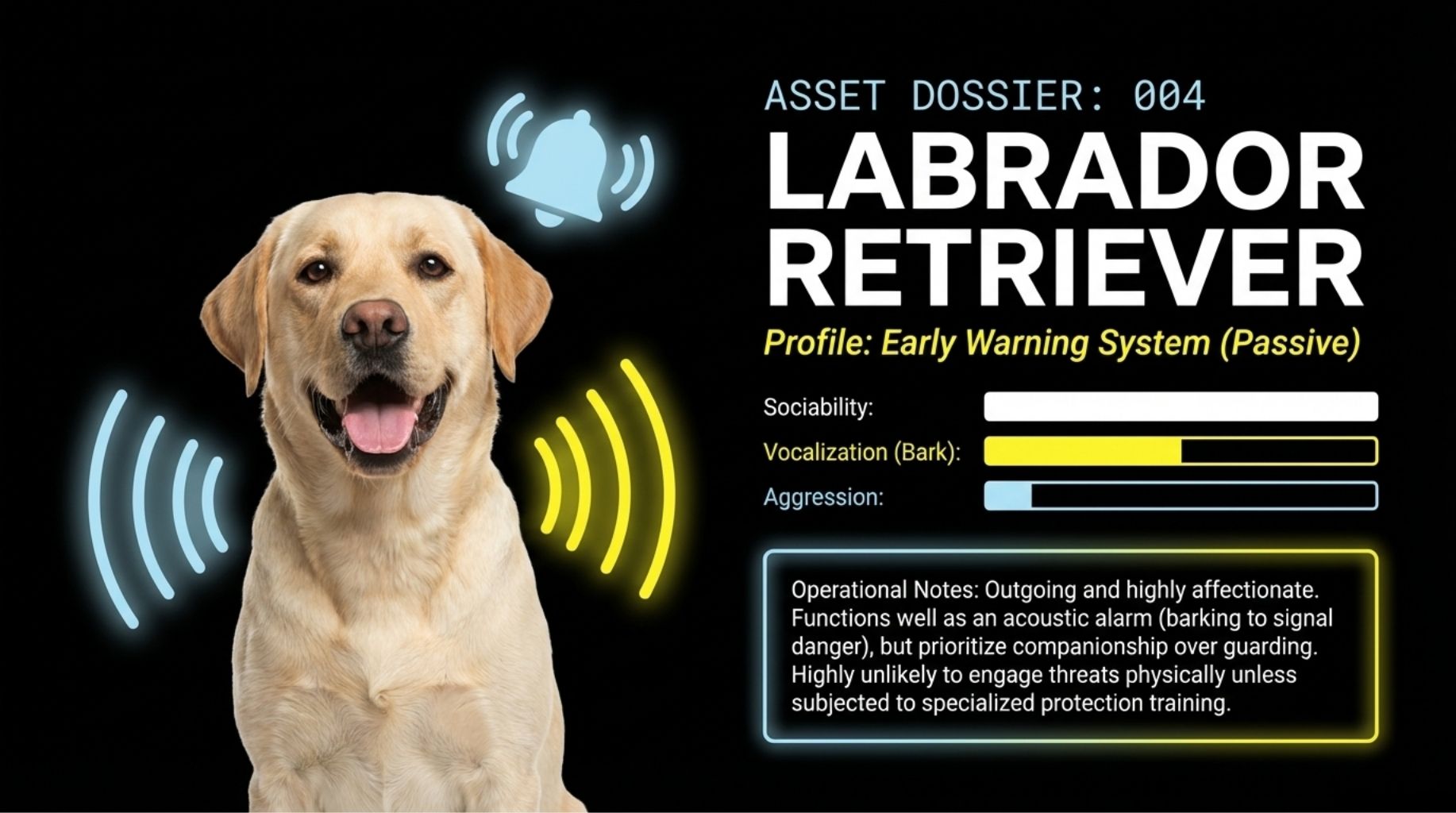
Labrador Retriever
Known for their affectionate, outgoing nature, Labradors make excellent family companions. While they may bark to signal potential danger, they’re unlikely to attack unless adequately trained for protection. Labradors originated in Newfoundland, not Labrador, where they helped fishermen pull nets from icy waters. That history made them people‑pleasers, not fighters.
A Labrador’s bark is usually a “notice bark”, loud but without a growl. Real security footage from 2021 shows a Labrador named Gus barking at a back door intruder for four seconds, then dropping a tennis ball at the thief’s feet. The intruder left anyway, but not because of fear. He later told police, “The dog was too nice. I felt guilty.”
That is the Labrador paradox: they can still deter crime through sheer unexpected friendliness.
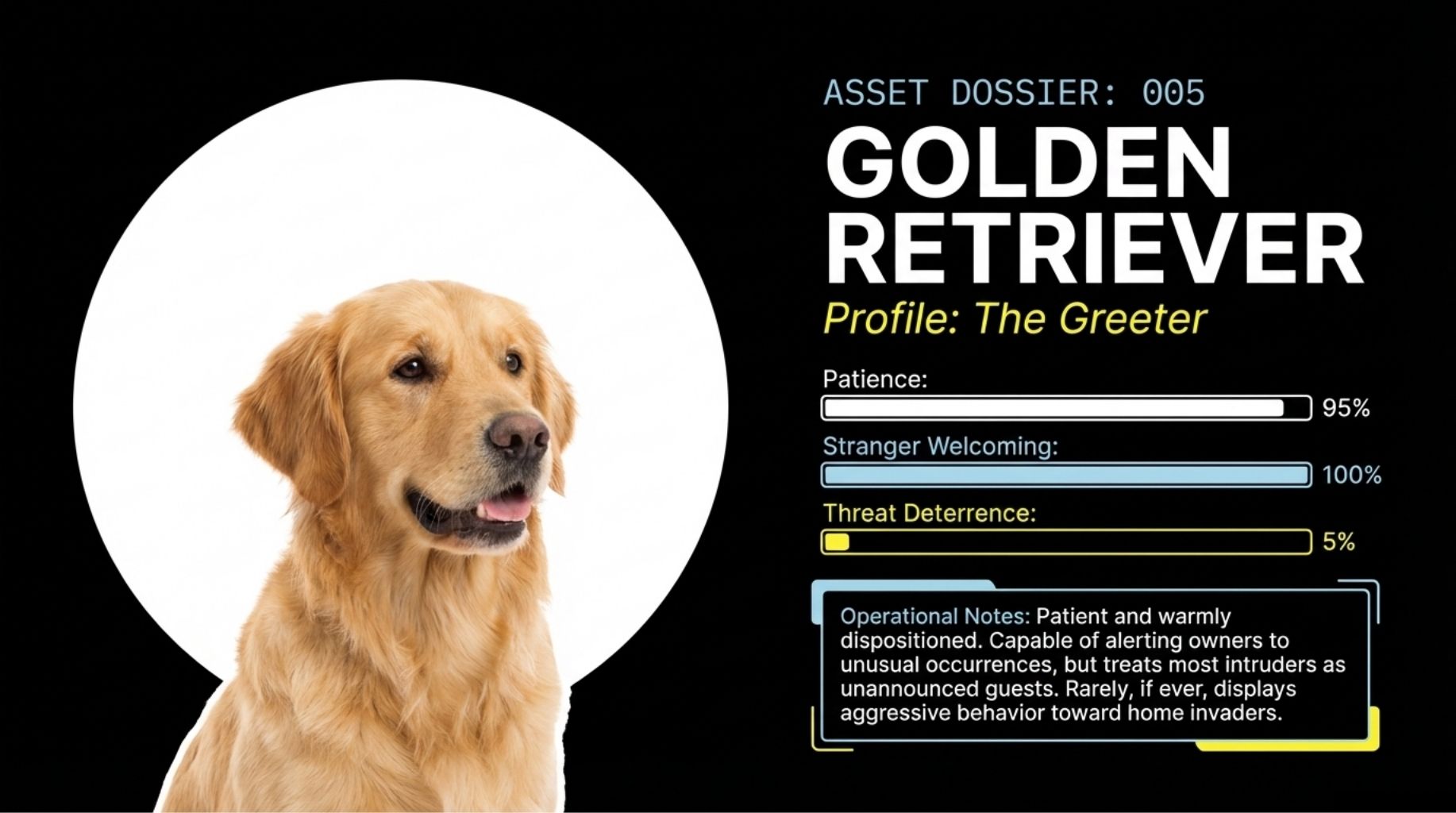
Golden Retriever
With their friendly, patient dispositions, Golden Retrievers often greet strangers warmly. They can alert owners to unusual occurrences but rarely display aggressive behavior towards intruders. Golden Retrievers were first bred in Scotland in the mid‑1800s by Lord Tweedmouth, who wanted a gentle hunting dog that could retrieve birds without crushing them. That soft mouth carries over to home defense.
A Golden will rarely bite.
Instead, they may “herd” an intruder by nudging them with their nose or standing in their way. One anecdote from Colorado describes a Golden who trapped a burglar in a bathroom by simply sitting against the door and wagging. The burglar called 911 himself because he felt too guilty to push past the dog. Goldens teach us that protection does not always require teeth.
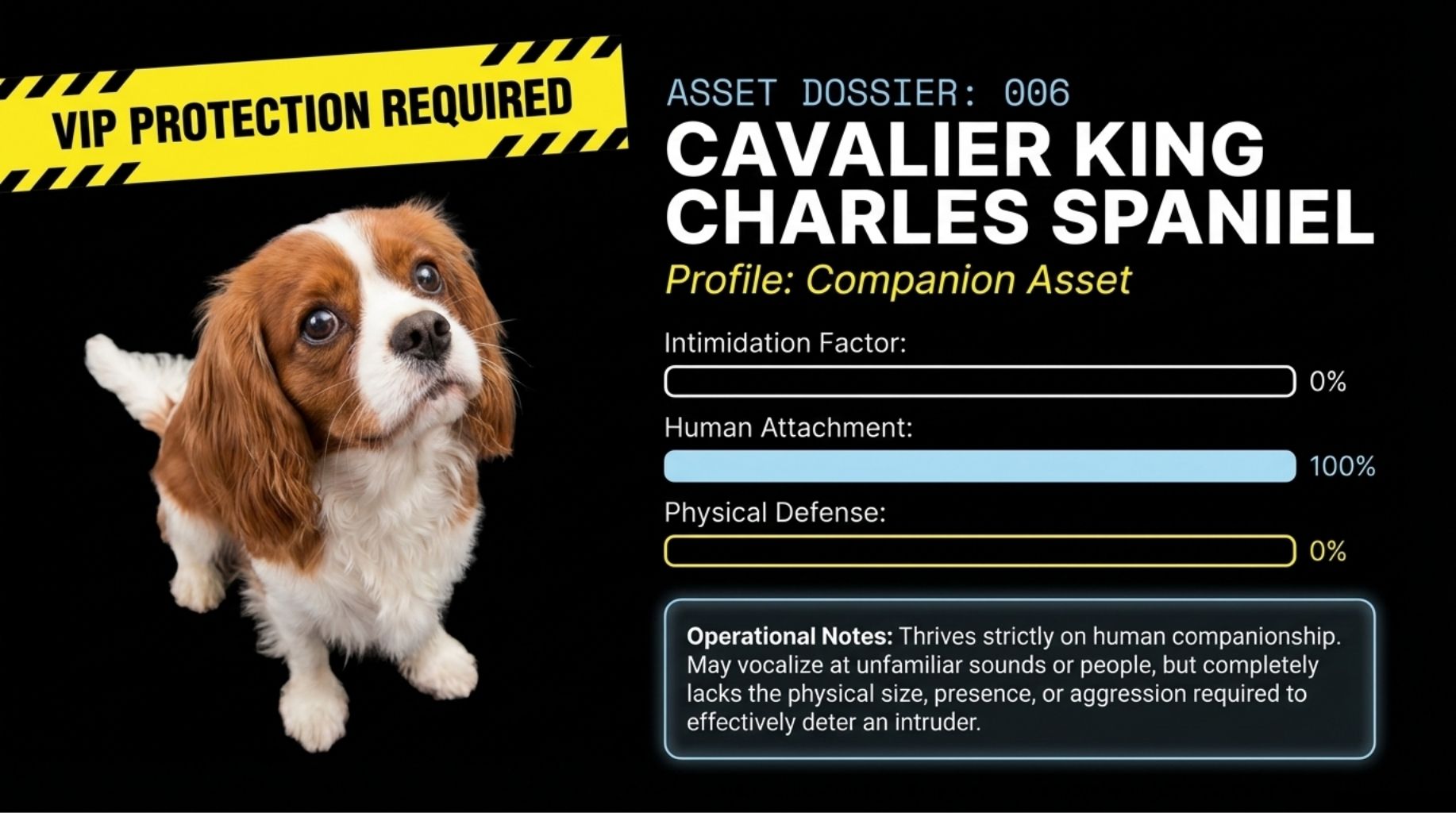
Cavalier King Charles Spaniel
These small, gentle dogs thrive on human companionship. Though they may bark at unfamiliar sounds or people, they lack the intimidating presence or aggression required to deter intruders effectively. Cavaliers were bred as lap warmers for British royalty, not as guardians. Their ears are so long and silky because King Charles II decreed that no one else could own a similar dog.
Today, a Cavalier weighs only 13 to 18 pounds. A thief could step over one.
But here is a surprising fact: Cavaliers have extremely sensitive hearing. They can detect a window breaking from two floors away. Their high‑pitched, rapid bark is often the first alert a homeowner gets. While they will not attack, that early warning gives you precious seconds to call for help or turn on lights.
While gentle breeds provide loving companionship, they may not reliably defend against thieves or home invasions without specialized training. Their friendly nature could potentially put them and their owners at risk in such situations.
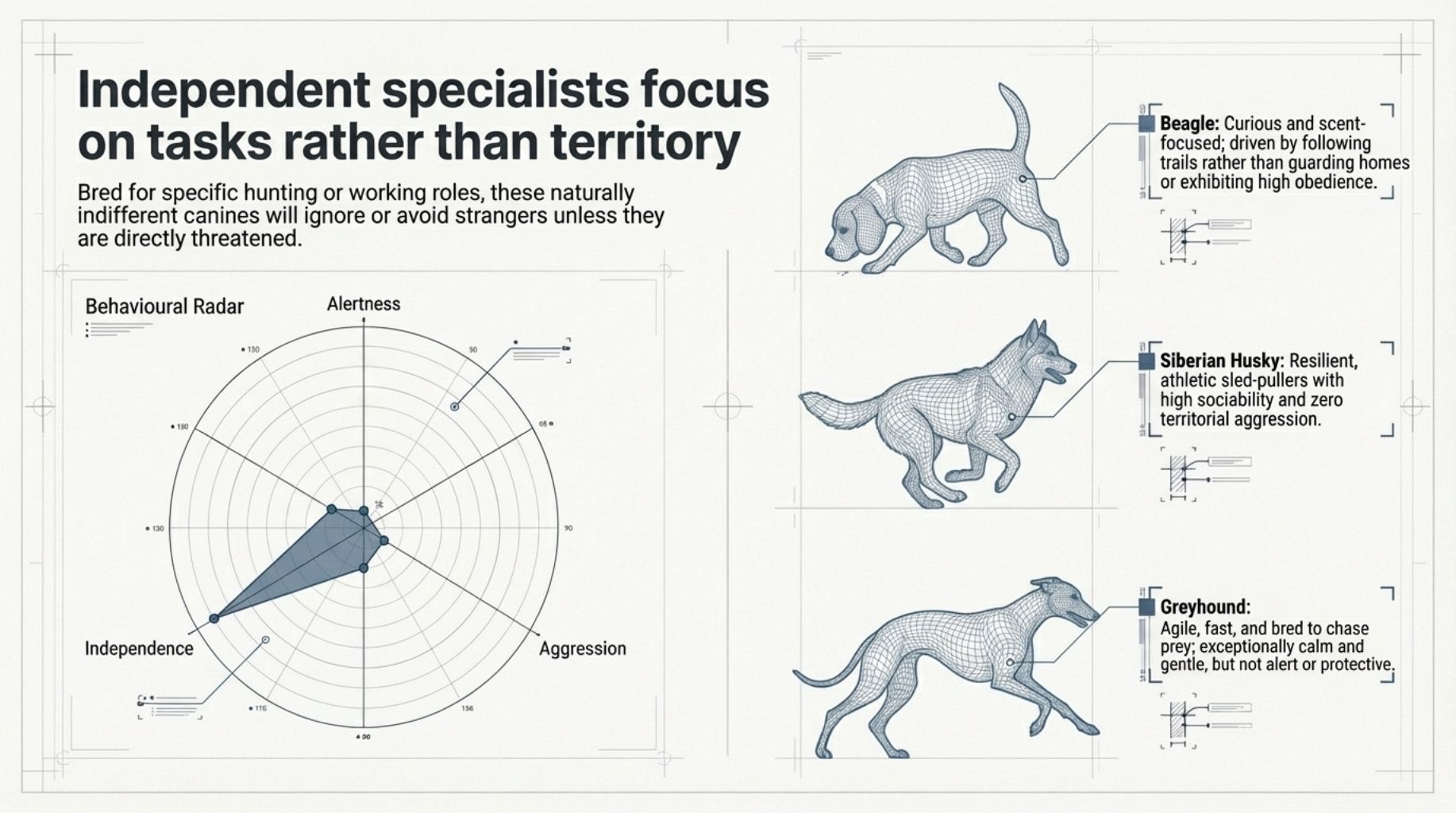
HOW INDIFFERENT DOGS REACT TO THIEVES?
In contrast, certain dog breeds exhibit a naturally indifferent disposition. They may ignore or avoid strangers or intruders unless directly threatened or if their owners are endangered. These breeds are often employed as hunting companions or working dogs, possessing a strong sense of independence and a fervent drive to perform their designated tasks.
Unfamiliar individuals or perceived intruders do not garner much reaction from these dogs unless posing an immediate threat to themselves or their owners. Bred for specific hunting or working roles, these dogs possess an inherent independence and unwavering focus on their assigned duties.
Some examples of indifferent breeds are:

Beagle
Beagles are small and sturdy dogs that have a keen sense of smell and a high energy level. They were created to hunt rabbits. The Beagles are focused on following scents rather than guarding their home. They are also friendly and curious, but not very loyal or obedient.
A Beagle has about 220 million scent receptors in its nose. For comparison, humans have just 5 million. That means when a thief breaks in, the Beagle is not looking at the person. It is smelling the pizza crust on the floor, the squirrel outside, and the intruder’s shoes all at once.
The scent of a fleeing rabbit is more interesting than a masked burglar. One real story from Virginia: a Beagle named Snoopy slept through a whole home invasion because a bag of bacon treats had fallen open in the kitchen. The thief took electronics. Snoopy took the bacon.
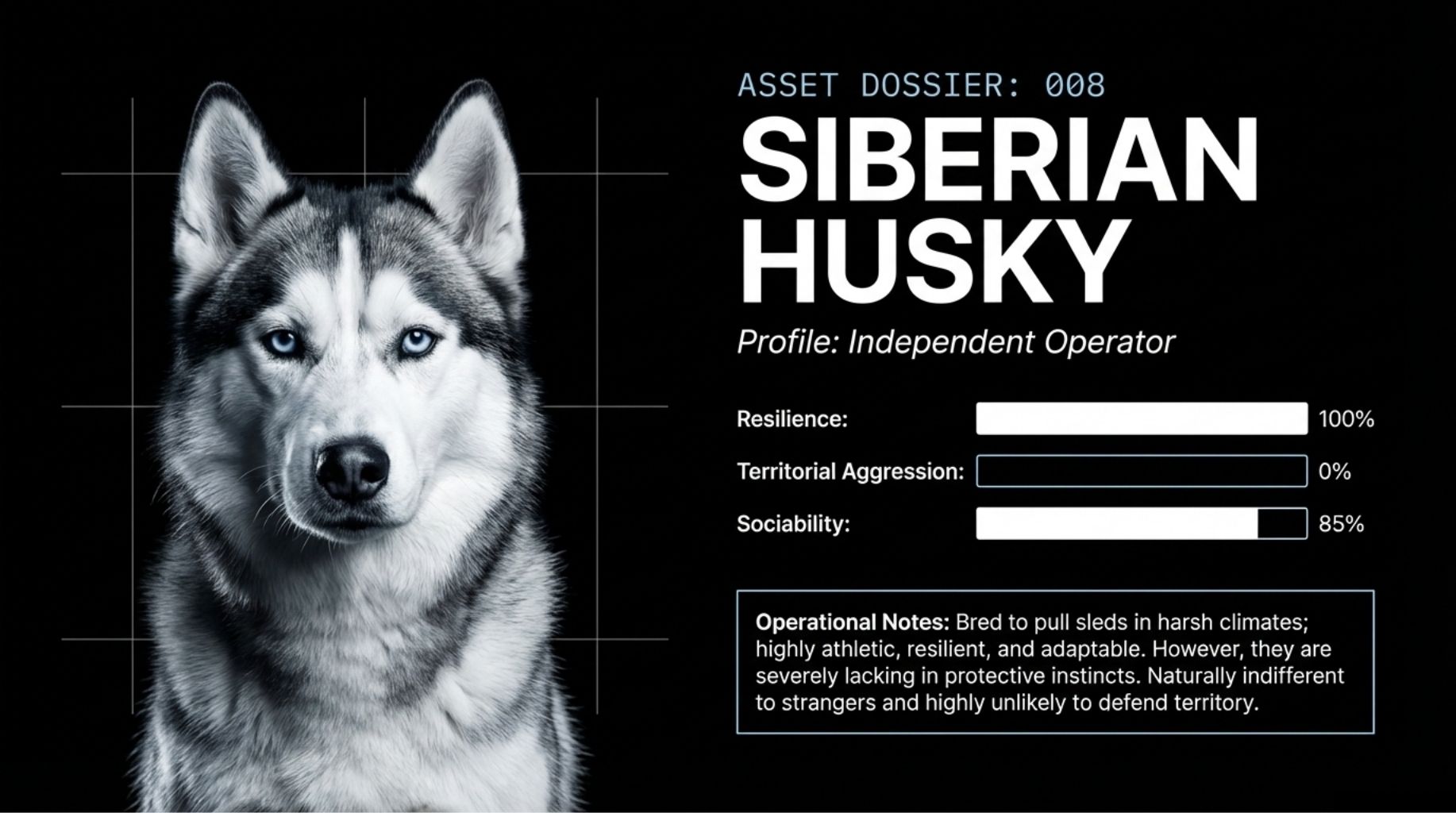
Siberian Husky
Siberian Huskies are medium-sized dogs that have a thick coat and striking eyes. They were bred to pull sleds in harsh climates, making them resilient, athletic, and adaptable. They are also friendly and sociable, but not very territorial or aggressive.
Huskies descend from the Chukchi people of Siberia, who treated them as family members, not guard dogs. A Husky’s instinct is to run, not fight. In fact, they rarely bark. Instead, they howl. That howl sounds like a wolf, which can actually scare some intruders by accident.
But most thieves quickly learn that a howling Husky is just saying “hello.” A 2020 security video from Alaska shows a Husky leading a burglar to the refrigerator, opening it with its nose, and stealing a cheese stick for itself while the thief took a laptop. The Husky was not an accomplice. It just had priorities.
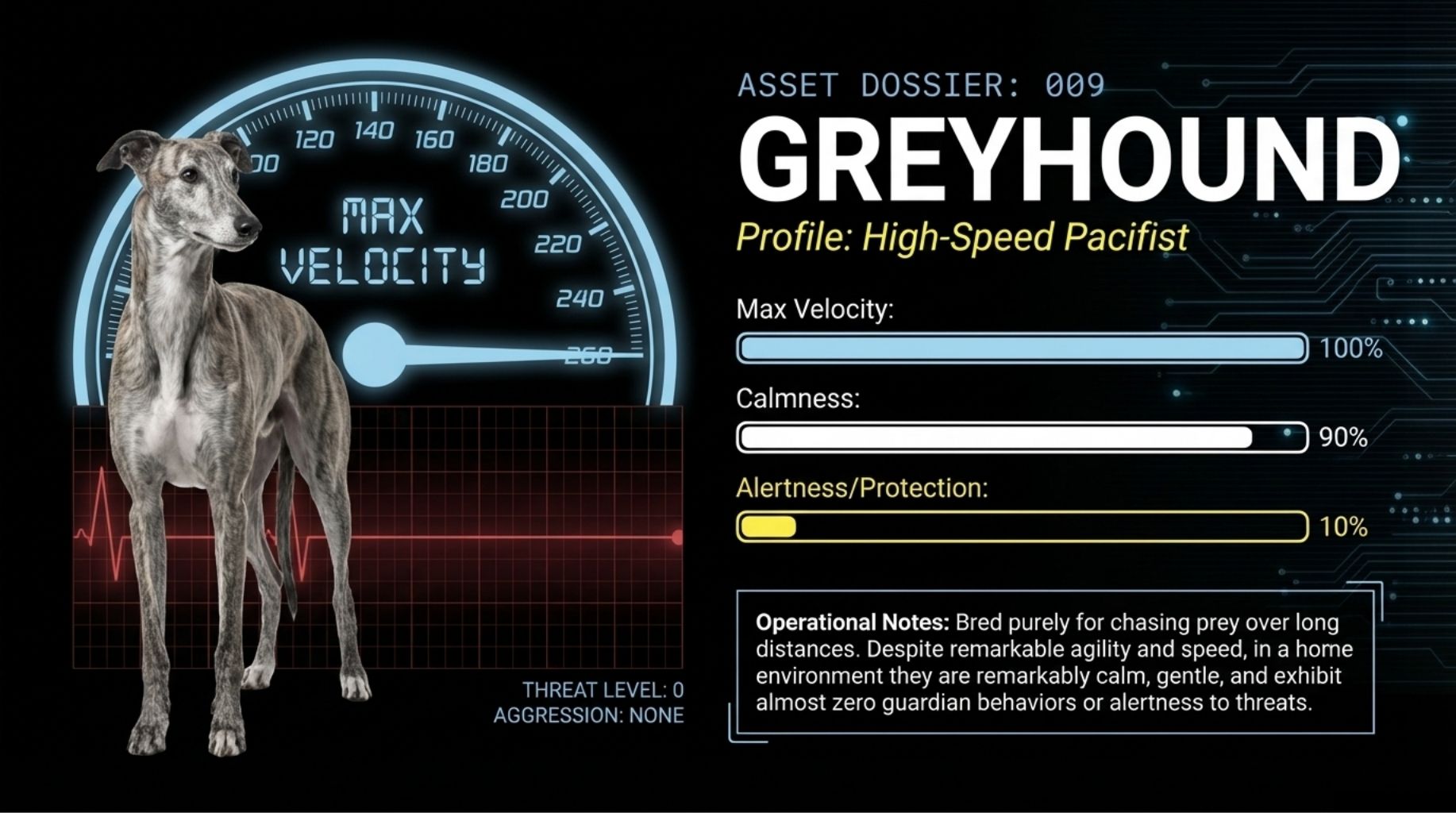
Greyhound
Greyhounds are large and slender dogs that have a graceful appearance and a remarkable speed. They were bred to chase prey over long distances, making them agile, fast, and focused. They are calm and gentle, but not very alert or protective. Greyhounds are the cheetahs of the dog world.
They can go from 0 to 45 miles per hour in three strides. But that speed is for chasing a mechanical rabbit, not catching a criminal. Most Greyhounds sleep 18 hours a day. When they are awake, they are calm and almost lazy.
A real anecdote from a Florida shelter tells of a Greyhound named Flash who watched a thief climb through a window, walk past him, and take a TV. Flash did not move. He did not bark. He simply blinked. When the owner returned, Flash was in the exact same spot. The police asked if Flash had tried to stop the thief. The owner laughed and said, “He probably offered the thief his bed.”
These are some of the ways how dog breeds react to thieves and home invasion. This is based on their temperament, size, and training. Remember that every dog is different. They may have different reactions depending on their personality, experience, environment, and situation. To learn how your dog will react is to observe their behavior and train them accordingly.
HOW GUARDIAN DOGS INSTINCT HELPS WHEN THEY REACT TO THIEVES AND PROTECTING YOUR HOME?
Dogs have long been our trusted companions, and they often serve as protectors of our homes. Further in this article, we’ll delve into the most asked questions about how dogs react to thieves, the instincts that drive their protective behavior, and how you can best utilize their guardianship to keep your home secure.
Guardian Dogs as Home Protectors
For many years, dogs have been greatly valued. They have been loyal companions, yes. But they have also served as guardians, protecting our homes and families. Their protective instincts have made them great allies. They help ensure home security.
How Dogs React to Thieves Using Their Instincts?
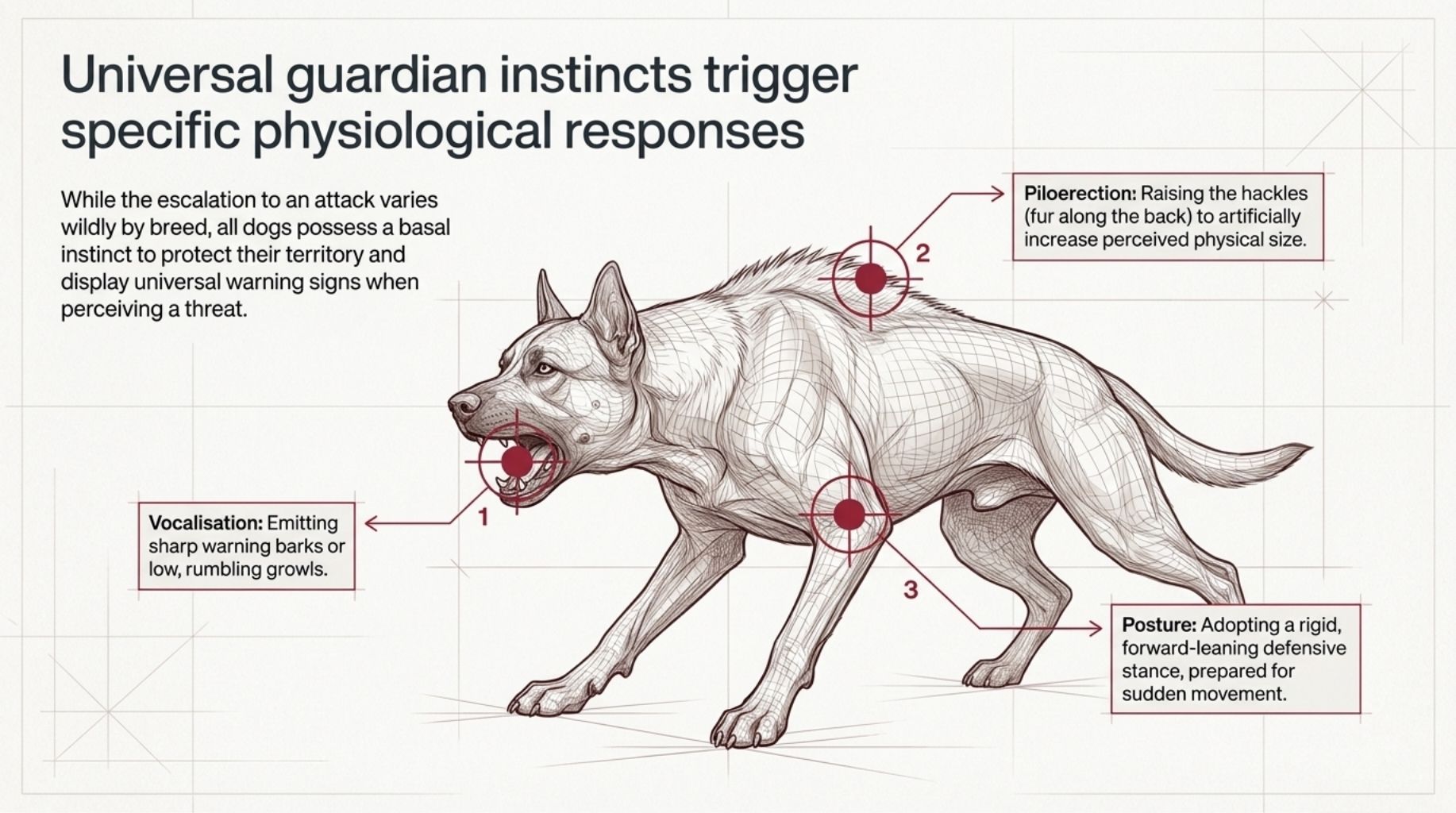
- Guardian Instincts: All dogs have a natural guardian instinct. This instinct makes them want to protect their territory and loved ones. This instinct can show itself in many ways. Dogs may alert their owners to intruders. Or they may show more assertive protective behaviors.
- Warning Signs and Protective Behavior: There are signs a dog is reacting to a threat. They may bark, growl, raise their hackles, or take a defensive stance. Protective behavior can range from warning the intruder to taking action. Assertive dogs may do more to protect their family.
UTILIZING THE PROTECTIVE INSTINCTS OF YOUR DOGS TO REACT TO THIEVES
- Training for Specific Scenarios: You can train your dog to react appropriately in specific situations. For example, teaching them to bark on command or stay alert when someone approaches your property.
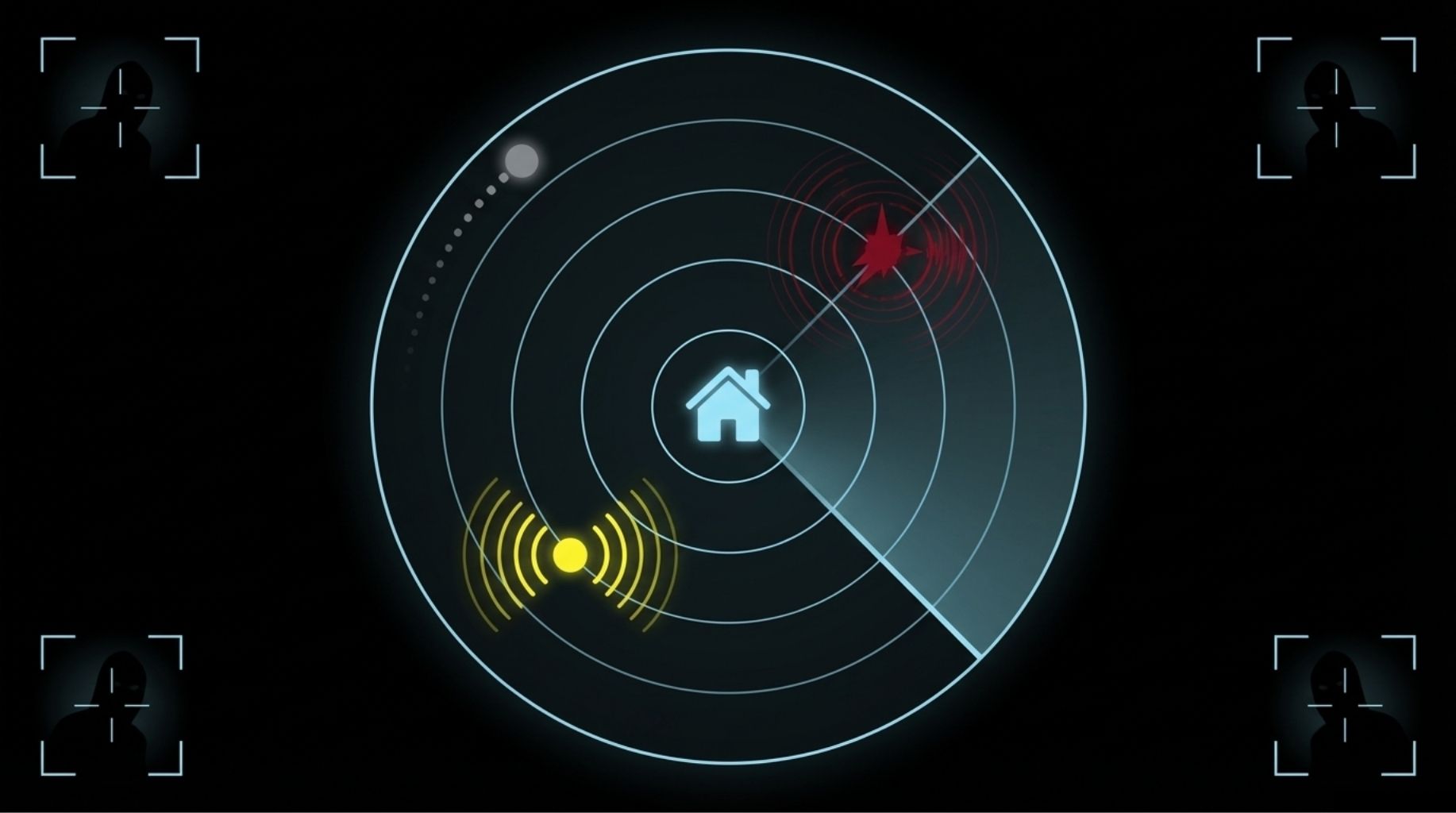
- Deterrence Through Presence: Simply having a dog can be a significant deterrent to potential thieves. Most burglars prefer to avoid homes with dogs, as the risk of getting caught is higher.
- Balance Between Protection and Sociability: It’s important to strike a balance between your dog’s protective instincts and their ability to socialize with others. Encouraging positive interactions while maintaining their protective awareness is key.

HOME ALONE VS. HOME TOGETHER: TWO VERY DIFFERENT REACTIONS
Many people assume their dog will act the same way toward a thief whether they are home or not. That is a mistake. Dogs are extremely sensitive to their owner’s presence. Research and real police reports show that a dog’s behavior can flip completely depending on who is inside the house. Understanding this difference helps you prepare for both scenarios.
When You Are Home: The Confidence Boost
A dog feels braver when you are nearby. Your voice, your smell, and your movements tell the dog, “We are a pack. We fight together.” Studies on dog behavior show that dogs are more likely to bark loudly, show teeth, and even charge at a stranger when their owner is present.
Why? Because they trust you to back them up. One real anecdote from a security camera in Ohio shows a small terrier hiding under a bed when the owner was out. The same dog lunged at a delivery man the next day when the owner stood right behind it. Your presence gives your dog courage.
When You Are Away: The Silent or Hiding Response
Most owners never see what their dog does during a real break‑in when no one is home. Police and home security footage tell a different story. Many dogs do not bark or attack at all. Instead, they hide under furniture, run to a back room, or stay completely silent. This is not cowardice. It is a survival instinct.
In the wild, a lone animal does not pick a fight with an unknown threat. A 2017 study of home invasion videos found that over 60% of dogs remained quiet or fled when the owner was absent. The thief often does not even know a dog lives there. This is a hard truth, your dog may only be a guardian when you are there to lead.
How to Prepare Your Dog for Both Situations?
You can train your dog to react better even when you are gone. Start by leaving a radio or TV on. The sound of human voices can trick your dog into feeling less alone. Second, practice “alert training” from a distance. Have a friend act like a stranger outside while you hide inside another room. When your dog barks, reward them.
Over time, your dog learns that barking at an intruder is good even if they cannot see you. Third, never punish a dog for barking at a stranger when you are home. That teaches them to stay quiet at the wrong times. A well‑prepared dog can become a reliable alarm whether you are there or not.

FACTS ABOUT HOW DOGS REACT TO THIEVES AND HOME INVASION
Discover these facts from recent research and real‑life stories.
Fact 1: A Dog’s Sense Of Smell Can Detect A Thief’s Emotional State
A 2021 study from the University of Naples found that dogs can smell stress hormones like cortisol and adrenaline. When a person has bad intentions, their body releases these chemicals through sweat. Dogs sniffing a hidden intruder reacted more intensely than to a calm stranger, even before the person made a sound.
Fact 2: The “Cuddle Dog” Who Attacked A Real Intruder
In a well‑known 2020 news story from Texas, a family’s Labrador Retriever, famous for sleeping on the couch with kids, suddenly bit a masked burglar on the leg and held on until police arrived. The owner said, “He never even growled at the mailman.” This shows that even gentle dogs can flip a switch when their family’s safety feels instantly threatened.
Fact 3: Dogs Use “Eavesdropping” To Judge A Thief
A fascinating 2018 experiment at Kyoto University showed that dogs watch human social interactions. If they see a person being rude or aggressive to their owner (even pretending), the dog later avoids that person and shows defensive body language. This means dogs don’t just react to a thief’s actions, they judge intent based on earlier social cues.

FAQ ABOUT HOW DOGS REACT TO THIEVES AND HOME INVASION

The Dog Guardians of Our Homes
Having a dog can bring great peace of mind. With their loyalty and protective nature, they make excellent home guardians. Their keen senses alert you to potential dangers. And their bravery gives you an extra layer of security. In conclusion, dogs serve as remarkable guardians of our homes, with their protective instincts and loyalty.
Understanding their reactions to potential threats, harnessing their protective skills, and striking a balance between protection and sociability can help you fully utilize your dog’s role as a home protector.
Your relationship with your dog is a partnership, and their protective role is an extension of your bond. By recognizing their instincts and training them effectively, you can ensure that your dog not only brings joy but also security to your home.

If you find this topic interested, we recommend to continue reading dogs as livestock guardians!