
You’ve seen it happen. Your dog suddenly stares at a blank wall. Their ears perk up, and they let out a series of sharp barks. You look around and see absolutely nothing there. This puzzling behavior can be funny, but it can also become a real headache for pet owners. So, what is the real answer to the question, why do dogs bark at nothing?
The truth is, your dog isn’t just being dramatic or trying to get on your last nerve. They are likely responding to a world that is far more complex and rich than we can perceive. We need to remember that our furry friends experience life through senses that are much sharper than our own. This simple fact is almost always the key to solving the mystery of their “phantom” barking.
“Have you ever jumped off the couch because your dog started barking wildly at an empty corner, leaving you both confused and a little creeped out?”

Quick Summary About Why DO DOGS BARK AT NOTHING
Dogs bark at “nothing” because their powerful senses detect sounds, smells, and movements we miss. Why do dogs bark at nothing often comes down to high-frequency noises, passing shadows, or even boredom. Medical issues like dog dementia can also cause this behavior. Learn simple training tricks to calm your pup and bring peace back home. Ignoring attention barks works, but never ignore fear or anxiety. Check with your vet if the barking starts suddenly in an older dog. With patience and the right approach, you and your dog can both sleep soundly again.
WHY DO DOGS BARK AT NOTHING AND HOW CAN I CALM THEM?
The first thing to do when your dog has a barking fit is to stay calm. Your dog will take cues from your own body language, so getting anxious will only make things worse. Instead of shouting, try to figure out what has caught their attention. They might be reacting to a high-pitched sound from an appliance or a scent carried in from the yard.
Once you understand the trigger, you can use simple training commands to redirect their focus. This is the answer about why dogs bark at nothing and finding a solution for it.
Key Points & Takeaways to Remember
- Calming the “nothing” barks: Your dog hears sounds you can’t, like high-frequency electronics. Teach a “quiet” command and reward silence with treats to stop the barking.
- Empty spaces aren’t empty: Dogs see shadows, smell old scents, and hear distant noises we miss. Their world is simply fuller and more interesting than ours.
- Common hidden triggers: Boredom and attention-seeking are top causes. A daily walk plus puzzle toys keeps your dog busy and cuts down on phantom barks.
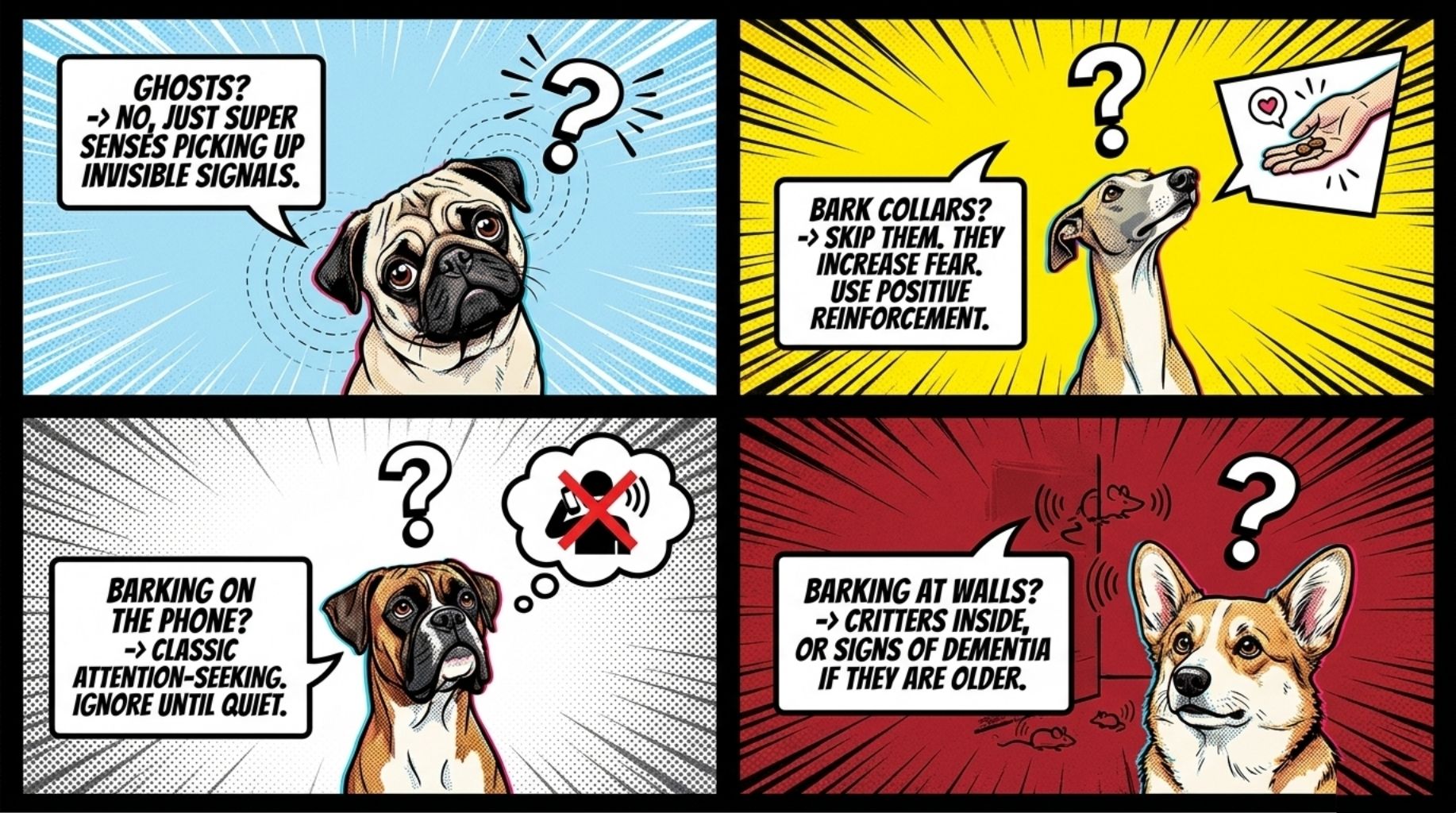
- Spotting medical causes: Sudden barking in senior dogs may signal dementia. Keep a log and visit the vet if your dog also paces, hides, or seems confused.
- Nighttime barking secrets: Dogs have built-in night vision and hear nocturnal animals outside. Close curtains and use a white noise machine for quieter nights.
- Ghosts or just senses? Science finds zero proof dogs see spirits. Their super-powered hearing and smell explain every single “ghost” bark you hear.
- What science says: A 2024 study proves our brains sense emotion in dog barks. Positive training reduces stress barking, even in loud shelters.
- To ignore or not? Ignore only attention-seeking barks. Never ignore fear, pain, or anxiety. Match your response to the real cause for a happy home.
Breaking the Focus to Stop Your Dog to Bark at Nothing
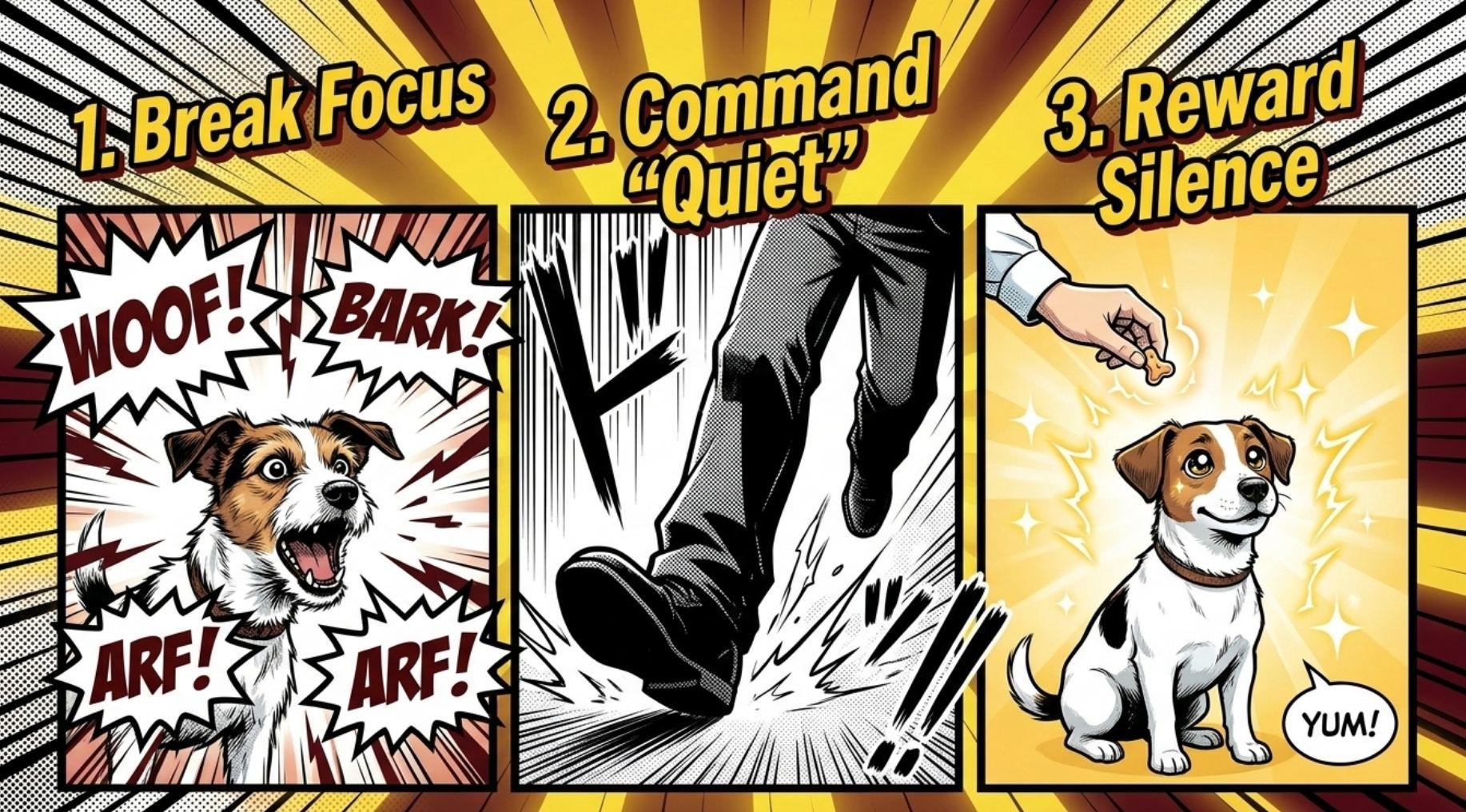
The first step in any calming technique is to break your dog’s concentration. Do not shout over them, as they will think you are barking along with them. Instead, calmly step in front of your dog to break their line of sight. This simple action tells them that you are now the focus of attention. Once you have their focus, you can move on to the next step of the training.
Using a ‘Quiet’ Command When Your Dog Bark at Nothing
Consistency is your best friend when it comes to dog training. Choose a simple word like “quiet” or “enough” and stick to it every single time. Wait for a tiny break in their barking, even if it’s just for a second. As soon as they pause, step in front of them, say your command, and immediately reward the silence. This technique pairs the act of being quiet with a positive reward.
How to Manage Your Dogs When They Bark at Nothing?
After you have their quiet attention, it is time to redirect them. Turn your dog away from whatever they were barking at and ask them to do a simple trick like “sit” or “touch“. Once they obey, give them a high-value treat. Always give the reward in the opposite direction of the trigger. This teaches your dog that disengaging from the “nothing” is way more rewarding than barking at it.
WHY DOES MY DOG BARK AT SEEMINGLY EMPTY SPACES?
It can feel a bit spooky when your dog stares intently at an empty corner or an open closet. You might start to wonder if they are seeing something you can’t. In most cases, the answer is that they are indeed sensing something, but it is not a ghost. It’s more likely a tiny mouse scurrying inside the wall or a faint electrical hum from a nearby device.
Why does my dog bark at seemingly empty spaces? The answer almost always lies in their incredible sensory superpowers. We live in a world of sights and sounds, but dogs live in a world of scent, high-frequency noise, and subtle motion.
The Science of Dog Hearing Explains Barking at Nothing
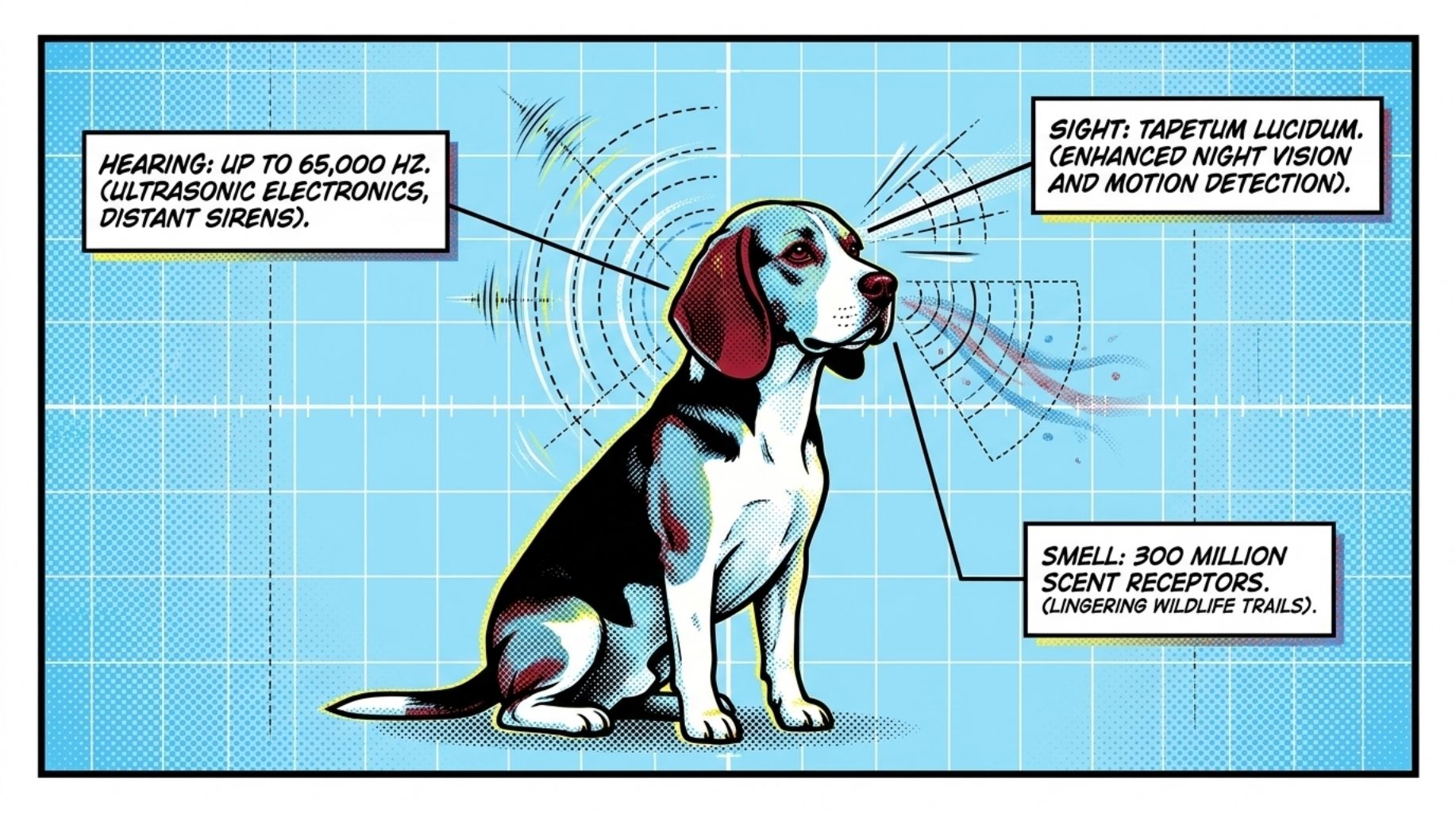
Dogs have an amazing ability to hear sounds that are completely out of our range. While humans top out at hearing around 20,000 Hz, dogs can pick up frequencies as high as 65,000 Hz. This means your “empty” living room might be filled with the ultrasonic squeaks of electronics, phone chargers, or even a distant siren. Your dog is not barking at nothing; they are simply reacting to a noisy world you cannot hear.
Super Smell: Why Your Dog Barks at Nothing Visible
Your dog’s nose is a powerful sensory tool that puts ours to shame. With up to 300 million scent receptors compared to our mere 5 million, they smell in a world of detail we can’t even imagine. They can detect the scent of a raccoon that passed through your yard hours ago. Why does my dog bark at seemingly empty spaces? Because those spaces hold a library of smells telling a story you simply cannot read.
Night Vision: Why Dogs See More When They Bark at Nothing?
Have you ever noticed that a lot of this “phantom” barking happens in the dark? Your dog has a secret weapon called the tapetum lucidum, a reflective layer in their eyes. This layer acts like a mirror, giving light a second chance to hit their retinas. This allows them to see perfectly well with only one-quarter of the light we need. That pitch-black backyard to you looks like a well-lit movie screen to them, full of motion and shapes you will never see.

WHAT ARE COMMON REASONS DOGS TO BARK AT NOTHING VISIBLE?
Most of the time, your dog is just doing their job as a member of your family. They are hardwired to alert you to anything new, strange, or potentially dangerous in their territory. This can range from the mailman across the street to a leaf blowing in a weird pattern.
Understanding these common triggers helps you stop worrying and start problem-solving. So, what are common reasons dogs bark at nothing visible? It usually comes down to one of a few simple explanations: boredom, fear, or pure instinct.
Boredom and Frustration Cause Dogs to Bark at Nothing
A tired dog is a quiet dog, and a bored dog will find their own entertainment. If your pup is not getting enough physical exercise and mental games, they will often bark just to release pent-up energy. This is a form of frustration vocalization. It might sound like they are barking at the wall, but they are really saying, “I’m bored, please play with me!” A long walk or a puzzle toy is usually the best cure for this.
Territorial Alerts: A Key Reason for Dogs To Bark at Nothing
Dogs are naturally territorial animals, and barking is their primary alarm system. Even if you don’t see anyone, your dog might detect a person or animal walking far down the street. They bark to make it clear that this area is occupied and protected. This bark is often loud, sharp, and authoritative. It is their way of saying, “Keep moving, this is my house.”
Fear and Anxiety as Triggers for Dogs to Bark at Nothing
Sometimes, a dog barks because they are genuinely scared or anxious. A single, unexpected noise can startle them and trigger a defensive reaction. This is especially common in rescue dogs or during loud events like thunderstorms or fireworks. Their barking is a self-soothing mechanism. They are trying to scare away the thing that has frightened them, even if that thing is just the sound of the washing machine spinning.
HOW TO TELL IF MY DOG’S BARKING AT NOTHING IS A MEDICAL ISSUE?
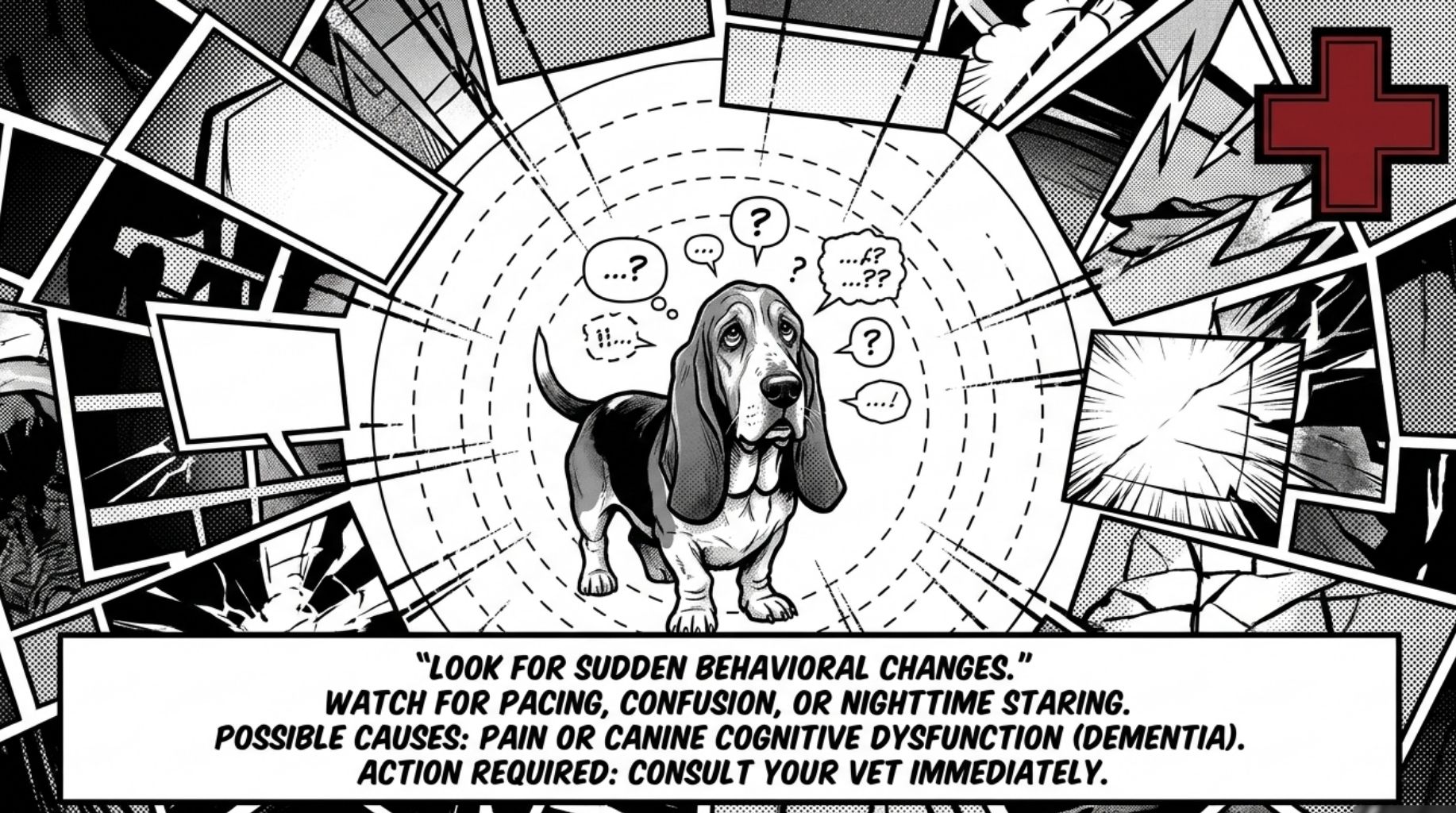
While most barking is behavioral, you should always keep an eye out for signs of a deeper problem. A sudden change in your dog’s behavior is always worth a closer look. If your quiet, calm dog suddenly starts barking excessively at empty spaces, it is time to consider a medical cause.
How to tell if my dog’s barking at nothing is a medical issue? You need to look for specific patterns like confusion, disorientation, or barking that happens at very specific times, like the middle of the night.
Cognitive Dysfunction in Senior Dogs to Bark at Nothing
As dogs age, they can develop a condition similar to human Alzheimer’s, called Canine Cognitive Dysfunction (CCD). One of the classic signs of CCD is a dog who seems lost or confused in their own home. They might stare at walls, get stuck in corners, or start barking in the middle of the night for no apparent reason. This “sundowner’s syndrome” is a common medical reason for why do dogs bark at nothing, especially in our beloved senior pets.
Pain and Sensory Loss as Causes of Barking at Nothing
Your dog may be barking because they are in pain. Conditions like dental disease, arthritis, or ear infections can make a dog irritable and more reactive to normal stimuli. Similarly, a dog losing their hearing or eyesight may bark more often because they are confused and anxious about their changing world. They can’t hear their own voice or see the familiar environment, leading to fear-based barking.
When to Visit the Vet for Your Dog Barking at Nothing?
Do not hesitate to schedule a vet visit if you notice the barking is getting worse or happening more frequently. It is also a good idea to get a checkup if the barking is accompanied by other changes, like a loss of appetite, pacing, or changes in sleep. A thorough veterinary exam can rule out or identify any painful conditions. This is the only way to ensure you are treating a medical problem and not just a behavioral quirk.
WHY IS MY DOG BARKING AT NOTHING DURING THE NIGHT?
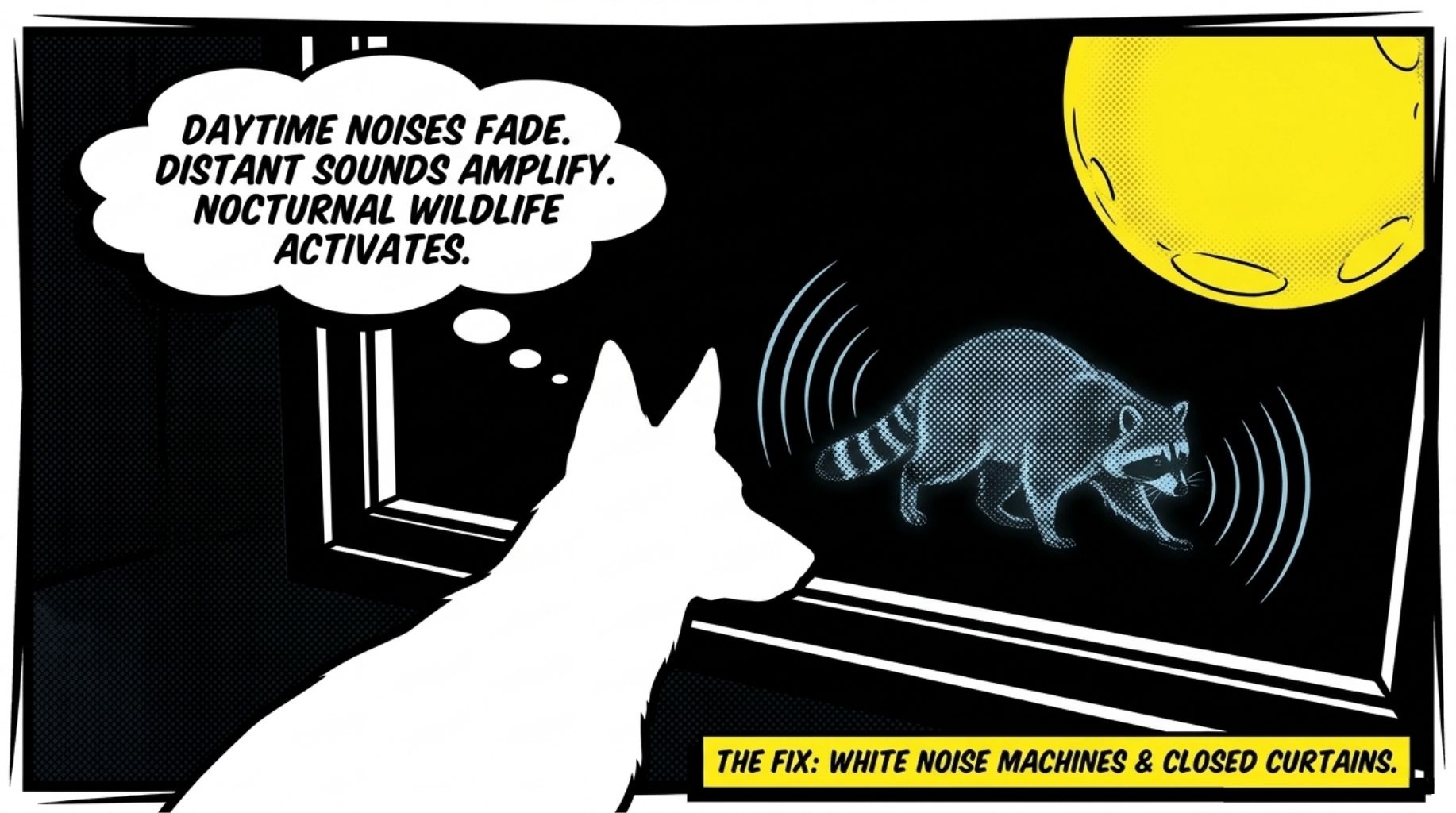
Nighttime barking can be the most frustrating kind because it disrupts your sleep. However, the world is actually a much louder place at night when all the daytime noise fades away. The quiet of the night allows your dog to hear sounds from much farther away, like other dogs barking in the distance.
Why is my dog barking at nothing during the night? It is often a simple case of heightened senses combined with a lack of daytime activity. A dog who sleeps all day will be wide awake and alert when the moon comes up.
Why Dogs Bark at Nothing Outside After Dark?
Your backyard transforms at night. Nocturnal animals like raccoons, possums, and stray cats become very active. Your dog can hear them, smell them, and even see them moving in the shadows long before you ever notice a thing. So, why do dogs bark at nothing outside when you look out the window? Because they are watching a whole wildlife documentary playing out in the dark, and you are missing the show.
Addressing Why Dogs Bark at Nothing for Hours
If your dog is barking for hours on end, it is no longer just an alert; it is a habit. They have likely learned that barking eventually gets a reaction from you, even if that reaction is just you yelling “quiet!” This is called attention-seeking behavior in dogs. So, why do dogs bark at nothing for hours? Because it works. The solution is to ensure they get plenty of exercise during the day and to completely ignore the barking at night, which we will talk about next.
Exploring Why Dogs Bark at Nothing in the Dark
The darkness can be a source of anxiety for some dogs, just like it is for some people. If your dog is barking because they are scared of the dark, you might notice a trembling or whining quality to their voice. Try leaving a gentle nightlight on for them or playing some soft, calming music. This can help reduce their fear and anxiety. It also masks some of those tiny, startling sounds that keep them on high alert all night long.
SHOULD I IGNORE MY DOG BARKING AT NOTHING?
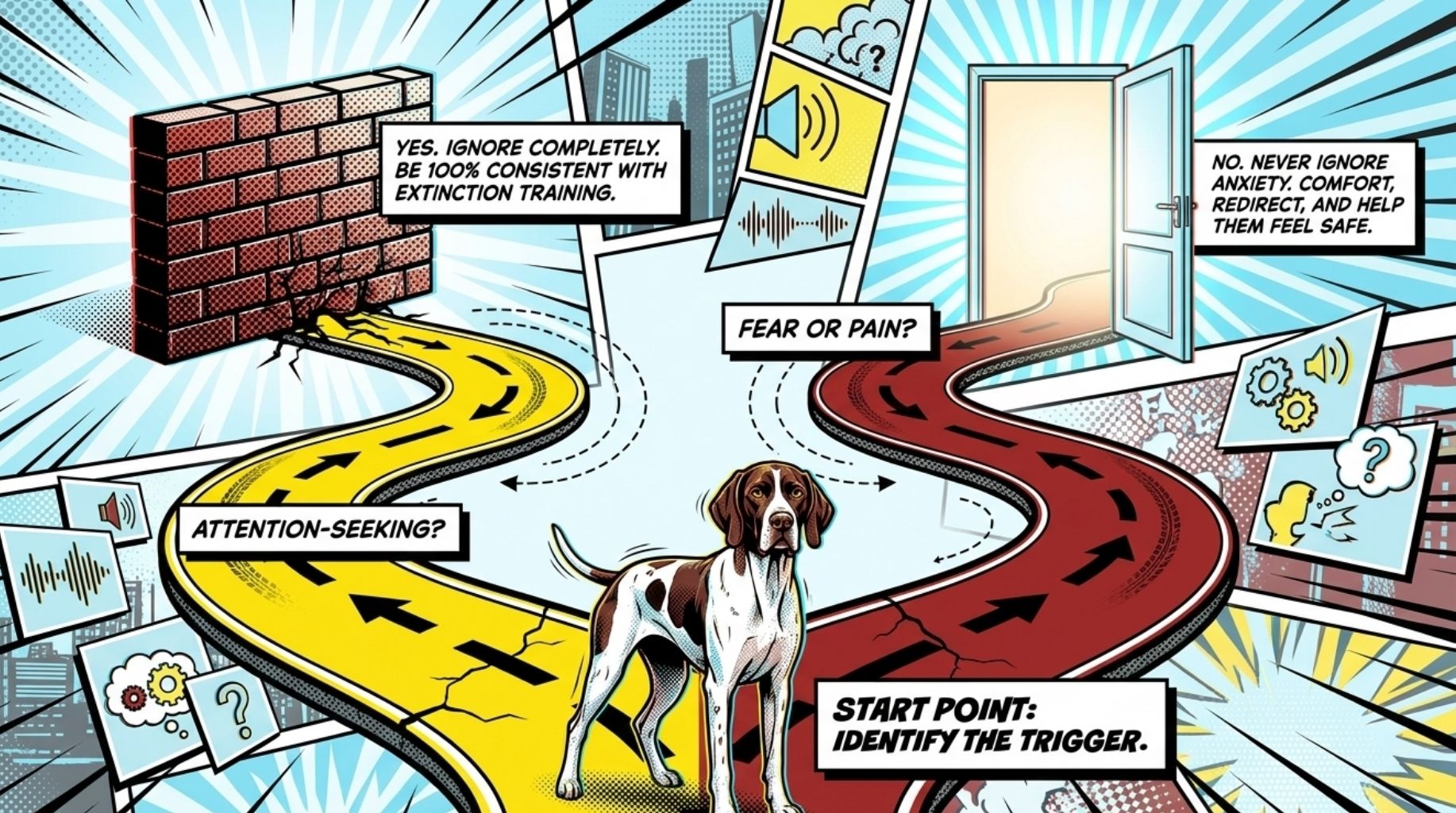
This is one of the most common questions from frustrated dog owners. The answer is not a simple yes or no because it depends entirely on why they are barking. If your dog is barking because they are bored or want your attention, then yes, ignoring them is the best strategy. However, you should never ignore a dog who is barking because they are in pain, scared, or anxious.
You have to be smart about how and when you apply the “ignore” technique to make it effective.
Will Dogs Stop Barking if You Ignore Them for Attention?
Yes, but only if you are consistent. This technique is known as “extinction.” When a dog learns that barking no longer gets them a treat, a walk, or even a shout, the behavior will eventually stop. Will dogs stop barking if you ignore them? Absolutely, but you must be 100% consistent. Everyone in the household has to follow the same rule. Do not make eye contact, do not touch them, and do not speak to them. Any attention, even negative attention, will reinforce the barking.
Why Ignoring Fear-Based Barking at Nothing Is a Bad Idea?
Imagine you are scared of something, and the person you trust most in the world just walks away. This is how your dog feels when you ignore their fear-based barking. If they are barking because of a storm or a loud noise, your ignoring them will only increase their anxiety and stress. In this case, you should offer comfort. Let them come to you, pet them gently, and help them feel safe. You will not “spoil” a scared dog by offering reassurance.
Best Training Techniques for Dog Barking at Unseen Stimuli
The best approach is to teach an alternative behavior. Train your dog to perform a task that is incompatible with barking, such as going to their bed or fetching a toy. You can also use “desensitization” to get them used to triggers. For example, if they bark at the sound of a doorbell, record the sound and play it at a very low volume while rewarding them for staying calm. The goal is to change their emotional response from “scary and new” to “normal and boring.”
THE LATEST RESEARCH ABOUT WHY DOGS BARK AT NOTHING
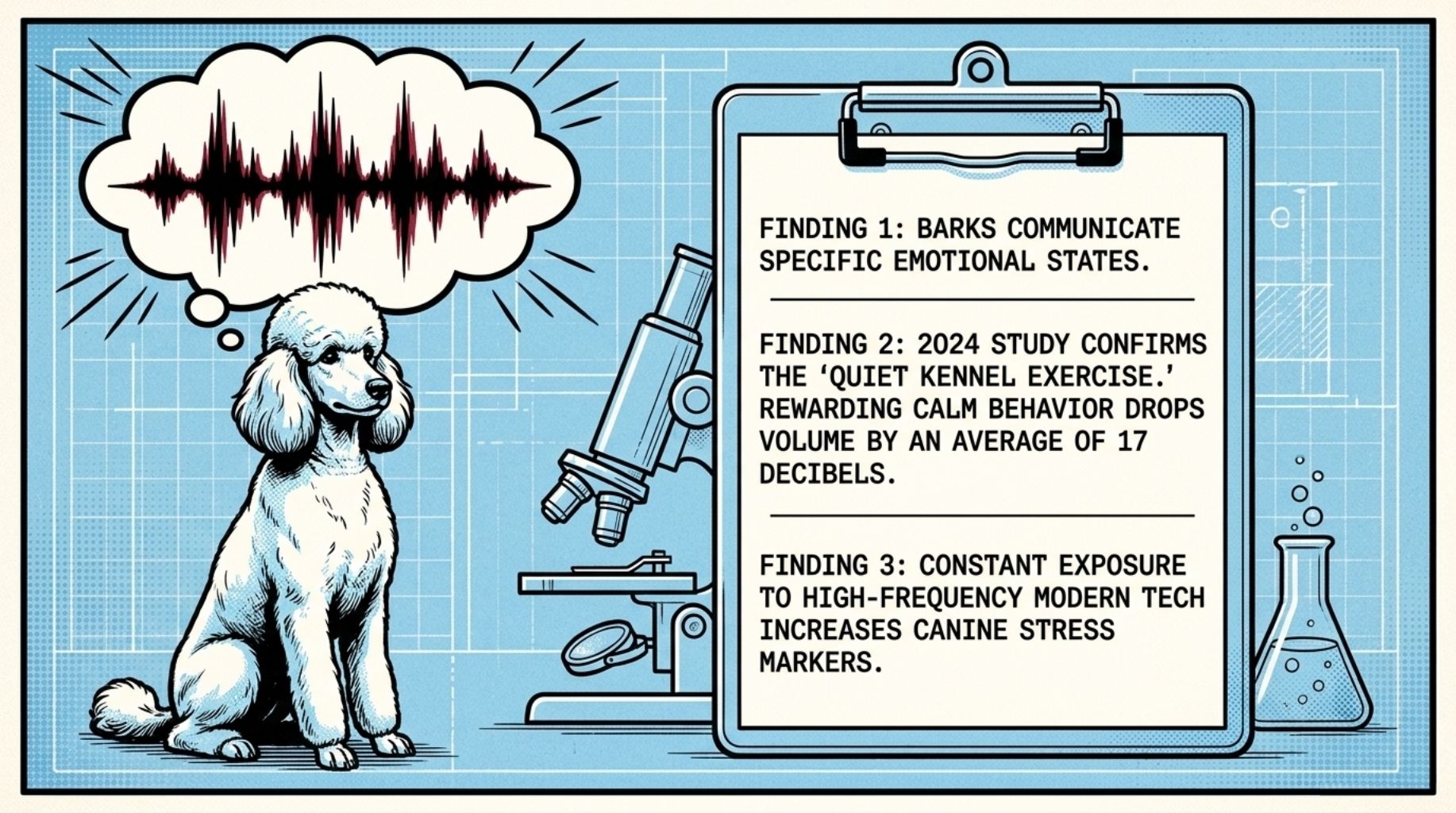
Science is finally starting to catch up with what dog owners have always suspected. Our dogs are communicating a great deal of information through their barks, and we are just learning how to listen. Recent studies show that barking is not just random noise; it is a complex form of communication used to convey specific emotional states.
This research confirms that when you ask why do dogs bark at nothing, the answer is rarely simple. It is a rich, nuanced form of language.
The Quiet Kennel Exercise: A Scientific Approach to Barking
A fascinating 2024 study published in the Journal of Veterinary Behavior tested a method called the “Quiet Kennel Exercise” (QKE). This method uses classical counter-conditioning to change a dog’s emotional response to their environment.
In a shelter setting, they encouraged people to toss treats to dogs who were being quiet.
The results were remarkable: for every one percent increase in people participating, the barking volume decreased by an average of 17 decibels. This proves that rewarding calm, quiet behavior is scientifically effective.
Dog Acoustic Communication: More Than Just a Bark
Another important area of research focuses on the acoustic structure of barks themselves. Studies have shown that dogs can actually identify the emotional state of another dog just by listening to its bark. They can tell the difference between a “stranger danger” bark and a “I’m lonely” howl.
This research supports the idea that when your dog barks at “nothing” at night, they might actually be communicating with a dog you cannot hear or see down the street.
High-Frequency Noise and Dog Stress Levels
Emerging science is also looking at the impact of our modern world on our dogs. Studies indicate that constant exposure to high-frequency background noise from things like LED lights and Wi-Fi routers can increase stress markers like cortisol in dogs.
This is a huge clue in solving the mystery of why do dogs bark at nothing. Your dog might not be barking at a ghost; they might be trying to tell you that the constant, high-pitched hum of your home electronics is making them incredibly anxious.
FREQUENTLY ASKED QUESTIONS
FINAL THOUGHTS
So, why do dogs bark at nothing? Most of the time, they aren’t barking at nothing at all. They’re hearing, smelling, or seeing things you simply cannot detect. Your dog’s super senses constantly scan for hidden sounds, old scents, and faint movements.

Sometimes they bark from stress, loneliness, or even a medical issue. The next time your pup stares at an empty corner and lets out a sudden bark, don’t get frustrated. Get curious instead. Watch their body language. Check for hidden triggers.

Rule out pain or anxiety. And remember, a little patience and training go a long way. Your dog isn’t trying to annoy you. Usually your dog is just trying to tell you something important about their world. Listen with an open mind, and you’ll both feel a whole lot better.