
Seeing your dog growl over food is scary. It hurts your feelings. This behavior is called food aggression in dogs. It is also known as resource guarding. Your dog is not being bad. It is acting from fear or instinct. It thinks it must protect its meal.
This guide will help you understand why. We will show you safe, vet-approved ways to fix it. You can help your dog feel safe. You can make meal times peaceful again. Let’s learn how to build trust instead of fear. A peaceful home is possible for every family. You just need the right knowledge and a gentle plan.
“Is your dog’s growl over the dinner bowl turning mealtime into a scary moment? You can fix it with kindness and the right knowledge.”
Quick Summary About FOOD AGGRESSION IN DOGS
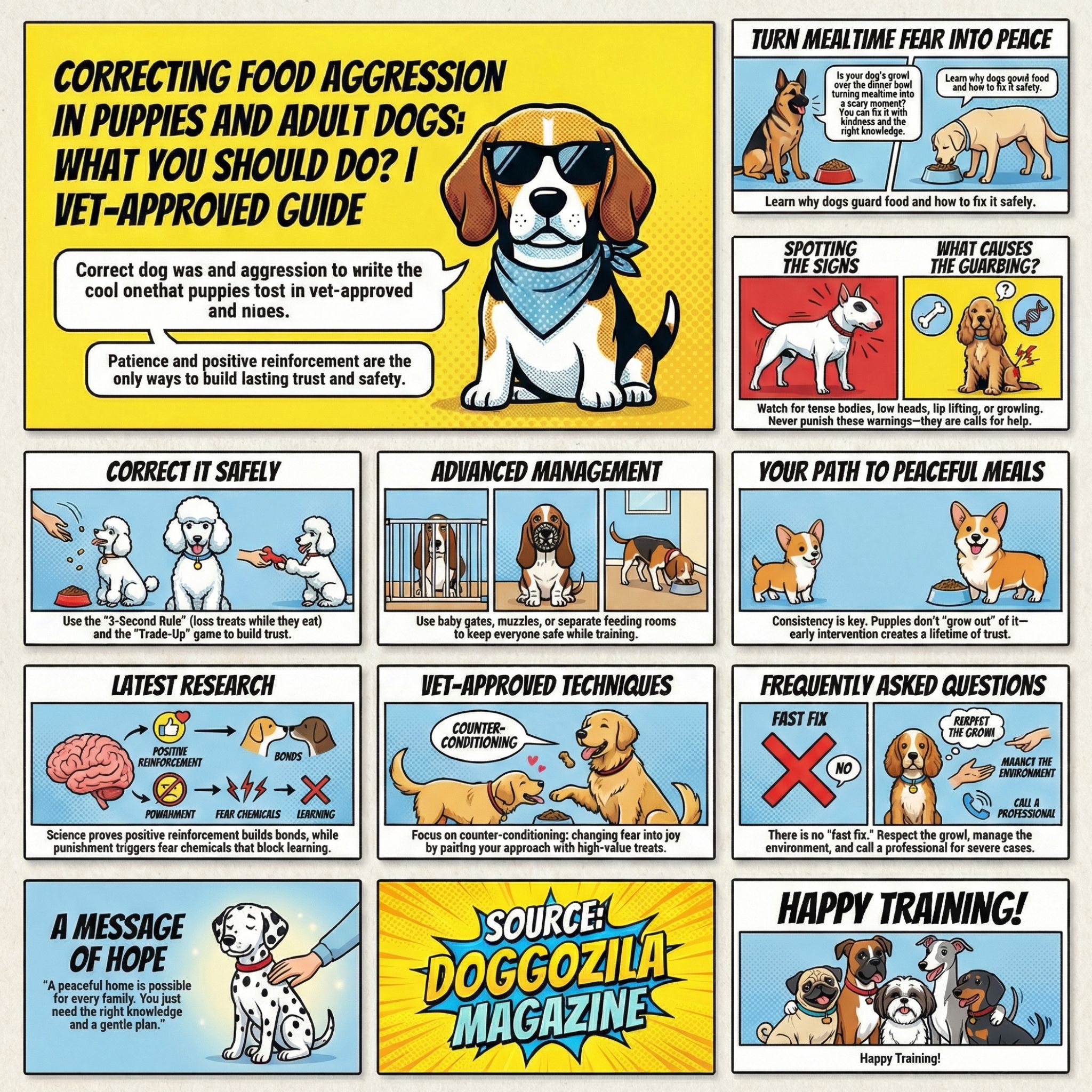
This guide explains food aggression in dogs. It shows you what causes this scary behavior. You will learn safe, step-by-step ways to fix it. We cover early warning signs and vet-approved training tips. The goal is to build trust and make meals peaceful again.
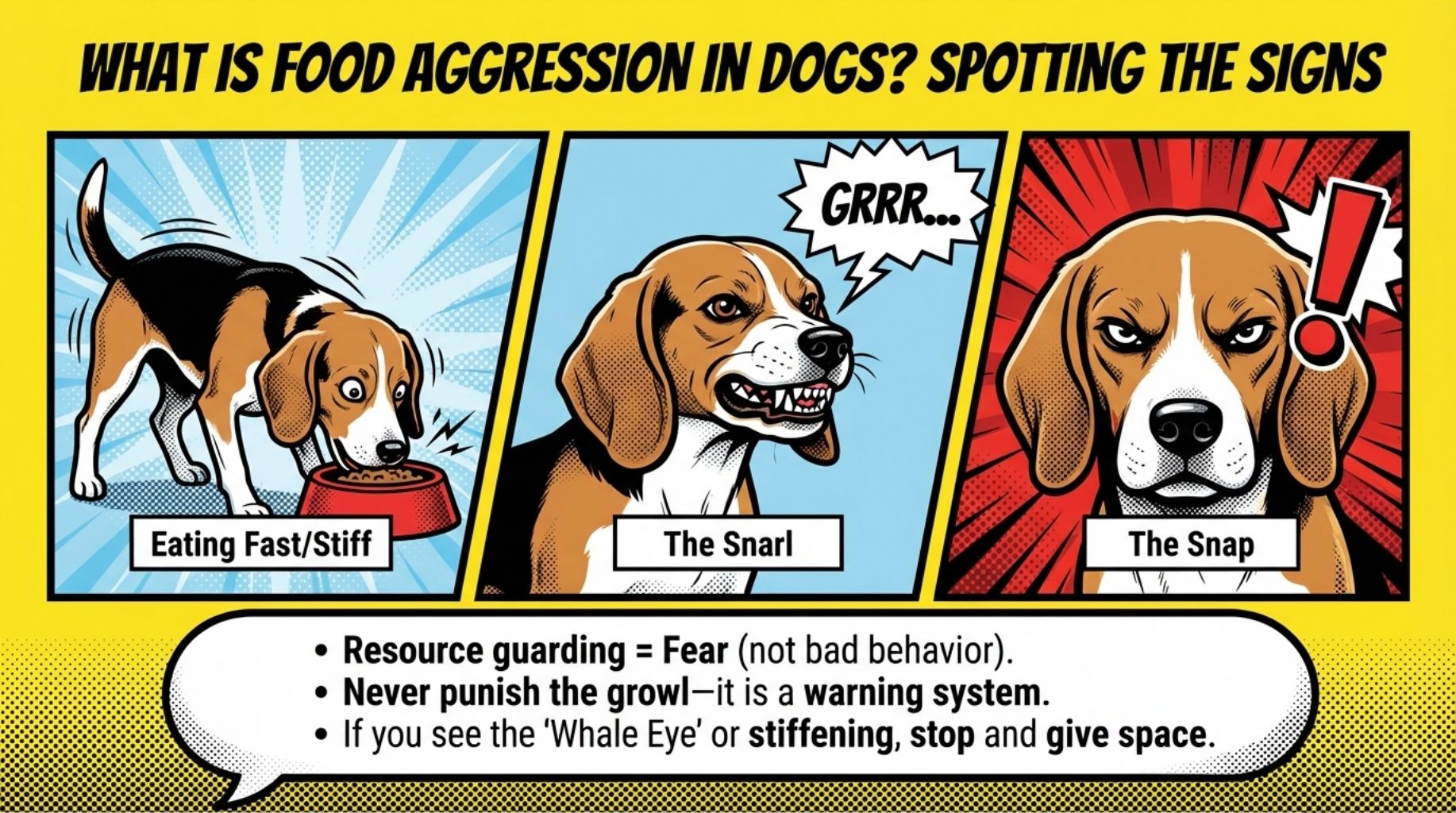
WHAT IS FOOD AGGRESSION IN DOGS? SPOTTING THE SIGNS
Food aggression in dogs is a form of resource guarding. Your dog sees its food as a valuable prize. It fears you will take it away. It uses threats to keep the food. This can start with a mild warning. It can get worse over time. Knowing the signs is your first step. You can see the problem early. Then you can start to help your dog. Do not ignore the warning signs. They tell you your dog feels insecure. Your dog is communicating its fear. Learning this language keeps everyone safer.
Studies suggest about 20% of shelter dogs show some form of this behavior. It can stem from past experiences, like competition for food as a puppy. Some breeds with strong guarding instincts might be more prone to it. Learn more about resource guarding in dogs!
How Do I Know if My Dog Has Food Aggression?
Watch your dog eat. Look for clear signals. Mild signs include eating faster when you are near. Your dog may tense its body. It might put its head low over the bowl. Moderate signs are more direct. Your dog may lift its lip. It might give a low growl. It could snap the air near your hand.
Severe signs are dangerous. Your dog may bite to defend the food. It might chase you away. Know these signs to stay safe. Always watch from a distance first. Never punish these warnings. Your dog is asking for space. Giving space is the first step to safety.
What Are Early Signs of Aggression in Dogs?
Guarding can start small. Your dog may guard other things too. Watch for signs with toys, bones, or beds. Your dog might stare at you. It may freeze over an item. It could pick up the item and walk away. A hard stare is a red flag. Listen for a low growl over a chew.
These early signs are a call for help. Your dog is saying it feels scared. See these signs as information. They tell you to start training now. Do not wait for it to get worse. Catching it early makes fixing it much easier. You can prevent a big problem.
What is a Red Flag Dog’s Behavior?
Some behaviors mean “stop immediately.” Never ignore a growl or snap. Do not test your dog by pushing closer. A fixed, hard stare is very serious. If your dog’s ears are pinned back, be careful. If it bares its teeth, back away. These red flags mean your dog is very stressed. It feels it must defend itself.
Your next move is very important. You must stay calm. Do not yell or punish. Punishment will make the fear and aggression much worse. Your dog will learn it was right to be scared of you. Always put safety first. Create distance to defuse the situation.
🔑 Key Points: Food aggression is a fear-based behavior where your dog guards its food, and recognizing the early signs, from tense body language to growls, is the crucial first step to getting help and keeping everyone safe.
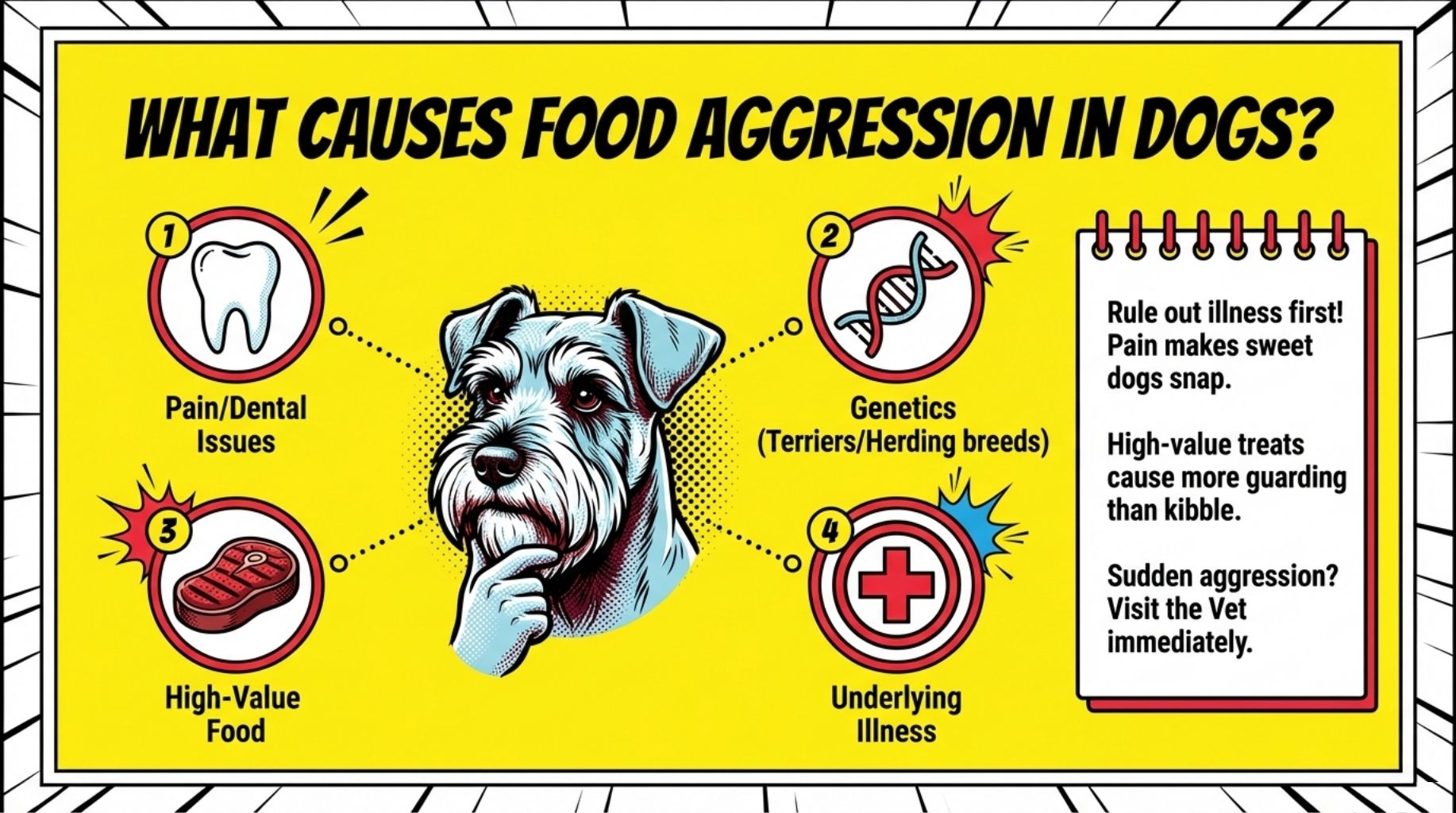
WHAT CAUSES FOOD AGGRESSION IN DOGS?
Why does this happen? There are many reasons. Sometimes it is in their genes. Sometimes life experiences teach them to guard. Your dog is not trying to be the boss. It is trying to feel safe. Understanding the cause helps you fix it. You can remove the fear. You can teach a new, calm behavior. Let’s look at the common causes of food aggression in dogs. Knowing why helps you know how to help. Every dog has its own story and its own fears.
Experts often point to two main causes for food aggression in dogs. The first is a genetic predisposition. The second cause is learned behavior.
Why Did My Dog Suddenly Get Food Aggressive?
A sudden change needs a vet visit. New aggression can mean your dog is in pain. Dental pain is a common cause. A sore mouth makes eating painful. Your dog may think you will cause more pain. Other illnesses can cause it too. Brain tumors or thyroid problems can change behavior.
Sudden aggression is a medical red flag. Always rule out health problems first. Your veterinarian is your first stop. They can check for pain or sickness. Do not try training before a vet check. Pain can make the sweetest dog snap. Fixing the pain can fix the behavior.
What Foods Can Cause Aggression in Dogs?
Food does not usually cause aggression. But diet can affect mood. Low-quality food with bad fillers can cause discomfort. Food allergies can make a dog itchy and grumpy. A diet too high in protein might hype up some dogs. The biggest issue is high-value treats.
Things like real meat or cheese are super valuable. A dog might guard these more than kibble. Watch what you feed your dog. A balanced, vet-recommended diet is best. It keeps your dog’s body and mind healthy. Good nutrition supports a calm mind. Talk to your vet about the best food for your dog.
Which Dog Breeds Are Food Aggressive?
Any dog can have food aggression. It is not just for certain breeds. But some breeds are more prone to guarding. Terriers were bred to hunt and catch prey. They can be possessive. Herding dogs can be protective. Some guardian breeds are more alert to threats.
However, any mixed-breed dog can also guard. Do not blame the breed. Look at the individual dog. A loving home and good training help any breed. Focus on your dog’s behavior, not its breed label. Every dog is an individual with its own personality and needs.
🔑 Key Points: This behavior is caused by fear, instinct, or even sudden pain, and it’s vital to rule out medical issues with a vet first, as treating the pain can often resolve the aggression.
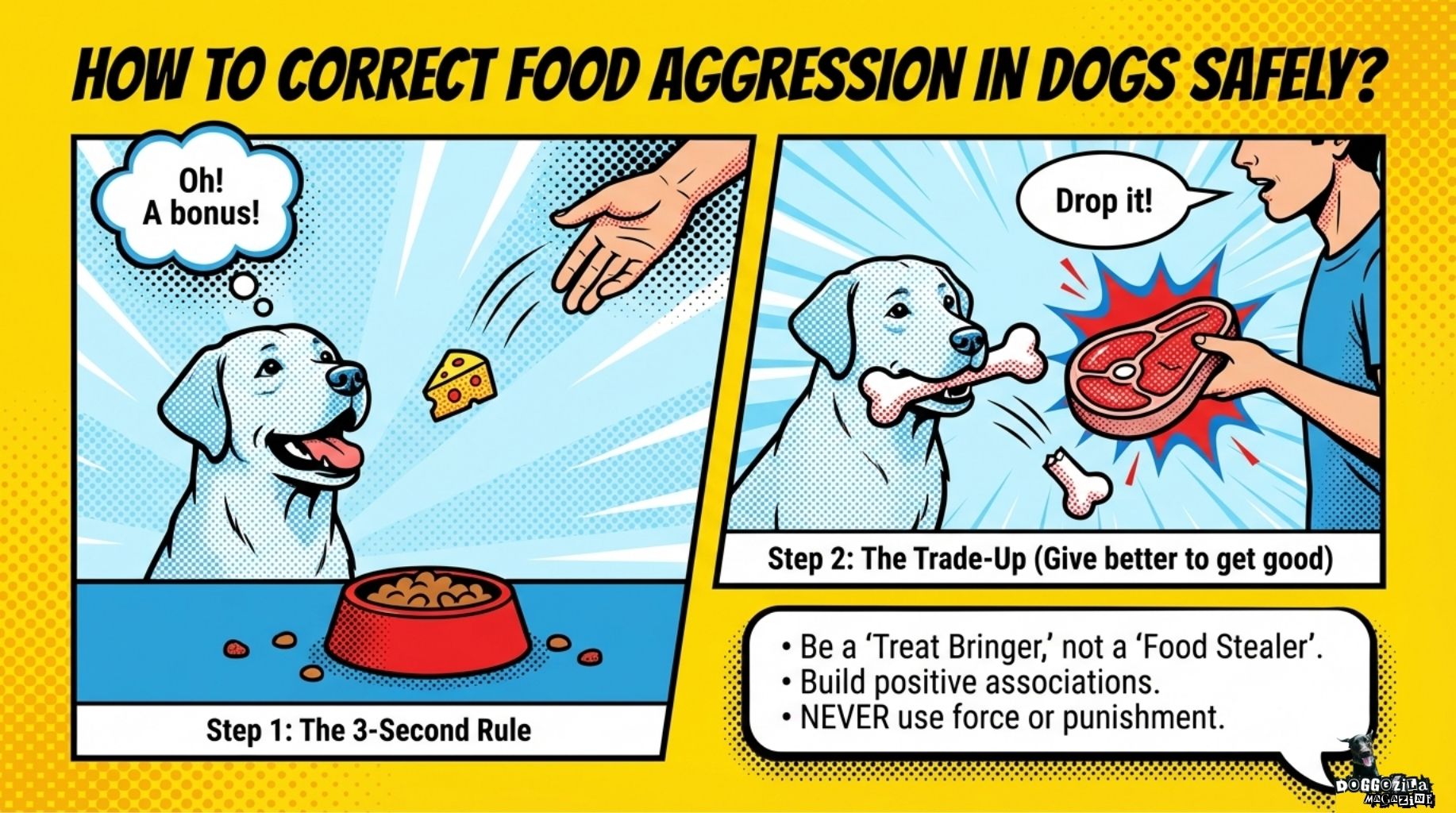
HOW TO CORRECT FOOD AGGRESSION IN DOGS SAFELY?
Fixing this problem takes patience. You must go slow. You will change your dog’s feelings about your presence. The goal is to make your hand a predictor of good things. Not a predictor of food loss. Never use punishment or force. This will make the aggression worse. Follow these vet-approved steps for correcting food aggression in dogs. Go at your dog’s pace, not yours. Small wins every day lead to big changes over time. Consistency is your best friend in this training.
Create a culture of safety and trust around food from the start. Your dog should learn that people near their bowl are wonderful. People bring good things, they do not take good things away. This requires a consistent, gentle approach.
What is the 3 Second Rule for Dogs?
This is a simple training start. It builds positive association. Toss a super tasty treat near your dog’s bowl. Do this while it is eating. Then immediately walk away. The treat should be better than the bowl food. Use chicken or cheese. You are not taking anything. You are adding something wonderful.
Your dog learns: “A person near my bowl means I get a bonus!”
Start from a distance where your dog is calm. Just do this for 3 seconds. Repeat many times. This is the foundation of trust. It changes the story in your dog’s mind. People become treat bringers, not food stealers.
The “Trade-Up” Game for Food Aggression in Dogs
This game teaches your dog to give up items happily. It works for toys and food. Offer your dog a lower-value item. Let it take it. Then show a much higher-value treat. Say “Drop it” or “Trade.” When your dog drops the first item, give the great treat. Then give the original item back.
This is crucial. Your dog learns that giving things to you results in getting them back, plus a bonus. It removes the fear of loss. Practice this daily with different items. Always make the trade feel like a win for your dog. This game builds incredible trust. It teaches your dog that good things come from you.
Check Out These Step-By-Step Guides About The “Drop it” or “Trade” Cues:
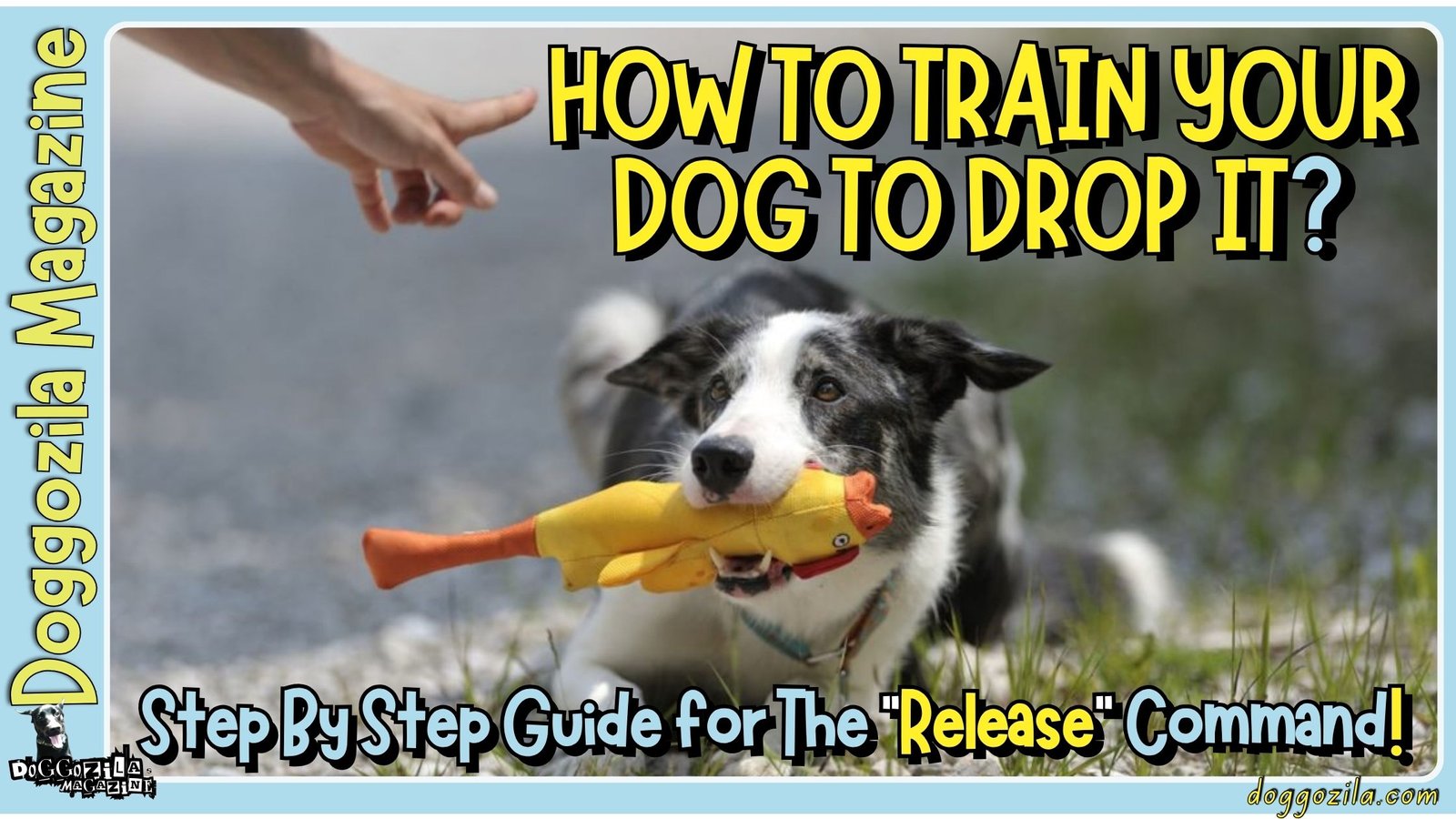
Learning how to train your dog to drop it turns those tense moments into opportunities for deeper bonds, transforming chaos into clear communication. Beyond emergency prevention like snatching away toxic items this release cue underpins smooth games of fetch, tug-of-war, and everyday resource sharing.
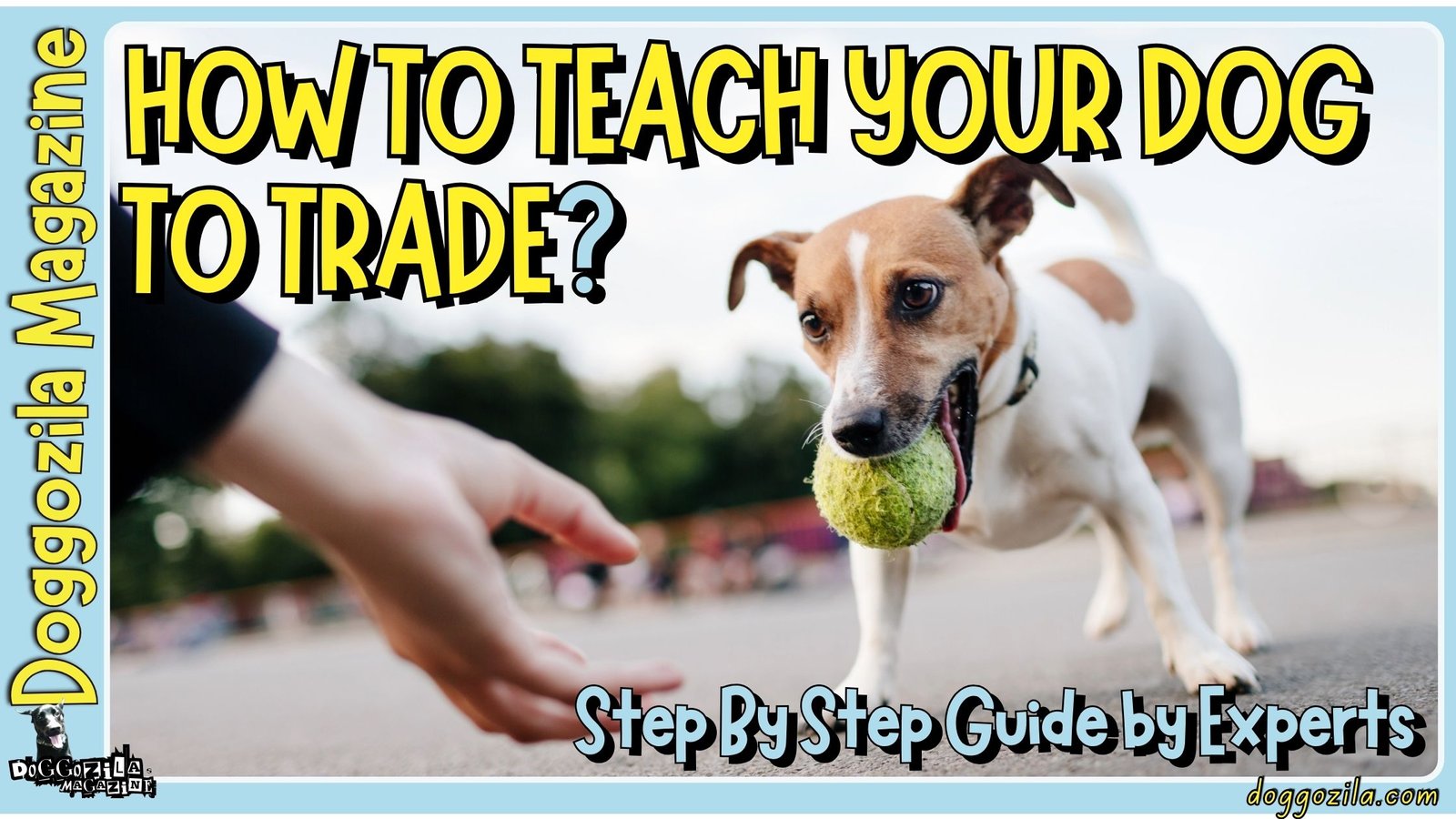
Understanding how to teach your dog to trade is one of the most valuable skills you can add to your training toolkit. It’s not just about getting a toy back without a chase, but it’s about building trust, preventing resource guarding, and turning potential conflicts into moments of cooperation.
Creating a Peaceful Feeding Routine for Food Aggression in Dogs
Structure reduces anxiety. Feed your dog at the same times each day. Put the bowl down in a quiet, safe spot. Do not crowd your dog. Let it eat in peace. For severe cases, hand-feed all meals for a while. This rebuilds your relationship. Your dog sees you as the source of food, not a threat.
You can also use food-dispensing toys. They make eating fun and slow. A calm routine tells your dog food is plentiful and predictable. There is no need to panic and guard it anymore. Consistency tells your dog what to expect. Predictability makes the world feel safer.
🔑 Key Points: Fixing food aggression requires slow, positive training like the “3 Second Rule” to build trust, and you must never use punishment, as it will make your dog’s fear and aggression much worse.
ADVANCED MANAGEMENT FOR FOOD AGGRESSION IN DOGS
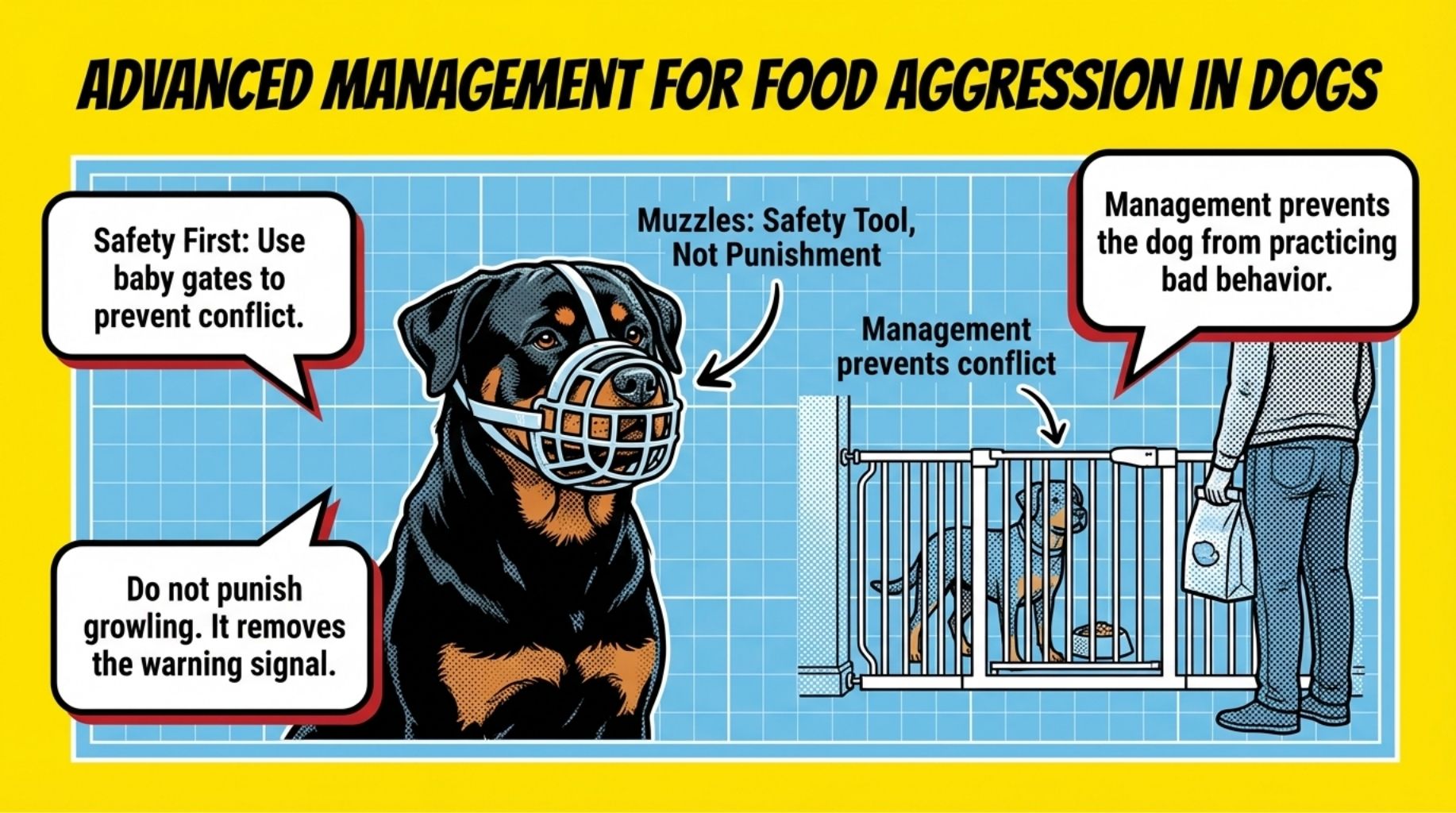
Some cases are more serious. You may need extra help. Management keeps everyone safe while you train. It prevents your dog from practicing the bad behavior. Use tools like baby gates and leashes. Create a safe plan for your home. This is key for fixing severe food aggression in dogs. Management is not giving up. It is a smart strategy for success. It sets your dog up to learn without failing.
Management keeps everyone safe. It also prevents your dog from practicing growling or snapping, which makes the habit stronger. Good management is not giving up. It is a responsible strategy that supports your training.
Should I Punish My Dog for Food Aggression?
No. Never punish a growl. A growl is a warning. It says, “I am scared, please go away.” If you punish the growl, you remove the warning. Next time, your dog might just bite. Punishment increases fear and anxiety. It destroys your dog’s trust in you. It makes the aggression worse.
Always use positive, reward-based methods. You want to change the emotion behind the behavior. Remember that you cannot punish fear away. You can only build confidence and safety through kindness. Punishment teaches your dog to hide its warning signs. That makes a dog much more dangerous.
Using Safety Tools for Severe Food Aggression in Dogs
Safety first. For dogs that have bitten, use a basket muzzle during training. A muzzle lets your dog pant and take treats. It keeps hands safe. Use a leash in the house to guide your dog without grabbing. Feed your dog in a separate room with a baby gate. This gives it space.
These tools are not punishments. They are a temporary safety plan. They let you work on the problem without risk. As your dog improves, you can slowly remove these tools. A professional trainer can show you how to use them properly. Tools are a bridge to a better future. They help you train with confidence.
Can Medication Help with Food Aggression in Dogs?
Sometimes, yes. For extreme fear or anxiety, medication can help. It is prescribed by a veterinarian. It is not a cure by itself. Medicine lowers the anxiety to a level where training can work. Think of it like lowering the volume of fear. This lets your dog learn new, calm behaviors.
Talk to your vet or a veterinary behaviorist. They can decide if medication is a good part of your dog’s treatment plan. It is often used with a full behavior modification program. It is a tool for healing, not a simple fix. Medication can be a kind and effective part of care.
🔑 Key Points: For severe cases, tools like muzzles and baby gates are temporary safety measures, not punishments, and they manage risk while you train, with medication sometimes being a helpful tool under a vet’s guidance.
LATEST RESEARCH ON FOOD AGGRESSION IN DOGS
Science helps us understand this problem better. New studies look at dog brains and behavior. They give us better ways to help. Research supports the kind, positive methods. It shows why old, punishment-based ways fail.
Let’s look at the science of food aggression in dogs. Knowledge gives us power to help our pets. Modern science guides us toward kinder, more effective solutions.
The Link Between Pain and Sudden Food Aggression in Dogs
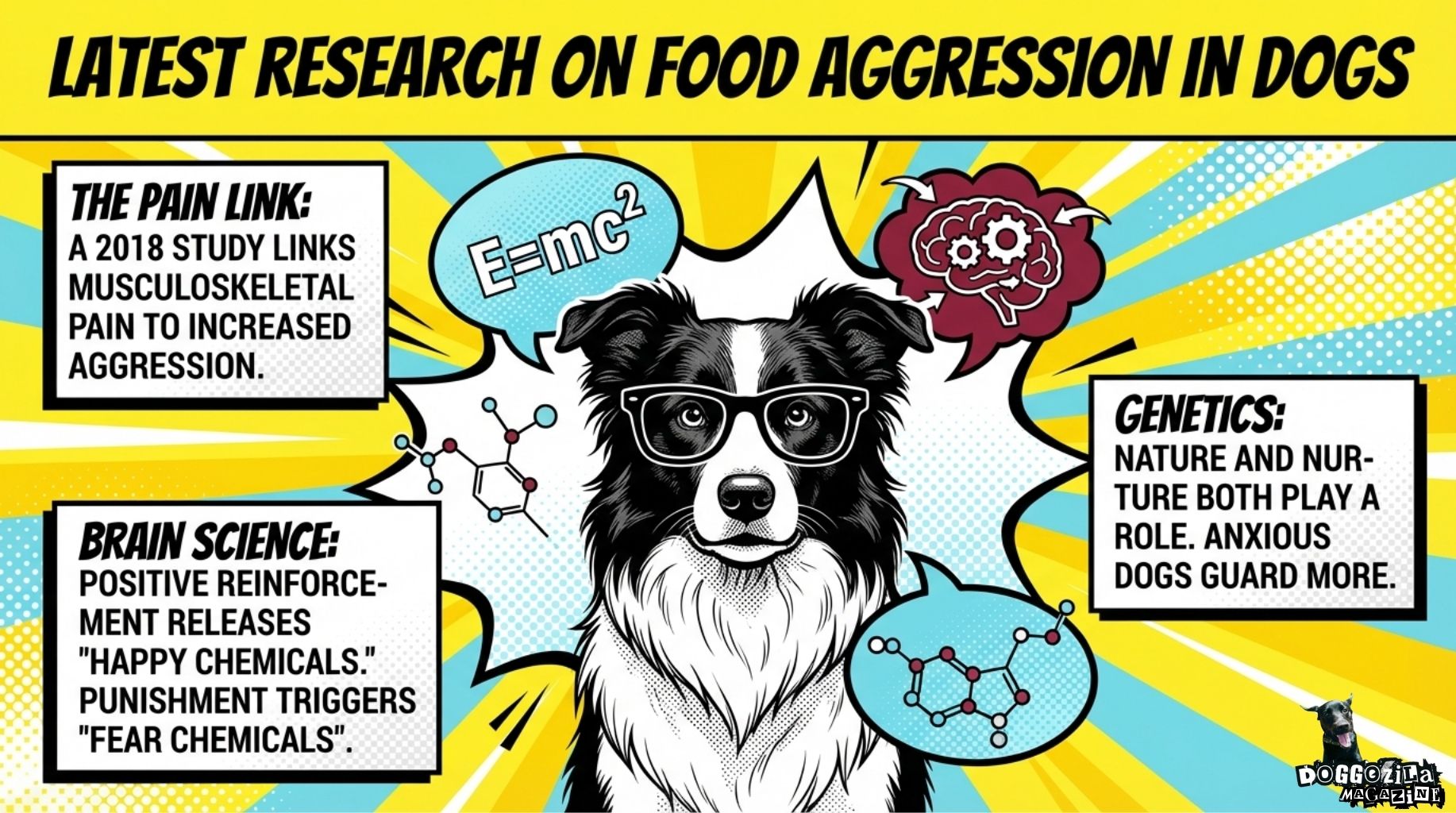
New studies confirm the pain-aggression link. A dog in pain is more likely to guard. A 2018 study found dogs with musculoskeletal pain showed more aggression. This includes guarding food and space. Pain makes a dog irritable and defensive. It is a biological response.
This research proves why a vet check is so important. Treating the pain can often reduce the aggression significantly. Always consider pain first when behavior changes suddenly. Your dog cannot tell you it hurts. It can only act out. Pain changes how a dog sees the world. Relieving pain can change its behavior.
What Genetics Research Says About Food Aggression in Dogs?
Is guarding inherited? Research suggests it can be. Some dogs are naturally more anxious or vigilant. This can make them quicker to guard. However, environment plays a huge role. A genetic tendency is not a destiny. Good early socialization matters.
Positive training can manage a genetic predisposition. The research shows us we should be gentle with these dogs. They are not being stubborn. Their nerves are wired to be more alert. We must help them feel safe in our world. Training builds their confidence. Nature and nurture work together to shape behavior.
The Science Behind Positive Reinforcement for Food Aggression in Dogs
Brain science supports reward-based training. Studies using MRI scans show positive methods are better. They build trust and lower stress. Punishment floods a dog’s brain with fear chemicals. This shuts down learning. The dog only learns to avoid punishment. It does not learn to feel safe.
Rewards release positive chemicals. This helps a dog learn and bond. For food aggression in dogs, this science is vital. It proves that adding good things (treats) changes the emotion from fear to happiness. This is the only lasting fix. Happy brains learn better. Scared brains just survive.
The Benji Case: How Daycare Changed a Dog’s Behavior?
Real-life stories help us understand. Consider Benji, a friendly Collie mix. He had no food issues until he started going to a large daycare. This facility used communal food bowls for up to 25 dogs. Benji learned to compete in this stressful environment. He started guarding his food at home and later aggressed toward other dogs near food. His case shows how environment shapes behavior.
A place meant for fun created lasting anxiety around resources. The solution involved a complete change. His family found a new boarding facility that fed dogs separately. They also set up a peaceful, solitary feeding area at home. This story highlights a key point. Sometimes, managing the environment is the most effective and kindest solution.
🔑 Key Points: Modern science confirms that pain can cause sudden aggression and strongly supports positive reinforcement training, as it changes your dog’s emotional state instead of just suppressing warning signs.
YOUR PATH TO PEACEFUL MEALS
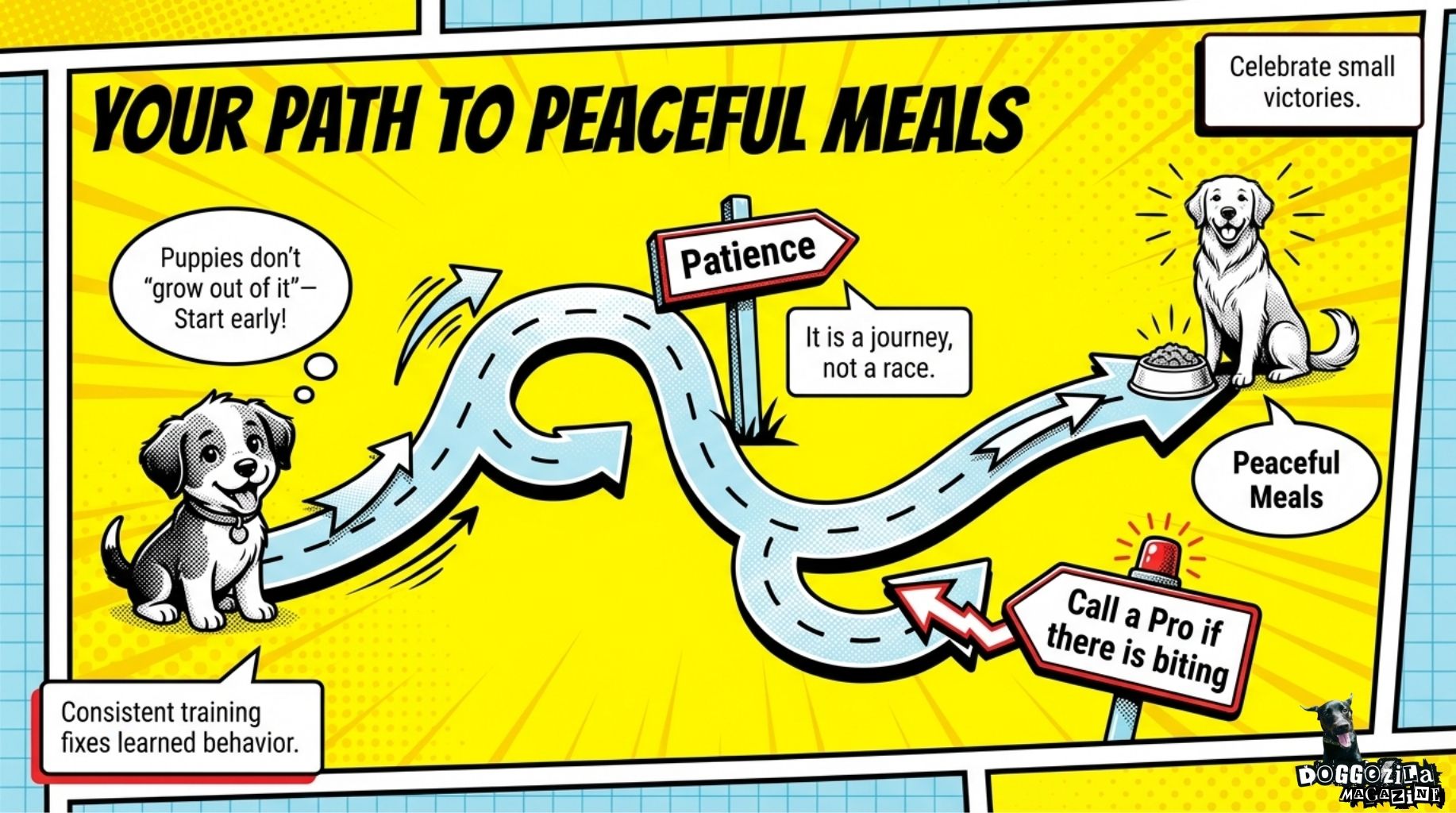
Fixing food aggression is a journey. It requires consistency and empathy. There will be good days and hard days. Do not give up. Your dog can learn to feel safe. You are its guide. Use the knowledge and steps in this guide. You can turn mealtime fear into calm. You can rebuild trust. The bond with your dog will be stronger.
Remember, you are not alone. Seek help from professionals when needed. A peaceful home is possible. Your patience will be rewarded with a happier dog. Every step forward is a victory for your family.
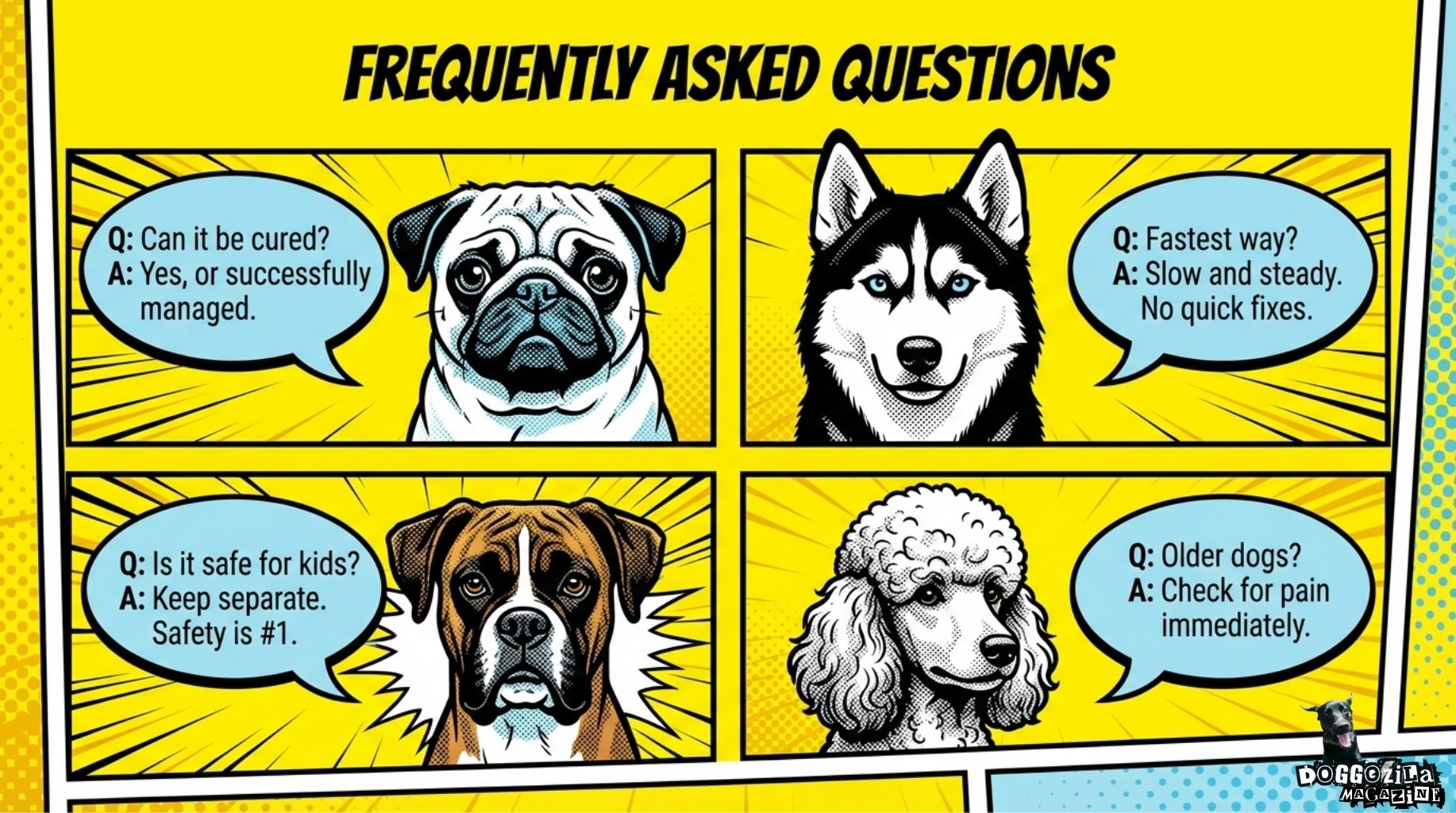
Can Food Aggression Be Trained Out of Dogs?
Yes, in most cases it can be greatly improved. “Cured” might not be the right word. The goal is management and a new emotional response. Many dogs learn to be completely comfortable. Some may always need careful management. The key is starting early.
Be patient and use positive methods. Severe cases need professional help. Do not expect overnight change. Celebrate small victories. Every calm meal is a step toward a happier dog. You are changing a deep-seated fear. That takes time and love. Progress is the goal, not perfection.
Will Puppies Grow Out of Food Aggression?
No. Puppies will not just grow out of it. It will get worse if ignored. Guarding in a puppy is a serious sign. You must address it gently right away. A puppy’s brain is still learning. It is the perfect time to teach good habits. Use the “trade-up” game. Hand-feed your puppy often.
Make every human interaction around food positive. This sets up a lifetime of good behavior. Do not wait, hoping it will go away. Early intervention is the kindest and most effective path. You are building a foundation of trust. A puppy can learn that sharing is safe and rewarding.
When to Call a Professional for Food Aggression in Dogs?
Call for help if you see biting. Especially if you are scared of your dog. Call if you see no progress after a few weeks. A certified professional dog trainer (CPDT) can help. Look for one who uses positive methods. For severe cases, see a veterinary behaviorist.
They are vets with extra training in behavior. They can rule out medical issues and make a full plan. There is no shame in asking for help. It is the responsible and loving thing to do. A professional keeps everyone safe and speeds up progress. They can see things you might miss. Their expertise is a gift to your family.
🔑 Key Points: Correcting food aggression is a journey of patience that strengthens your bond, and seeking help from a professional trainer or veterinary behaviorist is a responsible choice for severe cases.
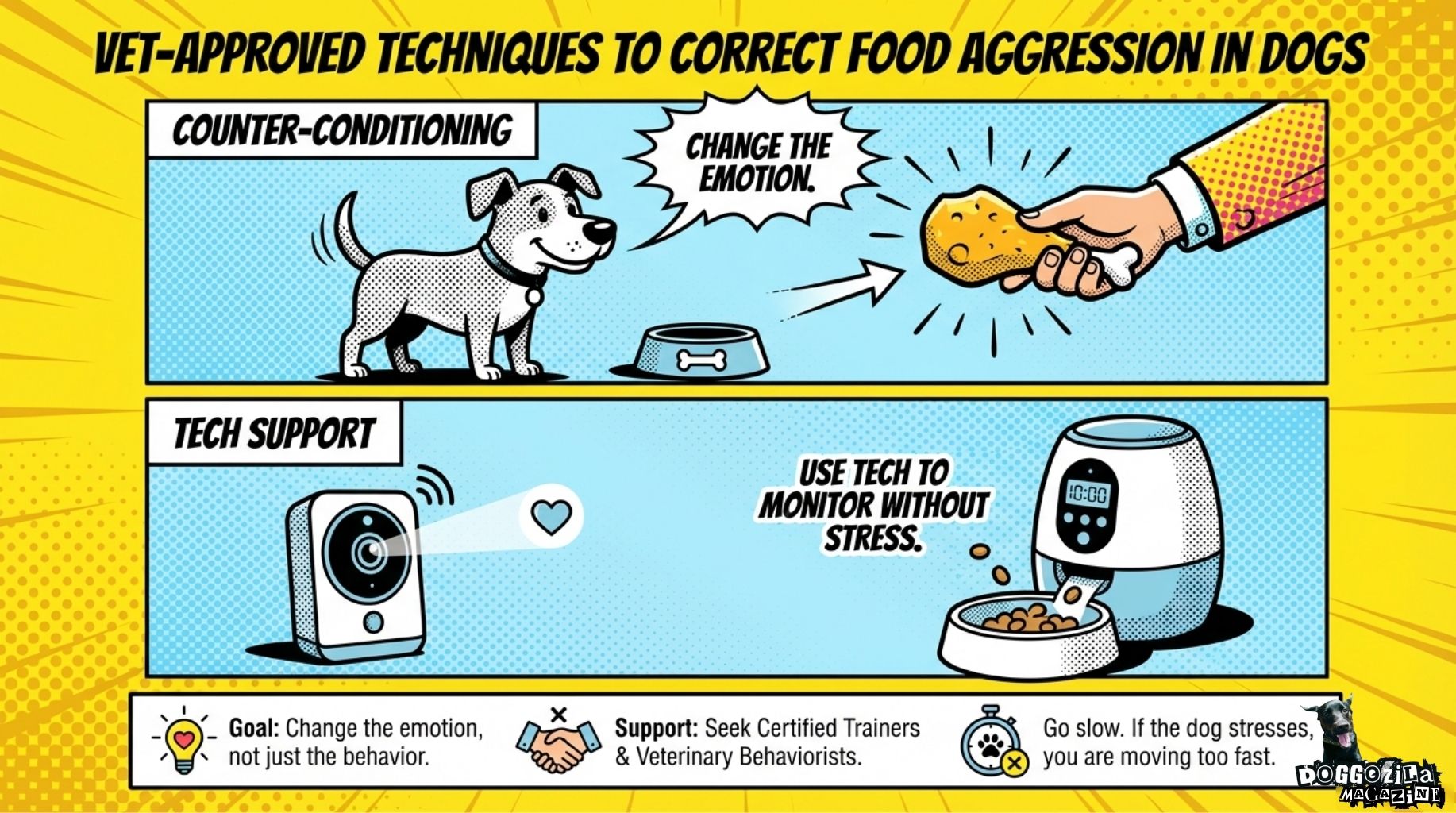
VET-APPROVED TECHNIQUES TO CORRECT FOOD AGGRESSION IN DOGS
If your dog shows signs of food aggression, you can help them. Use safe and effective training methods. The goal is to change how your dog feels. You want your dog to think a person near its food is good. This method is called counter-conditioning.
You must go very slowly. Take tiny steps forward. Never force your dog to be scared. If your dog gets stressed, you went too fast. Go back to an easier step. Be patient. Rushing will make the problem worse. Always keep everyone safe. This is extra important in homes with children.
Finding The Right Expert For Food Aggression In Dogs
You might need professional help. Find a certified trainer. Choose one who uses positive reinforcement. They should reward good behavior. Avoid trainers who promise a fast fix. Be wary of those who talk about “dominance.” A veterinary behaviorist is a great choice.
They are vets with special behavior training. You can ask your regular vet for a name. A good expert will ask many questions about your dog. They will watch your dog’s behavior. Then they will make a custom plan just for you. They are there to support you and your dog.
What To Expect From A Professional Behavior Consultation?
The professional will need to know your dog’s story. They will ask about your dog’s life and routine. Then they will ask exactly what happens during guarding. They might watch your dog eat from a distance. They will create a plan with two parts. The first part is management, like a quiet place to eat.
The second part is training exercises. They will teach you how to do each exercise safely. Sometimes, they may talk about medicine for anxiety. Medicine can help lower fear. It makes training easier. Think of it like a life jacket for learning to swim.
How Modern Tech Is Helping Solve Canine Behavior Issues?
New technology offers great tools to help. Pet cameras are very useful. You can watch your dog eat from another room. This prevents stress. Automatic feeders are good too. They give food on a set schedule. This creates a predictable routine for your dog.
There are also apps for private dog parks. These let your dog play safely alone. Tech tools like these support your training plan. They are part of modern, smart dog care. They focus on your dog’s emotional well-being.
Final Thoughts
Fixing food aggression or resource guarding in dogs takes time and understanding. See the world from your dog’s scared point of view. Use positive training to build trust. Make your home a safe place. Your dog can learn that its food is always safe.
You will feel more relaxed at mealtimes. Progress might be slow, and that’s okay. Every calm meal is a big success. Celebrate these small wins. You and your dog are building a stronger, happier bond together. Take it one step, and one bite, at a time.
🔑 Key Points: The core fix is counter-conditioning, changing your dog’s emotional response by pairing your approach with amazing treats in tiny, gradual steps.
FREQUENTLY ASKED QUESTIONS
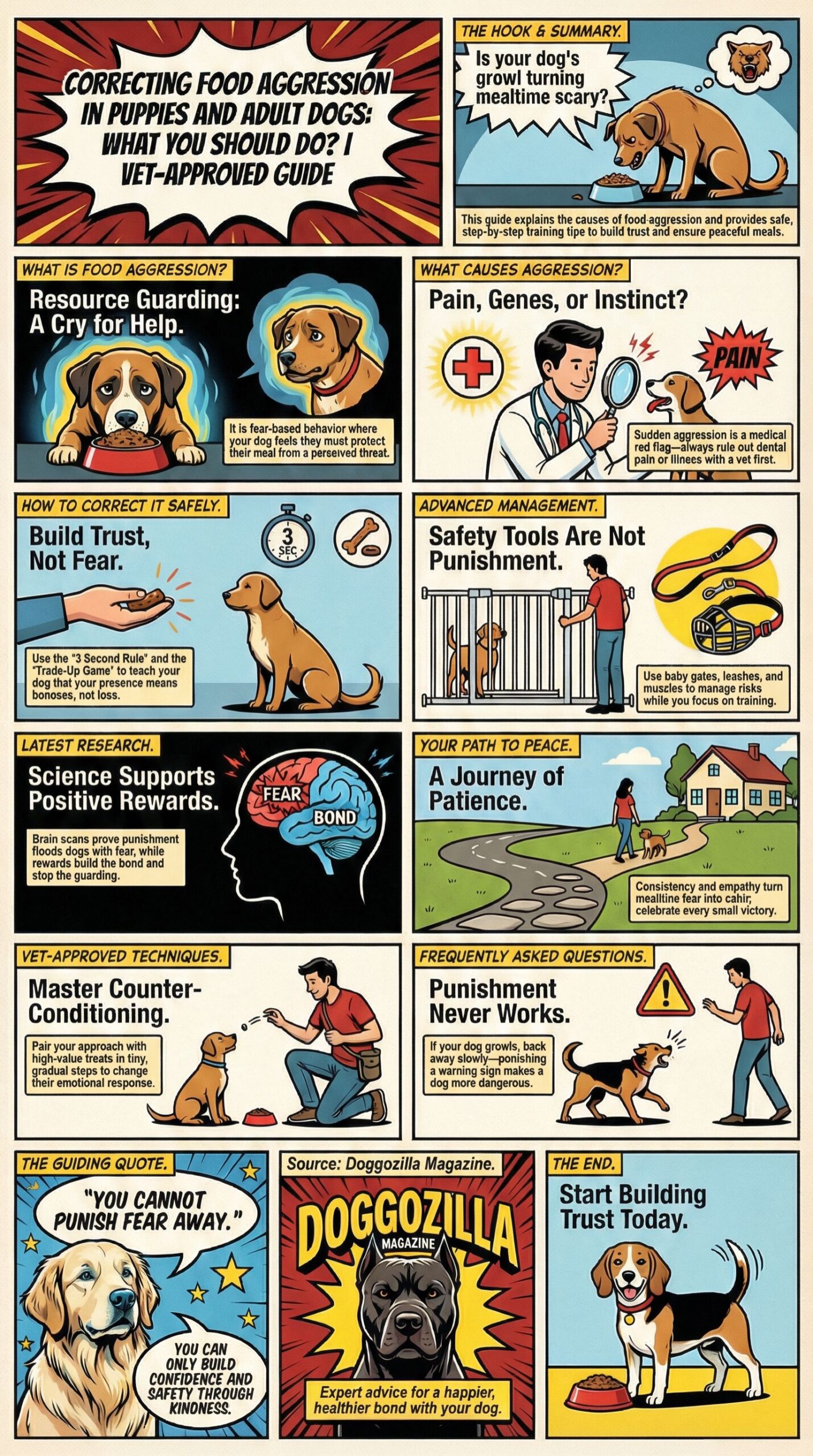
Key Points and Takeaways to Remember
- Food aggression is a fear-based behavior where your dog guards its food, and recognizing the early signs, from tense body language to growls, is the crucial first step to getting help and keeping everyone safe.
- This behavior is caused by fear, instinct, or even sudden pain, and it’s vital to rule out medical issues with a vet first, as treating the pain can often resolve the aggression.
- Fixing food aggression requires slow, positive training like the “3 Second Rule” to build trust, and you must never use punishment, as it will make your dog’s fear and aggression much worse.
- For severe cases, tools like muzzles and baby gates are temporary safety measures, not punishments, and they manage risk while you train, with medication sometimes being a helpful tool under a vet’s guidance.
- Modern science confirms that pain can cause sudden aggression and strongly supports positive reinforcement training, as it changes your dog’s emotional state instead of just suppressing warning signs.
- Correcting food aggression is a journey of patience that strengthens your bond, and seeking help from a professional trainer or veterinary behaviorist is a responsible choice for severe cases.
- The core fix is counter-conditioning: changing your dog’s emotional response by pairing your approach with amazing treats in tiny, gradual steps.
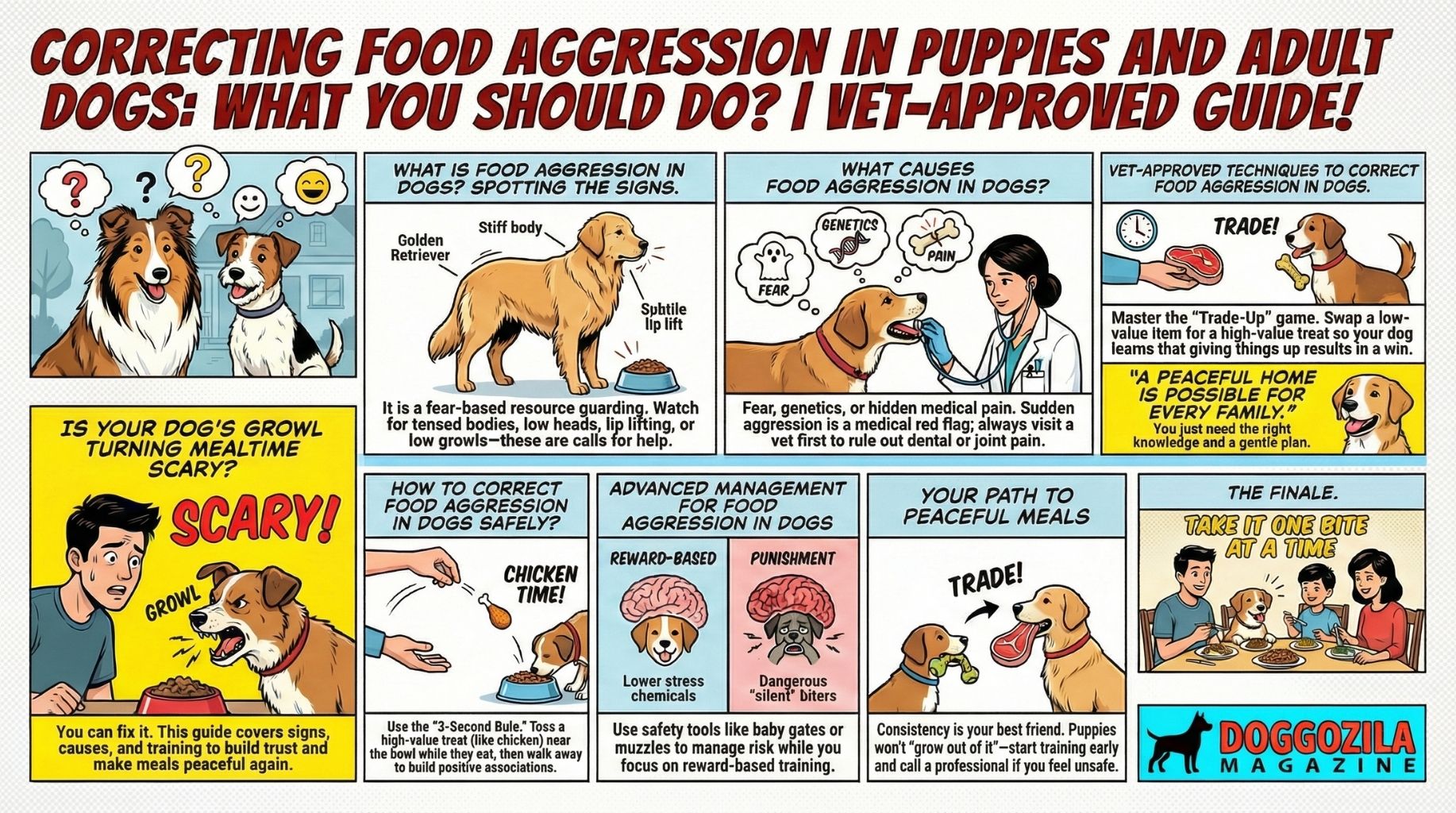
Our guide addressed the most common questions, confirming that punishment doesn’t work, resource guarding can be fixed with the right methods, and a dog’s growl is a warning that should be respected, not punished.