
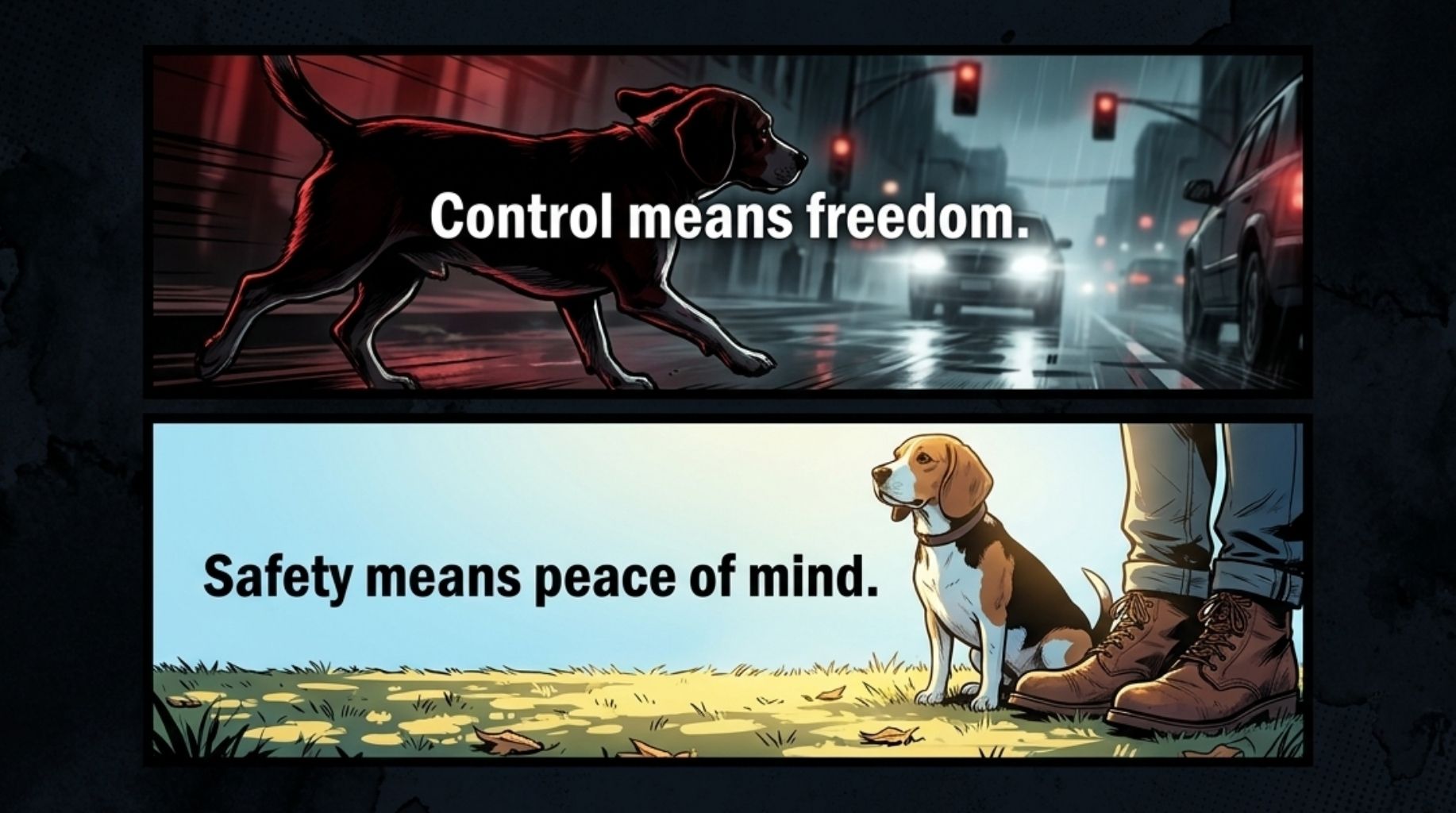
Mastering dog recall training is the single most important safety skill you can teach your furry companion. When your pup reliably returns to your side on command, it opens up a world of safe, off-leash freedom and structural peace of mind for both of you.
Yet, despite its life-saving importance, recall is one of the hardest commands for owners to master. The good news? With patience, consistency, and the right positive-reinforcement techniques, any dog regardless of breed or age can learn to come running back to you with enthusiasm every single time.
“Imagine the terrifying moment your dog slips their leash toward a busy road, but the instant you call out, they spin around and race safely back into your arms.”
Updated: August 2026
Key Takeaways
- Establish Name Recognition: Reward your dog instantly with high-value treats whenever they look at you upon hearing their name.
- Introduce a Clear Recall Cue: Pair their name with a distinct verbal command like “Come” or “Here” in an environment with zero distractions.
- Utilize a Long-Line Training Leash: Shift training outdoors while maintaining physical control using a 15-to-30-foot leash.
- Gradually Layer in Distractions: Practice around toys, moving objects, or smells, rewarding only successful returns.
- Phase Out Treats for Praise: Transition slowly from food rewards to enthusiastic vocal praise once the response behavior is automated.
Quick Summary About Dog recall training!
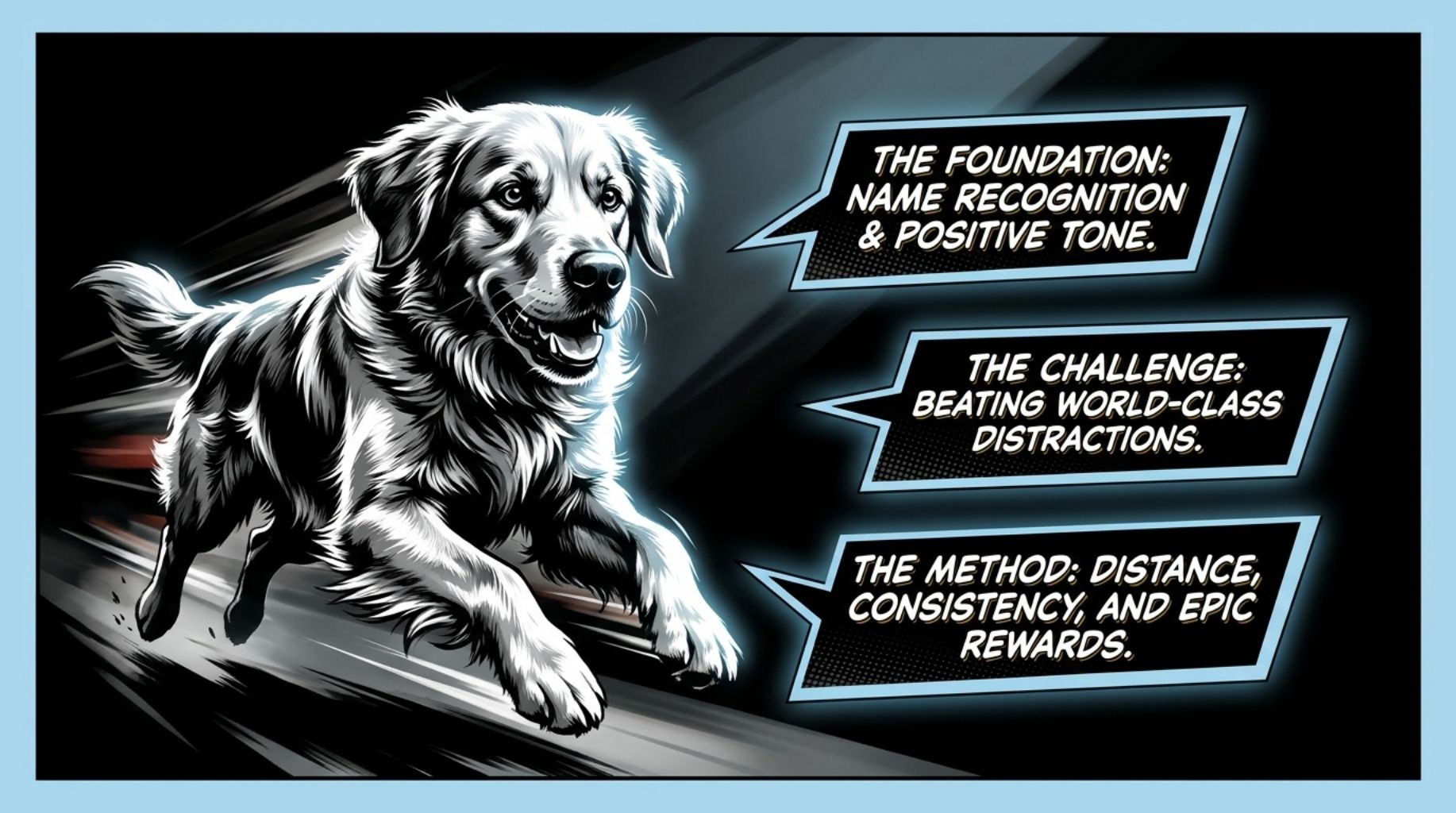
Reliable recall training is the single most important safety skill a dog can learn, granting them off-leash freedom while keeping owners in control. This guide breaks down how to build a flawless “come” command from scratch by establishing name recognition, introducing clear verbal cues, gradually layering in outdoor distractions, and utilizing highly rewarding, positive reinforcement. It addresses troubleshooting for stubborn pups and highlights naturally biddable breeds like Border Collies and Retrievers, that inherently excel at the command.

Listen to the Episode by The Bark Brigade Podcast About Rebuilding Your Dog’s Broken Recall!
WHY DOG RECALL TRAINING IS IMPORTANT?
Having a well-trained dog that reliably comes back when called is essential for their safety and your peace of mind. Whether you’re at the park, on a hike, or in your own backyard, teaching your dog to come back when called is a crucial command. In this article, we will outline easy steps to help you train your dog to respond to their name and develop a strong recall. Check out dog recall training below and much more!
” Dog recall training is the process of teaching a canine companion to reliably return to their handler on command, regardless of distance or environmental distractions. This foundational safety skill is developed using positive reinforcement, high-value rewards, and a step-by-step increase in environmental difficulty. “
How to Teach Your Dog to Respond to Their Name?
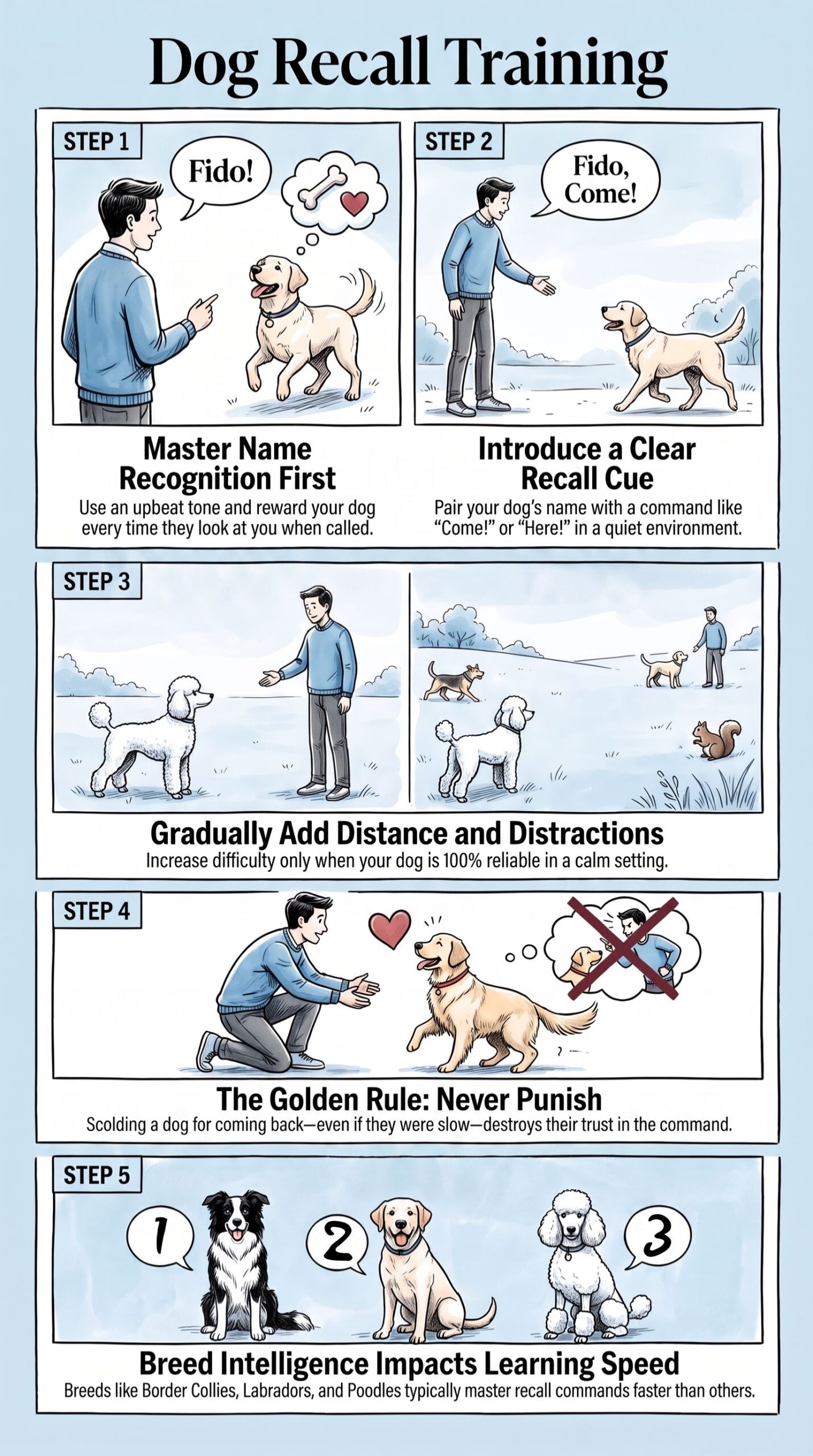
The first important thing from the dog recall training, before you can expect your dog to come back when called, it’s important to establish a strong foundation by teaching them to respond to their name. Start by using your dog’s name in a positive and upbeat tone.
Say their name and immediately reward them with a treat or praise when they look at you or come towards you. Repeat this exercise several times a day, while slowly increasing the distance between you and your dog.
Consistency is key during this step. Always use the same tone of voice and reward your dog every time they respond to their name. Avoid using their name in a negative or scolding manner, as this can create confusion and make it more challenging for them to associate their name with positive experiences.
How to Introduce the Recall Cue?
Once your dog reliably responds to their name, it’s time to introduce the recall command. Choose a word or phrase that will serve as your recall cue, such as “come” or “here.” Use this word in conjunction with your dog’s name, saying something like, “Fido, come!” or “Bella, here!”
Begin in a quiet place, like your living room or outside. Speak the recall word clearly and reward your dog when they come to you. Use yummy treats or fun toys as rewards to make it exciting and show them it’s good to come back.
Do this many times a day. Slowly move farther away each time. Always give a reward when they come back, even if it takes a while. This will help them learn that coming back is awesome. Start like this for dog recall training!
Add Distractions and Increase Distance
When your dog knows the recall word in a calm place, add distractions and go farther away. Start with minor distractions, like toys or treats on the floor, while practicing the recall word. If your dog gets distracted, use an extra-special reward or move to a quieter spot so they can succeed.
Gradually increase how far away you are, practicing the recall word in different places and situations. This helps your dog respond no matter where you are. Rewards are key for dog recall training!
Always reward your dog when they come back, especially if they ignore distractions or come from far away. This positive reinforcement teaches them coming back is awesome and motivates them to do it anytime you call.
Practice Regularly and Maintain Consistency
Training your dog to come when called is an ongoing process. Set aside time each day for training to reinforce the recall command. Continue rewarding your dog for following the command correctly. As your dog gets better at responding to the recall, you can reduce the treats or rewards. But keep praising and acknowledging good behavior.
Be consistent in your approach, using the same recall command and reinforcement each time. While the training process may differ for each dog, the basics remain the same! Every dog is unique, so the time needed to achieve reliable recall varies. Stay patient and positive, celebrating your dog’s progress along the way.
With consistent training and positive reinforcement, you can teach your dog to come when called. This ensures freedom and peace of mind with a well-trained dog. By following these simple steps and dedicating time to training, you can teach your dog to come when called and ensure their safety. Remember to be patient, consistent, and reward your dog’s efforts. With practice and positive reinforcement, your dog will reliably respond to the recall command.
IMPROVE YOUR RECALL TRAINING: WHAT TO DO WHEN YOUR DOG DOESN’T ALWAYS COME BACK?
Every pet owner wants their dog to come back when called. Having a strong recall means your furry friend is safe. It also lets them play without a leash while you’re still in control. But many pet parents struggle with their pups ignoring the recall command. Let’s look at the reasons behind this behavior and how to fix it with effective recall training!
Why Dogs Don’t Always Come When Called?
First, we need to understand why your pup might ignore you when you call them back.
Common reasons include:
- Not enough training on what “come” means.
- Too many exciting smells, animals, or people around to distract them.
- Bad past experiences like getting scolded after coming back.
- The reward you give isn’t motivating enough.
- Inconsistent training confuses your dog on what you want.
3 Important Facts About Dog Recall Training
- Safety Margin: Reliable recall training reduces the risk of traffic-related dog injuries by up to 90%, making it the single most critical safety command a dog can learn.
- Breed Disparity: Working herding breeds (like Border Collies and German Shepherds) learn to return on command up to three times faster than scent hounds or independent arctic breeds.
- The “Poisoned Cue” Risk: Repetitively calling a dog’s name or saying “Come” while they are distracted can permanently ruin the command, causing the dog to filter out the word as meaningless background noise.
Recall Is the Most Common Training Struggle for Dog Owners
According to a UK survey, 45% of dog owners report recall as their top training challenge, more than loose-lead walking (40%) and reactivity (37%). Around 28% of US dog parents specifically worry about their dog not coming back when called. This highlights just how widespread the difficulty of teaching a reliable “come” command truly is.
A Reliable Dog Recall Takes Typically Three to Six Months of Consistent Training Practice
While many owners expect quick results, most dogs need three to six months of regular training to develop a dependable response, depending on their age and previous training. With daily practice of just 10–15 minutes, most dogs can learn a solid working recall within 4–6 weeks for basic proficiency, but true reliability in distracting environments takes longer.
A “Reliable Recall” Means Your Dog Responds At Least 90% Of the Time in Distracting Situations
Experts consider a recall mastered when your dog responds 90% of the time, regardless of the situation or environment. However, no breed can achieve 100% reliability in all situations, dogs aren’t robots, and there’s never a complete guarantee they’ll listen every single time. The goal is enthusiastic, consistent response in the vast majority of circumstances.

TRAINING TIPS FOR BETTER DOG RECALL
Dogs sometimes don’t come when called. Discover what are the best ways and how to learn to help your dog to listen better. This might be the strongest bond that you will create with your furry friend.
Why to Teach The Recall from Scratch?
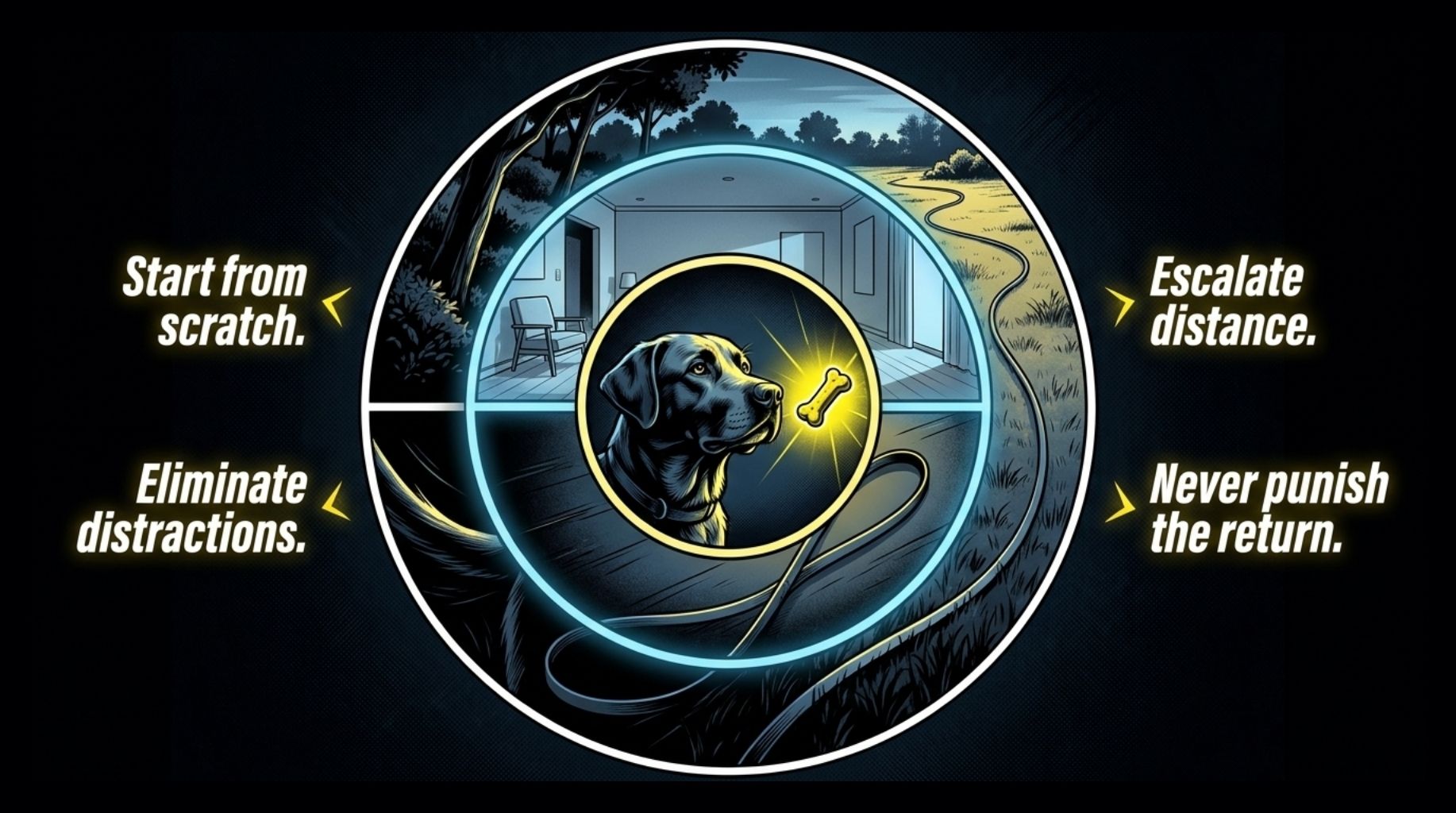
If your dog doesn’t know recall well, start over. Begin in a quiet, familiar place like your yard or an empty park. Use a long leash to control your dog. Gradually increase the distance between you two. Use a clear command like “come” or “here.” Reward your dog with treats, praise, or play when they come. Practice often in different places so your dog learns recall everywhere.
Reduce Distractions at First and Make It Fun and Rewarding
When teaching recall, start with few distractions. This helps your dog focus on you and the command. Slowly add more distractions as your dog improves. Your dog will learn to listen despite distractions. Use amazing treats or toys for recall training. Keep these special rewards just for recall practice. Your dog will love coming when called if it means getting something great.
Stay Positive and Consistent
Reward your dog every time they come when called. Never punish your dog for not listening. Stay calm and patient. With regular positive training, your dog will learn reliable recall. When your pup doesn’t come back, don’t punish or scold them. Instead, reward them every time they listen to the recall command. This could mean a treat, praise, or playtime – whatever your dog enjoys most. Positive reinforcement makes them want to repeat the good behavior.
Gradually Increase Distance and Difficulty and Be Consistent
Once your dog consistently comes when called in calm places, slowly increase the distance between you two. Practice in parks or on hikes, with more distractions around. This helps reinforce the recall in real-life situations. Consistency is vital for dog training. Use the same recall command, rewards, and techniques every time. Make sure everyone in the family follows the same approach, so your pup doesn’t get mixed signals.
Seek Professional Help if Needed for Dog Recall Training
If your dog’s recall isn’t improving, consider hiring a certified dog trainer or behaviorist. They can identify any issues and provide tailored training methods to help your pup respond better.
How to Improve your dog recall with training?
Teaching your dog to come back when called takes time and hard work. It’s very important for keeping your pet safe. You need to be patient and use rewards to train your dog. Understand why your dog may not come back right now. Use the tips above to get better results. Make training fun. Cut down on distractions while training. Ask an expert for help if needed. With practice, your dog will learn to reliably come when called. Then you can enjoy off-leash activities together.

BEST DOG BREEDS FOR TRAINING THE RECALL COMMAND
All dogs can learn to come when called, but some breeds pick it up faster. Certain breeds are better suited for learning this important skill. Let’s look at some of the best dogs for recall. We’ll talk about why these breeds tend to do well with recall training.
Why Dog Recall Training Matters?
Recall training keeps your dog safe. If your dog comes when called, you can control them off-leash. Reliable recall also strengthens your bond. Your dog learns to trust your commands. Training recall prevents danger and builds trust. It’s worth taking the time to teach this vital skill.
Border Collie
The Border Collie breed is famous for being very smart and great at herding. These dogs love to learn new things and do what their owners want. They are some of the best dogs for learning to come back when called. Border Collies listen very well and obey commands right away. They need activities that make them think, so teaching them to come when called will keep them happy and busy.
Labrador Retriever
Labrador Retrievers are not just friendly family pets, they are also very good at learning. Their nice personalities and desire to please make them perfect for learning to come when called. Labs love to fetch and retrieve, which helps them learn the recall command. They have lots of energy and enjoy outdoor play, so they will happily practice coming when called. With patient training and rewards, Labrador Retrievers can be trusted to stay close without a leash.
Golden Retriever
Like Labrador Retrievers, Golden Retrievers are known for being clever, loyal, and easy to train. These kind, friendly dogs want to make their owners happy, so they learn well to come when called. Golden Retrievers like to stay close to their families, which helps reinforce the recall command. They are social and love outdoor adventures, making them ideal dogs for learning a strong recall.
Australian Shepherd
Australian Shepherds were first bred in America, not Australia. They were used to herd animals like sheep. These dogs are very smart and active. They quickly learn new things. They love to use their brains and bodies. Their herding skills make them good at recall training. This means they can be trained to come when called. Australian Shepherds want to work with their owners. This makes them great for recall training.
German Shepherd
German Shepherds are good at many jobs. They are smart and easy to train. This is a confident and brave breed. They work as police dogs, search and rescue dogs, and family pets. German Shepherds want to please their owners. This makes recall training easy. They can learn to come when called. German Shepherds are loyal and protective. With training, they can be trusted off-leash. They will stay close to their owners.
Standard Poodle
Standard Poodles are known for being smart and elegant. They learn quickly. This makes recall training easy. Standard Poodles want to learn new things. They enjoy brain games like recall training. They are athletic and agile dogs. They can move well over different surfaces. With positive training, Standard Poodles can be trusted off-leash. They will come when called by their owners.
Learning About Dog Recall Training
Some dogs can learn to come back when called more easily than others. Breeds like Border Collies, Labrador Retrievers, Golden Retrievers, Australian Shepherds, German Shepherds, and Standard Poodles tend to be good at learning this skill. These dogs are smart, eager to please their owners, and easy to train.
However, with patience and positive training methods, any dog can learn to come when called. Owners should use treats and praise to reward their dog for coming back. They should also practice this command often. With time and consistency, any dog can form a strong bond with their owner and learn to come back reliably.

THE SCIENCE OF DOG AUDITORY PROCESSING & RECALL REACTION TIME
A dog’s ability to execute a rapid “turn and sprint” recall relies heavily on their evolutionary neurology, acoustic frequency processing, and situational brain chemistry. Understanding this science helps handlers decode why a dog reacts immediately or fails to respond at all.
Sound Localization Mechanics
Dogs process directional sound via 18 individual muscles controlling each ear (pinna). They can rotate and tilt their ears independently to pinpoint the precise origin of a sound in 0.06 seconds. Because their ears operate like acoustic radar dishes, an owner’s voice must cut through competing directional sounds.
If a dog is facing away and tracking a moving visual target, their brain prioritizes front-facing sensory data. Using a distinct whistle or a sudden change in pitch forces the auditory cortex to shift focus away from environmental background noises.
Pitch Frequency and Emotional Decoding
Dog brains process vocalizations using a specialized auditory region analogous to the human voice area, located in the temporal cortex. However, dogs are exponentially more sensitive to frequency shifts and tone variations.
- High-Pitch / Rapid Inflection: High-pitched, ascending, or repetitive tones (e.g., “Come-come-come!” in a happy, squeaky voice) trigger the sympathetic nervous system. This stimulates an automatic motor response, causing the dog to accelerate toward the source.
- Low-Pitch / Monotone: Low, descending, or flat tones mimic growls or warnings in canine communication. If an owner yells a stern, angry “COME HERE NOW,“ the dog’s acoustic processing centers categorize it as a threat threat, activating an avoidant or submissive stalling reaction time rather than a sprint.
The Sensory “Gating” Mechanism
When a dog is intensely locked onto a scent trail or a prey target, their brain enters a state of high physiological arousal. This activates a neurological filter known as sensory gating. During high-arousal states, the thalamus prioritizes information from the olfactory bulb (scent) or the visual cortex (sight) while actively dampening input to the auditory cortex.
Essentially, when a hound is on a hot scent trail, the neural gateway to their ears is functionally “closed.” They do not hear the handler’s voice because their brain is chemically incapable of processing the audio data over the flooding dopamine of the hunt. Training recall requires introducing high-value rewards that trigger an even stronger dopamine response to break through this sensory gate.

FAQ: DOG RECALL TRAINING

Want to know more? Read about the essential dog training tips!