
The loss of a family dog leaves a huge hole. For a child, this is often their first big loss. Their world feels suddenly different. Your role as a parent is more important than ever. You are their safe harbor in this storm of sadness. This guide offers a clear path forward. We will talk about honest conversations and healing actions. We will share the latest insights from child development experts. This is your handbook for child pet loss support. We give you the tools to help your family heal and remember your friend with love.
We will cover the science of grief, safe talks for dog euthanasia and age-appropriate advice. Our goal is to provide you with gentle, practical strategies. These strategies will show you how to help your child cope when a dog dies. This is about honoring a beloved friend and mending young hearts.
“The loss of a family dog can be a child’s first encounter with deep grief, and how you guide them through it can shape their heart for a lifetime.”

Quick Summary About HOW TO SUPPORT YOUR CHILD AFTER A PET LOSS
This article is a compassionate guide for parents helping a child grieve a beloved dog. It offers age-advised strategies for honest conversations, emotional support, and healing activities, blending practical steps with the latest insights on childhood grief to help your family heal together.
THE FIRST STEP IN CHILD PET LOSS SUPPORT IS TO UNDERSTAND HIS GRIEF
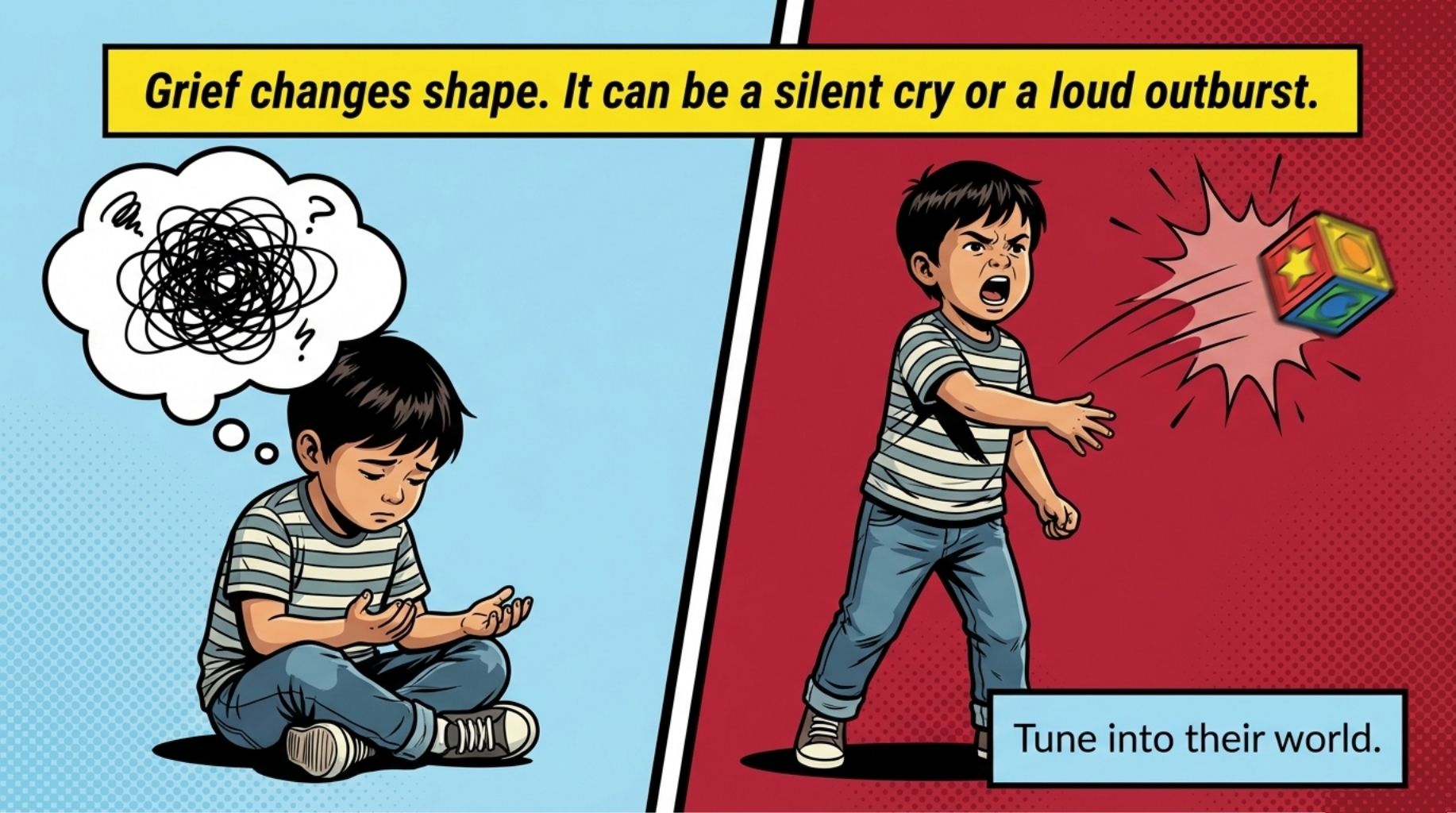
Grief in children doesn’t always look like adult sadness. It can be quiet, loud, confusing, or even invisible. Kids might cry one minute and ask for ice cream the next, which is perfectly normal. Their understanding of death changes as they grow, so their reactions will too. A preschooler may think the dog is just sleeping, while a teenager might grapple with profound questions about life.
The first and most crucial step in child pet loss support is simply recognizing these unique signs of grief. By tuning into their world, you can offer the right comfort at the right time. Your patience and observation are the foundation of healing.
Why Child Pet Loss Support Looks Different at Every Age?
A toddler’s grief is often linked to routine, they miss the dog at breakfast or walk time. They might ask repeated questions or seem clingy. School-aged children understand death is final but may worry they caused it or feel intense anger. Teenagers might withdraw, feeling embarrassed by their deep sadness.
Tailoring your child pet loss support to their developmental stage makes all the difference. Use clear, simple words for little ones. For older kids, encourage open conversations about feelings. Always validate their emotions, no matter how they appear. This age-appropriate approach ensures your support truly reaches them.
Why Your Child’s Grief Needs Special Child Pet Loss Support?
Children see the world differently than adults do. Their connection to a pet is often pure and simple. A dog is a playmate, a confidant, and a source of constant love. When that friend is gone, the loss can feel enormous. Kids might not have the words to express this huge feeling.
They might act out, become clingy, or have trouble sleeping. These are all signs of grief looking for a way out. Offering patient child pet loss support means you provide a safe space for all these emotions. You are telling your child it’s okay to feel this way. Your calm presence is the most powerful comfort you can give.
How to Spot the Hidden Signs when Your Child is Struggling?
Sometimes grief hides behind other behaviors. Your child might suddenly have trouble sleeping or complain of stomachaches. They could lose interest in school, hobbies, or even friends. Some kids might start acting out or having tantrums. Others become overly quiet or obsessed with video games.
These can all be silent cries for help. Part of effective child pet loss support is being a detective for these hidden signals. When you notice a change, gently open a door for conversation. Let them know it’s okay to not be okay, creating a safe space for their pain to surface.
How Your Reaction Shapes Their Child Pet Loss Support Journey?
Children are incredible observers. They look to you to learn how to handle hard things. If you hide your own tears, they might think sadness is bad. If you share your feelings simply, you give them permission to do the same. You can say, “I feel really sad today because I miss Sparky. It’s okay to miss him.” This models healthy grieving. It shows them that love and loss are connected.
Your honest reaction becomes a cornerstone of their child pet loss support. It builds trust and shows them they are not alone in their feelings. However, try to avoid falling apart in front of them constantly. Find your own support network so you can be their steady rock. Your balanced emotional honesty is a guidepost for their own healing.
🔑 Key Point: A child’s grief looks different from an adult’s grief. Recognizing their unique signals, from quiet confusion to outbursts, is the essential first step in supporting them.
THE FIRST CONVERSATION IS THE START OF THE CHILD PET LOSS SUPPORT
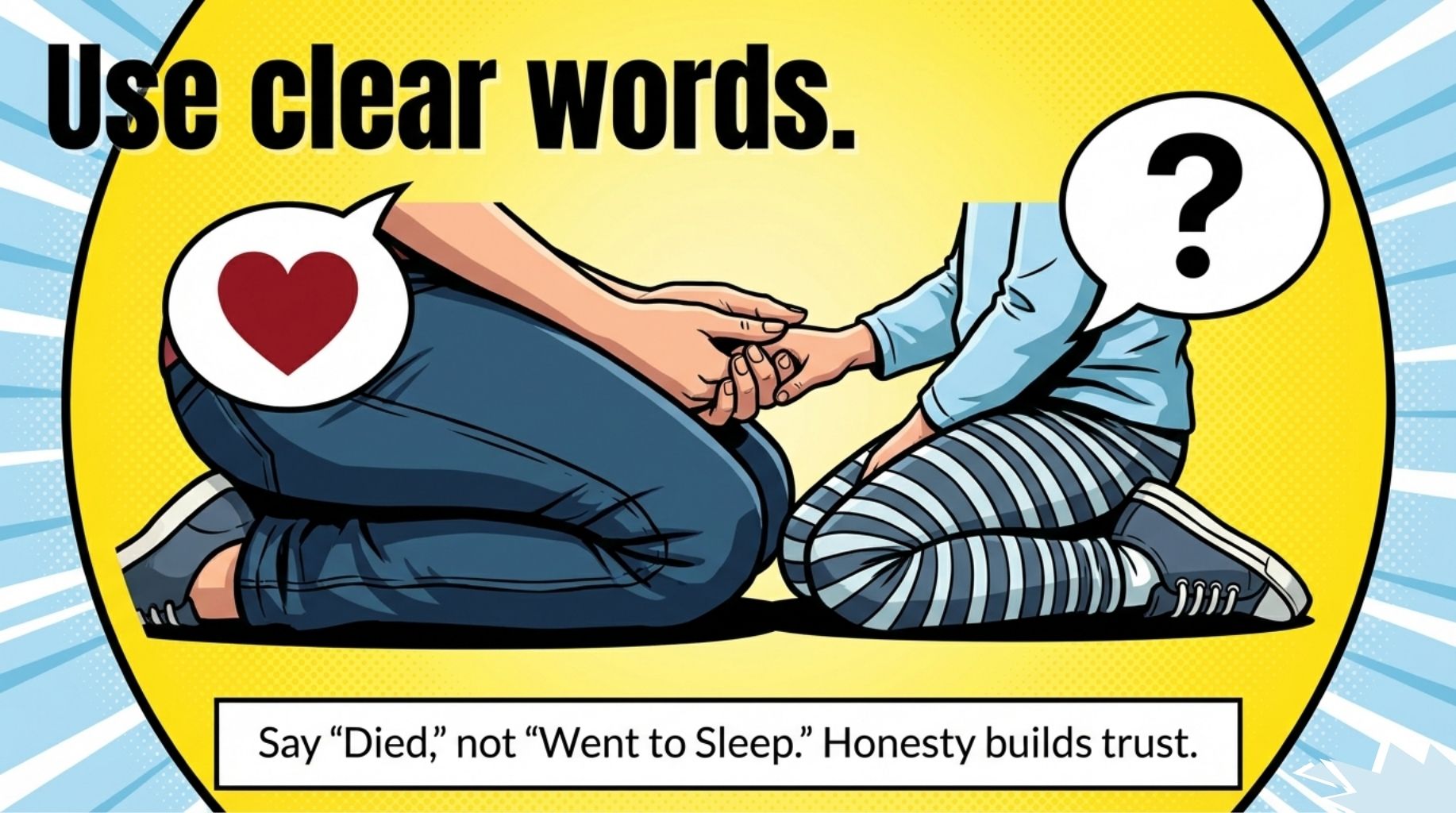
The moment you share the news is hard. It is also the most important step. Your honesty builds trust. Use clear words like “died.” Avoid confusing phrases like “went to sleep.” Tell your child in a calm, quiet place. They will look to your face for clues. It is okay to cry.
Showing your sadness gives them permission to feel their own. This first talk starts the healing process. It is the foundation of all child pet loss support. Offer simple truth and a big hug.
Use Honest and Simple Language
Choose words your child knows. Say, “I have very sad news. Bailey’s body stopped working, and she died.” Pause and let them react. They might cry or ask questions. Answer with short, true answers. If you do not know something, it is okay to say so. You can say, “I don’t know why she got so sick, but I am sad too.” This honesty helps your child feel secure. Clear talk is the first rule of good child pet loss support.
Validate Your Child’s Immediate Feelings
Your child may react in many ways. They might cry, get angry, or seem not to listen. All feelings are normal. Tell them, “It’s okay to feel sad. It’s okay to feel mad. I am here for you.” If they do not want to talk, do not force them. Let them know you are available. Say, “We can talk or just sit together whenever you’re ready.” Your calm presence is the best comfort. Accepting all emotions is key to child pet loss support.
Phrases to Avoid After a Pet Dies
Some common phrases can hurt more than help. Never say, “Don’t cry,” or “Be strong for me.” This teaches kids to hide grief. Do not say, “We can get a new dog tomorrow.” This makes their unique friend seem replaceable. Avoid saying the dog was “just a pet.” Their pain is real. Do not blame the vet. This creates anger. Instead, say, “This hurts so much because we loved her so much.” Knowing what not to say is part of wise child pet loss support.
🔑 Key Point: Use clear, honest words like “died” when telling your child, and validate all their immediate feelings to build a foundation of trust for the healing journey.
AGE-APPROPRIATE EXPLANATIONS FOR CHILD PET LOSS SUPPORT
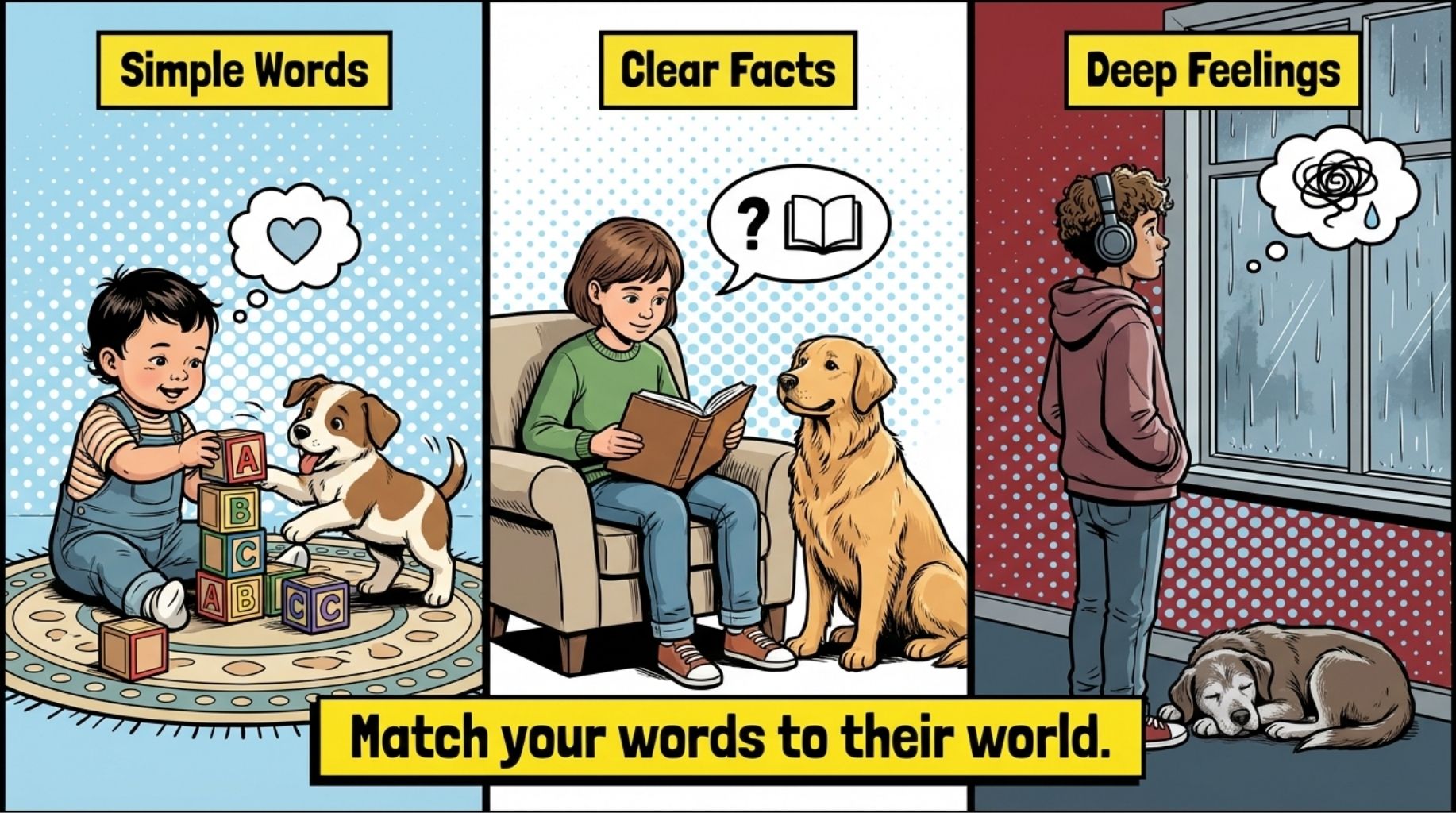
A two-year-old and a twelve-year-old understand death differently. Your explanation must fit their mind. A young child thinks death is temporary. A school-aged child starts to understand it is forever. A teenager gets the full meaning and may ask deep questions.
Matching your words to their age prevents fear and confusion. This careful approach is the core of good child pet loss support. It meets your child right where they are.
How to Talk to Toddlers and Preschoolers (Ages 2-5)?
Use very simple, physical words. Say, “When Toby died, his body stopped working. He can’t run or eat anymore. He doesn’t feel hurt or scared.” Avoid stories about heaven or sleep unless you use them at home. Young kids might think they caused the death by being mad.
Tell them clearly, “This is not your fault. You were a great friend to him.” They might ask if you will die. Reassure them you are healthy and will be with them for a long time. This basic clarity is essential for child pet loss support at this age.
Guide The School-Aged Children (Ages 6-12)
Children this age want facts. They may ask, “What happened to her body?” or “What is euthanasia?” Give gentle, direct answers. “The vet gave her medicine so she wouldn’t hurt, and then her heart stopped. It was peaceful.” They understand death is final.
They might worry about who else could die. This is a good age to share your family’s spiritual beliefs, if you have any. Encourage them to draw or write about their pet. Giving facts gently is central to child pet loss support for this group.
Support The Teenagers (Ages 13+)
A teenager’s grief is deep and complex. They may feel profound sadness, anger, or guilt. Do not minimize it. Say, “Losing Rex is devastating. Your feelings make sense.” They might think deeply about life and death.
Listen without feeling you must solve it. Teens may hide grief to look strong. Give them space but check in. Suggest a journal, music, or art as an outlet. Respecting their deep process is vital for child pet loss support for teens.
🔑 Key Point: Tailor your talk about death to your child’s age, using simple, physical words for little ones and more factual details for older children and teens.
HOW TO EXPLAIN THE DEATH OF A DOG TO YOUR CHILD?
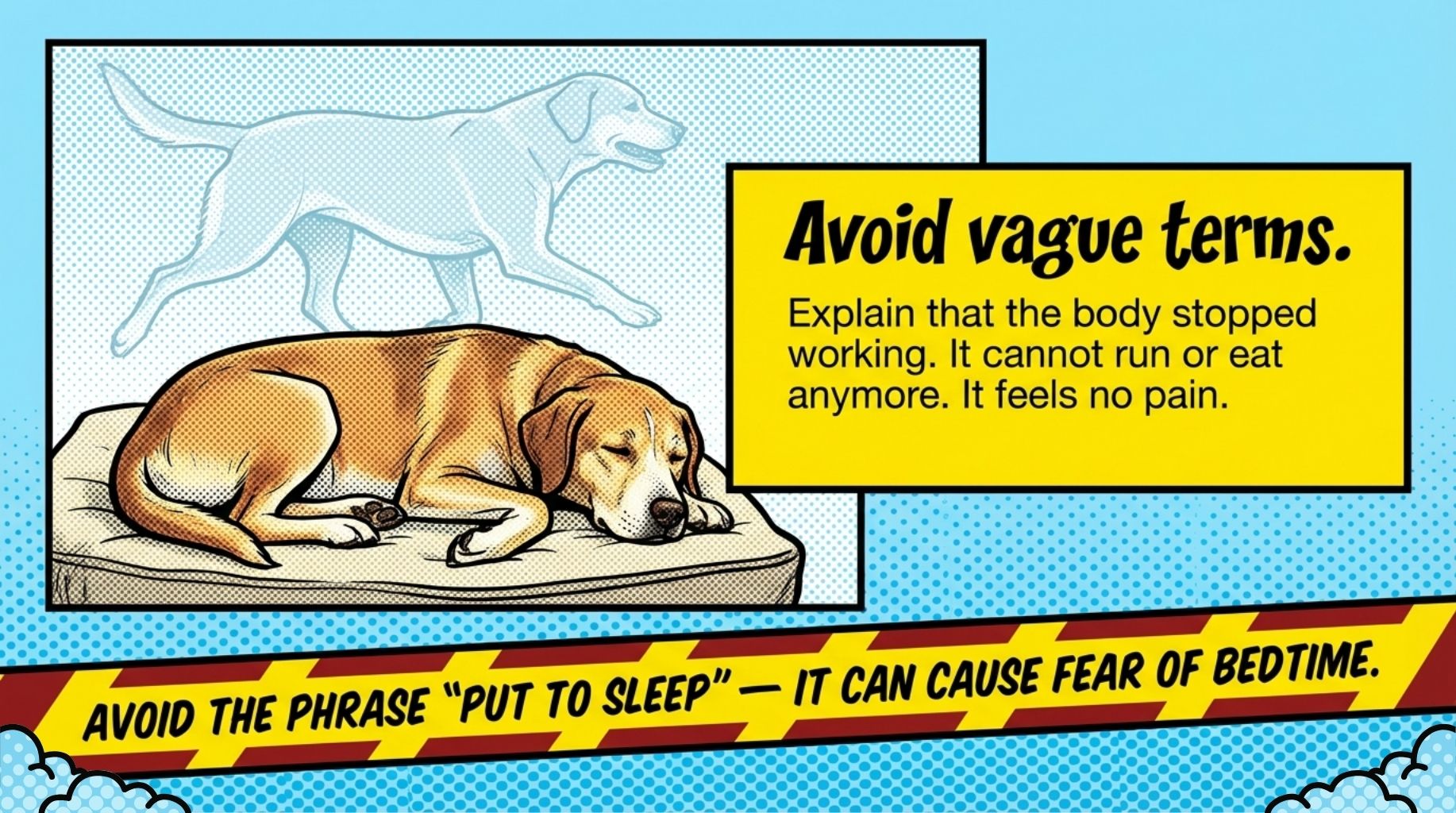
Honesty is the best policy, even when the truth is hard. Use clear, gentle language suited to your child’s age. Avoid vague phrases like “put to sleep,” which can confuse a young child about sleep itself. Instead, you could say, “His body stopped working, and he died. He won’t be able to run or play with us anymore.”
Answer their questions simply and directly, even if the answer is “I don’t know.” It’s far better than a confusing story that might create fear later. This honest conversation is a cornerstone of trust and a vital part of child pet loss support.
Find the Right Words: Simple Language for a Hard Truth
For very young children, keep it concrete. “Fido was very, very old and sick. His body couldn’t work anymore, so he died.” For euthanasia, you might say, “The doctor gave him special medicine so he wouldn’t feel any more pain, and then his heart stopped.”
School kids can handle more detail, “He had cancer, and the medicine couldn’t make him better.” The key is to be direct yet compassionate. Reassure them that the dog is not in pain, that death is a natural part of life, and most importantly, that it was not their fault. This clarity prevents magical thinking and scary misunderstandings.
Answer the Tough Questions About Heaven and “Why?”
“Is he in heaven?” “Why did he have to die?” “Will I see him again?” These questions are deep and meaningful. Answer according to your family’s beliefs. If you believe in an afterlife, share that comforting vision. If not, you can talk about how love and memories live on forever.
For the “why,” focus on biology or age, “All living things’ bodies get old and stop working.” It’s okay to admit you don’t have all the answers. The goal of child pet loss support here isn’t to have a perfect answer, but to show you’re willing to explore these big questions with them.
What To Avoid Saying: Common Well-Meaning Mistakes
Certain phrases, though meant to comfort, can backfire. Never say, “We’ll get a new puppy tomorrow,” as it dismisses the unique bond just lost. Avoid, “Don’t cry, be strong,” which teaches them to suppress emotions.
Don’t blame the vet or say the dog “ran away,” as this breeds mistrust or false hope. Also, steer clear of comparing losses, “It’s just a dog.” To a child, it’s family. Being mindful of your words is a critical component of sensitive child pet loss support, ensuring your comfort truly comforts.
🔑 Key Point: Always use honest, gentle language suited to your child’s age, avoiding confusing phrases like “put to sleep” to prevent fear or misunderstanding.

CREATE A MEMORIAL WITH YOUR CHILD TO SUPPORT THE LOSS OF THE PET
Active, creative remembrance is a powerful healing tool. A memorial gives your child a tangible way to express love and say goodbye. It turns abstract grief into a positive, shared project. This act is a beautiful form of child pet loss support because it puts focus on the joy your dog brought. It creates a legacy that your family can revisit.
Whether it’s a simple drawing or a planted tree, the process itself is therapeutic. Working side-by-side, you’re not just building a memorial, you’re building precious new memories of support and connection.
Hold a Family Funeral or Farewell Ceremony
A ceremony makes the loss real and provides closure. Let your child help plan it. They can choose a special spot in the yard, pick flowers, or decide what to say. You might share favorite stories, play the dog’s favorite song, or bury a collar with a note.
This ritual honors the pet’s life and shows your child that their feelings matter. It formalizes the goodbye in a way that simple words cannot. This shared experience is a profound act of child pet loss support, teaching them healthy ways to honor and remember those we love.
Craft a Memory Box or Scrapbook Full of Joy
Gather photos, a favorite toy, a leash, and a paw print. Let your child decorate a box or scrapbook to hold these treasures. Encourage them to write or draw a memory on each page. Was it the time the dog stole a sandwich? Or the way he always slept at the foot of the bed?
This project allows them to revisit happy times when they feel sad. It becomes a personal, portable source of comfort. This hands-on activity is a key strategy in child pet loss support, helping them externalize their feelings and curate a legacy of love.
Plant a Living Tribute in Your Backyard
Planting a tree, bush, or flowers in your dog’s honor is a symbol of life continuing. Your child can help dig, plant, and water. Watch it grow together over the years. You can say, “This is Buddy’s tree. It’s growing strong, just like our love for him.”
It provides a peaceful place to sit and remember. This living memorial offers ongoing, natural child pet loss support. It connects the cycle of life and death in a gentle, visible way, providing a place for reflection and peace for years to come.
🔑 Key Point: Active remembrance, like a ceremony or memory box, turns grief into a positive, shared project and is a powerful healing tool for a child.
THE ROLE OF RITUALS IN ONGOING CHILD PET LOSS SUPPORT
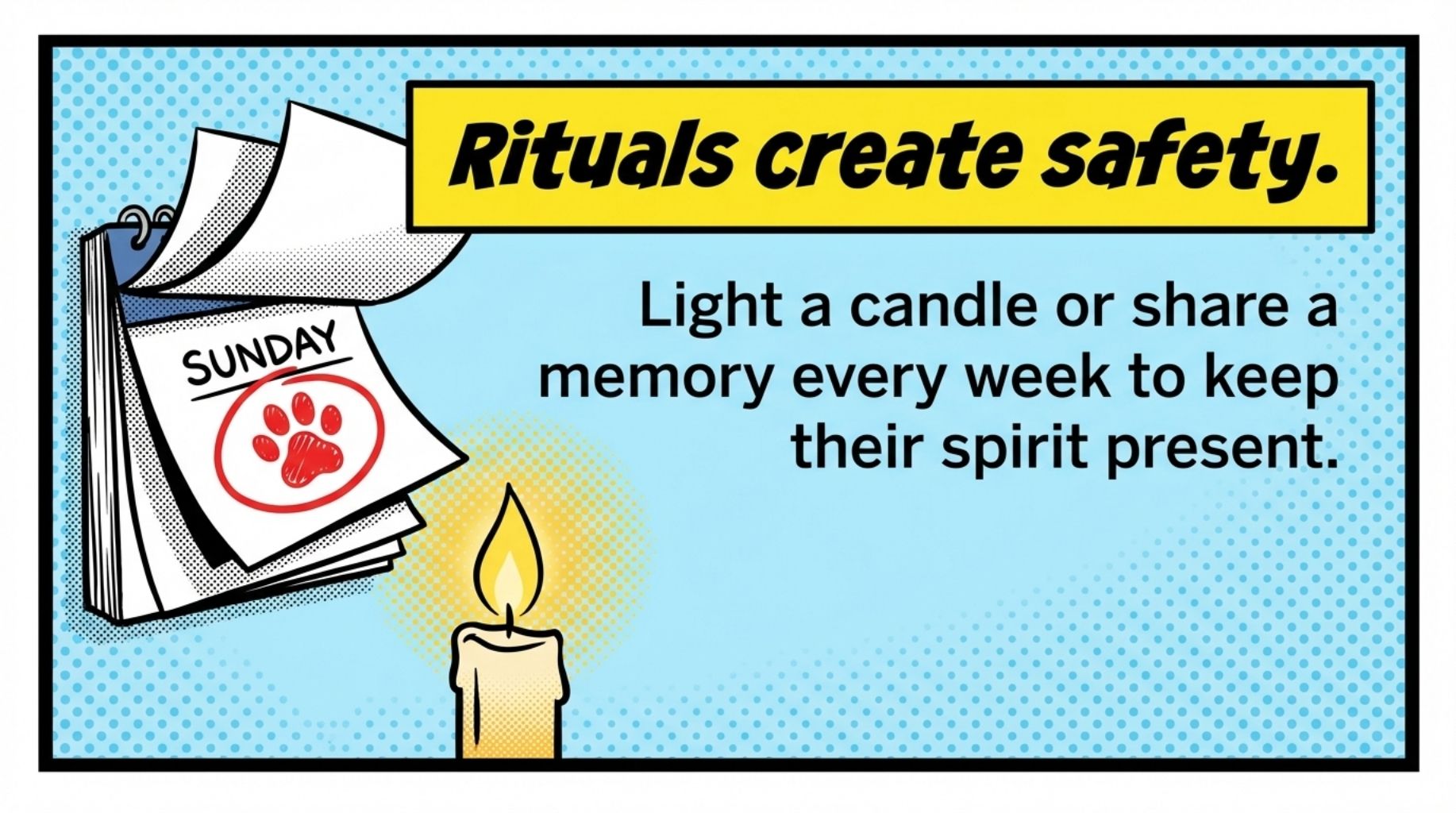
Rituals provide structure and comfort in the confusing days after a loss. They are repeated actions that hold meaning, like lighting a candle on the dog’s birthday or visiting his favorite park every Sunday. These acts create a sense of continuity and safety. They tell your child, “We haven’t forgotten, and it’s okay to still miss him.”
Rituals are a steady, predictable form of child pet loss support that can be returned to again and again. They help integrate the loss into your family’s story, making the grief feel more manageable over time.
Establish a Weekly “Remembering Our Dog” Time
Set aside a short, regular time, maybe Sunday evening, to share a memory. Everyone says one thing they loved or miss about your dog. It could be funny, sweet, or sad. This ritual ensures the topic stays open and the dog remains a talked-about part of the family. It prevents the unspoken rule that his name is off-limits. This dedicated time is a simple yet powerful pillar of child pet loss support. It normalizes reminiscing and shows that love lasts far beyond a lifetime.
Use Books and Stories as Healing Tools
Reading together is a cozy, non-threatening way to explore big feelings. Choose children’s books about pet loss. As you read, ask, “How do you think that character feels?” or “Does that remind you of our dog?” Stories provide language for emotions your child might not yet have.
They also show that other kids go through this too, reducing feelings of isolation. Incorporating storytime into your child pet loss support toolkit offers comfort, sparks conversation, and provides a shared, quiet moment of connection.
Create New Traditions That Honor the Past
Start a new tradition that connects to your dog’s spirit. Maybe you donate old toys to a shelter every year on his “gotcha” day. Or you bake dog-bone-shaped cookies for the family. Perhaps you go on a hike to a place he loved. These new traditions blend remembrance with positive action. They transform grief into generosity and connection. This proactive approach to child pet loss support helps your child see that love can be expressed in active, joyful ways, even after a loss.
🔑 Key Point: Simple, repeated rituals, like a weekly time to share memories, provide ongoing comfort and structure, helping a child feel safe in their grief.
A KEY PART OF PET LOSS IS TO SUPPORT YOUR CHILD’S EMOTIONAL NEEDS
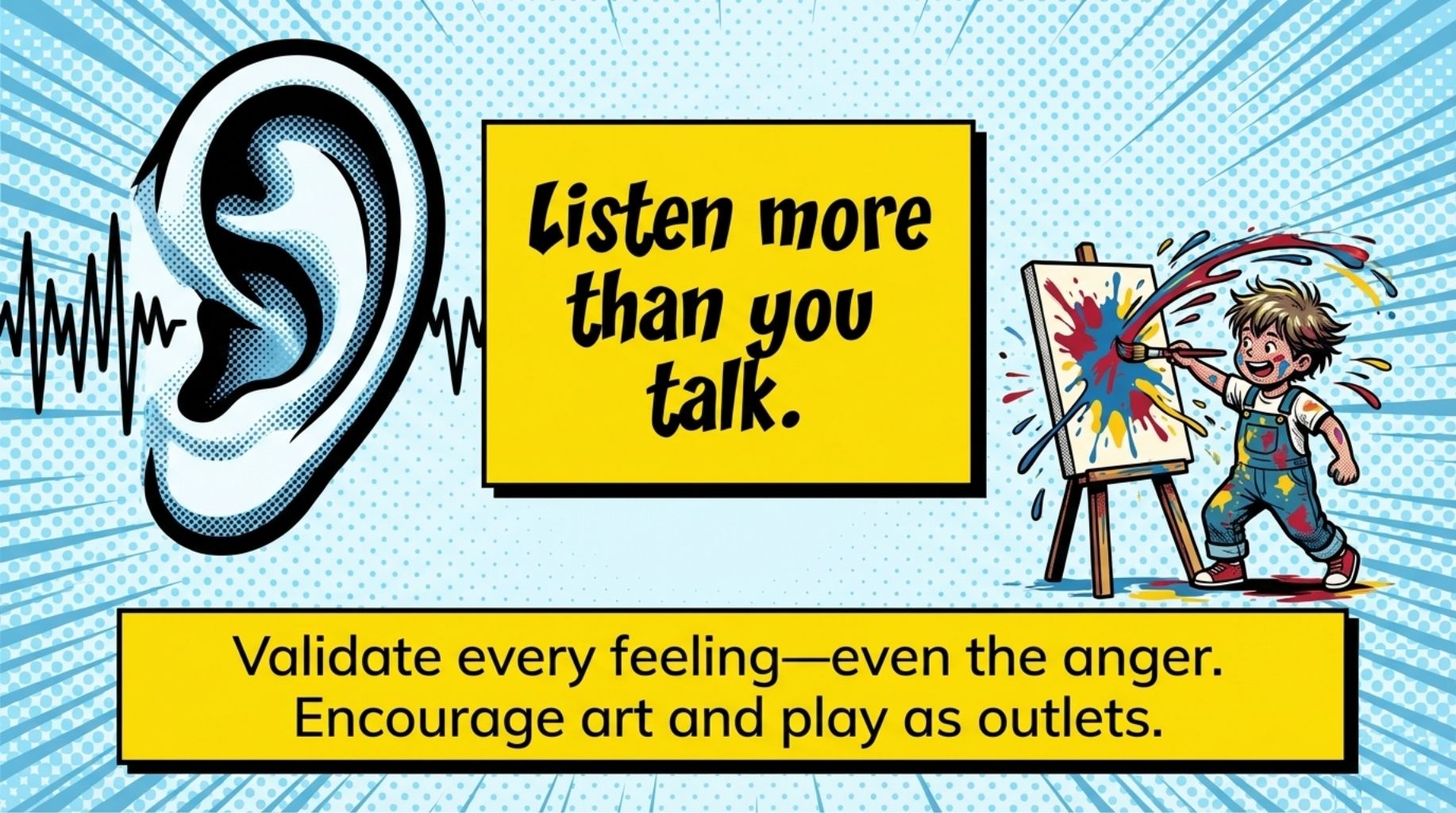
After the first shock fades, your child will need ongoing emotional care. Your goal is to help them feel safe expressing anything. Listen more than you talk. Validate their feelings by saying, “It makes sense you feel that way.” Encourage healthy outlets like drawing or running outside.
Be patient with regression, like bedwetting in a younger child. This consistent, loving attention is the heart of child pet loss support. It helps them build emotional resilience.
Listen More and Talk Less: The Power of Presence
Sometimes the most powerful support is silent. Sit with your child while they color or play. If they start to talk, just listen. Don’t rush to fix their sadness. Say things like, “Tell me more about that,” or “I’m here for you.” This active listening tells them their inner world matters. It is a fundamental practice in effective child pet loss support. It strengthens your connection during a fragile time.
Validate Every Feeling, Even the Tough Ones
Let your child know all feelings are welcome, sadness, anger, guilt, and even relief if the pet was sick. Say, “It’s okay to feel angry that he’s gone,” or “I sometimes feel that way too.” This validation prevents them from feeling ashamed of their emotions. It teaches them that grief is not a problem to solve, but an experience to move through. This acceptance is a critical component of compassionate child pet loss support.
Encourage Creative Outlets for Big Emotions
Grief can feel too big for words, especially for kids. Offer alternatives. Provide clay to sculpt, paints to make a mess with, or journals to write in. Encourage them to make up a song about their dog. Physical activity, like a family walk, can also help lift heavy feelings. These creative and physical channels are essential tools in child pet loss support. They help emotions move out of the body and mind in a healthy way.
🔑 Key Point: Listen more than you talk, validate all feelings, and encourage creative outlets to help your child process their emotions in a healthy way.
WHEN TO SEEK PROFESSIONAL CHILD PET LOSS SUPPORT?
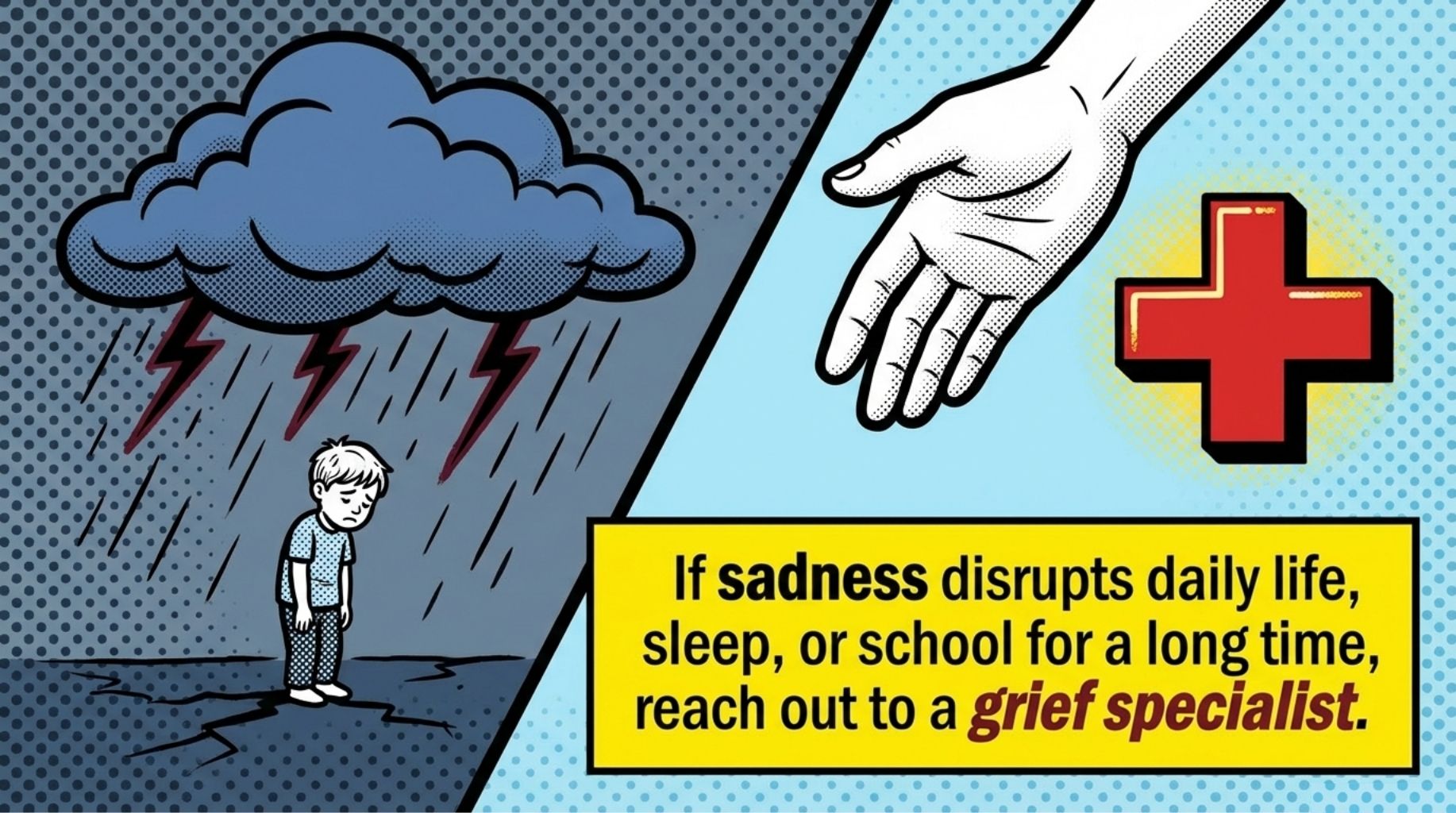
Most children will navigate their grief with your loving guidance. However, some signs suggest extra help could be beneficial. If intense sadness lasts for many months and disrupts daily life, take note. If your child completely avoids talking about the dog or refuses to participate in normal activities, it may be time to seek help.
A professional can provide tailored child pet loss support strategies. There is no shame in asking for help, it is a sign of strength and care.
How to Recognize The Signs of Overwhelming Grief?
Look for persistent changes that don’t improve over time. These can include major sleep problems, a lasting drop in grades, loss of interest in friends, or constant talk about death. Physical symptoms like frequent stomachaches can also be a sign. If your child’s personality seems to have changed dramatically, it’s a cue to look deeper. Recognizing these signs early is a proactive part of child pet loss support.
How a Child Therapist or Counselor Can Help?
A child grief specialist creates a safe space for your child to express things they can’t say at home. They use play, art, and talk therapy suited to a child’s world. They can also give you specific tools to use at home. This partnership provides expert-level child pet loss support. It can help your child process their loss in a healthy way and prevent longer-term emotional difficulties.
How to Find the Right Support Resources for Your Family?
Start by asking your pediatrician for a referral to a child therapist who specializes in grief. Look for local pet loss support groups for families. There are also wonderful books and online resources designed for grieving children. Exploring these options together can be part of your family’s healing. Seeking out resources is a powerful act of child pet loss support. It shows your child that their feelings are important enough to get the best help available.
🔑 Key Point: Consider professional help if your child’s grief severely disrupts daily life for months, showing as lasting changes in sleep, school, or personality.
WHAT RESEARCH TELLS US ABOUT CHILD PET LOSS SUPPORT?
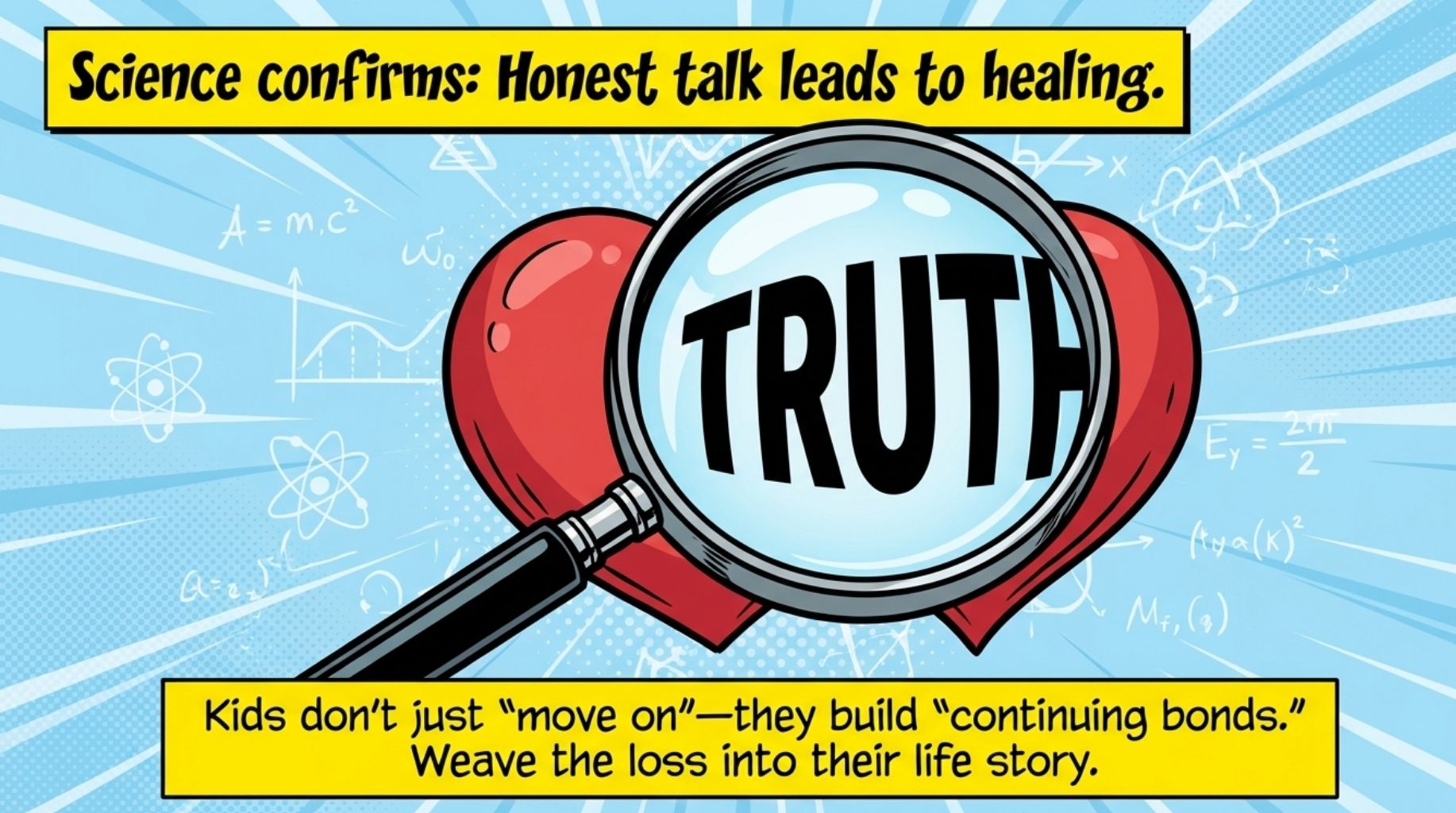
New studies give us better ways to help. Old ideas said kids “get over it fast.” We now know that is not true. Research shows how children process this loss over time. It tells us what truly helps them adjust. For example, studies prove honest talk leads to better long-term healing. This science helps us move past guesswork. Using evidence-based methods makes your child pet loss support more effective. It ensures your actions are guided by real understanding.
Recent research confirms that for many children, the death of a pet is their first major experience with grief. In fact, studies show about 6 in 10 children with pets will lose one before they turn seven. This makes pet loss a very common, yet profound, childhood event. Another key finding is that the strength of a child’s attachment to their pet directly influences their grief. The closer the bond, the deeper the sadness, and that’s a normal, healthy response.
Studies on Honest Communication and Adjustment
Important research followed families after a pet died. It found clear results. Children whose parents talked openly about the death were emotionally healthier a year later. Kids who were shielded from the truth or given confusing stories had more anxiety. The study concluded that a child’s ability to make sense of the death is crucial. This science strongly supports using clear, honest words. It confirms your tough conversation is vital child pet loss support.
The Healthy Role of “Continuing Bonds”
The old grief model said we must “let go” and “move on.” New research on child pet loss support supports “continuing bonds.” This means keeping a healthy connection after death. We do this by talking about the pet, making memorials, and celebrating their life. Studies show this helps children weave the loss into their life story. It does not hold them back. It lets love and sadness live together. Encouraging these bonds is a modern, smart strategy.
Why a Dog’s Death Can Feel Like Losing a Family Member?
Brain scan studies show that the bond with a pet activates the same brain regions as human attachment. This explains why the pain feels so physical and deep. For a child, a dog is often a constant, non-judgmental companion. This unique bond means the loss is truly of a family member. Acknowledging this depth validates your child’s pain. It helps them, and you, understand why it hurts so much.
What New Studies Say About Childhood Grief Patterns?
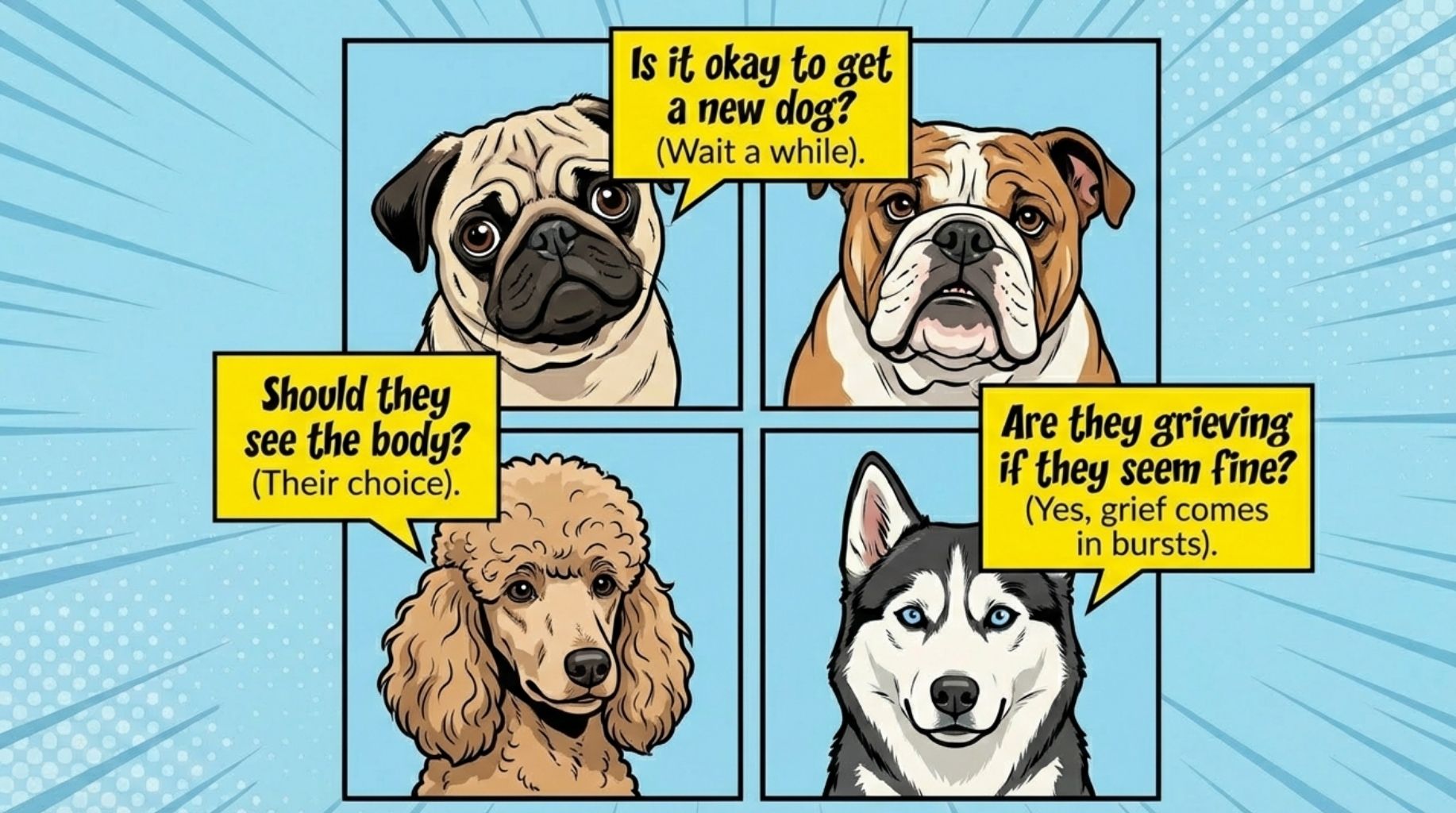
Research is moving away from the idea of “stages” of grief for children. Instead, it shows that kids often experience “grief bursts“, intense moments of sadness that come and go. They might be fine one day and very sad the next, even months later. This is not a setback, it’s a normal pattern. Understanding this can relieve pressure on both you and your child. It allows grief to follow its own natural, non-linear timeline.
How Support to Child for Pet Loss Builds Emotional Strength for Life?
Navigating this loss with support teaches children invaluable emotional skills. They learn that it’s okay to feel sad, how to ask for comfort, and that hard times can be faced with love. These are lessons in resilience that will help them throughout life. By providing strong child pet loss support now, you are not just helping them heal from this loss. You are giving them tools to handle future challenges with greater strength and empathy.
🔑 Key Point: Science supports using honest communication and “continuing bonds” (like memorials) as effective strategies that help children adjust healthily over time.
NAVIGATE YOUR OWN GRIEF WHILE YOU SUPPORT YOUR CHILD PET LOSS
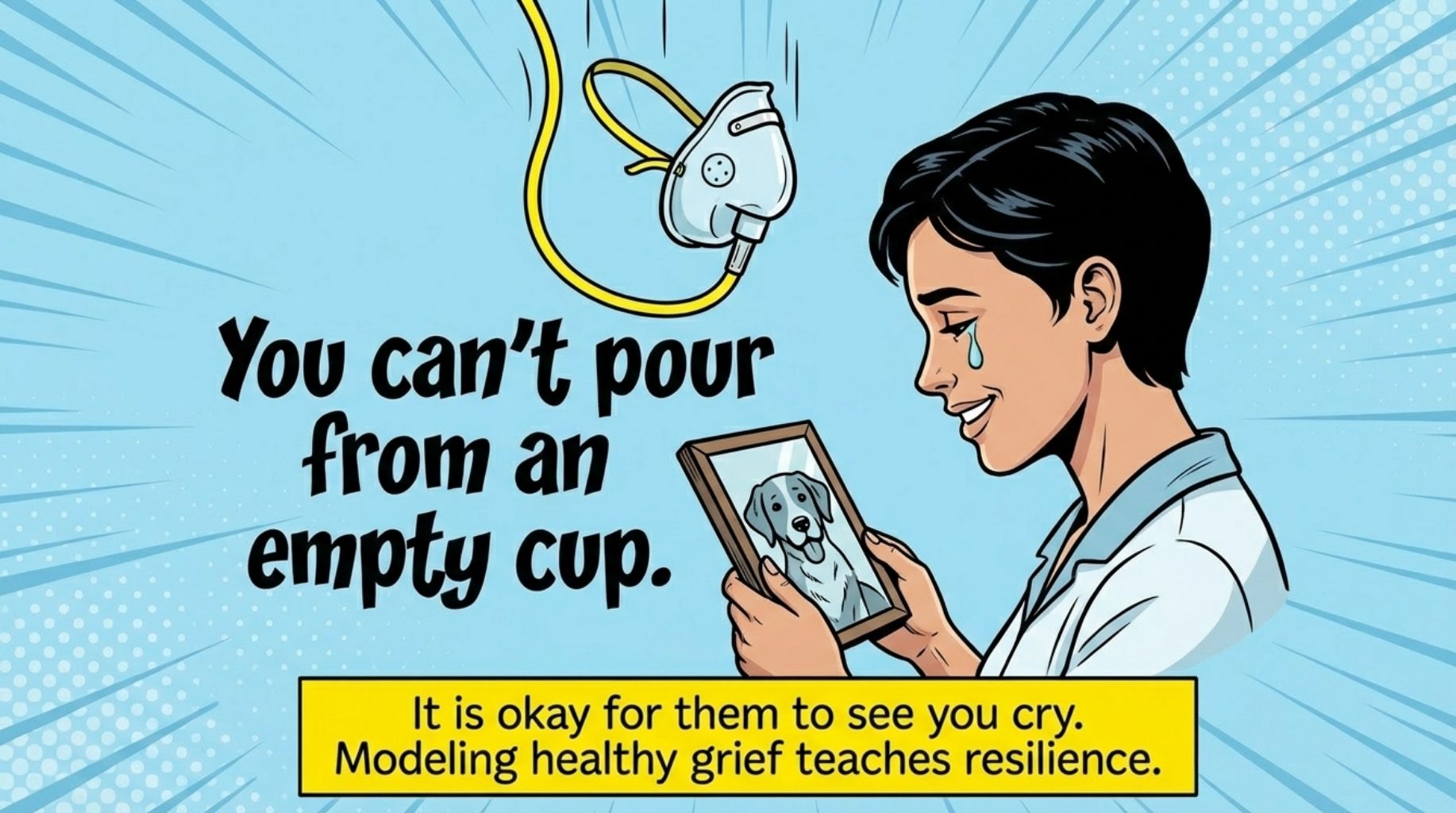
You can’t pour from an empty cup. Your grief is real and valid, too. Trying to hide it completely can be exhausting and confusing for your child. It’s essential to acknowledge your own pain while staying present for them. Find time to grieve privately, cry with a friend, write in a journal, or take a solitary walk.
Taking care of yourself is not selfish, it’s a necessary part of being able to offer steady child pet loss support. Your own healing journey models resilience for your child.
Tailor a Healthy Grief Without to Overwhelm Your Kid
It’s okay to cry in front of your child. Say, “I’m crying because I miss Max so much. It’s okay to feel sad.” Then, after a moment, you can take a deep breath and say, “Let’s look at some pictures of him together.”
This shows that grief is a wave you feel, then ride out. Avoid prolonged, uncontrolled sobbing in front of them, which can be scary. This balanced modeling is a subtle but vital lesson in child pet loss support. It teaches emotional regulation and the natural flow of mourning.
Find Support for Yourself as a Grieving Pet Parent
Seek out your own support network. Talk to friends who understand the bond with a pet. Consider an adult pet loss support group, either locally or online. Don’t hesitate to speak with a counselor yourself if you’re struggling.
You are also going through a significant loss. Caring for your own heart is a critical, often overlooked component of the child pet loss support ecosystem. When you are supported, you have more strength, patience, and compassion to give to your child.
Act with Balance: Be Strong and Be Real
You don’t have to be a rock 24/7. The goal is to be a “secure base”, someone your child can reliably return to for comfort. This means being emotionally available and consistent, not emotionless. Sometimes you’ll be the strong one holding them.
Other times, you’ll be real, sharing a memory that makes you both tear up. This authentic balance is the essence of true child pet loss support. It builds deep trust and shows your child that families support each other through all of life’s ups and downs.
🔑 Key Point: It’s vital to care for your own grief too. Modeling healthy emotions and seeking support makes you a stronger, more present source of comfort for your child.

HELP YOUR CHILD TO REMEMBER THE DOG WITH JOY: SUPPORT THE PET LOSS THROUGH MEMORIES
Over time, the sharp pain of loss softens. The goal is to help your child remember their dog with more smiles than tears. You can keep the dog’s spirit alive in your family stories and traditions. This shifts the focus from the moment of death to a lifetime of love. This practice is a joyful, ongoing part of child pet loss support. It teaches your child that love never really ends.
Make it normal to talk about your pet. This lets your child share too. If talking makes them sad, validate it. Look at videos together. On the dog’s birthday, have a favorite snack in his honor. This teaches that death ends a life, but not a relationship.
Share “Remember When…” Stories at Dinner
Make it a habit to share a happy memory about your dog during family meals. Start with, “Remember when Buddy stole the whole sandwich off the table?” Laughter and happy tears will mix. This ritual keeps the dog’s personality alive in your home. It shows your child that it’s good to talk about the pet you miss. This simple tradition is a powerful form of child pet loss support. It builds a family history filled with love.
Create an Annual “Remembrance Day” Tradition
Pick a date, like your dog’s adoption day or birthday. On that day, do something your dog loved. Go for a hike, eat a special dog-friendly treat (like peanut butter cookies), or visit a favorite park. This creates a positive day to look forward to each year. It transforms a date that might be sad into a celebration of life. This tradition is a beautiful, forward-looking piece of child pet loss support.
Keep Their Spirit Alive in Daily Life
Leave your dog’s photo in a frame where you can see it. If you get a new pet, talk about how the old dog would have loved them. Keep using silly nicknames your dog had. These small acts weave your dog’s memory into the fabric of your daily life. They remind your child that their furry friend is still a part of your family’s story. This integration is the ultimate goal of child pet loss support, to hold love and loss together in a peaceful heart.
🔑 Key Point: Shift focus from loss to love by sharing happy stories and traditions, teaching that love persists and memories can be a source of smiles.
FREQUENTLY ASKED QUESTIONS ABOUT CHILD PET LOSS SUPPORT

Key Points and Takeaways to Remember!
- Recognizing the unique signals of child’s grief, from quiet confusion to outbursts, is the essential first step in supporting them.
- Use clear, honest words like “died” when telling your child, and validate all their immediate feelings to build a foundation of trust for the healing journey.
- Tailor your talk about death to your child’s age, using simple, physical words for little ones and more factual details for older children and teens.
- Always use honest, gentle language suited to your child’s age, avoiding confusing phrases like “put to sleep” to prevent fear or misunderstanding.
- Active remembrance, like a ceremony or memory box, turns grief into a positive, shared project and is a powerful healing tool for a child.
- Simple, repeated rituals, like a weekly time to share memories, provide ongoing comfort and structure, helping a child feel safe in their grief.
- Listen more than you talk, validate all feelings, and encourage creative outlets to help your child process their emotions in a healthy way.
- Consider professional help if your child’s grief severely disrupts daily life for months, showing as lasting changes in sleep, school, or personality.
- Science supports using honest communication and “continuing bonds” (like memorials) as effective strategies that help children adjust healthily over time.
- It’s vital to care for your own grief too. Modeling healthy emotions and seeking support makes you a stronger, more present source of comfort for your child.
- Shift focus from loss to love by sharing happy stories and traditions, teaching that love persists and memories can be a source of smiles.
The loss of a family dog is a profound heartbreak. For a child, it is often their first experience with death. The grief is real and deep. Your role as a parent is crucial. You are their guide through this painful time.