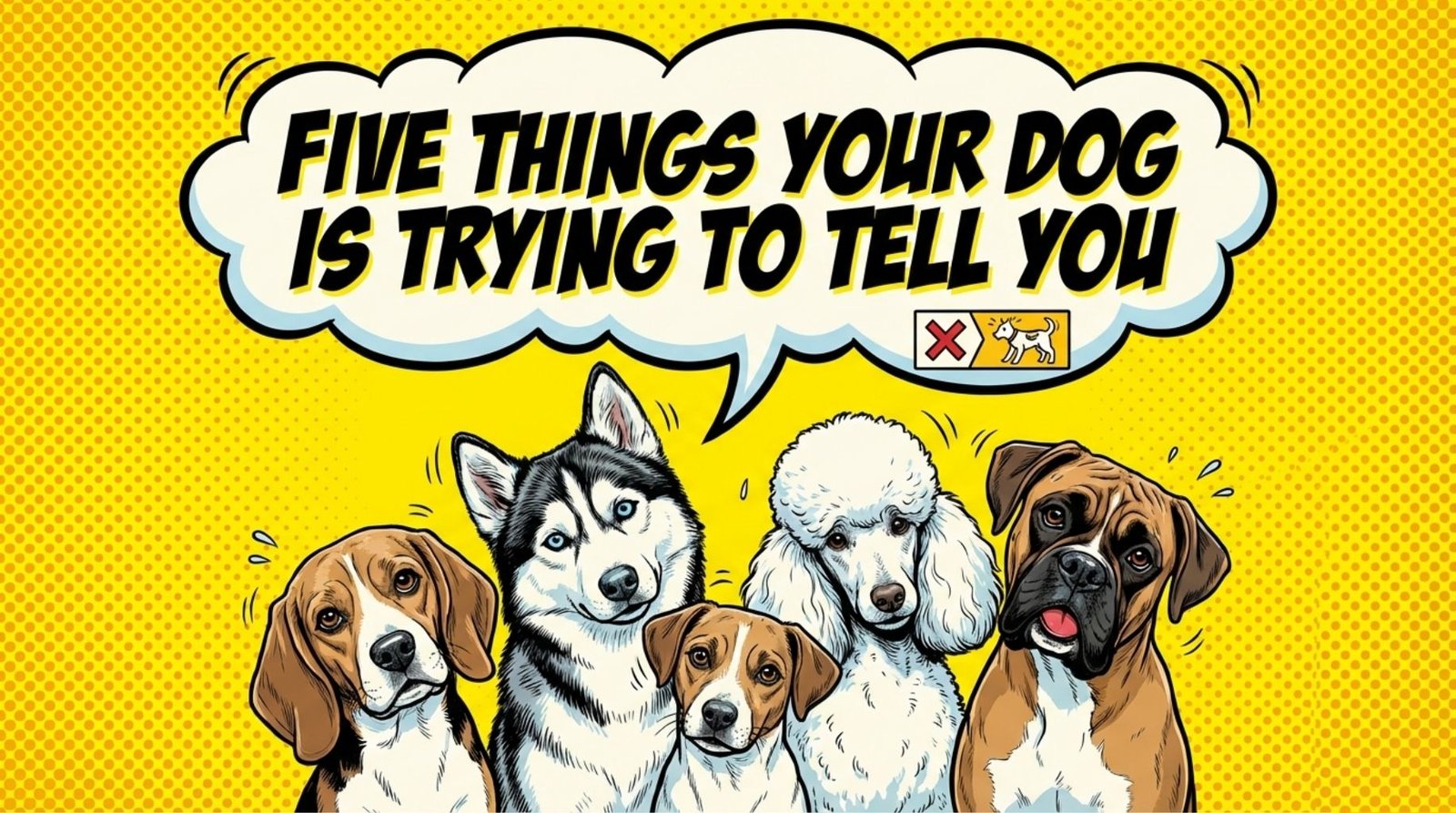



What is it about floppy dog ears that makes us smile? Is it the soft slap-slap sound when they run? Maybe it is the velvety feel between your fingers. Those droopy ears are full of charm. But there is more to this cute trait than just looks. The story of floppy ears mixes science, history, and pet care.
Researchers are finding the genetic secrets behind ear shape. This journey often starts with a simple question from a dog owner. It is a fun story about why your dog looks the way it does. Let’s explore the world of this cute shape of dog ears together. We will learn about their genes, their health, and their huge appeal.
“Why do some dogs have soft, floppy ears that we love to pet?“
Quick Summary About Floppy Dog Ears
This article is all about floppy dog ears. We will look at the new science behind them. You will see how dogs got them. We will learn how to care for them. Also we will also share fun facts about our floppy-eared friends.

THE SIMPLE GENETICS OF FLOPPY DOG EARS
The reason for a dog’s ear shape was a mystery for a long time. New science has given us a clear answer. A major study in early 2026 looked at dog DNA. Scientists studied over 3,000 animals, including dogs and wolves. They wanted to find what makes ears long and floppy or short and pointy. They found a special area in dog DNA near a gene called MSRB3. This gene matters for hearing.
Think of this DNA area as a simple recipe. One recipe version makes prick ears. Another version makes basic drop ears. An extra ingredient in that recipe makes ears grow long and floppy. So, the long, lovely floppy ears on a Spaniel are written in their genes from birth. This is the basic blueprint for their look.
How a Single Gene Can Shape a Floppy Ear?
The MSRB3 gene is very important here. It helps make a protein that protects cells. The study found that the DNA changes for ear length are near this gene. These changes likely control how active the gene is. Imagine the gene is a factory. The nearby DNA is a dial that controls the factory’s speed.
For floppy dog ears, the dial might be turned up high. This boosts the gene’s activity. More activity can make cells in the ear flap grow faster. More growth means more ear tissue. The result is those long, soft ears we love to pet. This link between this gene and ear growth is seen in other animals, too. It is a basic biological process.
From Wolf Ears to Floppy Dog Ears
We must look at wild family to understand floppy dog ears. The study compared dogs to wolves and coyotes. This showed what DNA is original and what is new. The original, wild trait is the upright, pointy wolf ear. This ear is great for hearing prey. The floppy dog ear is a new trait from domestication.
Scientists looked only at dog breeds that already have drop ears. This helped them find the small differences that affect length. They filtered out the big switch that makes an ear flop over. Then they found the tiny changes that make a Beagle’s ear moderately long. They found what makes a Bloodhound’s ear very, very long. It was a smart and simple approach.
What Future Research Holds for Floppy Dog Ears?
This discovery is just the start. The researchers are curious about the next steps. They note that even in one breed, ear size can vary. Studying a single, diverse breed more could show even tinier genetic controls. Also, the DNA area near MSRB3 is close to genes for body size.
Selecting for a smaller dog might accidentally affect ear length. Knowing these links helps breeders make good choices. The goal is to use this science for better dog health. We want to keep cute traits like floppy dog ears and avoid ones that cause sickness. Good breeding is thoughtful breeding.
🔑 Key Points: Floppy dog ears are in their genes. A simple DNA recipe makes ear cartilage grow long and soft.
HOW DOMESTICATION CREATED FLOPPY DOG EARS?
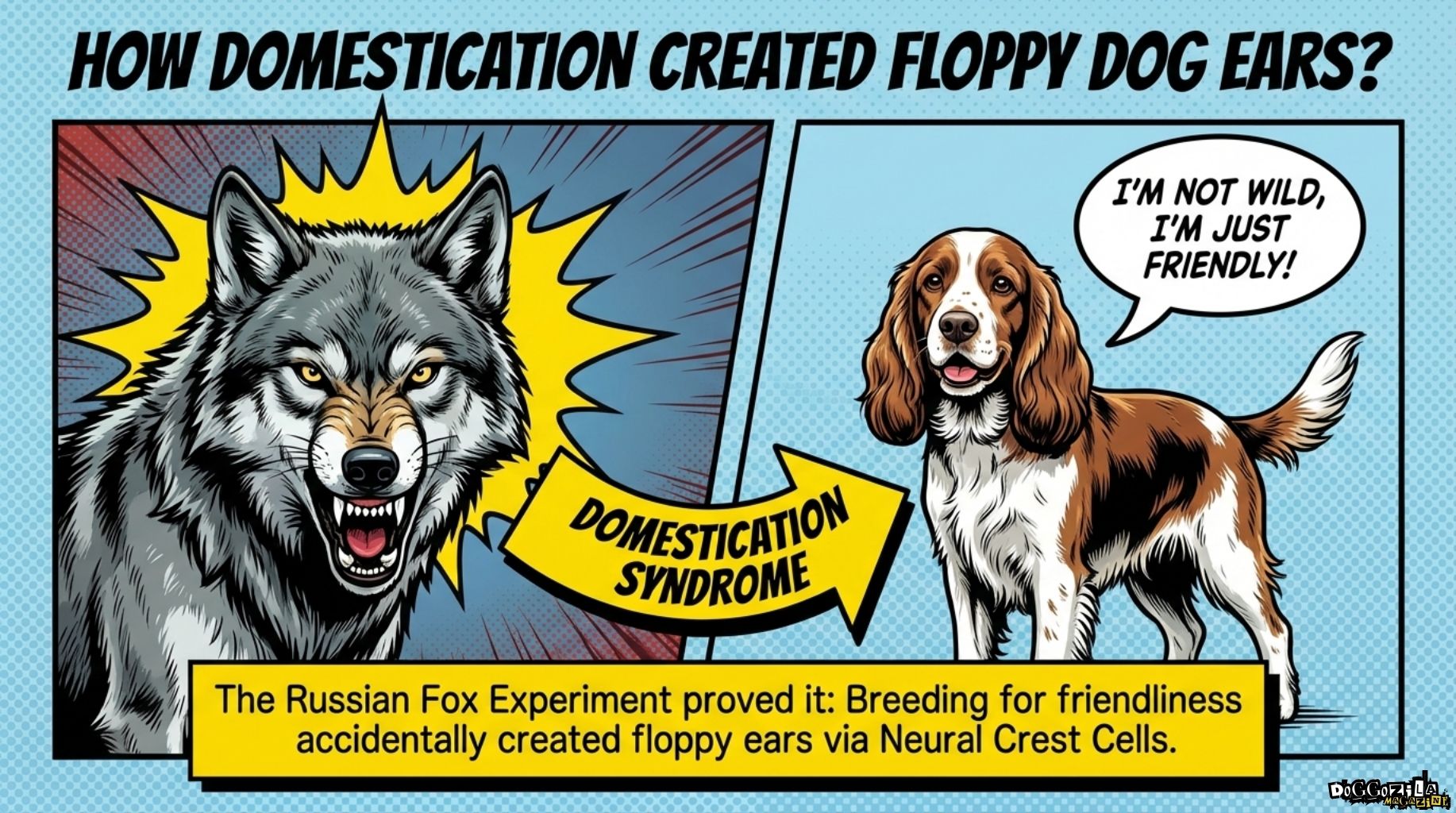
The tale of floppy dog ears is part of a bigger story called “domestication syndrome.” This describes common traits in tame animals. These traits include floppy ears, spotted fur, and shorter snouts. People did not directly breed for all these traits at first. Instead, they bred for one thing, a friendly, tame personality.
The other physical changes came along as a package deal. This is why tame foxes, horses, and dogs can look similar. The famous Russian fox experiment proved this. Foxes bred only for tameness got floppy ears and curly tails in a few generations. So, the floppy dog ear is a mark of friendship. It is a sign of becoming close to people.
The Cell That Explains Floppy Dog Ears
What links a friendly personality to floppy dog ears? The answer is a special stem cell called the neural crest cell. These cells move through a young animal’s body as it grows. They build many different tissues. They build adrenal glands, facial bones, teeth, and ear cartilage.
The theory is simple. Choosing tamer animals means choosing animals with milder neural crest cell development. This leads to smaller adrenal glands, shorter snouts, and softer ear cartilage. Softer cartilage cannot hold up a big ear. The ear droops into the charming floppy ears we know. One simple cell change causes many different effects.
Why Ear Shape Matters in Nature?
Long before people bred dogs, ear shape had natural benefits. In wild dogs, ear shape often relates to climate. Big, thin ears, like a fennec fox’s, help release heat in the desert. Small, thick ears keep heat in during cold winters. This also applies to our pet dogs. Also, floppy ears had a practical job for early hunting dogs.
For scent hounds like the Basset, those long ears are useful tools. As the dog sniffs the ground, its ears sweep the floor. They stir up scent particles toward the nose. The ear flap can also block distracting noises. This helps the dog focus on the smell trail. Form follows function.
Human Selection and the Amplification of the Floppy Ear
Once humans got involved, natural evolution slowed. Selective breeding took over. We saw traits we liked and made them stronger. The long floppy ears of the Basset Hound were chosen for better scent gathering. For other breeds, like the Cavalier King Charles Spaniel, the floppy ear was picked for its sweet look.
This kind look makes people want to care for the dog. Breed standards then fixed these shapes. The prick ear of a Shepherd and the heavy drop ear of a Spaniel became official. Human selection worked fast. It created the amazing variety of dog ears we see in dogs today.
🔑 Key Points: Floppy ears are a sign dogs were tamed. Friendly dogs often got floppy ears as a side effect.
A BREEDER’S GUIDE: WHAT DOGS HAVE FLOPPY EARS?
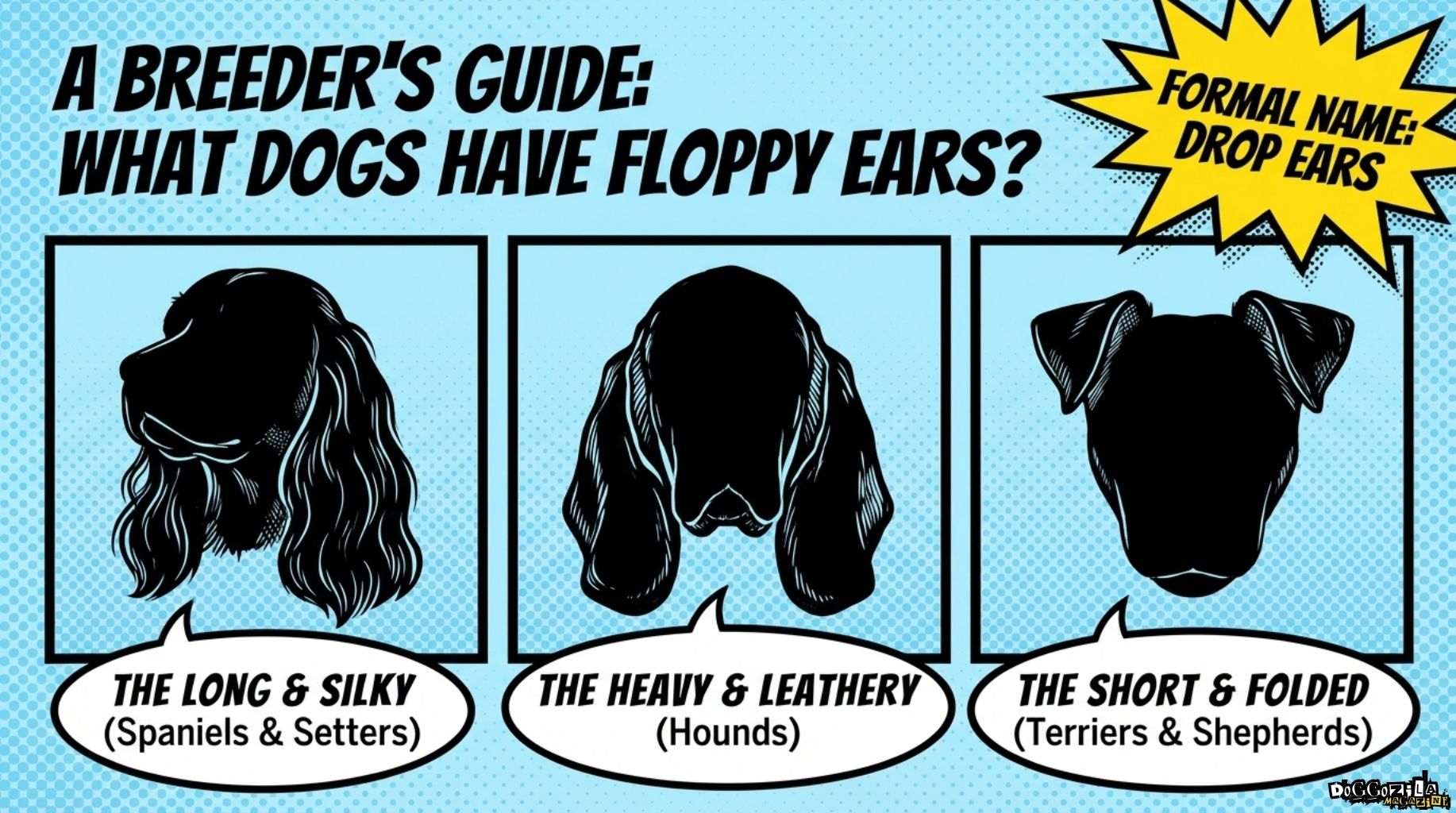
From regal spaniels to comical basset hounds, floppy dog ears are a defining feature for countless beloved breeds. These ears come in all shapes and sizes. They are long and silky, short and velvety, or broad and leathery.
Knowing which breeds are prone to this trait helps owners understand their dog’s grooming needs and potential health considerations. This list celebrates the wonderful diversity of dogs with drop ears.
Dogs with Long, Floppy Ears
These breeds are famous for their elegant, often feathered ears that can drape far down their necks.
They include:
- Spaniels: Cocker Spaniel, Springer Spaniel, Cavalier King Charles Spaniel.
- Setters: Irish Setter, Gordon Setter.
- Hounds: Basset Hound, Bloodhound, Coonhound, Beagle.
- Retrievers: Golden Retriever, Labrador Retriever (though shorter).
- Others: Afghan Hound, Papillon (with long fringes).
Dogs with Short, Floppy Ears
These breeds have drop ears that are shorter in length, lying closer to the head:
- Terriers: Many terrier breeds, like the Border Terrier and Fox Terrier (in some lines).
- Herding Dogs: Some shepherd lines and the Shetland Sheepdog.
- Companion Breeds: French Bulldog, Pug, Boston Terrier (though these are often classified as “rose ears“).
- Others: The iconic Labrador Retriever typically has a short, drop ear.
What Are Dogs with Floppy Ears Called?
There are several formal terms. “Drop ears” or “pendant ears” are the common kennel club terms. “Folded ears” is also accurate. The specific shape can have more precise names, like the long, leathery “hound ear” of a Basset or the finely feathered “spaniel ear.” Regardless of the name, they all share the common characteristic of the ear pinna folding over and hanging down.
🔑 Key Points: Many breeds have floppy ears, from long-eared hounds to short-eared labs, they are called drop or pendant ears.

POPULAR BREEDS WITH FLOPPY DOG EARS
The world of floppy dog ears is wonderfully diverse. It has tiny lapdogs and giant working breeds. They share the droopy look, but their stories are unique. For many, the classic floppy ears belong to a hound. They sweep scents from the ground to its nose.
The Basset Hound is a favorite. It has very long ears, short legs, and a sad, sweet face. Its ears are tools. The Beagle is another icon. It has softer, medium-length ears. Beagles are cheerful, curious, and great for families. Then there is the noble Bloodhound. It has long, wrinkled skin and incredibly long ears. It is the best tracking dog in the world.
Sporting Dogs with Floppy Dog Ears
Many sporting breeds have lovely floppy ears. The popular Labrador Retriever and Golden Retriever are perfect examples. Their friendly nature matches their soft, hanging ears. Remember, these water-loving dogs need ear care after swimming. The elegant Irish Setter has long, feathery ears. They flow beside its red coat.
In the herding group, the smart Australian Shepherd often has drop ears. They frame its expressive eyes. Even the brilliant Poodle has long, covered ears. They hang close to its head. Floppy ears appear in many breed groups. They were chosen for work, for water, and for a gentle look.
Small Companions with Floppy Dog Ears
For small companion breeds, floppy dog ears make a sweet face sweeter. The Cocker Spaniel has long, silky ears. It inspired the latest genetic research. The tiny Shih Tzu has ears lost in its luxurious coat. The Maltese is a small, bold dog with drop ears covered in white hair.
These breeds show how the trait was kept for beauty. Floppy dog ears promote a nurturing feeling in humans. They make dogs look puppy-like and friendly. From the huge, gentle Great Dane to the small Maltese, the floppy dog ear is a common thread. It is a thread of softness in the dog world.
Picking a Floppy-Eared Friend
Falling for a floppy dog ears breed is easy. But you must think beyond the cute ears. Consider the breed’s full needs. A high-energy Weimaraner needs lots of exercise. A vocal Beagle might not suit an apartment. Grooming needs vary a lot. A Labrador’s coat is easy.
An Irish Setter’s feathers need daily brushing. Most importantly, all floppy dog ears breeds need proactive ear health care. Knowing these needs helps you give a great home. Your droopy-eared friend will thrive in a home that meets all its needs. Its ears will be healthy and happy.
🔑 Key Points: Many loved breeds have floppy ears. This includes hounds, retrievers, and sweet lapdogs.
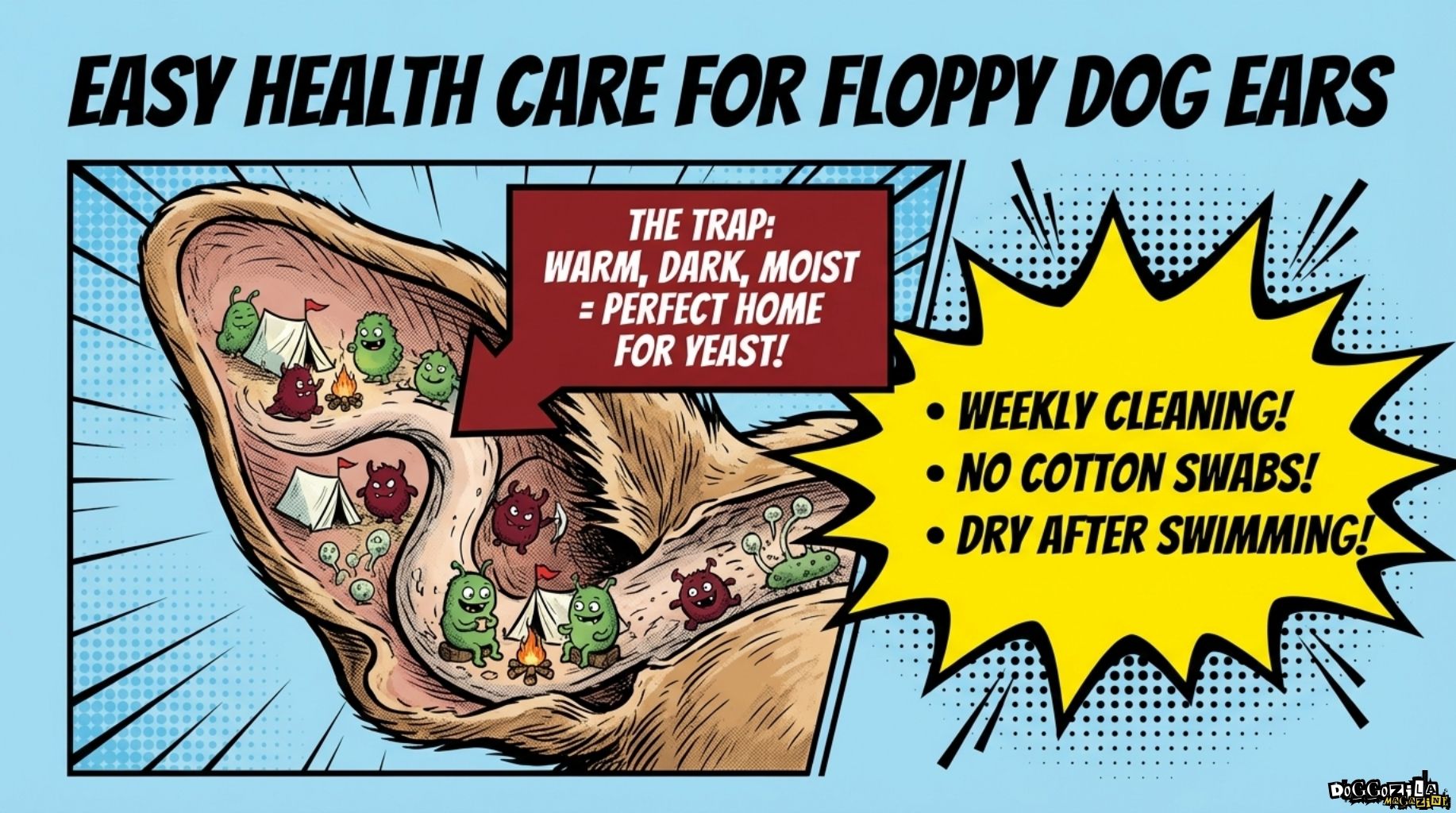
EASY HEALTH CARE FOR FLOPPY DOG EARS
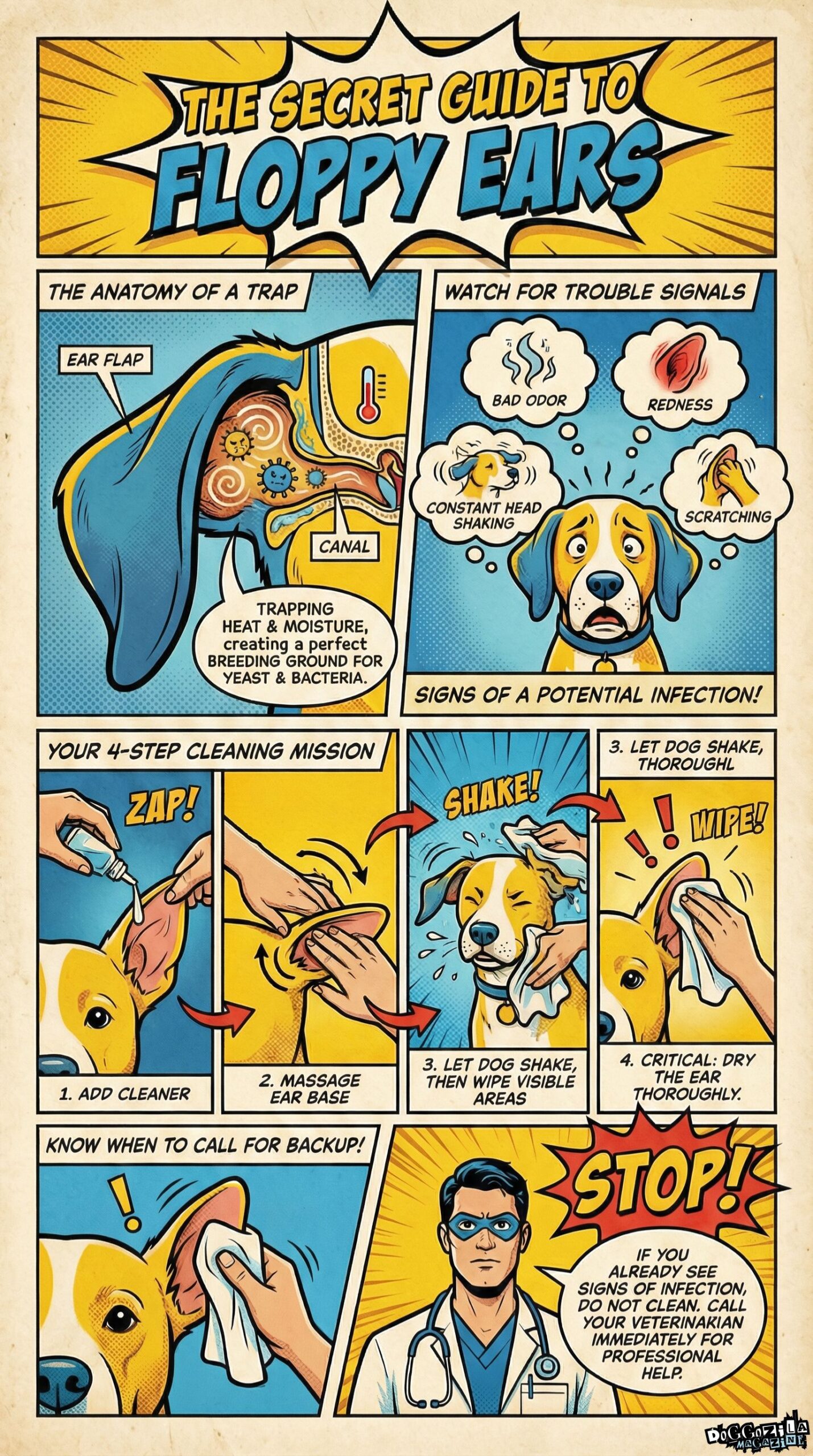
Those beautiful floppy dog ears need a little extra care. Their structure creates a warm, dark, moist space inside the ear. Airflow is limited. This is a perfect home for yeast and bacteria. Dogs with floppy ears get more ear infections than pointy-eared dogs.
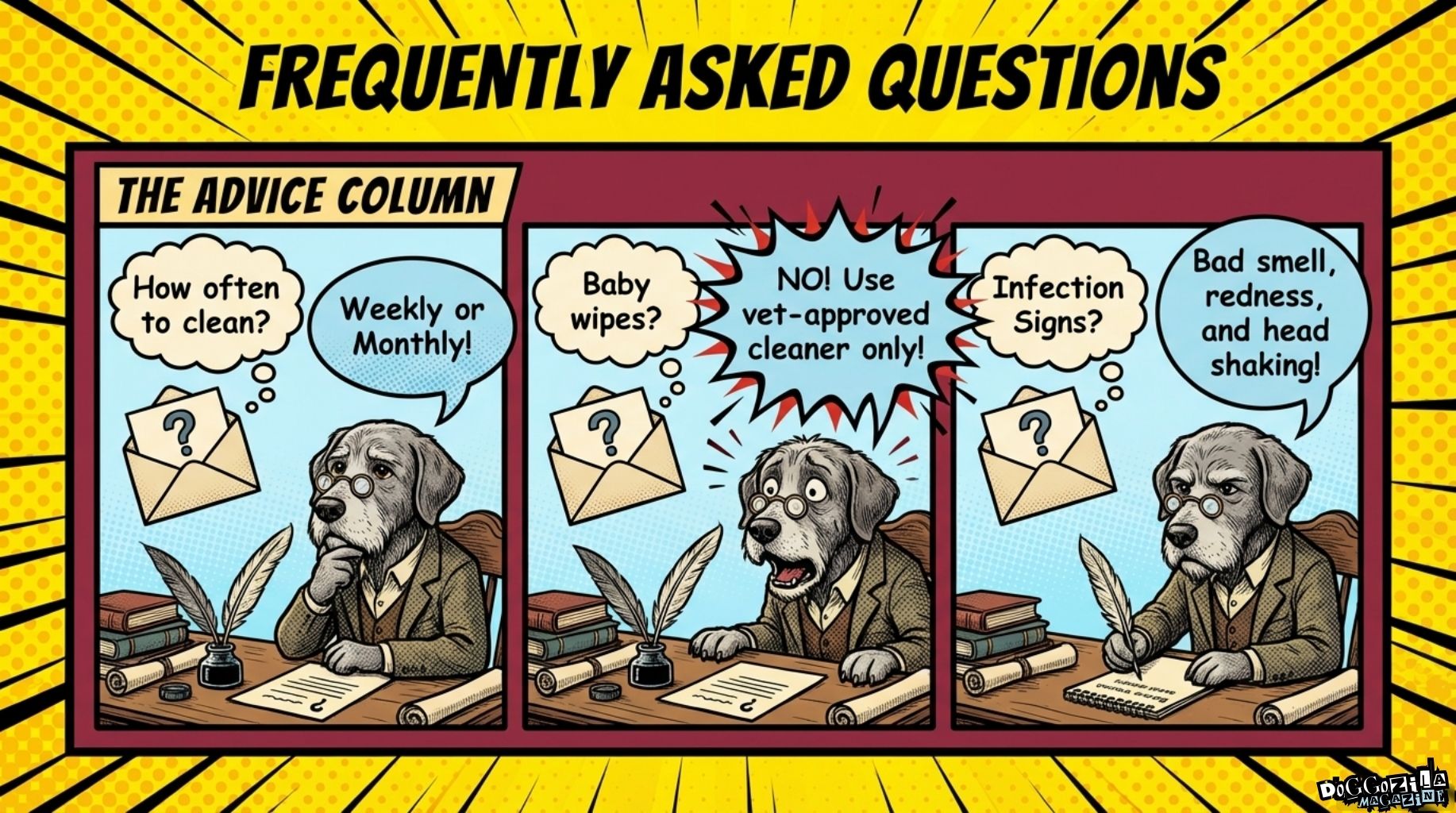
Regular, simple care is the best prevention. A monthly cleaning routine helps a lot. Watch for warning signs. Look for head shaking, ear scratching, redness, swelling, bad smell, or unusual discharge. Catching a problem early makes treatment easier. Caring for floppy dog ears is a key part of responsible ownership.
How to Clean Your Dog’s Floppy Ears Safely?
Cleaning your dog’s floppy ears is simple. You need a vet-approved ear cleaner, cotton balls, and treats. Never use cotton swabs deep in the ear. They can push debris in and hurt the eardrum. Use plenty of tasty treats. First, lift the floppy dog ears flap. Apply the cleaner until the ear canal is almost full. Do not put the bottle tip in the canal.
Next, massage the ear base for 30 seconds. You will hear a squishy sound. This is the solution breaking up wax. Then, let your dog shake its head. Do this in the bathroom, it gets messy! Finally, use a cotton ball to wipe the inner flap. Praise and reward your dog. Make it a positive time.
Stopping Infections Before They Start
Ear health connects to your dog’s overall health. Allergies are a common cause of ear infections. Allergies cause itchiness and inflammation everywhere, including ears. Scratching damages ear skin. This lets infections start. If your dog has frequent ear problems, talk to your vet about allergies.
They might suggest a special diet. Good food supports a strong immune system. A strong immune system fights off minor infections. For dogs that swim, clean their floppy ears after every swim. Dry that moist environment. Simple habits prevent big problems with your dog’s floppy ears.
Common Symptoms of Ear Infections in Floppy-Eared Dogs
Every owner of a dog with floppy dog ears should know the signs of otitis (ear infection):
- Odor: A noticeable yeasty or foul smell from the ears.
- Discharge: Brown, yellow, or black waxy debris.
- Redness & Swelling: The ear flap or canal may look inflamed.
- Pain & Itching: Your dog may scratch its ears excessively, shake its head, tilt its head, or yelp when the ears are touched.
- Behavioral Changes: Irritability or depression due to discomfort.
Find out more about ear infection in dogs, in the article below on the link!
Ear Infection in Dogs: What Causes and How to Treat it?
When to Call the Vet?
Home care is great, but some problems need a vet. Call the vet if the ear is very red, swollen, or painful. Call if there is a foul-smelling or colorful discharge. Other serious signs are a head tilt, loss of balance, walking in circles, or hearing loss. Your vet will look deep into the ear with a special tool.
They will check the eardrum. They might take a discharge sample to look at under a microscope. This tells them if it is bacteria or yeast. Then they give the right medicine. Chronic infections can cause more issues. Quick treatment is best for your dog’s comfort. Protect those precious floppy dog ears.
🔑 Key Points: Floppy ears trap moisture. They need regular cleaning to stop bad ear infections.
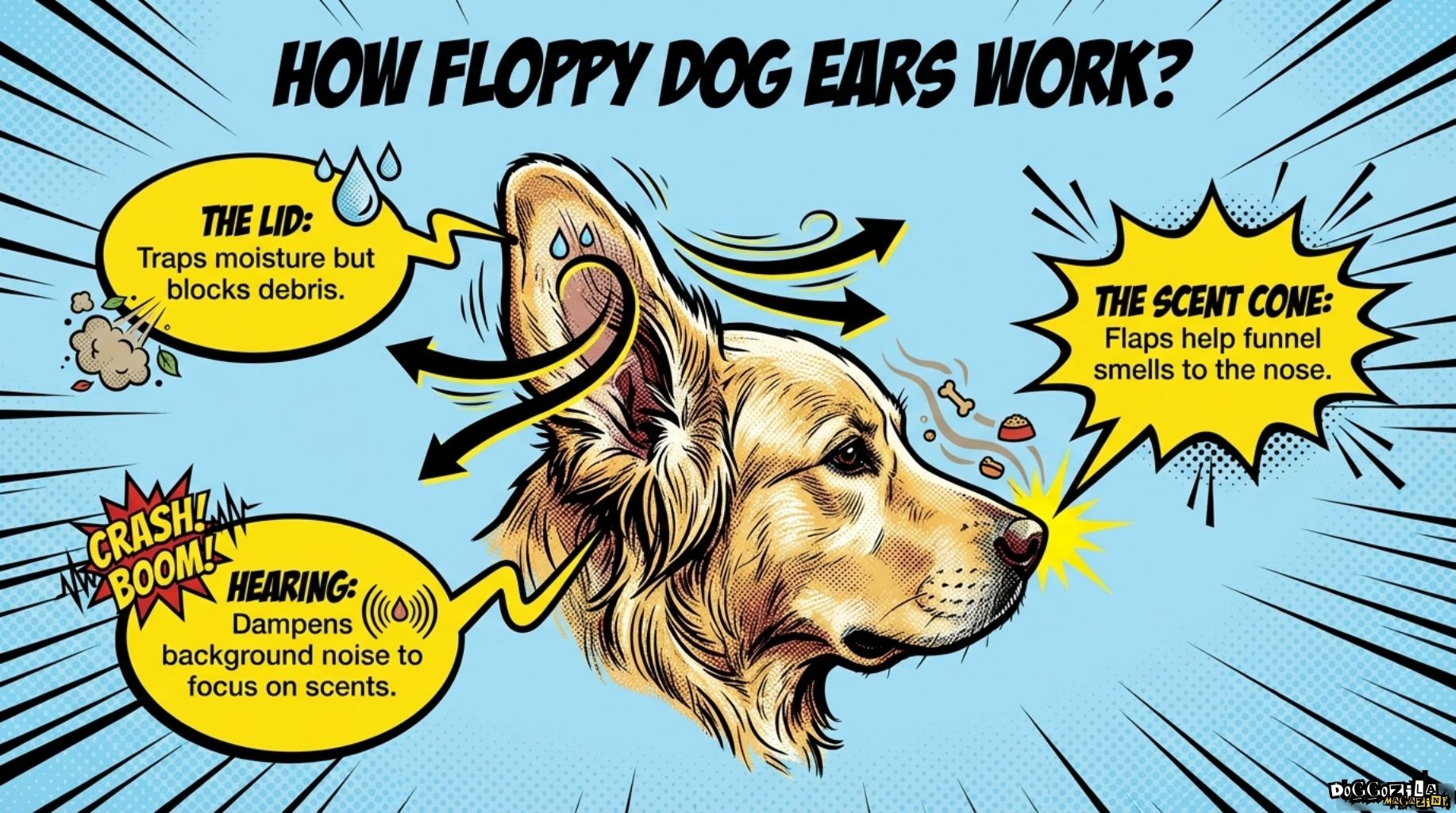
HOW FLOPPY DOG EARS WORK?
Knowing how floppy dog ears are built helps you care for them. A dog’s ear has three parts, outer, middle, and inner. The part we see is the pinna, or ear flap. It is the door to the outer ear canal. In floppy dog ears, this flap covers the canal entrance. The canal goes down, then turns toward the eardrum. The middle and inner ear are deep in the skull. They handle sound and balance.
The point is that the floppy dog ears flap acts like a lid. It reduces airflow into the canal. This can keep some debris out. But it also traps body heat and moisture. This creates the environment where germs can grow.
Hearing with Floppy Dog Ears
Do floppy dog ears mean worse hearing? The answer is a little tricky. The floppy pinna does not block sound from entering. But it changes how sound is collected. Dogs with pointy ears can move them like satellite dishes. They can find a sound’s source precisely. A dog with floppy ears has less control over its ear flaps.
This might slightly reduce its ability to pinpoint a sound. But it does not make them deaf. For scent hounds, this can even help. It dampens background noise. This lets them focus harder on the scent trail. Their nose leads their world. Their floppy dog ears assist their amazing nose.
Learn more about dog hearing in the article below on the link!
Dog Hearing Abilities, Range and Protection
The Connection Between Ear Shape and Body Language
A dog’s ears are very expressive. Even floppy dog ears show emotions. They cannot prick forward in alertness. But you can see the ear base shift or tighten when the dog is interested. When a dog with floppy ears pins them back, it often means fear or submission.
Relaxed, neutral ears hang softly. Learning to “read” your dog’s ears is useful. Look at the ears, tail, eyes, and body together. This tells you your dog’s feelings. You will know when it is happy, scared, or curious. Floppy ears are part of your dog’s language.
Evolutionary Trade-offs of the Floppy Ear Structure
Floppy dog ears are a great example of a trade-off. The small trade in sound location is balanced by other benefits. For early people, a dog with soft, drooping ears looked less scary. It looked more baby-like. This triggered a caregiving feeling in humans.
For dogs, a calmer, cooperative personality was good for living with people. In some jobs, the ear’s physical function helped survival. So, floppy dog ears need a bit more care to prevent infection. But their benefits for bonding and function are huge. This trait is a successful result of friendship.
🔑 Key Points: These ears may hear differently. But they help dogs show feelings and focus on smells.
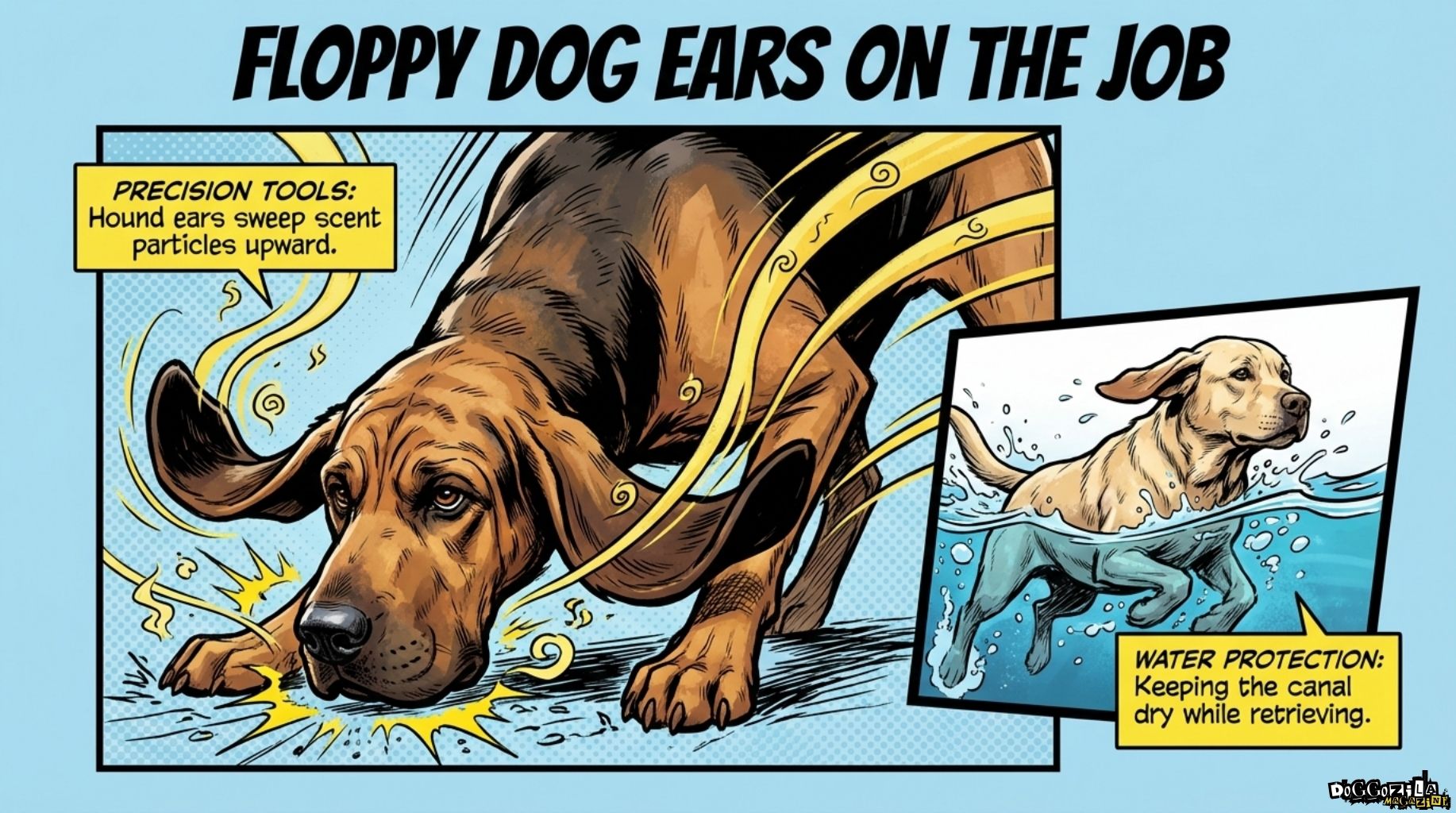
FLOPPY DOG EARS ON THE JOB
Many breeds with floppy dog ears were first bred for work. Their ears were part of their work toolkit. The best example is the hound group. Breeds like the Basset Hound and Bloodhound trailed game for miles. Their very long, heavy ears have a purpose. As the dog moves, its ears sweep the ground. They disturb and collect scent particles. They create a scent cone to the dog’s nose. This improves its ability to follow a trail.
The big ears also muffle wind and distracting sounds. This lets the dog focus on smells. For these dogs, floppy ears are precision hunting tools.
Retrievers and Spaniels: Floppy Ears for Water and Field Work
In the sporting group, floppy dog ears also had practical starts. Retrievers, like Labradors, fetched waterfowl. Their drop ears give some protection. When swimming or moving through brush, their ears lay flat. This helps keep out water and debris. Spaniels, like the Cocker, were flushing dogs.
They worked in thick cover to push birds into the air. Their longer ears protected them from thorns. For these active breeds, floppy dog ears were a functional adaptation. They were not just for looks. They helped the dog do its job in its environment.
From Worker to Best Friend
As times changed, many working breeds became companions. But their bred-in traits, like ear shape, stayed. The gentle look of floppy dog ears made this change easy. A dog with droopy ears seems less threatening. It seems more approachable. This “baby” look makes people feel nurturing. It strengthens the human-dog bond.
Breeders of companion dogs then chose this trait on purpose. They wanted the sweet, kind face that floppy dog ears create. Breeds like the Cavalier King Charles Spaniel have this perfect “care-me” face. It is a face shaped by generations of friendship.
Modern Jobs for Floppy-Eared Breeds
Today, many floppy dog ears breeds still use their skills. Bloodhounds track missing people for police. Labradors and Goldens are great service dogs and guide dogs. They are also detection dogs for bombs or drugs. Their intelligence and trainability help.
The friendly, non-threatening look helps, too. Their soft floppy dog ears make them less scary in public spaces. So, the floppy dog ear still has a purpose. It either helps a sense, like smelling, or helps the dog be a trusted partner. These dogs work alongside us, thanks partly to their appealing looks.
🔑 Key Points: For some dogs, floppy ears were work tools. They helped hunt by sweeping scents to the nose.
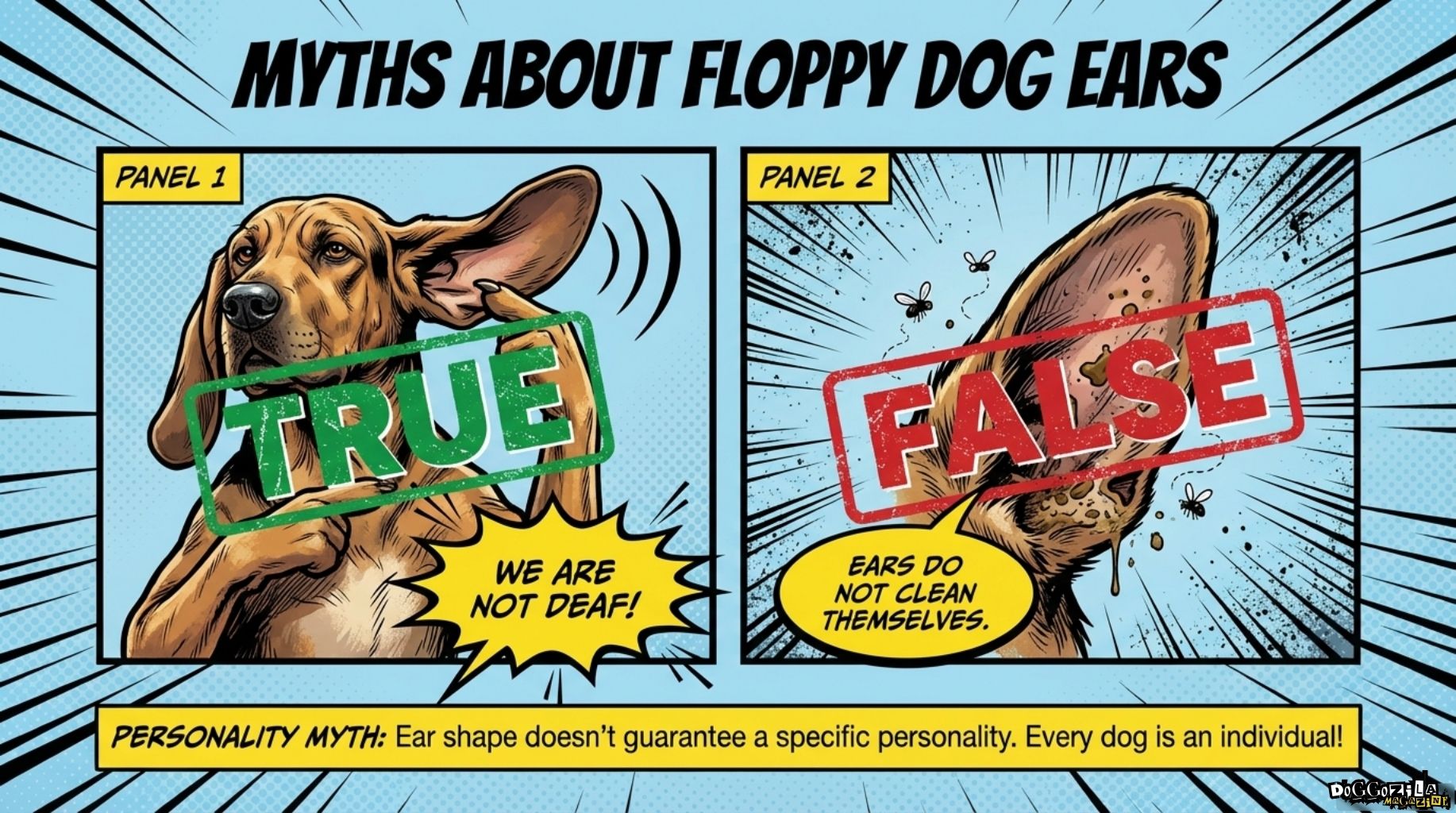
MYTHS ABOUT FLOPPY DOG EARS
Let us find the truth. One big myth says all dogs with floppy ears hear worse. This is not exactly true. They may not locate sound as precisely, but they are not deaf. Another myth says you can tell a puppy’s ear shape very early. This is tricky. Do not believe everything you hear about floppy dog ears.
There are many stories about dogs and their ears. Many puppies have floppy ears at first, even future pointy-eared breeds. The ears often go through a funny, uneven stage. For true floppy dog ears breeds, the ears just get longer and heavier.
The Myth of “Natural” Ear Cleaning
Some think a dog’s ears clean themselves. They think human help is not needed. This idea is wrong and dangerous for floppy dog ears. A little light-brown wax is normal and healthy. But the ear canal does not clean itself well. The lack of airflow and the deep, L-shaped canal trap debris, wax, and moisture.
Waiting for “nature” to fix it will likely cause an infection. Proactive, regular cleaning is essential. It is not a spa treat. It is a must for floppy dog ears health. Be a responsible owner. Clean those lovely floppy ears.
All Dogs Can Get Ear Issues
It is true that floppy dog ears breeds get more infections. But pointy-eared breeds are not immune. Dogs with erect ears have different risks. Their ear canals are more open. They can get foreign bodies, like grass seeds, stuck inside. They can get cuts or sunburn on their ear tips.
Allergies cause ear inflammation in all dogs. So, all ear shapes can have problems. The type of risk is different. No dog is completely safe from ear troubles. All dog owners should check ears regularly. Check your dog’s floppy ears often as part of grooming.
Dog Personalities and Ear Shape
A big myth links ear shape to personality. The idea says floppy ears mean calmer, friendlier dogs. It says pointy ears mean more alert, aggressive dogs. This is a bad overgeneralization. A dog’s temperament is complex. It comes from genetics, socialization, training, and individual spirit.
A well-socialized German Shepherd can be a gentle family dog. An unsocialized Cocker Spaniel can have fear-based aggression. Domestication theory links floppy dog ears to a genetic tendency for tameness. But it does not predict a single dog’s behavior. Judge each dog as an individual. Do not judge by its floppy dog ears alone.
🔑 Key Points: Some beliefs about these ears are wrong. They do not cause deafness, and they cannot clean themselves.
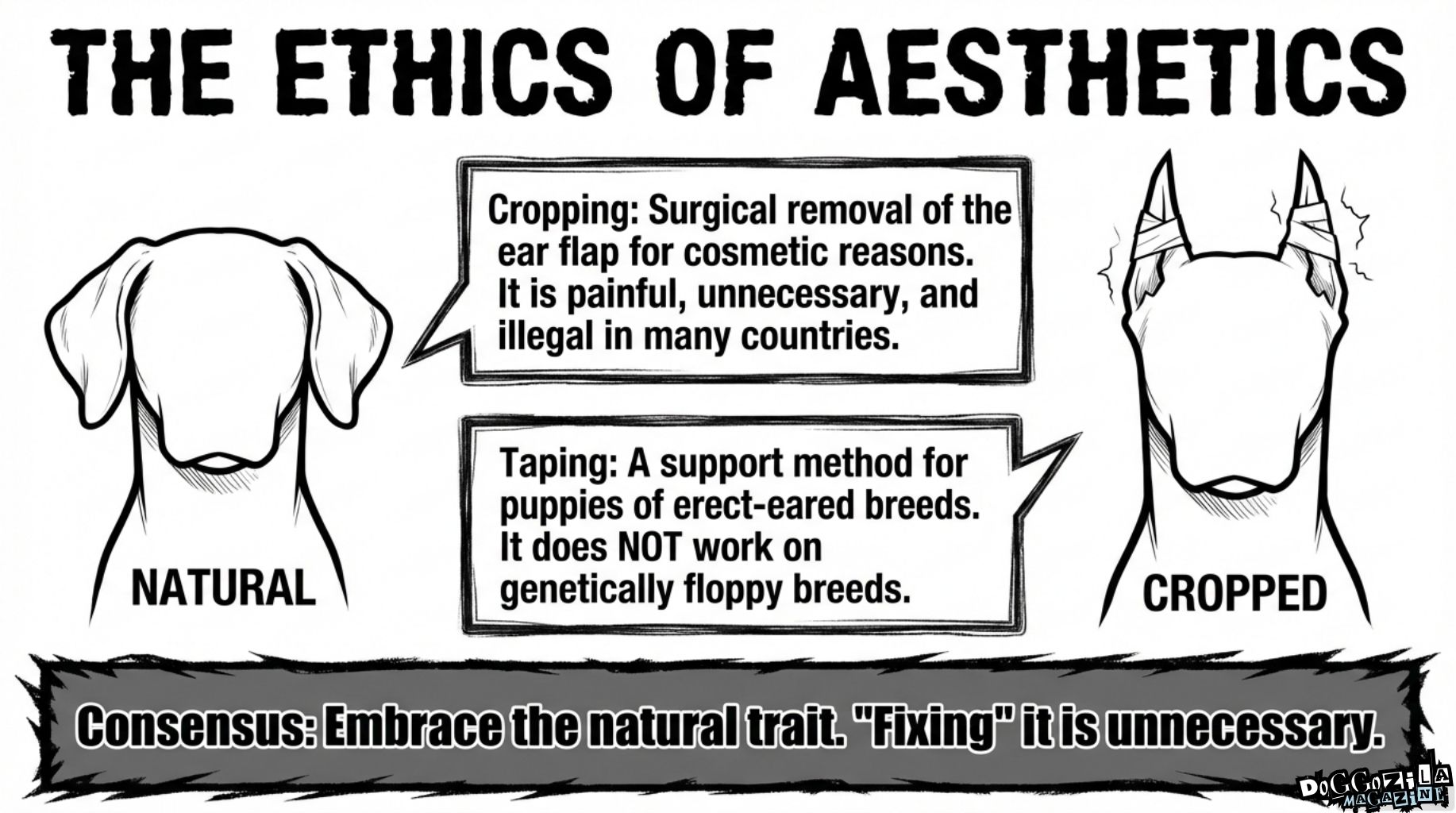
CORRECTION AND CONCERNS: CAN OR SHOULD FLOPPY DOG EARS BE FIXED?
Some owners wonder if floppy dog ears can be made to stand up, often for aesthetic reasons or to meet breed show standards. Conversely, others worry the trait is inherently harmful. It’s important to separate cosmetic desires from health necessities.
In most cases, “fixing” floppy ears is an elective procedure, not a medical requirement.
Non-Surgical Methods: Taping and Support
For some puppies of breeds where upright ears are standard (like German Shepherds or Australian Shepherds), ears may flop during teething. Breeders and owners sometimes use taping techniques to provide support. This involves gently taping the ears into an upright position to encourage cartilage strengthening.
It must be done carefully and correctly to avoid skin irritation. This method only works during a specific window of puppyhood and is not effective for adult dogs or breeds genetically programmed for floppy dog ears.
Surgical Correction: Ear Cropping
The only permanent way to make floppy dog ears stand erect is through a controversial surgical procedure called ear cropping. This involves cutting off a significant portion of the ear flap and splinting it to heal upright. This is a cosmetic surgery with no health benefit to the dog.
It is illegal or heavily restricted in many countries, including most of Europe and Australia, and is increasingly frowned upon by veterinary associations in the U.S. and Canada. It is considered an unnecessary and painful elective surgery.
The Ethical Perspective: Embracing Natural Traits
The modern ethical view held by many veterinarians, breeders, and animal welfare advocates is that floppy dog ears should not be “corrected” surgically. The trait is a natural genetic variation that does not hinder a dog’s quality of life when properly cared for. Efforts are better spent on preventative health care like regular cleaning and monitoring. Instead on altering the dog’s appearance to fit an arbitrary standard. Embracing the natural form of our pets is a growing and compassionate trend.
🔑 Key Points: Taping is for puppies of erect-eared breeds; cosmetic ear cropping is controversial and often illegal.

FUN FLOPPY DOG EARS FACTS
The world of floppy dog ears is full of fun trivia and sweet stories. Did you know the longest dog ears ever were on a Bloodhound named Tigger? His right ear was 13.75 inches long! In pop culture, floppy dog ears define beloved characters. Snoopy, the imaginative Beagle, has those iconic soft ears. Disney’s Lady, from Lady and the Tramp, is a Cocker Spaniel with feathery ears.
Even science gets inspired by floppy dog ears. The big genetic study started with a scientist looking at her Cocker Spaniel. She wondered “why?” about his long ears. Simple questions lead to big discoveries.
The “Floppy Ear Effect” on Human Psychology
There is a reason we find floppy dog ears so cute. Scientists think it triggers “cute aggression.” That is when you see something so adorable you want to squeeze it. The floppy dog ear adds to the “baby schema.” This is a set of infant-like features. It includes a big head, large eyes, and a soft body.
These features make people feel caring and protective. When you stroke a dog’s floppy ears, it feels good for the dog. It also releases oxytocin in you. Oxytocin is the “love hormone.” It strengthens your bond. Petting those velvety floppy dog ears is a deep, biological connection.
Historical Tales of Floppy-Eared Dogs
Dogs with floppy ears have been with us for centuries. Bloodhounds tracked since medieval times in Europe. King Henry VIII kept Basset Hounds. The breed’s name comes from the French “bas,” meaning low. The Cavalier King Charles Spaniel is named for King Charles II.
He loved his little dogs so much. He said they could go anywhere, even into Parliament! Our love for dogs with soft, drooping ears is timeless. They have been hunters, royal friends, and loyal companions through history. Floppy dog ears have a long, proud story.
Famous Floppy-Eared Dogs
From social media to movies, floppy dog ears are stars. Famous dogs like Doug the Pug and Tuna the Chiweenie have millions of fans online. Their expressions are charming. In film, a Yellow Labrador named Buddy starred in Air Bud. He won hearts with his skill and friendly, floppy-eared face.
These famous pets show the trait’s universal appeal. It does not matter if the dog is a purebred champion or a quirky mix. Those floppy dog ears bring joy, laughs, and lots of love. They are a guaranteed source of happiness.
🔑 Key Points: People find floppy ears very cute. Some dogs have record-breaking long ears.
THE FUTURE OF FLOPPY DOG EARS
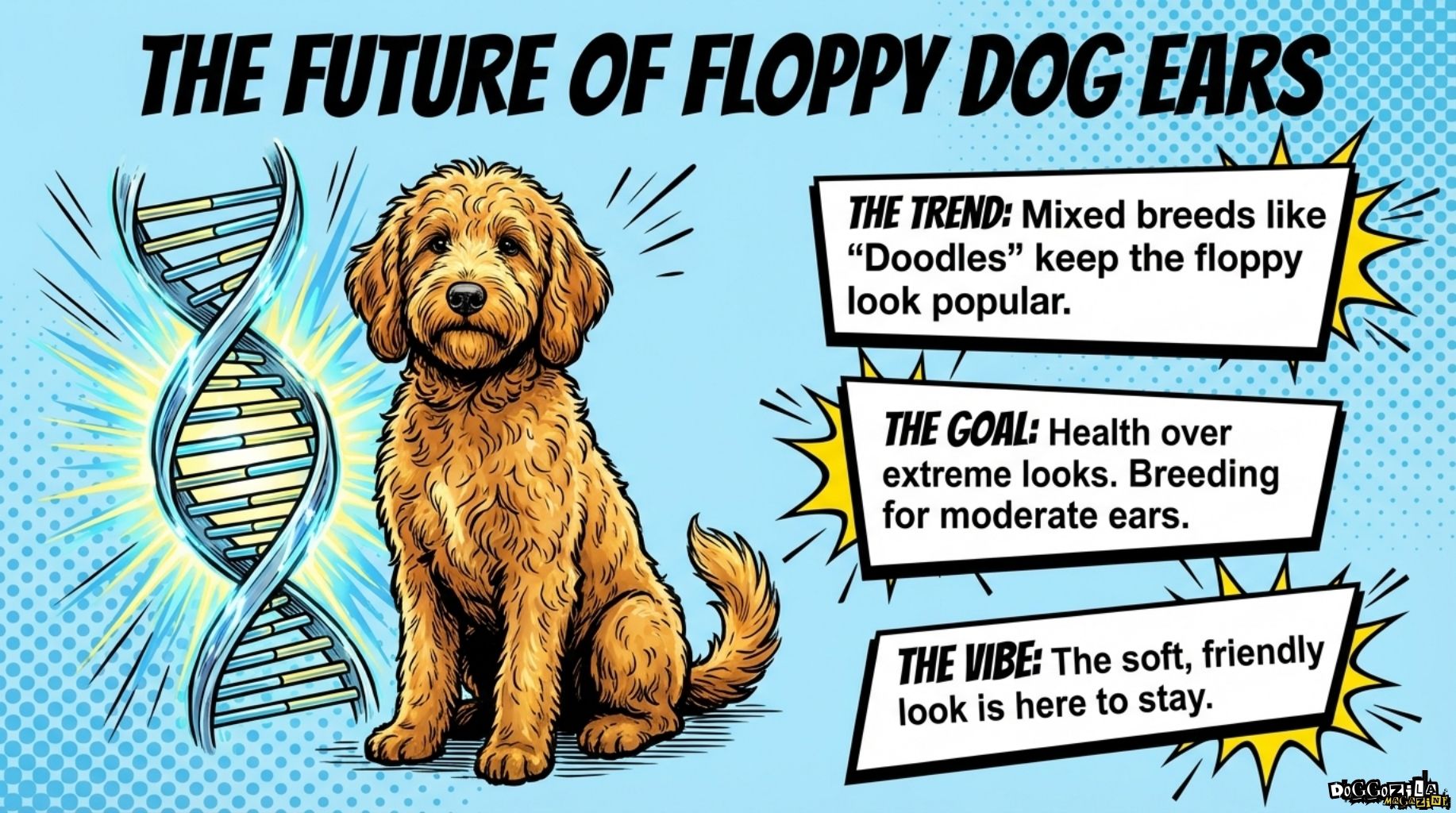
As we learn more about dog genes, we face important questions. What is the future of breeding for traits like ear shape? The discovery of the MSRB3 region gives breeders a genetic marker. This knowledge can be used well. It can keep healthy variety in a breed while preserving its classic look. But there is a warning, too. Extreme breeding for very long, heavy floppy dog ears can have unintended health results.
Good breeders will use genetic testing as a tool. They will balance the desire for a certain “look” with the dog’s health and temperament. The dog’s well-being always comes first.
The Rise of Mixed Breeds and Floppy Ear Popularity
Mixed-breed dogs are very popular now. Many popular mixes inherit floppy dog ears. Think of Cavapoos or Goldendoodles. They often get the floppy ear from their non-poodle parent. This trend shows people still love soft, droopy ears. Mixed-breed dogs can have “hybrid vigor.”
They may have fewer breed-specific issues. But their floppy dog ears still need the same good care. The future of dogs is diverse. The floppy dog ear will surely be a loved feature in many future best friends. People will always want that soft, friendly look.
Ethical Considerations and Breed Standards
New science brings new responsibility. Veterinary geneticists say we must understand what genes we select. A gene for ear length might be close to a gene for a health problem. Selecting for one could raise the risk of the other. Breed clubs are now reviewing standards with health in mind.
The talk is shifting from just looks to health and function. In the future, “moderate” length and good ear health might be valued more. “Extremely long” might become less important in shows. The health of floppy dog ears matters most.
The Unchanging Joy of a Floppy-Eared Friend
Science and breeding will change. But one thing will stay the same. The simple, deep joy of living with a floppy-eared dog is constant. The sound of those ears flapping as they run to you. The feel of them, soft as velvet, as you pet your dog to sleep. The funny sight of them dipping in the water bowl.
These small, daily moments are the real magic. Science explains the how. Love explains the why. Why we choose them, care for them, and adore them. The future of floppy dog ears is bright. It is forever tied to the timeless bond between people and dogs.
🔑 Key Points: We now know the genes for ear shape. Good breeders use this to keep dogs healthy.
FREQUENTLY ASKED QUESTIONS
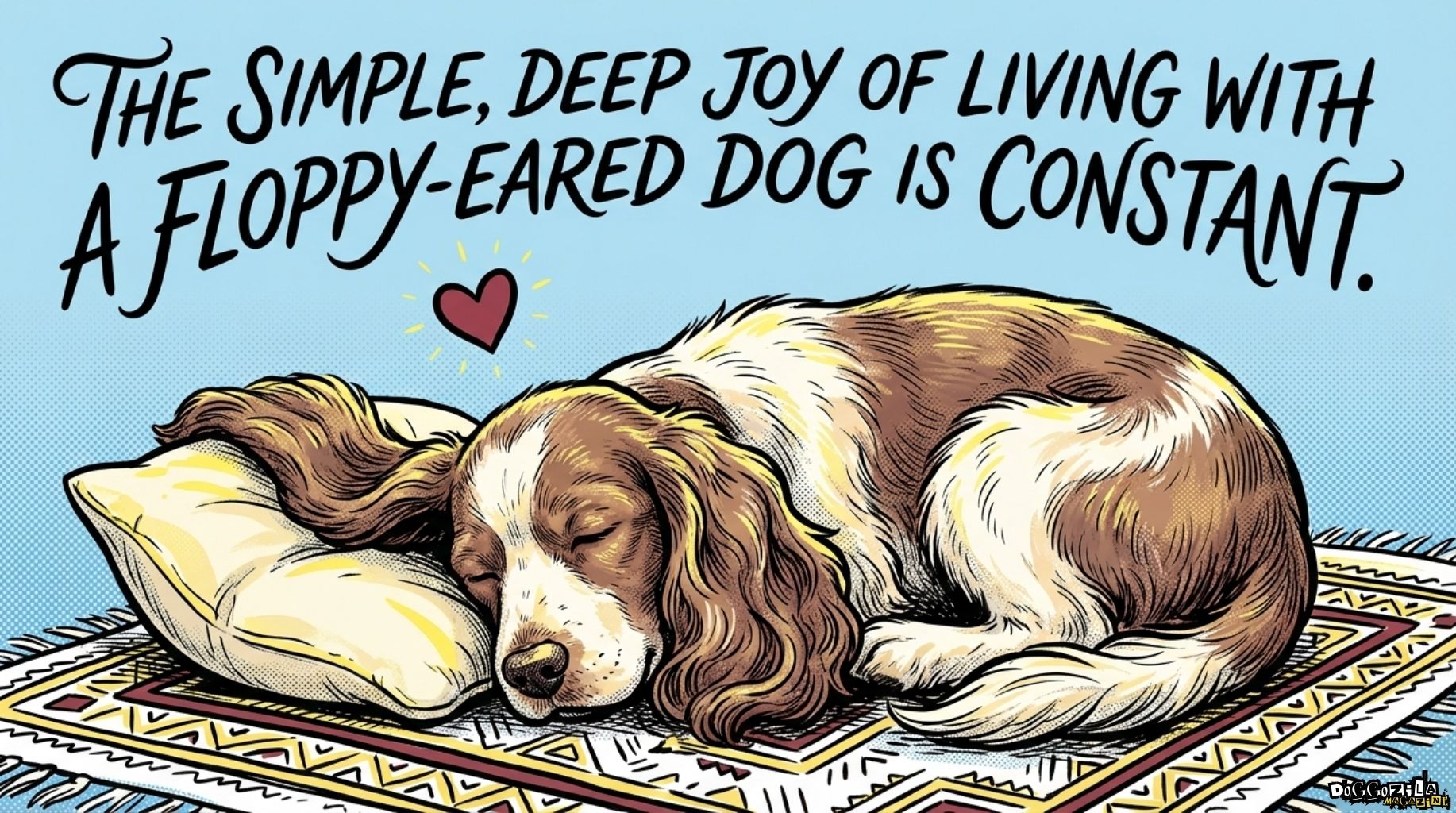
Living with a floppy-eared dog is a joy. It is a happy mix of science, history, and love.