
Can my dog get the flu? This question haunts every dog owner. The answer is yes, canine influenza is real and spreads faster than you think. But new 2026 research reveals surprising facts most articles miss. In this guide, discover real outbreak stories, three hidden scientific findings, and simple steps to protect your dog today. Remember that dog flu, also known as canine influenza is highly transmittable respiratory disease affecting dogs.
Quick Summary About THE INFLUENZA IN DOGS
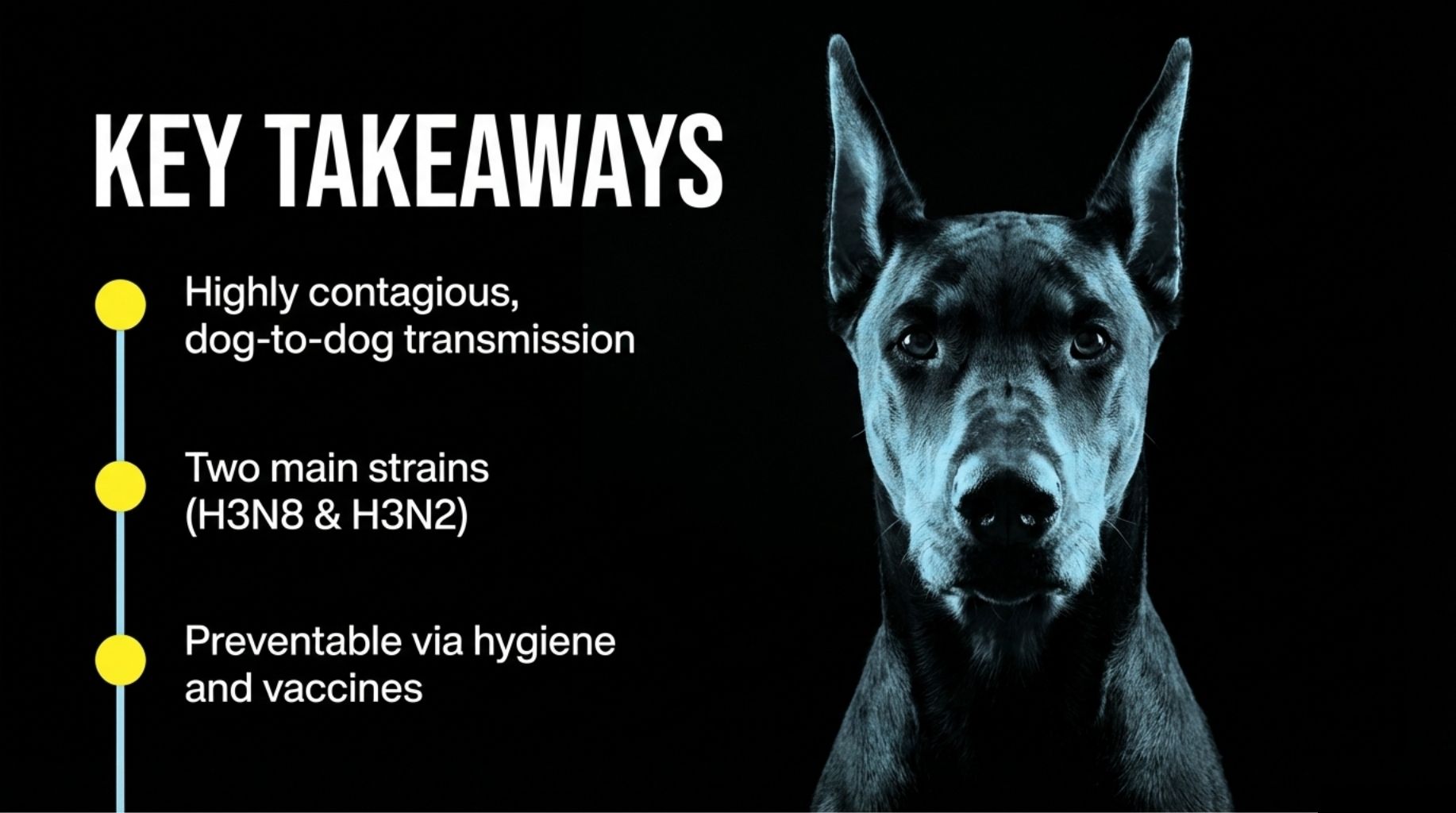
The article explains that canine influenza (dog flu) is a highly contagious respiratory disease in dogs, caused by two specific viruses: H3N8 (originally from horses) and H3N2 (originally from birds). It details how the virus spreads through respiratory droplets, contaminated objects, and even human clothing, and can survive on surfaces for up to 48 hours. Symptoms include cough, runny nose, and fever, and while most dogs recover in 2-3 weeks, some can develop pneumonia. The article emphasizes that it is not a threat to humans and highlights the importance of vaccination, good hygiene, and isolating sick dogs to control outbreaks.
THE DOG FLU IS CAUSED BY SPECIFIC TYPE A INFLUENZA VIRUSES INFECTING DOGS
This type of influenza is known to transmit only among dogs, and it is different from seasonal influenza virus that spread annually between humans. There are two types of a dog flu viruses. The first one is an H3N8 virus, and the later is known as H3N2 virus. Always be sure when it comes to your dog’s health!
Can my dog get the flu and is it transmittable to people?
Generally, the dog flu viruses are considered not to be a threat to people. Globally, a human infection by canine influenza was not reported, but there are cases when influenza viruses change, and it is unlikely but possible to spread easily and transmit to humans. So far, no human infection of animal origin had been reported.

THE DISCOVERY OF CANINE INFLUENZA
The history of canine influenza dates back to the early 2000s. It was first discovered in racing greyhounds in Florida. Veterinarians and researchers began to notice a mysterious respiratory illness affecting the dogs.
Identifying the H3N8 and H3N2 Strains
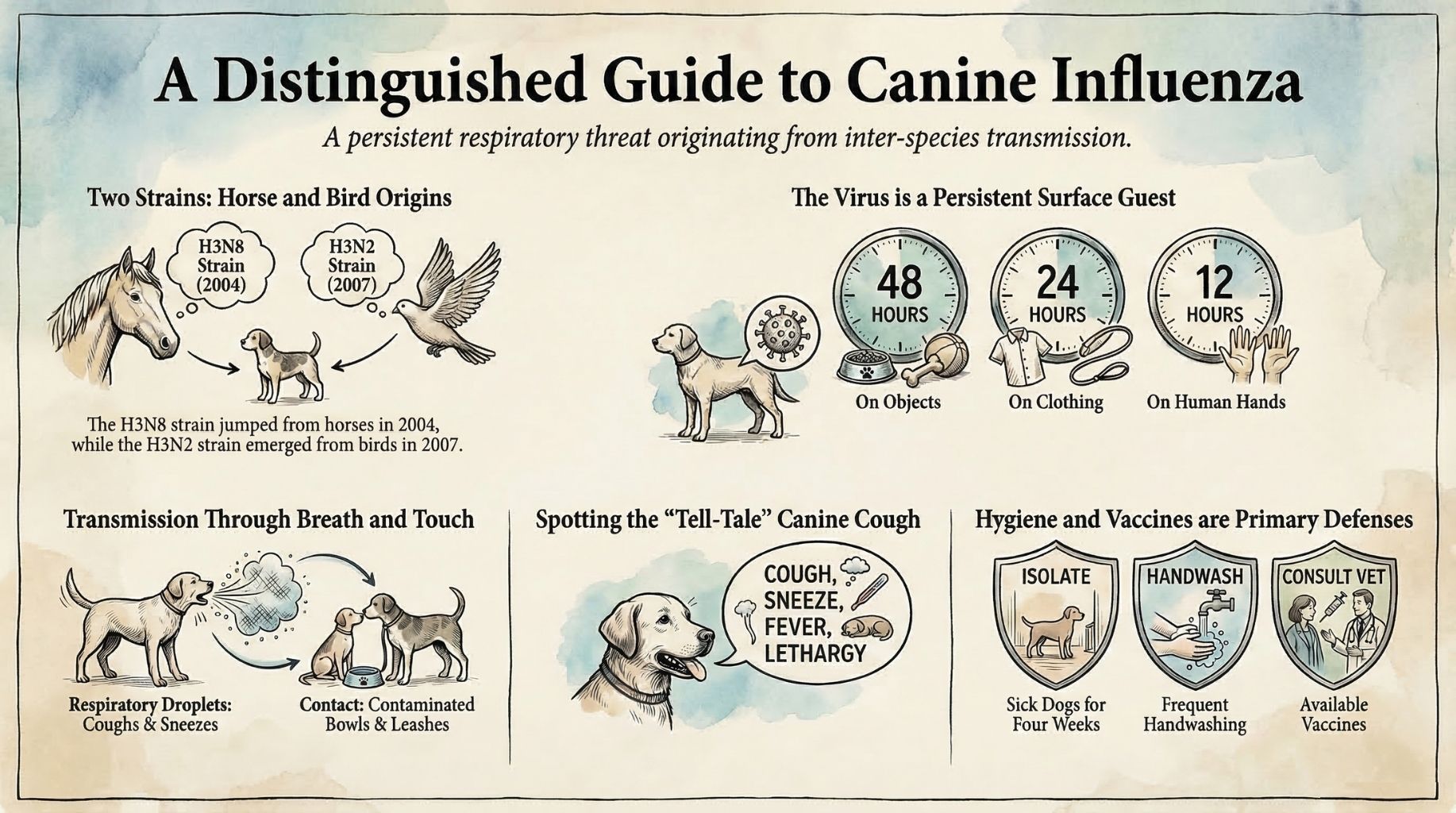
Subsequent research identified the specific strains of the influenza virus responsible for the outbreak. The H3N8 strain was traced back to equine influenza, while the H3N2 strain had a different origin.
History of type H3N8 canine influenza
Canine virus type H3N8 originates from horses. With time the horses transmitted the virus to dogs which lead now to be spread between dogs. The other name for this type of virus is horse flu, and exists in horses for more than 40 years. For a long time this respiratory disease was not known to exist in dogs till 2004 in the United States.
It is considered that this type of virus (H3N8) was spread from horses to dogs, causing illness in dogs and spread among dogs, mainly in dogs who are living in kennels and shelters. Canine virus type H3N2 originates from birds. This type of influenza was first identified in 2007 in South Korea. It is spread from birds to canines, nowadays making it possible to shed the virus between dogs.

THE IMPACT OF CANINE INFLUENZA
Canine influenza quickly spread among racing greyhounds and other dog populations. The virus is highly contagious and can be transmitted through the air, contaminated surfaces, and direct dog-to-dog contact.
How dog flu can transmit?
It can be transmitted when dogs cough, bark or sneeze, releasing droplets and aerosols. When in close contact, particularly dogs housed in kennels or shelters have highest risk of infection. Firstly, it can be spread indirectly through objects such as water and food bowls, leashes etc. Secondly, it can be spread is from people who have been in contact with dogs infected with canine influenza.
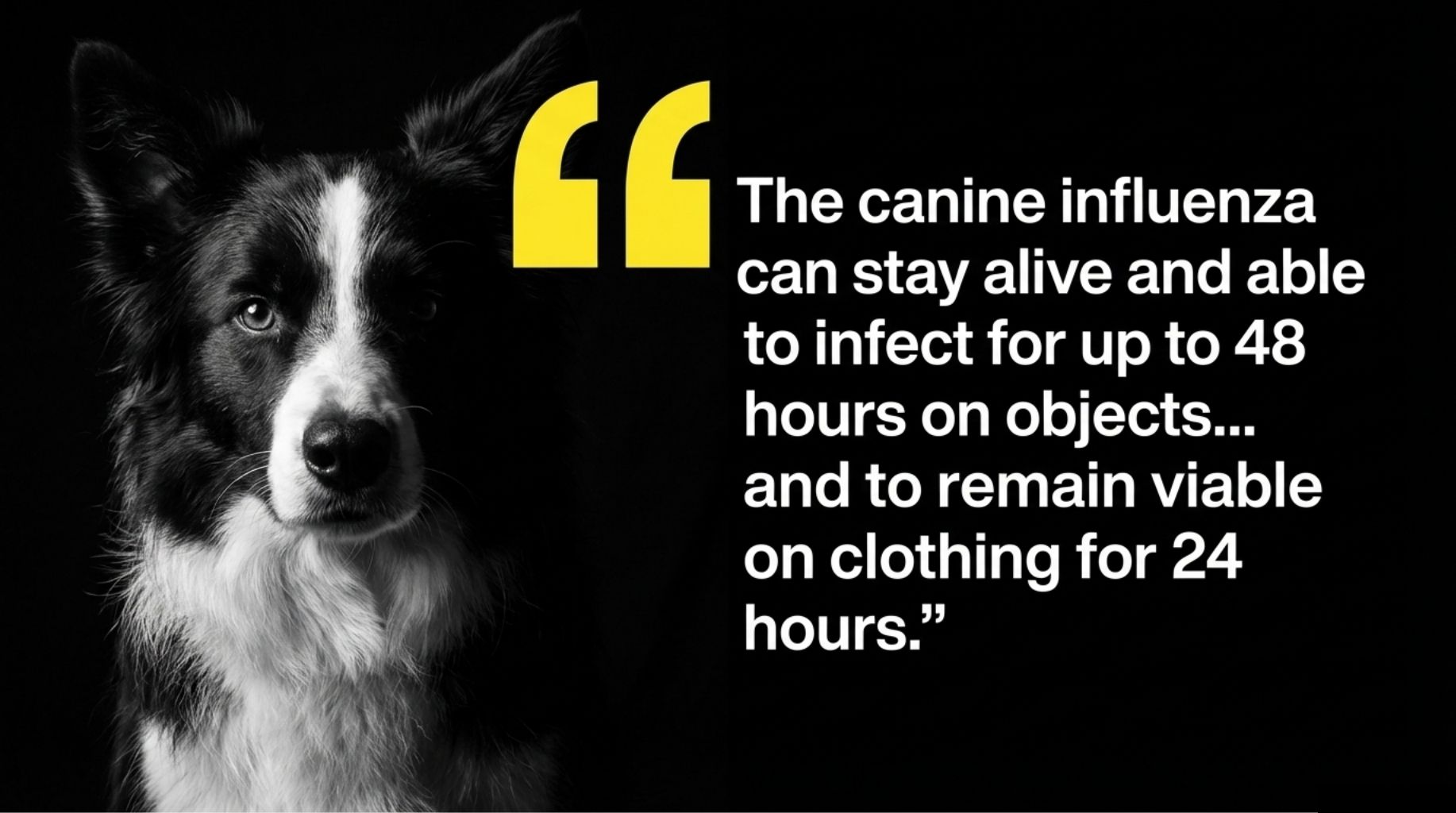
That is why people who have been in close contact with a dog infected with influenza should wash their hands and keep their clothes clean in order to avoid spreading the virus. The canine influenza can stay alive and able to infect for up to 48 hours on objects and surfaces, and also to remain viable on clothing for 24 hours, and on hands for 12 hours.
In most of the cases, dogs have shown clinical signs 2 to 3 days after exposure, after an incubation period of 1 to 5 days. Mostly, dogs are contagious during the incubation period, with or without showing clinical signs of the disease. Infected dogs might show respiratory problems between 2-8 days after being exposed to the virus. As we mentioned, some dogs may not show clinical signs of the disease, but they are able to spread the virus.
Symptoms of the dog flu
When infected, the dog flu replicates inside cells in the respiratory tract from the nasal lining to the terminal airways. It causes acute respiratory infection, resulting in rhinitis, bronchitis and bronchiolitis. The majority of infected dogs show some clinical signs, and the most common of them is soft, moist of a dry cough.
Other signs of the infection are runny nose, sneezing, lethargy or fever (a mild form of the disease). Furthermore, there are dogs that exhibit signs of pneumonia and consolidation of the lung lobes. Even though, dogs can recover fast within 2-3 weeks without any additional respiratory problem, there are cases of deaths reported due to the canine influenza.
If your dog is showing any of these symptoms, you should contact their veterinarian. They will tell you which test is appropriate in order to confirm type H3N8 or type H3N2 canine influenza virus.
Treatment for the dog flu
Helping your dog to have an effective immune response requires an appropriate treatment. In order your dog to maintain hydration let him or she drink a lot of fluids. Consult with your veterinarian about any additional medication for reducing fever, pneumonia or other dog health problems. As a caretaker of your dog is the best to keep their household clean and keep the dog isolated for 4 weeks.
There are vaccines already available for H3N8 and H3N2 type of canine influenza. These vaccines intend to protect the dogs and reduce the risk of contracting the dog flu. Therefore, dog caretakers should consult and ask the veterinarian which vaccine is appropriate for their dog.
3 FACTS ABOUT CANINE INFLUENZA
Fact 1: Scientists Have Identified Specific Genetic Mutations That Weaken the H3N2 Virus
Recent research published in the Journal of General Virology (2026) has pinpointed two critical amino acid mutations, K54E and S154P, in the neuraminidase (NA) gene of H3N2 canine influenza virus that significantly reduce its ability to cause disease. These mutations decrease NA enzymatic activity, which impairs the virus’s ability to release itself from infected cells.
As a result, mutant viruses lose their capacity to infect mice, providing researchers with potential new targets for vaccine development and antiviral drugs. This molecular-level understanding helps scientists track how the virus evolves and identify strains that may be naturally weaker or stronger.
Fact 2: Canine Distemper Virus Outbreaks Can Trigger Sudden Spikes in Dog Flu Cases
A 2026 study published in the Journal of Integrative Agriculture documented something never reported before: H3N2 canine influenza and canine distemper virus (CDV) can co-circulate with co-infection rates reaching as high as 66.67% in shelter populations. Researchers found that when CDV outbreaks occurred, canine influenza prevalence sharply increased from baseline levels of around 6% to peaks of 26.67% to 70.83%.
The statistical analysis showed a significant positive correlation between the two viruses (p<0.001), suggesting that CDV-induced immunosuppression makes dogs more susceptible to influenza infection. This means controlling distemper outbreaks through vaccination may also help prevent flu epidemics.
Fact 3: Some Canine Influenza Strains Have Developed Resistance to Antiviral Drugs
A concerning development published in the Virology Journal (2026) reveals that certain H3N2 canine influenza virus variants have acquired resistance to the antiviral drug amantadine. These “M variant” strains contain a matrix (M) gene segment derived from the 2009 pandemic H1N1 virus, which carries an L22S amino acid substitution in the M2 protein.

HYGIENE AND INFECTION CONTROL
Practicing good hygiene and infection control is crucial in preventing the spread of dog flu. Isolating sick dogs, cleaning and disinfecting areas, and practicing good hand hygiene are effective measures.
What We’ve Learned About The Dog Flu?
The discovery and management of canine influenza have provided valuable insights into how respiratory diseases spread in the canine population. It has underscored the importance of early detection and rapid response to potential outbreaks.
The Ongoing Battle Against Dog Flu
The discovery of canine influenza and subsequent research have enhanced our understanding of this contagious disease. While the impact of dog flu can be significant, preventive measures, such as vaccination and good hygiene practices, have improved our ability to manage and control outbreaks. Continued research and vigilance are essential to stay ahead of emerging diseases and protect our dogs from the impact of canine influenza.

REAL-LIFE STORIES: HOW CANINE INFLUENZA SPREADS
Example 1: The Dog Park Water Bowl That Started an Outbreak
In October 2023, a busy dog park in Austin, Texas became the epicenter of a local H3N2 outbreak. A seemingly healthy Labrador named Max visited the park on a Saturday morning. He drank from the communal water bowl and played with several dogs. Within 72 hours, Max developed a wet cough and runny nose. His owner, Sarah, initially thought it was kennel cough and kept him home.
Meanwhile, four other dogs that visited the park that same weekend fell ill with identical symptoms. The local veterinarian confirmed canine influenza in all five dogs through PCR testing. The shared water bowl served as the transmission point, the virus survived in the water for days, infecting dogs long after Max left the park. This real outbreak prompted the park to remove all communal water bowls permanently.
Example 2: A Shelter Cat Triggers a Quarantine
In early 2024, a small animal shelter in Portland, Oregon admitted a stray cat, Whiskers, who appeared healthy. Unbeknownst to staff, Whiskers had asymptomatic exposure to H3N2 canine influenza from a stray dog in the same intake room. Within one week, three dogs in the adjacent kennel developed fevers and a persistent cough. The shelter veterinarian tested the dogs and confirmed H3N2 infection.
She then tested Whiskers and discovered the cat was the asymptomatic carrier. The shelter immediately quarantined the entire wing for 21 days, deep-cleaned all surfaces with accelerated hydrogen peroxide disinfectant, and halted all dog adoptions temporarily. This real incident forced the shelter to revise its intake protocol, now they isolate all new cats for observation before placing them near dogs.
Example 3: A Doggy Daycare Learns a Hard Lesson About Ventilation
A popular doggy daycare in Chicago experienced a devastating outbreak in winter 2023. An infected Golden Retriever named Rocky attended for just three hours while his owner worked. Rocky showed no symptoms that day, but he was actively shedding the virus. The daycare’s indoor play area relied on recirculated air with poor ventilation. Within five days, 12 of the 18 dogs in Rocky’s playgroup developed respiratory symptoms.
Three senior dogs required hospitalization for secondary bacterial pneumonia. The owner, Mike, had to close the facility for two full weeks. He spent $15,000 on professional disinfection, upgraded the HVAC system to increase fresh air exchange, and installed UV-C lights in the air ducts. He now requires all dogs to show proof of canine influenza vaccination before admission.

FREQUENTLY ASKED QUESTIONS

If you want to explore this topic more, check the Wiki Pages!