
How to Truly Measure Your Dog’s Quality of Life? Doggozila Labs is offering a free calculator to all of our readers to check the health score of your dog and the quality of their life.
The HHHHHMM Framework: Quality of Dog Life Calculator
Watching a beloved companion enter their twilight years or face a chronic illness is one of the most emotionally taxing experiences a pet parent can endure. We often find ourselves searching for a sign, a specific look in their eyes or a familiar wag of the tail, to tell us they are still okay. However, love alone is not always enough to see the full picture of a dog’s well-being.
When emotions are high, it is easy to overlook subtle signs of decline or, conversely, to miss the small victories. To provide the best care, we must look past our own hope and grief toward a more objective way of evaluating comfort and joy. Science offers a clinical framework to help us navigate these years by shifting our focus from clinical maintenance to life enrichment.

Dog Quality of Life Calculator
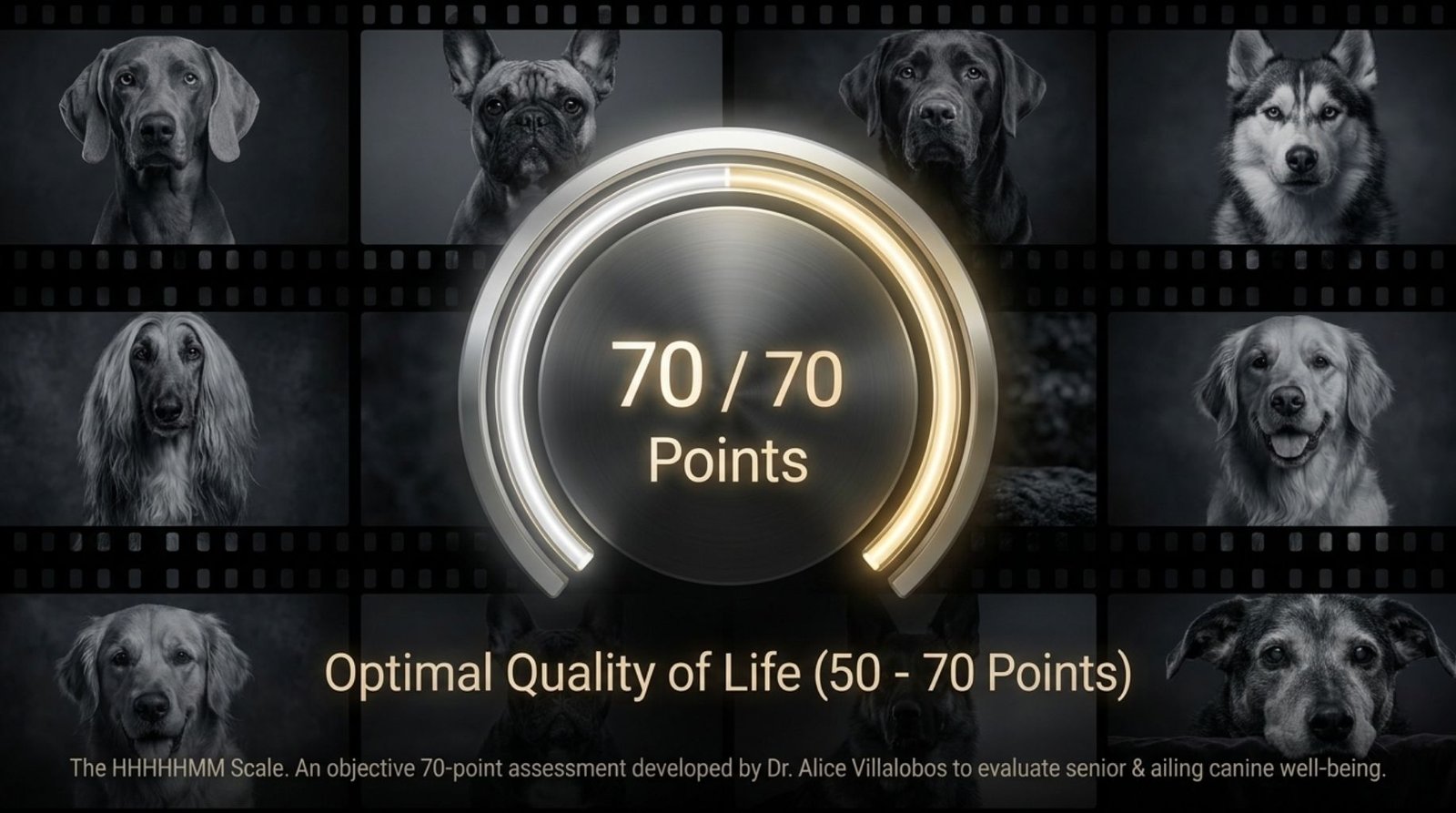
Objective 70-point assessment developed by Dr. Alice Villalobos to evaluate senior & ailing canine well-being.
💡 Clinical Recommendation & Care Plan
QUALITY OF DOG LIFE CALCULATOR AS Scientific Compass for Compassion
To remove the guesswork from end-of-life care, veterinary professionals utilize the HHHHHMM Scale. Developed by Dr. Alice Villalobos, this tool allows pet parents to evaluate their dog’s status across seven key categories, Hurt, Hunger, Hydration, Hygiene, Happiness, Mobility, and More Good Days than Bad Days, assigning a score from 0 to 10 for each.
The HHHHHMM Scale is an “objective 70-point assessment” designed to evaluate the well-being of senior and ailing dogs, providing a clear metric for their current quality of life.
Hurt, Hunger, and Hydration: The Pillars of Physical Vitality
The first three “H“s form the foundation of physical comfort. Pain management, or “Hurt,” encompasses more than just physical injury, it is heavily tied to respiratory health. A dog in a state of comfort should experience “smooth, easy breathing.” Conversely, “labored breathing” or “excessive panting” are specific clinical markers of a low score, signaling that the dog is in distress.
“Hunger” and “Hydration” are equally vital metrics of vitality. We look for whether a dog is eating voluntarily or if they require hand-feeding or food warming to stimulate an appetite. A score of zero reflects a dog that refuses all food or suffers from chronic nausea.
Similarly, for “Hydration,” we assess if the dog is drinking adequate water or if they require interventions like subcutaneous fluids to combat persistent vomiting or dehydration. As a consultant, I view these not just as biological needs, but as indicators of the body’s internal willingness to persist.
Happiness: Measuring the Emotional Spark
A dog’s mental and emotional state is a critical clinical metric. The “Happiness” category measures the “emotional spark” by observing social engagement. We look for signs of joy, such as tail wagging, greeting family members, and actively seeking out affection or responding to petting.
Interaction is used as a clinical metric because it signals the dog’s engagement with their environment. When a dog becomes withdrawn, anxious, depressed, or lethargic, it suggests that their mental “joy” has been superseded by their physical or cognitive burdens. A high score indicates that the dog is still “responsive” and emotionally connected to their pack, which is a key differentiator between existing and living.
Hygiene: The Quiet Essential of Dignity
The “Hygiene” metric focuses on a dog’s ability to stay clean and dry, which is paramount for their self-respect. This involves the “hygienic management of elimination“, ensuring that incontinence is managed and bedsores are prevented.
While pet parents often focus on the logistical challenge of cleaning up, the clinical priority is “preserving dignity.” A dog that can no longer maintain bowel control or is left in a soiled environment faces a significant decline in quality of life. Maintaining a clean, groomed coat and healthy skin is an essential act of care that sustains the animal’s physical health and their place as a respected member of the home.
Mobility: Movement vs. Independence
The “Mobility” metric is frequently misunderstood by pet parents who equate a lack of independence with a lack of quality. On this scale, a high score can still be achieved even if the dog requires assistance. The ability to stand, walk, or go outside to eliminate, even with the use of a harness or supportive device, constitutes successful mobility.
The expert insight here is that “assistance isn’t failure.” The focus is not on athletic performance but on the dog’s ability to “enjoy trips outside” and perform basic life functions. If your dog can still experience the world and manage their needs with your help, they are still participating in their own life.
The Tipping Point: Tracking the Trend
The final category, “More Good Days than Bad Days“, is the ultimate clinical tipping point. To assess this accurately, I advise pet parents to use a physical calendar to mark each day as “Good” or “Bad.” Tracking the ratio over time is far more accurate than judging a dog’s status based on a single, emotional moment.
If the total HHHHHMM score falls below 35 (the halfway point of the scale), or if “Bad Days” (characterized by pain, nausea, or withdrawal) consistently outnumber “Good Days,” the tipping point has been reached. This data provides the clarity needed to make difficult decisions based on the trend of the dog’s experience rather than the spikes of our own hope.
Navigating the Golden Years with Data and Heart
Using the HHHHHMM Scale allows pet parents to move from a place of uncertainty to a place of informed advocacy. An “Optimal Quality of Dog Life” is represented by a total calculator score between 50 and 70 points. This assessment should be a weekly monitoring habit, and the results should be discussed specifically with your veterinarian to create a collaborative “Clinical Care Plan.”
By grounding our observations in these seven clinical categories, we ensure our decisions are based on the dog’s actual experience. As you care for your companion, consider this, “How can you shift your daily perspective from merely ensuring their “survival” to actively protecting the “quality” and enrichment of their every remaining moment?”
Source Authority and Standards FOR THE QUALITY OF DOG LIFE CALCULTOR
The information provided is based on clinical frameworks presented by Doggozila Magazine. The content is reviewed by pet professionals, including veterinarians and certified dog trainers, to ensure adherence to editorial standards and scientific accuracy in dog health and research.
Related Tool By Doggozila Labs: Calculator for Dog Resting Energy Requirement